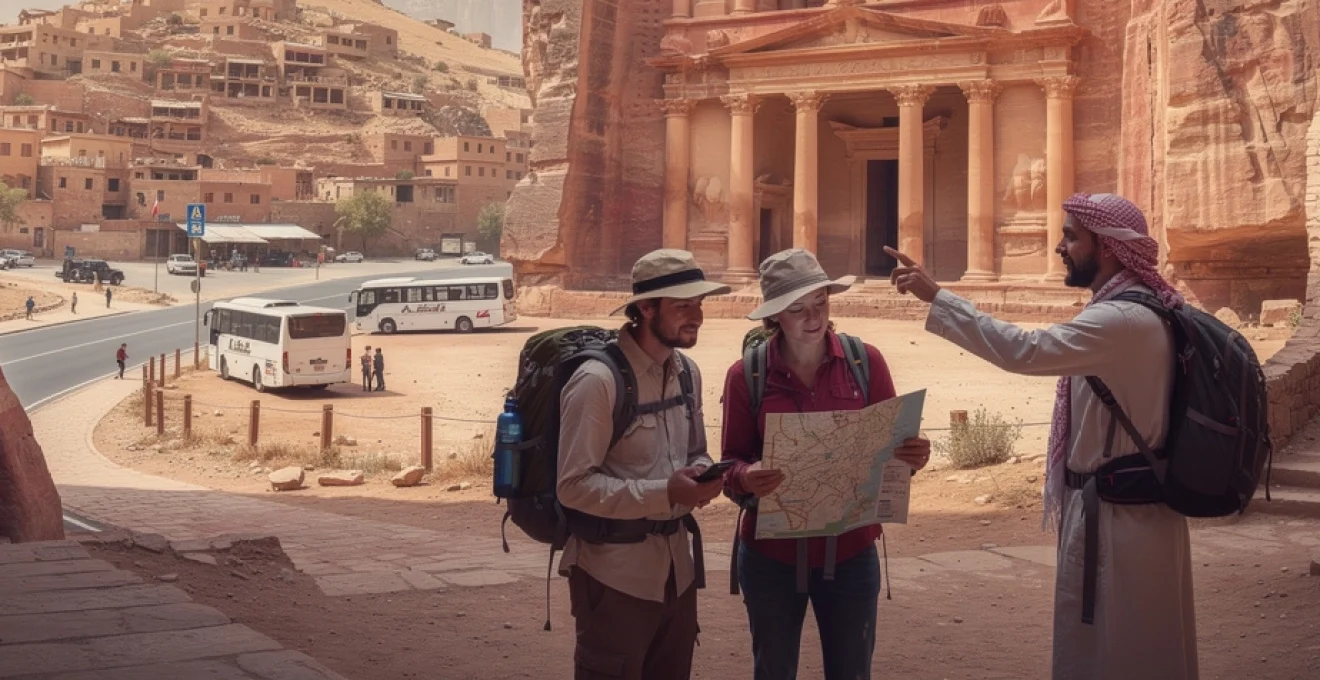
Jordan’s ancient city of Petra stands as one of the world’s most remarkable archaeological treasures, carved directly into rose-red sandstone cliffs by the ingenious Nabataean civilisation over 2,000 years ago. This UNESCO World Heritage Site and New Wonder of the World attracts more than one million visitors annually, each drawn by the mystique of its hidden passages, magnificent facades, and rich historical tapestry. From the iconic Treasury that greets visitors at the end of the serpentine Siq canyon to the monastery perched high in the mountains, Petra offers an unparalleled journey through time that combines natural beauty with human ingenuity.
Petra archaeological site access points and transportation networks
Reaching Petra requires careful planning of your journey to Jordan, with multiple transportation options available depending on your starting point and travel preferences. The archaeological site sits within the small town of Wadi Musa in southern Jordan, approximately 250 kilometres south of the capital Amman. Understanding the various access routes and transportation networks will help you optimise your arrival strategy and maximise your time exploring this ancient wonder.
Wadi musa village base camp strategic positioning
Wadi Musa serves as the essential gateway to Petra, positioned strategically at the entrance to the archaeological site. This small town has evolved specifically to support tourism, offering accommodation ranging from budget hostels to luxury five-star resorts. The village layout centres around the main tourist strip, with most hotels, restaurants, and services concentrated within walking distance of the Petra Visitor Centre. Hotels closest to the entrance, such as the Mövenpick Resort Petra and Petra Guest House, provide the advantage of immediate access for early morning visits, whilst properties further up the hillside offer panoramic views of the surrounding mountains at more affordable rates.
Queen alia international airport direct transfer routes
Queen Alia International Airport in Amman represents the primary international gateway for Petra visitors, located approximately 230 kilometres north of Wadi Musa. Direct transfers from the airport typically take between 3.5 to 4 hours by road, with several transportation options available. Private taxi transfers offer the most flexibility, allowing stops for refreshments and sightseeing, whilst organised tour groups provide cost-effective shared transportation. Car rental services at the airport enable independent exploration, with well-maintained highways connecting Amman to Petra via the Desert Highway route, which offers faster travel times compared to the scenic but slower King’s Highway.
The Desert Highway provides the most efficient route to Petra, cutting travel time by up to 90 minutes compared to alternative mountain roads whilst offering glimpses of Jordan’s diverse landscape.
Jordan pass integration with petra entry protocols
The Jordan Pass represents a comprehensive tourism package that streamlines both visa requirements and attraction access for international visitors. This government initiative includes visa fees and entry tickets to over 40 attractions throughout Jordan, including Petra’s multi-day passes. Purchasing the Jordan Pass online before arrival eliminates queuing at the Petra ticket office and provides significant cost savings for visitors planning to explore multiple Jordanian attractions. The pass includes one, two, or three-day Petra entries, with the three-day option providing the best value for comprehensive exploration of the archaeological site.
JETT bus terminal connections from amman central station
The Jordan Express Tourist Transport (JETT) company operates reliable bus services connecting Amman to Wadi Musa, providing an affordable alternative to private transportation. Daily departures from Amman’s central bus station commence at 6:30 AM, with the journey taking approximately three hours. Return services from Petra depart at 5:00 PM, allowing sufficient time for day visitors to explore the main archaeological highlights. JETT buses feature air conditioning and comfortable seating, making them suitable for the desert climate, though advance booking is recommended during peak tourist seasons.
Essential petra entry regulations and ticketing mechanisms
Understanding Petra’s entry requirements and ticketing structure proves crucial for planning an effective visit to this archaeological marvel. The site operates under strict regulations designed to preserve its historical integrity whilst accommodating the substantial visitor demand. Entry fees vary significantly based on visit duration and accommodation status, with different pricing tiers for day visitors versus those staying overnight in Jordan.
Multi-day petra by night permit requirements
Petra by Night is a separate experience from standard daytime entry and operates under its own ticketing system. The candlelit walk through the Siq to the illuminated Treasury currently runs three evenings per week (traditionally Monday, Wednesday, and Thursday), from approximately 8:30 PM to 10:30 PM. A Petra by Night ticket must be purchased in addition to a valid daytime entrance ticket, and you must already have entered Petra at least once on the same day or a previous day of your stay in Jordan.
Tickets for Petra by Night are bought at the Petra Visitor Centre or from many hotels in Wadi Musa on the day of the event, and cannot presently be reserved online. There is no formal “multi-day Petra by Night permit,” but if you hold a two or three-day Petra ticket (or an appropriate Jordan Pass), you may attend Petra by Night on more than one evening as long as you pay the separate night ticket fee each time. Arriving 15–20 minutes before the official start time allows you to avoid the tightest crowds at the entrance and to walk the Siq in relative quiet.
Because the event is very popular, you should also factor in seasonal variability and potential changes to operating days, especially around religious holidays or periods of national events. Always confirm current Petra by Night schedules and pricing at the Visitor Centre earlier in your stay. If you plan a tightly packed Jordan itinerary, consider aligning your Wadi Musa overnight with a Petra by Night evening so you can experience both the day and night atmospheres without backtracking.
Archaeological site conservation fees structure
Petra’s ticketing system is designed not only to control access but also to fund ongoing conservation work on fragile Nabataean structures. Standard entry fees for visitors who stay at least one night in Jordan are tiered by duration: one-day tickets, two-day tickets, and three-day tickets, with each additional day offering progressively better value. Day trippers who do not overnight in the country pay a significantly higher rate, reflecting the fact that they do not contribute through local accommodation taxes or wider spending.
Revenue from Petra’s conservation fees is directed towards stabilising rock-cut facades, maintaining paths, and managing visitor infrastructure such as lighting, safety barriers, and drainage systems. In recent years, funds have also been allocated to modern visitor facilities like the Petra Museum and to monitoring programmes that track erosion and structural stress on key monuments such as the Treasury and Monastery. When you purchase a multi-day ticket or Jordan Pass, you are effectively investing in the long-term protection of the site, not just buying access.
It is also worth noting that the fee structure can change, often with little advance notice, as authorities respond to economic pressures and conservation needs. Before your trip, verify current Petra entry fees via official Jordanian tourism channels so you can budget accurately. If you are travelling as a family, remember that children under a certain age (usually 12) often enter free of charge, which can translate into considerable savings over two or three days of exploration.
UNESCO world heritage site access restrictions
As a designated UNESCO World Heritage Site since 1985, Petra is subject to strict protective measures that influence how and where visitors may move. Off-limits areas are clearly marked, and climbing on monuments, entering unstable caves, or touching delicate facades is prohibited to prevent further deterioration of the sandstone. Some tomb interiors and staircases that were once accessible have been closed over the years as structural risks became apparent, so guidebooks and older blog posts may show viewpoints that are no longer permitted.
Drone usage is another major restriction at Petra. Unauthorised drones are banned across the site for both safety and conservation reasons, and equipment can be confiscated if flown without prior written approval from Jordanian authorities. Commercial filming, research activities, or large organised groups often require special permits in addition to regular entrance tickets, which must be arranged weeks or months in advance. You should also be aware that certain trails may temporarily close after heavy rain or rockfall, with rangers enforcing diversions for visitor safety.
These restrictions can feel limiting in the moment, especially when you see photos taken before the rules tightened, but they exist to ensure Petra is still standing for future generations. When in doubt, follow marked paths, heed ranger advice, and avoid “shortcuts” promoted by unlicensed touts. Respecting barriers and signs is one of the simplest yet most powerful ways you can contribute to preserving this extraordinary heritage site.
Peak season visitor quota management systems
With annual visitor numbers now exceeding one million, Petra faces the same capacity challenges as other global icons such as Machu Picchu or Angkor Wat. Although Jordan has not yet implemented a hard cap or timed-ticket system for individual visitors, soft quota management is increasingly used during the busiest months of March–May and September–November. This includes staggered group entry times, greater ranger presence at choke points like the Treasury and Siq, and targeted messaging to encourage early-morning or late-afternoon visits.
Large tour groups are often required to follow predefined circuits that minimise congestion around fragile structures and distribute traffic along secondary routes. During exceptionally busy days, authorities may limit the number of buses entering the Wadi Musa area at one time or encourage tour operators to pair Petra with alternative sites such as Little Petra or Wadi Rum to spread loads across the region. While you might not see a turnstile counting every traveller, these behind-the-scenes systems significantly influence crowd flow.
For independent travellers, the most effective way to bypass peak pressure is to arrive at the Petra Visitor Centre as close to opening time as possible and to plan a midday rest when heat and crowd density are at their worst. Consider structuring your visit across two partial days rather than one long day in high season; you will enjoy cooler temperatures, quieter trails, and more time at major viewpoints without feeling rushed. Monitoring local holidays and avoiding the busiest national long weekends can further improve your experience.
Nabataean treasury and monastery trail navigation strategies
Navigating Petra’s core circuit efficiently is the key to experiencing its most iconic monuments without feeling overwhelmed. The main trail from the Visitor Centre to the Basin area is approximately 4 kilometres one way, with the Treasury and Royal Tombs reached along the way and the Monastery accessible via an additional ascent. Approaching the site with a clear route plan—especially for the Treasury, Monastery, and High Place of Sacrifice—allows you to pace your energy, manage daylight, and time your photography for the best light.
Al-khazneh facade optimal photography positioning techniques
Al-Khazneh, or the Treasury, is Petra’s most photographed monument, and capturing it well requires a bit of strategy. The first classic angle comes as you emerge from the Siq: as soon as you glimpse the facade framed by the narrow canyon walls, slow your pace and position yourself slightly to the right or left to avoid other visitors in the centre of the frame. This “reveal shot” works particularly well in the early morning, when the Siq is quieter and the contrast between shadow and sun is less severe.
Once you reach the open plaza, mid-morning to early afternoon typically offers the most even light on the Treasury’s facade, minimising harsh shadows under cornices and columns. If you prefer a more atmospheric mood and fewer crowds, however, late afternoon just before closing can be ideal; tour groups will have departed, and you may briefly share the space with only a handful of other independent travellers. Resist the urge to stand too close to the structure—stepping back towards the mid-plaza gives you space to include people, camels, or the full height of the facade for scale.
You may encounter offers from local guides to escort you to high viewpoints above the Treasury for a fee. Some of these lookouts are on unofficial paths that can be unstable or off-limits, so you should prioritise safety and conservation over replicating a social media shot. If you decide to go, negotiate a clear price beforehand, ensure your guide uses recognised routes, and avoid standing on fragile ledges. Often, a well-composed ground-level photo at a quiet moment will feel more authentic than any precarious perch.
Ad deir monastery ascent route planning and duration
The hike to Ad Deir, the Monastery, is one of Petra’s most rewarding yet demanding undertakings. From the Basin area, where The Basin Restaurant and nearby facilities are located, the official trail climbs roughly 800–900 rock-cut steps over about 1.25 kilometres. Most reasonably fit visitors complete the ascent in 35–50 minutes, though you should allow at least 60 minutes if you anticipate frequent rest stops, are travelling with children, or visiting in warmer months.
Planning your ascent for either late morning or mid-afternoon can help balance light conditions with temperature. Early in the day, large portions of the path may be in shade, which is comfortable but can make uneven steps harder to see; by early afternoon, the route is brighter but hotter, requiring more water and sun protection. Treat the climb more like a steady mountain trail than a casual stroll—use a consistent, comfortable pace and pause in shaded alcoves or beside vendor stalls to let your heart rate settle.
At the top, you are rewarded with the Monastery’s massive facade and several surrounding viewpoints where you can appreciate the scale of the structure and the Wadi Araba beyond. Many travellers underestimate how long they will want to linger here; it is realistic to spend an hour or more exploring, photographing, and simply absorbing the atmosphere. When calculating your schedule, remember to factor in at least 30 minutes for the descent and an additional 1.5–2 hours to walk back from the Basin to the main entrance, particularly if you plan to catch a late bus or evening transfer.
Royal tombs complex architectural survey points
The Royal Tombs, carved into the eastern cliff face overlooking the main thoroughfare, provide a concentrated lesson in Nabataean funerary architecture. Starting from the Urn Tomb—the most prominent, with its broad terrace and vaulted interior—you can work your way north along the face to the Silk Tomb, Corinthian Tomb, and Palace Tomb. Each structure displays a different combination of Hellenistic, Roman, and indigenous Nabataean design elements, from broken pediments to multi-storey facades.
A practical way to approach this complex is to climb to the Urn Tomb first, using the broad staircase from the main path. From its terrace, you gain not only close-up views of the carved facade but also a sweeping panorama of the theatre, colonnaded street, and cave-dotted cliffs opposite. This elevated vantage point is ideal for photography and for orienting yourself within Petra’s urban layout. The interior chamber, though relatively plain, gives a sense of the tomb’s original scale and acoustics.
Continuing along the ledge trail between the tombs allows you to compare construction techniques and weathering patterns at close range. Notice how the Silk Tomb’s vibrant sandstone bands resemble marbled fabric, while the Palace Tomb’s multiple levels hint at an attempted rock-cut imitation of a freestanding Roman palace. By taking 45–60 minutes to explore this area, you deepen your understanding of Petra’s social hierarchy and burial practices rather than treating the tombs as a quick photo stop.
Siq canyon natural formation geological markers
The Siq is more than just the dramatic entry corridor to Petra; it is a geological and engineering marvel in its own right. Formed along a natural fault line, the narrow gorge winds for about 1.2 kilometres between towering sandstone walls that reach up to 80 metres in height. As you walk, look for the remnants of Nabataean water channels carved along the rock faces, some lined with stone or terracotta pipes that once supplied Petra with precious water from distant springs.
Geological markers in the Siq tell a slow-motion story of erosion, sedimentation, and tectonic shifts. You will notice swirling bands of colour in the sandstone, ranging from deep reds to pale yellows and purples, caused by varying mineral content and oxidation levels. In some sections, boulders appear wedged high above the path, evidence of past rockfalls and floods that have gradually reshaped the canyon. This interplay between solid rock and dynamic forces makes the Siq feel alive, even before you reach any man-made structures.
Treat the Siq as an open-air museum rather than a simple passageway you must rush through. Pause at the niches that once held religious statues, examine the carved reliefs of caravans and deities, and look down occasionally to see the original stone paving beneath the modern path. By engaging with these details, you gain a richer appreciation for the Nabataeans’ ability to harness a natural feature as both a defensive entry route and a ceremonial approach to their city.
High place of sacrifice summit trail difficulty assessment
The High Place of Sacrifice, perched above Petra’s central basin, offers one of the most impressive vantage points in the entire site, but reaching it involves a moderately strenuous climb. The main trail begins near the theatre area, ascending via a series of rock-cut steps and switchbacks that can take 45–75 minutes depending on pace and heat. While the path is generally clear and not technically difficult, there are sections with uneven footing and exposed edges that may challenge those with vertigo or limited mobility.
From the summit, you are rewarded with sweeping views over the Royal Tombs, colonnaded street, and surrounding wadis, as well as an up-close look at the carved altars and basins that give the site its name. The descent can be made via the same route or continued along a longer circuit that drops into Wadi Farasa, passing additional tombs and rock formations before rejoining the main trail near the Basin. This circular option turns the outing into a half-day hike and offers a quieter alternative to the busier Treasury–Monastery axis.
If you are weighing whether to attempt the High Place of Sacrifice in addition to the Monastery on the same day, consider your fitness level and the season. In cooler months with shorter daylight hours, it is feasible but demanding to combine both; in high summer, spreading them across two days is usually more enjoyable. Think of it like climbing two different staircases to two different rooftop terraces—you will gain unique views from each, but your legs will thank you for a little rest in between.
Petra climate adaptation and seasonal touring considerations
Petra’s desert climate significantly shapes how you should plan your visit, influencing everything from what time you start walking to how much water you carry. Summers (June to August) are typically hot and dry, with daytime temperatures often exceeding 35°C (95°F), while winters (December to February) can be surprisingly cold, especially at night, with occasional rain and even rare snowfall. Spring and autumn offer the most comfortable conditions for extended exploration, with milder temperatures and clearer skies.
To adapt effectively, think of your Petra day in three climate-driven phases: early morning, midday, and late afternoon. In summer, early mornings are precious; entering as close to opening time as possible lets you cover the exposed stretch from the Treasury to the Basin before heat peaks. Midday is better spent in shaded areas such as the Royal Tombs, in a café, or even back at your hotel for a rest. As temperatures drop later in the afternoon, you can return to the site for more relaxed wandering and golden-hour photography.
Regardless of season, sun protection is essential. Lightweight, breathable clothing that covers shoulders and knees, a wide-brimmed hat or scarf, sunglasses, and high-SPF sunscreen will all make long hours outdoors more comfortable. Hydration is equally critical; a general guideline is to carry at least 1.5–2 litres of water per person for a half-day, increasing to 3 litres or more if you plan a full-day hike in warmer months. Refillable bottles with built-in filters can help you top up from safe sources and reduce plastic waste compared with buying multiple small bottles.
Finally, be prepared for rapid weather changes, especially outside summer. A cloudy, cool morning can quickly give way to strong sun, and winter showers can cause slippery paths or temporary trail closures. Checking the forecast the evening before and speaking with hotel staff or rangers about expected conditions will help you decide whether to prioritise longer hikes like the Monastery and High Place of Sacrifice or to focus on lower, easier circuits on less stable days.
Wadi musa accommodation infrastructure and local amenities
Wadi Musa’s evolution from a quiet village to a bustling tourism hub means you have a wide range of accommodation and services at your disposal. Hotels cluster along the main road leading down to the Petra Visitor Centre, with the closest properties—such as Petra Guest House and the Mövenpick Resort Petra—literally opposite the entrance gates. These are ideal if you value maximum convenience for early starts or brief midday breaks. Further uphill, mid-range hotels and guesthouses offer better value and expansive views across the valley, though they may require a short taxi ride to and from the site.
Budget travellers will find hostels, simple hotels, and family-run guesthouses scattered throughout Wadi Musa, many of which include basic breakfasts and arrange shuttles to the Petra entrance at set times. Some newer properties cater to digital nomads and remote workers with stronger Wi-Fi and quiet communal spaces, useful if you plan to combine sightseeing with working days. During peak months, particularly around Easter and October holidays, popular options can sell out weeks in advance, so advance booking is strongly advised.
Beyond accommodation, Wadi Musa provides the essential amenities you need to support a multi-day Petra visit. ATMs are available near the Visitor Centre and in several bank branches along the main road, though machines can occasionally run out of cash at busy times, so it is wise to withdraw what you need early in your stay. Pharmacies, small supermarkets, and bakeries allow you to stock up on snacks, water, and basic supplies, while cafés and restaurants serve everything from traditional Jordanian dishes like mansaf and maqluba to international fare.
Transport within Wadi Musa is straightforward: short taxi rides are inexpensive, and many hotels offer scheduled shuttles down to the Petra entrance each morning and back again in the afternoon. Evening activities are relatively low-key, with rooftop terraces, shisha lounges, and occasional live music providing relaxed settings to unwind after a long day of walking. If you are staying two or three nights, consider dedicating one evening to experiences such as Petra Kitchen cooking classes or cultural shows hosted by local venues, which add depth to your understanding of the region beyond the archaeological site itself.
Advanced petra exploration routes beyond treasury circuit
Once you have covered Petra’s classic Treasury–Monastery circuit, a network of advanced trails awaits travellers who want to dig deeper into the site’s 60 square kilometres. These routes, which include the Al-Khubtha Trail, Wadi Al-Mudhlim, and the “Back Door” approach to the Monastery from Little Petra, reveal quieter corners of the ancient city and showcase the Nabataeans’ mastery of water management, defence, and landscape adaptation. Many of these paths require good fitness, firm footing, and sometimes a local guide, but they reward the effort with solitude and rarely seen perspectives.
The Al-Khubtha Trail, for instance, begins near the Royal Tombs and climbs gradually towards a high plateau overlooking the Treasury. From designated viewpoints, you can look down on the facade framed by cliffs and sky—an inversion of the usual ground-level view. This official route is safer and more sustainable than unofficial scramble paths and can be completed in 2–3 hours round-trip from the main trail. Starting in the early morning or late afternoon reduces both heat and crowding at the lookouts.
For a longer, more immersive experience, the Wadi Al-Mudhlim route follows a dramatic canyon that once carried floodwaters away from Petra. When conditions are dry and access is allowed, guided hikes through this wadi expose you to rock formations, narrow passages, and ancient hydraulic structures that are often missed by casual visitors. Because flash floods can occur after rain, this and similar canyon routes are subject to closure; always enquire at the Visitor Centre or with a licensed guide about current safety conditions before attempting them.
Perhaps the most appealing “advanced” option is the back-door trail from Little Petra to the Monastery. This route, typically undertaken with a guide or arranged transfer to the trailhead, approaches Ad Deir from the rear via a more gradual ascent through open landscapes and Bedouin grazing areas. Many travellers choose to start from Little Petra in the morning, hike to the Monastery, spend time there, and then descend via the standard staircase route to the Basin and main trail—effectively turning the usual day’s itinerary on its head. If you have already seen the Siq and Treasury on a previous day, this alternative entry can make your second or third visit feel like an entirely new adventure.
Whichever advanced route you choose, preparation is crucial: sturdy footwear, ample water, sun protection, and offline maps are non-negotiable. Hiring a knowledgeable local guide not only increases your safety but also enriches the journey with stories, historical context, and route-finding expertise that you might otherwise miss. In a landscape as intricate and storied as Petra, venturing beyond the obvious path is where the site begins to reveal its full depth—and where, often, you will feel most like you have stepped back into the Nabataeans’ world.