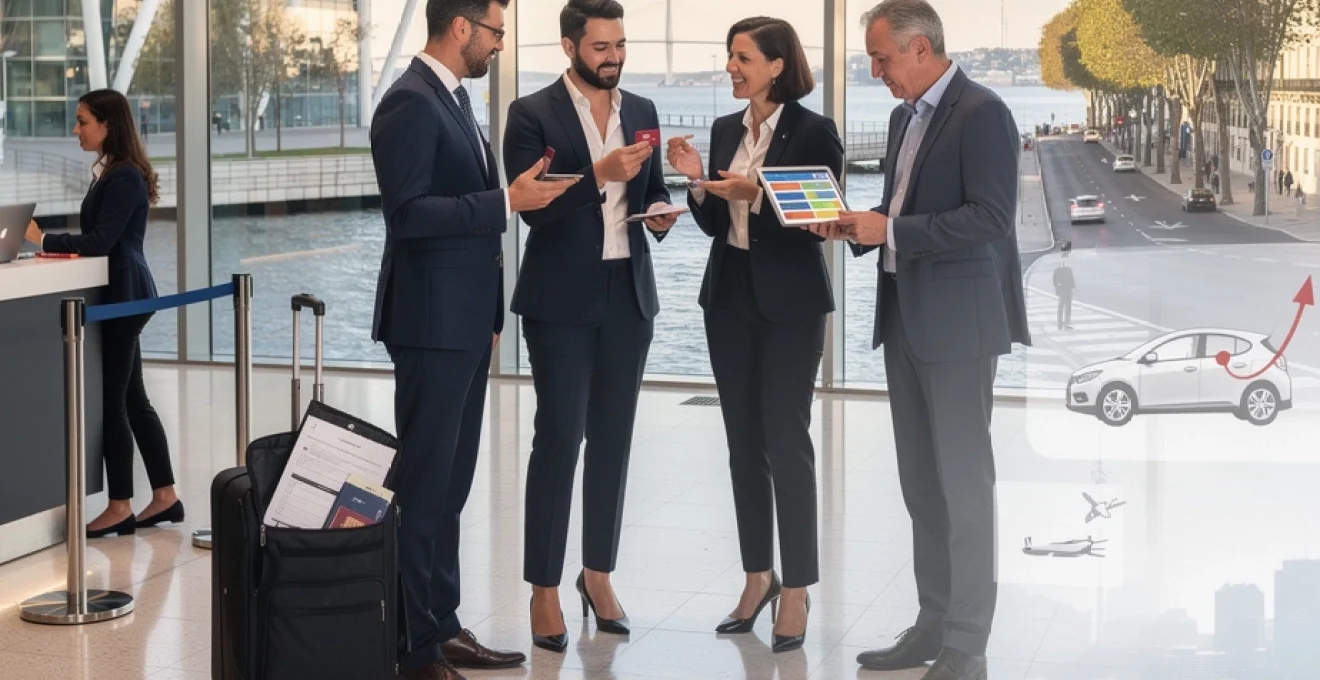
Lisbon has rapidly emerged as one of Europe’s most dynamic business event destinations, attracting professionals from across the globe to its conferences, trade shows, and networking gatherings. The Portuguese capital combines historical sophistication with cutting-edge infrastructure, creating an environment where meaningful business connections flourish. Whether you’re attending the internationally renowned Web Summit, a sector-specific trade exhibition, or a corporate seminar, understanding the practical aspects of navigating Lisbon’s business event landscape can significantly enhance your professional outcomes. The city’s compact geography, excellent transportation links, and world-class venues have positioned it as a preferred alternative to traditional European business hubs, offering attendees both professional value and cultural enrichment in equal measure.
For professionals preparing to attend business events in Portugal’s capital, strategic planning extends far beyond simply registering for a conference. Success requires understanding venue logistics, accommodation strategies, transportation systems, and the subtle yet important aspects of Portuguese business culture. This comprehensive guide provides actionable insights into maximising your time at Lisbon’s premier business events, from pre-arrival preparations through to post-event follow-up methodologies that convert new contacts into lasting professional relationships.
Strategic Pre-Event planning for lisbon’s business conference circuit
Effective participation in Lisbon’s business events begins weeks before you board your flight. The difference between a productive conference experience and a missed opportunity often lies in the thoroughness of your advance preparation. Understanding the specific characteristics of Lisbon’s event ecosystem enables you to make informed decisions about accommodation, scheduling, and networking priorities that align with your professional objectives.
Navigating FIL – feira internacional de lisboa and pavilhão carlos lopes venue logistics
Feira Internacional de Lisboa (FIL), located in the modern Parque das Nações district, serves as the city’s primary large-scale exhibition centre, hosting major trade shows and conferences throughout the year. This venue complex offers over 20,000 square metres of exhibition space across multiple interconnected pavilions, making it essential to study the floor plan before arrival. Event organisers typically publish detailed venue maps four to six weeks before major conferences, allowing you to identify the locations of key exhibitors, presentation theatres, and networking zones relevant to your interests.
The Pavilhão Carlos Lopes, situated in Eduardo VII Park near the city centre, presents a contrasting venue experience. This historic structure, dating from 1932, combines architectural grandeur with modern event facilities, accommodating up to 1,000 attendees for conferences and gala dinners. Its central location makes it accessible via multiple transport routes, though the surrounding area offers limited parking. Professionals attending events here should plan to use public transportation or pre-arranged private transfers to avoid the challenges of navigating narrow surrounding streets during peak hours.
Securing accommodation in parque das nações and avenida da liberdade business districts
Your choice of accommodation significantly impacts your overall event experience, particularly regarding travel time to venues and access to business amenities. The Parque das Nações district, developed for Expo ’98, offers numerous modern hotels with excellent conference facilities, positioned within walking distance of FIL and the Altice Arena. This area provides convenient access to the Oriente transport hub, connecting you to the airport, city centre, and regional destinations through integrated metro, train, and bus services.
Alternatively, the Avenida da Liberdade corridor represents Lisbon’s traditional business district, featuring luxury hotels such as the Four Seasons Ritz and Tivoli Avenida Liberdade. Staying in this central location offers advantages for events held at venues like Pavilhão Carlos Lopes, the Lisbon Congress Centre, or the historic Beato Convent. The concentration of high-end restaurants and bars along Avenida da Liberdade also facilitates informal business meetings and client entertainment. However, properties here typically command premium rates, particularly during major conference periods, making early booking essential for securing preferred accommodations at competitive prices.
Strategic accommodation selection can reduce your daily transit time by up to 90 minutes, providing additional opportunities for preparation, networking, or exploring business opportunities beyond the main event programme.
Registration protocols for web summit, lisbon investment summit, and Industry-Specific conferences
High-profile events such as Web Summit and Lisbon Investment Summit operate with strict registration protocols and tiered ticketing structures. For Web Summit, early-bird and 2-for-1 offers typically launch 8–10 months in advance, with prices increasing significantly closer to the event. You should create your attendee profile as soon as registration opens, ensuring your job title, company description, and areas of interest are clearly defined, as these details feed into the event’s recommendation engines and networking tools.
Industry-specific conferences in Lisbon, particularly in sectors like fintech, renewable energy, and life sciences, often require additional steps such as call-for-paper submissions, investor–startup matching forms, or pre-booked one-to-one meetings. Carefully review confirmation emails and portal dashboards for deadlines related to pitching sessions, matchmaking platforms, or workshop registrations; missing these windows can limit your access to high-value interactions. Always download the official event app at least a week before arrival, sync it with your calendar, and pre-select sessions and side events to avoid last-minute scheduling conflicts.
Corporate travel documentation and portuguese business visa requirements
Most business travellers from the EU, Schengen Area, UK, US, Canada, and several Asia-Pacific countries can enter Portugal visa-free for short stays of up to 90 days within a 180-day period. However, if you are travelling from a country that requires a Schengen visa, you must apply well in advance—ideally 6–8 weeks before your business event in Lisbon. Your invitation letter from the conference organiser or host company should clearly state the purpose, duration, and financial responsibility for your trip, as consular officers often request this documentation when assessing business visa applications.
Alongside visa considerations, ensure your passport has at least three to six months of validity beyond your planned departure date, in line with Schengen guidelines. Many companies now require employees to register business trips in internal travel management systems for duty-of-care and insurance purposes, so verify that your itinerary, accommodation details, and event registration are correctly logged. Finally, carry digital and printed copies of your conference ticket, hotel booking, and travel insurance; in the rare event of airline disruption or schedule changes, these documents streamline rebooking and help maintain your Lisbon business event schedule.
Maximising networking opportunities at lisbon’s premier business venues
Once your travel logistics are in place, the real value of attending business events in Lisbon lies in your ability to build meaningful professional relationships. The city’s venues are deliberately designed to encourage serendipitous encounters, from open networking lounges at FIL to informal terraces at creative hubs like LX Factory. By combining structured networking (such as pre-arranged meetings and roundtables) with spontaneous conversations in common areas, you can transform a standard conference agenda into a powerful business development opportunity.
Executive networking strategies at LX factory and convento do beato event spaces
LX Factory, located beneath the 25 de Abril Bridge, has become one of Lisbon’s most recognised creative hubs, frequently hosting product launches, innovation meetups, and intimate corporate gatherings. Its industrial-chic environment, dotted with cafes, bookstores, and rooftop bars, naturally encourages relaxed, informal conversations that can evolve into strategic partnerships. When attending an event here, arrive 30–45 minutes early to walk the complex, identify quieter spots for one-to-one meetings, and familiarise yourself with key gathering points such as the central courtyard and rooftop spaces.
Convento do Beato, a restored convent turned premium event venue, typically hosts high-level corporate dinners, gala events, and exclusive industry nights. Networking in such a setting requires a balance between formality and approachability: business attire is usually expected, but conversations often shift quickly from formal introductions to more candid strategic discussions. To maximise your impact, research the attendee list or sponsor roster in advance, identify 5–10 priority contacts, and use natural breakpoints—such as aperitif service, table changes, or post-dinner coffee—to initiate targeted conversations without appearing intrusive.
Leveraging event management platforms: eventbrite, LinkedIn events, and meetup.com in lisbon
In addition to flagship conferences, Lisbon maintains a dense calendar of satellite events that often provide better access to decision-makers in smaller, more focused settings. Platforms such as Eventbrite, LinkedIn Events, and Meetup.com are invaluable for discovering these side events during your stay. By searching for terms like Lisbon business networking, startup events in Lisbon, or tech meetups near Parque das Nações, you can quickly identify after-hours gatherings that complement your main conference schedule.
To stand out in these environments, treat your online event profiles as an extension of your business card. On LinkedIn Events, update your headline and “About” section to reflect your current objectives—for example, “Attending Web Summit 2026 – exploring partnerships in B2B SaaS” gives other attendees a clear idea of why they should connect with you. On Meetup.com and Eventbrite, use consistent profile photos and short bios so that people you meet can easily recognise you across platforms. Think of these tools as the digital equivalent of a well-organised conference badge: concise, clear, and aligned with your Lisbon business goals.
VIP access and fast-track registration systems at major portuguese trade shows
Large-scale trade shows and business events in Lisbon increasingly offer VIP or executive passes that provide access to fast-track registration, dedicated lounges, and curated networking sessions. While these passes come at a premium, they can significantly reduce queuing time and grant entry to invitation-only events where senior decision-makers congregate. When evaluating whether VIP access is worthwhile, consider the potential value of just one high-quality connection; in many cases, the return on investment from a single partnership far outweighs the cost of the upgrade.
Fast-track systems at venues like FIL and Altice Arena typically include separate entrances, dedicated security lines, and on-site concierge desks that can facilitate meeting room bookings or last-minute schedule adjustments. To fully capitalise on these advantages, pre-book meeting slots in the VIP lounges, using the event app or email introductions before you arrive in Lisbon. Treat the VIP areas as a quiet control centre where you can regroup, send follow-up messages, and schedule next-day appointments while the event energy continues around you.
Building professional connections through lisbon’s co-working spaces: second home and LACS
Beyond formal events, Lisbon’s co-working ecosystem offers ongoing opportunities to build professional relationships in a more organic environment. Second Home, located in the Mercado da Ribeira building near Cais do Sodré, attracts a diverse community of startups, creatives, and international remote workers. Its open-plan layout and frequent talks, panels, and community breakfasts make it easy to strike up conversations with potential collaborators or local partners while still enjoying a structured, business-focused setting.
LACS (Lisbon Art Center & Studios), with locations such as LACS Anjos and LACS Rocha Conde d’Óbidos, combines co-working with cultural programming, art exhibitions, and industry-specific events. If you are extending your stay for bleisure or planning follow-up meetings after a conference, consider booking a day pass or meeting room in one of these spaces. Not only do they provide reliable Wi-Fi and professional meeting facilities, but they also situate you in the heart of Lisbon’s entrepreneurial ecosystem, where informal introductions at the coffee machine can be as valuable as scheduled boardroom presentations.
Transportation infrastructure and business event accessibility
Lisbon’s transportation infrastructure is one of the key reasons the city has become a preferred destination for business conferences and trade fairs. Its compact layout, efficient metro system, and proximity of the airport to major business districts allow you to move between sessions, meetings, and social events with minimal downtime. Understanding how to combine public transport, ride-hailing services, and pre-arranged transfers enables you to maintain punctuality while keeping travel stress to a minimum.
Humberto delgado airport to conference venue transfer solutions
Humberto Delgado Airport is located just 6–7 kilometres from the city centre, meaning typical transfers to central Lisbon or Parque das Nações take 15–25 minutes depending on traffic. For solo travellers or small teams, airport taxis and ride-hailing services such as Uber, Bolt, and Free Now provide cost-effective and flexible options, with clear signage directing you to designated pick-up areas. During major events, however, queues can lengthen considerably, so allowing additional buffer time between your arrival and your first scheduled meeting is advisable.
Corporate groups or delegations attending large conferences often benefit from pre-booked private transfers or chauffeur-driven vans, particularly when a tight schedule or VIP protocol is involved. Professional transport providers monitor flight arrivals, coordinate with event organisers, and can adapt routes in real time if traffic congestion threatens your timetable. If your event is held at FIL or Altice Arena, consider arranging direct transfers from the airport to Parque das Nações for check-in and badge collection before heading to your hotel; this simple adjustment can save you a return journey and streamline your first day in Lisbon.
Metro de lisboa red line and green line routes for business districts
The Metro de Lisboa is one of the most efficient ways to navigate between Lisbon’s business districts and conference venues. The Red Line (Linha Vermelha) connects Humberto Delgado Airport directly to Oriente (for Parque das Nações and FIL) and Saldanha, a central business hub with access to numerous hotels and offices. From the airport to Oriente, the journey typically takes less than 10 minutes, making the metro a highly competitive alternative to road transfers, especially during rush hour.
The Green Line (Linha Verde) serves key central areas including Cais do Sodré, Baixa-Chiado, and Rossio, which are common bases for business travellers who wish to combine conference attendance with access to Lisbon’s historic centre. You can easily transfer between the Red and Green Lines at Alameda or Saldanha stations, enabling flexible movement between your hotel, the financial district, and after-hours networking venues. For frequent journeys over several days, consider purchasing a rechargeable Viva Viagem card and loading it with a 24-hour unlimited travel option; this small investment removes the friction of buying single tickets and simplifies budgeting for your Lisbon business trip.
Corporate car hire services and chauffeur-driven transport options
For executives with multiple off-site meetings or for companies hosting visiting clients, corporate car hire and chauffeur-driven services offer an added layer of comfort and control. Major international rental brands operate at Lisbon Airport and in central districts, but navigating the city’s narrow streets, limited parking, and occasional traffic bottlenecks can be challenging if you are unfamiliar with local driving habits. As a result, many business travellers opt instead for chauffeur-driven sedans or vans, which combine the flexibility of a private vehicle with the expertise of a local driver.
Chauffeur services are particularly valuable for itineraries that include site visits in Cascais, Sintra, or the Setúbal Peninsula, all within 30–45 minutes of Lisbon under normal traffic conditions. Rather than juggling train schedules or multiple taxi rides, you can treat the vehicle as a mobile office, using travel time to prepare presentations, conduct calls, or debrief with colleagues. When booking, specify your event schedule, preferred pick-up points (such as hotel lobbies or conference entrances), and any language requirements for the driver to ensure seamless integration with your Lisbon business agenda.
Portuguese business etiquette and professional protocol standards
Success at business events in Lisbon is not determined solely by your presentation skills or networking strategy; it also depends on your understanding of Portuguese business etiquette and professional norms. While Lisbon’s corporate culture is increasingly international, traditional values such as courtesy, punctuality, and respect for hierarchy still play an important role. Initial meetings often begin with a firm handshake, direct eye contact, and polite formalities, using titles such as Senhor or Senhora followed by the surname, especially in more conservative sectors like finance or public administration.
Portuguese professionals generally appreciate a measured, relational approach rather than aggressive hard selling. Building trust may take more than one meeting, with informal conversations over coffee or lunch playing a key role in developing rapport. Punctuality is expected for formal appointments, though discussions may begin with a few minutes of small talk about the city, food, or football before moving into core business topics. When attending conferences, dress codes can range from business formal to smart casual depending on the industry; when in doubt, it is better to err on the side of formality, particularly for opening ceremonies, panel appearances, or gala dinners.
Post-event follow-up methodologies and ROI measurement
The real value of attending business events in Lisbon reveals itself in the weeks and months after you return home. Without a structured follow-up process, contact lists and business cards risk becoming little more than souvenirs. By implementing clear methodologies for CRM integration, lead qualification, and cross-cultural communication, you transform conference conversations into measurable contributions to your organisation’s revenue, partnerships, and market intelligence.
CRM integration techniques for lisbon-acquired business contacts
Efficient CRM integration begins before you even set foot in Lisbon. Create custom fields or tags within your CRM system—such as “Event: Web Summit 2026” or “Location: Lisbon – FIL”—to categorise new contacts in a way that allows for targeted follow-up campaigns. As you meet prospects, partners, or suppliers, capture not only basic contact details but also contextual information: which session you met at, key topics discussed, and any specific next steps you agreed upon. This context is crucial when re-engaging after the intensity of a multi-day event.
Within 48–72 hours of the conference closing, prioritise importing your Lisbon contacts into the CRM, either manually or via integration with event apps and digital business card tools. Consider setting up automated but personalised email sequences that reference the event, the venue, or a particular session you both attended—for example, “It was great meeting you at the innovation panel at Pavilhão Carlos Lopes.” By combining automation with specific, human details, you maintain momentum without overwhelming your schedule.
Digital business card management using HiHello and CamCard applications
Traditional paper business cards still play a role in Portuguese business culture, but relying on them alone can lead to data loss and delayed follow-ups. Applications such as HiHello and CamCard allow you to scan, store, and categorise business cards in seconds, reducing the risk of misplacing crucial contact information. Many of these tools integrate directly with major CRM platforms, meaning that a quick scan at a networking break can automatically generate a new lead record in your system.
Digital business cards also support contactless sharing, which has become increasingly common at major international events. Before travelling to Lisbon, create a digital card that includes your LinkedIn profile, company website, and preferred meeting scheduling link. Sharing this via QR code or email during conferences and side events not only streamlines the exchange but also ensures that your new contacts have accurate, up-to-date details. Think of these tools as your personal “contact hub,” turning stacks of cards into a searchable, action-oriented database.
Lead qualification frameworks for portuguese market entry strategies
Not every contact you meet at a Lisbon business event will represent an immediate sales opportunity, and treating them all as such can dilute your focus. Implementing a clear lead qualification framework—such as BANT (Budget, Authority, Need, Timeline) or MEDDIC—helps you identify which conversations merit immediate follow-up, which should be nurtured over time, and which are better suited to partnership or referral roles. During initial interactions, ask open but targeted questions that reveal a contact’s position within their organisation, their decision-making power, and their strategic priorities.
If you are exploring entry into the Portuguese market, pay particular attention to contacts who demonstrate local regulatory knowledge, distribution capabilities, or existing client networks in your sector. These individuals may not always be direct buyers, but they can become invaluable allies in navigating licensing requirements, cultural nuances, or sector-specific associations. By classifying leads into categories such as “Prospect – Portugal,” “Partner – Lisbon Ecosystem,” or “Investor – Iberian Focus,” you create a structured map of how your conference experience contributes to your broader internationalisation strategy.
Cross-cultural communication follow-up in portuguese and english
While English is widely spoken in Lisbon’s business community, especially in technology and finance, taking the time to acknowledge Portuguese language and culture in your follow-up can make a strong impression. Even simple phrases such as “Obrigado/Obrigada pela nossa conversa em Lisboa” at the beginning of an email demonstrate respect and attention to detail. When dealing with more traditional sectors or public institutions, consider providing bilingual materials—such as a one-page company overview in both English and Portuguese—to facilitate internal sharing among stakeholders with varying language preferences.
Timing also matters. Avoid sending important follow-up messages late on Fridays or during major Portuguese holidays when response times may slow. Instead, schedule key emails for mid-morning or early afternoon on weekdays, allowing your contact time to read and respond before the day ends. When arranging virtual follow-up meetings, be mindful of time zones and propose several options that reflect Lisbon time alongside your own; this small gesture signals professionalism and helps maintain the goodwill you built during your time at Lisbon’s business events.
Sector-specific business events calendar: tech, finance, and startup ecosystems
Lisbon’s business event calendar has evolved into a year-round ecosystem, particularly strong in technology, finance, and startup innovation. Web Summit remains the headline event each November, drawing tens of thousands of participants from over 160 countries and acting as a catalyst for a multitude of side events across the city. However, beyond this flagship conference, you will find a growing roster of specialised gatherings such as Lisbon Investment Summit, fintech forums, cybersecurity congresses, and industry-specific innovation days hosted by major corporations and accelerators.
In the tech and startup sphere, spring and early summer often feature acceleration program demo days, venture capital meetups, and sector-focused events on topics like AI, SaaS, and green technologies. The finance sector sees regular conferences on banking innovation, sustainable finance, and regulatory developments, frequently held at hotels along Avenida da Liberdade or in the Lisbon Congress Centre. To make the most of this landscape, map out your target events 6–12 months in advance, aligning them with your product launches, fundraising rounds, or market-entry milestones.
As you plan your participation, consider combining flagship conferences with smaller, highly targeted events in the same time frame. For example, attending Web Summit while also scheduling meetings at co-working spaces like Second Home or LACS and sector dinners in venues such as LX Factory can provide a layered understanding of Lisbon’s business climate. By viewing the city not just as a one-time conference destination but as an interconnected ecosystem of venues, communities, and opportunities, you position yourself to derive maximum long-term value from every business trip to Portugal’s capital.