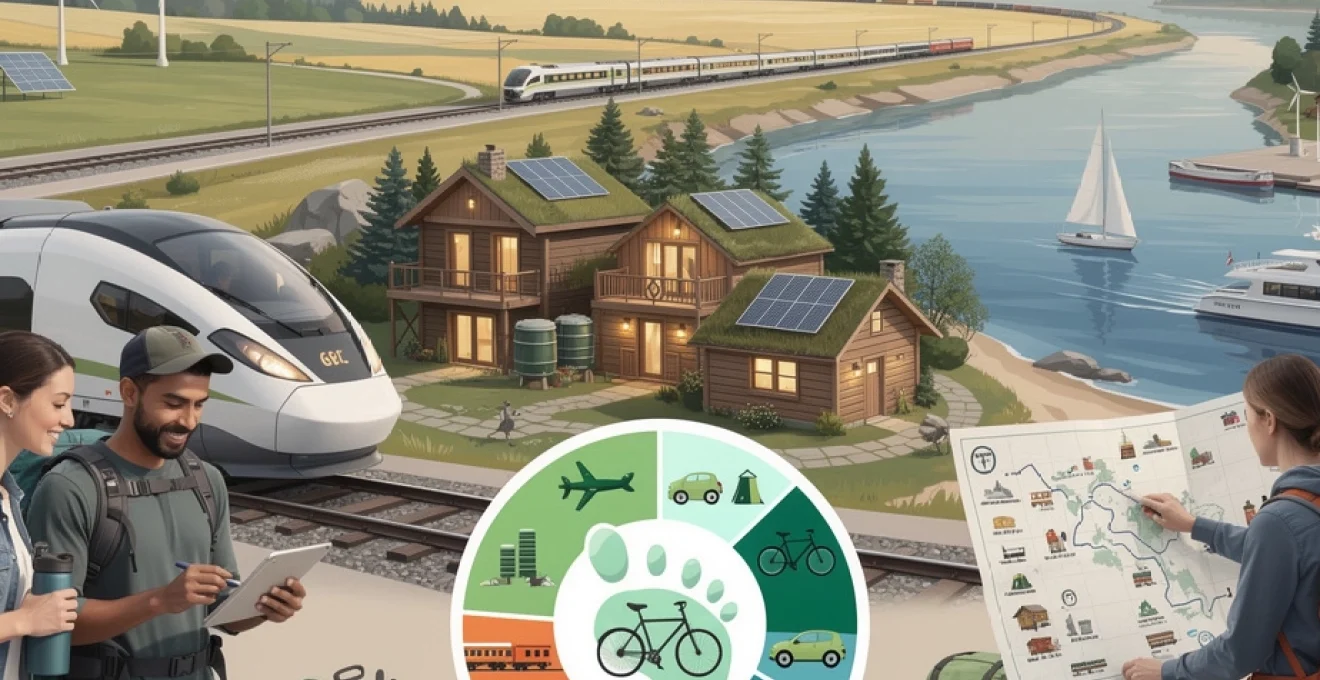
The modern traveller faces an unprecedented paradox: whilst our wanderlust drives us to explore distant lands and cultures, the environmental cost of tourism continues to accelerate climate change and biodiversity loss. With aviation responsible for approximately 2.5% of global carbon emissions and tourism accounting for roughly 8% of total greenhouse gas emissions, the industry stands at a critical juncture. Yet this challenge presents an opportunity for conscious travellers to pioneer a new approach—one that transforms journeys from environmental liabilities into forces for positive change.
The concept of sustainable travel extends far beyond simply choosing eco-friendly accommodation or offsetting carbon emissions. It encompasses a comprehensive approach to tourism that considers environmental impact, social responsibility, and economic sustainability throughout every aspect of your journey. From the initial planning stages to your return home, each decision influences whether your travels contribute to or mitigate the pressing environmental challenges facing our planet.
Understanding the mechanics of travel-related emissions, implementing low-impact transportation strategies, and embracing regenerative tourism practices represents the foundation of responsible exploration. Modern travellers possess unprecedented access to tools, technologies, and information that make sustainable choices not only feasible but often more rewarding than conventional approaches.
Carbon footprint assessment and measurement for travel activities
Accurate measurement forms the cornerstone of effective carbon reduction strategies. Without understanding the emissions profile of different travel components, efforts to minimise environmental impact remain largely theoretical. The complexity of travel-related emissions encompasses direct combustion from transportation, indirect emissions from accommodation and activities, plus embedded carbon within the tourism infrastructure itself.
Aviation emissions calculation using ICAO carbon emissions calculator
The International Civil Aviation Organization’s carbon emissions calculator provides the most standardised methodology for assessing flight-related emissions. This tool accounts for aircraft type, route efficiency, passenger load factors, and cargo weight to deliver precise emissions data. A typical economy class return flight from London to New York generates approximately 1.8 tonnes of CO2 equivalent per passenger—equivalent to driving a petrol car for nearly 8,000 kilometres.
Advanced calculators incorporate radiative forcing effects, which account for aviation’s non-CO2 climate impacts including nitrogen oxides, water vapour, and particulates released at high altitude. These effects can multiply aviation’s warming impact by a factor of 2-3 compared to ground-level CO2 emissions alone. Business and first-class seats carry significantly higher per-passenger emissions due to increased space allocation and weight considerations.
Accommodation carbon intensity analysis and hotel sustainability certifications
Hotel emissions typically range from 15-50 kg CO2 equivalent per room night, with luxury properties often exceeding 100 kg CO2 equivalent due to energy-intensive amenities and services. The Hotel Carbon Measurement Initiative provides standardised metrics across major hotel chains, enabling informed comparisons. Key factors influencing accommodation emissions include building efficiency, renewable energy adoption, heating and cooling systems, and operational practices.
Recognised certification schemes include LEED (Leadership in Energy and Environmental Design), BREEAM (Building Research Establishment Environmental Assessment Method), and Green Key. These frameworks assess energy consumption, water usage, waste management, and sustainable procurement practices. Green certified properties typically demonstrate 20-30% lower emissions compared to conventional alternatives whilst often providing superior guest experiences through improved air quality and innovative sustainable technologies.
Ground transportation emissions comparison: rail vs road vs maritime
Rail transport emerges as the clear winner for medium-distance travel across most metrics. Electric trains in countries with clean grids can achieve emissions as low as 6g CO2 per passenger-kilometre, compared to 120-200g for passenger vehicles and 200-300g for aviation per passenger-kilometre. The efficiency advantages of rail become even more pronounced when considering door-to-door journey times for distances under 800 kilometres, where high-speed rail often proves faster than flying when airport processing times are included.
Maritime transport presents interesting opportunities for patient travellers, with modern ferries achieving 50-80g CO2 per passenger-kilometre on well-utilised routes. However, older vessels and low-occupancy services can exceed road transport emissions significantly. Electric vehicle rentals are transforming road-based tourism, particularly in regions with clean electricity grids, achieving lifecycle emissions comparable to rail transport.
<h3
Activity-based carbon accounting for adventure tourism and excursions
Beyond transport and accommodation, the activities you choose on holiday can significantly influence your overall travel carbon footprint. Adventure tourism, in particular, often involves equipment-heavy or motorised experiences that carry hidden emissions from fuel use, gear production, and infrastructure. To make informed choices, it helps to think in terms of activity-based carbon accounting—estimating the emissions associated with each excursion in the same way you might budget time or money.
Low-carbon activities such as hiking, cycling, kayaking, wildlife watching, and cultural tours generally produce minimal direct emissions, especially when operated locally and in small groups. In contrast, high-speed motorboat tours, helicopter sightseeing, snowmobiling, and jet-skiing can generate emissions per hour that rival a short domestic flight. As a rule of thumb, any activity that burns fossil fuel continuously while you participate will carry a higher carbon intensity than human-powered or passive experiences.
When assessing activities, consider three dimensions: transport to and from the site, on-site energy or fuel use, and the scale of infrastructure needed to support the experience. A remote zipline park accessed by a long minibus transfer and powered by diesel generators may have a larger footprint than a local guided walk that uses existing trails. Many responsible operators now publish their own carbon estimates or participate in third-party sustainability audits, so do not hesitate to ask how an excursion’s emissions are calculated and what measures are in place to reduce them.
Applying activity-based accounting does not mean eliminating fun; instead, it helps you prioritise experiences that align with your values. You might limit yourself to one higher-impact adventure (such as a scenic flight that contributes to local conservation funding) and balance it with several low-impact days. Over time, this conscious approach to excursions can reduce your holiday emissions by a meaningful margin while often deepening your connection with local landscapes and communities.
Low-impact transportation strategies and modal shift implementation
Reducing travel emissions at scale depends on our willingness to embrace modal shift—swapping high-carbon transport modes such as flying and private car use for lower-impact alternatives like trains, buses, shared cars, and ferries. Choosing low-impact transportation strategies can feel daunting at first, especially if you are used to booking the quickest or cheapest flight. Yet, with careful planning and the right tools, shifting modes often results in richer, more flexible journeys and a significantly lower carbon footprint.
Think of your route as a puzzle with multiple possible solutions rather than a straight line from airport to airport. Can you replace one or two short-haul flights a year with rail or coach? Could you combine destinations so you fly less frequently but stay longer each time? By reframing travel planning around emissions rather than just price or speed, you begin to see an array of low-carbon options that were previously invisible.
Implementing a modal shift also involves rethinking what you value during transit. Instead of seeing travel time as wasted, you might use slower journeys for reading, working, or simply watching the landscape change. Overnight trains, scenic ferries, and multi-leg rail adventures can transform logistics into a memorable part of the trip. As more countries expand high-speed rail, electric bus networks, and EV infrastructure, these options are becoming not only greener but often more comfortable and convenient than traditional air travel.
European rail network optimisation: eurail pass vs point-to-point booking
Europe offers one of the most extensive and efficient rail networks in the world, making it an ideal region for low-impact travel. When planning a multi-stop itinerary, travellers often face a strategic choice: purchase a rail pass such as Eurail (for non-Europeans) or Interrail (for Europeans), or book individual point-to-point tickets. Each approach has different implications for cost, flexibility, and your overall sustainable travel strategy.
Rail passes excel when you plan to visit several countries or take frequent long-distance journeys within a limited time frame. They provide flexibility to change plans, hop on spontaneous routes, and explore lesser-known towns without worrying about individual ticket prices. From a practical perspective, this can help you commit fully to rail rather than being tempted by last-minute budget flights if prices spike for individual train journeys.
Point-to-point tickets, on the other hand, can be more cost-effective if you have a fixed itinerary with only a few longer journeys. Booking in advance often unlocks significant discounts, particularly on high-speed lines such as France’s TGV, Spain’s AVE, Italy’s Frecciarossa, and cross-border routes like Eurostar. Tools such as national rail websites and integrated booking platforms make it straightforward to compare journey times and emissions, reinforcing your choice of trains over planes.
From an emissions standpoint, both options are comparable—what matters is that you choose rail over air wherever feasible. To optimise your European rail journey further, consider grouping destinations to minimise backtracking, using night trains to cover longer distances efficiently, and combining regional trains with local public transport or cycling for last-mile travel. Over a two-week holiday, a well-planned rail itinerary can reduce your travel carbon footprint by several hundred kilograms of CO2 equivalent compared to short-haul flying.
Electric vehicle rental networks: hertz, enterprise and zipcar EV fleets
For destinations where public transport is limited or you need the flexibility of a car, electric vehicle (EV) rentals offer a powerful way to reduce your travel emissions. Major rental companies such as Hertz and Enterprise, along with car-sharing networks like Zipcar, are rapidly expanding their EV fleets across Europe, North America, and parts of Asia-Pacific. Choosing an EV over a conventional petrol or diesel car can cut tailpipe emissions to zero, with overall lifecycle emissions heavily dependent on the cleanliness of the local electricity grid.
When renting an EV, range anxiety is a common concern, but planning ahead can make it a non-issue. Most modern electric vehicles offer ranges of 250–500 kilometres, which comfortably covers typical day trips and regional touring. Charging infrastructure is improving rapidly, with dedicated apps and in-car navigation systems displaying live charger availability and speeds. Many hotels, eco-lodges, and campsites now provide charging points as part of their sustainability initiatives.
Short-term EV car-sharing services such as Zipcar can be particularly efficient in urban areas, where you might combine public transport for daily mobility with occasional EV use for excursions. This hybrid model aligns well with sustainable travel principles: it reduces the need for full-time vehicle hire, lowers parking stress, and encourages you to walk, cycle, or use transit whenever practical. If you are new to electric driving, staff at rental counters or car-share guides typically offer basic orientation to charging and eco-driving modes.
Financially, EV rentals can be competitive, especially when fuel prices are high and you have access to free or discounted charging. In some regions, toll exemptions, priority lanes, or parking benefits further reward low-emission vehicles. By opting into electric fleets, you also send a clear market signal that there is demand for climate-conscious mobility solutions, encouraging rental companies to accelerate their transition away from fossil fuel vehicles.
Overland route planning through central asia and Trans-Siberian railway
For long-distance travellers willing to trade speed for experience, overland routes across Eurasia offer some of the most iconic low-impact journeys on Earth. Travelling through Central Asia or along the historic Trans-Siberian Railway can dramatically reduce the number of flights required to cross continents. While these routes still carry emissions—particularly where trains are diesel-powered—per passenger-kilometre impacts are generally lower than equivalent long-haul flights, and your journey becomes a continuous narrative rather than a series of disconnected hops.
Planning such routes requires more research and flexibility than booking a single air ticket. Visa requirements, seasonal weather conditions, and train schedules all influence your options. Countries such as Kazakhstan, Uzbekistan, and Kyrgyzstan are investing in rail and road infrastructure, opening up new combinations of sleeper trains and shared taxis that link cities, mountain regions, and cultural hubs. Much like piecing together an intricate tapestry, mapping an overland route invites you to understand geography, history, and local logistics in greater depth.
The Trans-Siberian and related routes (such as the Trans-Mongolian) symbolise the potential of rail to connect vast distances. Depending on political conditions and service availability, you can travel thousands of kilometres overland, breaking the journey into segments that support local economies en route. While some segments may still involve higher-emission rolling stock, the cumulative footprint tends to be lower than multiple intercontinental flights, particularly if you travel in standard classes and avoid unnecessary detours.
Overland travel through Central Asia also creates opportunities to practice regenerative tourism principles: staying in community guesthouses, supporting local guides, and spending money in small businesses rather than transit hubs. The slower pace encourages you to adapt to local rhythms, learn basic phrases, and develop an appreciation for landscapes that most travellers only ever see from 10,000 metres up. For those with time and curiosity, such routes epitomise what sustainable travel can be—immersive, connective, and transformative.
Coastal ferry systems: scandlines, DFDS seaways and celtic link ferries
Coastal ferry systems provide vital links between countries and islands, and they can form an important component of a low-carbon itinerary when chosen carefully. Operators like Scandlines in the Baltic Sea, DFDS Seaways across the North Sea and English Channel, and Celtic Link Ferries (now integrated into larger operators) have been investing in cleaner technologies, including hybrid propulsion, shore power connections, and improved fuel efficiency. For travellers, ferries often make it possible to combine rail, bus, and cycling journeys without flying.
From a sustainability perspective, the key variables are vessel age, fuel type, occupancy levels, and route distance. High-capacity ferries operating on short, busy routes tend to achieve better per-passenger emissions than smaller, infrequent services. Some operators, such as Scandlines, have introduced hybrid ferries that significantly reduce fuel consumption and air pollution, particularly when paired with shore power that allows engines to shut down in port. When booking, look for information on environmental initiatives and fleet modernisation; many companies now highlight these efforts as a core part of their brand.
Practically, ferries enable you to travel with bikes or electric vehicles, supporting seamless multimodal journeys. For example, you might take a train from a major city to a port, board an overnight ferry with a cabin, and continue by rail or EV on the other side. In addition to being lower impact than flying, this approach often reduces the stress of airport security, luggage restrictions, and rushed transfers. It also turns the crossing itself into an experience—watching coastlines drift by, spotting seabirds, and feeling the gradual transition between regions.
As with other modes, integrating ferries into sustainable travel plans involves comparing not just price and duration but relative emissions. Although maritime transport is not emissions-free and faces its own decarbonisation challenges, thoughtful use of high-occupancy, efficiency-focused ferry services can significantly reduce your reliance on short-haul flights, especially across European seas and channels. Combined with rail and EV travel, coastal ferries help knit together a low-impact network for exploring entire regions without taking to the air.
Regenerative tourism practices and destination selection criteria
Sustainable travel aims to minimise harm; regenerative tourism goes a step further by seeking to leave places better than you found them. Rather than simply reducing your footprint, regenerative practices focus on actively restoring ecosystems, supporting local livelihoods, and strengthening cultural resilience. Selecting destinations and experiences through this lens transforms your trip from a neutral transaction into a catalyst for positive change.
When evaluating destinations, look beyond marketing terms like “eco” or “green” and examine how tourism revenue is used in practice. Does the region have protected areas funded by visitor fees? Are there community-owned lodges or cooperatives that give residents a real stake in tourism decisions? Countries such as Costa Rica, Bhutan, and Slovenia have become case studies in aligning tourism with national conservation and wellbeing goals, but regenerative pockets exist worldwide, from Indigenous-led tourism in Canada to community conservancies in Kenya.
On a practical level, you can use a simple set of destination selection criteria to guide your choices. Prioritise places that: have clear conservation or social impact initiatives tied to tourism; support small-scale, locally owned businesses; demonstrate strong environmental regulation and enforcement; and actively manage visitor numbers to avoid overtourism. If a city or region is struggling with overcrowding and rising living costs due to tourism, consider visiting in the shoulder season, exploring lesser-known nearby areas, or choosing an alternative destination that actively welcomes visitors.
Regenerative tourism also invites you to consider how your time and skills could contribute. Could you participate in citizen science projects, join a reforestation initiative, or support heritage preservation work led by local organisations? Rather than traditional “voluntourism,” which can sometimes displace local jobs, look for programmes co-designed with communities that address their self-identified priorities. The goal is not to play saviour but to become a respectful guest who helps sustain the places that make travel so enriching.
Sustainable accommodation frameworks and green certification systems
Accommodation is often where you spend a large portion of both your budget and your time while travelling, making it a critical lever for sustainable impact. Beyond basic efficiency measures, many properties are adopting comprehensive sustainable accommodation frameworks that address energy, water, waste, procurement, and community engagement. Understanding these frameworks—and the certification systems that verify them—helps you distinguish genuinely responsible stays from superficial “greenwashing.”
In addition to LEED, BREEAM, and Green Key, several tourism-specific certifications provide useful benchmarks. Programmes such as EarthCheck, Green Globe, and the Global Sustainable Tourism Council (GSTC) recognised standards evaluate a wide range of criteria, from carbon management and biodiversity protection to labour rights and cultural heritage preservation. While no certification is perfect, they function like a nutrition label for hotels and lodges, giving you comparable data on what is being done behind the scenes.
When choosing where to stay, it helps to think in layers. At the building level, look for properties with renewable energy systems, efficient insulation, and intelligent climate control. Operationally, pay attention to water-saving measures, waste separation, and responsible cleaning practices that minimise harmful chemicals. Socially, consider whether the accommodation hires locally, provides fair wages, and supports nearby suppliers—from farmers and artisans to guides and transport providers.
You can also play an active role in making your stay more sustainable. Simple behaviours such as declining daily linen changes, avoiding disposable amenities, and switching off lights and devices can significantly reduce energy and water use, especially when multiplied across many guests. Asking polite questions about sustainability policies signals to management that these issues matter, encouraging further investment. Over time, widespread guest demand for certified, genuinely green properties can shift the entire accommodation market toward lower-carbon, higher-benefit models.
Circular economy principles in travel gear and equipment management
The gear we buy, use, and discard for travel carries its own environmental footprint, often hidden from view. Manufacturing luggage, clothing, electronics, and outdoor equipment consumes raw materials, energy, and water, while generating waste and pollution. Applying circular economy principles to your travel kit—designing out waste, keeping products in use, and regenerating natural systems—can significantly reduce your overall impact, even if you only take a few trips each year.
A circular approach begins with questioning whether you need to buy something new at all. Could you borrow a backpack, tent, or winter jacket from a friend? Is there a local rental service for skis, bikes, or camping gear at your destination? By extending the life of existing products through sharing, you avoid the emissions and resource extraction associated with new manufacturing. When purchase is unavoidable, prioritise durable, repairable items from brands that offer spare parts, repair services, or take-back schemes.
Clothing is a particularly important area for sustainable travel, given the fashion industry’s substantial carbon and water footprint. Choosing versatile, high-quality garments that layer well and dry quickly allows you to pack lighter and wash less frequently, reducing both luggage weight and resource use. Second-hand and upcycled clothing can be an excellent option for travel wardrobes, especially for items you might only wear in specific climates. Much like building a capsule wardrobe at home, curating a compact, adaptable travel kit can feel liberating rather than restrictive.
End-of-life considerations are equally vital. Before discarding worn-out gear, explore repair options or creative repurposing—turning old T-shirts into cleaning cloths, for example, or using damaged dry bags for storage. Many outdoor brands and specialist organisations now run refurbish-and-resell programmes, keeping functional equipment in circulation for longer. By aligning your travel gear decisions with circular economy principles, you not only reduce waste and emissions but also cultivate a mindset of sufficiency that carries over into other areas of your life.