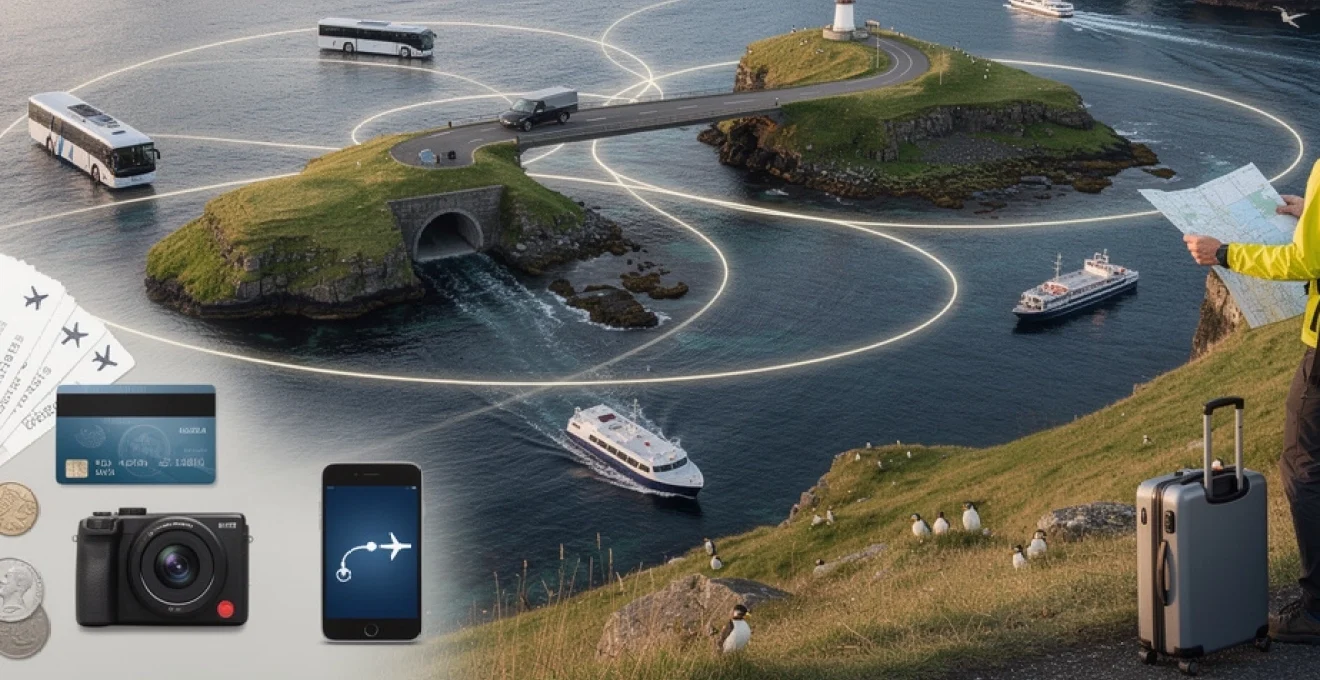
Nestled between Iceland and Norway in the North Atlantic Ocean, the Faroe Islands emerge from the sea like a collection of emerald jewels scattered across azure waters. This autonomous territory within the Kingdom of Denmark comprises 18 dramatic islands, each offering breathtaking landscapes that seem plucked from Norse mythology itself. With grass-roof houses dotting windswept valleys, towering sea cliffs that plunge into churning waters, and coastal villages that appear frozen in time, the Faroes present one of Europe’s last untouched wilderness destinations. The archipelago’s unique position at the crossroads of ancient trade routes has created a fascinating cultural tapestry where traditional Nordic heritage meets modern Scandinavian sensibilities.
Pre-departure planning and visa requirements for faroe islands travel
Understanding the administrative requirements for visiting the Faroe Islands requires careful attention to their unique political status. While part of the Kingdom of Denmark, these islands maintain significant autonomy in immigration matters, creating distinct entry protocols that differ from standard European Union procedures.
Danish kingdom entry protocols and schengen area exemptions
The Faroe Islands occupy a peculiar position within European immigration frameworks. Despite their association with Denmark, they remain outside the Schengen Area, meaning standard Schengen visas do not grant automatic entry. Citizens from European Union member states, Nordic countries, and Schengen Area nations enjoy visa-free access for stays up to 90 days, provided they carry valid passports or national identity cards. However, third-country nationals requiring visas for Denmark must specifically apply for Faroese entry permits through Danish diplomatic missions.
Immigration officers at Vágar Airport maintain strict protocols regarding documentation. Even EU citizens benefit from carrying passports rather than relying solely on identity cards, as weather-related flight diversions occasionally route passengers through non-Schengen territories. The immigration process remains remarkably efficient, typically requiring no more than five minutes per passenger during peak summer periods.
Optimal seasonal weather patterns and atlantic climate considerations
The Faroese climate defies simple categorisation, influenced by the dynamic interaction between Arctic and Gulf Stream currents. This oceanic climate creates remarkably stable temperatures year-round, with winter averages hovering around 3°C and summer peaks reaching 13°C. However, temperature stability comes at the cost of weather predictability – meteorological conditions can shift dramatically within minutes.
Summer months from June through August offer the most favourable conditions for outdoor exploration. During this period, daylight extends nearly 19 hours, providing ample time for hiking and photography. However, even summer weather demands preparation for sudden downpours, with precipitation occurring on approximately 260 days annually. Winter visitors should anticipate limited daylight, with December offering merely five hours of natural light, though this period occasionally rewards travellers with spectacular aurora displays.
Currency exchange strategies and faroese króna banking infrastructure
The Faroese króna maintains parity with the Danish krone, creating seamless monetary exchange between the territories. However, Faroese banknotes and coins remain non-convertible outside the islands, making pre-departure currency planning essential. Most establishments accept major credit cards, though cash remains necessary for small vendors, parking meters, and hiking trail fees.
Banking infrastructure centres on two primary institutions: Eik Banki and BankNordik, both offering comprehensive ATM networks throughout populated areas. International wire transfers and currency exchange services operate efficiently, though visitors should anticipate higher transaction fees compared to mainland European standards. Digital payment solutions have gained widespread adoption, with contactless payments accepted at virtually all tourist-oriented businesses.
International flight connections via copenhagen CPH and reykjavik KEF
Atlantic Airways serves as the Faroese flag carrier, operating year-round services from Copenhagen, Reykjavik, Edinburgh, and Bergen. Seasonal routes extend to Barcelona, Mallorca, and several other European destinations during summer months. Flight duration from Copenhagen averages 2 hours, while Edinburgh connections require merely 90 minutes – remarkably brief considering the islands’ remote location.
Scandinavian Airlines maintains competing services on the Copenhagen route, occasionally offering more competitive pricing during off-peak periods. However,
SAS flights typically involve a connection through Copenhagen and can be advantageous if you are already using Star Alliance carriers for your transatlantic or intra‑European flights. Regardless of airline, schedule disruptions caused by fog and high winds remain relatively common, particularly in spring and autumn. To protect your Faroe Islands itinerary, consider building in at least one buffer day on either side of your trip and avoid extremely tight connections at Copenhagen CPH or Reykjavik KEF.
Transportation networks and inter-island connectivity systems
For a remote archipelago scattered across the North Atlantic, the Faroe Islands boast remarkably sophisticated transport infrastructure. Modern roads, sub‑sea tunnels, ferries and even government‑subsidised helicopters link most inhabited settlements, making it far easier to explore than its wild landscapes might suggest. Understanding how these networks fit together will help you plan a flexible, weather‑resilient Faroe Islands itinerary.
Vágar airport VAG ground transportation and rental car logistics
Most visitors arrive via Vágar Airport (VAG), located on the island of Vágar approximately 50 km from Tórshavn. The terminal is compact and efficient, so you will usually clear baggage claim and immigration in less than 30 minutes. From the arrivals hall, you can either pick up a pre‑booked rental car or take the public bus to the capital. Bus route 300 connects the airport with Tórshavn several times daily, with a journey time of about 50 minutes depending on traffic and tunnel conditions.
Car rental remains the most flexible way to travel in the Faroe Islands, especially if you plan to chase good weather or explore remote hiking trails. Major local providers such as Unicar, 62°N, and Visit Faroe Islands–affiliated agencies offer vehicles ranging from compact hatchbacks to 4x4s. Given the combination of steep roads, narrow passes and strong crosswinds, a mid‑sized vehicle with decent ground clearance often strikes the best balance between comfort and cost. Always book in advance for travel between May and September, as peak‑season demand regularly outstrips supply.
When finalising your Faroe Islands car hire, pay attention to tunnel tolls, mileage limits and insurance coverage. Many companies offer packages that include unlimited kilometres but exclude sub‑sea tunnel charges, which are then billed to your credit card after the rental. Collision damage waivers usually come with a high excess; adding supplemental coverage can be wise given the prevalence of loose gravel, high winds and wandering sheep. Before leaving the airport car park, take photos of the vehicle from all angles and familiarise yourself with Faroese road signs, one‑lane tunnel rules and recommended speeds.
Sub-sea tunnel engineering: eysturoy and sandoy connections
One of the most impressive features of Faroe Islands infrastructure is its network of sub‑sea tunnels, or undirsjóvartunnlar, which knit previously isolated islands into a coherent road system. The first of these, the Vágatunnilin, opened in 2002 and links Vágar (and thus the airport) with Streymoy, home to Tórshavn. Today, the Eysturoyartunnilin and the newer Sandoyartunnilin further extend this network, dramatically reducing travel times and making year‑round access less dependent on ferries and weather conditions.
The Eysturoyartunnilin, opened in 2020, connects Streymoy with Eysturoy and incorporates an underwater roundabout – a rare engineering feature that has become a minor attraction in its own right. It shortens the drive from Tórshavn to Klaksvík by up to 45 minutes, turning what was once a lengthy sea‑and‑road combination into a straightforward car journey. The Sandoyartunnilin, inaugurated in late 2023, links Streymoy and Sandoy, replacing the previously weather‑sensitive ferry route and offering more reliable access for residents and visitors alike.
These sub‑sea links operate on a toll system, with charges varying depending on tunnel and vehicle type. Some rental agencies automatically register your licence plate and invoice tolls after your trip, while others require manual payment at petrol stations within a set period. Think of the tunnel network as the skeleton of your Faroe Islands road trip: once you understand which tunnels connect which islands, it becomes much easier to design efficient driving loops that maximise sightseeing time and minimise backtracking.
Strandfaraskip landsins ferry schedules and maritime routes
Despite the rapid expansion of tunnels and bridges, ferries remain vital to the Faroe Islands’ transportation system. State‑owned company Strandfaraskip Landsins (often abbreviated SSL) operates an extensive network of car and passenger ferries, serving both major outer islands and smaller communities. Routes connect, among others, Tórshavn with Nólsoy, Klaksvík with Kalsoy, and Sørvágur with Mykines during the summer season. For many travellers, these maritime journeys are an atmospheric highlight in themselves, offering sweeping views of fjords, sea cliffs and bird colonies.
Ferry schedules are highly sensitive to weather and sea conditions, particularly in winter and shoulder seasons. Strong winds or heavy swells can lead to delays or cancellations at short notice, so always check the latest updates on the SSL website before setting out. If your Faroe Islands itinerary includes islands like Mykines or Kalsoy, consider scheduling these excursions early in your stay; that way, you have additional days to rebook if conditions deteriorate. For car ferries on popular routes, such as Klaksvík–Kalsoy in summer, arriving well before departure time will increase your chances of getting a spot on board.
Ticketing systems vary between routes: some require advance booking online, while others operate on a pay‑on‑board or kiosk basis. Fares are generally modest compared with other travel costs in the Faroe Islands, thanks to government subsidies that keep prices accessible for residents. Treat ferries as a practical extension of the road network rather than a separate activity – with careful planning, you can stitch together multi‑island day trips that combine scenic drives, short hikes and village visits without feeling rushed.
Helicopter services to remote villages and Weather-Dependent access
One of the more surprising aspects of Faroe Islands transport is the network of government‑subsidised helicopter services operated by Atlantic Airways. Originally designed to connect isolated communities that were difficult to reach by sea, these flights now also accept tourists on a space‑available basis. Routes link Tórshavn and Vágar with remote islands such as Fugloy, Svínoy and Stóra Dímun, some of which have tiny populations and limited ferry service. For travellers, this system offers a rare chance to experience vertical access to tiny settlements perched on cliffs and slopes.
Helicopter timetables are published seasonally and typically feature just a few flights per week on each route. Fares are surprisingly affordable by international standards, reflecting their public‑service role rather than a luxury positioning. However, strict rules prioritise local residents, schoolchildren and essential services, so visitors should view helicopter trips as a bonus rather than a guaranteed component of their Faroe Islands itinerary. In addition, flights are even more weather‑dependent than ferries; low cloud ceilings or strong winds can lead to same‑day cancellations.
If you do manage to secure a booking, factor in logistics on both ends of the journey. Many heliports are located near small harbours or village centres, but onward transportation options may be limited or non‑existent. You may find yourself walking from the heliport to your accommodation or hike starting point, which can be part of the adventure if you are prepared with proper clothing and supplies. Think of the helicopter network as the archipelago’s “airborne bus system” – immensely practical yet beholden to the North Atlantic’s ever‑changing moods.
Accommodation infrastructure across the eighteen islands
Accommodation options in the Faroe Islands have expanded rapidly over the past decade, but capacity still lags behind peak‑season demand. The majority of hotels and guesthouses cluster in Tórshavn and Klaksvík, while smaller islands offer a scattering of family‑run guesthouses, homestays and self‑catering cottages. Because of this uneven distribution, where you stay will significantly influence how you structure your Faroe Islands itinerary, particularly if you hope to avoid long daily commutes.
In Tórshavn, you will find modern business hotels, boutique properties in historic buildings, and a growing number of serviced apartments. These are ideal bases if you prefer to return to the same bed each night and take day trips by car or bus. Outside the capital, accommodation leans more traditional – think converted farmhouses with turf roofs, seaside cabins and small inns in fishing villages. Many of these rural stays operate seasonally from May to September, and some require a minimum stay of two nights, especially during festivals or local holidays.
Budget‑conscious travellers often consider camping, but the Faroe Islands enforce strict rules: wild camping is prohibited, and you must use designated campsites. Facilities at these sites vary from basic fields with toilets to well‑equipped grounds offering kitchens, showers and common rooms. Weather should also play a decisive role in your choice; camping in the Faroes can feel romantic when the sun is out but demanding when gale‑force winds and horizontal rain hit. As a middle ground, many visitors opt for self‑catering apartments or cabins, which allow you to cook your own meals and reduce restaurant costs.
Regardless of your preferred style, advance booking is essential, especially between June and August and during events like the Ólavsøka national holiday in late July. It is not uncommon for all accommodation on smaller islands to sell out months ahead of time, and last‑minute walk‑ins may find only premium‑priced options remaining. To build flexibility into your Faroe Islands itinerary without risking sold‑out nights, consider reserving cancellable rates where possible and finalising your route once your flight and car hire are confirmed.
Tórshavn cultural heritage and historic tinganes peninsula
Despite its modest size, Tórshavn functions as the political, cultural and economic heart of the Faroe Islands. The city’s compact centre blends contemporary Scandinavian architecture with turf‑roofed wooden houses, creating a streetscape that feels both modern and timeless. At its southern tip lies Tinganes, the historic parliamentary peninsula, where narrow lanes weave between centuries‑old buildings painted in deep reds and blacks. Exploring this area on foot offers an intimate introduction to Faroese history, identity and everyday life.
Nordic house cultural centre and faroese literature exhibitions
The Nordic House (Nordens Hus) sits just outside central Tórshavn and serves as the archipelago’s premier cultural venue. Architecturally, it is a striking statement of Nordic modernism softened by a grass roof that anchors the building in its landscape, much like traditional Faroese farmsteads. Inside, you will find performance spaces, galleries and a library that collectively showcase the artistic output of the Faroe Islands and the wider Nordic region. Regular programming includes concerts, film screenings, theatre productions and literary events.
For travellers interested in Faroese language and storytelling traditions, the Nordic House often hosts exhibitions on local literature, folklore and oral history. These displays can be invaluable for contextualising what you see on the islands: sagas of seafaring, tales of selkies and hill‑dwellers, and poetry inspired by harsh yet beautiful surroundings. Most information panels appear in Faroese, Danish and English, making the content accessible even if this is your first encounter with the language. The on‑site café, serving seasonal and locally sourced dishes, provides a relaxed setting to reflect on what you have learned.
Practical details enhance the appeal of a visit: entry to the building and many exhibitions is free, and opening hours generally extend into the early evening. If the weather turns particularly wild, the Nordic House offers a warm, light‑filled refuge where you can still deepen your understanding of Faroe Islands culture. Think of it as an indoor counterpart to your outdoor adventures – a place where the islands’ creative spirit is as visible as its cliffs and waterfalls.
Tinganes parliamentary site archaeological significance
Tinganes, the small peninsula jutting into Tórshavn’s harbour, is widely regarded as one of the world’s oldest parliamentary meeting sites. Since at least the 9th century, representatives have gathered here to resolve disputes, set laws and govern communal affairs. Walking its cobbled lanes today, you can still feel echoes of those early assemblies, even as modern Faroese government offices occupy many of the historic buildings. The contrast between ancient institution and contemporary administration underscores the continuity of Faroese self‑rule.
Archaeological studies on Tinganes have revealed layers of settlement that trace the evolution from Viking longhouses to later timber structures. While you will not find extensive excavations open to the public, interpretive signs and guided walking tours help bring this history to life. Wooden buildings painted in deep red with black turf roofs line the narrow alleyways, leaning at slight angles like weathered storytellers. The setting invites you to imagine chieftains and farmers debating fishing rights or land use on these same stones centuries ago.
Unlike many political centres in Europe, Tinganes remains remarkably accessible: there are no fences or entry fees, and you are free to wander respectfully between the buildings. This openness reflects both the small scale of Faroese governance and the trust underlying local society. As you explore, remember that many houses remain working offices; keep noise to a minimum and avoid peering through windows. In a sense, Tinganes functions as a living museum of Faroe Islands political history, where the exhibits are still actively in use.
Tórshavn cathedral and magnus cathedral religious heritage
Religion has long played a central role in Faroese community life, and two historic churches illustrate this spiritual heritage particularly well: Tórshavn Cathedral and Magnus Cathedral in Kirkjubøur. Tórshavn Cathedral, located near the harbour, dates back to the late 18th century and serves as the seat of the Lutheran bishop. Its whitewashed walls and modest tower stand in gentle contrast to the darker wooden buildings around Tinganes, while its interior features simple wooden pews and ship models suspended from the ceiling – a maritime tradition common in Nordic churches.
Further south, in the village of Kirkjubøur, the partially ruined Magnus Cathedral offers a more dramatic glimpse into medieval ecclesiastical power. Construction began in the 13th century, and although the building was never fully completed, its roofless stone walls still rise impressively against the backdrop of the sea. Archaeologists believe this was intended to be one of the largest churches in the North Atlantic, underscoring the importance of the Faroe Islands within the medieval church hierarchy. Visiting both sites in a single day provides a tangible sense of how religious architecture evolved here over the centuries.
For travellers interested in cultural immersion, attending a church service in Tórshavn or one of the smaller villages can be a memorable experience. Hymns sung in Faroese, often accompanied by organ or simple choral arrangements, fill the modest spaces with sound that feels both ancient and immediate. Even if you are not religious, observing the rhythms of local worship offers insight into community values, social bonds and the role of tradition in everyday life. Be sure to dress modestly and arrive a few minutes early to find a seat discreetly at the back.
Skansin fortress maritime defence history
Perched on a headland overlooking Tórshavn harbour, Skansin Fortress stands as a reminder of the Faroe Islands’ strategic importance in North Atlantic maritime history. Originally constructed in the late 16th century to protect against pirate raids, the fortifications were expanded and modified over subsequent centuries to counter evolving threats. During World War II, British forces occupied the islands and used Skansin as a key defensive position and communications hub, installing anti‑aircraft guns and other military equipment.
Today, the fortress grounds function as a public park and open‑air historical site. You can wander among old stone walls, cannons and lookout points, imagining ships approaching through the narrow sounds that lead to Tórshavn. Information boards provide concise historical context, but much of the site’s impact comes simply from its vantage point: on a clear day, you can see across the harbour to Nólsoy and along the coastline of Streymoy. The combination of military remnants and sweeping views makes Skansin a popular stop for photographers exploring the capital.
Skansin’s location also makes it an easy addition to a walking tour of Tórshavn. From the city centre, it is only a short uphill stroll, suitable for most fitness levels. Visiting in the late afternoon or early evening rewards you with atmospheric light as the sun drops towards the horizon, casting long shadows over the cannons and walls. In many ways, Skansin encapsulates the Faroes’ blend of vulnerability and resilience – a small outpost that has weathered centuries of storms and conflict at the edge of the ocean.
Natural landmark navigation and geological formations
The Faroe Islands’ most iconic attractions are its natural landmarks: sky‑high cliffs, sea stacks, waterfalls and volcanic plateaus carved by glaciers. Navigating these sites requires more than simply following GPS directions; you will need to account for land ownership, hiking regulations, weather forecasts and, increasingly, visitor quotas and trail fees. Thinking of the islands as a living, working landscape rather than an open‑air theme park is key to planning responsible, rewarding experiences.
Mykines puffin colony conservation areas and breeding seasons
Mykines, the westernmost island of the archipelago, is famed for its dense puffin colonies and dramatic lighthouse views. Accessible by ferry from Sørvágur in summer and by occasional helicopter services, it feels like a frontier outpost even by Faroese standards. During peak breeding season from late May to early August, thousands of Atlantic puffins nest in burrows along the cliffs and grassy slopes, creating a cacophony of calls and a flurry of activity as adults shuttle fish to their chicks. For many visitors, a day trip to Mykines becomes the emotional highlight of their Faroe Islands itinerary.
However, the very popularity of Mykines has placed heavy pressure on its fragile ecosystems. To protect breeding grounds and manage foot traffic, local authorities have established designated hiking routes and introduced access fees payable upon arrival or via online booking. In some recent seasons, sections of the traditional path to Mykineshólmur lighthouse have been closed or restricted to guided tours to safeguard bird colonies and prevent erosion. Always check the latest regulations before travelling; they can change year to year based on conservation needs and monitoring data.
When walking near puffin burrows, keep to marked trails and avoid stepping on soft, disturbed ground where nests may lie just below the surface. A good rule of thumb is to stay at least several metres back from cliff edges, both for your safety and to minimise disturbance to birds. Binoculars or a telephoto lens will allow you to observe behaviours in detail without crowding the animals. Think of yourself as a guest in a vast open‑air nursery: your patience and restraint help ensure future generations of birds will continue to thrive here.
Múlafossur waterfall photography techniques and access routes
Múlafossur, the waterfall that plummets from grassy cliffs directly into the ocean near the village of Gásadalur, has become one of the most photographed scenes in the Faroe Islands. Until a road tunnel opened in 2004, this settlement was accessible only by boat or a strenuous hike over mountain passes, lending it a sense of isolation that still lingers today. Now, a paved road leads from Vágar Airport to Gásadalur in less than 20 minutes, making Múlafossur a relatively easy stop even on a short visit.
From the village car park, a well‑marked path leads to several viewpoints overlooking the falls and the surrounding sea cliffs. For classic postcard images, photographers often frame the waterfall against the backdrop of the island of Mykines, using a wide‑angle lens to capture the entire scene. Long‑exposure techniques, where the shutter remains open for several seconds, can transform the falling water into a silky ribbon, but this requires a tripod and, ideally, a neutral‑density filter to avoid overexposure. Overcast conditions, which might frustrate you elsewhere, can actually be beneficial here by softening harsh shadows.
As at many Faroe Islands attractions, wind is the wildcard factor at Múlafossur. Gusts funnel through the valley and along the cliff edges, sometimes strong enough to unsteady tripods or blow spray onto your camera lens. Always secure your equipment, keep a safe distance from drops and pack a microfiber cloth to wipe away moisture. Visiting early in the morning or later in the evening can help you avoid crowds from tour buses and allow more time to experiment with compositions without feeling rushed.
Kallur lighthouse extreme weather hiking conditions
The hike to Kallur Lighthouse on the island of Kalsoy has achieved near‑mythic status among Faroe Islands visitors, thanks in part to its appearance in films and social media. The route starts near the village of Trøllanes, reached by car ferry from Klaksvík and a series of narrow, one‑lane tunnels that feel like passages into another world. From the trailhead, a moderately steep path climbs grassy slopes to a ridge that offers panoramic views of jagged cliffs dropping hundreds of metres into the sea. On clear days, you can see neighbouring islands rising like dark ships from the water.
Despite its popularity, the Kallur hike demands serious respect for weather conditions. Exposed ridgelines channel wind like giant funnels, and gusts can arrive without warning strong enough to knock an adult off balance. Fog often rolls in from the sea, reducing visibility to a few metres and obscuring informal paths that criss‑cross the hillside. Treat the official, more conservative viewpoints as your default goal, and only venture onto narrower promontories or photo spots if wind, visibility and your own comfort level all align safely.
Proper equipment makes a substantial difference here. Sturdy, waterproof hiking boots with good traction help on wet grass and mud, while layered clothing allows you to adapt quickly to changing temperatures. A simple analogy can be helpful: approach Kallur as you would a high‑mountain trek rather than a casual coastal stroll, even if the distance seems short on paper. Before boarding the ferry at Klaksvík, check both the general weather forecast and any local advisories; in extreme conditions, postponing your hike is the wisest choice.
Sørvágsvatn optical illusion lake geological analysis
Sørvágsvatn, also known as Leitisvatn, is the largest lake in the Faroe Islands and the star of one of the archipelago’s most famous visual illusions. From a particular cliffside vantage point, the lake appears to float high above the ocean, separated by a sheer drop that seems almost impossible. In reality, the water bodies are separated by a steep but more moderate slope; the illusion arises from the angle of view and the way foreground and background elements compress in photographs. Understanding this perspective trick can enhance your appreciation of both the geology and the artistry involved in capturing the scene.
The hiking route to the viewpoint begins near the village of Miðvágur on Vágar and follows a well‑trodden path across fields and low hills. In recent years, landowners have instituted access fees and, at times, guided‑only policies to manage erosion and ensure visitor safety near cliff edges. While some travellers bristle at the cost, these measures reflect broader debates across the Faroe Islands about balancing tourism with the rights of farmers who have grazed sheep here for generations. When planning your visit, factor these fees into your budget and check up‑to‑date access rules through official tourism channels.
Geologically, Sørvágsvatn occupies a glacially carved basin perched close to the coastal cliffs, with the famous waterfall Bøsdalafossur carrying its outflow into the Atlantic. The combination of dark basalt, green turf and white water framed by often brooding skies creates a naturally dramatic composition. If you are hoping to reproduce the iconic “floating lake” image, a wide‑angle lens and careful positioning on the hillside are essential. As always near high cliffs in the Faroe Islands, prioritise stable footing over perfect framing; no photograph is worth risking a fall in this rugged terrain.
Traditional faroese cuisine and fermentation techniques
Faroe Islands cuisine reflects centuries of adaptation to a harsh, resource‑scarce environment. With limited arable land and long, stormy winters, islanders developed preservation methods that could store calories for months: drying, salting, smoking and, most distinctively, fermenting in the cool, salty air. The result is a culinary tradition that can seem challenging to newcomers yet offers deep insight into how people have survived – and thrived – in this North Atlantic outpost. Even if you prefer modern restaurants, understanding these techniques enriches any exploration of local food culture.
Ræst fermented mutton traditional preservation methods
Perhaps the most emblematic dish in the Faroese culinary canon is ræst kjøt, fermented mutton that occupies a flavour space somewhere between cured meat and strong blue cheese. Traditionally, farmers slaughter sheep in autumn and hang selected cuts in special drying sheds known as hjallur, where ventilation slats allow cold, salty air to circulate. Over weeks or months, naturally occurring bacteria and moulds transform the meat’s texture and taste, a process that depends delicately on temperature, humidity and air flow. The resulting product is sliced and served boiled or raw, often accompanied by potatoes and turnips.
For visitors, the intensity of ræst can be surprising; it is a food that divides opinion as sharply as powerful washed‑rind cheeses in continental Europe. Yet from a preservation standpoint, it represents an ingenious response to local conditions. In an era before refrigeration, fermentation allowed families to convert autumn abundance into winter sustenance with minimal added energy. Contemporary chefs in the Faroe Islands increasingly experiment with these techniques in refined contexts, using smaller portions of ræst to add umami depth to modern dishes.
If you are curious but cautious, look for tasting menus or home‑style meals that offer small samples alongside more familiar items. Approaching ræst kjøt as you might a rare, complex spirit – to be sipped and contemplated rather than consumed in large quantities – can help you appreciate its cultural and sensory richness. And even if you ultimately decide it is not for you, the experience will likely be among your most memorable culinary encounters on the islands.
Pilot whale grindadráp cultural practices and sustainability
No discussion of Faroe Islands food traditions can ignore the grindadráp, the communal pilot whale hunt that has drawn global attention and controversy. Historically, these hunts provided coastal communities with vital protein and fat in an environment where agriculture was limited and imported foods scarce. Whales driven into shallow bays were killed and their meat and blubber distributed according to established rules, emphasising collective benefit over individual profit. Supporters argue that, compared to industrial livestock farming, the practice remains local, non‑commercial and relatively low in carbon footprint.
However, modern concerns about animal welfare, marine pollution and species conservation have fundamentally reshaped the debate. Graphic images of blood‑red bays provoke strong emotional reactions worldwide, and scientific studies have raised questions about mercury and PCB levels in whale meat. As tourism grows, visitors increasingly ask how to reconcile admiration for Faroe Islands landscapes and culture with discomfort about this practice. There are no simple answers, but engaging with informed local perspectives and up‑to‑date research can provide a more nuanced understanding than headlines alone.
As a traveller, you are unlikely to encounter a grind directly unless you happen to be in a village on the exact day of a drive. Participation is strictly regulated, and outsiders are not expected to take part. If the subject arises in conversation, approach it with genuine curiosity rather than confrontation, recognising that for some Faroese, the hunt is intertwined with identity, history and ideas of self‑sufficiency. You may decide personally to avoid eating whale products, just as others choose vegetarian or vegan options; respecting local complexity while holding your own ethical line is part of responsible travel in the Faroe Islands.
Nordic Michelin-Starred dining at KOKS restaurant
At the opposite end of the culinary spectrum from windswept drying sheds lies KOKS, the pioneering Faroese restaurant that has brought the archipelago to global gastronomic attention. Awarded multiple Michelin stars over recent years, KOKS champions a hyper‑local, seasonally driven approach that treats traditional ingredients – including fermented lamb, dried fish and seaweeds – with avant‑garde technique. The result is a tasting menu that reads like a love letter to the islands’ ecosystems, from sub‑sea kelp forests to mountain pastures and bird cliffs.
Dining at KOKS is, unsurprisingly, a significant investment of both time and money. Reservations open months in advance and often sell out quickly for the May–September season when the restaurant typically operates on the islands. The multi‑course experience can last several hours and may involve travel to a rural location, depending on the current venue arrangement. For committed food enthusiasts, building a Faroe Islands itinerary around a confirmed KOKS booking can be a compelling strategy, anchoring your trip with a single, indelible meal.
Even if your budget or timing does not align with KOKS itself, its influence has rippled through the local culinary scene. Smaller bistros and hotel restaurants increasingly highlight Faroese ingredients prepared with modern sensitivity: line‑caught fish, locally grown herbs, organic lamb and imaginative uses of rhubarb, berries and root vegetables. In this way, KOKS functions like a lighthouse for Faroese cuisine more broadly – a bright point that helps orient both chefs and visitors towards a deeper appreciation of what the islands can offer on the plate.
Heimablídni home dining cultural exchange programs
For a more intimate and affordable route into Faroese food culture, consider experiencing heimablídni, literally “home hospitality”. Under this informal system, local families open their homes to small groups of visitors for set‑menu meals featuring traditional dishes, often prepared from ingredients they have hunted, fished or grown themselves. Picture it as the culinary equivalent of staying in a guest room rather than a hotel: less polished perhaps, but rich in human connection and everyday detail.
Heimablídni experiences vary widely depending on host, location and season. You might share a simple supper of fish soup, freshly baked bread and homemade rhubarb jam in a Tórshavn apartment, or sit down to a more elaborate feast of lamb, root vegetables and preserved seafood in a remote village overlooking the sea. Conversations range from weather and sheep farming to politics, music and the impact of tourism on island life. For many travellers, these evenings become the moments when the Faroe Islands shift from a spectacular landscape into a place filled with individual stories and perspectives.
Booking is typically done through local tourism offices or dedicated platforms that vet hosts and coordinate dates. As with other Faroe Islands activities, flexibility is helpful: hosts may juggle fishing schedules, farm work and family obligations, so being open to different nights or times increases your chances of finding a match. Approaching heimablídni with the same respect you would bring to any private invitation – arriving on time, dressing neatly and engaging warmly – helps ensure that this unique form of cultural exchange remains rewarding for both guests and hosts.