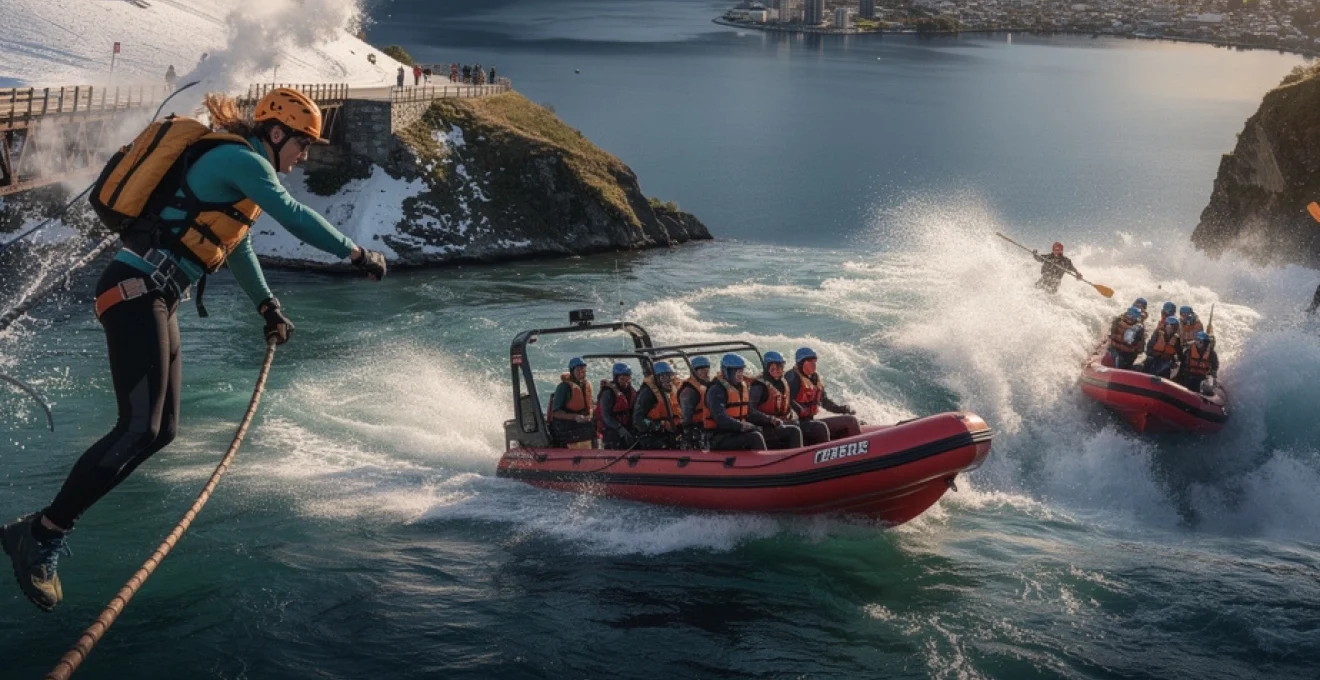
Queenstown stands as an extraordinary testament to human courage and natural beauty, where dramatic alpine landscapes meet innovative adventure tourism. Carved by ancient glaciers and shaped by pioneering spirits, this South Island destination has earned its reputation as the adventure capital of the world through decades of innovation and an unwavering commitment to pushing boundaries. From the moment you arrive in the Wakatipu Basin, surrounded by the snow-capped peaks of The Remarkables and the crystal-clear waters of Lake Wakatipu, you’ll understand why adventurers from every corner of the globe make pilgrimage to this alpine paradise.
The region’s adventure heritage began with commercial jet boating in 1958 and exploded onto the world stage with the first commercial bungy jump in 1988. Today, Queenstown offers over 200 adventure activities ranging from heart-stopping adrenaline rushes to scenic outdoor experiences that showcase the region’s pristine wilderness. Whether you’re seeking freefall from 15,000 feet, navigating Grade 5 rapids, or carving fresh powder on world-class ski fields, Queenstown delivers experiences that will challenge your limits and redefine your understanding of adventure.
Bungy jumping at kawarau bridge and nevis highwire
Bungy jumping remains synonymous with Queenstown’s adventure identity, and for good reason. The region pioneered commercial bungy jumping and continues to set global standards for safety and thrills. Three distinct bungy sites around Queenstown cater to different courage thresholds, each offering unique perspectives on this quintessential adrenaline activity. The experience combines psychological challenge with pure physical sensation, creating moments that participants remember for life.
AJ hackett kawarau bridge: the world’s first commercial bungy site
The historic Kawarau Bridge Bungy holds special significance as the birthplace of commercial bungy jumping. Located 43 metres above the turquoise Kawarau River, this site opened in November 1988 and has since hosted over three million jumps. The bridge setting provides spectacular photo opportunities, with the Southern Alps creating a dramatic backdrop for your leap of faith. You can choose between jumping styles, including the classic ankle tie, the walking bungy where you simply step off the platform, or even requesting a water touch where your head skims the river surface during your lowest point.
The Kawarau Bridge experience includes comprehensive safety briefings from experienced jump masters who have perfected their craft over decades. The elastic cords are specifically matched to your body weight, ensuring optimal bounce characteristics and safety margins. Many first-time bungy jumpers choose Kawarau Bridge precisely because of its historical significance and the reassuring presence of thousands of successful jumps before them. The entire experience typically takes two hours from check-in to certificate presentation, though your actual freefall lasts just five exhilarating seconds.
Nevis bungy: new zealand’s highest bungy jump at 134 metres
For those seeking ultimate adrenaline experiences, the Nevis Bungy represents the pinnacle of bungy jumping in New Zealand. Suspended 134 metres above the Nevis River in a specially designed cable car pod, this jump delivers an eight-second freefall that reaches speeds exceeding 120 kilometres per hour. The Nevis location sits in a remote valley approximately 40 minutes from Queenstown, where rugged mountain terrain creates an atmosphere of raw wilderness that amplifies the psychological intensity.
The approach to the jump pod itself constitutes part of the adventure. You’ll travel across the valley floor in a 4WD vehicle before boarding a suspended cable car that transports you to the jump platform. The pod offers 360-degree views of the canyon, giving you plenty of time to contemplate your decision while observing the tiny river far below. Jump masters at Nevis work exclusively at this site, developing specialized expertise in managing the unique challenges of high-altitude bungy operations. The weight requirements for Nevis range from 45 to 127 kilograms, with tandem options available for couples who want to share the experience.
Ledge bungy and urban adventures above queenstown
The Ledge Bungy provides a distinctly different jumping experience at 47 metres above Queenstown
and offers an urban twist on the classic freefall. Perched high on Bob’s Peak above Queenstown’s town centre, the Ledge Bungy uses a unique freestyle harness that lets you run, jump, twist, or even backflip off the platform. By day, you’ll get expansive views over Lake Wakatipu and the surrounding ranges; by night, the lights of Queenstown create an unforgettable backdrop for your leap. The shorter height and gondola access from the Skyline complex make this an accessible option for those wanting a taste of bungy jumping without committing to the extremes of Nevis.
Because the Ledge Bungy is integrated into a wider adventure hub, it pairs well with other urban activities like luge rides, dining at the Skyline restaurant, or short hiking trails on Bob’s Peak. This makes it a popular choice for groups with mixed interests and varying appetite for adrenaline. If you are travelling with non-jumpers, they can still enjoy panoramic viewing platforms and capture photos of your jump from multiple angles. The flexibility of jump styles means you can personalise your experience, whether you prefer a smooth, controlled step-off or a dramatic running launch.
Tandem bungy options and weight requirements
Many of Queenstown’s bungy sites, including Kawarau Bridge and Nevis, offer tandem bungy options that allow two people to jump together. Tandem jumps are ideal for couples, siblings, or close friends who want to share the psychological build-up and the rush of freefall. Jump masters carefully calculate combined weight and cord selection to keep the experience safe while maximising bounce and rebound. If you have ever wondered whether screaming together makes it less scary, a tandem bungy is your chance to find out.
Weight requirements and medical considerations are strictly enforced at all Queenstown bungy sites, and you should always check current limits before booking. As a general guide, individual jumpers usually need to weigh between 35 and 127 kilograms, while tandem combinations must fall within a specified combined range set by the operator. You’ll complete a medical form at check-in, and conditions such as recent surgery, heart issues, or pregnancy may preclude participation. Adventure operators take safety standards seriously, so be honest with your disclosures and ask questions if you are unsure. It is much like a pre-flight checklist on an aircraft: thorough preparation ensures you can relax and enjoy the ride once you are strapped in.
Jet boating on the shotover and kawarau rivers
Jet boating in Queenstown showcases the region’s innovation and its dramatic river canyons in equal measure. Developed in the 1950s to navigate shallow braided rivers, jet boats now deliver high-speed adventure experiences that skim just centimetres above turquoise water. As you blast through canyons and along lake edges, you’ll experience rapid acceleration, tight turns, and trademark 360-degree spins that feel a bit like riding a roller coaster without rails. The combination of engineering, skilled driving, and stunning scenery makes jet boating one of the must-do adventure activities in Queenstown, New Zealand.
Most jet boating adventures depart within minutes of Queenstown’s town centre or from nearby river bases, making them easy to fit into even a short itinerary. Trips typically last between 25 minutes and two hours depending on the operator and route. You can expect to be provided with life jackets and, in colder months, spray jackets to keep the chill at bay. While jet boating is an adrenaline activity, it is suitable for a wide range of ages, with minimum height requirements rather than strict age limits. If you are travelling with a family or a group of different ability levels, jet boating is often the perfect shared adventure.
Shotover jet: navigating the shotover river canyons
Shotover Jet is perhaps the most iconic jet boating operation in Queenstown, famous for its narrow canyons and heart-racing close passes to rock walls. Operating on a dedicated section of the Shotover River just outside town, this experience takes you through a series of tight gorges where the driver threads the boat between boulders at speeds of up to 85 kilometres per hour. At times, you’ll feel as though you could reach out and touch the canyon walls, even though strict safety margins are maintained. The combination of speed, precision, and scenery makes this one of the most photographed jet boat experiences in the world.
The Shotover Jet experience typically includes transport from Queenstown, a safety briefing, and around 25 minutes on the water. You’ll be asked to store loose items and hold on to heated hand rails for comfort in cooler conditions. Professional drivers complete extensive training and must log hundreds of supervised hours before taking guests through the canyons, so you can focus on the thrill rather than the risk. Have you ever wondered what it feels like to drift a car on ice? The drifting sensation of a jet boat sliding sideways across the river surface offers a similar controlled exhilaration, but with water spray instead of rubber smoke.
Kjet kawarau river experience and 360-degree spins
KJet offers a longer, lake-to-river adventure that departs directly from Queenstown’s central pier on Lake Wakatipu. From there, you’ll power across open water before entering the Kawarau and Shotover Rivers, where the ride becomes more technical and dynamic. The driver executes high-speed turns and their signature 360-degree spins, sending curtains of spray into the air while keeping the boat stable and secure. This style of jet boating is ideal if you want a mix of open-water speed and river excitement in one package.
The full KJet experience usually lasts around an hour, giving you plenty of time to settle into the rhythm of the ride and appreciate the changing landscapes. Life jackets are compulsory, and you’ll receive a safety briefing covering hand signals and what to expect during spins and sudden direction changes. Because departures are frequent throughout the day, KJet is easy to slot between other Queenstown adventure activities like bungy jumping or gondola rides. If you are keen to capture content for social media, this trip offers multiple backdrops, from the wide expanse of Lake Wakatipu to the braided river flats and distant peaks.
Dart river wilderness jet safari to paradise valley
For a more remote, nature-focused jet boating experience, the Dart River Wilderness Jet takes you into the ancient beech forests and braided channels of the Dart River near Glenorchy. This full-day or half-day adventure combines high-speed jet boating with interpretive commentary about local ecology, Māori heritage, and film locations used in major productions. The journey through Paradise Valley feels like stepping onto a movie set, with towering peaks, hanging valleys, and crystal-clear water. The emphasis here is as much on immersion in wilderness as on adrenaline.
Trips usually include return coach transfers from Queenstown, a safety briefing, and a mix of fast-paced sections and slower cruising where you can take photos and learn about the region. Guides often share stories about how the glaciers shaped the landscape and how local communities interact with this environment today. Because the Dart River lies within Mount Aspiring National Park, operators work under strict environmental guidelines to minimise impact. If jet boating through the Shotover canyons feels like an action sequence, the Dart River Wilderness Jet is more like an epic nature documentary in which you play a starring role.
Skydiving over lake wakatipu and the remarkables
Skydiving in Queenstown elevates adventure—literally—by combining freefall with some of the most dramatic alpine scenery in New Zealand. From the moment your aircraft lifts off, you’ll watch Lake Wakatipu recede beneath you and the serrated ridgelines of The Remarkables rise to eye level. At altitude, the door slides open, cold air rushes in, and you’re suddenly aware that your “viewpoint” is about to change at 200 kilometres per hour. For many travellers, skydiving in Queenstown becomes the defining memory of their trip, precisely because it blends fear, trust, and awe in a single experience.
Multiple operators offer tandem skydives from varying altitudes, typically ranging from 9,000 to 15,000 feet. Tandem systems allow you to be securely harnessed to a highly trained instructor who controls every technical aspect of the jump. This structure means that, even if you have never flown in a small plane before, you can safely experience freefall within a couple of hours of arriving at the drop zone. The contrast between the intensity of the jump and the serenity of the parachute ride makes skydiving feel like two adventures wrapped into one.
NZONE skydive: tandem jumps from 15,000 feet
NZONE Skydive is one of the longest-running skydiving operators in New Zealand and a popular choice for tandem skydiving in the Wakatipu Basin. Departing from their drop zone near the Shotover River, you’ll gear up, meet your instructor, and receive a detailed briefing covering body position, harness fittings, and what to expect in the aircraft. The signature 15,000-foot option offers up to 60 seconds of freefall, giving you ample time to process the surreal sensation of falling while still feeling present enough to enjoy the view. Lower-altitude options around 9,000 or 12,000 feet provide shorter freefall but can be a good choice if you are working within a budget or easing into the idea of skydiving.
Tandem instructors at NZONE complete extensive training and repeated currency checks to maintain their qualifications. You’ll notice that many of them treat the process with a calm, almost routine professionalism, which can be reassuring when your adrenaline is surging. The operation runs multiple flights per day during high season, and check-in to landing usually takes three to four hours depending on weather conditions. If you’re asking yourself, “Will I even remember the freefall?”, the answer from many past jumpers is yes—but in a way that feels more like a vivid dream than a typical memory.
Freefall speeds and parachute deployment procedures
From 15,000 feet, a tandem skydive in Queenstown reaches terminal velocity of around 200 kilometres per hour, depending on your body position and air density. During freefall, your instructor adjusts orientation to keep you stable and facing the mountains and lake below, much like a pilot trimming an aircraft for level flight. You’ll feel strong airflow against your goggles and harness, but breathing remains normal—there is no sensation of “stomach drop” like you might experience on a theme park ride. Instead, it feels more like leaning into a powerful wind that fully supports your body.
Parachute deployment typically occurs at approximately 5,000 feet, when your instructor throws or activates the deployment system and a small pilot chute extracts the main canopy. The rapid deceleration from freefall to canopy flight takes only a few seconds and can feel like suddenly shifting from sprinting to walking. Under canopy, your instructor will guide the parachute using steering toggles, occasionally letting you take the controls if conditions allow. Gentle turns, or more dynamic spirals for thrill-seekers, provide a new vantage point on the Wakatipu landscape. Backup reserve systems and automatic activation devices add additional layers of safety to the entire parachute deployment sequence.
Aerial photography packages and GoPro recording options
Most Queenstown skydiving operators offer a range of photography and video packages so you can relive your jump long after you have landed. Options often include hand-cam footage captured by your tandem instructor using a wrist-mounted GoPro, as well as “outside camera” packages where an additional skydiver films your exit and freefall from a short distance away. Hand-cam provides intimate close-ups of your facial expressions, while outside camera delivers dramatic wide shots that show your body against the mountain and lake backdrop. Many travellers opt for a combination of both to maximise coverage.
While photo and video packages add to the overall cost, they can be more valuable than buying souvenirs after the fact. In a sense, you are investing in a record of your own courage and a piece of personalised adventure content. Most operators deliver digital files on USB drives or via cloud download links, optimised for sharing on social media. If you plan to bring your own GoPro, check with the operator first, as strict regulations govern what can be attached to harnesses or helmets for safety reasons. Think of it a bit like filming a live concert—you want to capture the moment, but not at the expense of the performance itself.
Weather windows and jump conditions in the wakatipu basin
Because skydiving is such a weather-dependent activity, flexibility is key when planning your Queenstown adventure itinerary. Operators monitor wind speed, cloud cover, and visibility throughout the day, sometimes adjusting jump altitudes or temporarily pausing operations. Clear, calm mornings often provide the best conditions, especially in summer when thermal activity can increase later in the afternoon. Winter can deliver crystal-clear views over snow-covered peaks, but colder temperatures and occasional storms may reduce available weather windows.
When you book your skydive, it is wise to schedule it early in your stay so that you have buffer days in case of weather delays. If conditions are unsuitable, operators typically offer to rebook you for a later time or another day, or provide a refund according to their policy. While it can be frustrating to wait, remember that strict weather limits exist for a reason: they maintain high safety margins and ensure you enjoy the experience rather than simply endure it. By approaching your skydiving plans with the same respect for conditions that mountaineers show for their summit attempts, you’re far more likely to leave Queenstown with unforgettable, for-all-the-right-reasons memories.
Skiing and snowboarding at coronet peak and the remarkables
Queenstown transforms into a world-class snowsports destination during the Southern Hemisphere winter, with Coronet Peak and The Remarkables offering terrain for all ability levels. Coronet Peak, just 20 minutes from town, is renowned for its efficient lift system, extensive snowmaking, and popular night skiing sessions. The Remarkables, accessed via a scenic alpine road, delivers a more rugged, freeride feel with natural bowls, terrain parks, and backcountry gates for advanced riders. Both resorts provide rental equipment, lessons, and on-mountain dining, making it easy to arrive with minimal gear and still enjoy full days on the slopes.
Snow conditions typically peak between late June and early September, although exact timing varies from season to season. If you’re a beginner, dedicated learner zones and group lessons will help you quickly progress from tentative first turns to linking confident runs. Intermediate skiers and snowboarders can explore groomed blue and red trails, while experts test themselves on steeper off-piste terrain or in the parks. Shuttle buses run regularly from Queenstown, so you don’t need to drive icy roads if you’d rather relax and watch the scenery. Combining skiing in Queenstown with other adventure activities like bungy jumping or jet boating lets you design a multi-sport winter holiday in one compact region.
White water rafting and river sledging on the shotover
White water rafting and river sledging on the Shotover and Kawarau Rivers provide an immersive way to experience Queenstown’s waterways at eye level. Instead of watching from a jet boat or bridge, you’ll feel every wave, eddy, and drop as you navigate rapids with your guide or on your own sled. Professional rafting companies supply all technical gear, including wetsuits, buoyancy aids, helmets, and paddles, and they follow strict safety standards developed over decades of operation. Whether you’re tackling Grade 5 rapids or drifting along gentler sections, these river adventures showcase another side of the region’s “adventure capital of the world” reputation.
Trips typically begin with a detailed safety briefing and paddle instruction, followed by transport to the river via bus or 4WD. Depending on river levels, water temperatures, and your own comfort, operators may adjust the exact section run on a given day. Have you ever compared tackling rapids to navigating a busy city street on a bike? In both cases, reading the flow, anticipating obstacles, and trusting your guide—or your own instincts—turn what might seem chaotic into something surprisingly smooth and coordinated.
Grade 3-5 rapids: shotover river rafting sections
The Shotover River is famous for its steep gradient and narrow canyons, which produce continuous, technical rapids rated between Grade 3 and Grade 5. Commercial rafting trips generally focus on the Lower Shotover, where named rapids like “Aftershock,” “Squeeze,” and “Toilet” provide a mix of waves, drops, and tight channels. Under the guidance of an experienced rafting guide, you and your team will learn to paddle in unison, lean into waves, and adopt secure positions when the boat punches through larger features. The thrill comes from the combination of physical exertion and the raw power of the river.
Access to the Shotover rafting put-in often involves a rugged 4WD journey along the historic Skippers Road, itself an adventure with steep drop-offs and dramatic views. Once on the water, your guide will give commands and coach you through each rapid, using a mix of humour and clear direction to keep everyone engaged. Near the end of the trip, you’ll pass through the purpose-built Oxenbridge Tunnel, emerging into the final rapid that caps off the experience. Water levels fluctuate with rainfall and snowmelt, so no two trips are exactly alike. It’s a bit like revisiting a favourite hiking trail each season: the landscape is familiar, but the conditions keep it fresh.
River sledging (hydrospeed) through oxenbridge tunnel
River sledging, also known as hydrospeed, takes river adventure a step closer to the water by swapping rafts for individual buoyant sleds. Equipped with fins, a full wetsuit, and protective gear, you’ll lie chest-down on your sled and use your legs to steer through waves and around rocks. On the Kawarau River and sections of the Shotover, sledgers can experience standing waves, smaller rapids, and the unique sensation of passing through the Oxenbridge Tunnel almost at water level. Compared to rafting, river sledging feels more personal and intense, because every movement you make directly influences your line.
Before entering the main current, guides lead you through a calm-water training session where you’ll practice self-rescue, edging the sled, and reading basic river signals. Group sizes are usually small, allowing for close supervision and personalised tips as you progress downstream. While river sledging requires a reasonable level of water confidence and fitness, you don’t need prior white water experience. If you love bodyboarding in the ocean and want to translate that thrill to a river environment, sledging in Queenstown is a natural next step.
Kawarau river family rafting and scenic floats
Not every river adventure in Queenstown needs to be high-octane. Family rafting and scenic floats on the Kawarau River cater to those who prefer gentle rapids, swimming spots, and a stronger focus on landscapes and local history. These trips typically run on Grade 1-2 water, with occasional splashes and small waves that add excitement without overwhelming younger participants. Guides share stories about gold-mining heritage, local geology, and filming locations along the way, transforming the river into a living classroom.
Family rafting departures often have lower minimum age requirements than Shotover trips, making them suitable for mixed-age groups or those new to river environments. You’ll still be equipped with safety gear and receive a briefing, but the mood on board is more relaxed, with time for games, gentle paddling, and optional swims in calmer pools. Scenic floats provide another alternative, using larger, more stable rafts or inflatable kayaks to drift quietly through tranquil river sections. If you’re building a Queenstown itinerary that balances extreme adventure with accessible outdoor experiences, Kawarau family rafting is an excellent counterpoint to bungy or skydiving.
Via ferrata routes on bob’s peak and fernhill
Via ferrata—Italian for “iron path”—routes in Queenstown allow you to climb steep rock faces using fixed ladders, cables, and metal rungs, all while secured to a safety system. On Bob’s Peak and the Fernhill escarpments, guided via ferrata experiences let you traverse cliffs, cross wire bridges, and scale vertical sections that would normally require advanced rock-climbing skills. Harnesses, helmets, and lanyards with shock absorbers keep you attached to the steel lifeline at all times, turning exposed terrain into a structured, progressive challenge. If you have ever wished you could experience the feeling of big-wall climbing without years of training, via ferrata provides exactly that.
Routes are graded by difficulty, with introductory options for adventurous beginners and more demanding lines for those with experience and strong head for heights. Guides manage clipping systems, coach correct technique, and monitor group pacing, ensuring that everyone moves safely and efficiently. The reward for your efforts comes in the form of panoramic views over Queenstown, Lake Wakatipu, and surrounding peaks that unfold as you gain height. Because via ferrata is less weather-dependent than some other activities, it can be a great choice on days when winds might affect paragliding or skydiving but conditions remain dry.
Paragliding and hang gliding from coronet peak summit
Paragliding and hang gliding from Coronet Peak offer some of the most serene yet exhilarating aerial experiences in Queenstown. Launching near the summit, you’ll run a few steps with your pilot before your feet leave the ground and the wing—or glider—catches the mountain breeze. Within seconds, the ski field below transforms into a patchwork of ridges and valleys as you soar out over the Wakatipu Basin. Unlike the intense rush of skydiving freefall, paragliding feels more like sailing on invisible waves of air, with smooth turns and the occasional thermal lift carrying you higher.
Tandem flights are available year-round, with winter launches often coinciding with ski operations and summer flights taking advantage of longer daylight and thermic conditions. Paragliding uses a fabric wing and seated harness, while hang gliding involves a rigid-frame wing and a more prone flying position; both are piloted by highly trained professionals who manage take-off, flight path, and landing. Flight times vary with conditions but typically range from 10 to 25 minutes, giving you plenty of time to absorb the views and even take the controls briefly if your pilot allows. If you have ever imagined what it might feel like to glide like a bird along the ridgelines, a tandem flight from Coronet Peak is likely the closest you will come.
Operators provide transport from Queenstown to Coronet Peak, as well as all required flying equipment and safety gear. You’ll receive a briefing on launch technique, in-flight communication, and landing procedures before heading to the take-off point. Weather plays a crucial role in operations, with wind strength and direction particularly important for safe launches and landings. As with skydiving, booking early in your visit gives you flexibility to adjust if conditions are not suitable on your chosen day. By combining paragliding or hang gliding with Queenstown’s other adventure activities—from bungy jumping and jet boating to skiing and rafting—you can build an itinerary that explores this remarkable alpine region from water, land, and sky.