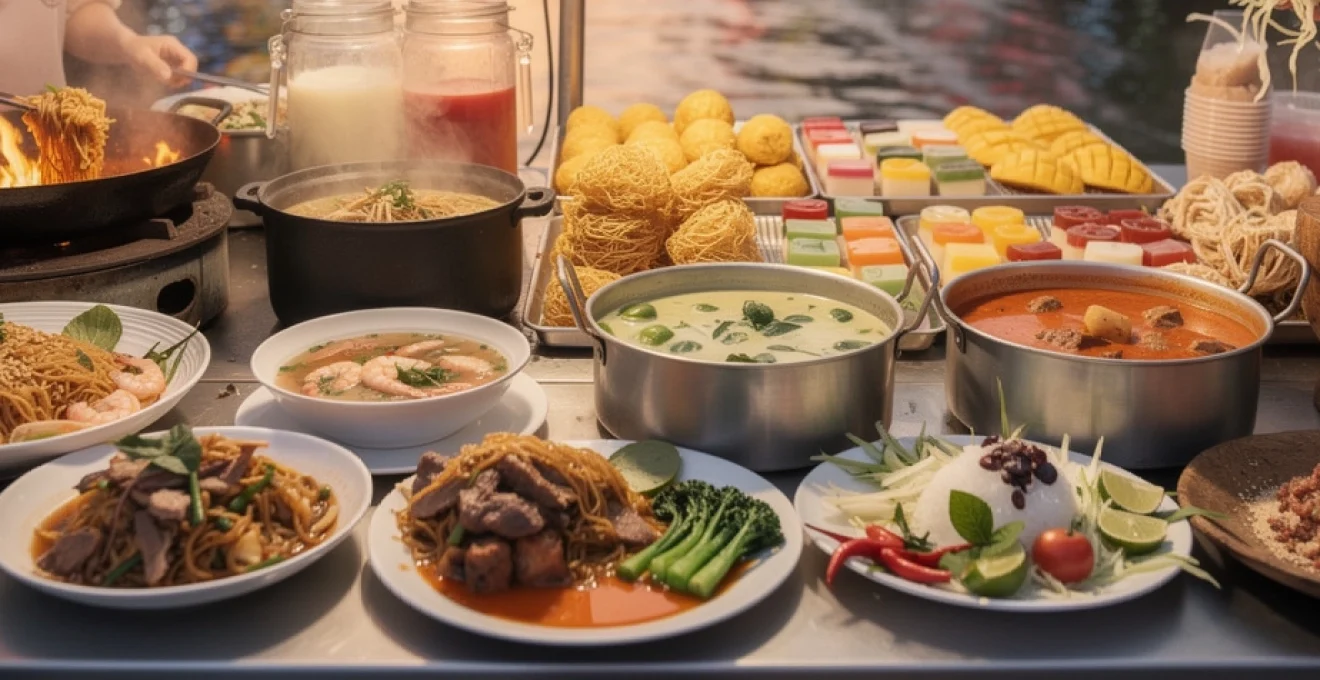
Bangkok’s culinary landscape represents one of the world’s most vibrant street food cultures, where centuries-old recipes meet modern urban life in an extraordinary fusion of flavours, techniques, and traditions. The Thai capital serves as a melting pot for regional cuisines from across Thailand, creating a unique gastronomic ecosystem where authentic local dishes thrive alongside innovative interpretations of classic recipes. From bustling morning markets filled with aromatic spices to late-night food stalls serving steaming bowls of noodles, Bangkok offers an unparalleled opportunity to experience the depth and complexity of Thai cuisine in its most genuine form.
Street food culture and authentic thai culinary heritage in bangkok’s markets
Bangkok’s street food culture represents far more than convenient dining; it embodies the soul of Thai culinary tradition, where recipes passed down through generations continue to flourish in the city’s bustling markets and roadside stalls. The authentic street food experience in Bangkok provides insight into Thailand’s rich cultural heritage, where cooking techniques refined over centuries meet the demands of modern urban life. Each market district offers distinct specialities that reflect both regional influences and local innovations.
The social aspect of street food culture cannot be understated, as these venues serve as community gathering places where locals share meals, exchange stories, and maintain cultural connections. The vendors themselves often represent multi-generational businesses, with recipes and techniques carefully preserved and adapted to contemporary tastes whilst maintaining their essential character.
Chatuchak weekend market traditional food vendors and local specialities
Chatuchak Weekend Market stands as Bangkok’s largest market complex, housing over 200 food vendors who specialise in traditional Thai dishes alongside regional specialities from across the country. The market’s food section provides an exceptional opportunity to sample authentic regional cuisines that might otherwise require extensive travel throughout Thailand to experience. Weekend visitors encounter vendors from Isaan provinces serving spicy som tam and grilled meats, northern Thai specialists offering khao soi and sai ua sausages, and southern Thai cooks preparing fiery curries with fresh seafood.
The market’s layout encourages culinary exploration, with dedicated sections for different meal types and regional specialities. Traditional breakfast options include khao tom (rice porridge) and various curry-based dishes, whilst lunch offerings expand to include an impressive array of noodle dishes, stir-fries, and grilled items. The afternoon and evening hours bring out dessert vendors specialising in traditional Thai sweets, creating a comprehensive culinary journey through Thailand’s diverse food culture.
Khlong toei fresh market dawn trading and regional ingredient sourcing
Khlong Toei Fresh Market operates as Bangkok’s primary wholesale food distribution centre, where the city’s restaurants and street vendors source their ingredients from traders who arrive before dawn with produce from across Thailand and neighbouring countries. The market’s early morning atmosphere reveals the intricate supply chains that support Bangkok’s food culture, with vendors sorting through fresh vegetables, selecting the finest seafood, and negotiating prices for aromatic herbs and spices essential to Thai cooking.
The prepared food vendors within Khlong Toei cater primarily to market workers and early-rising locals, offering hearty traditional breakfast dishes such as khao tom pla (fish rice porridge), various curry dishes served over rice, and freshly prepared noodle soups. These establishments often maintain recipes that have remained unchanged for decades, providing authentic flavours that reflect working-class Thai culinary traditions without tourist-oriented modifications.
Saphan phut night market street food ecosystem and vendor networks
Saphan Phut Night Market creates a dynamic street food ecosystem where multiple vendor networks collaborate to serve comprehensive Thai meals throughout the evening hours. The market’s organisation demonstrates the sophisticated logistics behind Bangkok’s street food culture, with specialised vendors focusing on specific components of traditional Thai meals whilst coordinating with neighbours to provide complete dining experiences for customers.
The night market environment encourages social dining, with communal seating areas where strangers share tables and sample dishes from multiple vendors. This setup allows visitors to experience the authentic Thai approach to dining, where meals consist of several shared dishes rather than individual portions, creating opportunities to taste a broader range of flavours and cooking styles within a single visit.
Or tor
Or tor kor market premium local produce and artisanal food preparation
Or Tor Kor Market, located opposite Chatuchak, showcases the premium side of Bangkok’s street food culture, where seasonal produce and artisanal preparations take centre stage. Originally a farmers’ market, it has evolved into a curated space where vendors specialise in high-quality regional ingredients such as fragrant jasmine rice, hand-pounded curry pastes, and tree-ripened tropical fruits. Prices are slightly higher than in conventional markets, but the consistent quality makes Or Tor Kor a reference point for local chefs seeking top-grade ingredients for traditional Thai dishes.
Visitors will find specialist stalls dedicated to single product categories, from coconut cream producers who cold-press fresh coconuts several times per day, to curry vendors offering meticulously balanced pastes for green, red, and Massaman curries. Ready-to-eat counters serve classic Bangkok dishes like khao gaeng (rice with curry), grilled seafood, and regional sausages, all prepared with market-fresh ingredients. For travellers interested in understanding how ingredient quality shapes authentic Thai flavours, Or Tor Kor provides a direct link between produce and plate.
Quintessential thai noodle dishes and regional preparation methods
Noodle dishes form the backbone of everyday eating in Bangkok, offering quick, satisfying meals that still respect traditional techniques and regional culinary identities. From wok-fried classics to richly seasoned soups, each preparation reflects a balance of flavours and textures that defines authentic Thai street food in Bangkok. Understanding how vendors handle heat, season broths, and select ingredients will help you distinguish an ordinary bowl of noodles from a truly exceptional one.
Across the city, you will notice specialised noodle stalls that focus on a narrow range of dishes perfected over decades. Some work with roaring charcoal-fired woks to achieve intense wok hei, while others concentrate on slow-simmered broths and delicate seasoning. As you explore the best local dishes to taste in Bangkok, paying attention to these subtle preparation methods will deepen your appreciation of each bowl you order.
Pad thai wok hei techniques and tamarind-palm sugar balancing
Pad Thai, perhaps Thailand’s most internationally recognised dish, relies on a precise balance of sweet, sour, salty, and umami flavours rather than on heavy chilli heat. In Bangkok’s top Pad Thai stalls, cooks begin by heating a well-seasoned wok over intense fire until it reaches a smoking point, allowing them to impart the coveted wok hei – a smoky aroma that signals proper stir-frying technique. Rice noodles are quickly tossed with shallots, preserved radish, dried shrimp, and tofu before being deglazed with a sauce made from tamarind pulp, palm sugar, and fish sauce.
Achieving the correct sauce profile is similar to fine-tuning an audio mix: too much palm sugar and the dish becomes cloying; too much tamarind and it turns sharply sour. Skilled vendors taste and adjust constantly, sometimes altering the ratio slightly based on the sweetness of that day’s tamarind or the type of palm sugar available. In Bangkok, the most memorable Pad Thai often features a light coating of sauce rather than a heavy glaze, fresh chives and bean sprouts added at the last moment, and optional toppings like crushed peanuts, chilli flakes, and lime wedges so you can calibrate the final flavour to your own taste.
Boat noodles (kuay teow reua) dark broth preparation and pork blood integration
Boat noodles, or kuay teow reua, originated on Bangkok’s canals, where vendors sold compact, intensely flavoured bowls from narrow wooden boats. The defining feature of this dish is its dark, aromatic broth, built from long-simmered pork or beef bones, Chinese spices such as star anise and cinnamon, and toasted garlic. Just before serving, vendors add a small quantity of fresh pork or cow’s blood to the boiling broth, which thickens the liquid and adds a deep, rounded savouriness rather than a metallic taste when handled correctly.
For many first-time visitors, the idea of blood in soup can be daunting, but in practice it functions much like adding egg yolk to a sauce: it enriches texture and amplifies flavour without dominating. Bangkok’s best boat noodle stalls manage this integration by carefully controlling temperature so the blood emulsifies rather than curdles, resulting in a silky, opaque broth. Bowls are typically small to encourage multiple servings, allowing you to try various noodle types and meat combinations, from beef balls and sliced brisket to slow-braised tendon and tripe.
Pad see ew broad rice noodle caramelisation and chinese broccoli selection
Pad See Ew, a staple of Bangkok’s wok-fried repertoire, showcases the art of caramelising broad rice noodles without turning them soggy. Cooks begin by searing the noodles in a very hot wok with dark and light soy sauces, letting the sugars in the sauce and the starch on the noodle surface brown and char slightly. This controlled charring creates the signature smoky, slightly sweet flavour that distinguishes a well-executed Pad See Ew from a simple soy-sauce stir-fry.
Equally important is the choice of vegetable, traditionally Chinese broccoli (kailan), which offers both crisp stems and tender leaves. Vendors in Bangkok’s better noodle shops select young stalks with firm, pale-green stems that retain crunch after quick frying. Eggs are usually scrambled directly in the wok, binding the noodles and vegetables and absorbing the seasoned oil. When you taste Pad See Ew at a busy street stall, notice how the best versions maintain individual strands rather than clumping, with just enough sauce to coat the noodles and lightly season the greens.
Tom yum noodle soup aromatic herb layering and chilli oil infusion
Tom Yum noodle soup combines the iconic flavours of Thailand’s most famous soup with the comfort of a noodle bowl, creating one of the most satisfying local dishes to taste in Bangkok. The broth begins with a base of pork or chicken stock, to which cooks add galangal, lemongrass, kaffir lime leaves, and shallots, building layers of aroma as the herbs gently simmer. Rather than boiling everything together at once, many experienced vendors stagger the addition of herbs so the most delicate aromas are preserved until just before serving.
To transform the broth into tom yum, a roasted chilli paste (nam prik pao) and fresh lime juice are incorporated, with ground peanuts often added for body and nuttiness. Some stalls prepare their own chilli oil by slowly frying dried chillies with garlic and shallots, then drizzling this vibrant red oil over the finished bowl to create pockets of heat and fragrance. You can customise your bowl at the table with extra chilli flakes, fish sauce, sugar, and vinegar – an interactive ritual that reflects the Thai emphasis on personal flavour balance.
Traditional thai curries and spice paste authenticity standards
Thai curries are built on complex spice pastes that demand time, precision, and high-quality ingredients. In Bangkok, you’ll encounter everything from homestyle curries sold with rice at morning markets to refined versions in family-run shophouses and contemporary restaurants. The authenticity of a curry often comes down to the paste: whether it has been hand-pounded in a mortar and pestle or blended mechanically, and whether the cook has respected traditional ratios of fresh and dried ingredients.
While modern kitchens sometimes rely on pre-made pastes, many of Bangkok’s most respected vendors still grind their own, believing that the rhythmic pounding releases essential oils in a way that blenders cannot replicate. Much like grinding coffee just before brewing, this approach yields a more vibrant and layered flavour. As you explore different local dishes to taste in Bangkok, comparing curries from markets, street stalls, and restaurants will give you insight into how technique influences depth, aroma, and heat.
Green curry (gaeng keow wan) fresh herb grinding and coconut cream separation
Green curry, or gaeng keow wan, is characterised by its fragrant green colour, derived from fresh green chillies, coriander roots, kaffir lime peel, and Thai basil. Vendors who prioritise authenticity grind these ingredients with lemongrass, galangal, garlic, and shallots in a granite mortar, creating a paste that feels slightly coarse yet homogeneous. This manual grinding process bruises the herbs and releases essential oils, producing a curry paste that is both aromatic and vibrant, rather than flat and grassy.
A key technique in Bangkok’s better curry kitchens is coconut cream separation. Instead of simply adding coconut milk straight to the pot, cooks first heat thick coconut cream until the natural oils separate and begin to sizzle. The green curry paste is then fried in this fragrant oil, allowing the spices to bloom and meld with the coconut fat. Only after this stage do they add thinner coconut milk and proteins such as chicken, fish balls, or tofu, along with vegetables like Thai eggplant and pea eggplant. The result is a curry that is rich yet not heavy, with a gentle, rounded heat and a fresh herbal finish.
Massaman curry persian-influenced spice integration and slow-braising techniques
Massaman curry, often described as one of the world’s most delicious dishes in international rankings, reflects historical influences from Persian and Muslim traders. Unlike many other Thai curries, its paste incorporates warm spices such as cinnamon, cardamom, cloves, and nutmeg, alongside traditional Thai ingredients like lemongrass and galangal. In Bangkok’s specialist curry houses, these dry spices are often toasted and ground separately, then folded into the base paste to prevent bitterness and preserve their aromatic complexity.
The preparation of Massaman relies heavily on slow-braising techniques. Large cuts of beef, lamb, or chicken are simmered gently in the coconut-based curry for hours, along with waxy potatoes and roasted peanuts, until the meat becomes tender and the sauce thickens naturally. The cooking process is similar to a French stew in terms of patience and temperature control, but the flavour profile is unmistakably Thai, with palm sugar and tamarind providing a subtle sweet-sour undercurrent. When evaluating Massaman in Bangkok, look for a glossy, well-reduced sauce and meat that yields easily without falling apart into dryness.
Som tam papaya salad mortar and pestle preparation methods
Som Tam, or green papaya salad, is an essential dish from the Isaan region that has become fully integrated into Bangkok’s daily food culture. At street stalls across the city, you’ll see vendors preparing each portion to order using a large clay mortar and wooden pestle. Rather than pounding the ingredients into a paste, the technique involves a rhythmic combination of light pounding and tossing, which bruises the shredded papaya just enough to absorb the dressing while keeping its crisp texture.
The dressing typically blends lime juice, fish sauce, palm sugar, and chillies, with garlic and sometimes dried shrimp or fermented fish sauce for added depth. Different variations – such as som tam thai (with peanuts and a sweeter profile) or som tam pla ra (with pungent fermented fish) – illustrate how seasoning can dramatically alter the personality of the dish. When you order som tam in Bangkok, vendors will often ask for your preferred spice level, allowing you to experience anything from a mildly tangy salad to a fiery, tongue-tingling side dish that pairs beautifully with sticky rice and grilled meats.
Larb isaan northeastern meat salad and roasted rice powder applications
Larb, another classic from the Isaan region, is a finely chopped meat salad that balances heat, acidity, and herbaceous freshness. In Bangkok’s Isaan restaurants and street stalls, larb is most commonly made with minced pork or chicken, though duck, fish, and even beef versions are also available. The meat is either lightly poached or stir-fried, then combined with lime juice, fish sauce, ground dried chillies, sliced shallots, and a generous amount of fresh mint and coriander.
What sets larb apart texturally is the use of roasted rice powder (khao khua). Sticky rice is dry-roasted in a pan until golden brown, then ground into a coarse powder that adds a subtle nuttiness and gentle crunch to the salad. This technique, simple as it may seem, is a hallmark of authentic Isaan preparation and a key indicator of quality when you order larb in Bangkok. The dish is typically served with raw vegetables and sticky rice, and is designed for shared, communal eating rather than as a standalone main course.
Bangkok’s iconic desserts and traditional sweet-making craftsmanship
No exploration of the best local dishes to taste in Bangkok is complete without delving into its dessert culture, which balances tropical fruit freshness with intricate sugar and coconut preparations. Traditional Thai sweets, or khanom, often require painstaking techniques such as slow reduction of coconut cream, delicate egg-yolk threading, and precise steaming methods. Many of these recipes have roots in royal palace kitchens, where aesthetics and craftsmanship were as important as flavour.
In markets like Or Tor Kor and Nang Loeng, you will find artisanal dessert vendors who specialise in just a handful of items perfected over years. Classic options include mango sticky rice, where glutinous rice is steamed and then soaked in sweetened coconut cream before being served with ripe, fragrant mangoes. Others, such as khanom chan (layered pandan and coconut jelly) or thong yod and foi thong (golden egg-yolk sweets), showcase refined sugar work and precise temperature control. As you sample these desserts, notice how sweetness is often moderated by salt or pandan fragrance, preventing the flavours from becoming overwhelming.
Local beverage culture and traditional thai drink preparation
Bangkok’s beverage culture complements its food scene with an array of drinks designed to refresh and balance the bold flavours of Thai cuisine. Iced beverages are especially popular in the city’s tropical climate, from strong Thai iced tea brewed with robust black tea and condensed milk, to Thai iced coffee made with dark-roast beans and often sweetened with evaporated milk. Many street vendors brew their tea and coffee through fabric filters, allowing for rapid preparation while maintaining a rich, concentrated flavour.
Beyond caffeinated drinks, fresh fruit juices and herbal infusions play a central role in everyday hydration. You’ll see vendors pressing sugarcane, blending ripe guava or pomegranate, and brewing herbal drinks such as chrysanthemum tea or nam matoom (bael fruit drink), which is traditionally believed to aid digestion. When pairing drinks with food, consider how sweetness and temperature interact with spice: a cold, lightly sweetened lime soda can cut through a rich curry, while unsweetened iced tea might be preferable if you are already adjusting your dish with extra sugar and chilli at the table.
Michelin-recognised street food vendors and award-winning local establishments
In recent years, Bangkok’s street food scene has gained international recognition through the Michelin Guide, which now highlights both humble stalls and modest shophouse restaurants alongside fine-dining venues. For travellers seeking the best local dishes to taste in Bangkok, these listings can serve as a useful starting point, though popularity often leads to longer queues and, occasionally, higher prices. The key is to treat Michelin recognition as one tool among many, combining it with local recommendations and your own observations of freshness, turnover, and technique.
Some Michelin-recognised vendors specialise in a single dish, such as crab omelette, boat noodles, or rice porridge, reflecting a long-standing Thai tradition of culinary specialisation. Others are family-run eateries that have maintained consistent standards for generations, serving curries, stir-fries, or seafood using time-tested recipes. When you visit these establishments, pay attention not only to the final plate but also to the workflow: the speed of service, the care taken in plating, and the way the staff interact with regular customers all offer clues to why a particular place has earned such acclaim.
At the same time, many of Bangkok’s most beloved eats will never appear in a guidebook but are equally worthy of exploration. Balancing celebrated spots with lesser-known neighbourhood favourites will give you the richest understanding of the city’s culinary landscape. Ultimately, whether you are slurping down noodles at a canal-side stall, sharing curries at a family restaurant, or sampling desserts in a traditional market, Bangkok rewards curiosity, patience, and a willingness to taste beyond the familiar.