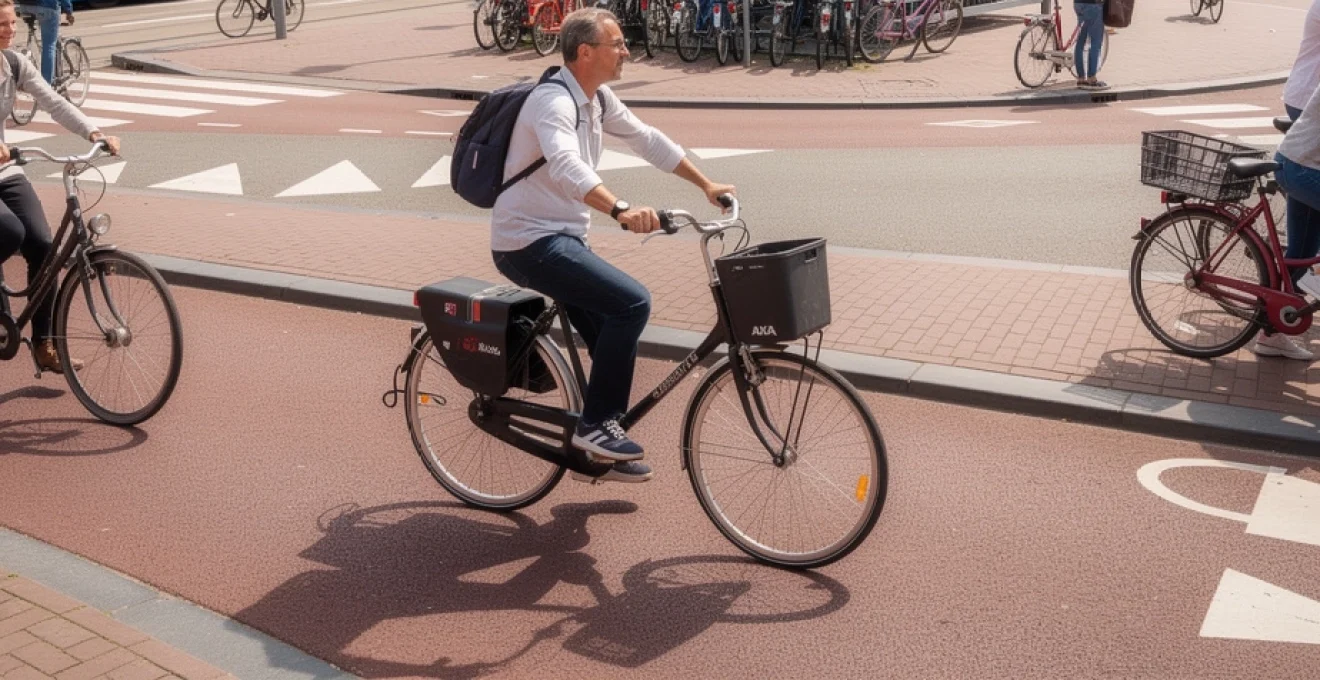
Amsterdam’s cycling culture represents more than just a mode of transportation—it’s a fundamental aspect of daily life that defines the city’s character and rhythm. With over 880,000 bicycles in a city of approximately 850,000 residents, the Dutch capital has earned its reputation as one of the world’s most bike-friendly cities. However, this extensive cycling network operates under a sophisticated system of rules, etiquette, and infrastructure that can initially overwhelm visitors unfamiliar with urban cycling culture. Understanding these regulations isn’t merely about compliance; it’s essential for your safety and the smooth functioning of a system that moves hundreds of thousands of cyclists daily through narrow medieval streets and modern thoroughfares alike.
Dutch cycling infrastructure: understanding amsterdam’s fietspad network
The fietspad—Dutch for bicycle path—forms the backbone of Amsterdam’s cycling infrastructure, representing decades of urban planning dedicated to sustainable transportation. This network extends over 500 kilometres throughout the city, creating a comprehensive system that prioritises cyclist safety and efficiency. Unlike many cities where cycling infrastructure appears as an afterthought, Amsterdam’s fietspads are integrated into the urban fabric with the same importance as roads for motor vehicles. The system includes dedicated lanes, traffic signals specifically for cyclists, and parking facilities that rival those for cars in scale and sophistication.
Dedicated cycle lane classification: red asphalt vs Brick-Paved routes
Amsterdam’s cycle lanes employ distinctive visual coding that communicates their function and priority level. The most recognisable are the red asphalt lanes, typically found on major routes and busy streets, which provide a clear visual separation between cyclists and other road users. These lanes often feature raised curbs or physical barriers, offering enhanced protection from motor traffic. The vibrant red colour serves as an unmistakable warning to pedestrians and drivers that they’re entering cycling territory. In contrast, brick-paved routes typically indicate shared spaces or lower-traffic areas where cyclists must exercise greater awareness. These brick lanes frequently appear in residential neighbourhoods and historic districts where modern infrastructure must respect architectural heritage. The textured surface also provides natural speed reduction, encouraging cyclists to moderate their pace in areas with higher pedestrian activity.
Navigating shared space zones in jordaan and de pijp districts
The Jordaan and De Pijp districts present unique challenges due to their narrow streets and mixed-use character. These neighbourhoods employ shared space zones where traditional road markings are minimised or absent entirely, requiring all users—cyclists, pedestrians, and occasionally vehicles—to negotiate passage through mutual awareness and courtesy. In these areas, cyclists cannot rely on dedicated infrastructure and must adapt to a more fluid, context-dependent navigation style. The absence of clear lane markings doesn’t eliminate rules but rather demands heightened attention and lower speeds. During weekends and evenings, when pedestrian traffic peaks around cafés and shops, experienced cyclists often choose alternative routes rather than forcing passage through congested shared spaces.
Traffic priority rules at roundabouts and zebra crossings
Roundabouts in Amsterdam follow a consistent priority system that differs from some international conventions. Cyclists already circulating within the roundabout maintain priority over those entering, regardless of the entry point. This rule applies universally across the city, creating predictable flow patterns that experienced cyclists navigate instinctively. However, visitors often struggle with this concept, particularly when approaching from roads that would typically have priority in other contexts. At zebra crossings, the hierarchy is unambiguous: pedestrians possess absolute priority when they’ve stepped onto the crossing, and cyclists must yield completely. This rule is strictly enforced, and failure to stop for pedestrians can result in substantial fines. The Dutch legal framework heavily protects pedestrians and cyclists over motor vehicles, creating a liability structure that encourages cautious behaviour from all road users.
Understanding white shark’s teeth road markings
The distinctive triangular road markings known colloquially as “shark’s teeth” or haaientanden provide crucial priority information at intersections. When these white triangles point towards you, with the pointed end facing your direction of travel, you must yield to crossing traffic. This marking system appears consistently throughout Amsterdam, creating a standardised visual language that transcends linguistic barriers. The confusion typically arises because the triangles’ orientation may seem counterintuitive initially—many visitors
assume the opposite rule applies. A useful mental shortcut is to imagine the shark’s teeth as actual teeth blocking your path: if they “bite” into your lane, you must slow down, look carefully in all directions, and give way. You will often see these markings combined with a smaller blue and white triangular sign indicating that you are approaching a priority road. Once you become familiar with this system, reading intersections in Amsterdam becomes as intuitive as reading traffic lights, greatly reducing the risk of last‑second braking or confusion in busy cycling areas.
Legal requirements and regulations for cyclists in amsterdam
While Amsterdam feels relaxed and informal, cycling is governed by a clear legal framework designed to protect all road users. As a visitor, you are expected to follow the same rules and regulations as residents, whether you rent a bike for one afternoon or stay for several weeks. Dutch police carry out occasional checks in popular areas and around major junctions, focusing on lights, mobile phone use, and dangerous behaviour. Fines can be significant, so treating cycling in Amsterdam like driving a car—with rules, responsibilities, and potential penalties—is a smart mindset. Knowing the basics before you pedal off will help you enjoy the city with confidence and avoid costly mistakes.
Mandatory bicycle lighting standards: front white and rear red lamps
Proper bicycle lighting is one of the most strictly enforced rules for cyclists in Amsterdam, especially during the darker winter months. Legally, your bike must have a steady or flashing white light at the front and a red light at the rear when riding after sunset or in poor visibility. These lights may be attached to the bike itself or clipped to your clothing or bag, but they must be clearly visible and fixed in a forward or backward direction. Reflectors on pedals and wheels are recommended, but they are not a substitute for working lamps.
Being stopped without proper lights can result in an on-the-spot fine of around €60 per person, which is often more than the cost of several days’ bike rental. Beyond the financial penalty, cycling without lights dramatically increases your risk of collision at junctions and on canal-side roads where street lighting may be limited. If you are renting a bicycle in Amsterdam, always check that the front and rear lights work before leaving the shop and ask how to operate or recharge them. For longer stays, many locals simply carry small clip-on LED lights in a pocket or bag—an inexpensive backup that can save you both money and trouble if a built-in light fails unexpectedly.
Hand signal protocol for turning and lane changes
Clear communication is essential when cycling in a busy city, and in Amsterdam, hand signals are the primary language on the fietspad. To indicate a right or left turn, extend your arm fully in the direction you plan to go, ideally two to three seconds before you make the manoeuvre. If you need to change lanes, overtake, or merge from a side street, a brief but visible arm signal alerts cyclists behind and beside you, giving them time to adjust their speed or position. Think of it as using your car’s indicator lights—if others can predict what you will do, everyone moves more smoothly.
Visitors often underestimate how closely cyclists travel together, particularly during rush hours near Central Station or on major commuting routes. Abruptly stopping or turning without signalling can trigger a chain reaction, forcing people behind you to brake hard or swerve into traffic. If you must slow down suddenly—for instance, to check a map or avoid a pedestrian—raise one hand slightly as a “brake” signal while easing to the right-hand side of the lane. This small gesture can prevent collisions and is considered basic good manners on Amsterdam’s bike paths.
Mobile phone usage restrictions and €140 fines
Since 2019, using a handheld mobile phone while cycling in the Netherlands has been explicitly illegal. That means no texting, scrolling, filming, or holding your phone to follow navigation while riding; doing so can result in a fine of around €140. The law treats distracted cycling in a similar way to using a phone while driving, because your attention is divided at precisely the moment when you need to process fast-changing information in traffic. Even a quick glance at your screen can be enough to miss a pedestrian stepping onto a zebra crossing or a tram pulling in front of the bike lane.
How can you navigate Amsterdam by bike without constantly looking at your phone? Many cyclists use audio directions from navigation apps, slipping their phone into a pocket or bag and listening with one earbud so they can still hear surrounding traffic. Others use a fixed phone mount secured to the handlebars, which keeps both hands on the bike and your attention mostly on the road. The key is to treat your phone as a background tool rather than a distraction. If you absolutely must read a message or adjust your route, pull over to a safe spot out of the cycling lane, stop completely, and only then take out your phone.
Alcohol limits and cycling under the influence penalties
Because bicycles feel informal and accessible, many visitors underestimate how seriously Dutch law treats cycling under the influence of alcohol or drugs. Legally, the same blood alcohol concentration limits applied to motorists—typically 0.5‰ (and 0.2‰ for novice drivers)—are also used as a guideline for cyclists, and police can stop and test you if they suspect impairment. Riding a bicycle while drunk is not only dangerous for you but also for pedestrians and other cyclists forced to react to your unpredictable movements. Crashes involving intoxicated riders are overrepresented in accident statistics, particularly at night and on weekends.
If the police determine that you are cycling under the influence, you can receive a substantial fine, and in severe cases where accidents or injuries occur, the consequences can escalate to criminal charges. From a practical perspective, think of it as you would think of drink-driving in any major city: if you plan to enjoy Amsterdam’s nightlife, leave the bike locked and take a tram, night bus, or taxi. As a visitor, this approach not only keeps you safer but also shows respect for the local cycling culture, which relies on predictable, responsible behaviour from everyone using the shared infrastructure.
Amsterdam bicycle rental systems: OV-fiets, MacBike, and black bikes
For most visitors, renting a bicycle is the easiest way to experience Amsterdam’s cycling culture first-hand. The city offers a broad range of rental options, from large, well-known companies to local shops and station-based systems. Each has its own advantages in terms of price, flexibility, and bike style, so choosing the right one depends on how long you plan to ride and where you intend to go. Before you pick up a bike, it is worth considering whether you want a distinctly “tourist” rental that signals your inexperience, or a more discreet model that blends into the daily traffic.
OV-fiets is the national train company’s bike rental system, available at many Dutch railway stations, including Amsterdam Centraal, Amstel, and Sloterdijk. Designed primarily for residents, it requires a Dutch public transport card (OV-chipkaart) and a subscription, so it is not ideal for short-term tourists. However, if you are staying longer or visiting friends in the Netherlands, OV-fiets provides a simple way to combine train travel and cycling throughout the country for a relatively low daily fee. Rental and return are streamlined: you simply check out a bike at the station and bring it back to the same location, much like borrowing a library book.
For most international visitors, companies such as MacBike and Black Bikes offer the most straightforward solutions. MacBike is easily recognisable thanks to its bright branding and sturdy city bikes, often with step-through frames and comfortable upright riding positions. These bicycles are built for reliability rather than speed and typically include integrated locks, lights, and optional child seats or helmets. The obvious downside is that the red MacBike branding clearly marks you as a tourist—but many locals see this as an advantage, as it warns them to give you a little extra space and patience on busy routes.
Black Bikes caters more to those who prefer a subtle, “local” look. Their rental fleet consists mainly of classic black Dutch bikes that blend into the city’s endless sea of bicycles, making you less conspicuous. This can feel more authentic, but it also means other cyclists may assume you know the unwritten rules and react less forgivingly if you hesitate or make mistakes. Both MacBike and Black Bikes have multiple locations around central Amsterdam, offer day and multi-day rentals, and allow you to return your bike to a different branch for an extra fee. Whichever company you choose, inspect the bike before leaving—check the brakes, lights, saddle height, and lock—and ask for a short explanation of how everything works if you are unfamiliar with Dutch-style pedal brakes.
High-risk zones and tourist cycling hotspots to navigate carefully
Amsterdam’s cycling network is remarkably safe by global standards, but certain areas present more challenges, especially for visitors. High concentrations of tourists, complex junctions, and tram lines can create conditions where even confident cyclists need to slow down and pay closer attention. Rather than avoiding these areas entirely, it helps to know what to expect and how to adapt your riding style. Think of these hotspots as “advanced levels” of cycling in Amsterdam: manageable with care, but best approached with patience rather than speed.
Central station bicycle parking and pedestrian congestion management
The area around Amsterdam Central Station is one of the most intense cycling environments in the city. Here, commuter flows, tourists with luggage, trams, buses, and ferries all converge in a relatively compact space. The station’s multi-storey bicycle parking facilities, including the large underwater bike garage, accommodate thousands of bikes, but they can still feel overwhelming when you first arrive. Navigating this zone is similar to walking through a crowded airport terminal: everyone has somewhere to go, but the key is to move predictably and avoid sudden changes of direction.
As you cycle near Central Station, keep your speed low and be prepared for pedestrians unexpectedly stepping into the bike lane while checking departure boards or taking photos. If you plan to park your bicycle, look for official parking signs and follow the one-way systems within the garages, which are clearly marked with arrows and painted lines. Leaving your bike outside designated areas can result in it being removed by the municipality, especially in no-park zones near entrances and tram stops. If you feel overwhelmed, there is no shame in dismounting and walking your bike for a short stretch; in such a busy space, walking can sometimes be faster and certainly less stressful than trying to ride.
Tram track hazards on leidseplein and rembrandtplein
Leidseplein and Rembrandtplein are major nightlife and entertainment hubs where tram tracks intersect with busy cycling routes and crowded terraces. Tram rails pose a particular hazard to cyclists because the grooves are almost exactly the width of a standard bike tyre. If you cross them at a shallow angle, your wheel can slip into the track, causing you to lose balance or fall—especially in wet conditions. Many locals have experienced at least one “tram track incident,” which is why they treat these crossings with considerable respect.
To safely navigate these areas, approach tram tracks as if you were crossing a railway line: at as close to a right angle as possible, with both hands firmly on the handlebars and your weight centred. Avoid making tight turns directly on top of the rails or braking hard while crossing. If the square is especially crowded, consider taking a slightly longer route around the perimeter streets rather than cutting straight through the central tram zone. This small detour often results in a calmer ride and reduces your chances of being caught between trams, taxis, and groups of late-night pedestrians wandering across the lanes.
Dam square and museumplein low-cycling zones
Despite Amsterdam’s reputation as a cycling city, some central squares function more as pedestrian plazas than as through-routes for bikes. Dam Square, in front of the Royal Palace and the National Monument, is one such example. While it is not completely closed to cyclists, the sheer volume of tourists, street performers, and events means that riding across the square can be slow and frustrating. Museumplein, bordered by the Rijksmuseum and the Van Gogh Museum, also sees heavy foot traffic, particularly during peak tourist seasons and public festivals.
In these low-cycling zones, it is often more practical—and more polite—to dismount and walk your bike for a few minutes, especially if you are unsure where the designated cycling paths run. This approach reduces conflict with pedestrians and lowers your stress level as you navigate crowds and cameras. If you are planning longer rides, you can also use mapping apps to choose routes that skirt around Dam Square and Museumplein, using quieter parallel streets that still keep you close to the city’s main attractions. By treating these spaces more like open-air living rooms than highways, you will fit in better with the local rhythm and avoid the common frustration of trying to “rush” through the densest tourist zones by bike.
Anti-theft measures: AXA ring locks and chain security systems
Bicycle theft is an unfortunate but well-known reality in Amsterdam, and locals treat bike security almost as seriously as bike maintenance. A good rule of thumb is to lock your bike as carefully as you would lock a car in another city: opportunistic thieves look for the quickest, easiest targets, and a poorly secured rental can disappear in minutes. Most Dutch bikes are equipped with an integrated rear wheel lock, often from brands like AXA or ABUS. This ring lock immobilises the rear wheel with a simple key turn, making it impossible to ride the bike away without first unlocking it.
However, experienced thieves can simply lift a bike with only a ring lock and load it into a van or carry it away. That is why locals almost always use a second lock: a heavy-duty chain or cable that passes through the frame and front wheel and then around a fixed object such as a bike rack, lamppost, or rail. When you park your bicycle in Amsterdam, aim to secure it to something immovable and avoid leaving it on isolated side streets overnight. In central areas and near stations, look for official bike racks and parking zones, which are generally safer and less likely to be cleared by the municipality.
Rental companies usually provide at least one lock, and some will include a second chain for a small extra fee—a worthwhile investment if you are keeping the bike for several days. Always remove valuables from baskets or panniers and avoid leaving removable accessories such as lights or phone mounts attached to the bike. If, despite all precautions, your bicycle disappears, contact the rental company immediately and follow their instructions; many have procedures for checking with the city’s bicycle depot or filing a report. By approaching bike security proactively, you significantly reduce the risk of losing both your transport and your deposit.
Essential cycling etiquette: bell usage, overtaking, and right-side protocol
Beyond laws and infrastructure, Amsterdam’s cycling culture is held together by a set of unwritten etiquette rules that keep traffic flowing smoothly. Understanding these habits is like learning the social code of a new workplace: they are not always written down, but following them helps you fit in and avoid friction. Etiquette on the fietspad is not about being strict or unfriendly; it is about allowing thousands of cyclists of different speeds and skill levels to share the same limited space without constant conflict. As a visitor, adopting these customs will make your rides more pleasant—for you and for everyone around you.
One of the key principles is maintaining a predictable position in the lane. In the Netherlands, you ride on the right-hand side, just as cars drive on the right. This means keeping to the right edge of the cycle path whenever possible, especially if you are riding more slowly or sightseeing. Faster cyclists will overtake you on the left, often with a brief bell ring or verbal signal to indicate their presence. Think of the fietspad as an escalator: people who want to stand or move slowly keep to one side, allowing others to pass smoothly.
Using your bell is not considered rude in Amsterdam—it is more like saying “excuse me” in a crowded corridor. A single, quick ring is usually enough to alert pedestrians walking in the bike lane or slower cyclists ahead of you that you intend to pass. Repeated or aggressive ringing, however, can be interpreted as impatience, especially in areas where tourists may not understand the layout. When overtaking, always check behind you first, then move left smoothly, giving enough space to the cyclist or pedestrian you are passing. After overtaking, drift back to the right-hand side rather than continuing in the middle of the lane.
Riding two abreast with a friend is common on quieter streets and park paths, but it requires situational awareness. If you hear a bell behind you or notice other cyclists stacking up, move into single file so they can overtake. At traffic lights, avoid blocking junctions or standing in the pedestrian crossing; instead, queue up within the marked cycle area and be ready to move when the bicycle signal turns green. By following these simple etiquette rules—keep right, signal clearly, use your bell politely, and ride at a speed suited to the conditions—you will quickly find that cycling in Amsterdam feels less like a challenge and more like a natural, enjoyable way to explore the city.