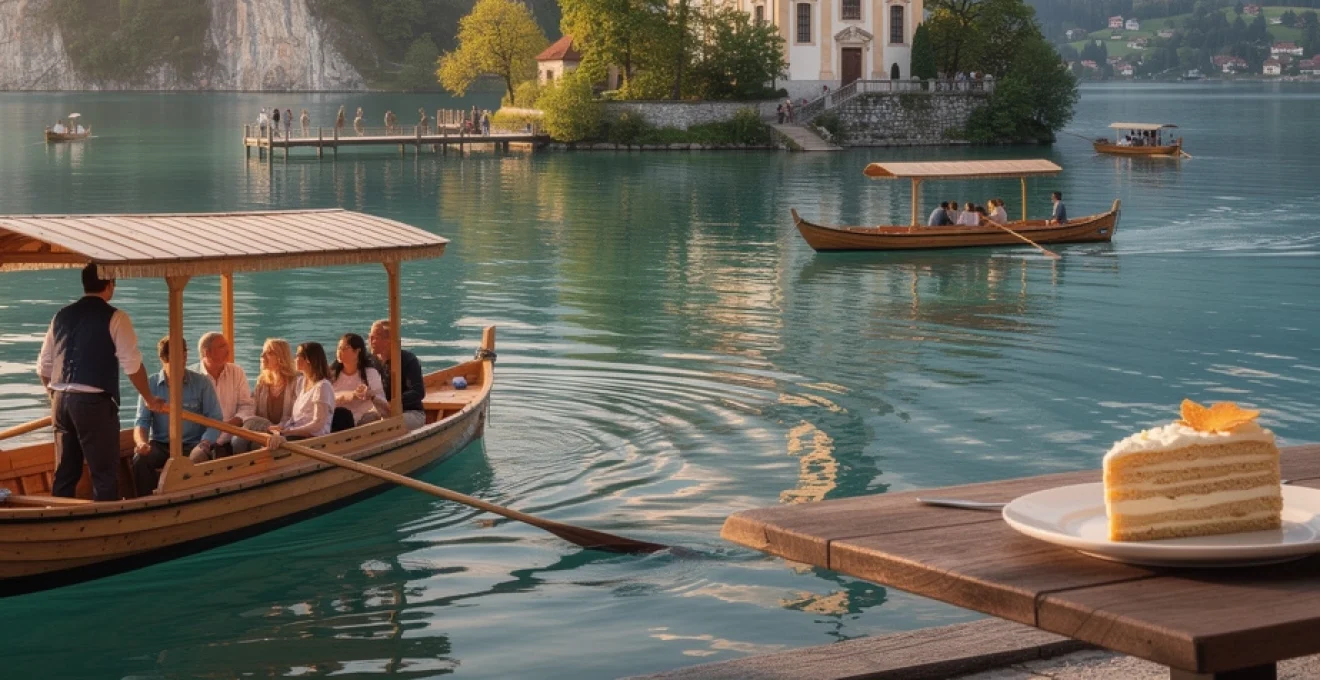
Nestled in the heart of the Julian Alps, Lake Bled stands as Slovenia’s most iconic destination, captivating visitors with its ethereal beauty and rich cultural heritage. This glacial lake, crowned by a medieval castle perched dramatically on a cliff and graced by a picturesque island church, represents the perfect synthesis of natural wonder and human artistry. The crystalline waters reflect towering Alpine peaks, creating a mirror-like surface that has inspired poets, artists, and travellers for centuries.
Beyond its postcard-perfect appearance, Lake Bled serves as a gateway to understanding Slovenia’s geological history, architectural evolution, and deep-rooted traditions. From the ancient craftsmanship of traditional Pletna boats to the sacred rituals performed in the Assumption of Mary Church, every element of this Alpine jewel tells a story of cultural continuity and natural magnificence. The destination offers visitors an extraordinary blend of outdoor adventure, historical exploration, and culinary delights, making it an essential stop for anyone seeking to understand the soul of Slovenia.
Lake bled’s geological formation and alpine setting
The remarkable landscape surrounding Lake Bled represents millions of years of geological evolution, shaped primarily by glacial activity during the Pleistocene epoch. This natural masterpiece sits at an elevation of 475 metres above sea level, nestled within the Radovljica basin and surrounded by the majestic peaks of the Julian Alps. Understanding the geological foundations of this region provides crucial insight into why Lake Bled possesses such unique characteristics and enduring appeal.
Glacial origins of the bled basin during the pleistocene era
During the last Ice Age, approximately 10,000 to 15,000 years ago, the Bohinj Glacier carved the distinctive basin that now cradles Lake Bled. This massive ice sheet moved slowly through the valley, scouring the bedrock and depositing sediments that would later form the lake’s distinctive shape. The glacier’s retreat left behind a natural depression that gradually filled with meltwater, creating the 2.1-kilometre-long and 1.4-kilometre-wide body of water we see today.
The glacial origins explain the lake’s remarkable depth of 30.6 metres and its unique thermal properties. Unlike many Alpine lakes, Bled maintains relatively warm water temperatures due to thermal springs feeding from underground sources. This geological gift allows the lake to support diverse aquatic life and makes swimming possible during summer months, with temperatures reaching a comfortable 24°C.
Triglav national park’s limestone karst topography
The broader geological context of Lake Bled extends into Slovenia’s only national park, Triglav, where limestone karst formations dominate the landscape. This distinctive topography, characterised by underground drainage systems, caves, and dramatic cliff faces, directly influences the hydrology and water quality of Lake Bled. The limestone bedrock acts as a natural filtration system, contributing to the lake’s exceptional clarity and purity.
The karst environment creates a complex network of underground waterways that feed into Lake Bled through numerous springs. These subterranean connections ensure a constant flow of fresh, mineral-rich water that maintains the lake’s ecological balance. The permeable limestone also prevents stagnation, as water continuously circulates through the system, carrying dissolved minerals that support the lake’s unique ecosystem.
Julian alps watershed system and lake hydrology
Lake Bled functions as part of a sophisticated watershed system that extends throughout the Julian Alps, collecting precipitation and snowmelt from peaks reaching over 2,800 metres in elevation. The primary inflow comes from several small streams, with the most significant being the Jezernica Creek, which enters the lake from the western shore. This hydrological system demonstrates remarkable stability, with water levels remaining relatively constant throughout the year.
The lake’s outflow occurs through the Jezernica River, which eventually joins the Sava River system and flows toward the Black Sea. This connection to major European waterways historically made Lake Bled an important waystation for trade and cultural exchange. The consistent water temperature and quality result from the balance between thermal spring inputs and the steady circulation provided by the watershed system.
Bled island’s tectonic formation and sediment composition
At the centre of Lake Bled, the small island that hosts the Assumption of Mary Church is more than a picturesque focal point; it is a product of complex tectonic and glacial processes. The island occupies a subtle tectonic uplift within the lake basin, where resistant bedrock withstood the scouring action of the Bohinj Glacier more effectively than the surrounding material. As the ice retreated, this rocky prominence remained above the waterline, gradually accumulating sediments transported by meltwater and wave action.
Core samples taken from the island reveal alternating layers of glacial till, lacustrine clay, and fine silts, overlain by anthropogenic deposits from centuries of human settlement. These sediments act as a natural archive of climatic and environmental change, preserving pollen grains, microfossils, and charcoal fragments that help scientists reconstruct the region’s ecological history. For visitors, this means that the seemingly simple island you see today actually represents thousands of years of slow geological and human transformation.
Architectural heritage of bled castle and medieval fortifications
Bled Castle, dramatically perched 130 metres above the lake, is not only one of the most photographed sites in Slovenia but also a key to understanding the region’s architectural and political history. First mentioned in written sources in 1011, the castle has evolved from a modest Romanesque fortification into a layered complex of Gothic, Renaissance, and later additions. As you walk through its courtyards and terraces, you are effectively moving through several centuries of Central European architectural development condensed into a single site.
The strategic location of Bled Castle once allowed its occupants to control trade routes and agricultural lands in the surrounding Radovljica basin. Today, its preserved walls and reconstructed spaces house a museum, wine cellar, and print workshop, all designed to interpret this long history for modern visitors. Understanding how the castle was built and adapted over time will give you a deeper appreciation of its silhouette above Lake Bled’s calm waters.
11th century romanesque construction techniques at bled castle
The earliest elements of Bled Castle follow classic Romanesque construction principles, focused on solidity and defence rather than ornament. Massive stone walls, often over a metre thick, were built using locally quarried limestone blocks bonded with lime mortar, a technique that provided both strength and flexibility against minor earth movements. Small, narrow window openings, or loopholes, allowed defenders to observe and repel attackers while minimising vulnerable surface area.
The central Romanesque tower, originally the core of the fortress, used a simple rectangular plan with thick supporting buttresses integrated into the wall mass rather than expressed externally. Timber beams supported the interior floors, and access between levels was often via steep wooden stairs or ladders that could be removed in the event of attack. When you stand in the lower courtyard today, you are effectively standing at the heart of this early medieval stronghold, whose basic structure has endured for nearly a thousand years.
Gothic revival modifications during habsburg rule
As regional power shifted and military technology evolved, Bled Castle underwent substantial modifications, particularly during the Habsburg period from the late Middle Ages onward. Gothic and later Gothic Revival influences introduced pointed arches, larger window openings, and more articulated façades, reflecting a gradual shift from pure defence to residential comfort and symbolic prestige. Decorative elements such as traceried windows and painted coats of arms signalled the growing importance of representation.
By the 19th century, romanticism had inspired a renewed interest in medieval architecture, prompting restorations that emphasised Gothic motifs and picturesque silhouettes. Some battlements and towers were partially reconstructed to match contemporary ideas of how a medieval castle should look, rather than strictly following archaeological evidence. As a visitor, you will notice this blend of authenticity and 19th-century imagination, which together create the fairy-tale profile so strongly associated with Lake Bled today.
Defensive positioning on 130-metre cliff precipice
The castle’s dramatic placement on a near-vertical cliff is not only visually striking but also a textbook example of medieval defensive strategy. By building on a limestone outcrop rising 130 metres above Lake Bled, the original architects exploited natural topography to minimise the number of directions from which an assault could be launched. Steep slopes on three sides functioned as natural ramparts, reducing the need for extensive man-made earthworks.
Access to the castle was historically limited to a narrow approach path that could be easily defended or blocked, a common technique in fortification design throughout the Alps. In case of siege, the elevated position also provided clear lines of sight over the lake and surrounding valley, allowing early detection of approaching forces. When you climb up to the castle today, you are following much the same route that traders, soldiers, and nobles would have used centuries ago, experiencing firsthand how terrain dictated both movement and security.
Castle museum’s archaeological artefacts from roman settlements
Inside the castle, the on-site museum presents an impressive collection of archaeological artefacts that trace human activity in the Lake Bled area back to prehistoric and Roman times. Excavations have uncovered fragments of Roman ceramics, coins, and building materials, indicating that this region once formed part of a broader network of settlements linked to the Roman road system. These finds suggest that Lake Bled served not only as a natural refuge but also as a node of economic and cultural exchange.
Exhibits typically include tools, jewellery, and household items that provide a tangible connection to the everyday lives of past inhabitants. Interpretive panels explain how these objects were used and what they reveal about trade routes, agricultural practices, and local craftsmanship. By exploring these displays, you can better understand how Bled evolved from a modest Roman-era community into a medieval power centre crowned by the castle we see today.
Assumption of mary church and baroque ecclesiastical architecture
The Assumption of Mary Church on Bled Island stands as a significant example of Baroque ecclesiastical architecture in Slovenia, blending religious symbolism with artistic flourish. The present structure, largely dating from the 17th century, replaced earlier sacred buildings that had occupied the island since at least the early Middle Ages. Its whitewashed walls, graceful bell tower, and red-tiled roof create a striking contrast against the deep blue of Lake Bled and the green slopes of the surrounding hills.
Inside, you will find richly decorated altars, gilded carvings, and frescoes that reflect the Baroque emphasis on drama, emotion, and sensory experience. The main altar, dedicated to the Assumption of Mary, is framed by twisted columns and populated by sculpted figures that seem to move in the flickering candlelight. This immersive aesthetic was designed to draw worshippers into a more direct emotional connection with the divine, a hallmark of Counter-Reformation church design throughout Central Europe.
Architecturally, the church follows a relatively simple nave-and-chancel plan, but its proportions are carefully calibrated to create a sense of verticality despite the modest footprint of the island. The 52-metre bell tower, rebuilt several times after earthquakes and fires, serves both practical and symbolic functions, calling the faithful to worship and acting as a navigational landmark on the lake. When you climb the 99 stone steps leading from the boat landing to the church entrance, you are participating in a ritualised ascent that has been repeated by pilgrims for centuries.
Traditional pletna boat craftsmanship and lake navigation
No visit to Lake Bled feels complete without experiencing it from the water, and the traditional Pletna boats provide the most authentic way to do so. These flat-bottomed wooden vessels, with their colourful awnings and elegant curved prows, have been ferrying visitors to Bled Island since at least the 16th century. Their design is uniquely adapted to the lake’s calm conditions, shallow shorelines, and need for quiet, non-motorised transport around religious and later recreational sites.
Beyond their practical role, Pletna boats embody a living craft tradition known as pletnaštvo, passed down within local families for generations. Each boat is built by hand, using techniques that have changed little over the centuries, even as tourism numbers have grown. When you step aboard, you are not just taking a short ride; you are engaging with a piece of intangible cultural heritage that continues to shape the character of Lake Bled today.
Hand-forged pletna construction using spruce and oak timber
The construction of a Pletna boat begins with the careful selection of local spruce and oak, chosen for their complementary properties of flexibility and strength. Spruce, which is relatively light and easy to work, forms the main planking of the hull, allowing the boat to glide smoothly across the water. Oak, denser and more resistant to wear, is reserved for the structural framework, ribs, and key joints that must withstand constant mechanical stress.
Traditional tools such as adzes, hand saws, and chisels are still used in many workshops, with iron fittings often hand-forged by local blacksmiths. The flat bottom and slightly raised bow are designed to provide stability when passengers board and disembark, while the symmetrical hull ensures easier manoeuvrability with a single oarsman. The entire process, from timber seasoning to final painting, can take several months, reflecting the dedication and precision required to produce a boat that will safely serve for decades.
UNESCO intangible heritage status of pletnarstvo tradition
Recognising the cultural value of Pletna boats and their associated skills, Slovenia has worked to document and protect the pletnaštvo tradition as part of its national heritage. While not yet listed as a standalone element on the UNESCO Intangible Cultural Heritage list, the practice is frequently cited in discussions of Alpine lake communities preserving non-motorised navigation methods. Such recognition helps ensure that the knowledge of how to build and operate these boats is not lost amid the pressures of mass tourism and technological change.
For travellers, this emerging heritage status means that choosing a Pletna ride supports both local livelihoods and the continuation of a unique craft. Rather than opting for generic motorboats, you can consciously contribute to a more sustainable and culturally sensitive form of lake transport. In an age where many traditional skills are disappearing, the ongoing visibility of Pletna boats on Lake Bled serves as a reminder that heritage can remain dynamic and economically viable.
Hereditary licensing system for certified pletna operators
The operation of Pletna boats is governed by a hereditary licensing system that restricts the number of authorised pletnarji (Pletna oarsmen). Historically, these rights were passed down within families, often from father to son, along with the practical knowledge of navigating the lake in all conditions. This system ensured a high level of skill and fostered a strong sense of personal responsibility for passenger safety and boat maintenance.
Today, while formal training and safety regulations have been updated to meet modern standards, the core principle of controlled numbers and local stewardship remains. To become a certified Pletna operator, candidates must demonstrate proficiency in rowing, docking, and basic boat repair, as well as a working knowledge of Lake Bled’s history and environment. As a result, your boatman is not just a transport provider but also a potential guide, able to share stories and insights that enrich your understanding of the lake.
Traditional rowing techniques for silent lake propulsion
One of the most distinctive aspects of a Pletna ride is the quiet, gliding motion created by the oarsman’s unique rowing technique. Standing at the stern, facing forward, the pletnar uses two long oars mounted on a special frame to push the boat through the water. This method, sometimes compared to a standing version of Venetian gondoliering, allows for excellent visibility and precise control, essential when approaching crowded docks or navigating near the island steps.
The symmetrical stroke pattern minimises wake and noise, preserving the lake’s tranquil atmosphere and reducing disturbance to wildlife. For you as a visitor, this means you can enjoy unobstructed views and conversation without the interruption of engine noise or exhaust fumes. Watching the rhythmic movement of the oars can be almost meditative, reinforcing the sense that Lake Bled is best experienced at a slower, more deliberate pace.
Culinary specialities: kremšnita pastry and regional gastronomy
Lake Bled’s appeal extends well beyond scenery and architecture; it also offers a distinctive culinary experience anchored by the famous Kremšnita cream cake. Originating in the mid-20th century at the Hotel Park patisserie, this layered dessert has become synonymous with Bled itself. A crisp puff pastry base supports a generous layer of vanilla custard and whipped cream, topped by another pastry sheet dusted with icing sugar, creating a delicate balance of textures.
Sampling Kremšnita in a café overlooking the lake is almost a rite of passage for visitors, combining local flavour with iconic views. Beyond dessert, regional cuisine around Lake Bled highlights hearty Alpine and Central European influences, with dishes such as žganci (buckwheat spoonbread), game stews, and smoked meats commonly featured on menus. If you are seeking an authentic food experience, look for smaller family-run inns and gostilne, where recipes often reflect generations of culinary tradition.
For those with dietary restrictions, it is increasingly possible to find vegetarian, vegan, and gluten-free options, especially during the main tourist season. However, rural establishments may be slower to adapt, so it is wise to communicate your needs clearly. Pairing local dishes with Slovenian wines from regions such as Goriška Brda or the Vipava Valley can turn a simple meal into a deeper exploration of the country’s gastronomic identity.
Adventure tourism infrastructure and outdoor recreation activities
While Lake Bled is often portrayed as a tranquil retreat, it also serves as a major hub for adventure tourism in Slovenia. The surrounding Julian Alps and Triglav National Park provide a vast natural playground for hiking, climbing, cycling, and water sports. Over the past decade, local authorities and tour operators have invested in well-marked trails, safety infrastructure, and guided experiences that allow you to explore this environment with confidence.
Whether you are an experienced mountaineer or a casual walker seeking a scenic day trip, you will find routes and activities tailored to different fitness levels. The key is to plan according to the season: summer and early autumn are ideal for high-altitude adventures, while spring and late autumn favour lower-elevation hikes and cycling. By aligning your expectations with local conditions, you can make the most of Lake Bled’s outdoor offerings without compromising safety.
Via ferrata climbing routes on triglav massif
For those keen to experience the high mountains, the Triglav Massif offers an extensive network of via ferrata routes—protected climbing paths equipped with fixed cables, ladders, and iron rungs. These routes allow non-expert climbers, when properly equipped, to access dramatic ridges and summits that would otherwise require advanced mountaineering skills. Popular ascents of Mount Triglav (2,864 metres) often combine traditional hiking trails with via ferrata sections near the top.
To participate safely, you will need a helmet, harness, and via ferrata lanyard, all of which can be rented from outdoor shops in Bled or nearby towns. Guided tours are highly recommended if you lack prior experience, as local guides can assess weather conditions, route difficulty, and your fitness level. Think of via ferrata as a “ladder into the sky”: it opens spectacular vertical terrain while still requiring respect for exposure, changing weather, and objective hazards.
Vintgar gorge trail system and radovna river access
Just a short drive or bike ride from Lake Bled, Vintgar Gorge offers one of the region’s most accessible yet impressive natural experiences. A 1.6-kilometre wooden boardwalk follows the emerald-green Radovna River as it carves its way through steep limestone walls, creating pools, rapids, and small waterfalls. The trail system has been carefully designed to balance visitor access with environmental protection, limiting trampling and erosion while allowing you to get close to the water.
In recent years, timed entry and one-way walking routes have been introduced during peak season to manage crowds and reduce bottlenecks on narrow sections. If you prefer a quieter experience, consider visiting early in the morning or later in the afternoon, outside the busiest tour bus hours. Good footwear is advisable, as the boardwalk can become slippery after rain, and you should always stay within designated paths to protect both yourself and the fragile gorge ecosystem.
Cycling networks connecting bohinj valley and kranjska gora
The area around Lake Bled is interlaced with cycling routes that connect it to neighbouring highlights such as the Bohinj Valley and the mountain resort town of Kranjska Gora. Dedicated bike paths and low-traffic rural roads allow you to explore traditional villages, forests, and river valleys at a relaxed pace. For many visitors, renting an e-bike in Bled transforms longer routes into manageable day trips, making it possible to cover 40 to 60 kilometres without excessive strain.
Waymarked routes often follow the Sava River or climb gently into side valleys, offering frequent opportunities for rest stops at local farms or viewpoints. Before setting out, it is wise to check elevation profiles and estimated times, especially if you are not accustomed to riding in hilly terrain. Carrying basic repair tools, water, and a light jacket will help you stay comfortable in the changeable Alpine climate, where conditions can shift as quickly as the scenery.
Thermal springs at zaka beach recreation complex
On the western shore of Lake Bled, the Zaka area has developed into a key recreational hub, combining lakeside relaxation with subtle geothermal benefits. Although not a conventional spa resort, parts of the lake here are influenced by thermal springs that contribute to the relatively mild water temperatures during summer. This makes Zaka Beach a popular spot for swimming, rowing, and stand-up paddleboarding, supported by rental facilities and seasonal cafés.
For families and casual visitors, Zaka offers grassy sunbathing areas, shaded spots under trees, and convenient access to walking and cycling paths that circle the lake. Water quality is regularly monitored to ensure safe bathing conditions, reflecting Slovenia’s broader commitment to environmental stewardship. If you are looking for a way to unwind after a day of hiking or sightseeing, a late-afternoon swim at Zaka, with the sun setting behind the hills, can provide a gentle, restorative contrast to more strenuous adventures.