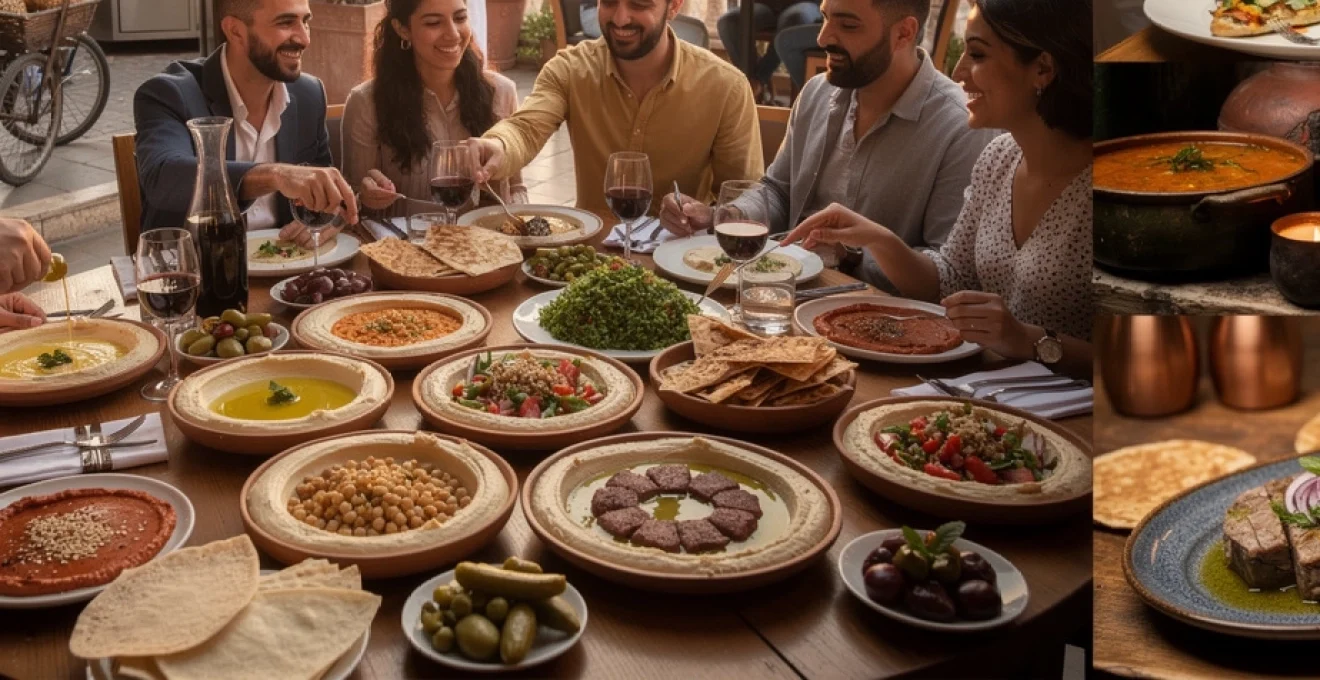
Beirut stands as a living testament to centuries of culinary evolution, where Mediterranean influences merge with Arabic traditions to create one of the world’s most celebrated food cultures. The Lebanese capital offers you an unparalleled gastronomic experience, from humble street-side vendors serving warm manakish to sophisticated dining establishments reinventing traditional recipes with contemporary techniques. Every neighbourhood presents distinct flavours and cooking methods, reflecting the diverse communities that have shaped this remarkable city. As you navigate through bustling souks and quiet residential streets, the aromatic blend of spices, grilled meats, and freshly baked bread creates an intoxicating sensory experience that captures the essence of Lebanese hospitality and culinary artistry.
Meze culture and traditional lebanese appetiser platters
The concept of meze represents the cornerstone of Lebanese dining culture, transforming meals into extended social gatherings where conversation flows as freely as the food. This tradition involves serving numerous small dishes simultaneously, allowing you to sample diverse flavours and textures throughout your dining experience. Lebanese meze typically includes between eight and fifteen different preparations, ranging from cold vegetable-based dishes to warm grilled items, each meticulously prepared to showcase specific ingredients and regional cooking techniques. The presentation matters tremendously, with restaurants taking pride in arranging colourful plates that appeal to both visual and gustatory senses.
Understanding meze culture requires appreciating its social function within Lebanese society. Rather than rushing through courses, you’re encouraged to linger over each small dish, savouring flavours whilst engaging in meaningful conversation with dining companions. This approach to eating reflects the broader Lebanese philosophy that meals serve purposes beyond mere sustenance—they strengthen community bonds and celebrate shared heritage. Statistics indicate that the average Lebanese meze service lasts between two and three hours, significantly longer than typical Western dining experiences.
Hummus variations at falafel arax and abu hassan restaurants
Hummus holds sacred status in Lebanese cuisine, with passionate debates surrounding proper preparation methods and ingredient ratios. At establishments like Falafel Arax, located in the Armenian quarter, you’ll discover hummus preparations that differ substantially from commercial versions available internationally. The authentic Lebanese version requires dried chickpeas soaked overnight and cooked until perfectly tender, then blended with tahini, lemon juice, garlic, and salt to achieve a silky-smooth consistency. The ratio typically follows approximately four parts chickpeas to one part tahini, though individual establishments guard their precise formulations jealously.
Abu Hassan, another renowned destination for hummus enthusiasts, emphasises the importance of using freshly ground tahini and serving the dish whilst still slightly warm. The presentation involves creating a shallow well in the centre of the hummus mound, then filling it with olive oil infused with paprika or pine nuts fried in clarified butter. This technique not only enhances visual appeal but allows you to experience different flavour combinations with each scoop. Recent surveys suggest that over 87% of Beirut residents consume hummus at least three times weekly, demonstrating its fundamental role in daily dietary patterns.
Fattoush and tabbouleh preparation techniques in mar mikhael eateries
Mar Mikhael, the trendy neighbourhood known for its artistic atmosphere and innovative dining scene, hosts numerous establishments that have perfected the preparation of Lebanon’s most celebrated salads. Fattoush distinguishes itself through the inclusion of toasted pita chips, which add crucial textural contrast to the fresh vegetables. The secret lies in achieving the perfect balance between crispy bread pieces and moisture from tomatoes, cucumbers, radishes, and the distinctive pomegranate molasses dressing. Chefs in Mar Mikhael often add their personal touches—some incorporate purslane for additional tanginess, whilst others experiment with seasonal vegetables whilst maintaining the dish’s essential character.
Tabbouleh preparation requires even greater precision, with traditional recipes calling for a ratio heavily favouring parsley over bulgur wheat. Authentic Lebanese tabbouleh contains approximately 80% finely chopped parsley, 10% bulgur, and 10% tomatoes, with generous amounts of lemon juice and olive oil. The chopping technique proves critical—you must achieve uniform, fine pieces without bruising the delicate parsley leaves. Many Mar Mikhael restaurants prepare tabbouleh fresh throughout service
to preserve maximum freshness, adjusting seasoning only at the last minute. When you taste tabbouleh in these Mar Mikhael eateries, the bright acidity and herbaceous aroma illustrate why this salad has become synonymous with healthy Lebanese cuisine worldwide.
Kibbeh nayeh and raw meat dishes at souk el tayeb market
Souk el Tayeb, Beirut’s pioneering farmers’ market, offers an authentic setting to discover kibbeh nayeh, Lebanon’s famous raw meat dish. Often compared to a Levantine version of steak tartare, kibbeh nayeh combines finely minced lean lamb or beef with bulgur, spices, and fresh herbs. Vendors at Souk el Tayeb emphasise transparency and quality, sourcing meat from trusted rural producers and grinding it to order to ensure optimal texture and food safety. You’ll notice that experienced cooks knead the mixture by hand for several minutes, developing a smooth, almost creamy consistency that holds its shape on the plate.
Raw meat traditions in Lebanon extend beyond kibbeh nayeh to include preparations such as habra nayeh (pure lean meat) and frakeh (meat mixed with cracked wheat and mint). While some visitors may initially hesitate to try these dishes, strict hygiene standards and rapid same-day consumption significantly reduce risk. Nutritionists in Lebanon point out that kibbeh nayeh, when prepared with high-quality meat and olive oil, offers a protein-rich dish lower in saturated fat than many grilled alternatives. If you’re unsure where to start, we recommend sharing a portion amongst your group, pairing each bite with fresh mint, spring onions, and a drizzle of peppery olive oil.
Observing kibbeh nayeh preparation at Souk el Tayeb also reveals broader aspects of Lebanese food heritage. Many of the women who prepare these dishes learned their techniques from mothers and grandmothers in mountain villages, and they treat the recipe as a living heirloom rather than a fixed formula. Conversations at the market often move seamlessly from spice ratios to stories of village life, demonstrating how food acts as an archive of memory. As you watch the rhythmic kneading and careful plating, it becomes clear that kibbeh nayeh is not only a raw meat dish but also a symbol of trust, craftsmanship, and communal sharing.
Muhammara and walnut-based spreads in gemmayzeh district
Just a short walk from Mar Mikhael, the Gemmayzeh district has earned a reputation for its bars and bistros, many of which serve refined versions of classic dips such as muhammara. This vibrant red pepper and walnut spread originated in Aleppo but has become firmly integrated into Lebanese meze culture. In Gemmayzeh kitchens, chefs typically roast red peppers over open flames to impart a subtle smokiness before blending them with toasted walnuts, breadcrumbs, pomegranate molasses, cumin, and chilli flakes. The result is a rich, slightly sweet, and gently spicy paste that pairs beautifully with warm pita or crudités.
Walnut-based spreads here extend beyond muhammara to include variations enriched with aged goat cheese, roasted garlic, or even sun-dried tomatoes. Some contemporary eateries in Gemmayzeh experiment with texture, leaving the mixture slightly coarse to highlight nutty crunch, while others aim for a smooth, almost pâté-like consistency. According to recent hospitality industry reports, plant-based meze items such as muhammara and baba ghanoush now account for more than 40% of cold appetiser orders in Beirut’s trendy districts, reflecting a global shift toward vegetable-focused dining. For visitors seeking a lighter introduction to Lebanese cuisine, sharing a platter of walnut spreads and grilled vegetables provides a balanced yet indulgent option.
Muhammara also illustrates how Lebanese cuisine absorbs regional influences while maintaining a distinct identity. Although its origins lie across the border, the Lebanese version often relies more heavily on pomegranate molasses, creating a brighter acidity that suits the country’s fondness for tangy flavours. Tasting muhammara in Gemmayzeh is a bit like listening to a familiar song performed by a new orchestra—it retains its core melody but gains fresh nuances through local interpretation. As you dip torn bread into the glossy red spread, you’re not just enjoying a snack; you’re experiencing the fluid boundaries of Levantine culinary culture.
Street food corridors along hamra street and bliss street
Beyond formal meze platters, Lebanese cuisine in Beirut thrives in its bustling street food corridors, particularly along Hamra Street and neighbouring Bliss Street near the American University of Beirut. These areas function as open-air dining rooms, where students, office workers, and night owls converge over quick, flavour-packed meals. Street vendors and small eateries specialise in perfecting a single item—whether that’s manakish, shawarma, or falafel—often honed over decades of practice. Walking these streets, you’ll notice that the rhythm of the city is marked not by traffic lights but by the hiss of grills, the thump of dough, and the steady stream of customers queuing at their favourite stalls.
What makes Beirut street food so compelling for visitors? Part of the appeal lies in its balance between affordability and quality, with many items costing just a few dollars yet prepared with the same care found in high-end restaurants. National tourism statistics indicate that over 60% of international visitors to Beirut cite street food as a highlight of their trip, and Hamra–Bliss consistently ranks among the top neighbourhoods for casual dining. As you explore, it’s wise to follow local cues: a long line at a modest-looking counter often signals culinary excellence. Don’t hesitate to ask vendors for recommendations; you’ll often receive a personalised explanation of fillings, sauces, and spice levels.
Manakish zaatar at furn beaino and traditional bakeries
Manakish, sometimes described as “Lebanese pizza”, is one of the most iconic breakfast foods in Beirut, and Hamra hosts several beloved bakeries, including the well-known Furn Beaino. The classic manakish zaatar features a thin dough base topped with a fragrant mixture of thyme, sesame seeds, sumac, and olive oil, then baked in a super-heated oven until crisp at the edges and soft in the centre. Bakeries that specialise in manakish often start production before dawn, serving customers who grab a warm flatbread on their way to work or university. Watching the bakers stretch, dimple, and slide dough into the oven offers a glimpse into the choreography behind this seemingly simple snack.
Traditional bakeries around Hamra and Bliss still rely on stone ovens or gas-fired domes capable of reaching very high temperatures, which ensures that the manakish cooks in just a few minutes. The high heat helps preserve moisture while creating the characteristic golden-brown blisters on the crust, much like a Neapolitan pizza. In addition to zaatar, you’ll find toppings such as Akkawi cheese, jibneh w zaatar (a mix of cheese and herbs), minced meat, or even contemporary options with vegetables and labneh. For a complete Lebanese street food breakfast, many locals pair their manakish with a glass of fresh mint lemonade or a strong Turkish-style coffee.
From an economic perspective, manakish represents a democratising force within Lebanese food culture. With prices that remain accessible despite fluctuating local conditions, it offers consistent nourishment to a broad segment of the population. Food researchers note that manakish has maintained its popularity across social classes because it adapts easily to changing tastes and budgets—affordable zaatar versions coexist with more indulgent cheese and meat varieties. When you sit on a Hamra sidewalk bench and bite into a hot manakish zaatar, you’re sharing a daily ritual with thousands of Beirutis, from schoolchildren to retirees.
Shawarma preparation methods at barbar restaurant
Shawarma stands as another pillar of Beirut street food, and few names command as much recognition as Barbar, a 24-hour institution on Hamra’s edge. Here, vertical rotisseries loaded with marinated chicken or beef rotate slowly, basting themselves in their own juices as they cook. The preparation begins hours earlier, when thin slices of meat are soaked in a mixture of yoghurt (for chicken), vinegar, garlic, citrus, and a closely guarded blend of spices. Stacking the meat on the skewer requires precision: thicker pieces are often placed toward the centre, while smaller cuts fill gaps to ensure even cooking and a uniform, caramelised exterior.
At peak hours, shawarma specialists at Barbar work with remarkable speed, shaving off crisp outer layers using long knives, then tucking the meat into fresh pita or markouk bread. The choice of condiments distinguishes Lebanese shawarma from its regional cousins. Chicken versions typically come with pungent garlic sauce, pickles, and sometimes thin fries, while beef shawarma often features tahini, onions with sumac, and parsley. This balance of rich sauce, tangy vegetables, and spices mirrors the broader philosophy of Lebanese cuisine, which seeks harmony between acidity, fat, and freshness.
If you’re curious about technique, focus on the distance between the meat and the heat source. At Barbar and similar establishments, cooks adjust this spacing throughout the day, moving skewers closer during rush periods when turnover is rapid and farther away during slower times to prevent drying out. This dynamic approach resembles a DJ fine-tuning sound levels in response to the crowd. For visitors, the best strategy is to order when you see staff actively carving—an indication that the shawarma is at its juiciest and crispiest. Many locals insist on eating their sandwich immediately, standing at nearby counters, to preserve temperature and texture.
Falafel sandwich assembly techniques in bourj hammoud
While Hamra excels in shawarma and manakish, nearby Bourj Hammoud—Beirut’s historically Armenian district—is renowned for its falafel. In small shops tucked along narrow streets, cooks drop balls of ground chickpeas, herbs, and spices into bubbling oil, producing crisp, golden spheres with soft, fragrant centres. The mixture is typically made several times a day to maintain freshness, with proportions of chickpeas, parsley, coriander, onion, and garlic refined through years of practice. Many Beirut falafel specialists insist on frying at a specific oil temperature to ensure even browning without greasiness, much like a pastry chef controlling the heat for perfect croissants.
What truly elevates Lebanese falafel, however, is the assembly of the sandwich. In Bourj Hammoud, vendors split a pocket of pita or wrap thinner khubz bread, layer in freshly fried falafel, and then customise the filling with a variety of accompaniments. Common additions include tomatoes, pickled turnips, chopped parsley, and cabbage, all tied together with tahini sauce thinned with lemon juice and water. Some shops add a spoonful of hummus or a drizzle of chilli paste, creating complex layers of flavour and texture in each bite. Watching a skilled vendor assemble a falafel sandwich is like observing a calligrapher at work—each movement is deliberate yet fluid.
To enjoy falafel in Bourj Hammoud like a local, consider ordering a mix of plain balls on the side, allowing you to appreciate the seasoning without sauces. Many regulars also request that the bread be slightly toasted on the griddle before filling, adding an extra dimension of crunch. Recent surveys of Beirut street food preferences show that falafel remains one of the most popular vegetarian options, chosen by both meat-eaters and plant-based diners looking for a satisfying, protein-rich meal. If you’re exploring Beirut on foot, a falafel sandwich provides an ideal, portable lunch that encapsulates the essence of Lebanese street food culture.
Kaak vendors and sesame bread culture near martyrs’ square
As you move closer to the historic centre near Martyrs’ Square, another beloved street food appears: kaak, a ring-shaped sesame bread often sold from mobile carts. Kaak vendors typically hang their breads on metal racks, creating an instantly recognisable display that doubles as a fragrant invitation. The bread itself has a chewy, slightly airy texture, with a thin, crisp crust coated in toasted sesame seeds. Traditionally eaten as a snack on the go, kaak can be enjoyed plain or split open and filled with ingredients such as picon cheese, zaatar, or even chocolate spread, making it adaptable to both savoury and sweet cravings.
Kaak culture embodies the spontaneity of Beirut’s street food scene. Because vendors move throughout the day, you may encounter them near schools in the morning, office buildings at midday, and nightlife spots in the evening. This mobility allows kaak to follow the city’s shifting rhythms, much like an urban soundtrack that adjusts to different audiences. Some bakers supply specific vendors, maintaining informal yet long-standing partnerships that ensure consistent quality. If you’re unsure how to order, simply point to a loaf and tell the vendor your preferred filling; they will quickly shape it into a customised sandwich.
Anthropologists studying Lebanese foodways often point to kaak as an example of how simple staples can carry deep cultural meaning. Generations of Beirutis associate the bread with childhood, exam days, and everyday commutes, making it a comfort food that transcends social changes. In recent years, innovative versions featuring whole grains or mixed seeds have appeared, reflecting broader health-conscious trends while preserving the bread’s familiar form. When you bite into a warm kaak near Martyrs’ Square, you’re participating in a quiet ritual shared by countless residents over decades, linking the present cityscape to its past.
Fine dining lebanese gastronomy in downtown beirut
While street food captures Beirut’s energetic side, the city’s fine dining scene showcases Lebanese cuisine in a more polished, interpretive context, especially in Downtown Beirut. Here, historic buildings and contemporary architecture frame restaurants that reinterpret traditional dishes through modern techniques. Tasting menus might feature deconstructed meze, slow-cooked meats with updated garnishes, or seafood prepared using sous-vide and other advanced methods. Yet, despite the refined presentation, the core flavours remain anchored in familiar ingredients such as sumac, pomegranate molasses, freekeh, and local olive oil.
Fine dining in Beirut also reflects the city’s role as a regional hub for gastronomy and hospitality. According to regional restaurant industry reports, high-end Lebanese establishments in the capital have seen a noticeable uptick in international visitors seeking curated culinary experiences. Chefs trained in Europe or North America often return home, blending classical techniques with childhood memories of village cooking. For travellers, booking at least one dinner in Downtown Beirut provides a valuable counterpoint to street-side snacks, revealing how flexible and sophisticated Lebanese flavours can become when given a formal stage.
Contemporary lebanese cuisine at liza restaurant
Liza, housed in a beautifully restored Ottoman-era mansion, exemplifies contemporary Lebanese cuisine that respects tradition while embracing innovation. The interior design—high ceilings, patterned tiles, and elegant lighting—creates an atmosphere that feels both nostalgic and cosmopolitan. On the menu, you’ll find dishes such as fattoush with crisped kale, kibbeh stuffed with goat cheese and pistachios, or grilled octopus served over lentil salads infused with sumac and citrus. Each plate aims to preserve the recognisable flavour profile of Lebanese food while introducing unexpected textures and presentations.
One of Liza’s strengths lies in how it reimagines meze for the modern diner. Portions are often slightly smaller and more refined, encouraging you to sample a wider range of flavours without feeling overwhelmed. The kitchen pays close attention to sourcing, highlighting seasonal produce and artisanal products from different Lebanese regions, such as mountain honey or coastal herbs. This approach mirrors global farm-to-table movements while grounding the experience firmly in Lebanese terroir. Guests interested in food photography will also appreciate the restaurant’s natural light and thoughtful plating, which make each dish visually striking.
From a practical standpoint, reservations at Liza are recommended, especially on weekends or during holiday periods when Beirut’s dining rooms fill quickly. Dress codes tend to be smart-casual, reflecting the restaurant’s upscale yet relaxed character. If you’re unsure what to order, asking the staff for a mix of classic and signature dishes can lead to a well-balanced meal that moves from familiar starters to more adventurous mains. In many ways, dining at Liza feels like reading an updated edition of a beloved cookbook: the core stories remain, but the language has been refreshed for a new generation.
Seafood specialities at le chef and coastal establishments
Seafood holds a prominent place in Lebanese cuisine, thanks to the country’s extensive Mediterranean coastline, and Beirut benefits from daily catches that arrive at city markets. While Le Chef in Gemmayzeh is widely known for its simple, home-style dishes and warm hospitality, numerous coastal establishments along the Corniche and nearby suburbs specialise in grilled and fried fish, calamari, and prawns. Typical preparations involve marinating whole fish with lemon, garlic, and coriander before grilling, or coating fillets lightly in flour for crisp frying. Side dishes often include tahini tarator sauce, parsley salads, and rice with vermicelli, creating a meal that balances richness with brightness.
For many locals, a leisurely seafood lunch by the sea represents a cherished weekend ritual. Diners frequently choose their fish directly from ice displays, selecting varieties such as sultan ibrahim (red mullet), sea bass, or grouper, then specifying their preferred cooking method. Recent consumer surveys in Lebanon show that demand for sustainable seafood sourcing is growing, with more restaurants highlighting line-caught or responsibly farmed options on their menus. When you visit, asking staff about the origin of the fish can lead to informative conversations about seasonality, fishing practices, and regional differences along the coast.
Le Chef, though not a pure seafood restaurant, illustrates the enduring appeal of straightforward, well-executed Lebanese dishes. Its menu changes to reflect seasonal availability and economic realities, but you can often find comforting options like fish stew, grilled fillet with lemon and garlic, or shrimp cooked with tomatoes and herbs. The restaurant’s welcoming, unpretentious atmosphere has attracted a loyal clientele for decades, including writers, artists, and curious travellers. Whether you opt for a sea-view restaurant or a humble urban dining room, seafood in Beirut offers a direct connection to the Mediterranean landscape that shapes so much of Lebanese food identity.
Wine pairing with ksara and château musar vintages
No exploration of fine dining Lebanese gastronomy would be complete without considering the country’s wine culture, particularly labels like Ksara and Château Musar. Lebanon’s Bekaa Valley benefits from high-altitude vineyards, abundant sunshine, and cooling night temperatures, conditions that wine experts compare to certain regions in southern France. Wineries such as Château Ksara, founded in the 19th century, and Château Musar, internationally acclaimed for its age-worthy reds, have helped position Lebanese wines on the global stage. Their bottlings often blend grape varieties like Cabernet Sauvignon, Cinsault, Carignan, and indigenous Obaideh, producing wines with distinctive spice and earthy notes.
When dining in Downtown Beirut, you’ll frequently encounter curated wine lists that suggest pairings for traditional dishes. A crisp white from Ksara, for instance, pairs beautifully with fattoush, grilled fish, or tangy labneh, while a structured red from Château Musar complements lamb, kibbeh, or slow-braised shanks. Sommeliers and knowledgeable servers can guide you toward vintages that match your flavour preferences and budget, making it easier to explore Lebanese wine even if you’re new to the region. Recent export figures show steady growth in Lebanese wine shipments to Europe and North America, underscoring increasing international appreciation.
Approaching wine pairing in Beirut can be as informal or as detailed as you like. If you prefer a relaxed meal, simply choosing a glass of local red or white to accompany your main course already supports the country’s viticultural heritage. Enthusiasts, on the other hand, might request vertical tastings of specific vintages, comparing how older and younger bottles express the same terroir. This process resembles listening to multiple recordings of the same musical piece—each version reveals new subtleties and interpretations. By the end of your stay, you may find that Lebanese wine has become as memorable to you as hummus or shawarma.
Heritage cooking methods at tawlet restaurant and rural kitchens
Beyond Beirut’s urban sophistication, Lebanese cuisine draws immense strength from rural traditions and home-style cooking, and few places showcase this connection as clearly as Tawlet. Founded as part of the Souk el Tayeb initiative, Tawlet operates as a farmers’ kitchen, inviting cooks from different villages to prepare regional specialities on rotating days. This model preserves techniques that might otherwise fade, such as slow-cooking stews in clay pots, baking bread in outdoor taboun ovens, or smoking meats over fruitwood. For visitors, eating at Tawlet feels like being invited into a family home, where recipes are shared alongside stories of landscapes, harvests, and seasonal rituals.
Heritage cooking methods across Lebanon often prioritise time and patience over complexity. Dishes like mujaddara (lentils with rice and caramelised onions), mloukhiyeh (jute leaf stew), or warak enab (stuffed grape leaves) rely on slow simmering to blend flavours and achieve comforting textures. In mountain villages, families traditionally gather in late summer to preserve produce through drying, pickling, and fermenting, creating stocks of mouneh (larder foods) that last through winter. Tawlet’s menus frequently incorporate such preserved ingredients, offering a snapshot of how rural households historically managed scarcity and seasonality.
If you’re curious about experiencing heritage cooking beyond restaurant walls, consider organising a day trip to surrounding regions like the Chouf or the Bekaa Valley, where guesthouses and small lodges sometimes offer cooking demonstrations. Learning to roll kibbeh by hand or bake saj bread over a convex griddle can deepen your appreciation for the physical skill required in traditional kitchens. Recent interest in culinary tourism has encouraged more Lebanese families to open their homes to visitors, providing both supplemental income and a platform for cultural exchange. When you participate in such experiences, you’re not just enjoying a meal—you’re helping sustain knowledge passed down through generations.
Dessert traditions and patisserie excellence in achrafieh
Achrafieh, one of Beirut’s oldest and most elegant districts, has long been associated with refined dessert culture and artisanal patisseries. Walking its tree-lined streets, you’ll encounter shop windows stacked with trays of baklava, maamoul, and syrup-soaked pastries that glisten under soft lighting. Lebanese dessert traditions blend Ottoman influences with local ingredients such as pistachios, almonds, rose water, and orange blossom. While many sweets are undeniably rich, they’re often served in small pieces designed for sharing, echoing the communal spirit found throughout Lebanese cuisine.
The district’s patisseries not only supply families with treats for daily enjoyment but also play crucial roles during weddings, religious holidays, and celebrations. Customary gift boxes, meticulously arranged, act as edible calling cards, signalling both generosity and good taste. Industry reports suggest that despite economic challenges, demand for high-quality Lebanese sweets remains strong, particularly among the diaspora who often order boxes to be shipped abroad. For travellers, sampling desserts in Achrafieh offers a delicious way to understand how sweetness punctuates life events in Lebanese culture.
Baklava layering techniques at hallab 1881
Hallab 1881, though originally from Tripoli in northern Lebanon, maintains a significant presence in Beirut and sets the standard for baklava craftsmanship. At its Achrafieh branches and kiosks, you can observe the results of intricate layering techniques that define superior baklava. Thin sheets of filo pastry—sometimes compared to paper for their delicacy—are brushed with clarified butter and stacked with ground pistachios, walnuts, or cashews. Achieving the right balance between crisp pastry and rich nut filling requires precise control of thickness; too many layers can make the dessert heavy, while too few sacrifice structural integrity.
Bakers at Hallab typically chill the stacked pastry slightly before cutting it into diamonds or squares, ensuring clean edges that bake evenly. After the baklava emerges from the oven, hot and fragrant, it’s immediately doused with cooled sugar syrup infused with rose or orange blossom water. This temperature contrast helps the pastry retain its crunch while absorbing just enough sweetness. The process is akin to tuning a musical instrument—each step requires minor adjustments to achieve perfect harmony between texture and flavour. When you bite into a piece, the audible crackle followed by melting layers signals that the technique has succeeded.
For visitors concerned about the richness of baklava, starting with a small selection of mixed pieces can help you discover your preferences without overindulging. Some varieties, such as baklava bel fustuk (pistachio-heavy) or kol w shkor (“eat and thank”) pastries, lean more towards nutty complexity than syrupy sweetness. Staff at Hallab are usually happy to explain the differences and offer recommendations, turning your visit into a brief tasting workshop. As you sample, you’ll gain insight into why Lebanese baklava has become a sought-after gift item worldwide.
Knefeh preparation at al baba sweets
Knefeh (or knafeh) holds a special place in Lebanese breakfast and dessert culture, and Al Baba Sweets is widely celebrated for its masterful versions. This dish typically consists of stretchy, slightly salty cheese topped with shredded phyllo-like pastry or semolina dough, baked until golden and then soaked in fragrant sugar syrup. Achieving the right contrast between gooey cheese and crisp topping is the central challenge, and experienced pastry chefs at Al Baba pay close attention to oven temperature and baking time. Too little heat and the knefeh lacks colour; too much and the cheese toughens rather than stretching into satisfying strands.
In many Beirut bakeries, knefeh is served in sesame-studded kaak bread, creating a portable, sweet-savory sandwich that locals enjoy with morning coffee. At Al Baba, you can also order it plated, allowing the cheese to remain molten under the crunchy crust. The pastry is often cut into squares or wedges and drenched with extra syrup according to your taste, a level of customisation that helps balance sweetness. Nutritionists occasionally point out that knefeh, thanks to its protein and calcium content, can be more substantial than typical Western breakfast pastries, though it remains an occasional indulgence for most.
Watching knefeh preparation offers a fascinating behind-the-scenes look at Lebanese patisserie technique. Large trays are assembled in advance but baked in batches to ensure customers receive portions at peak temperature, much like ordering a pizza fresh from the oven. Staff use wide metal spatulas to portion and transfer the dessert quickly, minimising heat loss. For travellers, arriving early in the day increases your chances of tasting knefeh at its best—soft, aromatic, and irresistibly stretchy.
Maamoul and date-filled pastries during religious festivals
Maamoul, delicate shortbread-like cookies filled with dates, pistachios, or walnuts, play a central role in both Christian and Muslim celebrations in Lebanon. Traditionally prepared at home in the days leading up to Easter and Eid, maamoul symbolises hospitality and shared joy. The dough, often flavoured with orange blossom water and sometimes semolina, is shaped using carved wooden moulds that imprint intricate patterns indicating the type of filling inside. This visual code lets guests identify their preferred variety at a glance, turning a platter of maamoul into both a dessert and a decorative centrepiece.
Achrafieh’s patisseries produce maamoul year-round, but production surges during religious seasons when households may order dozens of pieces to welcome relatives and neighbours. Many bakeries now offer modern twists—chocolate-coated maamoul, smaller bite-sized versions, or fillings infused with spices like cardamom—catering to evolving tastes while preserving the cookie’s symbolic role. Sociologists studying Lebanese rituals often note that families, regardless of religious background, share similar baking practices during holidays, using maamoul-making as an opportunity for intergenerational bonding. Children help press dough into moulds, learning both technique and cultural narratives.
For visitors, purchasing a box of maamoul from an Achrafieh shop provides an excellent edible souvenir that travels well and keeps for several days. If you’re sensitive to sweetness, date-filled maamoul usually offers a more naturally sweet profile compared with syrup-soaked pastries, thanks to the fruit’s inherent richness. Asking staff about storage and serving suggestions can help you preserve texture and flavour until you’re ready to share them back home. In doing so, you extend your Beirut culinary journey to friends and family, inviting them to taste a piece of Lebanese festive tradition.
Lebanese ice cream and ashta at hanna mitri parlour
No exploration of Achrafieh’s sweet landscape would be complete without a stop at Hanna Mitri, a legendary ice cream parlour tucked away on a side street. Unlike industrial ice creams, Hanna Mitri’s creations rely on natural ingredients and minimal stabilisers, resulting in a dense, clean-tasting product. Flavours often highlight seasonal fruits—such as apricot, mulberry, or lemon—as well as regional favourites like mastica (mastic resin) and rose water. The texture is smooth yet elastic, closer to Italian gelato than airy ice cream, allowing flavours to linger on the palate.
One of the parlour’s signatures is ashta ice cream, made with clotted cream perfumed with orange blossom water and sometimes studded with pistachios. Ashta itself appears throughout Lebanese desserts, from filled pancakes (atayef) to fruit bowls and layered puddings. At Hanna Mitri, the ashta flavour manages to be both indulgent and delicate, showcasing dairy richness without heaviness. Customers often order combinations—pairing, for example, sharp lemon with soothing ashta—to create a balanced dessert experience. Portions are intentionally modest, encouraging you to savour rather than rush.
The shop’s unassuming decor contrasts with its near-mythic status among Beirut residents and visiting chefs. Food writers frequently describe a visit to Hanna Mitri as a pilgrimage, and long-time patrons recount memories spanning multiple generations. If you arrive and find only a few flavours available, don’t be disappointed; the limited selection usually indicates adherence to seasonal availability and small-batch production. Standing outside with a paper cup of melting ice cream, you’ll understand why this modest parlour has become synonymous with Lebanese artisanal gelato.
Culinary souks and ingredient sourcing in bourj hammoud market
To fully grasp the depth of Lebanese cuisine in Beirut, it’s essential to look beyond finished dishes and examine where ingredients originate, and Bourj Hammoud Market offers one of the most illuminating perspectives. This densely packed area, home to a large Armenian community, brims with shops selling spices, nuts, dried fruits, cured meats, and pickles essential to local cooking. Walking through the market, you’ll encounter towering sacks of sumac, cumin, and allspice, as well as rows of glass jars filled with makdous (oil-cured baby aubergines), olives, and wild capers. The air itself seems seasoned, carrying a mixture of toasted sesame, roasting coffee, and tangy brine.
Many restaurant owners and home cooks alike source ingredients from these stalls, drawn by competitive prices and the ability to inspect products up close. You’ll often see customers breaking walnuts to check freshness or asking vendors to grind spices on the spot, practices that contribute to the intense flavours characteristic of Lebanese food. Recent market studies highlight how such traditional souks continue to coexist with supermarkets, offering greater variety in certain categories—especially nuts and spices—at better value. For travellers, exploring Bourj Hammoud Market is akin to browsing a living pantry, where you can purchase small quantities of spices or sweets to replicate Lebanese recipes at home.
Navigating the market can feel overwhelming at first, but a few simple strategies enhance the experience. Visiting in the morning helps you avoid peak crowds and observe deliveries, giving insight into daily supply chains. Engaging vendors with questions—about the difference between Syrian and Lebanese zaatar blends, for example—often leads to generous tastings and practical cooking advice. Many shopkeepers speak multiple languages or at least enough English to explain basic uses, and they generally appreciate curiosity and respect. By the time you leave Bourj Hammoud, bags lightly dusted with spice and pockets full of receipts, you’ll understand that Lebanese cuisine in Beirut is not just about restaurants and recipes, but about the vibrant networks of people and places that keep its flavours alive.