# Exploring Hidden Villages in Central Portugal
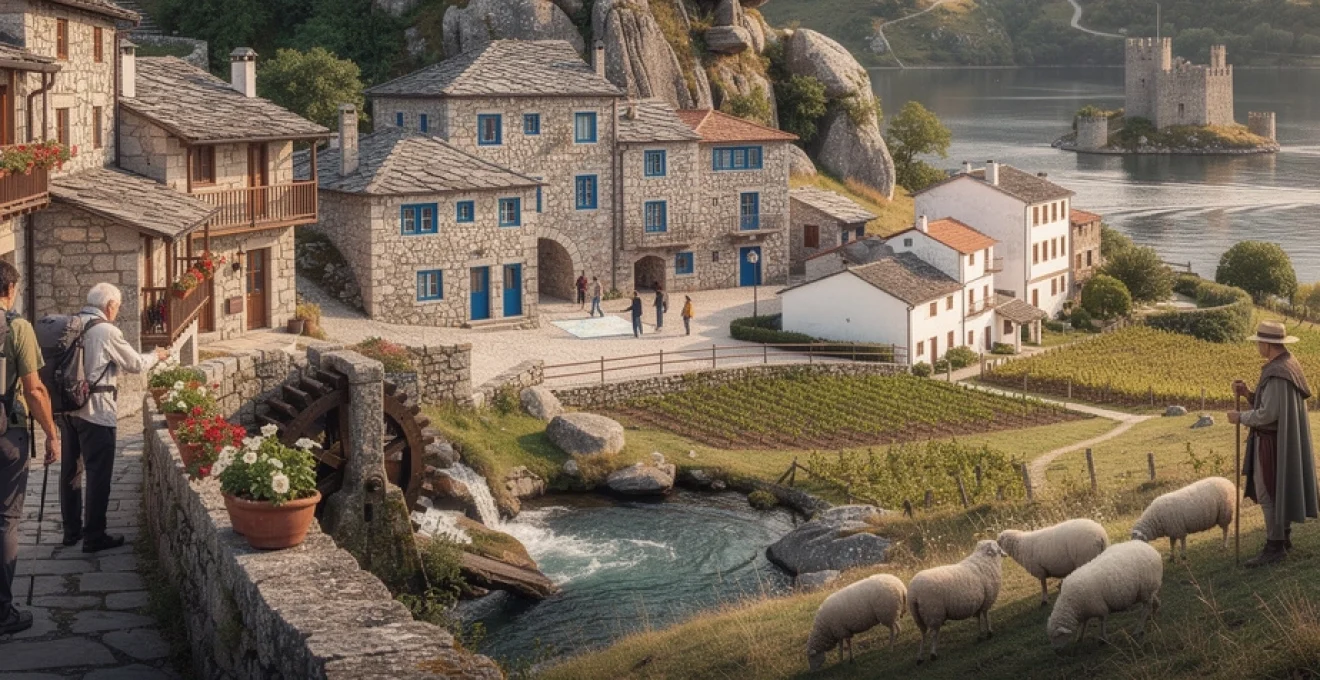
Central Portugal remains one of Europe’s most captivating yet underexplored regions, where centuries-old villages cling to mountainsides and medieval fortifications guard ancient trade routes. While coastal cities attract millions of visitors annually, the interior territories preserve an authentic narrative of Portuguese rural life, architectural heritage, and cultural continuity that stretches back millennia. These settlements represent far more than picturesque destinations—they embody living testimonies to defensive strategies, agricultural adaptation, and community resilience across successive occupations from Roman times through the Reconquista period. The schist-built hamlets of Serra da Lousã, the granite fortresses along the Spanish border, and the shepherd communities of Serra da Estrela offer contemporary travellers an immersive encounter with landscapes and lifeways that have remained remarkably unchanged despite modern pressures.
Schist villages network: UNESCO-Recognised heritage architecture in serra da lousã
The Aldeias do Xisto network comprises 27 settlements across the Serra da Lousã and surrounding mountain ranges, where distinctive dark schist stone construction creates a visual harmony with the forested landscape. This geological material, formed from compressed sedimentary layers, provided builders with readily available resources that offered excellent thermal properties—keeping interiors cool during scorching summers and retaining warmth through harsh winters. The villages developed organically over centuries, with narrow cobbled pathways winding between closely-packed dwellings that maximised defensive capabilities whilst accommodating steep topography. UNESCO recognition in recent decades has catalysed sensitive restoration projects that preserve architectural authenticity whilst introducing modern amenities, transforming previously abandoned hamlets into sustainable tourism destinations that generate economic opportunities for rural communities.
Contemporary conservation efforts balance heritage preservation with practical habitability, ensuring these villages function as living museums rather than static attractions. Artisan workshops, traditional restaurants, and cultural programmes provide visitors with meaningful engagement opportunities whilst supporting local livelihoods. The schist villages demonstrate how thoughtful heritage management can reverse depopulation trends that threatened their existence throughout the late twentieth century.
Talasnal: Stone-Built terraced settlement and traditional water mills
Talasnal exemplifies the vertical architecture characteristic of schist villages, with houses constructed in terraced layers that follow the mountain contours. The settlement’s water mill complex represents one of Central Portugal’s best-preserved examples of pre-industrial grain processing infrastructure, where channelled streams once powered grinding stones that served surrounding agricultural communities. Walking through Talasnal’s pedestrianised streets reveals architectural details that reflect centuries of building traditions—exterior stone staircases accessing upper floors, small window openings that minimised heat loss, and communal washing areas where villagers gathered for daily tasks. Several properties now function as rural tourism accommodation, offering visitors the opportunity to experience authentic village life whilst supporting local economic sustainability. The surrounding landscape provides access to hiking trails that connect to neighbouring settlements, creating multi-day trekking opportunities through some of Portugal’s most pristine mountain environments.
Casal de são simão: panoramic ridge village with restored communal bread ovens
Positioned along a dramatic ridge formation, Casal de São Simão commands exceptional views across forested valleys that stretch toward the Serra da Estrela massif. The village’s restored communal bread ovens remain operational, hosting regular baking demonstrations that showcase traditional techniques passed through generations. These wood-fired structures served as social centres where villagers gathered weekly to bake sufficient bread for their families, sharing news and strengthening community bonds. The settlement’s cultural programming includes seasonal festivals celebrating agricultural cycles, artisan markets featuring local crafts, and musical performances in the village square. Accommodation options range from self-catering cottages to bed-and-breakfast establishments, many occupying carefully restored historic properties that retain original architectural features whilst incorporating contemporary comforts.
Candal: vertical village architecture along medieval pathways
Candal presents perhaps the most striking example of vertical settlement patterns within the schist villages network, with dwellings ascending a precipitous slope in tightly-packed tiers. Medieval pathways connect different elevation levels through steep stone staircases that wind between buildings, creating an intimate spatial experience where neighbours interact across small vertical distances. The village’s architectural coherence—uniform schist construction, consistent roofline heights, and traditional door and window proport
ions preserves a powerful visual unity that photographers and architecture enthusiasts especially appreciate. Despite its compact size, Candal offers a range of visitor services, including a small café with panoramic terrace, craft shops selling locally produced honey and liqueurs, and waymarked trails leading directly into the surrounding forest. For travellers exploring Central Portugal off the beaten path, Candal works well as a base for short circular hikes that connect nearby schist villages and river valleys.
One of the most rewarding experiences in Candal is to follow the old mule tracks that once linked the village to regional markets. These medieval pathways, carved into the mountainside, reveal how closely mobility, trade, and settlement patterns were intertwined in Central Portugal. As you walk, you can still see dry‑stone walls that supported terraced agriculture and small irrigation channels that captured seasonal rainfall. In many ways, Candal functions as an open‑air classroom in sustainable mountain living, demonstrating how communities adapted their built environment to steep gradients long before modern engineering.
Janeiro de cima: artist residencies and adaptive reuse conservation projects
Situated along the banks of the Zêzere River, Janeiro de Cima showcases a different facet of the schist villages network: creative regeneration through arts and design. Here, adaptive reuse projects have transformed former agricultural stores and riverfront warehouses into studios, galleries, and guesthouses that welcome visiting artists and researchers. The village participates in residency programmes that invite creators to engage with local materials—schist, wood, and wool—and reinterpret traditional crafts for contemporary audiences. This fusion of heritage and innovation makes Janeiro de Cima a compelling destination for travellers interested in cultural tourism and slow travel.
The settlement’s riverside location historically supported boat‑building and sand extraction, activities that are now interpreted through small exhibits and guided walks. Carefully restored riverine architecture—including stone steps leading directly into the water and boathouses with distinctive wooden doors—illustrates how daily life revolved around the Zêzere. Today, kayaking, stand‑up paddleboarding, and river cruises allow you to experience this landscape from the water while contributing to the local economy. By choosing accommodation within the village and participating in workshops, visitors help sustain the long‑term conservation of this living schist heritage.
Aldeias históricas de portugal: fortified border villages along the beira interior
The Aldeias Históricas de Portugal programme unites 12 fortified villages across the Beira Interior region, many of which once formed the first defensive line between Portugal and the kingdoms of León and Castile. These granite settlements occupy strategically elevated positions, controlling river crossings and mountain passes that were vital during medieval conflicts. Today, their preserved walls, keeps, and battlements offer some of the most evocative historical landscapes in Central Portugal. Walking through these villages, you are effectively tracing the frontiers of the Portuguese kingdom as they were consolidated between the 12th and 14th centuries.
Beyond their military significance, the historical villages provide insight into everyday life in frontier zones—spaces where trade, religion, and cultural exchange flourished alongside conflict. Many retain Jewish quarters, Romanesque churches, and Renaissance civic buildings, reflecting centuries of layered occupation. For travellers planning day trips from Lisbon or Porto into the interior, combining several of these villages along the well‑signposted GR22 long‑distance trail offers a structured way to explore Central Portugal’s hidden heritage while supporting local businesses and accommodation providers.
Monsanto: granite boulder dwellings beneath the mons sanctus fortification
Monsanto, often referred to as “the most Portuguese village in Portugal,” is instantly recognisable for its remarkable granite boulder houses. Here, entire dwellings are built directly beneath, between, or even inside massive rock formations, creating an almost surreal architectural landscape. The imposing Mons Sanctus fortification crowns the hilltop, its ruined walls blending seamlessly with the natural stone outcrops that once amplified the site’s defensive strength. Climbing to the castle remains rewards you with sweeping views across the Beira Baixa plateau and, on clear days, as far as the Spanish border.
In the village itself, winding lanes reveal chapels, tiny taverns, and stone houses with red‑tiled roofs wedged improbably against vertical boulders. Many properties have been sensitively converted into guesthouses and cafés, allowing you to stay overnight and experience the unique atmosphere after day‑trip crowds have departed. Nightfall transforms Monsanto into a tranquil labyrinth of lantern‑lit alleys and silhouetted rock masses, offering a profound sense of connection to the landscape. If you’re interested in defensive architecture and vernacular building techniques, Monsanto feels like a living textbook rendered in granite.
Sortelha: complete medieval ring wall and manueline architectural elements
Sortelha is one of the best‑preserved medieval villages in Portugal, distinguished by its complete ring of defensive walls that encircle a compact cluster of stone houses. Entering through the monumental gates is akin to passing through a portal in time: cobbled streets, Romanesque doorways, and Gothic windows unfold in a remarkably intact urban fabric. The 13th‑century castle keep dominates the settlement, offering panoramic views over the surrounding granite landscape and ancient agricultural plots, many of which remain in use. Signage throughout the village provides context on construction phases, from early medieval fortification to later Manueline embellishments.
Among Sortelha’s architectural highlights are its Manueline pillory and civic buildings, which attest to the village’s administrative importance in the 16th century. Ornamented window frames and sculpted stone motifs reveal how royal investment reshaped what had once been a purely defensive outpost. Today, small guesthouses, traditional restaurants, and handicraft shops occupy restored properties within the walls, allowing you to linger rather than rush through on a quick visit. Have you ever wondered what it would be like to wake up within a perfectly encircled medieval town? An overnight stay in Sortelha provides exactly that experience.
Piódão: schist amphitheatre village with blue-trimmed vernacular houses
Nestled on the slopes of the Serra do Açor, Piódão appears from a distance like a terraced amphitheatre of dark schist houses cascading down a mountainside. The village layout follows the contours of the steep terrain, with narrow stairways and alleys replacing conventional streets. What immediately distinguishes Piódão from other schist villages is its characteristic blue‑trimmed windows and doors, a colour thought to have become popular when blue paint was the most affordable option in local shops. Against the dark stone, the effect is striking and has become an iconic image of Central Portugal.
At the heart of the village stands the whitewashed Igreja Matriz, whose smooth plastered façade and simple bell towers contrast with the surrounding stone architecture. The area around Piódão offers numerous hiking routes, including paths leading to the river beach at Foz d’Égua, where wooden bridges and crystalline pools create an idyllic summer retreat. Because Piódão has grown in popularity, visiting outside peak hours or seasons can make your experience more tranquil and authentic. Staying overnight in one of the restored houses allows you to enjoy the quiet of early morning and twilight, when the village is at its most atmospheric.
Belmonte: jewish quarter and pedro álvares cabral maritime heritage
Belmonte occupies a unique position among the historical villages due to its enduring Jewish community and association with the navigator Pedro Álvares Cabral, credited with discovering Brazil for the Portuguese crown in 1500. The village’s Jewish quarter preserves narrow lanes, discreet symbols of faith carved into stonework, and the Bet Eliahu synagogue, inaugurated in 1996 as a symbol of religious continuity. The Jewish Museum of Belmonte provides in‑depth insight into the history of crypto‑Judaism in Portugal, documenting how families secretly preserved their beliefs through centuries of persecution.
Above the village, Belmonte Castle houses a small exhibition dedicated to Pedro Álvares Cabral and offers commanding views across the Cova da Beira valley. Together with nearby museums focused on olive oil and rural life, these institutions create a comprehensive picture of how global maritime expansion and local agriculture have shaped the region’s identity. For visitors interested in combining landscape exploration with cultural history, Belmonte’s blend of Jewish heritage, medieval fortification, and Cabral’s maritime legacy makes it a rewarding stop on any Central Portugal itinerary.
Ribatejo region river settlements: tagus valley agricultural communities
Moving west towards the broad plains of Ribatejo, the character of Central Portugal’s hidden villages shifts from mountain strongholds to riverine communities shaped by the Tagus and its tributaries. Here, settlements evolved around fertile floodplains, fluvial trade routes, and strategic river crossings that connected Lisbon to the interior. Whitewashed houses with colourful trim replace schist and granite, while riverside promenades and quays bear witness to centuries of navigation. These villages offer an excellent window into how Central Portugal’s agricultural wealth has long depended on careful water management and seasonal rhythms.
Exploring the Tagus Valley, you will notice how architecture and urban form respond to the river’s dual nature as both life‑giving resource and potential threat. Elevated churches, flood‑resistant warehouses, and terraced fields reflect a deep understanding of hydrological cycles. At the same time, literary associations and military installations underscore the region’s importance in national narratives. For travellers seeking day trips from Lisbon that go beyond the usual coastal attractions, the Ribatejo river settlements provide a compelling combination of history, landscape, and local cuisine rooted in river fish and farm produce.
Constância: camões literary heritage at the tagus-zêzere confluence
Constância occupies a picturesque promontory at the confluence of the Tagus and Zêzere rivers, a position that once made it a key stopover for river traffic heading to and from Lisbon. The village is closely associated with Luís de Camões, Portugal’s national poet, who is believed to have lived here for a time in the 16th century. Today, the Casa‑Memória de Camões interprets this connection, situating Constância within the broader context of Portuguese literary heritage. Strolling through its whitewashed alleys, adorned with bougainvillea and traditional tiles, it is easy to understand why writers have long drawn inspiration from this tranquil setting.
Riverside gardens and viewpoints offer extensive vistas along both waterways, particularly beautiful at sunset when the light softens over the water. River beaches and boat tours provide opportunities to experience the landscape from the perspective of historical navigators. Constância also hosts colourful festivals, including floral processions during Easter, which weave together religious tradition and community identity. If you are combining several hidden villages in Central Portugal within a single trip, Constância works well as a gentle, contemplative pause between more mountainous or fortress‑oriented destinations.
Almourol castle island village: templar fortress and navigable river access
A short distance downstream, the iconic silhouette of Almourol Castle rises from a rocky islet mid‑channel in the Tagus River. Although not a village in itself, the fortress is accessed from small riverside settlements that historically serviced boat traffic and military logistics. Built in the 12th century and later associated with the Knights Templar, Almourol exemplifies how river islands were used as natural bastions to control navigation routes. Approaching the castle by boat, with its crenellated towers reflected in the water, is one of the most evocative experiences in Central Portugal.
Once ashore, a steep staircase leads to the inner courtyard and ramparts, from which you can survey the surrounding river corridor and riparian forests. Interpretation panels explain the castle’s role within broader defensive networks, including connections to land‑based strongholds in the Ribatejo region. Visiting Almourol alongside nearby villages such as Tancos or Praia do Ribatejo gives you a fuller picture of how communities depended on and interacted with the Tagus. For travellers interested in Templar history and medieval military engineering, Almourol is an unmissable stop on any Central Portugal itinerary.
Abrantes: strategic hilltop settlement with santa maria do castelo church
Abrantes overlooks a wide meander of the Tagus from an elevated hilltop that has been continuously occupied since pre‑Roman times. The town’s castle and the church of Santa Maria do Castelo anchor a fortified acropolis that once controlled a key crossing point between northern and southern Portugal. Today, landscaped gardens surround the remaining walls and towers, creating a peaceful setting from which to survey the Ribatejo plains. The church itself, now functioning as a small museum space, displays archaeological finds that trace Abrantes’ long history as a military and commercial hub.
Below the castle, the historic centre features tiled facades, iron‑balconied townhouses, and shaded squares where cafés spill onto the pavement. Because Abrantes remains a working regional centre rather than a purely touristic town, it offers an authentic slice of everyday life in Central Portugal—markets, local bakeries, and traditional restaurants serving river fish stews and mig as. As you explore, you can see how the town’s topography shaped its development: steep streets radiate from the hilltop, and many viewpoints reveal the enduring relationship between settlement and river.
Serra da estrela mountain hamlets: glacial valley shepherd settlements
Further inland, the Serra da Estrela massif rises to form mainland Portugal’s highest peaks, sculpted by ancient glaciers into U‑shaped valleys, cirques, and high plateaus. Within this dramatic landscape, small hamlets and villages reveal a pastoral heritage centred on transhumant sheep and goat herding. Stone barns, terraced pastures, and communal grazing lands demonstrate how communities adapted to harsh winters and short growing seasons. Visiting these settlements, you gain insight into the origins of iconic regional products such as queijo Serra da Estrela, one of Europe’s most celebrated sheep’s milk cheeses.
The mountain environment also underpins rich biodiversity, including endemic plant species and habitats protected within the Serra da Estrela Natural Park. Hiking trails, many following former shepherd routes, link hamlets to glacial lagoons, high‑altitude viewpoints, and traditional summer pastures. If you have ever compared the slow, methodical pace of mountain life to the precision of a mechanical clock, Serra da Estrela shows you the original mechanism: seasonal migration, grazing cycles, and snowmelt dictate a rhythm that has guided human activity here for centuries.
Folgosinho: castro-era origins and romanesque chapel of são sebastião
Folgosinho occupies a rounded hilltop that was once the site of a pre‑Roman castro settlement, later absorbed into medieval defensive networks. Today, traces of ancient ramparts coexist with a small castle‑like structure and winding streets of granite houses. From the village, extensive views open across the Mondego valley and towards the higher Serra da Estrela peaks, underscoring the strategic value of this vantage point. Folgosinho’s compact layout and traditional architecture make it an inviting stop on any road trip through Central Portugal’s mountains.
One of the village’s key landmarks is the Romanesque chapel of São Sebastião, whose simple stonework and modest dimensions reflect rural devotional practices rather than royal patronage. Inside, you may find painted wooden altarpieces and offerings left by villagers seeking protection from disease or misfortune—a reminder that, historically, religious sites functioned as both spiritual and social anchors. Local restaurants in Folgosinho are known for generous portions of mountain cuisine, including kid goat, wild boar, and hearty stews, making the village an excellent place to combine cultural exploration with regional gastronomy.
Linhares da beira: medieval castle keep and granite stone houses
Linhares da Beira, part of the Aldeias Históricas network, stretches along a slope beneath an imposing medieval castle whose twin towers dominate the skyline. The village’s linear plan follows the contours of the hillside, with granite houses aligned along cobbled streets that still bear traces of medieval drainage channels. Walking from the lower entrance up towards the castle, you pass civic buildings, pillories, and chapels that chart Linhares’ evolution from frontier stronghold to judicial centre. The castle’s battlements afford spectacular views over the Mondego valley and surrounding mountains, revealing why this site was so fiercely contested.
In recent years, Linhares has also developed a reputation as a paragliding hub, taking advantage of favourable wind conditions and open landscapes. Seeing colourful wings launch from the slopes below the castle adds a contemporary dimension to a setting otherwise steeped in history. Guesthouses housed in restored stone properties offer comfortable bases for exploring both cultural heritage and outdoor activities. For travellers seeking a village that combines intact medieval architecture with opportunities for hiking, cycling, or paragliding, Linhares da Beira is an ideal choice.
Sabugueiro: portugal’s highest village and transhumance pastoral routes
Often described as Portugal’s highest village, Sabugueiro lies on the route to Torre, the summit of Serra da Estrela. Historically, it served as a staging post for transhumant shepherds moving their flocks between lowland winter pastures and high‑altitude summer grazing grounds. The village retains numerous signs of this pastoral heritage: stone byres incorporated into houses, drying racks for cured meats, and shops specialising in wool garments and mountain equipment. In many ways, Sabugueiro functions as a gateway between the everyday world and the austere, weather‑shaped environment of the high plateau.
Modern visitors use Sabugueiro as a base for exploring nearby glacial valleys, waterfalls, and ski areas (operational during years with sufficient snowfall). Local restaurants serve robust dishes designed to sustain people through harsh winters—smoked sausages, bean stews, and cheese platters featuring Serra da Estrela varieties. If you are planning to drive to Torre or hike to glacial lagoons, stopping in Sabugueiro allows you to stock up on supplies, check weather conditions, and get a sense of how communities have learned to thrive at the edge of habitable altitude.
Vale de amoreira: glacial lagoon access and mountain biodiversity corridors
Less known than Sabugueiro but equally rewarding for nature‑focused travellers, Vale de Amoreira occupies a valley that opens towards some of Serra da Estrela’s most pristine glacial landscapes. Traditional stone houses cluster along the river, surrounded by terraced fields and chestnut groves that provide important biodiversity corridors for wildlife. From the village, marked trails lead towards high‑altitude lagoons and ridgelines, offering opportunities to observe endemic plant species and, with luck, birds of prey that patrol the thermals above. For hikers seeking Central Portugal’s hidden gems, Vale de Amoreira offers direct access to wild terrain without the crowds found at more famous viewpoints.
Accommodation here tends to be small‑scale and family‑run, often in restored rural properties that maintain original features such as granite lintels, slate roofs, and interior fireplaces. Staying overnight enables you to experience the subtle shifts in mountain light at dawn and dusk, when the valley alternates between deep shadow and golden illumination. It also supports local initiatives aimed at maintaining traditional agriculture and preventing further depopulation. Think of Vale de Amoreira as a natural observatory where you can watch the ongoing interaction between human settlement and high‑mountain ecosystems.
Beira baixa plateau villages: post-reconquista agrarian settlements
South‑east of Serra da Estrela, the Beira Baixa plateau stretches towards the Spanish border, its open horizons punctuated by granite inselbergs and fortified villages. After the Reconquista consolidated Portuguese control in the 12th and 13th centuries, these lands were granted to military orders and nobility who encouraged settlement through land concessions and tax privileges. The resulting agrarian villages feature robust stone houses, Roman and Visigothic remains, and churches that reflect successive architectural styles. Compared to coastal regions, development here has remained modest, preserving a sense of temporal continuity that is increasingly rare in Europe.
For travellers interested in the deep history of Central Portugal, Beira Baixa offers an unparalleled concentration of archaeological sites layered within living communities. Roman bridges still carry local traffic, Visigothic capitals support later church naves, and medieval walls enclose streets that have changed little in layout for centuries. At the same time, contemporary projects in sustainable tourism and heritage interpretation are making these hidden villages more accessible without compromising their integrity. Exploring them feels a little like reading a palimpsest, where new narratives overwrite but never fully erase older ones.
Idanha-a-velha: roman civitas igaeditanorum and visigothic cathedral ruins
Idanha‑a‑Velha stands on the site of Civitas Igaeditanorum, a Roman administrative centre that flourished between the 1st and 4th centuries CE. Today, the village resembles an open‑air archaeological park, with Latin inscriptions, milestones, and masonry fragments integrated into walls and public spaces. The most striking structure is the complex formed by the early Christian basilica and later Visigothic cathedral, whose thick stone walls and horseshoe arches testify to the transition from imperial to post‑Roman rule. Walking through the site, you can see how subsequent centuries repurposed Roman blocks in vernacular houses, blurring the line between monument and everyday architecture.
Interpretive panels and a small local museum help contextualise Idanha‑a‑Velha’s long occupation sequence, from Iron Age settlement to medieval decline. Because the village is relatively isolated, it tends to receive fewer visitors than major UNESCO World Heritage sites, allowing for unhurried exploration. Combining Idanha‑a‑Velha with nearby villages such as Monsanto and Penha Garcia creates a compelling itinerary that spans over two millennia of Central Portugal’s history. For anyone fascinated by the longue durée of European settlement, this cluster of sites is particularly rewarding.
Monsanto o velho: abandoned village archaeological site and medieval foundations
Above the present‑day village of Monsanto lies Monsanto o Velho, an abandoned settlement whose ruins preserve the footprint of an earlier medieval community. Crumbling house walls, cisterns, and sections of fortification walls cling to the rocky slopes below the current castle, providing archaeologists with invaluable data on early stone construction and village organisation. Walking through this ghost village, now partially overgrown with vegetation, feels like stepping into a suspended moment in Central Portugal’s past. The absence of modern interventions allows you to imagine daily life when the site was still inhabited.
Access to Monsanto o Velho typically involves a short but steep hike from the main village or castle, so sturdy footwear is recommended. Because the site has not been heavily reconstructed, visitors should exercise caution while exploring and respect any restricted areas marked for archaeological work. The experience of moving between the living village below, with its thriving tourism infrastructure, and the silent ruins above offers a powerful illustration of settlement continuity and change. It is as if you are viewing two layers of the same place separated by several centuries.
Penha garcia: fossil heritage trail and pulo do lobo waterfall access
Penha Garcia occupies a dramatic position beneath towering quartzite ridges that conceal one of Central Portugal’s most remarkable geological attractions: a fossil‑rich gorge carved by the Pônsul River. The Rota dos Fósseis (Fossil Route) is a signposted walking trail that leads from the village into the canyon, where you can see well‑preserved trace fossils of trilobites embedded in the rock faces. These ancient imprints, dating back over 480 million years, offer a tangible connection to life on Earth long before human settlement. It is hard not to feel a sense of wonder standing beside them, knowing that they predate even the oldest ruins in the region.
Along the trail, restored watermills and stone bridges reveal how successive generations harnessed the river’s energy for grain milling and irrigation. Depending on water levels, you may also access viewpoints over small waterfalls and natural pools, sometimes referred to locally as Pulo do Lobo, where the river narrows between rock walls. After the hike, returning to the village square for a meal or refreshment completes a satisfying circuit that combines geology, industrial heritage, and contemporary rural life. For travellers seeking a unique, science‑infused day trip in Central Portugal, Penha Garcia is an outstanding option.
Sustainable tourism infrastructure for remote village exploration
As interest in Central Portugal’s hidden villages grows, sustainable tourism infrastructure has become crucial to preserving both cultural heritage and environmental quality. Regional authorities and local communities have responded by developing networks of rural accommodation, interpretive centres, and long‑distance trails designed to distribute visitors more evenly and encourage longer stays. This approach recognises that tourism, when carefully managed, can help counteract rural depopulation by generating income and justifying investment in services. At the same time, it seeks to avoid the pitfalls of overtourism experienced in some coastal and urban destinations.
For travellers, this means that exploring off‑the‑beaten‑path villages no longer requires sacrificing comfort or logistical ease. Waymarked hiking routes connect settlements, digital and on‑site information resources facilitate self‑guided visits, and local guides offer tailored experiences ranging from gastronomic tours to bird‑watching excursions. By choosing certified accommodations and participating in community‑run activities, you play an active role in sustaining the very places you have come to enjoy. In a sense, each visitor becomes part of a broader conservation effort, much like a single thread contributing to the strength of a woven tapestry.
Casa da montanha network: rural accommodation in restored stone properties
One cornerstone of this sustainable tourism strategy is the emergence of small‑scale accommodation networks—often branded under names such as Casa da Montanha or similar concepts—that focus on restored stone houses in mountain villages. These properties typically retain original facades, wooden beams, and fireplaces while incorporating modern insulation, heating, and bathroom facilities. The result is a comfortable base that still feels rooted in local building traditions. Many such guesthouses operate on a family‑run model, providing personalised hospitality and insider tips on nearby trails, cultural events, and dining options.
From a sustainability perspective, reusing existing structures reduces the need for new construction and helps maintain village density, which in turn supports local shops and services. Some accommodations participate in certification schemes or regional programmes that promote energy efficiency, waste reduction, and use of local products. When booking, you can look for mentions of eco‑practices or community partnerships, which indicate a commitment to responsible tourism. Choosing to stay in these houses rather than in distant urban hotels also reduces travel distances between attractions, lowering your overall environmental footprint.
Grande rota 22 (gr22): long-distance hiking trail through schist villages
The Grande Rota 22 (GR22), also known as the Historical Villages Trail, is a long‑distance hiking route of roughly 600 kilometres that links many of the fortified and schist villages across Beira Interior and Serra da Estrela. Waymarked in both directions, the trail forms a large loop that can be tackled as a complete multi‑week trek or broken into shorter sections for day hikes and weekend trips. By following the GR22, you literally walk in the footsteps of soldiers, traders, and pilgrims who once moved along these same corridors between strongholds and market towns.
Practically, the GR22 provides a coherent framework for planning an itinerary through Central Portugal’s hidden gems without relying heavily on a car. Villages along the route offer accommodation, meals, and basic services, and many have tourist offices or information panels that explain local history and natural features. Before setting out, it is wise to check current trail conditions, weather forecasts, and any fire‑risk restrictions, especially in summer. Carrying a detailed map or GPS track—alongside the on‑site waymarking—adds an extra layer of security. For hikers seeking a less crowded alternative to Portugal’s coastal Caminhos, the GR22 represents a rich and rewarding option.
CISE interpretive centres: cultural heritage education in lousã villages
Interpretive centres such as those managed by entities like CISE (often translated as Serra da Estrela or environmental interpretation centres, depending on the context) play a crucial role in mediating between visitors and sensitive landscapes. In the Lousã and Serra da Estrela regions, these centres provide exhibitions, guided activities, and educational materials that explain local geology, biodiversity, and cultural practices. Rather than presenting villages as static museum pieces, they emphasise dynamic processes—forest regeneration, rural innovation, climate adaptation—that continue to shape the territory today.
Stopping at an interpretive centre before exploring nearby villages and trails can significantly enrich your experience. You gain a deeper understanding of why settlements developed where they did, how traditional building materials relate to underlying rock formations, and what measures are in place to protect habitats and archaeological assets. Many centres also coordinate volunteer programmes and citizen‑science projects, offering opportunities for more engaged forms of tourism. By taking the time to learn about these contexts, you not only enhance your own journey through Central Portugal but also contribute to a culture of respect and stewardship that will help keep its hidden villages authentic for generations to come.