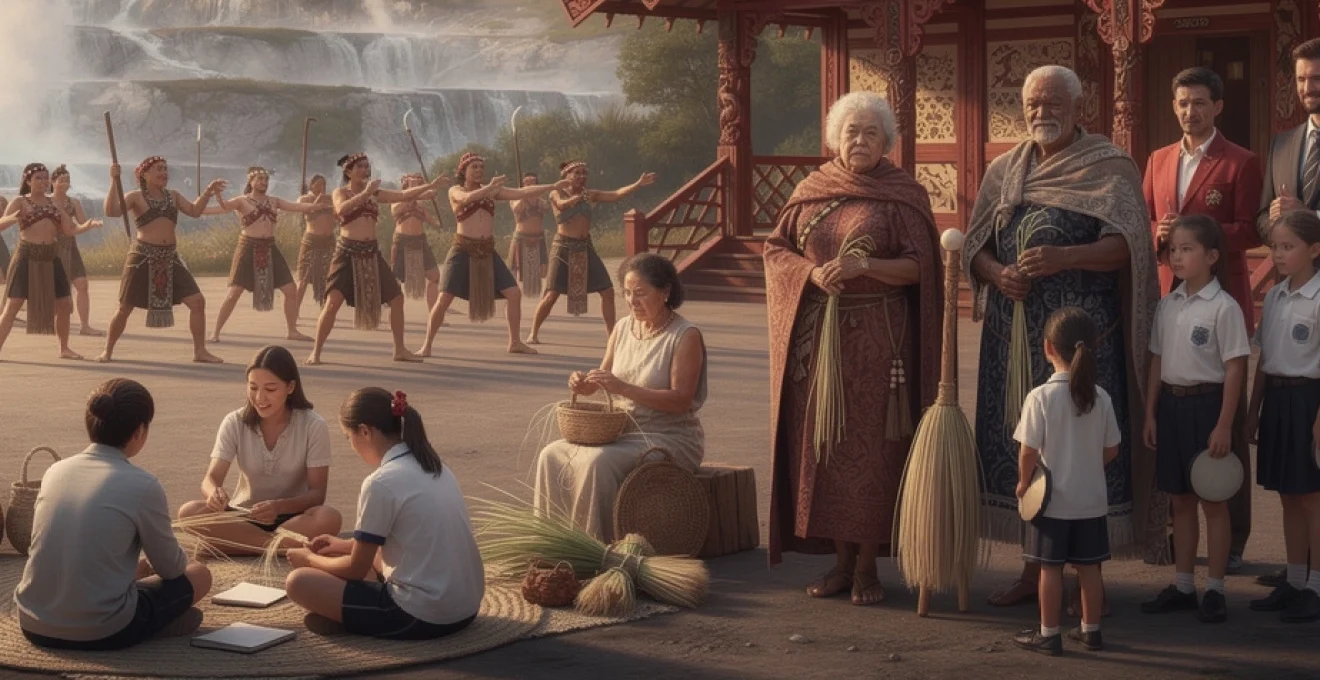
# Exploring Indigenous Maori Culture in New Zealand
New Zealand’s identity is inextricably woven with the vibrant threads of Māori culture, a living heritage that pulses through every aspect of Aotearoa’s landscape, language, and collective consciousness. The indigenous Māori people, who voyaged across the Pacific Ocean over seven centuries ago, brought with them a rich tapestry of Polynesian traditions that have not merely survived colonisation but have flourished into a dynamic cultural force shaping modern New Zealand. From the rhythmic foot-stomping of the haka to the intricate spiral patterns of traditional tattoos, Māori culture offers you an immersive journey into a worldview where spirituality, ancestry, and nature exist in profound interconnection. Understanding this culture isn’t simply about observing performances or visiting heritage sites—it’s about recognising the resilience of a people who have fought to preserve their language, customs, and sovereignty whilst adapting to contemporary realities.
Te reo māori: language revitalisation and contemporary usage
The story of te reo Māori, the Māori language, represents one of the most remarkable linguistic revivals in modern history. By the 1980s, the language teetered on the brink of extinction, with fewer than 20% of Māori children able to speak their ancestral tongue. Today, te reo Māori enjoys official language status alongside English and New Zealand Sign Language, a transformation that demonstrates the power of sustained cultural activism and governmental support. You’ll encounter Māori phrases throughout your New Zealand journey—kia ora (hello), whānau (family), manaakitanga (hospitality)—terms that have seamlessly integrated into everyday Kiwi vernacular, transcending ethnic boundaries to become part of the national linguistic identity.
Kohanga reo and kura kaupapa māori education models
The kōhanga reo (language nest) movement, launched in 1982, revolutionised Māori language transmission by creating total immersion early childhood centres where tamariki (children) learn exclusively in te reo Māori. These grassroots initiatives, driven by concerned kaumātua (elders) who recognised the urgency of language preservation, have educated over 50,000 children since their inception. The success of kōhanga reo spawned kura kaupapa Māori, primary schools operating entirely in te reo, and later wharekura (secondary schools) and wānanga (tertiary institutions), creating a complete educational pathway for Māori-medium learning. Research indicates that students educated through these models demonstrate stronger cultural identity, improved academic outcomes, and enhanced cognitive flexibility compared to monolingual peers. When you visit New Zealand, you might notice bilingual signage at government departments, airports, and public facilities—a visible testament to how kōhanga reo graduates have transformed linguistic expectations across society.
Te taura whiri i te reo māori language commission initiatives
Established in 1987, Te Taura Whiri i te Reo Māori (the Māori Language Commission) serves as the official guardian and promoter of te reo, developing contemporary vocabulary for modern concepts whilst maintaining linguistic authenticity. The commission faces the constant challenge of creating terminology for technologies and ideas that didn’t exist in pre-European Māori society—how do you say “computer” or “sustainability” in an indigenous language? Through consultation with language experts and tribal authorities, Te Taura Whiri has coined thousands of new terms, such as rorohiko (electric brain) for computer and hangarau for technology. The commission also certifies official place names, correcting colonial misspellings and restoring traditional Māori toponyms. Recent initiatives include Mahuru Māori (Māori Language Month), celebrated each September, during which government departments, businesses, and individuals commit to using more te reo in their daily communications.
Māori television and digital media platform integration
The launch of Māori Television
The launch of Māori Television in 2004 marked a turning point for the visibility of indigenous narratives in mainstream media. Broadcasting predominantly in te reo Māori with English subtitles, the channel normalises everyday language use and offers content ranging from news and current affairs to children’s shows and historical documentaries. In recent years, digital platforms such as on-demand streaming, YouTube, podcasts, and social media have amplified this impact, allowing younger generations to engage with te reo content on their own terms. You’ll find everything from reo-focused comedy skits to short-form language lessons on TikTok and Instagram, proving that te reo Māori is just as at home in the digital age as it is on the marae. For language learners, following Māori creators online can be one of the most practical ways to build confidence and hear the language as it is naturally spoken.
Dialectal variations across iwi: te tai tokerau to kai tahu
Like many living languages, te reo Māori is not monolithic; it features distinct dialects shaped by geography, history, and tribal identity. In the northern regions of Te Tai Tokerau, you may hear the consonant ng softened in everyday speech, while in Taranaki and Whanganui, historical records show that the h sound was often dropped. In the south, the Kai Tahu dialect is famous for substituting k for ng, so ngā (the plural article) becomes kā, and ngāti becomes kāti. These variations function a little like regional accents, signalling where a speaker comes from and which iwi they belong to, while remaining mutually intelligible across the country. As you travel through New Zealand and engage with Māori guides, listen closely—you may start to notice these subtle but significant markers of identity embedded in the language.
Marae protocol and tikanga customs in sacred spaces
The marae is the beating heart of Māori community life, serving as a focal point for ceremonies, celebrations, tangihanga (funerals), and important gatherings. More than a physical complex of buildings, a marae is a sacred space where tikanga (customs and correct procedures) uphold spiritual and social order. When you step onto a marae, you’re entering a world where every gesture, from where you sit to how you speak, carries layers of meaning anchored in genealogy and respect. For visitors, understanding marae protocol is essential to engaging with indigenous Māori culture in New Zealand in a way that is both respectful and enriching. Far from being rigid rules, these customs operate like a carefully choreographed dance that keeps relationships, stories, and spiritual connections in balance.
Pōwhiri ceremonial welcome process and karanga exchange
The pōwhiri, or ceremonial welcome, is one of the most powerful rituals you can experience on a marae. Traditionally used to determine whether visitors came in peace or with hostile intent, the pōwhiri now serves to weave manuhiri (guests) and tangata whenua (hosts) into a shared space of understanding. The process usually begins with the karanga, a haunting call performed by women from each side, which acknowledges ancestors, the purpose of the gathering, and the journey of the visitors. This is followed by speeches (whaikōrero), songs (waiata), and often the hongi, where people press noses and foreheads together to share the ha—the breath of life. If you’re invited to take part, you’ll usually be guided step by step, but a simple rule of thumb is to listen carefully, move when directed, and treat the space as you would a place of worship.
Whare whakairo architecture at te papa tongarewha and waitangi treaty grounds
Whare whakairo, or carved meeting houses, are among the most visually striking expressions of Māori culture, combining sculpture, painting, architecture, and genealogy into a single living artwork. At the Museum of New Zealand Te Papa Tongarewa in Wellington, the contemporary marae complex Rongomaraeroa showcases bold carving and design that honours tribal traditions while embracing a pan-tribal, urban future. In the Bay of Islands, the Te Whare Rūnanga meeting house at the Waitangi Treaty Grounds is richly adorned with tekoteko (carved figures) and poupou (wall panels), each representing ancestors and events tied to the Treaty of Waitangi. These buildings are often said to represent the body of an ancestor—the bargeboards are the arms, the ridgepole is the spine, and the interior is the chest and womb—creating an architectural metaphor where entering the house is akin to returning to the ancestor for guidance and protection. When you visit, you’re not just stepping into a structure; you’re entering a three-dimensional family tree carved in wood.
Tapu and noa spiritual framework in contemporary practice
Understanding the concepts of tapu and noa is key to making sense of Māori protocol. Tapu can be loosely translated as sacred or restricted, a state connected to spiritual power and ancestral presence, while noa refers to the removal of these restrictions, returning people or places to everyday balance. You might think of tapu as a protective boundary around certain objects, people, or activities—like a “do not cross” line that preserves mana and prevents spiritual harm. On the marae, tapu and noa influence everything from where food can be taken to how the meeting house is used, and they remain highly relevant in modern contexts such as environmental management or the care of ancestral remains. As a visitor, respecting these boundaries—such as not eating in the meeting house unless invited or seeking permission before photographing certain carvings—is an important way to honour contemporary Māori spirituality.
Whakapapa genealogical systems and tribal affiliations
Whakapapa, often translated as genealogy, is the backbone of Māori identity and social organisation. More than a family tree, it is a sophisticated system that links people to their ancestors, their iwi (tribe), hapū (sub-tribe), and whānau (extended family), as well as to the land, rivers, and mountains. In oral introductions, Māori often begin with a pepeha, a form of self-identification that names their mountain, river, canoe, tribe, and ancestors, situating themselves within a network of relationships rather than as isolated individuals. This worldview is a bit like seeing yourself as a single thread in a vast woven cloak; your strength and meaning come from the connections around you. When you hear your guide share their pepeha, you’re being invited into that relational landscape—an opportunity to see New Zealand’s geography not just as scenery, but as kin.
Traditional māori art forms: whakairo, tā moko, and raranga
Traditional Māori art forms are far more than aesthetic expressions; they are repositories of knowledge, law, and history. Whakairo (carving), tā moko (tattooing), and raranga (weaving) operate as visual languages, encoding whakapapa, mythology, and social roles in patterns and symbols. As you explore galleries, marae, and public spaces across Aotearoa, you’ll notice recurring motifs—spirals, notches, interlocking curves—that might at first seem purely decorative but in fact carry layers of meaning accessible to those who can “read” them. Engaging with these practices offers a powerful way to understand how indigenous Māori culture in New Zealand transmits identity across generations without relying solely on written texts.
Tekoteko and poupou carving techniques in meeting houses
Within a carved meeting house, tekoteko (gable figures) and poupou (upright wall panels) serve as guardians and storytellers in wood. Carvers use native timbers such as tōtara and kauri, chosen for their durability and spiritual significance, and work with traditional hand tools as well as modern equipment. The stylised forms—prominent eyes, intricate facial patterns, and curving limbs—are not meant to replicate realistic anatomy but to emphasise key ancestral features and symbolic attributes like strength, wisdom, or martial prowess. Techniques such as pakati (dog-tooth notching) and unaunahi (fish-scale patterns) create texture that catches the light, making the figures seem almost alive during ceremonies. When you visit places like Te Puia in Rotorua or Te Papa in Wellington, watching master carvers at work can feel like witnessing history being etched into the future, one chisel stroke at a time.
Kirituhi versus traditional tā moko tattooing distinctions
Tā moko, the traditional Māori practice of tattooing, is deeply intertwined with whakapapa and is considered a sacred art form. Historically, facial moko for men and kauae moko (chin tattoos) for women signified social status, achievements, and tribal links, functioning like a living identity document worn on the skin. In contemporary practice, tā moko remains reserved for Māori who can trace their genealogy and work with expert artists to design patterns that reflect their specific heritage and life journey. By contrast, kirituhi—literally “skin art”—describes Māori-inspired tattoo designs created for people regardless of ancestry, often with a focus on personal stories rather than tribal lineage. If you’re considering getting a Māori-style tattoo while travelling, choosing kirituhi and working with a reputable artist who explains the cultural context is a respectful way to honour the art without appropriating a form that is not yours to claim.
Harakeke flax weaving and kete construction methods
Raranga, or flax weaving, transforms harakeke (New Zealand flax) into practical and ceremonial items such as kete (baskets), piupiu (skirts), and finely patterned mats. The process begins long before the first strand is woven: weavers follow strict protocols when harvesting harakeke, never cutting the central shoot—the “baby” of the plant—and often offering a karakia (prayer) before taking leaves. The blades are then stripped, softened, and sometimes dyed using natural pigments before being woven using techniques passed down through generations. Watching a skilled weaver work is a bit like observing someone play a complex piece of music from memory; the rhythm of their hands and the emerging geometric patterns speak to years of practice and cultural immersion. Many marae and cultural centres offer short workshops where you can try basic weaving, giving you a tactile appreciation of the patience and precision involved.
Contemporary māori artists: robyn kahukiwa and shane cotton
Contemporary Māori artists continue this lineage of visual storytelling, using new media to explore themes of identity, colonisation, and cultural resilience. Painter and illustrator Robyn Kahukiwa is renowned for her powerful depictions of Māori women, ancestors, and atua (deities), often blending bold colours with symbolic motifs that assert indigenous sovereignty and mana wahine (the power of women). Shane Cotton, another leading figure, fuses graffiti aesthetics, birds, text, and traditional iconography into complex canvases that examine land loss, spirituality, and the shifting boundaries between Māori and Pākehā worlds. Encountering their works in galleries such as Te Papa or regional museums adds a contemporary layer to your understanding of Māori art, showing that tradition is not a static relic but a living conversation with the present. As you move between carved meeting houses and modern exhibitions, you’ll start to see how the same core symbols reappear, reinterpreted for each new era.
Kapa haka performance: haka, waiata, and poi traditions
Kapa haka, literally “line dance,” brings together song, chant, harmony, movement, and facial expression into a dramatic performance genre that is central to Māori cultural life. You might already know the haka through rugby, but kapa haka encompasses a diverse repertoire including action songs, poi, and choral laments. Performances can serve many roles: welcoming dignitaries, commemorating historical events, celebrating victories, or asserting tribal pride at competitive festivals. When you attend a kapa haka show in Rotorua or at a local school, you’ll notice how performers move as a single entity, their timing and energy reflecting hours of disciplined practice and deep emotional investment. It’s not simply entertainment; it’s a physical manifestation of collective identity and historical memory.
Te matatini national kapa haka festival competition structure
Te Matatini, held every two years, is the pinnacle of kapa haka performance and one of the most significant cultural events in Aotearoa. Regional teams from across the country—and sometimes from overseas Māori communities—compete in qualifying rounds before earning the right to perform on the national stage. Each group presents a carefully crafted suite of items, typically including haka, waiata-ā-ringa (action songs), poi, mōteatea (traditional laments), and whakawātea (closing items), all judged on criteria such as musicality, choreography, diction, and authenticity. The atmosphere is electric: thousands of supporters fill the venue, chanting, waving banners, and responding to each performance with passionate calls. If your trip coincides with Te Matatini, securing tickets offers a rare chance to witness indigenous Māori culture in New Zealand at its most dynamic and innovative.
Ka mate haka origins and ngāti toa rangatira connections
Among the many haka, Ka Mate is arguably the most famous, thanks to its adoption by the All Blacks rugby team. Composed around 1820 by the Ngāti Toa chief Te Rauparaha, the haka recounts his narrow escape from enemies who sought his life, celebrating the triumph of life over death. The lines “Ka mate! Ka mate! Ka ora! Ka ora!” (“It is death! It is death! It is life! It is life!”) refer to his emergence from hiding, aided by allies who concealed him beneath a food storage pit. For Ngāti Toa, Ka Mate is a taonga (treasure) intimately tied to their history, and in recent decades they have worked with the New Zealand government to secure recognition of their custodial rights over its use. Knowing this backstory adds depth when you see the haka performed on a sports field or marae—it is not a generic war dance, but a specific narrative of survival and gratitude.
Waiata-ā-ringa action songs and regional performance styles
Waiata-ā-ringa, or action songs, blend melodic singing with hand and body movements that emphasise key words and themes. These pieces often celebrate historical events, express love for the land, or honour ancestors, with gestures that mirror waves, birds in flight, or the beating heart. Different regions and iwi have distinctive stylistic signatures—some favour sharp, staccato movements and strong facial expressions, while others emphasise flowing, graceful gestures. For visitors, waiata-ā-ringa can offer a more accessible entry point into kapa haka, as you may be invited to learn a simple song and accompanying actions. Participating, even in a small way, turns you from a spectator into a collaborator in the shared project of keeping Māori performance traditions alive.
Treaty of waitangi legacy and māori land rights movements
No exploration of indigenous Māori culture in New Zealand is complete without grappling with the legacy of the Treaty of Waitangi and the struggles for land and political rights that followed. Signed in 1840 between representatives of the British Crown and many Māori chiefs, the Treaty was intended to establish a framework for shared governance and protection of Māori lands and customs. However, differing English and Māori texts, along with subsequent breaches by the Crown, led to widespread dispossession and conflict. The last half-century has seen concerted efforts to address these injustices through legal and political channels, reshaping New Zealand’s constitutional landscape and public consciousness. As a visitor, understanding these movements helps you see beyond scenic vistas to the contested histories beneath your feet.
Waitangi tribunal claims process and settlement negotiations
Established in 1975, the Waitangi Tribunal is a permanent commission of inquiry tasked with investigating alleged breaches of the Treaty by the Crown. Iwi and hapū bring claims detailing historical grievances such as land confiscations, unfair purchasing practices, or suppression of language and culture. The Tribunal conducts extensive research, holds hearings where elders and experts give evidence, and then issues reports that assess whether Treaty principles were violated. While its recommendations are not legally binding, they form the basis for negotiation between iwi and the government, often resulting in settlements that include financial redress, the return of culturally significant sites, and formal apologies. Visiting places like the Waitangi Treaty Grounds, you’ll see how these processes are not just legal abstractions but deeply emotional journeys toward recognition and healing.
Tino rangatiratanga sovereignty movement and māori party formation
The concept of tino rangatiratanga, commonly translated as “self-determination” or “absolute chieftainship,” appears in the Māori text of the Treaty and has become a rallying cry for political movements. Throughout the 1970s and 1980s, protests such as the Māori Land March and occupations of disputed sites foregrounded demands for greater control over land, resources, and social policy. In 2004, disagreements over the government’s handling of foreshore and seabed rights led to the formation of the Māori Party, a political vehicle explicitly dedicated to advancing Māori interests within Parliament. While political views within Māori communities are diverse, these developments highlight an ongoing conversation about how sovereignty, partnership, and representation should function in a modern state founded on a bicultural treaty. When you hear the term “Treaty partnership” in New Zealand, it’s this evolving negotiation of power and responsibility that sits in the background.
Parihaka peaceful resistance and te whiti o rongomai leadership
The Taranaki settlement of Parihaka stands as a powerful symbol of non-violent resistance in Māori history. In the late 19th century, visionary leaders Te Whiti o Rongomai and Tohu Kākahi responded to land confiscations not with warfare, but with acts of peaceful defiance—ploughing confiscated fields, erecting fences, and welcoming all who came, Māori and Pākehā alike. On 5 November 1881, government troops invaded Parihaka, arresting its leaders, dispersing its people, and committing acts of violence that reverberated for generations. Today, Parihaka is being revitalised as a place of remembrance and reconciliation, and in 2017 the New Zealand government issued a formal apology for its actions. Learning about Parihaka offers a sobering counterpoint to romanticised frontier narratives, highlighting Māori traditions of peace-making and moral courage in the face of injustice.
Foreshore and seabed controversy: ngāti apa versus Attorney-General
The early 2000s foreshore and seabed controversy illustrates how Treaty issues continue to evolve in contemporary law. In the landmark case Ngāti Apa v Attorney-General (2003), the Court of Appeal ruled that Māori could seek customary title over parts of the foreshore and seabed through the courts, challenging the assumption that the Crown owned these areas absolutely. Public debate was intense, with some fearing loss of public beach access, while many Māori argued for recognition of long-standing rights and guardianship responsibilities. The government’s subsequent Foreshore and Seabed Act 2004, which vested ownership in the Crown, sparked widespread protest and was a key catalyst for the formation of the Māori Party. Although later replaced by the Marine and Coastal Area (Takutai Moana) Act 2011, the episode underscores how questions of land, water, and authority remain central to New Zealand’s national conversation.
Experiencing māori culture: rotorua, waitangi, and wellington destinations
As you plan your trip, you might wonder: where are the best places to experience Māori culture in a way that is authentic, educational, and respectful? While Māori communities and cultural expressions are found throughout Aotearoa, certain destinations offer particularly rich opportunities to engage with language, history, and art. Rotorua is renowned for its geothermal landscapes and immersive cultural performances, the Bay of Islands holds the cradle of the modern nation at Waitangi, and Wellington provides museum experiences that bring centuries of stories under one roof. Combining these locations in your itinerary can give you a layered perspective—from living marae and craft schools to national institutions and historic treaty sites.
Te puia geothermal valley and new zealand māori arts and crafts institute
Located in Rotorua’s Whakarewarewa geothermal valley, Te Puia brings together spectacular natural phenomena and a world-leading centre for Māori arts. As you walk through the valley, clouds of steam rise from boiling mud pools and geysers, including Pōhutu, the largest active geyser in the Southern Hemisphere. Within this dramatic setting, the New Zealand Māori Arts and Crafts Institute trains apprentices in carving and weaving, ensuring that traditional techniques continue to thrive. Guided tours often include visits to the carving and weaving schools, cultural performances, and opportunities to sample food cooked using geothermal steam, blending environmental science with indigenous knowledge. If you’re keen to see how ancient skills adapt to contemporary contexts, Te Puia is an essential stop on your journey.
Waitangi treaty grounds and hobson’s beach historical sites
In the Bay of Islands, the Waitangi Treaty Grounds offer a comprehensive and moving introduction to the founding document of modern New Zealand. The beautifully maintained site includes the Treaty House, the carved meeting house Te Whare Rūnanga, an impressive waka taua (war canoe), and a state-of-the-art museum that explores the Treaty’s multiple texts and legacies. A short walk away lies Hobson’s Beach, where British naval officer William Hobson first read the Treaty’s English text to assembled chiefs in 1840, setting in motion a chain of events whose consequences are still unfolding. Guided tours led by knowledgeable educators—often with whakapapa connections to the area—help you navigate the complexities of the document, combining historical detail with personal and tribal perspectives. Allow plenty of time; this is a place where the past feels palpably close, inviting reflection rather than a rushed photo stop.
Te papa museum māori galleries and rongomaraeroa marae
In Wellington, the Museum of New Zealand Te Papa Tongarewa functions as a cultural anchor for the nation, with Māori galleries that showcase taonga ranging from ancient carved ancestors to contemporary artworks. The Mana Whenua exhibitions highlight the stories of iwi from across the country, often co-curated with tribal representatives to ensure accuracy and respect. At the heart of Te Papa is Rongomaraeroa, a modern marae complex that serves both ceremonial and educational purposes, welcoming visitors from New Zealand and around the world. Stepping into this space, you’ll see how traditional forms like the whare whakairo and whāriki (woven mats) have been reimagined for a multicultural, urban setting while still grounded in tikanga. For travellers with limited time, a guided tour of Te Papa’s Māori collections offers a powerful overview of indigenous Māori culture in New Zealand, providing context that will enrich everything else you see and do across Aotearoa.