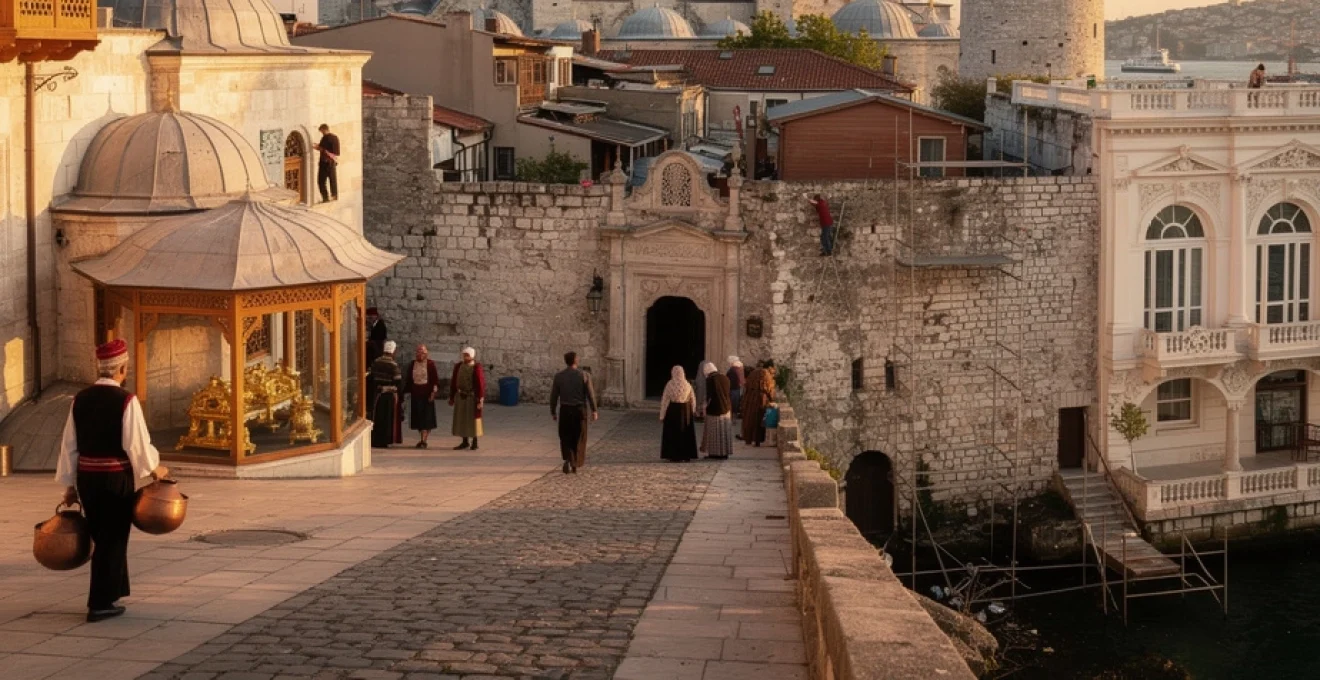
Istanbul stands as one of the world’s most remarkable living museums, where the architectural grandeur of the Ottoman Empire continues to define the city’s skyline and cultural identity. For over four centuries, from 1453 to 1922, the Ottomans transformed this ancient city into the beating heart of one of history’s most powerful empires. The legacy of their rule extends far beyond mere buildings; it encompasses a sophisticated urban planning philosophy, revolutionary architectural innovations, and cultural synthesis that still influences modern Istanbul today.
Walking through Istanbul’s historic districts today, visitors encounter an extraordinary collection of imperial mosques, palatial complexes, fortifications, and commercial structures that showcase the evolution of Ottoman architectural mastery. Each monument tells a unique story of imperial ambition, artistic achievement, and the gradual transformation of Byzantine Constantinople into the cosmopolitan capital of a multi-continental empire. The preservation of these structures offers contemporary visitors an unparalleled opportunity to experience the grandeur and complexity of Ottoman civilization firsthand.
Topkapi palace complex: imperial architecture and administrative quarters
The Topkapi Palace represents the pinnacle of Ottoman imperial architecture and served as the primary residence of Ottoman sultans for nearly four centuries. Constructed beginning in 1459 under Sultan Mehmed II, the palace complex evolved into a sprawling administrative and residential compound covering 70 hectares overlooking the Bosphorus and Golden Horn. The palace’s unique layout reflects the Ottoman approach to governance, with distinct courtyards serving different ceremonial and administrative functions whilst maintaining strict protocols of imperial access.
The architectural genius of Topkapi lies in its organic development over time, with successive sultans adding pavilions, gardens, and functional buildings that created a harmonious ensemble rather than a single monolithic structure. The palace’s positioning takes advantage of natural topography, offering commanding views whilst providing natural ventilation and defensive advantages. Its four main courtyards progress from public to increasingly private spaces, culminating in the sultan’s private quarters and the mysterious harem complex.
Harem section architectural features and royal living quarters
The Harem represents one of the most architecturally sophisticated and culturally significant sections of Topkapi Palace, housing up to 400 women including the Sultan’s mother, wives, and concubines. The architectural layout emphasises both privacy and hierarchy, with intricate tile work and geometric patterns adorning walls whilst providing acoustic privacy through clever spatial arrangement. The Valide Sultan’s apartments occupy the most prestigious position, featuring elaborate domed chambers and private courtyards that demonstrate the power wielded by the Queen Mother in Ottoman palace politics.
The harem’s construction utilises traditional Ottoman building techniques including load-bearing masonry walls, timber frame construction, and sophisticated ventilation systems. Decorative elements incorporate classical Ottoman motifs including calligraphy, geometric patterns, and stylised floral designs executed in precious materials. The apartments vary in size and decoration according to the inhabitant’s status, creating a complex social geography within the confined space that reflected broader Ottoman social hierarchies.
Imperial council chamber (divan-ı hümayun) design elements
The Imperial Council Chamber served as the administrative heart of the Ottoman Empire, where the Grand Vizier and other high officials conducted state business under the watchful oversight of the Sultan. The chamber’s acoustic design enables the Sultan to observe proceedings from a concealed latticed window whilst remaining invisible to participants, demonstrating the sophisticated understanding of both architectural function and political theatre. The interior decoration emphasises authority through rich materials including mother-of-pearl inlay, gold leaf, and precious stones arranged in geometric patterns.
Architectural elements include a central domed ceiling supported by elegant columns, with built-in storage niches for official documents and ceremonial objects. The chamber’s orientation and fenestration provide optimal lighting conditions for document examination whilst maintaining appropriate ceremonial atmosphere. The integration of functional and symbolic elements reflects the Ottoman synthesis of practical governance needs with imperial prestige requirements.
Treasury pavilion artefact collections and ceremonial objects
The Treasury Pavilion houses one of the world’s most significant collections of Ottoman imperial regalia, including the famous Topkapi Dagger and the Spoonmaker’s Diamond. The architectural design prioritises security whilst showcasing precious objects through carefully planned display spaces with controlled lighting and climate. The building’s thick walls and limited access points reflect medieval fortress design principles adapted for
the protection of high-value ceremonial regalia. Display cabinets are integrated into the masonry to resist fire and humidity, while small, high-set windows minimise direct sunlight, preserving delicate textiles and paper. As you move through the rooms, the controlled circulation path not only enhances security but also creates a narrative journey through Ottoman imperial power, from early conquest to late-period diplomacy.
Among the most striking objects are jewel-encrusted thrones, ceremonial caftans woven with gold thread, and religious relics presented to the sultans as diplomatic gifts. These artefacts illustrate how Ottoman rulers expressed authority through carefully choreographed displays of wealth and piety. For visitors interested in Ottoman heritage in Istanbul, the Treasury Pavilion offers a concentrated lesson in the visual language of power that once resonated across three continents.
Palace kitchen complexes and ottoman culinary infrastructure
The palace kitchens at Topkapi form one of the largest surviving pre-modern culinary complexes in the world, once employing hundreds of staff who prepared daily meals for thousands of residents. Architecturally, the kitchens are organised in a series of long halls topped with high chimneys and domes, designed to extract smoke efficiently while maintaining stable temperatures. This layout demonstrates a sophisticated understanding of large-scale food production and fire management long before modern ventilation systems.
Specialised sections within the kitchen complex handled everything from bakery production to dessert preparation, reflecting the complexity of Ottoman court cuisine. Massive copper cauldrons, ceramic food storage jars, and Chinese porcelain collections reveal both the scale of operations and the global trade networks feeding the palace. When you walk through these spaces today, it is easy to imagine the constant movement of cooks, apprentices, and servants—a logistical choreography that underpinned daily life in the imperial centre.
Sultanahmet mosque engineering and classical ottoman dome construction
The Sultanahmet Mosque, widely known as the Blue Mosque, represents the culmination of classical Ottoman mosque architecture in the early 17th century. Commissioned by Sultan Ahmed I and completed in 1616, it synthesises elements from Hagia Sophia and earlier imperial mosques into a unified, harmonious composition. From an engineering perspective, its cascading domes, semi-domes, and buttresses demonstrate a refined understanding of load distribution and lateral thrust control in large masonry structures.
Set within a carefully planned courtyard and surrounded by social facilities such as a madrasa, hospice, and fountains, the mosque complex mirrors the Ottoman ideal of integrating religious and civic functions. For travellers exploring Ottoman heritage in Istanbul, the site offers a textbook example of how sacred architecture, engineering innovation, and urban design were woven together in the imperial capital.
Six-minaret configuration and architectural significance
One of the most distinctive features of the Sultanahmet Mosque is its unprecedented configuration of six minarets. At the time of construction, this design choice was controversial because it matched the number of minarets at the Great Mosque of Mecca, prompting additional construction there to preserve symbolic hierarchy. Architecturally, the six slender towers frame the mosque from multiple viewpoints, giving it a commanding presence on the Istanbul skyline.
The minarets themselves are feats of vertical engineering, combining stone and brick with internal staircases spiralling up to multiple balconies. Their placement at the corners of the courtyard and sanctuary reinforces the mosque’s symmetry, while also organising the surrounding urban space through the call to prayer projected in all directions. As you approach from different angles, you can see how the minaret arrangement acts almost like a three-dimensional logo for the Ottoman capital, instantly recognisable and deeply symbolic.
Central dome structure and supporting pendentive systems
The central dome of the Sultanahmet Mosque spans 23.5 metres in diameter and rises 43 metres above the floor, supported by four massive piers and a series of semi-domes. The transition from the square prayer hall to the circular base of the dome is achieved through pendentives, triangular masonry segments that distribute weight efficiently into the supporting structure. This technique, refined over centuries from Byzantine precedents, allowed Ottoman architects to create vast, unobstructed interior spaces that feel both expansive and cohesive.
From an engineering standpoint, the dome system functions like a carefully balanced stone umbrella, with each semi-dome and buttress counteracting horizontal forces. For visitors, the effect is more emotional than technical: the eye is drawn upward in a single continuous movement, reinforcing the spiritual intent of the space. If you pause under the centre of the dome, you can sense how geometry, light, and structure work together to create an atmosphere that feels at once intimate and monumental.
İznik tile work patterns and ceramic artistry techniques
The interior of Sultanahmet Mosque owes its “Blue Mosque” nickname to more than 20,000 hand-painted İznik tiles adorning the lower walls and gallery levels. Produced in workshops in western Anatolia, these tiles showcase a palette dominated by cobalt blue, turquoise, and emerald green, often highlighted with coral red. Patterns range from stylised tulips and carnations to intricate arabesques and geometric compositions, each executed with remarkable precision.
From a technical perspective, İznik ceramics combine a quartz-based body with a lead-alkaline glaze, fired at high temperatures to produce a luminous, glass-like surface. Artisans employed techniques such as underglaze painting and stencil-based pattern transfer to maintain consistency across large surfaces. As you look closely, you will notice slight variations in brushwork and colour intensity—subtle signatures of individual craftsmen that remind us Ottoman architectural decoration was as much about human artistry as imperial patronage.
Mihrab design elements and calligraphic inscriptions
The mihrab of the Sultanahmet Mosque, indicating the direction of Mecca, is a focal point of both ritual and design. Clad in finely carved marble and framed by rich tile work, it employs muqarnas niches, fluted columns, and layered mouldings to create a sense of depth and movement. The careful modulation of light around the mihrab, enhanced by nearby windows and lamps, draws worshippers’ attention without overwhelming the broader visual harmony of the sanctuary.
Surrounding the mihrab and continuing along the upper walls are calligraphic bands featuring verses from the Qur’an and dedicatory inscriptions. Executed in elegant thuluth and naskh scripts, these inscriptions serve a dual function: transmitting religious messages and reinforcing the mosque’s aesthetic unity. For those interested in Islamic art history, the interplay between architectural form and calligraphy here is akin to a conversation between structure and text, each enhancing the other.
Galata tower medieval fortifications and genoese maritime heritage
Rising above the northern shore of the Golden Horn, the Galata Tower stands as a rare medieval survivor in a city dominated by Ottoman and Byzantine monuments. Built by the Genoese in 1348 as part of their fortified colony, the tower formed a key element in a larger defensive system protecting commercial interests and maritime routes. Its cylindrical stone structure, thick walls, and limited openings are typical of high medieval military architecture adapted to urban environments.
After the Ottoman conquest, the tower’s function shifted repeatedly—from watchtower and fire lookout to prison and observatory—mirroring Istanbul’s changing priorities. Today, when you climb to the viewing platform, you not only gain a 360-degree panorama of Ottoman heritage in Istanbul but also physically retrace the layered history of a structure that has watched over the city’s transformation for nearly seven centuries.
Byzantine-ottoman defensive architecture evolution
The Galata Tower’s design reveals much about the evolution of defensive architecture from the Byzantine era through Ottoman rule. Whereas earlier Byzantine fortifications around Constantinople relied heavily on extensive land walls and multiple defensive lines, the Genoese approach in Galata concentrated on a compact, heavily fortified core. The tower itself functioned as a last-resort refuge as well as a visual symbol of authority over the harbour.
Under the Ottomans, who inherited and adapted these fortifications, the emphasis gradually shifted from purely military defence to surveillance and early warning. The tower’s height and strategic placement allowed watchmen to spot fires and naval movements long before they reached the city’s heart. This transition from fortress to lookout exemplifies how changing technologies—such as artillery and later telegraph systems—reshaped the use of existing defensive structures rather than rendering them obsolete overnight.
Golden horn strategic positioning and naval control systems
The Golden Horn served as Istanbul’s inner harbour for centuries, and the Galata Tower occupied a prime vantage point for monitoring shipping traffic. From here, Genoese and later Ottoman authorities could observe vessels entering and leaving the estuary, control customs duties, and enforce maritime regulations. In a pre-digital age, height and line-of-sight were the most reliable “surveillance technologies” available, and the tower functioned as an analog control centre over one of the region’s busiest waterways.
Historically, the Golden Horn was protected by chains drawn across its entrance, as famously deployed during the 1453 siege. The tower’s placement within this wider system meant it played a role not only in local defence but also in broader naval strategy. When you look out over the harbour today, it is worth imagining the dense forest of masts, sails, and warehouses that once filled this space, all under the watchful stone gaze of Galata.
Restoration methodologies and historical preservation techniques
Given its age and continuous use, the Galata Tower has undergone multiple restoration campaigns, particularly in the 19th and 20th centuries. Modern conservation methodologies have focused on stabilising the masonry, replacing decayed stone with compatible materials, and installing discreet reinforcement to meet seismic safety standards. Engineers use techniques such as laser scanning and structural monitoring to understand how the tower responds to stress, especially in a city prone to earthquakes.
Interior adaptations, including the addition of elevators and staircases, aim to balance accessibility with historical integrity. Where original elements have been lost, restorers follow international charters that emphasise reversibility and clear distinction between old and new work. For visitors interested in heritage preservation, Galata Tower offers a living case study in how to keep a medieval monument functional in a modern metropolis without erasing the traces of its past.
Dolmabahçe palace westernisation period and neo-baroque architecture
Dolmabahçe Palace, constructed between 1843 and 1856, embodies the Ottoman Empire’s 19th-century drive toward westernisation and administrative reform. Replacing Topkapi as the main imperial residence, it was designed in a blend of Neo-Baroque, Neo-Rococo, and Neoclassical styles by Armenian Ottoman architects Garabet and Nigoğayos Balyan. The palace’s waterfront façade stretches over 600 metres along the Bosphorus, creating a theatrical backdrop that signalled the empire’s desire to engage with European diplomatic and cultural norms.
Structurally, Dolmabahçe differs markedly from earlier wooden and masonry palaces, employing a more rigid, European-style spatial organisation of grand ceremonial halls, reception salons, and clearly defined private quarters. The lavish interior decoration—featuring crystal chandeliers, gilded ceilings, and French parquet flooring—relies on imported materials and craftsmen, underscoring Istanbul’s integration into global trade networks of the time. As you walk through its corridors, you can sense how the palace functions almost like an architectural manifesto, announcing that the Ottoman court could rival any European monarchy in splendour.
Yet beneath the opulence lies a narrative of transition and vulnerability. The enormous maintenance costs of Dolmabahçe contributed to mounting state debts, symbolising the financial pressures of modernisation. Standing in the grand ceremonial hall under the 4.5-ton crystal chandelier, you are confronted with a striking analogy for the late Ottoman condition: dazzling brilliance suspended by a complex, and increasingly fragile, web of economic and political forces.
Grand bazaar commercial architecture and traditional craftsmanship guilds
The Grand Bazaar (Kapalıçarşı) is one of the oldest and largest covered markets in the world, its origins dating back to the mid-15th century under Sultan Mehmed II. More than just a shopping destination, it functioned as a regulated commercial ecosystem where architecture, law, and guild organisation intersected. The bazaar’s network of vaulted streets, hans (inns), and specialised sections reflects a deliberate attempt to structure economic life within an ordered, secure environment.
Architecturally, the Grand Bazaar employs repetitive bays with brick and stone vaults, creating fire-resistant roofs and stable interior climates for valuable goods such as textiles and jewellery. The layout channels foot traffic along primary arteries while allowing for quieter side passages, similar to how contemporary shopping centres balance anchor tenants and smaller boutiques. When you wander through its corridors, you experience a centuries-old prototype of the modern mall, but one in which negotiation, craft production, and social interaction still play a central role.
Historically, traditional craftsmanship guilds controlled production standards, prices, and apprenticeship systems within the bazaar. Goldsmiths, carpet weavers, copper workers, and bookbinders each occupied distinct zones, making it easy for buyers to compare quality and for authorities to monitor commerce. Although global supply chains and mass production have altered the economic landscape, traces of the old guild system remain in family-run workshops and long-standing trade associations. For travellers keen to support authentic Ottoman crafts, seeking out artisans who still work on-site—engraving metal, knotting carpets, or hand-painting ceramics—offers a more meaningful connection than simply purchasing souvenirs.
Suleymaniye mosque complex urban planning and mimar sinan’s architectural legacy
The Süleymaniye Mosque complex, completed in 1557 by the master architect Mimar Sinan for Sultan Suleiman the Magnificent, stands as a pinnacle of classical Ottoman urban and architectural design. Positioned atop one of Istanbul’s seven hills, the complex commands views over the Golden Horn and Bosphorus, asserting both spiritual and political dominance. Sinan conceived the site not just as a place of worship but as a self-sufficient socio-religious centre incorporating a hospital, schools, a library, kitchens, and caravanserais.
From an urban planning perspective, the Süleymaniye complex functions as a carefully calibrated node within the larger fabric of Ottoman Istanbul. Its courtyards, terraces, and subsidiary buildings step down the hillside, integrating with existing streets while creating new pedestrian flows. This terraced arrangement also optimises natural light and air circulation—an early example of climate-sensitive design. As you move from bustling commercial streets into the mosque’s serene inner courtyard, you experience a gradual transition from worldly activity to contemplative space, a spatial sequence that Sinan used to great effect.
Architecturally, the mosque’s central dome and cascading semi-domes showcase Sinan’s mature command of structural engineering, refining experiments from earlier projects like Şehzade Mosque. The interior proportions are carefully balanced so that no single element overwhelms the others, producing a sense of calm equilibrium. For many scholars, Süleymaniye represents the moment when Ottoman architecture achieved a synthesis comparable to the High Renaissance in Europe—rooted in tradition yet boldly innovative.
Mimar Sinan’s legacy extends far beyond this single complex. As chief architect for nearly half a century, he oversaw hundreds of projects across the empire, standardising construction techniques and training a generation of architects who continued his work. When you visit multiple Ottoman mosques and notice recurring features—such as harmonious courtyard proportions, slender minarets, and sophisticated acoustics—you are, in many ways, tracing Sinan’s design DNA through the city. In exploring Ottoman heritage in Istanbul, understanding his contribution is essential to appreciating why the city’s skyline looks and feels as cohesive as it does today.