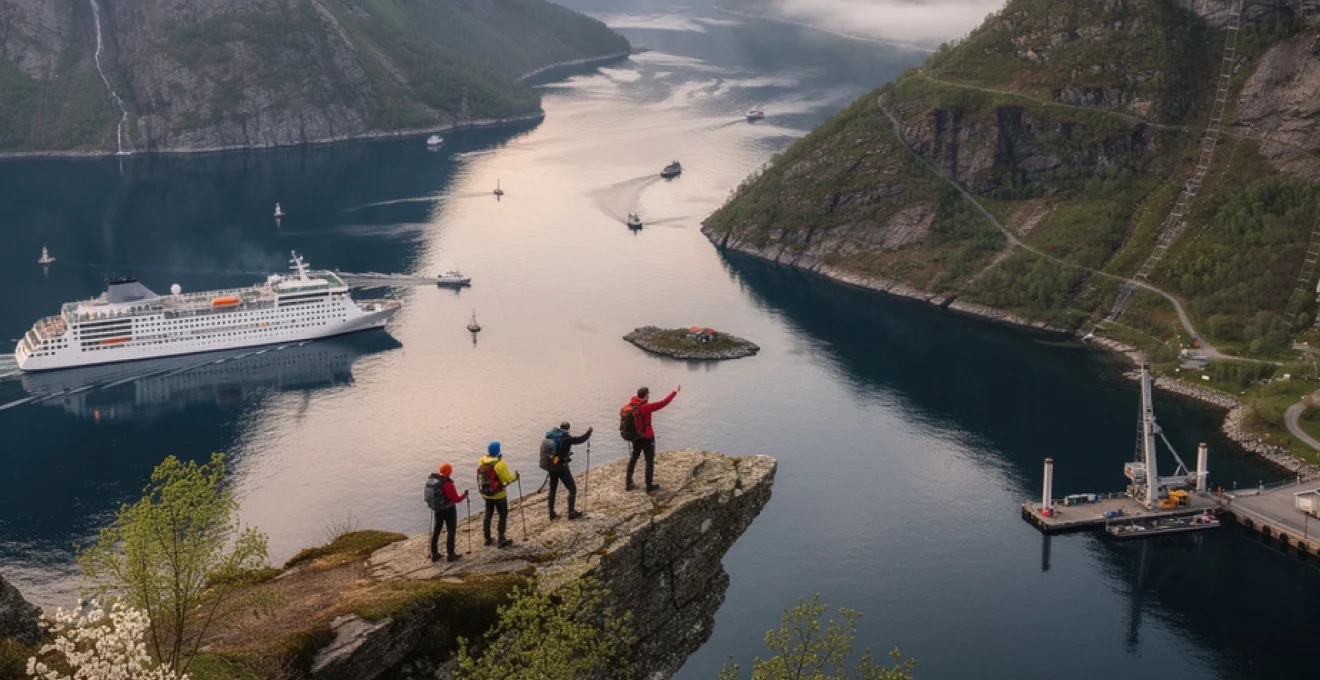
Norway’s fjords represent one of the world’s most spectacular natural phenomena, carved by ancient glaciers into dramatic waterways that penetrate deep into mountainous terrain. These geological masterpieces attract millions of visitors annually, offering unparalleled opportunities for cruise experiences, challenging hiking adventures, and breathtaking photographic vantage points. The Norwegian coastline boasts over 1,700 fjords, each presenting unique characteristics shaped by millennia of glacial activity and geological forces.
The allure of Norwegian fjords extends far beyond their visual splendour, encompassing a complex ecosystem of maritime navigation routes, technical climbing challenges, and seasonal variations that fundamentally alter accessibility and experience quality. From the UNESCO World Heritage sites of Geirangerfjord and Nærøyfjord to the towering cliffs surrounding Preikestolen, these natural amphitheatres provide diverse recreational opportunities for adventurers of all skill levels.
Norwegian fjord geography and formation through glacial erosion
The formation of Norwegian fjords represents a geological narrative spanning over two million years, primarily during the Pleistocene glacial periods when massive ice sheets advanced and retreated across Scandinavia. These glaciers, some reaching thicknesses of over 3,000 metres, carved distinctive U-shaped valleys through pre-existing river valleys and coastal plains. The erosive power of moving ice, combined with freeze-thaw cycles and glacial plucking, created the deep, steep-sided channels that characterise modern fjord systems.
When the last glacial period ended approximately 10,000 years ago, rising sea levels flooded these carved valleys, creating the saltwater inlets we recognise today. The depth of Norwegian fjords varies dramatically, with Sognefjord reaching depths of 1,308 metres below sea level whilst maintaining relatively narrow widths. This geological process resulted in threshold depths at fjord mouths, where glacial debris and sediment accumulation creates shallow underwater barriers that affect water circulation patterns.
The distinctive characteristics of Norwegian fjords include their steep gradient profiles, hanging valleys where tributary glaciers entered main valleys at higher elevations, and the presence of glacial flour that gives fjord waters their characteristic blue-green colouration. These geological features create unique microclimates and ecosystems, supporting diverse marine life whilst presenting specific challenges for maritime navigation and recreational activities.
Premier fjord cruise routes: geiranger, nærøyfjord and sognefjord navigation
Norwegian fjord cruising encompasses a sophisticated network of routes designed to showcase the most spectacular geological formations whilst accommodating vessels of varying sizes and specifications. The premier cruise destinations represent carefully selected waterways that balance scenic grandeur with navigational feasibility, offering passengers comprehensive exposure to glacial landscapes, cascading waterfalls, and traditional Norwegian settlements.
Geiranger-hellesylt UNESCO world heritage cruise itinerary
The Geiranger-Hellesylt route represents the pinnacle of Norwegian fjord cruising experiences, traversing a 20-kilometre stretch of water flanked by dramatic cliff faces rising over 1,400 metres above sea level. This UNESCO World Heritage site features legendary waterfalls including the Seven Sisters, the Suitor, and Bridal Veil cascades, each presenting distinct characteristics influenced by seasonal snowmelt and precipitation patterns.
Cruise vessels navigate through waters reaching depths of 260 metres, requiring specialised maritime expertise due to narrow channels and unpredictable weather conditions. The route includes stops at abandoned mountain farms such as Skageflå and Knivsflå, accessible only by steep hiking trails that demonstrate historical Norwegian agricultural adaptation to extreme topographical challenges. Navigation timing becomes critical during peak season months when multiple large cruise ships share limited anchoring positions.
Nærøyfjord’s narrow channel navigation techniques
Nærøyfjord presents unique navigational challenges due to its status as the world’s narrowest fjord, with minimum widths of just 250 metres between towering rock faces. This UNESCO World Heritage waterway requires specialised vessel handling techniques and experienced maritime crews capable of managing precise positioning in confined spaces. The fjord’s 18-kilometre length includes multiple
tight bends, requiring reduced speeds, continuous depth sounder monitoring, and active rudder corrections. Modern fjord cruise ships and smaller hybrid-electric vessels typically employ dynamic positioning systems and bow thrusters to maintain safe distances from both shorelines while minimising wake, which helps protect the fragile shoreline and small boat traffic. Captains carefully time transits to avoid periods of strong katabatic winds funneling down side valleys, which can create sudden gusts and crosswinds.
Given the fjord’s restricted width and steep bathymetry, navigational charts, radar, and visual references must be used in tandem. Many operators limit night-time passages and instead schedule daylight cruises to maximise both safety and passenger visibility of waterfalls and hanging farms. For travellers, this means that Nærøyfjord cruises are most often offered as part of daytime itineraries, frequently combined with bus or train segments such as the Flåm Railway to create seamless, multi-modal fjord experiences.
Sognefjord’s 204-kilometre deep water cruise experience
Sognefjord, often referred to as the “King of the Fjords”, extends approximately 204 kilometres inland from the Norwegian Sea, reaching depths of over 1,300 metres. This exceptional depth allows larger vessels, including expedition ships and coastal cruisers, to penetrate far into the interior of Western Norway. Despite its size, Sognefjord maintains relatively calm waters due to its sheltered position between high mountain ranges and the gradual narrowing of its arms.
From a cruise logistics perspective, Sognefjord functions as a primary maritime corridor linking coastal ports such as Bergen with inner fjord villages including Flåm, Balestrand, and Sogndal. Operators leverage modern navigation systems, AIS tracking, and real-time weather data to plan routes that optimise daylight for key scenic segments such as Aurlandsfjord and Nærøyfjord. For passengers, Sognefjord cruises often integrate with iconic rail journeys like the Bergen Railway and Flåm Railway, enabling you to experience the fjord both at water level and from elevated alpine vantage points.
The fjord’s numerous side arms require careful speed management and turning manoeuvres, especially when transitioning into narrow branches or docking at compact village harbours. Hybrid-electric sightseeing catamarans have become increasingly common on inner Sognefjord routes, reducing noise and emissions and allowing closer approaches to waterfalls and cliffs. If you are planning a Sognefjord itinerary, booking in advance during summer is essential, as high-season departures on both cruise and train segments frequently sell out weeks ahead.
Hardangerfjord spring blossom seasonal cruising
Hardangerfjord presents a different kind of fjord cruise experience, especially during the spring blossom season when its hillsides are covered with flowering apple, pear, and cherry orchards. Stretching 179 kilometres, Hardangerfjord is slightly less steep and severe than Sognefjord and Geirangerfjord, creating a softer landscape where agriculture and fjord scenery blend seamlessly. Spring cruises in this region are timed to coincide with blossom peaks, typically from late April to mid-May depending on weather conditions.
From a navigational standpoint, Hardangerfjord offers relatively wide channels and moderate depths that are suitable for a mix of car ferries, high-speed express boats, and smaller cruise vessels. Routes often connect Bergen with Rosendal, Odda, Lofthus, and Eidfjord, making it easy to combine a fjord cruise with visits to Baroniet Rosendal, cider farms, and the Vøringsfossen waterfall. Many operators offer seasonal “Hardangerfjord in a Nutshell” packages that coordinate boat schedules with local bus connections, simplifying the logistics for independent travellers.
Because blossom season is short and highly weather-dependent, flexibility becomes a key planning consideration. It is wise to allocate at least one buffer day in case of rain or low cloud that can obscure views and reduce photographic opportunities. Spring weather can shift quickly from warm sunshine to cold showers, so layered clothing and waterproof outerwear are essential for enjoying open-deck viewpoints during Hardangerfjord cruises.
Lysefjord and preikestolen cliff base approach routes
Lysefjord, in Rogaland county, is renowned for its vertical granite walls and iconic viewpoints such as Preikestolen (Pulpit Rock) and Kjerag. Unlike some broader fjords, Lysefjord is characterised by steep-sided, relatively straight corridors where the water depth often drops sharply close to the shore. Cruise vessels and high-speed boats typically enter from the west near Stavanger, following a 42-kilometre route to the village of Lysebotn at the fjord’s eastern end.
Approaching Preikestolen from the water involves careful speed regulation and positioning to provide passengers with optimal viewing angles of the 604-metre cliff plateau above. Captains often pause or manoeuvre in slow circles at designated viewpoints, balancing passenger experience with navigational safety and schedule constraints. Smaller RIB (rigid inflatable boat) fjord safaris can approach closer to cliff faces and waterfalls, but must maintain strict adherence to wake limits, distance regulations, and weather-related restrictions imposed by local authorities.
For travellers combining a Lysefjord cruise with the Preikestolen hike, common logistics include a morning boat departure from Stavanger, a mid-fjord viewing stop beneath the cliff, and an afternoon bus transfer to the Preikestolen trailhead. This integrated approach allows you to experience the formation from both below and above in a single day, provided you are prepared for a 4–5 hour hike and variable conditions on the plateau. During winter and early spring, reduced boat schedules and icy trails can affect accessibility, so you should always verify operating dates and trail conditions before committing to a combined cruise-and-hike itinerary.
Technical hiking classifications for norwegian fjord terrain
Hiking in the Norwegian fjords ranges from short, family-friendly strolls to demanding alpine ridge traverses that require advanced skills and equipment. To help visitors assess difficulty levels, Norway commonly uses a colour-coded trail grading system, similar to ski slope ratings: green for easy, blue for moderate, red for demanding, and black for expert-level hikes. In addition, alpine and climbing routes may be classified using international standards such as the UIAA scale for rock difficulty or via ferrata grades.
Understanding these technical classifications is crucial because fjord terrain often combines significant elevation gain, exposed sections, and rapidly changing weather. A route that appears straightforward on a map may traverse wet rock slabs, snowfields, or boulder fields that can become hazardous in rain or fog. When you plan a Norwegian fjord hike, it is helpful to think of the route not only in terms of distance but also vertical ascent, surface type, and exposure, much like evaluating both the length and gradient of a cycling climb.
Preikestolen 604-metre plateau trail difficulty assessment
The Preikestolen hike is one of Norway’s most popular fjord viewpoints, rising 604 metres above Lysefjord. Officially graded as a red (demanding) trail, it covers approximately 8 kilometres round trip with around 500 metres of elevation gain. While no technical climbing is required, the route includes uneven stone steps, rocky sections, and short areas where you may need to use your hands for balance.
In dry summer conditions, most reasonably fit hikers can complete the Preikestolen trail in 4–5 hours, including time at the plateau. However, the sheer drop at the cliff edge, combined with the absence of railings, requires a high degree of situational awareness, especially in windy or wet weather. During shoulder seasons, patches of snow, ice, and mud can significantly increase difficulty, turning some sections into slippery obstacles that demand proper footwear with good grip.
To safely enjoy this fjord hike, you should wear hiking boots rather than trainers, carry layers suitable for rapid temperature changes, and start early to avoid peak crowding during midday. Guided tours are available in winter and low season, where crampons, headlamps, and additional safety equipment may be supplied. For many visitors, the trail’s challenge-to-reward ratio is ideal: demanding enough to feel like an achievement, yet accessible to non-experts who prepare appropriately.
Trolltunga 1,180-metre ridge hike technical requirements
Trolltunga, near Odda in the Hardangerfjord region, represents a significant step up in difficulty compared to Preikestolen. The iconic rock ledge juts out at approximately 1,180 metres above sea level, and the standard round-trip distance ranges from 20 to 28 kilometres depending on the chosen start point and seasonal access to the upper parking areas. Elevation gain can reach 900–1,200 metres, making this a full-day alpine undertaking typically lasting 10–12 hours for average hikers.
The trail is classified as red to black, reflecting both its physical demands and the potential for rapidly changing weather at altitude. Sections of the route traverse exposed plateaus, snowfields that can persist into early summer, and wet rock surfaces that become slippery after rainfall. Navigation is generally straightforward in high season, thanks to waymarks and the presence of other hikers, but fog, low cloud, or early snowfall can quickly obscure trail markers, requiring competent route-finding skills.
Because of its length and exposure, Trolltunga is not recommended as a spontaneous or first-time hike for inexperienced walkers. Instead, you should approach it as you would a long alpine day in the mountains: start early, carry a detailed weather forecast, bring a map or offline GPS, and pack sufficient food, water, and emergency layers. Guided tours—including off-season snowshoe and ski-based itineraries—can provide additional safety, particularly when river crossings and lingering snow patches make solo travel more complex.
Besseggen ridge alpine classification and safety protocols
The Besseggen Ridge, located in Jotunheimen National Park, is an alpine classic that offers panoramic views over turquoise Lake Gjende and deep-blue Lake Bessvatnet. Although not directly above a fjord, it is often combined with fjord trips and is emblematic of the kind of high, narrow ridges that appeal to visitors exploring Norway’s mountainous interior after coastal cruises. The route is typically hiked one way, using a boat transfer on Lake Gjende to or from the starting point, and covers around 14 kilometres with 1,000 metres of ascent.
Besseggen is generally graded as a red (demanding) trail, with one notable scrambling section where you must use both hands and feet to ascend a rocky ridge. For hikers comfortable with exposure, this section is exhilarating, but for those with a fear of heights it can feel intimidating, similar to crossing a narrow bridge with steep drops on both sides. The route surface is mainly rock and gravel, so good footwear and careful foot placement are essential, especially in wet or windy conditions.
Standard safety protocols for Besseggen include checking boat schedules in advance, starting early enough to complete the ridge in daylight, and carrying windproof layers, as the exposed crest can be significantly colder than the lake shore. Rescue operations are occasionally required for underprepared hikers caught in deteriorating weather, making it important to assess your own fitness and comfort with steep terrain before attempting the traverse. When conditions are favourable, Besseggen rewards effort with some of Norway’s most iconic valley and lake vistas.
Romsdalseggen’s via ferrata climbing sections
Romsdalseggen, above the town of Åndalsnes, offers another high-level fjord-adjacent experience, with dramatic views of the Romsdal valley, surrounding peaks, and the Rauma River far below. The standard hiking route across the ridge is graded as red to black due to significant elevation gain and exposed sections, but it remains a hiking trail without fixed climbing gear. For visitors seeking greater technical challenge, the area also features via ferrata routes—protected climbing paths equipped with steel cables, iron rungs, and ladders.
Via ferrata routes around Romsdalseggen are classified using specialist grading systems that account for both physical difficulty and exposure. Participants are required to use a climbing harness, via ferrata lanyard with energy absorbers, and helmet, and are typically secured to the safety cable for the majority of the ascent. While no advanced rock-climbing techniques are necessary, comfort with heights, basic movement on vertical terrain, and good overall fitness are essential.
Guided via ferrata experiences usually include equipment rental, instruction in clipping techniques, and constant supervision by qualified guides, making them a controlled way to sample more technical fjord climbing. As with any alpine activity, weather monitoring is critical: thunderstorms, strong winds, or persistent rain can make metal equipment slippery and increase risk. If you are transitioning from hiking to via ferrata for the first time, starting with a shorter, lower-graded route is advisable before attempting more demanding lines on Romsdalseggen.
Optimal fjord photography vantage points and lighting conditions
Capturing the Norwegian fjords effectively through photography requires an understanding of both vantage points and the unique lighting conditions created by high latitudes. Because the sun travels lower across the sky than in more southerly regions, golden-hour light—those soft, warm tones just after sunrise and before sunset—can last longer, particularly in late spring and summer. This extended, angled light accentuates the texture of cliffs, waterfalls, and snowfields, creating depth and contrast that flatter fjord landscapes.
Many of the most iconic fjord viewpoints are elevated, such as Stegastein above Aurlandsfjord, Flydalsjuvet near Geiranger, and the plateau at Preikestolen above Lysefjord. These high vantage points provide sweeping panoramas where fjords appear as winding ribbons of water framed by mountain walls. To reach them, you may need to combine road access, short walks, or full-day hikes, which means planning your photography sessions in tandem with transport schedules and trail times to ensure you arrive during optimal light.
On the water, low-angle compositions from cruise decks or kayaks can emphasise the towering scale of the cliffs, especially when using wide-angle lenses. Early morning cruises often provide calmer water surfaces that mirror the surrounding peaks, while late-afternoon departures can capture warm reflections on the fjord. Overcast conditions, common in Norway, are not necessarily a disadvantage: soft, diffused light can reduce harsh shadows on waterfalls and forested slopes, much like a giant natural softbox in a studio.
For those serious about fjord photography, carrying a lightweight tripod, polarising filter, and spare batteries is recommended. A tripod stabilises long exposures for silky waterfall images, while a polariser helps manage glare from water surfaces and deepen sky colour. Given how unpredictable fjord weather can be, a waterproof camera bag or dry sack is essential, particularly if you are shooting from open decks or small boats. Ask yourself what story you want your images to tell—dramatic cliffs, cultural life in fjord villages, or intimate details of mossy rocks and wildflowers—and adjust your shooting locations and timing accordingly.
Seasonal weather patterns affecting fjord accessibility and visibility
Seasonal weather patterns have a direct impact on fjord accessibility, visibility, and the type of activities you can safely pursue. In winter, low-pressure systems from the North Atlantic bring frequent precipitation, which falls as snow at higher elevations and as rain near sea level. While major fjord towns such as Bergen, Ålesund, and Stavanger remain accessible year-round, mountain passes, high hiking trails, and some minor roads may close or require winter tyres and chains.
During winter months, daylight hours are limited, particularly in northern fjord regions where the sun may barely rise above the horizon. This reduced light window affects both cruise timing and photographic opportunities, but it also creates unique conditions for aurora borealis viewing in fjords located above the Arctic Circle. In contrast, summer brings long days and, in northern areas, the midnight sun, allowing cruises, hikes, and photography sessions to extend late into the evening under usable natural light.
Spring and autumn represent transitional seasons with rapidly changing conditions that can affect both visibility and safety. In spring, snowmelt feeds powerful waterfalls and raises river levels, which can impact river crossings on certain trails and increase spray around waterfall viewpoints. Autumn often brings more stable, clear days punctuated by storm systems, along with vibrant foliage that adds colour to fjord slopes. However, fog and low cloud can form quickly as warm air passes over cold water, sometimes obscuring views within minutes.
For travellers, the key is to align expectations and packing lists with seasonal realities. Checking multi-day weather forecasts, monitoring local avalanche warnings in mountainous areas, and understanding that schedules—even for well-planned fjord cruises and hikes—may change due to safety concerns is essential. Think of Norway’s fjords as a dynamic theatre where lighting, backdrop, and accessibility shift with the seasons; by remaining flexible, you can still enjoy remarkable experiences even when conditions do not match the postcard images you may have seen.
Maritime infrastructure: ports, terminals and vessel specifications for fjord navigation
The successful operation of fjord cruises and coastal voyages in Norway relies on a well-developed maritime infrastructure, including deep-water ports, regional terminals, and a diverse fleet of vessels tailored to different routes. Major fjord gateways such as Bergen, Stavanger, Ålesund, and Trondheim feature modern cruise terminals capable of handling large ocean-going ships, with facilities for passenger check-in, customs, and shore-excursion coordination. These ports serve as key interchange points where travellers transition between international cruises, regional express boats, buses, and rail services.
Smaller fjord villages—Flåm, Geiranger, Eidfjord, and Olden among them—maintain more compact quays and tender piers designed for both local ferries and visiting cruise ships. In locations where deep-water anchorage is required, cruise vessels often deploy tenders or use local shuttle boats to transport passengers ashore, which can be affected by wind, wave height, and tidal conditions. Many fjord ports are investing in shore-power connections and upgraded mooring systems to reduce emissions and improve safety as vessel sizes and traffic volumes increase.
From a technical perspective, fjord vessels range from small RIBs and sightseeing boats to multi-deck hybrid-electric catamarans and traditional Hurtigruten or Havila coastal ships. Smaller craft operating deep inside narrow fjords are typically designed with shallow drafts, high manoeuvrability, and robust hulls capable of handling sudden squalls or floating debris. Larger cruise ships navigating main fjord channels require advanced navigation suites including GPS, radar, ECDIS chart systems, and sometimes azimuth thrusters or podded propulsion units to facilitate tight turns and precise docking.
Safety regulations in Norwegian waters are stringent, with mandatory pilotage for large vessels in many fjord areas and clearly defined traffic separation schemes in busier channels. Environmental rules, such as fuel-type restrictions and limits on discharge, are particularly strict in UNESCO-listed fjords like Geirangerfjord and Nærøyfjord, where authorities aim to protect air quality and water clarity. As a passenger, you may notice operational measures such as reduced speeds, designated anchorage zones, and the increasing use of silent electric propulsion in sensitive areas, all of which are designed to preserve the fjords’ fragile ecosystems while maintaining safe and reliable access.