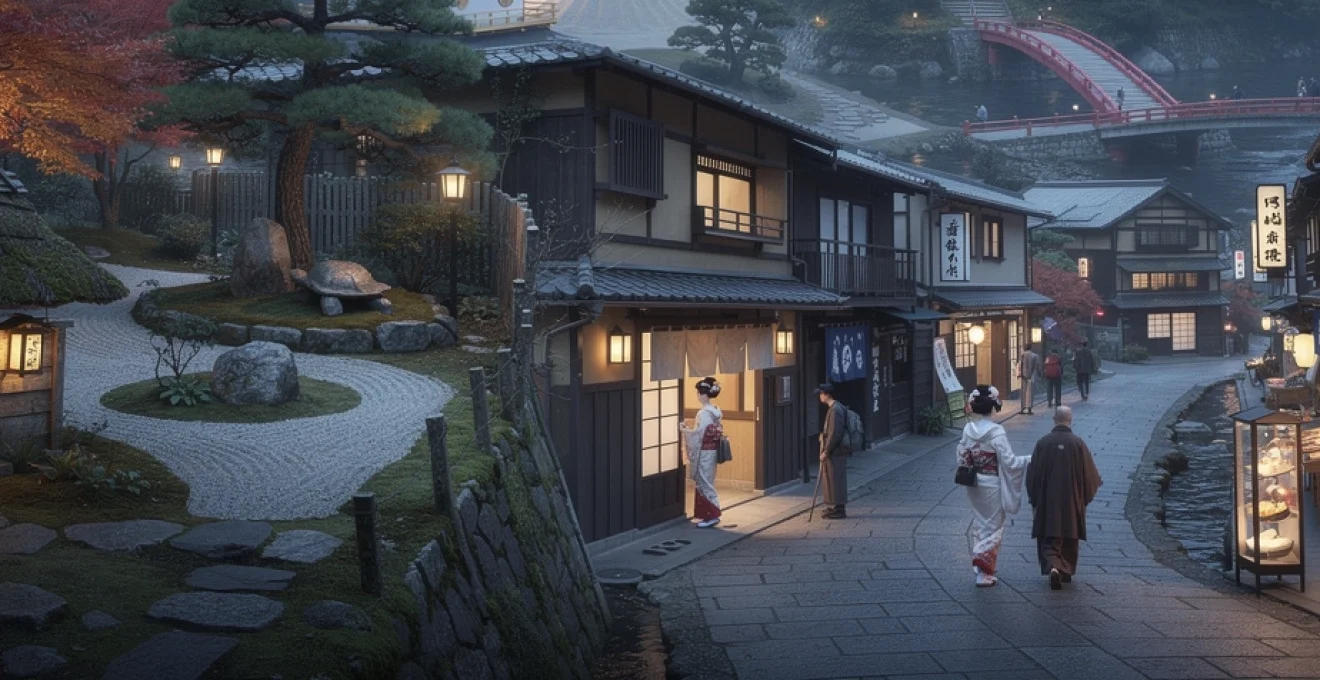
Beyond the crowded pathways of Fushimi Inari and the golden splendour of Kinkaku-ji lies a Kyoto that whispers rather than shouts—a city of moss-covered stone statues, intimate tea ceremonies, and districts where geisha traditions flourish away from camera flashes. These hidden corners of Japan’s ancient capital reveal the authentic soul of a city that has preserved its cultural heritage for over a millennium, offering visitors the chance to experience the profound serenity and artistic mastery that define traditional Japanese aesthetics.
The challenge of discovering authentic Kyoto experiences has intensified as tourism numbers have surged, making the quest for genuine cultural encounters more precious than ever. While millions of visitors flock to the same handful of iconic locations each year, the city’s true treasures often remain concealed within quiet temple complexes, traditional craft workshops, and residential districts where artisans continue centuries-old practices. Understanding where to look—and when to visit—transforms a typical sightseeing trip into a meaningful journey through Japan’s living cultural landscape.
Lesser-known temple complexes in eastern kyoto’s higashiyama district
Eastern Kyoto’s Higashiyama district represents the epitome of traditional Japanese temple architecture, yet many of its most spectacular complexes remain overlooked by mainstream tourism. This mountainous region, designated as a UNESCO World Heritage buffer zone, contains layers of spiritual and architectural significance that reward patient exploration. The district’s elevation changes create microclimates that support diverse plant communities, resulting in temple gardens that showcase different seasonal displays throughout the year.
Temple complexes in this area often interconnect through ancient pilgrimage routes, creating opportunities for contemplative walks that link multiple sacred sites. The morning hours between 6 AM and 8 AM offer the most authentic experience, when resident monks conduct their daily ceremonies and the soft light filtering through cedar branches creates an almost ethereal atmosphere. Many visitors underestimate the physical demands of exploring this mountainous terrain, but the reward lies in discovering temple gardens and architectural details that have remained virtually unchanged for centuries.
Honen-in temple’s philosophical path connection and autumn thatched gate
Honen-in Temple stands as one of Kyoto’s most photographically striking yet undervisited sacred sites, distinguished by its massive thatched entrance gate that frames views of the temple grounds like a living picture frame. The temple’s connection to the famous Philosopher’s Path creates a natural pilgrimage route, though most visitors rush past this remarkable complex without realizing its significance. Founded in 1680 to honour the Pure Land Buddhism teacher Honen, the temple maintains an atmosphere of scholarly contemplation that reflects its founder’s emphasis on accessible spiritual practice.
The temple’s autumn transformation ranks among Kyoto’s most spectacular seasonal displays, when the massive maple trees surrounding the thatched gate create a tunnel of red and gold foliage. Photography enthusiasts often discover that the interplay between the weathered thatch and vibrant autumn colours produces some of the most compelling images of traditional Japanese architecture. The temple grounds extend beyond the famous gate to include multiple halls, meditation gardens, and a cemetery where notable Japanese cultural figures rest among carefully maintained stone monuments.
Anrakuji temple’s camellia gardens and restricted seasonal access protocols
Anrakuji Temple operates one of Kyoto’s most exclusive access systems, opening its grounds to the public only during specific seasonal periods when the temple’s renowned camellia gardens reach peak bloom. This restriction, far from being merely exclusionary, serves to protect both the delicate garden ecosystem and the contemplative atmosphere that defines the temple experience. The limited access periods typically occur during early spring camellia season and autumn maple viewing, with exact dates announced annually based on botanical conditions.
The temple’s camellia collection represents over 300 years of careful cultivation, featuring varieties that bloom in succession from February through April, creating an extended season of floral displays.
The garden design follows classical Japanese principles of borrowed scenery, incorporating views of the surrounding Higashiyama mountains as integral elements of the composition.
Visitors who time their visits correctly often find themselves among small groups of serious garden enthusiasts and local residents who return annually to witness the camellias’ brief but spectacular flowering period.
<h3
Ginkakuji temple’s silver pavilion viewing angles and unesco buffer zones
Although Ginkaku-ji, the so-called Silver Pavilion, appears on most Kyoto itineraries, the subtleties that make it a genuine hidden gem are often overlooked as visitors rush through the prescribed path. The temple complex sits within a carefully regulated UNESCO buffer zone, which restricts modern development and preserves the sightlines between the pavilion, its reflective pond, and the surrounding Higashiyama slopes. This protection means that, unlike more urban temples, Ginkaku-ji still conveys the quiet, almost monastic atmosphere that inspired the aesthetics of wabi-sabi and the tea ceremony in the 15th century.
To appreciate the Silver Pavilion fully, it helps to think in terms of “viewing angles” rather than single snapshots. The classic postcard view appears shortly after you enter, where the pavilion seems to float above the Kyōko-chi pond with the conical sand mound of the Ginshadan in the foreground. However, some of the most rewarding perspectives reveal themselves as you climb the gently sloping path behind the main hall. From the upper viewpoints, you can look down across the entire composition—pavilion, raked sand, pine trees, and Kyoto’s tiled roofs in the distance—like examining a meticulously arranged painting.
Because the walking route here is one-way, you have only a few seconds at each vantage point before the flow of people nudges you onward. Arriving within 30 minutes of opening, or an hour before closing, allows you to pause longer at key angles and wait for gaps in the stream of visitors. In rainy or overcast weather, when many travellers stay away, the subdued light softens reflections on the pond and amplifies the mossy greens around the pavilion, resulting in photographs that feel more intimate and timeless. If you walk here via the Philosopher’s Path from Nanzen-ji, you also experience how the UNESCO buffer zone functions as a continuous cultural landscape rather than a single isolated monument.
Nanzen-ji subtemple network: konchi-in’s crane and turtle garden design
Most travellers know Nanzen-ji for its imposing Sanmon gate and red-brick aqueduct, yet some of its finest artistry lies tucked away in smaller subtemples like Konchi-in. Originally established in the early 15th century and later moved to the Nanzen-ji grounds, Konchi-in encapsulates the intimate, introspective side of Zen that can be hard to sense at larger, busier complexes. Here, the famous crane-and-turtle garden designed by master landscape artist Kobori Enshū invites slow looking and reflection rather than hurried photography.
The garden is a classic karesansui (dry landscape), where raked gravel, stone groupings, and pruned shrubs symbolise water, islands, and animals. The “crane” emerges from an arrangement of upright stones poised as if about to take flight, while the “turtle” is suggested by a low, flat rock formation that appears to swim through the “sea” of white gravel. Much like reading a haiku, the enjoyment lies in deciphering these minimal gestures and allowing your imagination to fill in the details. You may find yourself asking: how can a few stones and lines in sand evoke an entire seascape more convincingly than a detailed painting?
Konchi-in’s location within the greater Nanzen-ji precinct means it is easy to combine with the aqueduct and main hall while still escaping the tour groups that cluster at those more visible landmarks. Entry requires a separate fee from Nanzen-ji itself, which helps keep visitor numbers manageable and the atmosphere remarkably serene. For the best experience, visit on a weekday morning, sit on the tatami veranda facing the garden, and watch the changing light move across the raked gravel—much like observing waves on a shoreline that never truly stands still.
Authentic geisha districts beyond gion: pontocho and kamishichiken quarters
While Kyoto’s Gion district has become synonymous with geisha culture in popular imagination, several other hanamachi (geisha districts) preserve traditions with fewer crowds and less commercialisation. Exploring these neighbourhoods allows you to encounter the geiko (Kyoto’s term for geisha) world in a way that feels less like a staged performance and more like a living, breathing community. Each quarter maintains its own theatres, tea houses, and seasonal dance performances, creating a mosaic of cultural practices that together define Kyoto’s performing arts heritage.
Understanding these districts requires a shift in mindset: rather than seeking a perfect geisha photo, you are observing an ecosystem of wooden townhouses, narrow lanes, and small shrines that support training, performance, and patronage. In recent years, Kyoto City has introduced stricter regulations on visitor behaviour, particularly around photography and harassment, to protect residents’ privacy. As we walk through these historic quarters with respect, we contribute to the preservation of an art form that has survived social upheaval, war, and rapid modernisation.
Pontocho alley’s traditional ochaya architecture and michelin-starred kaiseki venues
Pontocho is a slender, lantern-lit alley running parallel to the Kamo River, often described as one of Kyoto’s most atmospheric evening strolls. Despite its proximity to downtown, the area retains a surprising density of traditional ochaya (teahouses) behind discreet wooden facades and latticed windows. Many of these establishments do not display English signage and continue to operate on an introduction-only basis, reflecting the long-standing geisha custom that new clients must be vouched for by existing patrons.
At the same time, Pontocho has embraced a new generation of culinary talent, with several Michelin-starred kaiseki restaurants and innovative bistro-style venues tucked between historic tea houses. This blend of old and new makes the alley an ideal place to experience Kyoto’s evolving food culture, whether you opt for a formal multi-course kaiseki dinner or a more casual small-plates bar facing the river. In summer, many restaurants build temporary riverside terraces known as yuka, where you can dine outdoors above the water and watch the sunset colour the sky over the Kamo.
Because Pontocho is so narrow, even modest foot traffic can feel congested, particularly between 6 PM and 9 PM. To enjoy the architecture and subtle details—such as nameplates, noren curtains, and stone alleyways—consider walking through once in the late afternoon before dinner service begins, then returning later if you have a reservation. As in other geisha districts, photography rules are tightening; avoid taking close-up photos of geiko or maiko without permission, and resist the temptation to peer through half-open doors. Think of yourself as walking through someone’s neighbourhood rather than an open-air museum.
Kamishichiken’s maiko training houses and spring odori performance calendar
At the northern edge of Kyoto, near Kitano Tenmangū Shrine, Kamishichiken is the city’s oldest and one of its most understated geisha districts. Unlike Gion or Pontocho, the streets here are rarely crowded, particularly on weekdays, which makes it easier to notice the quiet rhythms of daily life: maiko hurrying between lessons, tailors delivering kimono, and elderly residents chatting outside wooden townhouses. Many of the buildings along the main lane are okiya (geisha houses) and training residences where young maiko live while they study dance, music, and etiquette.
The highlight of Kamishichiken’s cultural calendar is the Kitano Odori, a series of spring dance performances typically held from late March to early April. Staged in the Kamishichiken Kaburenjō Theatre, these shows combine classical dance, short dramatised scenes, and ensemble pieces that feature both geiko and maiko. Because the district is smaller and less well-known internationally, tickets can be slightly easier to obtain than for the major Gion performances, and the audience often includes a higher proportion of Kyoto residents.
If you are planning a spring visit, checking the Kamishichiken Odori schedule a few months ahead allows you to align your dates with a performance day. Tickets are usually sold in several price tiers, and some include a short tea ceremony before the show where maiko serve sweets and matcha to guests. As with all odori, photography is strictly prohibited inside the theatre, preserving the focus on the stage and the performers’ artistry. Walking through the lantern-lit streets after the performance, you gain a rare sense of how these neighbourhoods function as both working communities and guardians of intangible heritage.
Miyagawa-cho district’s kabuki theatre heritage and contemporary adaptations
South of Gion, Miyagawa-chō stretches along the eastern bank of the Kamo River and has historically been linked to Kyoto’s kabuki theatre scene. In the Edo period, performers and theatre workers lived and trained here, and the area still maintains strong ties to the nearby Minami-za Theatre, Japan’s oldest existing kabuki playhouse. You can feel this theatrical heritage in the district’s layout: wide stone-paved streets suitable for processions, rehearsal spaces hidden behind plain wooden facades, and a local shrine where performers once prayed for successful runs.
Today, Miyagawa-chō remains an active geisha district, yet it has also responded to contemporary cultural trends by collaborating on more accessible public events. Some seasons feature small-scale outdoor performances, musical showcases, or collaborative projects with modern artists that reinterpret traditional dance and costume. These initiatives, often announced only in Japanese on local posters or community boards, highlight how geiko culture is adapting rather than simply preserving itself unchanged. For travellers who appreciate performing arts, staying nearby offers the chance to witness rehearsals, musicians carrying instruments, or maiko practicing fan techniques in full costume as they move between engagements.
The district is particularly atmospheric in the early evening when paper lanterns flicker on, and the sounds of shamisen drift from behind closed doors. Unlike in Gion, you are more likely to see geiko walking without being followed by large groups of photographers, but this does not mean etiquette can be relaxed. Maintaining a respectful distance, keeping sidewalks clear, and refraining from flash photography all help ensure that Miyagawa-chō remains a livable neighbourhood rather than a backdrop. If you are curious about kabuki itself, combining an evening stroll here with a performance at Minami-za is an excellent way to connect the district’s history with its present.
Shirakawa area’s preserved machiya townhouses and photographic restrictions
Running parallel to Gion’s busier streets, the Shirakawa area follows a narrow canal lined with willow trees, stone bridges, and impeccably preserved machiya townhouses. Many travellers stumble on this quarter while searching for “old Kyoto streets” and are surprised to discover how quiet it can feel just a few blocks from the main shopping avenues. The combination of water, greenery, and wooden architecture creates one of Kyoto’s most iconic scenes, especially during cherry blossom season when lanterns reflect in the canal at night.
However, the very popularity of Shirakawa’s scenery has prompted the local community and city authorities to introduce clearer rules governing photography and behaviour. In recent years, some lanes have posted signs explicitly banning photography, and fines have been imposed on visitors who harass geiko or enter private property for a better angle. This may sound strict at first, but it mirrors similar measures in Gion and reflects a broader shift toward balancing tourism with residents’ quality of life. Think of these rules as the “frame” around a painting: they might narrow your options slightly, but they also protect the integrity of what you came to see.
For travellers interested in shooting respectful, atmospheric images, the solution is straightforward: focus on broader street scenes, canal reflections, and architectural details from public paths, and avoid zooming in on individuals without consent. Visiting early in the morning or later at night, when the light is softer and foot traffic lighter, makes it easier to compose thoughtful photographs without blocking walkways. If you are staying nearby, a short daily walk along the canal can become a meditative ritual, allowing you to observe how the same view transforms across different weather, seasons, and times of day.
Mountain temple retreats in kyoto’s northern arashiyama region
Beyond the famous bamboo grove and riverside promenade of central Arashiyama, the northern hills conceal a network of mountain temples and moss gardens that feel worlds away from tour buses and souvenir shops. Here, narrow lanes gradually give way to forest paths, and temple bells echo through cedar stands instead of city streets. This area rewards travellers who are willing to walk a little further, climb a little higher, and trade convenience for deep quiet.
Temples such as Gio-ji, Jōjakkō-ji, Adashino Nenbutsu-ji, and Otagi Nenbutsu-ji each offer a different expression of mountain spirituality. Gio-ji is famed for its dense, velvety moss carpet beneath maples, which turns the garden into a living tapestry of greens in summer and golds and reds in autumn. Jōjakkō-ji clings to the hillside with stone stairways, a thatched gate, and a pagoda that opens onto wide views of Kyoto, making it an excellent choice if you want to combine nature, architecture, and city panoramas in one stop.
Farther up the slope, Adashino Nenbutsu-ji presents a more contemplative, even haunting atmosphere. Thousands of stone statues—many representing souls without family graves—cover the hillside, particularly striking in the soft light of late afternoon. Just beyond, Otagi Nenbutsu-ji introduces a lighter note, with more than a thousand hand-carved rakan figures displaying playful, sometimes humorous expressions. You move from quiet reflection to gentle smiles within the space of a short walk, illustrating how Kyoto’s mountain temples encompass a full range of human emotion.
Reaching these northern Arashiyama retreats typically involves a combination of train or tram to Saga-Arashiyama and then 20–40 minutes of walking, mostly uphill. In hot or humid months, this can feel more like a hike than a stroll, so carrying water, wearing proper shoes, and allowing extra time between temples is essential. Many travellers choose to start with the highest site (Otagi Nenbutsu-ji) by taxi and then work their way downhill on foot, an approach that lets you enjoy the changing scenery without a strenuous climb. Along the way, you pass preserved streets like Saga Toriimoto, where restored machiya houses evoke a Meiji-era merchant town and offer small cafés for a restorative tea break.
Underground sake brewing districts and traditional craft workshops
Kyoto’s cultural landscape is not limited to temples and geisha quarters; beneath the surface lies an equally rich world of brewing, forging, weaving, and incense-making. Exploring these craft districts reveals how traditional skills continue to shape daily life and local identity, even as Japan’s economy modernises. From Fushimi’s sake breweries to Nishiki Market’s knife shops and the looms of the Nishijin textile district, each area provides tangible connections between history, technique, and taste.
What makes these workshops and brewing districts “hidden gems” is not their obscurity—many are central and easy to reach—but the depth of experience they offer once you pause to look beyond the shopfront. Watching a blacksmith sharpen a knife, tasting water from a shrine-linked sake well, or stirring natural dyes in a kimono workshop all invite you to engage with Kyoto’s craftsmanship using more than just your eyes. In a city renowned for understatement, these hands-on encounters can feel as memorable as any temple visit.
Fushimi ward’s sacred spring water sources and premium junmai production
South of central Kyoto, Fushimi Ward is best known to international visitors for Fushimi Inari Taisha, yet the area also supports one of Japan’s most respected sake-producing communities. The key lies beneath your feet: a network of underground aquifers fed by rainwater filtered through layers of sand and granite. This soft, slightly sweet water, drawn from wells scattered around the district, has long been considered ideal for brewing premium junmai sake, where rice, water, and koji mold are the only ingredients.
Many of Fushimi’s breweries, some with histories stretching back over 300 years, maintain close ties to local shrines and temples. Sacred springs, such as those at Gokōnomiya Shrine, are believed to impart protective qualities and are sometimes used ceremonially at the start of brewing seasons. When you tour a brewery here, guides often invite you to taste the water first, making it clear that sake is as much a product of geology as of human craftsmanship. Think of it as terroir, the wine world’s concept of place-specific character, translated into Japanese rice wine.
Visitors can experience Fushimi’s brewing culture in several ways: guided tours at major breweries, tastings at small standing bars, or self-guided walks through the historic canal district where sake was once shipped by boat. Most tours explain differences between junmai, ginjo, and daiginjo grades, helping you decode labels that might otherwise seem opaque. If you are concerned about language barriers, look for breweries that offer English-language tours or multilingual tasting sheets, and remember that even a short visit can deepen your understanding of Kyoto’s relationship with rice, water, and seasonal cycles.
Nishiki market’s 400-year culinary heritage and artisan knife forging
Nishiki Market, often called “Kyoto’s kitchen”, is more than just a bustling food arcade—it is a living archive of the city’s culinary techniques, ingredients, and tools. The market’s roots stretch back over four centuries, and many stalls are still run by families who have specialised in a single product category for generations, from pickles and tofu to dried seafood and wagashi sweets. Walking through the narrow covered lane, you see how locally sourced vegetables, regional miso, and heirloom teas still underpin daily cooking even in an era of convenience stores and fast food.
Less obvious to casual visitors is Nishiki’s connection to Kyoto’s knife-making and sharpening traditions, essential to both home cooks and high-end chefs. Several shops in and around the market sell hand-forged kitchen knives, often crafted in collaboration with blacksmiths from nearby regions like Sakai or Echizen. Here, staff will typically ask about your dominant hand, cooking style, and maintenance habits before recommending a blade, underscoring that a good knife is a long-term companion rather than a souvenir. Watching a craftsman demonstrate sharpening techniques on a whetstone can be as hypnotic as any temple garden, with each stroke gradually revealing a mirror-like edge.
To get the most from Nishiki Market, consider arriving mid-morning on a weekday, before lunch crowds make the aisles difficult to navigate. A slow pass through the market, followed by a focused visit to one or two knife shops, turns what could be a rushed shopping stop into an educational experience in Kyoto’s food culture. If you purchase a high-quality knife, staff will usually explain how to care for it—proper drying, storage, and sharpening—ensuring that your “hidden gem of Kyoto” continues to serve you long after you return home.
Traditional kimono dyeing workshops in nishijin textile district
Northwest of the city centre, the Nishijin district has been Kyoto’s textile heart for over a thousand years, supplying elaborate silks for kimono, obi sashes, and ceremonial garments. While large-scale production has declined due to changing fashion and global competition, a core of master artisans still practices techniques such as yuzen resist dyeing, hand-weaving, and gold-thread embroidery. Visiting Nishijin offers a rare chance to see how these skills are passed down in small workshops where every tool, from wooden frames to dye brushes, bears traces of long use.
Many studios now offer short workshops where you can try your hand at simple dyeing or pattern-making processes under expert guidance. Activities might include painting a tenugui hand towel with yuzen-style motifs, creating an itajime shibori (fold-and-clamp tie-dye) scarf, or observing artisans as they align warp and weft threads on massive looms. The experience is a bit like stepping behind the scenes of a museum exhibition: instead of just admiring a finished kimono, you witness the countless small decisions and gestures that bring a design to life.
Because many Nishijin workshops are family-run and space is limited, advance reservations are usually required, and some explanations may be primarily in Japanese. However, visual demonstration goes a long way, and many studios provide illustrated instructions or basic English support. If you have a particular interest in textiles, allocating half a day to Nishijin, rather than a quick stop, allows you to combine a hands-on session with visits to local shrines, small weaving museums, or kimono showrooms that highlight how this district’s heritage continues to evolve.
Incense ceremony schools and koh-do practice centres near rokuon-ji
Near Rokuon-ji, the temple better known for its Golden Pavilion, a quieter cultural practice carries on behind modest doorways: kōdō, the Japanese incense ceremony. Often described as a “way of fragrance” parallel to the tea ceremony’s “way of tea”, kōdō involves not just appreciating scents but also memorising, comparing, and poetically naming them. Historically, incense was used in aristocratic circles, Zen temples, and samurai households, and Kyoto remains a central hub for both incense production and instruction.
Several traditional incense houses in the area, some centuries old, sell carefully blended sticks and chips of aromatic woods such as aloeswood and sandalwood. A smaller number host introductory kōdō sessions where visitors can learn basic etiquette: how to hold the incense burner, how to “listen” to fragrance rather than simply sniff it, and how to participate in simple scent-identification games. If you have ever wondered how a smell can evoke a poem, a season, or a landscape, kōdō offers a structured, almost meditative way to explore that connection.
Because incense materials, especially high-grade aloeswood, are extremely rare and expensive, many schools keep group sizes small and require reservations, often only in Japanese. However, some offer occasional English-friendly workshops or collaborate with cultural centres to introduce kōdō to international visitors. If you are already visiting Kinkaku-ji, setting aside time to explore nearby incense shops and inquiring about short experiences can add an unexpected sensory dimension to your Kyoto itinerary—much like discovering a hidden layer of meaning behind a familiar painting.
Seasonal temple illumination events and photography restrictions
Across Kyoto, seasonal illumination events transform temple and shrine grounds into luminous nightscapes, particularly during cherry blossom and autumn foliage periods. Major sites such as Kiyomizu-dera, Eikan-dō, Kodaiji, and Tō-ji open after dark for limited weeks, using carefully positioned lights to highlight pagodas, gardens, and reflective ponds. For many travellers, these evenings rank among the most memorable moments in Kyoto, offering a rare chance to see familiar landmarks from an entirely different perspective. Yet they also present unique logistical and ethical challenges that are worth considering in advance.
First, illumination events typically attract large crowds, especially on weekends and peak-season dates, which can make narrow paths and stairways feel congested. Tickets are often sold separately from daytime admission and may be timed, with last entry sometimes an hour or more before closing. Arriving early in the evening, choosing weeknights, or prioritising one or two illuminations rather than trying to see everything can significantly improve your experience. Have you ever tried to enjoy a Zen garden while jostling for position with a dozen tripods? Choosing less obvious venues—such as smaller subtemples or less-publicised events—can restore some of the calm these spaces were designed to evoke.
Photography rules at illuminations are becoming stricter, especially as social media drives demand for “perfect” night shots. Some temples ban tripods outright, others restrict flash use, and a few request that visitors refrain from photography in specific halls or garden areas to preserve the atmosphere. These policies are not arbitrary; long exposure setups can block walkways and disrupt the flow of visitors, while flashing lights can distract from subtle illuminations meant to mimic moonlight. Before you raise your camera, it is wise to check posted signs or ask staff about permitted practices.
From a creative standpoint, adapting to these constraints can actually enhance your results. Instead of long-exposure, tripod-mounted images, you might focus on handheld shots that capture silhouettes of pagodas against coloured leaves, reflections trembling in a pond, or the glow of lanterns along a stepping-stone path. Think of it as sketching quickly in a notebook rather than producing a formal oil painting: the goal is to convey mood and memory, not technical perfection. By accepting that some views are meant to be experienced rather than documented, you also align more closely with the spirit of these events, which were originally created for contemplation, not consumption.
Transportation networks to remote temple locations and hiking trail access
Reaching Kyoto’s more remote temples and mountain retreats requires a bit more planning than visiting central sites, but the reward is quieter paths, cleaner air, and a stronger sense of pilgrimage. The city’s transportation network combines JR and private rail lines, subways, buses, and taxis, each with its own advantages. Understanding how these modes interconnect can turn what might seem like a complicated journey into an enjoyable part of the experience—almost like following a treasure map, where each transfer brings you closer to a hidden gem.
For northern and eastern mountain temples—such as Kurama-dera, Kibune Shrine, and Sanzen-in in Ōhara—private rail lines play a key role. The Eizan Railway from Demachiyanagi Station links the city centre to Kurama and Kibune, from which hiking trails connect the two villages over a forested pass. Buses from Kyoto Station or Sanjō Keihan serve Ōhara, where you can walk between Sanzen-in, Hōsen-in, and other rural temples along narrow lanes lined with vegetable fields. In both cases, wearing sturdy shoes and checking the last train or bus times in advance prevents an unplanned (and expensive) taxi ride back to town.
Western retreats like Takao’s Jingo-ji and Saimyō-ji or the moss temple Saihō-ji in Nishikyō Ward are typically accessed by bus or a combination of train and taxi. For example, a JR Sagano Line train to Hozukyō or Umahori, followed by a short taxi ride or longer walk, brings you to quieter starting points for river and forest hikes. Saihō-ji, with its reservation-only entry and limited daily slots, requires additional coordination: applications must be made in advance, and arrival times are fixed, so choosing transport options with a time buffer is essential. Treating these journeys as part of the temple experience—rather than hurdles to clear—can shift your mindset from “commuting” to “approaching”, much like ancient pilgrims did.
Digital tools make navigating Kyoto’s network much easier than in the past. Apps such as Japan Travel by Navitime and Google Maps provide real-time route suggestions, fare estimates, and platform information, while IC cards like ICOCA or Suica allow you to transfer between trains, subways, and many buses without purchasing separate tickets. In mountainous areas, however, mobile coverage can occasionally drop, so noting key directions or timetables in advance is wise. Ultimately, the combination of reliable transport and well-marked trails means that even first-time visitors can safely access remote temples—opening up a side of Kyoto where silence, birdsong, and the crunch of gravel underfoot replace the busier soundtrack of the city below.