# How to Choose Between a Ryokan and a Hotel in Kyoto
Kyoto presents travellers with a distinctive accommodation dilemma that few other cities can match. This ancient capital, with its 2,000 temples, pristine gardens, and geisha districts, offers two fundamentally different ways to experience Japanese hospitality. The choice between a traditional ryokan and a modern hotel isn’t simply about where you’ll sleep—it shapes your entire Kyoto experience, from the rhythm of your days to the depth of your cultural immersion. Understanding the nuances between these accommodation styles becomes essential when you’re investing significant time and money into exploring Japan’s former imperial seat. With cherry blossoms beckoning in spring and maple leaves blazing in autumn, selecting the right lodging can elevate your visit from merely memorable to genuinely transformative.
Understanding traditional ryokan architecture and tatami room configurations
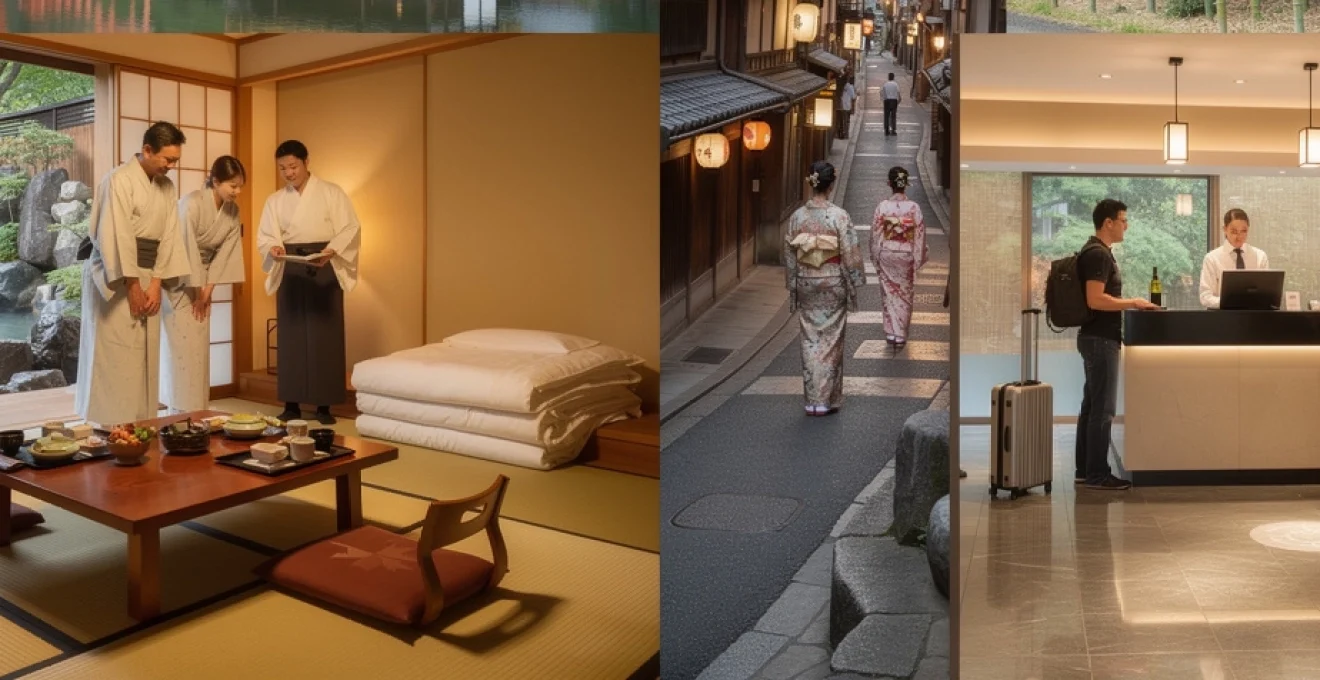
Walking into a ryokan feels like stepping through a portal into historical Japan. The architectural elements you encounter aren’t decorative choices—they’re centuries-old design principles that create a specific atmosphere. Tatami mats, woven from rush grass, cover the floors in precise rectangular arrangements. These mats aren’t just flooring; they’re a measurement system that defines room dimensions. A typical ryokan room measures between six and ten tatami mats, translating to approximately 10 to 16 square metres, though premium suites can extend to 30-40 square metres.
The spatial flexibility of ryokan rooms distinguishes them from Western accommodation. During daylight hours, your room functions as a sitting area with low tables and floor cushions positioned near windows overlooking gardens or traditional streetscapes. Come evening, staff members discreetly enter to transform the space, rolling out thick futon mattresses and arranging them with crisp linens. This metamorphosis happens while you’re enjoying dinner or soaking in the onsen, creating a seamless transition that feels almost magical. By morning, the futons vanish again, restoring the room to its daytime configuration.
Natural materials dominate ryokan interiors. Exposed wooden beams, often made from cypress or cedar, cross the ceilings. The woodwork typically remains unpainted, allowing the grain patterns and natural colour variations to provide visual interest. Alcoves called tokonoma display seasonal flower arrangements or hanging scrolls featuring calligraphy or landscape paintings. These aren’t permanent fixtures—the displays rotate according to the season, the local festivals, or even the weather, reflecting the Japanese aesthetic principle of impermanence.
Shoji screens, futon bedding, and minimalist washitsu design elements
Shoji screens represent one of the most recognisable elements of traditional Japanese architecture. These sliding panels, constructed from translucent washi paper stretched across wooden lattice frames, serve multiple purposes simultaneously. They function as room dividers, closet doors, and light filters. During the day, they diffuse sunlight into a soft, ambient glow that eliminates harsh shadows. The paper’s delicate nature requires careful handling—many first-time ryokan guests worry about accidentally puncturing these screens, though quality establishments use reinforced paper that withstands normal use.
Futon bedding differs substantially from Western mattresses. A traditional futon consists of a shikibuton (bottom mattress), a kakebuton (top quilt), and a makura (pillow). The shikibuton measures about 5-8 centimetres thick when new, providing cushioning whilst maintaining the firm support that sleeping directly on tatami would lack. Modern ryokans often layer multiple shikibuton for guests unaccustomed to floor sleeping. The experience divides travellers sharply—some find it unexpectedly comfortable, appreciating the firm support, whilst others struggle with the unfamiliar sleeping surface.
Washitsu design embraces minimalism, but this simplicity emerges from deliberate choices rather than absence. Every element serves a purpose. The limited furniture prevents clutter. The muted colour palette—typically earth tones with occasional accent colours—creates visual tranquility. Even the seemingly empty spaces are intentional, following the concept of ma,
or the meaningful pause between objects and activities. For many visitors, this stripped-back, carefully balanced environment becomes one of the most memorable aspects of staying in a Kyoto ryokan, especially when contrasted with the visual busyness of the city’s streets.
Communal onsen facilities versus private in-room bathing options
Bathing culture is often the deciding factor when you choose between a ryokan and a hotel in Kyoto. Traditional ryokans place a strong emphasis on communal baths, which may use natural hot spring water (onsen) if the property has access to a geothermal source, or heated groundwater known as ofuro if not. These large shared baths are typically segregated by gender and follow a strict etiquette sequence: you wash and rinse thoroughly at individual shower stations before entering the soaking pool, ensuring the water remains clean for all guests.
In Kyoto itself, many ryokans offer beautifully designed indoor communal baths lined with stone or hinoki cypress, sometimes with small open-air sections called rotenburo. You’ll also find establishments that provide kashikiri (private) baths that families or couples can reserve in 30–50 minute slots. These are ideal if you feel shy about communal bathing, travel with children, have tattoos, or prefer a more intimate experience. When you compare Kyoto ryokans with hotels, this focus on shared bathing spaces is one of the clearest differences in daily rhythm and social atmosphere.
Private in-room bathing at ryokans in Kyoto varies widely. Entry-level rooms may have only a simple unit bath, encouraging you to use the larger communal facilities instead. Mid- to high-end ryokans sometimes include semi-open terraces with deep soaking tubs, cedar barrels, or even stone baths positioned to frame a garden or inner courtyard view. These premium rooms usually command a higher per-person rate, but they give you the rare chance to enjoy a hot soak in complete privacy while still being surrounded by traditional tatami room design.
Kaiseki ryori multi-course dining protocols and meal timings
The food experience is where a Kyoto ryokan can truly distinguish itself from even the best city hotels. Instead of choosing from a menu in a restaurant, you are typically served kaiseki ryori—a seasonal, multi-course dinner that showcases local ingredients and classical culinary techniques. Courses follow a specific progression, starting with delicate appetizers and sashimi, moving through simmered and grilled dishes, then finishing with rice, pickles, and a light dessert. The presentation is almost as important as the flavours: lacquer trays, handmade ceramics, and garnishes that reflect the current season all contribute to the sense of occasion.
Meal timings at Kyoto ryokans are much stricter than at hotels. Dinner usually begins between 18:00 and 19:30, and you’ll be asked to choose your preferred time at check-in. Because the kitchen prepares each kaiseki course in sequence, arriving late or skipping dinner at short notice is often not possible without paying the full rate. Breakfast, typically served between 7:00 and 9:00, follows a similar pattern with grilled fish, miso soup, rice, and a variety of small side dishes. If you’re used to the flexibility of hotel buffets and late-night dining, this fixed schedule may feel restrictive—yet for many travellers, it becomes a welcome anchor that slows the pace of each day in Kyoto.
Protocol during kaiseki is formal but not intimidating. Staff will explain dishes as they arrive, and you’re not expected to know every rule. As a guideline, you work from lighter to heavier flavours, avoid pouring soy sauce directly over delicate items, and treat chopsticks with care (never sticking them upright in rice, for example). If you have dietary restrictions, you should inform the ryokan well in advance; while many Kyoto kitchens can adapt to allergies and basic preferences, strict vegan, halal, or ketogenic diets can be challenging outside larger hotels.
Yukata etiquette and traditional guest protocols in authentic ryokan settings
Kyoto ryokans invite you to participate in customs that go beyond décor and dining. One of the most visible is the wearing of yukata, a light cotton kimono provided in your room along with an obi belt and often a haori jacket during cooler months. You’re encouraged to change into these garments after check-in or before dinner, and it is perfectly acceptable—even expected—to walk through the corridors, visit the communal baths, or relax in common areas dressed this way. For many guests, slipping into a yukata marks the point at which the outside world fades and the ryokan experience truly begins.
Yukata etiquette is straightforward once you know a few basics. You wrap the left side of the robe over the right (the opposite order is reserved for funerals in Japan), tie the belt firmly but not too tight at your waist, and wear the provided slippers in the hallways but never on tatami. Some Kyoto ryokans in historic neighbourhoods will even allow you to step outside briefly in yukata to stroll their private gardens or inner courtyards. If you are unsure about how to put it on, staff are usually happy to demonstrate discretely, and you’ll quickly notice that perfection is less important than comfort and respect for the setting.
Other guest protocols in authentic Kyoto ryokans revolve around quietness and rhythm. You remove outdoor shoes at the entrance, lower your voice in corridors, and try to keep mobile phone use discreet so others can relax. Unlike large hotels, ryokans often have thin walls and wooden floors, making late-night noise more noticeable. You may also be asked to confirm your bathing and meal times, as the staff schedule is built around each guest’s plan. Understanding and accepting these small rituals can turn what might seem like “rules” into part of the charm that sets a ryokan stay apart from a standard hotel night in Kyoto.
Kyoto hotel categories: from machiya townhouse conversions to international chains
While ryokans embody Kyoto’s past, the city’s hotels offer a spectrum of options that suit different budgets, comfort levels, and travel styles. When you compare a Kyoto ryokan and a hotel, it can help to think of hotels as a toolbox: you pick the shape and size that match how you want to explore the city. From converted wooden machiya townhouses in Gion to glass-fronted luxury towers along the Kamogawa River, the range is wide, and each category carries distinct trade-offs in space, service, and cultural immersion.
Understanding these Kyoto hotel categories allows you to combine them strategically with a ryokan stay. For instance, you might book a centrally located business hotel for efficient sightseeing days and then move to a traditional inn for one or two nights of slower, more immersive experiences. Or, if you value five-star consistency over ritual, you may decide that a luxury international hotel gives you enough Japanese atmosphere through design touches without the stricter expectations of a ryokan. Let’s look more closely at the main hotel types you’ll encounter.
Western-style accommodation standards at Ritz-Carlton kyoto and hyatt regency
At the top end of the scale, international luxury brands like The Ritz-Carlton Kyoto and Hyatt Regency Kyoto provide Western-style comfort with curated Japanese accents. Rooms typically feature high-quality mattresses, blackout curtains, marble bathrooms, and climate control—elements that can be inconsistent in older ryokans or machiya lodgings. Service follows global five-star standards, with 24-hour front desks, concierge teams, and multilingual staff who can assist with restaurant reservations, private guides, and transport arrangements across Kyoto and beyond.
These properties also weave Kyoto aesthetics into their designs. You might find tatami-style platforms near windows, art inspired by local temples, or bathrooms with deep soaking tubs that echo ofuro traditions. However, you maintain hotel-level flexibility: housekeeping works around your schedule, room service runs late, and you’re free to return after midnight without disturbing anyone. For travellers who value predictable bedding, strong Wi-Fi, and a familiar layout, these Western-style hotels often feel like a safe middle ground between a purely international stay and a full immersion in ryokan culture.
Price-wise, luxury hotels in Kyoto can rival or even exceed high-end ryokans, especially during peak cherry blossom and autumn foliage seasons when occupancy rates regularly hit 80–90%. The difference is in what’s included. While ryokans bundle meals, luxury hotels usually charge separately for breakfast and dinner, giving you the freedom to try Kyoto’s vibrant restaurant scene. If you want to dine at Michelin-starred kaiseki restaurants or explore hidden izakaya alleys rather than commit to in-house meals, a high-end hotel can make more sense than a full-board ryokan.
Boutique machiya hotels in gion and higashiyama districts
Machiya hotels occupy a unique niche in Kyoto: they blend the charm of traditional wooden townhouses with the convenience of modern amenities. Many are located in atmospheric districts like Gion, Higashiyama, and Nishijin, where narrow lanes, low tiled roofs, and lattice-fronted facades shape the streetscape. Inside, you’ll often find exposed beams, tatami floors, and small inner gardens, but the service model tends to be closer to that of a hotel or serviced apartment than a ryokan. There may be limited front-desk hours, self-check-in systems, and no included meals.
For travellers who love the idea of staying in an old Kyoto house but feel hesitant about ryokan rules, a machiya hotel can be an ideal compromise. You can sleep on either futons or Western beds depending on the room type, cook simple meals in a small kitchenette, or walk out to countless nearby cafés and restaurants. However, you won’t usually get communal onsen baths, multi-course dinners, or staff in kimono guiding your every step. Think of machiya hotels as architectural immersion with DIY flexibility, whereas ryokans provide a fully choreographed cultural experience.
Because many machiya properties are small—often fewer than 10 rooms—they book up quickly during popular seasons. Some lack elevators or wide staircases, reflecting their historical footprint, so they may not be suitable if you have mobility issues or very large luggage. When comparing Kyoto hotels vs ryokans, ask yourself: do you want the structure of set meals and onsen times, or do you prefer the freedom to step straight from your townhouse entrance into the lively streets of Gion at any hour?
Budget business hotels: toyoko inn, APA hotel, and dormy inn options
At the budget end, Japanese business hotels like Toyoko Inn, APA Hotel, and Dormy Inn provide compact, efficient rooms that prioritise convenience over atmosphere. These properties are usually clustered around major transport hubs such as Kyoto Station, Shijo-Karasuma, and Sanjo, making them excellent bases if you plan to spend most of your time sightseeing rather than lingering in your accommodation. Rooms tend to be small—often 12–18 square metres—but include essentials like a comfortable bed, desk, mini-fridge, and en-suite unit bath.
What business hotels lack in character, they often make up for in predictability and value. Chains like Dormy Inn bridge the gap slightly by offering communal baths, saunas, and evening noodle services, giving you a modest taste of onsen culture without the formality of a ryokan. Breakfast is usually buffet-style and optional, allowing you to decide day by day whether you want to eat in or grab something quickly from a convenience store. For solo travellers or those on tight schedules, this level of flexibility can be a major advantage over Kyoto ryokan stays that charge per person and require advance meal commitments.
When comparing Kyoto business hotels to traditional inns, remember that pricing structures differ. A basic double room in a business hotel might cost the same as a single-person rate in a midrange ryokan, but the ryokan typically includes dinner and breakfast plus access to larger baths. If your priority is stretching your budget across more days in Kyoto or funding extra experiences like tea ceremonies or private guides, a business hotel can free up resources while still providing a clean, quiet place to rest each night.
Location analysis: proximity to fushimi inari, kinkaku-ji, and arashiyama bamboo grove
Location plays a crucial role when you’re choosing between a ryokan and a hotel in Kyoto, especially if your itinerary includes must-see sites like Fushimi Inari Taisha, Kinkaku-ji (the Golden Pavilion), and the Arashiyama Bamboo Grove. Kyoto’s attractions are spread across multiple districts, and there is no single “perfect” base that puts everything within walking distance. Instead, you’ll want to think in terms of train and bus lines: how easily can you reach your top priorities each morning, and how late can you return at night?
Many traditional ryokans are located in quieter, more residential areas or near scenic rivers and temple complexes. For example, you’ll find ryokans along the Kamo River, in the foothills near Higashiyama, or on the way to Arashiyama. These settings enhance the sense of retreat but often mean longer travel times to attractions on the opposite side of the city. Hotels—especially business and international chains—tend to cluster around Kyoto Station and central neighbourhoods like Shijo and Karasuma, where multiple bus routes and subway lines converge. If you plan to catch an early train to Nara or Osaka, or hit Fushimi Inari at sunrise to avoid the crowds, a station-area hotel can be far more practical than a secluded ryokan.
Consider how each key sight aligns with Kyoto’s accommodation zones. Fushimi Inari, in the south, is best accessed via JR or Keihan trains from central or station-adjacent hotels. Kinkaku-ji, in the northwest, relies mainly on buses or taxis, so staying near central bus hubs shortens journey times. Arashiyama, to the west, has its own cluster of charming ryokans and boutique hotels that make sunrise or sunset visits to the bamboo grove much easier. If your dream is to wander Arashiyama’s riverbanks in the early morning mist, overnighting nearby in a local ryokan can feel almost magical compared with commuting in from downtown each day.
In practice, many travellers split their stay to balance access and atmosphere. You might begin with a few nights in a central Kyoto hotel for efficient day trips to Fushimi Inari and Kinkaku-ji, then move to an Arashiyama or Higashiyama ryokan for a slower-paced finale. This approach reduces daily transit time while letting you experience both the city’s modern energy and its traditional tranquillity. When you map out your Kyoto sightseeing plan, ask yourself: do you want to minimise time on buses and trains, or are you willing to commute a little further in exchange for waking up to temple bells or river views outside your ryokan window?
Pricing structures: per-person ryokan rates versus per-room hotel charges
Budgeting for a stay in Kyoto can be confusing if you’re not familiar with how Japanese accommodations price their rooms. Ryokans almost always charge per person, not per room. The nightly rate reflects not just the space you occupy but also the cost of dinner, breakfast, service, and access to shared facilities like onsen baths. Hotels, on the other hand, use a per-room model: the base price is the same whether one or two people occupy the space, with meals and extras added separately. Understanding this distinction is essential when you compare Kyoto ryokan and hotel costs.
For example, a midrange ryokan near Kyoto’s Higashiyama area might quote ¥25,000–¥35,000 per person per night, including kaiseki dinner and Japanese breakfast. For two guests, the total quickly reaches ¥50,000–¥70,000 per night, which can initially seem high. However, if you factor in the equivalent cost of two restaurant dinners, two breakfasts, and a visit to a day-use onsen facility, the price gap between a ryokan and a four-star hotel narrows dramatically. Meanwhile, a central Kyoto hotel room might list at ¥18,000–¥30,000 per night for two people, but you’ll spend extra on meals and experiences that a ryokan bundles into its nightly rate.
Ryokan pricing in Kyoto also fluctuates more strongly with seasonality, view, and meal level. Upgraded kaiseki courses, private open-air baths, or river/temple-facing rooms can add 20–50% to the base rate. Some properties offer no-meal or breakfast-only plans at lower per-person prices, but these options partly defeat the purpose of staying in a ryokan, where cuisine is central to the experience. Hotels, by contrast, often have more predictable rate structures, loyalty-program discounts, and last-minute deals on booking platforms, which can favour flexible travellers or those staying longer.
If you’re travelling as a family or small group, the math becomes even more nuanced. A large tatami room in a Kyoto ryokan that sleeps four or five on futons can sometimes be more cost-effective than booking two or three separate hotel rooms, despite the per-person charges. On the flip side, solo travellers often find ryokans disproportionately expensive because there is little discount for single occupancy. In that case, a business hotel or machiya room may stretch your budget further while still leaving room for one splurge night at a carefully chosen ryokan.
Cultural immersion: omotenashi hospitality versus standard concierge services
One of the most important differences between a Kyoto ryokan and a hotel lies not in the bricks and mortar, but in the style of service. Ryokans embody omotenashi, a deeply rooted Japanese concept of hospitality that anticipates your needs without being intrusive. Staff might remember how you take your tea, adjust your futon arrangement for a second night, or quietly swap your slippers for dry ones if it starts raining outside. The relationship feels almost personal, as if you were a guest in a private home rather than a customer in a commercial property.
Hotels in Kyoto, even very good ones, tend to follow a more standardised, international model. Front-desk teams and concierges provide efficient check-in, city maps, and restaurant bookings, but interactions are usually shorter and more transactional. For some travellers, this sense of anonymity is a benefit: you can come and go without much notice, order room service at midnight, or skip breakfast without explanation. Others find that the slower, more attentive rhythm of a ryokan stay deepens their connection to Kyoto’s culture in ways that are hard to quantify yet difficult to forget.
Tea ceremony access and geisha district proximity in traditional lodgings
If your Kyoto travel dreams include tea ceremonies, geisha district walks, or intimate cultural encounters, your choice of accommodation can make these easier to arrange. Many traditional ryokans and machiya-style lodgings maintain relationships with local tea houses, artisans, and cultural practitioners. They may host on-site tea demonstrations in a dedicated tatami room, recommend authentic (rather than overly commercial) tea ceremony venues, or arrange early-morning temple visits before the general public arrives. In some cases, staying at a particular ryokan can grant you access to experiences that would be difficult to book independently.
Ryokans located in or near Gion and Miyagawacho—Kyoto’s historical geisha districts—also place you closer to the subtle rhythms of these neighbourhoods. From your doorstep, you can stroll down lantern-lit alleys at dusk, quietly observing maiko and geiko on their way to evening engagements, without needing to book a dedicated tour. While hotels in central Kyoto can offer similar geographic convenience, traditional lodgings often feel more in tune with their surroundings, using local crafts, artwork, and seasonal decorations that mirror what you see in the streets outside.
That said, many higher-end hotels now collaborate with cultural partners too, offering in-house tea introductions, ikebana workshops, or calligraphy classes. The difference is often in scale and intimacy. In a small ryokan, a tea ceremony might involve just a few guests seated together, with time for questions and conversation. In a large hotel, the same experience can feel more like a scheduled activity. When deciding between a Kyoto ryokan and hotel for cultural immersion, ask whether you prefer curated access with structure, or a more organic connection where your surroundings and hosts naturally guide you toward local traditions.
Flexibility in check-in times and luggage storage policies
Practical considerations like check-in times and luggage storage policies may not seem glamorous, but they have a real impact on how your Kyoto days unfold. Ryokans usually offer check-in from around 15:00 and kindly but firmly ask you to arrive by early evening, especially if dinner is included. This is because the kitchen and service teams work to a precise schedule, and your arrival triggers a sequence of preparations: tea service, bath readiness, room setup, and meal timing. Late arrivals can disrupt this rhythm, and some ryokans will not be able to serve dinner if you come after a certain time.
Hotels in Kyoto—particularly business and international chains—offer greater flexibility. Many have 24-hour front desks, allow late check-in, and can store luggage before and after your stay with minimal fuss. This can be invaluable if you want to maximise every hour, perhaps heading straight from the Shinkansen to Fushimi Inari, or catching an evening train after a full day at Kiyomizu-dera. If you travel with large suitcases, hotels often provide more generous storage rooms, whereas smaller ryokans may have limited space, encouraging you to use luggage forwarding services between cities.
In terms of luggage handling, ryokans typically bring your bags directly to your room and may even arrange them neatly for you, reflecting the personalised nature of omotenashi. Hotels tend to offer a more self-service approach in budget categories, with bellhops available mainly in higher-end properties. When planning a combined Kyoto ryokan and hotel itinerary, a useful strategy is to stay in a centrally located hotel first, using it as a base for sightseeing with minimal luggage, and then forward your larger bags to your next city while you travel light to a ryokan for a one- or two-night immersive stay.
Language barriers: english proficiency levels across accommodation types
Language is another factor that can influence whether a ryokan or hotel in Kyoto feels more comfortable for you. Large international hotels and many business chains near Kyoto Station generally have front-desk staff with good English proficiency, clear bilingual signage, and English-language city maps. This makes it easy to ask nuanced questions, adjust bookings, or seek advice about restaurants and transportation. If you’re a first-time visitor to Japan or feel nervous about communication, this level of support can be reassuring.
Ryokans, especially smaller family-run ones, may have more limited English. You’ll almost always be able to manage the basics—check-in forms, meal times, bath instructions—through a mix of simple phrases, printed guides, and gestures. Some ryokans provide detailed illustrated instructions in guest rooms covering yukata wearing, onsen etiquette, and room features, which helps bridge any gaps. However, complex requests such as accommodating unusual diets, rearranging multi-day plans, or booking specialised tours may be more challenging without a translation app or some prior Japanese phrases.
That said, many travellers find that the warmth of ryokan hospitality transcends language. Smiles, bows, and the careful presentation of meals can communicate welcome just as clearly as words. If you value detailed verbal explanations and spontaneous concierge recommendations, a hotel may be more aligned with your needs. If you’re comfortable embracing a little ambiguity and using technology to assist with specific questions, you might find that any language barriers at a Kyoto ryokan become part of the adventure rather than a source of stress.
Seasonal considerations: cherry blossom viewing and autumn foliage peak periods
Timing your trip adds another layer to the decision between a Kyoto ryokan and a hotel. Cherry blossom season (typically late March to early April) and autumn foliage (usually mid-November) transform Kyoto into one of the most sought-after destinations in the world. During these peak periods, accommodation prices rise, availability drops, and the style of place you choose will strongly influence how you experience the crowds. Booking six to twelve months in advance is common for both popular ryokans and well-located hotels.
In spring, staying in a ryokan near Philosopher’s Path, Higashiyama, or Arashiyama lets you step directly into early-morning hanami walks before day-trippers arrive. You can return for a midday rest, soak in a bath, then head out again for evening illuminations without lengthy commutes. However, demand for scenic ryokans with gardens or river views is intense at this time, and per-person rates can climb significantly. Hotels in central Kyoto may offer slightly more inventory and promotional packages, but you’ll often need to rely on public transport to reach the most photogenic blossom spots at optimal times.
Autumn brings a different atmosphere: cooler air, golden ginkgo trees, and maples that glow red against temple roofs. Ryokans with private gardens designed for momiji (maple viewing) can be priceless during this period, allowing you to enjoy foliage from your own veranda without jostling for space at famous sites like Eikando or Tofuku-ji. That said, shorter daylight hours and evening illumination schedules mean you may appreciate the flexible dining times and late-night access of hotels if you like to photograph temples after dark or hop between multiple districts in a single day.
Outside these peak seasons—during winter’s quiet months or the lush, humid days of early summer—you’ll find more availability and better value across both ryokan and hotel categories. This can be an ideal time to experiment: perhaps choose a slightly more luxurious ryokan than your budget would allow in April or November, or spend a few extra nights in a machiya hotel in Gion. Ultimately, when you plan your Kyoto itinerary around cherry blossoms or autumn leaves, ask yourself what kind of home base will best support your priorities. Do you want a tranquil retreat that frames the seasons through its gardens and meals, or a flexible hub that lets you chase the perfect view across the city, camera in hand?