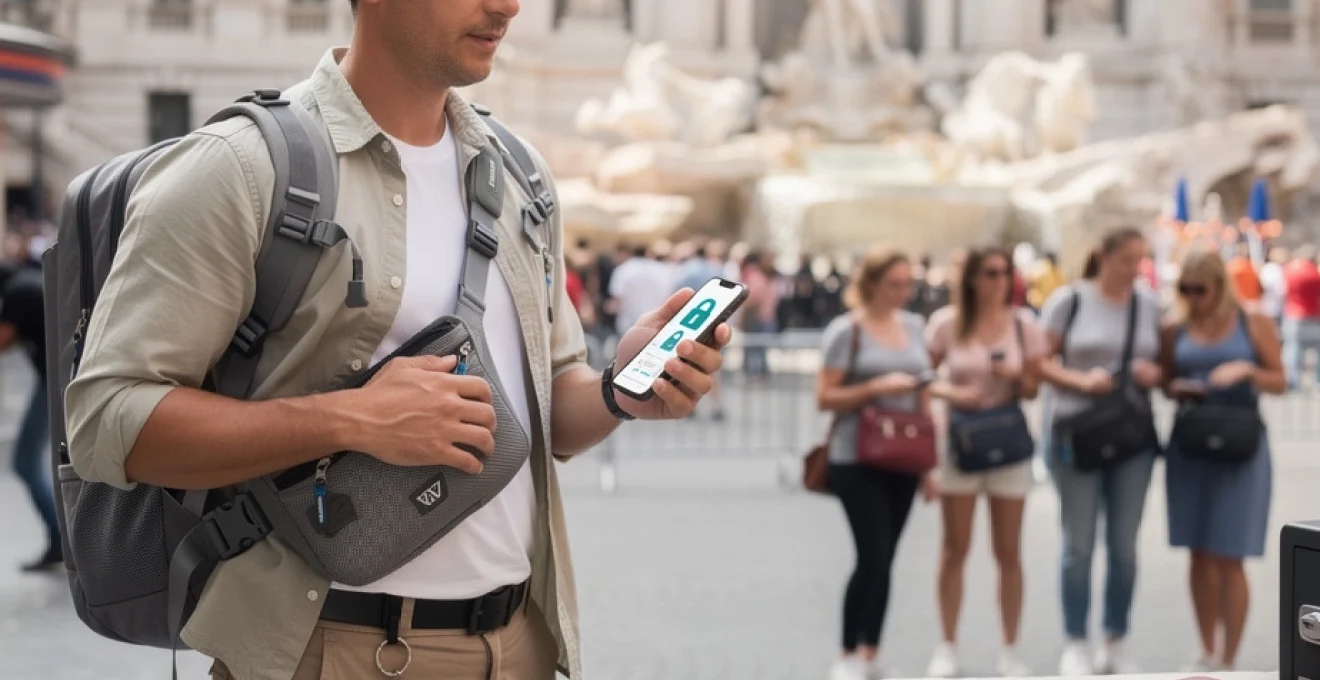
Every year, approximately 400,000 pickpocketing incidents occur across European tourist destinations alone, transforming what should be memorable holiday experiences into distressing ordeals involving police stations, insurance claims, and cancelled bank cards. The financial loss averages around €200 per incident, but the emotional toll—lost photographs, disrupted itineraries, and violated sense of security—extends far beyond monetary value. Understanding how thieves operate in crowded tourist areas and implementing proven protective strategies can dramatically reduce your vulnerability while allowing you to enjoy your travels with confidence rather than constant anxiety.
Modern travel security requires a multi-layered approach that combines awareness, specialist equipment, and strategic behaviour. From the moment you leave your accommodation to navigating busy marketplaces and returning to your hotel room, each environment presents distinct security challenges that demand tailored responses. The sophistication of theft operations in major tourist destinations has evolved considerably, with organised groups employing techniques refined over decades of practice against millions of unsuspecting visitors.
Understanding pickpocketing techniques in High-Traffic european destinations
Recognition of common theft methodologies forms the foundation of effective prevention. Professional pickpockets don’t simply grab and run—they employ carefully choreographed techniques designed to exploit human psychology, crowd dynamics, and environmental conditions. These methods have been perfected in the world’s busiest tourist zones, where high footfall creates ideal operating conditions for skilled thieves.
The distraction method at barcelona’s las ramblas and rome’s trevi fountain
Distraction theft remains the most prevalent technique in European tourist hotspots, accounting for approximately 60% of all pickpocketing incidents. The classic approach involves one accomplice creating a diversion whilst another extracts valuables. At Barcelona’s Las Ramblas, common distractions include someone “accidentally” spilling liquid on you, stopping suddenly in front of you, or asking for directions whilst holding a large map that obscures their partner’s actions. The distraction typically lasts just 3-5 seconds—sufficient time for a skilled pickpocket to locate, extract, and pocket your phone or wallet.
At Rome’s Trevi Fountain, thieves exploit the natural distraction of tourists photographing the landmark. Groups of pickpockets position themselves in the densest crowd areas where personal space becomes compressed. One member might jostle you from behind whilst claiming someone pushed them, whilst another accesses your bag or pockets from the side. The sensory overload of the environment—noise, movement, visual spectacle—provides natural cover for their operations. Research indicates that victims rarely notice the theft until 10-15 minutes after leaving the location, by which time the thieves have disappeared into the crowds.
Slash-and-grab tactics targeting Cross-Body bags in metro systems
Underground transport systems present unique vulnerabilities that thieves exploit systematically. The slash-and-grab technique involves using a small, sharp blade to cut the bottom or side of bags, allowing contents to fall into the thief’s waiting hand. This method is particularly prevalent on Madrid, Paris, and Barcelona metro systems during rush hours when compressed crowds make detection nearly impossible. Cross-body bags, often considered secure, become targets when worn on the side furthest from the body or when straps are positioned where they can be easily severed.
Statistics from transport police indicate that approximately 150 slash-and-grab thefts occur daily across major European metro systems. The technique typically occurs during boarding or alighting, when passengers are focused on navigating crowded doorways. Professional operators work in pairs, with one creating space and blocking sightlines whilst the other executes the cut. Modern anti-theft bags incorporate slash-resistant mesh within the fabric—a simple modification that eliminates this vulnerability entirely.
Child gangs operating in paris métro and milan’s duomo square
Perhaps the most psychologically challenging theft technique involves children, typically aged 8-14, operating in coordinated groups of 4-6 members. These gangs exploit visitors’ reluctance to suspect or confront minors. In Paris Métro stations, particularly around tourist-heavy lines 1 and 4, child gangs employ the “swarm” technique—surrounding a target whilst creating confusion through apparently innocent jostling and requests for money. Within seconds, wallets
and phones are lifted from bags, coat pockets, and even money belts worn loosely under clothing. Around Milan’s Duomo Square, similar groups operate by offering friendship bracelets, asking you to sign petitions, or pretending to collect for charity. While one or two children engage you, others move in from the sides and behind, using jackets or clipboards to shield their hands. Your best defence is to maintain a physical buffer zone, keep moving rather than stopping when approached, and firmly decline unsolicited contact with a clear “no” while keeping a hand on your bag and pockets.
Crowdsurfing theft techniques during street performances and queue lines
Crowdsurfing theft exploits the fact that everyone is facing the same way and focusing on a single point of interest. In places like Prague’s Old Town Square, London’s Covent Garden, or along Las Ramblas, pickpocket teams circulate at the outer edge of the crowd and gradually press inward. They often position themselves directly behind tourists wearing backpacks or carrying loose shoulder bags, taking advantage of the moment when you raise your phone to film or take photos. The motion of the crowd itself provides cover, making it seem as though any sudden bump or tug is just part of the jostling.
Queue lines outside attractions such as the Eiffel Tower, the Vatican Museums, or gondola stations in Venice are equally attractive targets. Thieves move up and down the line pretending to look for someone or trying to sell items, lightly brushing against people to test how accessible pockets and zips are. Because you are constrained by barriers or ropes and focused on when it will be your turn, your ability to reposition or step away is reduced. To counter crowdsurfing techniques, wear your backpack on your front in tight crowds, loop a strap around your arm, and avoid leaving phones or wallets in open or rear pockets at any time.
Anti-theft luggage and personal carry solutions for urban tourism
Once you understand how professional thieves operate, the next step is choosing the right gear to keep your valuables safe in busy tourist areas. Anti-theft luggage and secure personal carry systems provide a physical layer of protection that complements your situational awareness. Modern products have evolved far beyond simple padlocks, incorporating smart design, cut-resistant materials, and RFID-blocking technology. When selected and used correctly, these tools make you a much less attractive target and significantly reduce your chances of loss.
Rfid-blocking technology in travel wallets and passport holders
With the rise of contactless payments and biometric passports, electronic theft has become an additional concern, especially in crowded transport hubs. RFID-blocking travel wallets and passport holders use metallic fibres or special shielding layers to prevent unauthorised scanning of your cards and documents. While actual RFID skimming incidents are less common than classic pickpocketing, the low cost and high convenience of RFID-blocking gear make it a sensible precaution. Think of it as adding an extra deadbolt to your digital front door—most days you will not need it, but when you do, you will be glad it is there.
When choosing RFID-blocking accessories, prioritise practicality and layout over marketing claims. Look for wallets and organisers that allow you to store your main bank card, a backup card, and at least one form of ID in separate slots so you can spread risk. A compact RFID passport holder that fits comfortably in an inner jacket pocket or under a layer of clothing is more secure than a bulky organiser that lives in an easy-to-grab handbag. Pairing RFID-blocking technology with sensible habits—such as using contactless only when needed and enabling transaction alerts on your banking app—creates a robust defence against electronic theft when travelling.
Pacsafe anti-theft backpacks with locking zippers and slash-proof mesh
For urban tourism, a well-designed anti-theft backpack can be the difference between a carefree day of sightseeing and a trip to the police station. Brands such as Pacsafe incorporate cut-resistant mesh into the lining of bags and straps, preventing slash-and-grab tactics on metro systems and in crowded streets. Lockable zippers that clip into discreet anchors or are secured with small combination locks make casual, opportunistic theft far more difficult. A thief will almost always choose the easiest target; a secured Pacsafe backpack signals that you are not it.
To get the most from an anti-theft backpack, you need to pack and carry it intelligently. Place your highest-value items—passports, primary bank cards, and backup cash—in the most concealed pockets closest to your back. Use outer compartments only for low-value items like tissues, a refillable water bottle, or a city map. When you are in particularly busy environments, such as metro platforms or markets, wear the backpack on your front or under one arm with a strap looped around your wrist. This combination of secure design and conscious carry habits makes it extremely difficult for anyone to access your belongings without you noticing.
Money belts versus neck pouches: ergonomic concealment strategies
Concealed carry options like money belts and neck pouches remain popular for a reason: they keep your most important valuables away from obvious theft targets like pockets and handbags. Money belts are typically worn flat against the abdomen, under your clothing, and are ideal for storing backup cash, secondary cards, and copies of key documents. Neck pouches hang beneath your shirt, either in front or to the side, offering slightly easier access during the day. Which is better for you when moving through busy tourist areas?
From an ergonomic perspective, money belts are often more comfortable over long walking days, provided they are slim and breathable. Neck pouches can cause strain on your neck and shoulders if overloaded, but they allow quicker access in situations where you frequently need your passport or tickets, such as crossing borders by train. A practical strategy is to treat both as secure storage rather than active wallets: you keep the bulk of your funds and key documents concealed, while carrying only a small amount of cash and one card in a more accessible, but still secure, location. This way, if your everyday wallet is stolen, your true valuables remain untouched.
Portable travel safes with TSA-approved cable lock systems
Portable travel safes offer an effective solution when you need to secure valuables in accommodation that lacks reliable room safes or when using shared spaces like hostels. These soft-sided safes are usually made from slash-resistant fabric and close with a reinforced drawstring or zip that locks to an integrated steel cable. The cable can be looped around fixed objects—bed frames, radiators, or plumbing—making it significantly harder for a thief to simply walk off with your bag. While no system is completely foolproof, portable safes raise the time and effort required for theft far beyond what most opportunistic criminals are willing to risk.
Look for travel safes that accept TSA-approved locks if you intend to place them inside checked baggage or use them during multi-leg journeys. This ensures airport security can inspect your luggage without cutting locks, reducing the chance of your system being compromised. In practice, you might use a portable safe to store your primary passport, backup credit card, emergency cash, and expensive electronics whenever you are not actively using them. You then move around busy tourist areas with only a slim subset of essentials, dramatically reducing the potential impact of any street-level theft.
Hotel room security protocols in tourist accommodation
Many travellers focus on pickpockets in crowded streets but overlook the security of their hotel room, hostel dorm, or rental apartment. Yet a significant share of travel thefts occur not outside, but inside accommodation—often without signs of forced entry. Implementing basic hotel room security protocols helps ensure that your valuables remain safe while you sleep, shower, or explore the city. The key is to treat your room as a semi-public space rather than a guaranteed safe zone.
Electronic safe programming and backup override vulnerabilities
Electronic room safes provide a convenient way to secure valuables, but they are not all created equal. Many hotel safes include a master override code or physical key that allows staff to open them if guests forget their PIN. In poorly managed properties, these override methods can be known to more people than necessary, increasing the risk of misuse. There have even been instances where default factory codes were never changed, meaning anyone familiar with the model could open the safe in seconds.
To reduce these vulnerabilities, always test your room safe with non-critical items first: place a book or low-value object inside, lock it, and ensure your chosen code both locks and unlocks the unit reliably. If you are staying in a budget hotel or older property where the safe appears flimsy or badly installed, treat it as a deterrent rather than a vault. In such cases, combining the safe with a portable travel safe, or locking valuables inside your luggage with a solid cable lock anchored to furniture, can create layered security. Remember that hiding items in obvious places—under the mattress, in drawers, or behind curtains—is rarely effective, as experienced thieves know all the common hiding spots.
Door jamming devices and portable door locks for additional security
While door chains and internal deadbolts are standard in many hotels, their quality and reliability vary widely. Portable door jamming devices and travel door locks provide an extra layer of protection, particularly in budget accommodation, ground-floor rooms, or older buildings with worn locks. These compact devices typically fit into the door latch or wedge under the door, preventing it from being forced open from the outside, even with a key. They are especially reassuring for solo travellers or anyone sleeping in unfamiliar environments.
Using a door jammer or portable lock is simple and takes just a few seconds each night—about the same effort as fastening a seatbelt. Once installed, you can relax knowing that unexpected entry is far less likely, reducing the risk of both theft and personal safety incidents. Complement this hardware by keeping your key valuables—phone, wallet, passport copy—within arm’s reach of the bed, not scattered around the room. If you did need to leave quickly due to a fire alarm or emergency, you would be able to grab your essentials and go without delay.
Surveillance of housekeeping access and do not disturb strategic timing
Housekeeping and maintenance staff legitimately access your room, but every additional entry increases the theoretical risk of opportunistic theft. Most hotel employees are honest professionals, yet it still makes sense to minimise unnecessary exposure. Using the “Do Not Disturb” sign strategically—such as when you leave valuables charging in the room or when you are only staying one or two nights—can reduce the number of times your room is entered. You can always request fresh towels or toiletries from reception if needed.
Whenever you return to your room after housekeeping has visited, take a brief moment to scan for anything unusual: objects moved, bags unzipped, or doors left unlocked. It may sound paranoid, but in practice this becomes a simple 10-second habit that keeps you attuned to your environment. As a rule of thumb, do not leave passports, large amounts of cash, or high-value electronics in plain sight. Store them in a safe, portable travel safe, or locked suitcase instead, and use low-value decoy items—like a cheap pair of headphones or a basic power bank—on the desk or bedside table for everyday use.
Digital security measures against electronic theft in public spaces
Protecting your valuables in busy tourist areas is no longer just about guarding wallets and cameras. Your digital assets—banking credentials, email accounts, cloud photo backups—are often far more valuable than any single physical item. Airports, cafés, hostels, and co-working spaces in major tourist hubs all offer free Wi-Fi, but these networks can be a hunting ground for cybercriminals. Adopting robust digital security measures allows you to enjoy the convenience of staying connected without exposing yourself to unnecessary risk.
VPN encryption when using public Wi-Fi at airports and cafés
Public Wi-Fi networks are convenient but inherently insecure, especially when they are open or use shared passwords. Without protection, your browsing activity and login details can potentially be intercepted by someone on the same network using simple tools. A Virtual Private Network (VPN) creates an encrypted tunnel between your device and the internet, making your data unreadable to anyone attempting to snoop. Think of it as drawing the curtains on your online activity: others may see that you are online, but not what you are doing.
Before your trip, install a reputable VPN service on all devices you plan to travel with—phone, tablet, and laptop—and test it at home so you are familiar with how it works. Make it a personal rule: if you are using public Wi-Fi, your VPN is on, especially when accessing email, social media, cloud storage, or banking apps. If you cannot use a VPN for any reason, avoid logging into sensitive accounts on public networks; instead, switch to mobile data for brief tasks. This small adjustment significantly enhances your digital security in crowded travel environments.
Contactless payment card skimming at ATMs in tourist zones
ATMs in tourist areas, particularly around major railway stations and nightlife districts, are prime targets for card skimming and other forms of payment fraud. Criminals may install overlays on card slots, hidden cameras near keypads, or even fake standalone ATMs. With the rise of contactless cards, some travellers also worry about near-field communication (NFC) skimming in crowds, although such incidents remain relatively rare. Nonetheless, combining good habits with protective gear makes it difficult for criminals to compromise your card data.
Whenever possible, use ATMs located inside bank branches or well-lit, monitored areas rather than isolated machines on the street. Before inserting your card, gently tug on the card reader and keypad to check for loose or suspicious components. Cover the keypad with your hand while entering your PIN, even if you do not see any obvious cameras. Between withdrawals, store your cards in an RFID-blocking wallet to mitigate potential NFC skimming risks. If your bank offers instant transaction alerts via SMS or app notifications, enable them; that way, if your card details are cloned, you can react quickly by freezing or cancelling the card.
Smartphone anti-theft apps with remote wipe and GPS tracking
Your smartphone is often the single most valuable item you carry, not only in terms of cost but also because it holds navigation, tickets, banking apps, and personal memories. Losing it in a busy tourist area can be disruptive and emotionally stressful. Anti-theft features built into iOS and Android—such as “Find My iPhone” or “Find My Device”—allow you to locate, lock, and, if necessary, remotely wipe your phone. Yet many travellers never fully configure these tools before departure.
Before you travel, ensure that device location services are enabled, your phone is linked to a recoverable email account, and remote lock/wipe features are turned on. Set a strong screen lock PIN or biometric authentication; an unlocked phone is the digital equivalent of leaving your house door open with a sign saying “help yourself.” Consider installing a reputable security app that adds features like theft alerts, photos of anyone trying to unlock your device, or automatic data wipes after multiple failed attempts. If your phone is stolen, your priority is to protect the data first—even if that means sacrificing the chance of physical recovery.
Two-factor authentication for banking apps during international travel
Two-factor authentication (2FA) requires a second form of verification—such as a text code, app notification, or hardware token—when logging into sensitive accounts. This simple step dramatically reduces the risk of someone accessing your online banking, email, or cloud storage even if they obtain your password. During international travel, where you may be connecting from unfamiliar devices or networks, 2FA becomes even more important. It is the digital equivalent of an extra lock on your most important doors.
Before leaving home, review which of your key accounts support 2FA and enable it where possible, paying particular attention to banking, email, and password manager apps. Wherever possible, use app-based authenticators rather than SMS, as text messages can be less reliable when roaming or changing SIM cards. Make sure you carry backup codes in a secure, offline format—such as a printed sheet stored in your travel safe or money belt—so you can still access accounts if you lose your phone. By combining 2FA with a strong, unique password strategy (ideally managed by a password manager), you create a robust barrier against digital theft, even in high-risk environments.
Behavioural Counter-Surveillance techniques in crowded marketplaces
Physical gear and digital tools are only part of the solution; how you behave in crowded markets and busy tourist streets plays an equally critical role in keeping your valuables safe. Counter-surveillance techniques—simple habits that help you notice who is watching you and how close they are—are used by seasoned travellers and security professionals alike. You do not need special training to apply them. With a few conscious adjustments, you can move through bustling markets with calm confidence instead of nervousness.
Situational awareness training for bangkok’s chatuchak market and istanbul’s grand bazaar
Markets like Bangkok’s Chatuchak and Istanbul’s Grand Bazaar overwhelm the senses: colourful stalls, competing sounds, strong smells, and dense foot traffic. In such environments, your attention is naturally drawn to what you want to buy or photograph, not to who is standing just behind you. Situational awareness is the skill of gently expanding your focus to include both. Rather than walking with your head buried in your phone or map, you periodically scan your surroundings—left, right, ahead, and behind—looking for anything unusual.
One effective technique is to establish “check-in” moments: whenever you stop to browse a stall, join a queue, or take a photo, quickly confirm three things—where your bag is, who is within arm’s reach, and whether your exit routes are clear. Ask yourself, “If I needed to step away right now, could I do so easily?” This habit takes only a second or two but keeps you mentally present. Like checking mirrors while driving, situational awareness becomes automatic with practice and significantly reduces your vulnerability to pickpockets and bag snatchers.
Strategic positioning of valuables using front pocket carry methods
Where you physically place your valuables on your body can either invite theft or make it highly inconvenient for would-be thieves. Rear pockets and loose jacket pockets are easy targets in crowded areas, whereas front pockets—especially those with zips or buttons—require more effort and risk to access. For men and women alike, carrying your wallet, phone, or small card holder in a front pocket, with your hand resting lightly on it in dense crowds, is one of the simplest and most effective strategies you can adopt.
You can enhance this approach by separating your items: keep your primary card and a small amount of cash in an accessible front pocket, while storing backup cards and larger sums in a concealed belt or pouch. In markets and on public transport, consider turning your bag so it sits across your chest rather than at your side or back. If someone must reach past your field of vision and through several layers—jacket, zipped pocket, and perhaps a clipped bag—they are far more likely to be noticed. This layered positioning of valuables turns a quick, subtle theft into a complex, risky operation that most thieves will abandon.
Identifying surveillance teams and coordinated theft operations
Many thefts in busy tourist areas are not random acts by lone opportunists but carefully coordinated operations involving several people. One common pattern involves a “spotter” who identifies potential victims, a “blocker” who creates congestion or distraction, and a “taker” who physically removes the valuables. In some markets, you might also see a “receiver” who quickly walks away with stolen items to reduce the chance of recovery. Recognising these roles helps you spot trouble early and take evasive action.
Warning signs include the same individual or small group appearing near you repeatedly as you move through a market, people loitering without showing real interest in stalls, or someone standing very close behind you despite plenty of space elsewhere. If you notice such behaviour, you do not need to confront anyone. Instead, change your position: step into a shop, cross the street, or move closer to a security guard or stallholder. Make eye contact with suspicious individuals and adjust your bag so it is fully in front of you. Thieves prefer unaware, compliant targets; once they realise you have noticed them, they will usually lose interest and look for someone less alert.
Emergency response protocols when theft occurs abroad
Even with meticulous planning and the best anti-theft strategies, there is always a small chance that something will still go wrong. Knowing exactly what to do in the first minutes and hours after discovering a theft can dramatically limit the damage, speed up recovery, and improve your chances of successful insurance claims. Rather than improvising under stress in a foreign country, it is wise to prepare a simple emergency action plan before you travel—and keep a copy separate from your main valuables.
Immediate card cancellation and emergency cash access services
If your wallet, bag, or phone is stolen, your first priority is to secure your finances. Most banks provide 24/7 international phone numbers or in-app options for freezing or cancelling cards. Store these numbers in two places: digitally in a secure notes app and physically on a printed sheet kept in your luggage or travel safe. As soon as you notice the theft, move to a safe, quiet location—such as your hotel lobby or a police station—then contact your bank to block all compromised cards. Many modern banking apps now allow you to disable contactless payments or ATM withdrawals with a single tap.
For emergency funds, services like Western Union, MoneyGram, or app-based transfers allow trusted friends or family at home to send you money that you can collect locally with ID. Some premium bank accounts and travel insurance policies also include emergency cash advance facilities if your cards are stolen. Before travelling, check what your provider offers, and note any conditions or contact details. Knowing in advance where your nearest bank branch or international money transfer office is located in the city you are visiting can save valuable time when you are under pressure.
Police report filing requirements for insurance claims in foreign jurisdictions
Filing a police report may feel daunting in a foreign language, but it is often essential for insurance claims covering stolen valuables. Insurers typically require a formal report within a specific timeframe—often 24 to 48 hours after the incident—along with documentation such as receipts, serial numbers, or photos of the stolen items. Without this paperwork, your ability to recover losses may be limited, regardless of how strong your policy is. That is why photographing your luggage and valuable items before your trip is such a powerful, low-effort precaution.
To make the process smoother, ask your accommodation provider for help locating the nearest police station that handles tourist cases; in many cities, there are dedicated tourist police who speak English or other major languages. When you arrive, calmly explain what happened, providing as much detail as you can: time, location, description of suspects (if any), and a list of stolen items. Request multiple copies of the report, or at least a digital scan, so you can submit one to your insurer and keep another for your own records. Even if you believe the chances of recovery are low, the report serves as official confirmation that the theft occurred.
Embassy assistance for replacement travel documents and emergency funds
Losing your passport abroad is unsettling, but embassies and consulates handle such situations every day and have clear procedures to help. Your first step should be to locate your nearest embassy or consulate, which you can usually find via an online search, your government’s travel advice website, or emergency contact numbers printed in your passport. In many countries, embassies can issue emergency travel documents that allow you to return home or continue limited travel, provided you can verify your identity. This is where carrying photocopies or digital scans of your passport, visa pages, and other ID becomes invaluable.
Embassies may also offer guidance on local police procedures, provide lists of trusted translators or lawyers if needed, and in some cases help you access emergency funds if you are stranded without money. They will not typically replace stolen cash or cover hotel bills, but they can coordinate with family or friends back home to arrange financial support. To streamline the process, keep a small “emergency kit” of passport copies, insurance details, and important phone numbers separate from your main valuables—ideally in your accommodation safe or portable travel safe. With these measures in place, even a serious theft becomes a manageable setback rather than a travel-ending disaster.