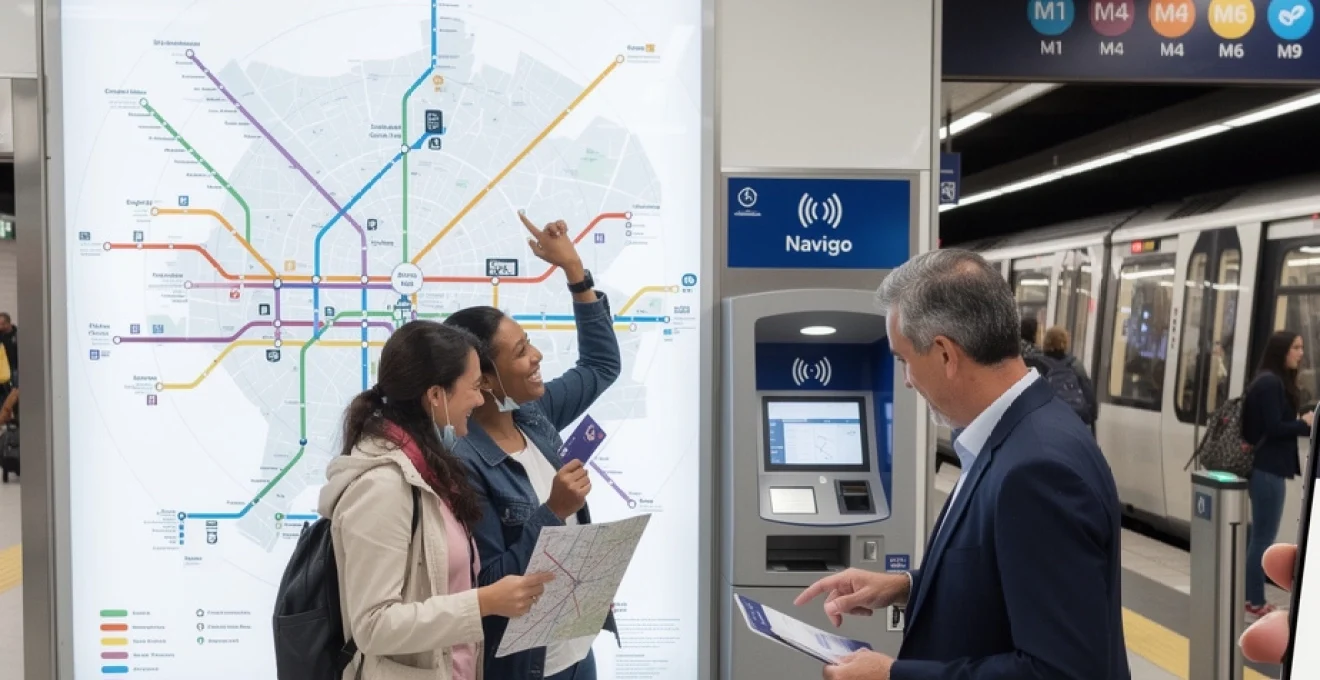
Paris Metro stands as one of the world’s most efficient urban transport networks, carrying over 1.5 billion passengers annually across its extensive underground system. The metropolitan railway network connects virtually every corner of the French capital, making it an indispensable tool for both residents and visitors seeking to explore the city’s iconic landmarks and hidden gems. With 308 stations spread across 16 lines, the Metro offers unparalleled accessibility to Paris’s cultural treasures, from the artistic districts of Montmartre to the historic heart of Île de la Cité.
Understanding this sophisticated transport system transforms your Parisian experience from potentially overwhelming to remarkably straightforward. The Metro’s logical structure, combined with modern technological enhancements and comprehensive mobile applications, ensures that navigating between destinations becomes second nature. Whether you’re rushing to catch a morning meeting near the Champs-Élysées or leisurely exploring the Latin Quarter’s winding streets, mastering the Metro system opens up endless possibilities for discovering Paris at your own pace.
Understanding the RATP metro network infrastructure and zone system
The Régie Autonome des Transports Parisiens (RATP) operates one of Europe’s most comprehensive metropolitan transport networks, serving the Île-de-France region with remarkable precision and reliability. This extensive system encompasses not only the traditional Metro lines but also integrates seamlessly with regional express trains, buses, and trams to create a unified transport ecosystem. The RATP’s infrastructure represents over a century of continuous development, beginning with the first line’s inauguration in 1900 and evolving into today’s modern, technologically advanced network.
Decoding the 14 metro lines and their Colour-Coded designations
Each Metro line bears a distinctive colour and number that serves as your primary navigation tool throughout the network. Line 1, represented in yellow, stretches from La Défense to Château de Vincennes, passing through major tourist destinations including the Louvre and Champs-Élysées. Line 4, coded in purple, runs north-south through central Paris, connecting Porte de Clignancourt to Porte d’Orléans via key stations like Châtelet and Saint-Germain-des-Prés.
The colour-coding system extends beyond mere aesthetics, serving as a crucial wayfinding mechanism that transcends language barriers. Green Line 2 circles through northern Paris, while blue Line 3 traverses the city from east to west. Understanding these visual identifiers enables you to navigate confidently even without speaking French, as station maps, directional signs, and digital displays consistently use these colour designations throughout the network.
Navigating zones 1-5 tarification structure for central paris coverage
Paris Metro operates on a five-zone tarification system, with Zones 1 and 2 encompassing central Paris where most tourist attractions are located. A standard Metro ticket provides unlimited travel within these central zones, covering destinations from the Arc de Triomphe to Bastille and from Montmartre to the Latin Quarter. This comprehensive coverage ensures that you can reach virtually any significant Parisian landmark using a single ticket.
Zone 3 extends the network to inner suburban areas including La Défense business district, while Zones 4 and 5 reach further into the Île-de-France region, connecting to airports, Disneyland Paris, and Versailles. The zonal structure becomes particularly relevant when planning excursions beyond central Paris, as ticket prices increase with distance travelled. Understanding this system helps you budget appropriately and select the most cost-effective travel options for your itinerary.
Interpreting terminus station names for directional guidance
Metro lines use their terminus stations as directional indicators, creating a logical navigation system that eliminates confusion about train directions. For instance, when travelling eastward on Line 1, you follow signs indicating “Direction Château de Vincennes,” while westward travel follows “Direction La Défense.” This terminology appears consistently on platform signs, train displays, and mobile applications.
Mastering terminus navigation proves essential for efficient Metro travel, particularly at interchange stations where multiple lines converge. Rather than memorising compass directions, focus on understanding which terminus corresponds to your intended destination. This approach proves
particularly valuable when you are tired, jet-lagged, or changing lines several times. Before stepping onto the platform, check the overhead boards listing all stops in that direction; if your station appears, you are on the right side. When in doubt, do not hesitate to step off at the next stop and cross to the opposite platform—within the Metro system, you can correct a wrong direction without buying a new ticket, as long as you have not exited through the gates.
Identifying RER integration points at Châtelet-Les halles and gare du nord
Beyond the classic Metro lines, the Paris network includes the RER (Réseau Express Régional), a faster suburban rail system that intersects with the Metro at key hubs. Two of the most important integration points are Châtelet–Les Halles and Gare du Nord, which function as vast underground crossroads where Metro lines and RER lines meet. These hubs can feel like miniature cities, with multiple levels, moving walkways, and extensive signage guiding you between platforms.
At Châtelet–Les Halles, you can connect between several Metro lines (1, 4, 7, 11, 14) and the RER A, B, and D, making it a strategic transfer point if you are coming from the airports or Disneyland Paris. Gare du Nord, meanwhile, links Metro lines 4 and 5 with RER B and D, as well as national and international rail services such as Eurostar and TGV. When using these hubs, allow extra time for transfers, follow the colour-coded line numbers, and watch for RER-specific symbols, which differ slightly from standard Metro icons.
Mastering navigo card systems and contactless payment methods
Ticketing in Paris has evolved rapidly, shifting from traditional paper tickets to modern contactless solutions designed to simplify travel. For most visitors, understanding the different Navigo card options and how they interact with the Metro system is just as important as learning the lines themselves. Once you are familiar with these smart cards and mobile payment methods, navigating the Metro becomes as intuitive as tapping your bank card at home.
Navigo easy vs navigo weekly pass cost-benefit analysis
The two most useful products for short-term visitors are the Navigo Easy card and the Navigo Semaine (weekly pass). Navigo Easy is a rechargeable, anonymous card that you purchase once and then top up with single rides or bundles, making it ideal if you plan only a handful of Metro journeys each day. Each standard ride within central Paris is charged individually, so you pay only for what you use while enjoying the convenience of a contactless tap at the gates.
By contrast, the Navigo Weekly pass offers unlimited travel across the selected zones for a fixed price during a specific calendar week, usually from Monday to Sunday. This option becomes more economical when you expect to take frequent trips—typically five or more rides per day—or when your plans include multiple journeys to suburbs, Versailles, or the airports by public transport. Think of it as an “all-you-can-ride” buffet: if you are constantly hopping between neighbourhoods, museums, and evening outings, the flat-rate structure quickly pays for itself. Before purchasing, estimate how many rides you will realistically take; if you love walking and expect to stay mostly in one district, Navigo Easy often remains the better value.
Smartphone NFC payment integration through apple pay and google pay
For tech-savvy travellers, using your smartphone as a Metro ticket can be the most seamless solution. Modern Android and iOS devices equipped with NFC allow you to purchase and store digital tickets through official apps and then validate them simply by tapping your phone on the gate reader. This approach eliminates the risk of losing a physical card and makes it easy to reload tickets on the go, even if station ticket offices are closed or crowded.
When linked with payment platforms such as Apple Pay or Google Pay, these apps function much like a virtual Navigo Easy card. You purchase individual journeys, day passes, or airport tickets directly in the app, then unlock the Metro system with a single tap, without taking out your wallet. Just as with a contactless bank card, you should keep your phone secure and in your front pocket or bag in busy stations. If your battery runs low, it is wise to have at least one physical ticket or card as a backup, ensuring you are not stranded at the gates.
Tourist pass options including navigo découverte and mobilis tickets
In addition to Navigo Easy and the weekly pass, several other products cater specifically to tourists or short-stay visitors. The Navigo Découverte card is a personalised version of the Navigo pass that requires a small photo and name but can be used for weekly or monthly passes across the full Île-de-France region. This is especially attractive for longer stays or for travellers who plan to return to Paris, as the card remains valid for several years and can be reloaded whenever you visit.
For single-day flexibility without a long-term commitment, the Mobilis ticket offers unlimited travel within chosen zones for one calendar day. It can be a smart alternative if you are planning an intensive sightseeing day that includes several Metro lines and possibly a trip to the outskirts, such as to the Château de Versailles or a major event venue. When comparing these tourist-oriented products, consider the length of your stay, the distances you intend to cover, and whether you prefer a simple, one-card solution or are comfortable combining different ticket types as your plans evolve.
Strategic route planning using RATP mobile app and citymapper
Even with a clear understanding of lines and tickets, effective route planning can make the difference between a stressful journey and a smooth, efficient trip. Fortunately, the Paris transport network is supported by powerful digital tools that transform complex timetables and transfers into simple step-by-step instructions. By combining the official RATP app with navigation tools like Citymapper, you can adapt your route in real time, avoid delays, and choose the most comfortable journeys across the city.
Real-time service disruption notifications and alternative route suggestions
Like any major transit system, the Paris Metro occasionally experiences disruptions due to maintenance, technical issues, or unexpected incidents. The RATP mobile app provides real-time information on line closures, partial suspensions, and delays, allowing you to react quickly rather than discovering problems only when you reach the platform. Push notifications can alert you to planned engineering works days in advance, which is especially helpful if you have time-sensitive connections such as airport transfers.
When disruptions occur, both the RATP app and Citymapper suggest alternative routes that may involve different Metro lines, buses, or RER trains. Think of these apps as intelligent travel companions: they evaluate the entire network and propose the fastest or least crowded options based on current conditions. If a direct line to your destination is compromised, the apps might propose a detour that adds only a few minutes but spares you from overcrowded platforms or long waits.
Accessibility features for wheelchair users at designated stations
Navigating the Paris Metro with limited mobility requires additional planning, as not all stations are fully accessible. However, an increasing number of key hubs and newer lines now feature lifts, ramps, and level-access platforms designed for wheelchair users and travellers with pushchairs or heavy luggage. The RATP app and official maps clearly mark accessible stations with specific symbols, enabling you to plan point-to-point journeys that avoid long staircases and narrow passageways.
If you or someone in your group uses a wheelchair, it is wise to focus on lines with modern rolling stock and recently renovated stations—such as Line 14 and sections of Lines 1 and 4—where accessibility has been prioritised. In many cases, combining Metro and bus routes offers the most comfortable solution, as buses across Paris are generally low-floor and equipped with ramps. Before setting out, check the accessibility filters in your chosen app, which can automatically exclude stations without lifts and recommend the smoothest possible itinerary.
Peak hour congestion patterns on lines 1, 4, 6, and 9
Understanding when and where the Metro gets busiest can help you avoid overcrowded trains and enjoy a more relaxed journey. Peak hours typically run from around 07:30 to 09:30 in the morning and from 17:00 to 19:30 in the evening on weekdays, when commuters flood the system. During these times, core lines such as 1 and 4, which traverse central Paris, can be extremely crowded, particularly between major hubs like Châtelet–Les Halles, Gare de Lyon, and Montparnasse.
Lines 6 and 9 also experience heavy usage, especially near business districts and popular residential areas. If your schedule allows, try shifting your sightseeing Metro rides to mid-morning or mid-afternoon, when carriages are less packed and stations feel calmer. When you cannot avoid peak hours, position yourself near the ends of the platform, where trains tend to be slightly less crowded, and allow extra time for transfers in case you decide to let one or two full trains pass before boarding.
Interchange optimisation at major hubs including république and bastille
Some Paris stations serve as key interchanges where several Metro lines intersect, offering multiple route options but also requiring more complex navigation. République and Bastille are excellent examples of such hubs, each connecting a web of lines that can significantly shorten cross-city journeys. At République, five different lines meet, making it a powerful pivot point when you need to change direction or bypass disruptions elsewhere in the network.
To optimise your interchanges, study the station maps displayed near platforms and follow the clearly labelled corridors indicating each line number and direction. In sprawling hubs, you may walk several minutes between platforms, so think of the station as a small airport terminal rather than a single set of tracks. When planning with Citymapper or the RATP app, consider routes that use one or two well-organised interchanges rather than multiple smaller ones—the overall travel time may be similar, but your journey will feel much more straightforward.
Essential metro etiquette and safety protocols for tourists
Parisian Metro etiquette is simple but important, and following it helps you blend in while keeping the system efficient for everyone. On escalators, stand on the right and leave the left side free for those who wish to walk; blocking both sides with luggage is frowned upon, especially during busy periods. Inside trains, offer your seat to elderly passengers, pregnant women, and those with visible mobility needs, particularly in priority seating areas marked by pictograms.
In terms of safety, the Metro is generally secure, but like any busy urban system, it attracts pickpockets, especially on popular tourist lines and airport routes. Keep bags zipped and worn in front of you, avoid leaving phones or wallets in back pockets, and be wary of distractions such as sudden jostling or groups crowding around the doors. If someone presses too closely against you in an otherwise spacious carriage, calmly move away. In case of emergency, use the intercom on board or seek out uniformed staff at the station; cameras and regular patrols contribute to a high overall level of security.
Connecting to major parisian attractions via strategic metro stops
One of the greatest advantages of the Paris Metro is its proximity to world-famous landmarks, allowing you to step off the train and find yourself just minutes from iconic sites. By learning which stations serve key attractions, you can design itineraries that minimise walking distances and maximise your time inside museums, monuments, and historic districts. Think of each Metro stop as a gateway to a different chapter of Parisian history, from medieval cathedrals to Belle Époque boulevards and modern art institutions.
Accessing louvre museum through Palais-Royal musée du louvre station
The Louvre, home to masterpieces like the Mona Lisa and the Winged Victory of Samothrace, is most conveniently accessed via the Palais-Royal – Musée du Louvre station on Line 1 and Line 7. When you exit here, clear signage directs you toward the underground entrance, which often provides a smoother experience than joining the longest queues at the glass pyramid. This integrated approach—Metro plus direct museum access—helps you conserve energy for the vast galleries that await inside.
Because the Louvre is one of the most visited museums in the world, plan your Metro journey to arrive either early in the morning or later in the afternoon, avoiding the midday rush. If you are combining a Louvre visit with other central attractions, Line 1 also connects easily to stations near the Tuileries Gardens, Place de la Concorde, and the Champs-Élysées. In practice, a simple hop along this east–west spine of the Metro can structure an entire day of sightseeing.
Reaching eiffel tower via Bir-Hakeim on line 6 or trocadéro on line 9
For the Eiffel Tower, you have two excellent Metro options, each offering a slightly different experience. Bir-Hakeim on Line 6 brings you within a short walk of the tower’s south side, following the Seine and crossing under the elevated tracks. Many visitors enjoy this route because Line 6 runs above ground for part of its journey, providing dramatic views of the tower as the train approaches.
Alternatively, you can alight at Trocadéro on Line 9, which leads you to a famous viewing terrace across the river. From this vantage point, the Eiffel Tower rises majestically above the fountains and gardens, making it one of the best spots for photos before you walk down toward the monument itself. Both routes are straightforward, so you might choose one for your arrival and the other for your departure, turning the Metro into part of the scenic experience.
Notre-dame cathedral access through cité station on line 4
Notre-Dame de Paris, even during restoration works, remains a focal point of any visit to the city, and the Metro places you almost at its doorstep. The Cité station on Line 4 is located on the Île de la Cité itself, just a few minutes’ walk from the cathedral’s façade. Emerging from this station feels a little like stepping back in time, with narrow streets and historic architecture surrounding you on all sides.
Line 4 also connects easily to other central points such as Saint-Germain-des-Prés and Montparnasse, allowing you to combine a visit to Notre-Dame with a stroll through literary cafés or a climb up the Montparnasse Tower. If you prefer an alternative route, Saint-Michel – Notre-Dame station on the RER B and C lines offers additional access from the Left Bank, providing convenient connections if you are arriving from the airports or outer suburbs.
Montmartre and Sacré-Cœur navigation via pigalle or abbesses stations
To explore the bohemian charm of Montmartre and visit the Basilica of Sacré-Cœur, you will typically aim for Pigalle or Abbesses stations. Pigalle, served by Lines 2 and 12, places you near the lively boulevard de Clichy and the historic cabaret district, from which you can walk uphill through side streets to reach the basilica. This route is slightly longer on foot but offers plenty of opportunities to discover local cafés, boutiques, and street art.
Abbesses, on Line 12, lies closer to the heart of Montmartre and is one of the deepest stations in the network, accessed by a long spiral staircase or lift. From here, winding streets lead you past artists’ squares and charming terraces as you make your way to Sacré-Cœur’s steps, which overlook the city with one of the finest panoramic views in Paris. Whichever station you choose, combining the Metro with a leisurely climb through Montmartre’s atmospheric streets is an experience in itself, turning your journey into part of the adventure rather than merely a means of getting from A to B.