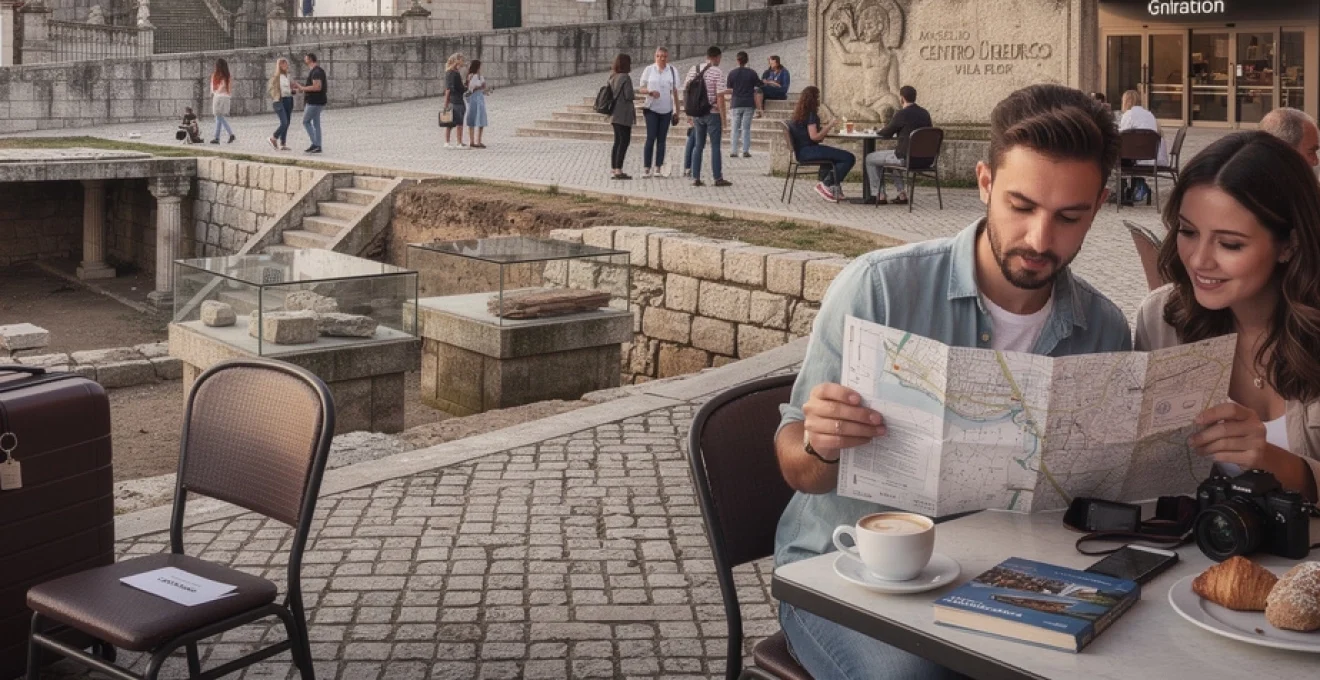
Portugal’s ancient spiritual capital beckons cultural enthusiasts with an extraordinary blend of sacred architecture, Roman archaeological treasures, and cutting-edge contemporary arts venues. Braga, often called the “Rome of Portugal,” presents visitors with over two millennia of continuous cultural evolution, from its origins as the Roman settlement of Bracara Augusta to its current status as a dynamic university city. This northern Portuguese gem offers an unparalleled weekend experience for those seeking to immerse themselves in authentic Portuguese heritage while discovering innovative artistic expressions.
The city’s cultural landscape spans magnificent baroque sanctuaries perched on hillsides, medieval cathedral complexes housing priceless religious art, and state-of-the-art performance venues showcasing contemporary Portuguese creativity. Beyond its famous religious monuments, Braga reveals layers of Roman history through well-preserved archaeological sites and museum collections that illuminate daily life in ancient Lusitania. Modern cultural institutions complement these historical treasures, creating a perfect weekend itinerary for discerning travellers who appreciate both traditional craftsmanship and contemporary artistic innovation.
Braga’s UNESCO world heritage sites and religious architecture
The spiritual heartland of Portugal showcases some of Europe’s most remarkable religious architecture, with centuries of ecclesiastical patronage resulting in an extraordinary concentration of sacred buildings. Braga’s religious monuments represent various architectural periods, from Romanesque foundations to elaborate baroque facades, each telling stories of faith, political power, and artistic achievement. These sacred spaces continue to function as active centres of worship while welcoming cultural tourists seeking to understand Portugal’s deep religious traditions.
Bom jesus do monte sanctuary pilgrimage routes
The UNESCO World Heritage sanctuary of Bom Jesus do Monte stands as Portugal’s most photographed religious monument, its iconic zigzagging baroque staircase ascending 116 metres above the city. This 18th-century masterpiece represents the Via Crucis through its elaborate sculptural programme, with each landing featuring fountains dedicated to the five senses. Pilgrims and visitors can choose between climbing the 577 granite steps or taking the historic water-powered funicular, dating from 1882 and still the world’s oldest operating system of its kind.
The sanctuary’s architectural complex includes the neoclassical basilica, designed by Carlos Amarante, and extensive landscaped gardens featuring artificial grottos and reflective pools. The pilgrimage route traditionally begins in the city centre, following ancient paths that wind through forested hillsides dotted with smaller chapels. Weekend visitors should allocate at least three hours to fully appreciate both the architectural details and panoramic views across the Minho region from the sanctuary’s elevated position.
Sé de braga cathedral medieval chapels and treasury
Portugal’s oldest cathedral, consecrated in 1089, presents a fascinating architectural palimpsest spanning nearly a millennium of continuous construction and renovation. The Sé de Braga combines Romanesque foundations with Gothic vaulting, Manueline decorative elements, and baroque additions, creating a unique synthesis of Portuguese architectural evolution. The cathedral’s treasure houses include the Kings’ Chapel, containing the tomb of Henry of Burgundy, and the elaborate choir stalls featuring intricate wooden carvings depicting biblical scenes.
The cathedral treasury displays an exceptional collection of sacred goldsmithery, including the 10th-century chalice of Saint Gerald and precious vestments worn during major religious ceremonies. Visitors can explore the cloisters, where archaeological excavations have revealed Roman foundations, and climb the medieval towers for commanding views over Braga’s historic centre. The cathedral’s musical heritage remains active through regular organ recitals performed on the magnificent baroque instrument installed in the 18th century.
Igreja do pópulo baroque azulejo tilework analysis
The Church of Pópulo exemplifies Portuguese baroque artistry through its extraordinary azulejo tile panels depicting scenes from the life of Saint Augustine. Created in the early 18th century by master ceramicists from Lisbon workshops, these blue and white narrative cycles demonstrate the sophisticated integration of architectural space and decorative arts that characterises Portuguese religious buildings. The church’s interior presents a masterclass in baroque spatial dynamics, with gilded woodwork complementing the ceramic storytelling to create an immersive devotional environment.
Art historians particularly value the church’s iconographic programme, which combines traditional Catholic imagery with distinctly Portuguese interpretations
of Augustinian theology, offering insight into how local artists and patrons interpreted complex doctrinal themes for a largely illiterate congregation. When planning a cultural weekend in Braga, it is worth scheduling a short, focused visit here with enough time to walk the nave slowly and read the tile cycles from left to right, almost like a graphic novel in ceramic form. Photography without flash is generally permitted, allowing you to capture details of the azulejo tilework for later study. Combined with the nearby Raio Palace, the Igreja do Pópulo provides an accessible introduction to Braga’s baroque cityscape in less than an hour.
Mosteiro de tibães benedictine monastic complex
Located about 6km from the historic centre, the Mosteiro de São Martinho de Tibães was once the mother house of the Benedictine Order in Portugal and Brazil, overseeing dozens of dependent monasteries. The present complex, largely rebuilt in the 17th and 18th centuries, showcases a remarkable combination of late baroque and rococo architecture, particularly visible in its gilded woodcarving (talha dourada) and monumental high altar. Wandering through its cloisters and refectory, you gain a vivid sense of how monastic communities organised daily life around prayer, work, and study. For cultural travellers, Tibães offers a more contemplative counterpart to the busier Bom Jesus do Monte sanctuary.
The monastery’s extensive wooded grounds, criss-crossed by marked walking paths and dotted with chapels and fountains, are ideal if you want to combine heritage sightseeing with light hiking. Expect to spend at least two to three hours exploring both the interior spaces and the landscaped surroundings; this is not a site to rush. Practical visitors should check opening hours in advance, as they vary by season, and consider using a taxi or rideshare from Braga’s centre if travelling without a car. When planning your cultural weekend in Braga, Tibães works particularly well on the second day, when your pace can be slower and more reflective.
Roman archaeological heritage and bracara augusta remains
Long before Braga became the “City of Archbishops”, it was Bracara Augusta, a key administrative centre of the Roman province of Gallaecia. Today, the city’s Roman heritage is not concentrated in a single monumental ruin but scattered across museums, excavation sites, and urban fragments integrated into modern buildings. This more fragmented landscape demands a bit of planning, yet it rewards curious visitors with a deeper, more archaeological understanding of northern Portugal’s Roman past. If you have ever wondered what daily life looked like in a medium-sized Roman city far from Rome itself, Braga is an ideal case study.
To make the most of the Roman layer of your cultural weekend in Braga, it is helpful to cluster visits geographically and thematically. The Museu D. Diogo de Sousa provides the broad historical framework and key artefacts, while the Termas Romanas do Alto da Cividade and Fonte do Ídolo let you stand directly on ancient foundations. Many travellers choose to dedicate one morning or afternoon to this Roman circuit, combining it with a leisurely coffee break in the historic centre. Like piecing together a mosaic from scattered tesserae, you will assemble your own mental picture of Bracara Augusta as you move from site to site.
Museu D. diogo de sousa archaeological collections
The D. Diogo de Sousa Museum is Braga’s principal archaeological institution and an essential stop for anyone interested in Roman Portugal. Built directly over an excavation area, the museum offers carefully curated galleries that trace human occupation in the region from the Paleolithic through the Roman and early medieval periods. Its Roman collections are particularly strong, featuring inscribed stone altars, fragments of mosaics, household ceramics, and everyday objects that bring Bracara Augusta to life. You can think of the museum as the “user manual” for interpreting all the other ancient remains you will encounter across the city.
Allow at least 90 minutes to explore the permanent exhibition, more if you like to read labels or sketch artefacts. Audio guides and bilingual signage (usually Portuguese and English) make the museum accessible even if you are new to Roman history. Practical tip: visit early in the day when it is quieter, then follow up with a walk through the nearby historic streets to spot reused Roman stones embedded in later buildings. For a cultural weekend itinerary, pairing the museum with a visit to the cathedral cloisters’ archaeological area creates a coherent historical arc from Roman urbanism to medieval ecclesiastical power.
Termas romanas do alto da cividade excavation site
The Termas Romanas do Alto da Cividade represent one of the most significant Roman bath complexes discovered in northern Portugal. Situated on a slope overlooking the ancient city, the site reveals the typical sequence of cold, warm, and hot rooms, along with remains of hypocaust heating systems and water channels. Walking along the raised platforms above the foundations, you can clearly identify the different functional spaces, almost as if reading an architectural blueprint etched into stone. For travellers used to the grand imperial baths of cities like Rome or Trier, Braga’s therms offer a more modest, provincial perspective that is equally instructive.
Access to the site is often via scheduled guided visits, so it is wise to check current visiting conditions before finalising your Braga weekend plan. A knowledgeable guide can help you visualise missing structures and explain how the bath complex fit into the broader topography of Bracara Augusta. If you are travelling with children or non-specialists, this is a good place to introduce simple archaeological concepts—stratigraphy, reconstruction, conservation—in a concrete way. Combine the therms with a visit to the nearby sports complex or park to balance cultural learning with some open-air relaxation.
Fonte do ídolo roman sanctuary inscriptions
Tucked away in a residential street not far from the historic centre, the Fonte do Ídolo is one of Braga’s most intriguing Roman relics. This rock-cut fountain sanctuary, dedicated to indigenous deities, preserves Latin inscriptions and carved reliefs that illuminate the fusion of Roman and local religious practices. Standing before the spring, you can almost imagine inhabitants of Bracara Augusta pausing here to make offerings or ask for protection during their daily routines. The site’s modest scale invites close, attentive viewing rather than hurried photography.
Interpretive panels explain the sanctuary’s inscriptions and iconography, making it accessible even without a guide. As a compact attraction, the Fonte do Ídolo fits perfectly into a walking tour of Braga’s historic core, especially on the first day of your cultural weekend when you are still orienting yourself in the city. Think of it as a quiet counterpoint to the grand scale of Bom Jesus do Monte and Sé de Braga: a reminder that Roman-era spirituality often unfolded in small, everyday spaces. Visiting during off-peak hours will enhance the contemplative atmosphere and allow you to study the carvings at your own pace.
Contemporary cultural venues and performance spaces
While Braga’s ancient monuments might draw you in, its contemporary cultural life will likely surprise you. Over the last decade, the city has invested heavily in performance venues, digital arts centres, and youth-oriented cultural spaces that give it a distinctly modern edge. For a balanced cultural weekend in Braga, it is worth planning at least one evening around a concert, theatre performance, or contemporary art exhibition. This way, you will experience not only the preserved heritage of the past but also the living creativity of the present.
From the opulent Theatro Circo to the experimental programming at Gnration, Braga’s cultural institutions cater to diverse tastes. Do you prefer opera or electronic music, dance or multimedia installations? With a bit of advance research on current programmes, you can tailor your stay to your interests and even align it with special festivals or the city’s role as a cultural capital. Consider this modern cultural circuit as the “second layer” of your trip, complementing daytime visits to churches and museums with evening immersion in Braga’s artistic scene.
Theatro circo programming and architectural restoration
Theatro Circo, inaugurated in 1915 and meticulously restored in the early 21st century, is widely regarded as one of Portugal’s most beautiful theatres. Its façade blends neoclassical and belle époque elements, while the interior reveals a lavish horseshoe-shaped auditorium with red velvet seating, gilded balconies, and an ornate ceiling. Beyond its visual splendour, Theatro Circo functions as a major regional hub for performing arts, hosting everything from classical concerts and contemporary dance to cinema screenings and international music acts. Checking the theatre’s programme in advance can transform an ordinary weekend in Braga into a truly memorable cultural getaway.
If you cannot attend a performance, consider joining a guided architectural tour when available; these visits often include access to backstage areas and technical spaces. The restoration itself, completed around 2006, is an interesting case study in how historic venues can be updated with modern sound and lighting systems without losing their character—a bit like fitting a vintage violin with new strings. For travellers interested in cultural management and heritage conservation, Theatro Circo provides a tangible example of best practice. It is also conveniently located within walking distance of most central hotels and restaurants, making it an easy evening destination.
Centro cultural vila flor exhibition galleries
Although technically located in nearby Guimarães, the Centro Cultural Vila Flor (CCVF) is often included in broader cultural itineraries in the Minho region and can be reached from Braga in under 30 minutes by train or car. Housed partly in an 18th-century palace and partly in a striking contemporary extension, the centre combines exhibition galleries, performance halls, and landscaped gardens. Its programming is known for blending regional projects with international theatre, dance, and visual arts, making it a compelling option if you are extending your cultural weekend in Braga into a longer northern Portugal stay.
If you choose to base yourself in Braga for three or four nights, a half-day excursion to Guimarães and CCVF fits naturally into your schedule. Think of Braga and Guimarães as cultural “siblings”: one rooted in religious and Roman heritage, the other more associated with the origins of the Portuguese nation-state. CCVF’s rotating exhibitions frequently feature Portuguese contemporary artists, offering a valuable counterpoint to the historical collections you will see in Braga’s museums. When planning, be sure to verify current shows and ticket availability on the centre’s website, as popular performances can sell out quickly.
Gnration digital arts and electronic music hub
Back in Braga, Gnration stands at the forefront of the city’s digital and experimental arts scene. Located in a former National Republican Guard (GNR) barracks, the centre has been repurposed into a multi-space venue with black-box performance rooms, exhibition areas, studios, and a lively courtyard. Its curatorial focus leans towards electronic music, sound art, media installations, and cross-disciplinary collaborations, making it particularly attractive if you enjoy cutting-edge creative work. Many visitors describe Gnration as Braga’s “laboratory of the future”, where technology, art, and community intersect.
Programmes range from intimate concerts by avant-garde musicians to large-scale multimedia exhibitions and festivals that spill out into the public square. If you are visiting Braga during a special event—such as an electronic music festival or digital arts biennale—Gnration is likely to be at the centre of the action. Even on a quieter weekend, it is worth checking the schedule; you might catch an artist talk, workshop, or experimental screening. For a rounded cultural weekend itinerary, consider pairing an afternoon visit to Gnration with dinner nearby, then continuing on to a late-night bar or club for a full immersion in Braga’s contemporary nightlife.
Casa da juventude alternative cultural events
For a glimpse into grassroots and youth-led culture in Braga, the Casa da Juventude (Youth House) plays a key role. Operated with a strong focus on community engagement, this multipurpose venue hosts small concerts, poetry readings, film cycles, and workshops spanning everything from urban art to entrepreneurship. While events may be more modest in scale compared to Theatro Circo or Gnration, they often provide a more direct connection to local creators and student communities. If you like to see how a city’s cultural ecosystem functions “from the bottom up”, Casa da Juventude is a worthwhile stop.
Most activities are advertised locally and on social media rather than through large tourism channels, so it pays to do a bit of last-minute research just before your trip. You might discover an open-mic night, an indie band showcase, or a temporary exhibition by young illustrators during your chosen weekend. As with similar youth spaces across Europe, the atmosphere is informal and welcoming, making it easy to strike up conversations and gather insider tips on other things to do in Braga. For budget-conscious travellers, many events at Casa da Juventude are free or low-cost, helping you stretch your cultural itinerary without compromising on experience.
Traditional portuguese gastronomy and minho regional specialities
No cultural weekend in Braga would be complete without exploring the region’s distinctive gastronomy. As the unofficial capital of Minho, Braga brings together rustic countryside recipes, monastic sweets, and contemporary interpretations of classic dishes. The local cuisine is hearty and flavourful, with cod, pork, veal, and leafy greens playing starring roles, often accompanied by the crisp effervescence of Vinho Verde. Eating here is not just about refuelling between museum visits; it is another way to understand how geography, climate, and history have shaped daily life.
Planning your meals strategically can enhance your overall cultural itinerary. For example, you might enjoy a traditional bacalhau à Braga (Braga-style cod) for lunch near the cathedral, then opt for lighter petiscos (Portuguese-style tapas) before a performance at Theatro Circo. On another day, you could seek out rustic dishes such as rojões à minhota (marinated pork with potatoes) or papas de sarrabulho in a family-run restaurant near Gnration or Tibães. Dessert deserves special attention: regional pastries and convent sweets, like pastéis de Braga or pudim Abade de Priscos, tell their own stories of monastic creativity and sugar trade routes.
| Dish or Product | What it is | When to try it |
|---|---|---|
| Bacalhau à Braga | Fried cod with onions, peppers, and potatoes in olive oil | Hearty lunch after visiting Sé de Braga |
| Papas de Sarrabulho | Rich pork, rice, and blood-based winter dish | Cooler months, ideally for dinner |
| Caldo Verde | Collard green and potato soup with sausage | Light supper or starter before an evening show |
| Vinho Verde | Young, slightly sparkling regional wine | With petiscos on an outdoor terrace |
To weave gastronomy into your cultural weekend in Braga, consider signing up for a short cooking class or pastry workshop, where you can learn to prepare a regional dessert or savoury dish. Such experiences often include background on local ingredients and culinary traditions, adding depth to what could otherwise be a simple meal. Even if you prefer to keep things informal, using mealtimes to explore different neighbourhoods—the historic centre, the areas around Universidade do Minho, or the roads leading to Bom Jesus—will broaden your impression of the city. As you move between churches, museums, and restaurants, you will notice how food rituals mirror religious and social calendars, from Lenten dishes to festive sweets.
Strategic accommodation options for cultural tourism
Selecting the right accommodation can significantly affect how easy it is to follow your cultural weekend itinerary in Braga. Because many major attractions—Sé de Braga, the Biscainhos Museum, Gnration, and numerous churches—are clustered in or near the historic centre, staying within walking distance of Praça da República or Avenida Central is often the most practical choice. From here, you can reach train and bus connections, including services to Bom Jesus do Monte and Guimarães, in 10–15 minutes on foot. Think of your hotel or guesthouse as a base camp from which you can launch focused cultural “expeditions” each day.
Travellers prioritising comfort and on-site amenities might opt for a four- or five-star hotel, some of which occupy historic buildings such as former convents or hospitals. These properties often feature their own small exhibitions, restored architectural elements, or views over significant monuments, adding an extra layer of cultural value to your stay. If you prefer a more intimate experience, centrally located guesthouses and boutique hotels, sometimes housed in renovated townhouses, offer personal service and local recommendations that can fine-tune your weekend plan. When comparing options, pay attention not only to star ratings but also to proximity to key sights on your personal itinerary.
Another strategic consideration is whether you plan to use Braga as a base for exploring the wider Minho region. If so, accommodation with easy parking or close access to main roads can save time, especially if you intend to visit Tibães, Sameiro, or nearby towns. Conversely, if your focus is a car-free cultural weekend—arriving by train from Porto, for example—then prioritise walkability and nearby public transport stops, including the route 2 bus to Bom Jesus do Monte. Whatever your configuration, booking slightly ahead of peak religious festivals, university events, or major cultural programmes will give you a broader choice of rooms and often better rates.
Finally, consider aligning your lodging choice with the kind of cultural experience you most value. Do you want to wake up to the sound of cathedral bells and step straight into medieval streets, or would you prefer a contemporary high-rise with a spa where you can relax after a long day of sightseeing? In Braga, both scenarios are achievable within a compact urban area. By matching your accommodation to your preferred rhythm—early church visits, late-night concerts, or a mix of both—you will make your cultural weekend in Braga more coherent, comfortable, and rewarding.