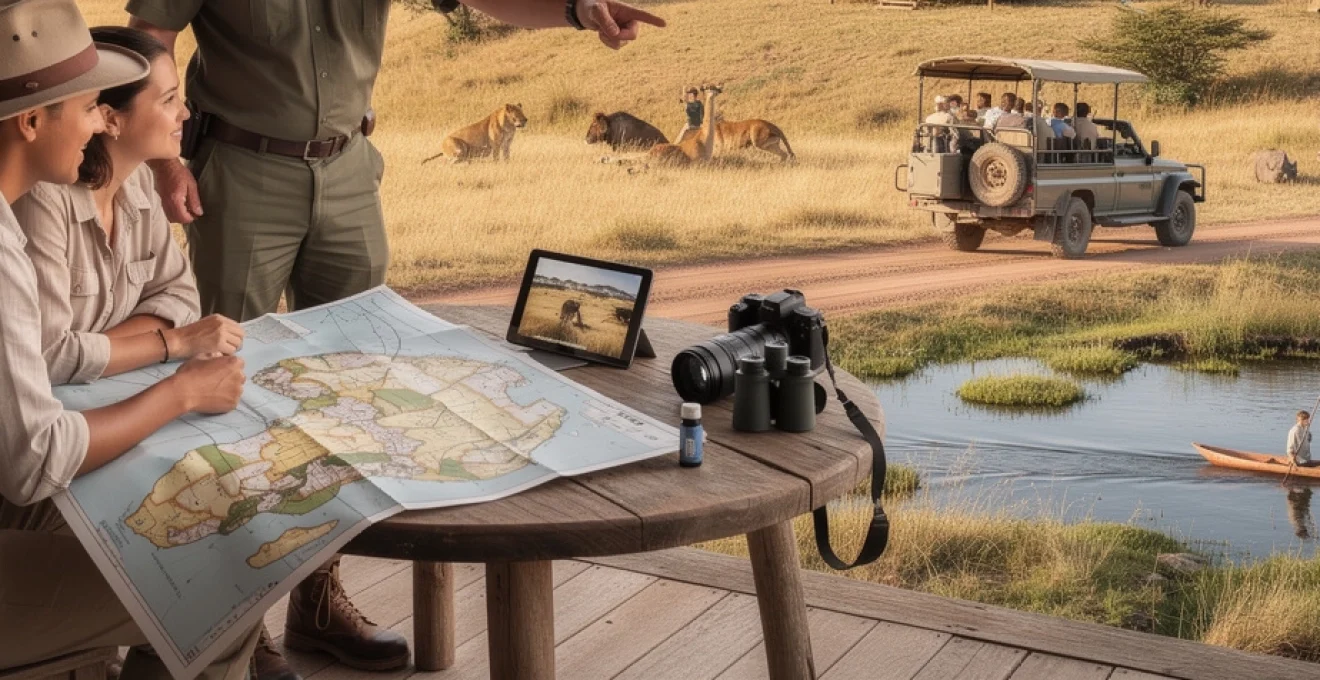
The vast African continent beckons adventurous travellers with its pristine wilderness areas, extraordinary wildlife concentrations, and breathtaking landscapes that have captivated explorers for centuries. Planning a safari expedition requires careful consideration of numerous factors, from selecting optimal destinations and timing your visit to coincide with wildlife migration patterns, to choosing appropriate accommodation that enhances rather than detracts from your wilderness experience. The sheer diversity of African ecosystems—from the endless plains of the Serengeti to the intricate waterways of the Okavango Delta—offers countless opportunities for wildlife encounters, yet this abundance of choice can initially seem overwhelming for first-time safari planners.
Modern safari tourism has evolved far beyond the colonial hunting expeditions of the past, transforming into sophisticated conservation-focused experiences that directly contribute to wildlife protection and local community development. Today’s discerning travellers seek authentic wilderness encounters whilst maintaining comfort and safety standards, creating a delicate balance between adventure and luxury that defines contemporary African safari experiences.
Essential Pre-Safari planning: permits, vaccinations, and documentation requirements
Successful safari planning begins months before departure, with comprehensive attention to health requirements, documentation, and permit acquisition. Most African safari destinations require specific vaccinations, particularly yellow fever certification, which many countries mandate for entry. Travellers should consult tropical medicine specialists at least eight weeks before departure, as some immunisations require multiple doses administered over several weeks. Malaria prophylaxis remains essential for most safari regions, though specific antimalarial medications vary depending on destination and seasonal patterns of drug-resistant strains.
Visa requirements differ significantly across African nations, with some countries offering visa-on-arrival services whilst others demand advance application through diplomatic missions. Tanzania, for example, provides e-visa services for most nationalities, whilst South Africa maintains visa-free access for numerous countries but requires specific documentation for minors travelling without both parents. Rwanda has streamlined its visa process for tourism, recognising the economic importance of gorilla trekking and wildlife tourism to national development.
Travel insurance specifically covering safari activities becomes crucial, particularly policies that include medical evacuation coverage. Standard travel insurance often excludes adventure activities, making specialised safari insurance necessary for comprehensive protection. These policies typically cover emergency helicopter evacuations from remote locations, a service that can cost upwards of £50,000 without proper coverage. Additionally, equipment insurance protects valuable photographic gear against damage from dust, humidity, and rough terrain encountered during game drives.
Proper documentation and health preparation can mean the difference between a seamless safari experience and costly delays or health complications that compromise your entire African adventure.
Selecting prime african safari destinations: serengeti, kruger, and masai mara ecosystems
Choosing the right safari destination depends on your specific wildlife interests, preferred activity levels, and desired accommodation standards. Each major African ecosystem offers distinct advantages, from accessibility and infrastructure development to unique species concentrations and seasonal wildlife phenomena. Understanding these differences enables informed decision-making that aligns expectations with reality, ensuring your safari investment delivers maximum satisfaction and memorable encounters.
Serengeti national park migration patterns and seasonal wildlife concentrations
The Serengeti ecosystem spans approximately 30,000 square kilometres across northern Tanzania and southern Kenya, supporting the world’s most spectacular wildlife migration involving over 1.5 million wildebeest, 400,000 zebras, and 300,000 Thomson’s gazelles. This continuous circular movement follows ancient rainfall patterns and grass regeneration cycles, creating predictable seasonal concentrations that savvy safari planners can utilise for optimal wildlife viewing opportunities.
Between December and April, the herds concentrate in the southern Serengeti plains around Ndutu and the Ngorongoro Conservation Area, where nutrient-rich volcanic soils support lush grass growth essential for calving season. This period offers exceptional predator viewing as lions, leopards, and cheetahs capitalise on vulnerable young animals, whilst over 500,000 wildebeest calves are born within a concentrated three-week period. The dramatic river crossings at the Mara and Grumeti rivers occur between June and September, representing one of nature’s most spectacular events as massive herds face crocodile-infested waters.
Kruger national park big five viewing corridors and private conc
Kruger national park big five viewing corridors and private concession access
Extending over 19,000 square kilometres in north-eastern South Africa, Kruger National Park is one of Africa’s most accessible and infrastructure-rich safari destinations. Its extensive road network and well-managed camps make it ideal for first-time visitors who want reliable Big Five viewing without overly complex logistics. Main rivers such as the Sabie, Olifants, and Letaba create natural wildlife corridors, concentrating elephants, buffalo, and predators along these life-giving water sources, especially in the dry winter months from June to September.
For travellers seeking a more exclusive safari tour in the African landscapes, the private reserves along Kruger’s unfenced western boundary—such as Sabi Sand, Timbavati, and Manyeleti—offer a very different experience. Here, vehicles can go off-road for specific sightings, night drives are permitted, and strict limits on vehicle numbers at animal encounters maintain a calm, unhurried atmosphere. These concessions often have highly trained guides and trackers who know individual leopard territories and lion prides intimately, significantly increasing your chances of high-quality sightings and photographic opportunities.
When planning your Kruger itinerary, consider blending a few days of self-drive in the public park with a stay in a private concession. This combination allows you to enjoy the freedom and affordability of the main park alongside the guided expertise, fine dining, and luxury accommodation of the private lodges. As a rule of thumb, the southern and central regions (around Skukuza and Satara) offer particularly dense Big Five populations, while the northern areas reward patient travellers with fewer crowds, rare antelope species, and exceptional birdlife.
Masai mara reserve wildebeest river crossings and predator activity zones
The Masai Mara National Reserve in south-western Kenya forms the northern extension of the greater Serengeti ecosystem and is world-renowned for its intense predator action. Between July and October, vast herds of wildebeest and zebra cross into the Mara in search of fresh grazing, transforming the landscape into a living theatre of survival. Key river crossing points along the Mara and Talek rivers—such as the Main Crossing, Lookout, and Serena areas—become focal zones where crocodiles, lions, and cheetahs lie in wait.
To increase your chances of witnessing a dramatic wildebeest river crossing, you should plan at least three to four nights in the central or northern Mara during peak migration season. However, the Masai Mara remains a stellar safari destination outside these months, with resident lion prides, leopards along the riverine forests, and cheetahs patrolling the open plains year-round. The relatively short grass and expansive vistas make predator tracking easier, and this is one reason why many wildlife documentary crews base themselves here.
Private conservancies bordering the main reserve, such as Mara North, Olare Motorogi, and Naboisho, offer lower vehicle densities, off-road driving, night drives, and walking safaris. These conservancies operate under community-based land-leasing models, meaning your tourism spend directly supports local Maasai landowners. If you are torn between staying inside the national reserve or in a conservancy, a split stay can give you the best of both: the iconic river crossings in the reserve and the more exclusive, low-impact experiences in the conservancies.
Okavango delta mokoro expeditions and floodplain wildlife dynamics
The Okavango Delta in Botswana is a unique inland delta where the Okavango River fans out into a labyrinth of channels, lagoons, and floodplains before disappearing into the sands of the Kalahari. Unlike many African rivers, the Okavango’s annual flood peaks between May and August, during Botswana’s dry winter, creating a paradoxical landscape of water in the middle of a desert. This seasonal flooding pushes wildlife onto the higher, drier islands, concentrating elephants, antelope, and predators in accessible pockets for exceptional game viewing.
Traditional mokoro (dugout canoe) expeditions are one of the most iconic ways to explore the Delta’s shallow channels. Poled silently by experienced guides, you glide past reed beds, water lilies, and basking crocodiles while listening to the calls of African fish eagles and the splash of red lechwe antelope. While large predators are less frequently encountered from a mokoro than on a vehicle-based safari, this low-impact activity offers an unparalleled sense of immersion and tranquillity, especially at sunrise and sunset.
Delta camps are typically located on private concessions, each with its own mix of permanent water, seasonal floodplains, and dry land. This mix determines which activities are possible: water-based camps focus on boating and mokoro trips, while “mixed-activity” camps combine drives, walks, and water excursions. When planning a safari tour in the African landscapes of the Okavango, consider pairing two contrasting areas—one more aquatic and one more land-based—to appreciate the full spectrum of this complex ecosystem.
Ngorongoro crater caldera ecosystem and endemic species distribution
The Ngorongoro Crater in northern Tanzania is the world’s largest intact volcanic caldera, encompassing approximately 260 square kilometres of fertile grasslands, acacia woodland, and soda lakes. Its steep walls create a natural amphitheatre that retains high densities of wildlife year-round, making it one of the most reliable places in Africa to see the Big Five in a single day. Resident populations of wildebeest, zebra, buffalo, and gazelles support a robust predator community, including a notable concentration of lions that are accustomed to vehicles.
Unlike the Serengeti, which is shaped by wide-ranging migrations, Ngorongoro’s wildlife is largely resident, with a few seasonal movements in and out of the crater. The Lerai Forest provides vital cover for elephants and leopards, while the shallow alkaline Lake Magadi attracts large flocks of flamingos when water conditions are suitable. The crater also offers a rare opportunity to see black rhino in East Africa, though sightings typically require patience and a good guide who knows the rhinos’ preferred grazing zones and times of day.
Because Ngorongoro is such a compact and productive wildlife area, it can feel busy during peak months. To minimise congestion, aim for early-morning or late-afternoon descents, and consider staying at a lodge on the crater rim to shorten transfer times. When incorporated into a broader northern Tanzania circuit including the Serengeti and Tarangire, Ngorongoro provides a high-intensity game-viewing “highlight reel” that beautifully complements more expansive wilderness experiences.
Safari accommodation strategies: bush camps, luxury lodges, and mobile tented camps
Accommodation choices have a profound impact on how you experience a safari tour in the African landscapes, influencing everything from your daily rhythm to your proximity to key wildlife habitats. Rather than simply asking whether a camp is “luxury” or “basic,” consider how its location, size, and operating philosophy align with your expectations. Do you value absolute comfort, or are you willing to trade a few amenities for a closer connection with the bush and lower environmental impact?
Broadly, safari accommodation falls into four categories: permanent tented camps, luxury lodges, mobile tented camps, and community-based conservancy stays. Each option offers distinct advantages and trade-offs in terms of cost, comfort, and conservation outcomes. A well-designed itinerary often combines two or three of these categories, allowing you to enjoy different styles of safari without constantly packing and unpacking. Staying at least two to three nights in each camp gives you time to settle in, get to know your guides, and follow the unfolding stories of local wildlife.
Permanent tented camp positioning for optimal game viewing access
Permanent tented camps are typically semi-fixed structures built on wooden platforms, offering the romance of canvas walls with the security of solid floors and proper bathrooms. Their great advantage lies in strategic placement: camp owners select locations along river lines, seasonal pans, or migration routes where wildlife naturally congregates. Being based in such a hotspot means that you may see elephants strolling past your veranda or lions roaring nearby at night without ever leaving camp.
When evaluating permanent tented camps, pay close attention to their “home range”—the typical area within which they conduct game drives and walks. Camps located in private concessions or conservancies often have larger, exclusive traversing areas and can respond more flexibly to sightings. Camps inside national parks may have stricter rules on off-road driving and night activities, but they benefit from proximity to iconic landmarks and well-known wildlife hotspots.
From a practical standpoint, permanent tented camps usually strike a balance between comfort and authenticity, with hot running water, good beds, and hearty meals but minimal unnecessary frills. For many travellers, this is the sweet spot: close to nature, yet comfortable enough for multi-night stays. If your priority is maximising your time in productive game-viewing areas rather than lounging by a spa, these camps often provide the best value.
Luxury safari lodge amenities and conservation partnership programmes
Luxury safari lodges cater to travellers who want a high-end, all-inclusive experience alongside exceptional wildlife encounters. These properties often feature air-conditioned suites, private plunge pools, fine-dining menus, and extensive wine lists, rivaling top city hotels in comfort. For some, this level of pampering after long days in the bush is the perfect way to recharge; for others, it may feel slightly removed from the rawness of the surrounding environment. The key is choosing lodges that balance indulgence with a genuine sense of place.
Many of Africa’s premier lodges partner with conservation organisations and research programmes, contributing a portion of their revenue to anti-poaching initiatives, habitat restoration, and community development. Before booking, you can request information about a lodge’s conservation impact, such as the number of anti-poaching rangers funded, hectares of land protected, or scholarships provided to local students. Transparent reporting is a good sign that your stay directly supports long-term wildlife protection.
From a planning perspective, luxury lodges are often located in private reserves or concession areas with limited bed numbers. This naturally controls vehicle density and improves the quality of sightings, particularly at sensitive events like kills or river crossings. If your budget allows, including at least one stay at a high-end lodge can elevate your safari tour in the African landscapes from memorable to truly unforgettable.
Mobile camping logistics and wilderness immersion experiences
Mobile tented camps are designed to follow seasonal wildlife movements, offering a level of flexibility that permanent properties cannot match. These camps range from simple dome tents with shared bush bathrooms to fully serviced operations with walk-in tents, proper beds, and dedicated staff. The core idea is mobility: structures can be dismantled and moved to new locations that track the migration or respond to shifting game concentrations, particularly in areas like the Serengeti, Botswana’s Kalahari, or remote parts of Zambia.
Because mobile camps are usually set up in low-impact clearings with minimal permanent infrastructure, they provide an intense sense of immersion in the wilderness. At night, the sounds of lions, hyenas, and hippos feel very close, and the star-filled skies are unpolluted by artificial light. However, this experience does demand a certain degree of comfort with rustic living: you may have bucket showers rather than tiled bathrooms, and electricity may be limited to solar-powered lanterns and charging stations.
Logistically, mobile safaris often operate on a small-group basis, moving guests and camp crew together between locations according to a set schedule. When considering such an option, clarify the level of comfort, group size, and daily routine so that it matches your expectations. For seasoned safari-goers—or adventurous first-timers—mobile camping can deliver some of the most authentic and rewarding wilderness encounters available.
Community-based conservancy accommodations and local economic impact
Community-based conservancies have emerged as one of the most promising models for sustainable safari tourism in Africa. In countries like Kenya and Namibia, local landowners lease their land to conservation organisations and safari operators, who then manage wildlife and tourism activities under agreed guidelines. In return, communities receive lease fees, employment opportunities, and training, turning wildlife from a liability into a valuable asset.
Accommodation within these conservancies ranges from simple eco-camps to ultra-luxury lodges, but they share a common ethos: your stay directly supports local livelihoods and long-term habitat protection. Many camps employ staff from nearby villages, source ingredients from local farmers, and support initiatives such as schools, medical clinics, and women’s cooperatives. Asking about these programmes when you book is not only appropriate—it signals that travellers care about responsible travel.
From a guest perspective, community-based conservancies often offer more flexible activities than national parks, including walking safaris, night drives, and cultural visits that feel authentic rather than staged. If you want your safari tour in the African landscapes to have a positive legacy, prioritising conservancy stays is one of the most effective choices you can make.
Wildlife photography equipment and bush craft techniques
Capturing compelling images on safari requires more than just an expensive camera; it demands a thoughtful balance between equipment, technique, and bush etiquette. The best wildlife photographers understand animal behaviour, anticipate movement, and work with available light rather than fighting it. Fortunately, you do not need professional credentials to return home with a strong portfolio—just a bit of preparation and awareness.
For most travellers, a DSLR or mirrorless camera with a zoom lens in the 100–400mm range offers the ideal balance between reach and portability. A second, wider lens (24–70mm) is useful for landscapes, lodge scenes, and environmental wildlife shots that show animals within their broader habitat. If you prefer to travel light, modern smartphones can produce surprisingly high-quality images, especially in good light, but they will struggle with distant subjects and low-light situations on night drives.
To stabilise your shots in bumpy vehicles, consider bringing a beanbag or using rolled-up clothing to support your lens on the vehicle rail; full-size tripods are often impractical in game-drive vehicles. Shooting in burst mode helps capture fleeting expressions and action sequences, while learning basic exposure compensation allows you to handle tricky backlit conditions at sunrise and sunset. Think of your camera as a storytelling tool: rather than taking hundreds of nearly identical images, ask yourself what story each shot is trying to tell.
Equally important are bush craft techniques that respect wildlife and fellow travellers. Avoid standing up suddenly or leaning too far out of the vehicle, as this can startle animals or obstruct other guests’ views. Keep noise to a minimum near sensitive sightings, particularly predators on a kill or nervous herbivores with young. Remember that a respectful distance often results in more natural behaviour and therefore better photographs—much like observing a play from the audience rather than stepping onto the stage.
Professional safari guide selection and game drive optimisation strategies
A skilled safari guide can transform a pleasant holiday into a life-changing journey. Guides interpret tracks, calls, and subtle changes in the environment, weaving them into narratives that bring the ecosystem to life. When you are comparing safari options, the guiding standards and training programmes are just as important as the room décor or menu. After all, you will spend several hours a day with your guide—shouldn’t that time be educational, engaging, and fun?
Many top camps in East and Southern Africa invest heavily in guide training, often combining formal qualifications with years of on-the-ground experience. When researching potential operators, look for references to established training bodies, guiding awards, or long-term staff retention. Reviews that praise specific guides by name can also be revealing. If guiding quality is a priority, you can request a senior guide or even book a private guide-and-vehicle combination for maximum flexibility.
To optimise each game drive, communicate your interests clearly at the start of your stay. Are you primarily focused on photographing big cats, or would you like to learn more about birds, insects, and tracks? Do you prefer to sit patiently with one sighting or move frequently to “tick off” as many species as possible? When your guide understands your goals, they can tailor the pace and route accordingly, making your safari tour in the African landscapes far more personalised.
Strategic planning also matters within each day. Early morning drives are ideal for predators and cooler temperatures, while late afternoons often produce dramatic light and renewed animal activity. Midday can be used for birding, tracking lessons around camp, or simply relaxing and reviewing your images. By approaching each drive with a loose plan—yet remaining open to the unexpected—you give yourself the best chance of encountering both headline species and quieter, equally rewarding moments.
Seasonal safari timing: dry season advantages and wet season wildlife behaviour
Timing is one of the most powerful tools at your disposal when planning a safari tour in the African landscapes. While there is no single “best” month that suits every traveller or destination, understanding the trade-offs between dry and wet seasons helps set realistic expectations. Just as a city reveals different sides of its personality by day and night, African ecosystems transform dramatically between dusty winters and emerald-green summers.
The dry season—typically from June to October in much of East and Southern Africa—offers classic safari conditions: sparse vegetation, limited water sources, and concentrated wildlife around rivers and waterholes. This makes animal spotting easier, particularly for first-time visitors eager to see as many species as possible. Road conditions are usually better, rain disruptions are rare, and cooler temperatures make long game drives comfortable. However, these advantages also attract more visitors, pushing prices higher and increasing vehicle numbers at popular sightings.
By contrast, the wet season (often November to April, with regional variations) transforms the bush into a lush, green landscape buzzing with life. Many herbivores give birth during or just after the rains, providing dramatic predator-prey interactions and delightful scenes of young animals learning to navigate their world. Migratory birds arrive in vast numbers, turning certain parks into world-class birding destinations. Afternoon thunderstorms can add atmosphere and dramatic skies to your photographs, though they may also cause temporary road closures or delayed activities.
So, which should you choose? If your priority is maximising big-game sightings and you do not mind higher costs, the dry season is generally your best bet. If you are more interested in photography, birdlife, and fewer crowds—and are comfortable with a bit more unpredictability—the green season can be incredibly rewarding and often more affordable. Ultimately, aligning your travel dates with your interests, budget, and tolerance for heat or rain will ensure that your safari delivers the unforgettable experience you have been dreaming about.