Asia beckons travellers with an irresistible tapestry of ancient traditions, cutting-edge modernity, and profound cultural depth that spans from the neon-lit streets of Tokyo to the serene temples of Angkor Wat. This vast continent, home to over 4.6 billion people across 49 countries, presents both extraordinary opportunities and unique challenges for Western visitors seeking authentic cultural immersion. The complexity of navigating multiple countries with distinct languages, customs, and social frameworks requires meticulous preparation that extends far beyond booking flights and accommodation.
Understanding the intricate cultural nuances, from the precise bowing etiquette in Japan to the concept of “saving face” throughout Southeast Asia, can transform your journey from a surface-level tourist experience into a meaningful cross-cultural exchange. Modern Asia seamlessly blends millennia-old traditions with rapid technological advancement, creating fascinating contrasts that reward culturally prepared travellers with deeper insights and more authentic connections with local communities.
Essential documentation and visa requirements for Multi-Country asian travel
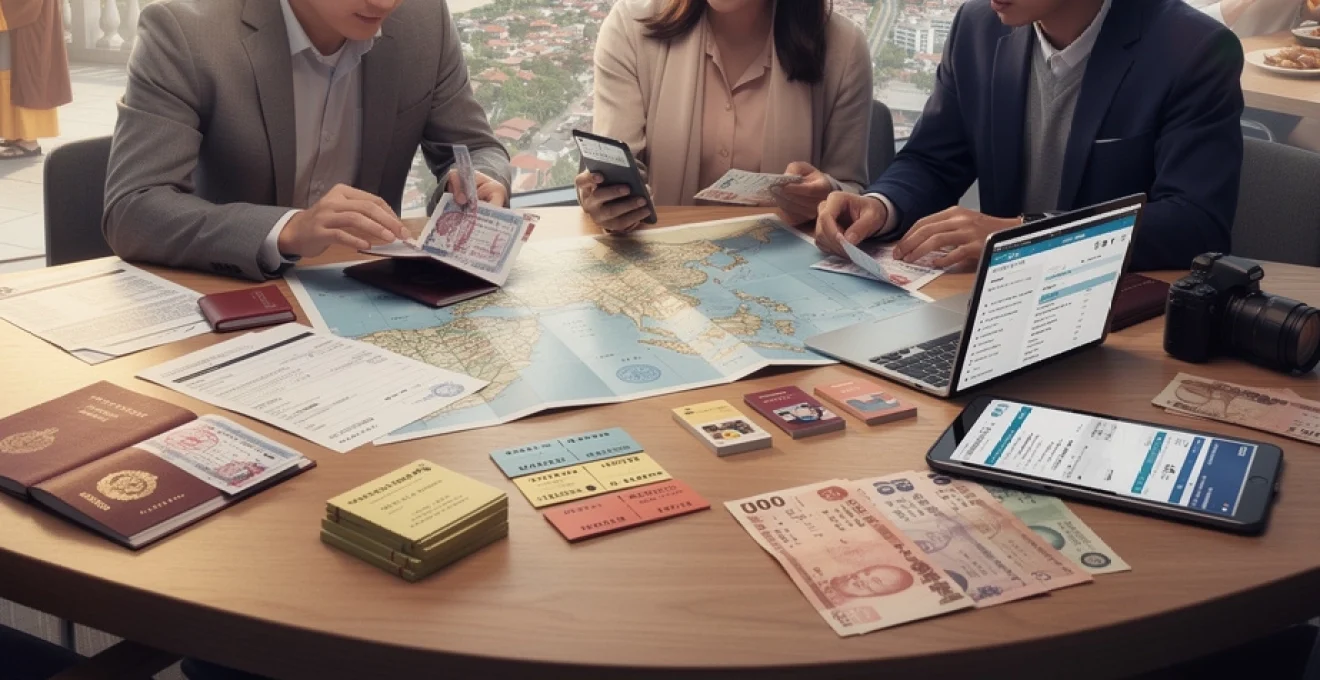
Navigating the complex visa landscape across Asian countries requires strategic planning, particularly when visiting multiple nations within a single journey. Each country maintains distinct entry requirements that can significantly impact your travel timeline and budget. The documentation process varies dramatically between tourist-friendly destinations like Thailand, which offers visa-on-arrival for many nationalities, and more restrictive countries such as China, where advance visa applications with extensive documentation are mandatory.
Tourist visa classifications for china, japan, and southeast asian nations
China’s tourist visa system operates under the L-category classification, requiring applicants to submit detailed itineraries, proof of accommodation, and return flight bookings. The processing time typically spans 4-10 working days, with fees ranging from £30-60 depending on your nationality and processing speed requirements. Single-entry visas permit stays up to 30 days, whilst multiple-entry options extend validity periods up to 10 years for eligible applicants.
Japan’s tourist visa requirements depend heavily on your nationality and intended duration of stay. Citizens from 68 countries, including the UK, Australia, and most European Union nations, can enter visa-free for tourism purposes for up to 90 days. However, travellers planning extended stays exceeding three months must apply for appropriate long-term visas through Japanese consulates, a process that can take several weeks and requires substantial documentation including financial proof and detailed travel plans.
Passport validity extensions and Six-Month rule compliance
The six-month passport validity rule represents one of the most critical yet frequently overlooked aspects of Asian travel planning. Countries including Thailand, Indonesia, Malaysia, and Singapore enforce strict passport validity requirements, refusing entry to travellers whose passports expire within six months of their intended departure date. This regulation applies regardless of your actual planned stay duration, meaning even a brief weekend trip requires full six-month compliance.
Emergency passport renewals whilst abroad can prove both expensive and time-consuming, often requiring visits to embassy facilities in major cities and potentially disrupting carefully planned itineraries. The UK Passport Office currently reports processing times of up to 10 weeks for standard renewals, highlighting the importance of checking passport expiry dates well in advance of travel. Fast-track services are available but come with premium pricing that can exceed £200 for urgent applications.
Digital nomad visa applications for thailand and malaysia
Thailand’s Long-Term Resident (LTR) visa programme, launched in 2022, specifically targets digital nomads and remote workers seeking extended stays in the kingdom. Applicants must demonstrate annual income exceeding $80,000 USD or possess professional qualifications in targeted industries including technology, healthcare, and finance. The visa grants stays up to 10 years with work permit privileges, though the application process requires comprehensive documentation including employment contracts, tax returns, and health insurance coverage.
Malaysia’s recently introduced DE Rantau Nomad Pass caters to location-independent professionals earning at least $24,000 USD annually. This 12-month renewable visa allows remote work for foreign employers whilst residing in Malaysia, with streamlined application processes conducted entirely online. However, the programme restricts local employment opportunities and requires applicants to maintain Malaysian tax compliance throughout their stay period.
International vaccination certificates and health documentation
Health documentation requirements vary significantly across Asian destinations, with some countries mandating
proof of COVID-19 vaccination or negative test certificates, particularly for travellers transiting through major hubs like Singapore, Hong Kong, and Doha. While many pandemic-era restrictions have eased, requirements can change rapidly in response to new variants or regional outbreaks. Before embarking on your cultural journey through Asia, verify entry rules on official government portals and airline websites, and ensure your vaccination records are accessible in both digital and printed formats.
Some Asian countries, including Indonesia and parts of India, maintain yellow fever vaccination requirements for travellers arriving from or transiting through endemic regions. In these cases, you must carry an International Certificate of Vaccination or Prophylaxis (ICVP), commonly known as the “yellow card”, issued by an authorised clinic. Additionally, comprehensive travel insurance with medical coverage remains essential across the continent, as hospitals may require proof of insurance or upfront payment before treating foreign nationals.
Cultural etiquette protocols and social navigation frameworks
Beyond documents and visas, preparing for a cultural journey through Asia means understanding the unwritten social rules that shape daily life. Many Asian societies prioritise harmony, respect for hierarchy, and indirect communication, all of which can feel unfamiliar if you are used to more direct Western norms. By learning key etiquette protocols in advance, you reduce the risk of accidental offence and open the door to more genuine, rewarding interactions with local people.
Cultural etiquette in Asia is not about memorising rigid rules; it is about reading context, observing others, and acting with humility. What happens if you make a mistake? In most cases, locals will forgive honest errors, especially when they see you are trying to show respect. Still, a basic social navigation framework—covering greetings, body language, and behaviour in religious or formal settings—will make your journey smoother from the moment you arrive.
Business card exchange rituals in japan and south korea
In Japan and South Korea, the simple act of exchanging business cards, or meishi in Japanese, carries ceremonial weight. The business card represents the person, their company, and their status, so treating it casually implies disrespect. Cards should be presented and received with both hands, text oriented toward the recipient, accompanied by a slight bow in Japan or a polite nod in South Korea. Never slide a card across the table or toss it toward someone.
Once you receive a business card, take a moment to read it carefully before placing it respectfully on the table in front of you or into a dedicated card holder. Putting it straight into your back pocket—or worse, writing on it in front of the person—signals that you do not value the relationship. If you are travelling for business, bring a generous supply of high-quality cards with your name, role, and contact details clearly printed, ideally with English on one side and Japanese or Korean on the other.
Buddhist temple visiting procedures in thailand and myanmar
Visiting Buddhist temples in Thailand and Myanmar is often a highlight of a cultural journey through Asia, but these sacred spaces demand particular care. Dress modestly: shoulders and knees should be covered for all genders, and tight or transparent clothing is best avoided. Before entering the temple building or sacred inner areas, remove your shoes and, in many cases, your hat; you will often see clear shoe racks or signage near the entrance as a reminder.
Inside, remain quiet and move slowly, treating the space as you would a cathedral or mosque. Never sit with your feet pointing toward a Buddha image or monk; instead, kneel or sit cross-legged with your feet tucked behind you. Photography rules vary: some temples permit photos without flash, others prohibit photography altogether, particularly during prayer or meditation. When in doubt, look for signs or discreetly ask a local guardian or attendant.
Dining customs and chopstick etiquette across east asian cultures
Dining etiquette across East Asia can feel like a choreography of small, meaningful gestures. In China, Japan, and Korea, chopsticks are the primary utensils, and how you use them sends strong social signals. Avoid sticking chopsticks upright in a bowl of rice, as this resembles funeral offerings; instead, rest them on a chopstick holder or neatly across your bowl. Waving chopsticks in the air, using them to point, or spearing food is also considered impolite.
Shared dishes are the norm in many East Asian cultures, especially in China and Korea. You may be offered communal plates from which everyone serves themselves, sometimes using the opposite ends of their chopsticks or dedicated serving utensils. In Japan, it is polite to say “itadakimasu” before eating and “gochisousama deshita” afterwards to thank the host. Curious whether you should finish everything on your plate? In most places, leaving a small amount is acceptable, but wasting food—especially rice—is frowned upon, so serve yourself conservatively and go back for seconds if you are still hungry.
Religious sensitivity guidelines for indonesia and malaysia
Indonesia and Malaysia are both Muslim-majority nations, and Islamic values shape many aspects of public life. Dress codes are generally more conservative than in some neighbouring countries, particularly outside major tourist hubs. When visiting mosques, both men and women should wear long trousers or skirts, and women should cover their hair with a scarf; many major mosques provide loan garments for visitors. During the call to prayer, you may notice people pausing conversations or business, and loud or disruptive behaviour near mosques is considered disrespectful.
Alcohol consumption and public displays of affection require particular awareness. In tourist areas of Bali or central Kuala Lumpur, bars and nightlife venues are common, but in rural or more religiously conservative regions, alcohol may be restricted or unavailable. Kissing or hugging romantically in public can draw disapproving looks or even official warnings, especially during Ramadan. As a cultural traveller, you do not need to adopt local religious practices, but by observing modesty and sensitivity, you show that you respect the beliefs of your hosts.
Gift-giving traditions and taboo items in chinese culture
Gift-giving in Chinese culture is a nuanced ritual that plays a key role in building and maintaining relationships. If you are invited to a home or meet business contacts, bringing a small, well-presented gift—such as quality tea, biscuits, or something representative of your home country—is a thoughtful gesture. Always offer the gift with both hands, and do not be surprised if it is initially declined once or twice; this polite refusal is part of the ritual of modesty and should be gently countered with insistence.
Certain items, however, carry negative connotations and should be avoided. Clocks symbolise impending death because the word for “clock” sounds like “end” in Mandarin; umbrellas and pairs of shoes can imply separation or walking away from a relationship. White and black are traditional funeral colours, so entirely white wrapping paper is best avoided; choose red or gold for auspiciousness instead. Understanding these taboos is a bit like learning the “grammar” of respect in Chinese culture—you may not be fluent, but knowing the basics prevents accidental faux pas.
Language preparation strategies and communication tools
Language preparation is one of the most effective ways to deepen your cultural journey through Asia. While English is widely spoken in major cities, tourist hubs, and business districts, it becomes less common in rural areas or among older generations. Learning even a handful of local phrases demonstrates respect and often leads to warmer service, better prices, and more authentic exchanges. Think of language skills as a key: the more phrases you know, the more doors you can unlock.
You do not need to achieve fluency before departure; instead, focus on strategic language tools that support basic navigation, politeness, and emergencies. A combination of essential phrases, reliable translation apps, and offline resources gives you a robust communication toolkit. When technology fails or batteries die—as they often do at the least convenient moments—a small paper phrasebook or printed cheat sheet can be as valuable as a portable charger.
Essential mandarin phrases for mainland china navigation
Mainland China’s sheer size and linguistic diversity mean you will encounter numerous regional dialects, but standard Mandarin remains the most widely understood language in cities and transport hubs. Learning core phrases can significantly ease everyday tasks such as ordering food, buying train tickets, or asking for directions. For instance, greetings like “nǐ hǎo” (hello), “xièxie” (thank you), and “duìbuqǐ” (sorry/excuse me) will be recognised almost everywhere.
Navigation-focused phrases are particularly useful on public transport or in taxis. Questions like “zhège duōshao qián?” (how much is this?), “wǒ yào qù …” (I want to go to …), or “huǒchēzhàn zài nǎlǐ?” (where is the train station?) can dramatically reduce confusion. To avoid misunderstandings with tones, consider saving key place names and phrases in both pinyin and Chinese characters on your phone; showing the written form to a driver or ticket agent is often clearer than pronouncing it yourself.
Japanese honorific system basics for tourist interactions
Japanese uses an elaborate system of honorifics that reflects social hierarchy and politeness. While mastering the full system takes years, tourists only need to grasp a few basics to show respect. Adding “-san” after a surname—such as “Tanaka-san”—is a safe, polite way to address most adults, similar to saying “Mr” or “Ms” in English. Avoid using first names unless invited to do so, especially in formal or business contexts.
Polite phrases also carry weight. Saying “sumimasen” can mean “excuse me”, “I’m sorry”, or even “thank you for the trouble”, depending on context, making it one of the most versatile words you can learn. “Onegaishimasu” (please) and “arigatou gozaimasu” (thank you very much) soften requests and express gratitude. By combining simple honorifics with these phrases, you signal that you understand the importance of humility and courtesy in Japanese culture, even if your vocabulary is limited.
Translation apps performance analysis: google translate vs papago
Translation apps have become indispensable tools for modern travellers in Asia, but not all apps perform equally across languages. Google Translate supports a vast range of Asian languages, including Mandarin, Japanese, Korean, Thai, and Vietnamese, and its camera function can instantly translate menus, signs, and documents. However, accuracy varies, and idiomatic expressions or handwritten text can still confuse the algorithm, particularly in more complex scripts.
Papago, developed by Naver in South Korea, often delivers more natural translations for Korean, Japanese, and Chinese, especially in everyday conversation. Many long-term travellers in East Asia use both apps in tandem: Google Translate for breadth of coverage and Papago for depth in Northeast Asian languages. Whichever you choose, remember that machine translation is a guide rather than a perfect interpreter—treat it like a phrasebook rather than a definitive authority, and double-check critical information such as medical instructions or visa conditions with a human when possible.
Offline language resources and phrasebook compilation
Relying solely on mobile data for translation can be risky when travelling across multiple Asian countries, where roaming fees, network blackspots, and battery drain are constant realities. Download offline language packs within your chosen apps before departure, and test them in airplane mode to ensure they function correctly. Offline voice recognition may be less accurate, but basic text and camera translation usually remain available and can be a lifesaver in remote areas.
Complement digital tools with a compact phrasebook or a self-made cheat sheet containing key phrases, local emergency numbers, and your accommodation addresses written in the local script. Think of this as your “analogue backup” for a cultural journey through Asia: it works even when your phone is lost, broken, or out of power. If you plan extended stays in one country, consider short, in-person language classes or language exchange meetups—they not only improve your communication but also serve as a gateway to new friendships.
Financial planning and currency exchange methodologies
Sound financial planning is as crucial to your cultural journey through Asia as packing the right clothing or learning local phrases. With multiple currencies, varied payment infrastructures, and different attitudes toward tipping and bargaining, Asia’s financial landscape can feel like a maze without a clear strategy. The goal is to balance convenience, security, and cost so that you can focus on cultural experiences rather than bank fees.
For most travellers, a mix of cash, debit or credit cards with low foreign transaction fees, and at least one backup payment method works best. ATMs in major Asian cities generally offer better exchange rates than currency kiosks in airports or tourist districts, but withdrawal fees can add up if you take out small amounts frequently. Consider withdrawing larger sums less often, then storing most of your cash in a hotel safe while carrying only what you need for the day.
Think of your money strategy as a layered safety net: if one strand fails—lost card, faulty ATM, or suspicious transaction—you still have others to catch you.
Currency fluctuations can affect longer trips, especially if you are budgeting tightly or visiting high-cost destinations like Japan or Singapore. Using budget-tracking apps and noting daily spending in local currency helps you spot patterns and adjust quickly. In markets and small eateries across Southeast Asia, cash remains king, and modest bargaining is often expected; however, in East Asian cities, contactless payments and QR codes are increasingly standard, sometimes even outpacing card acceptance.
Regional transportation networks and booking platforms
Efficiently navigating Asia’s regional transportation networks can transform a complex itinerary into a smooth, enjoyable journey. The continent boasts some of the world’s most advanced rail systems, extensive low-cost airline networks, and affordable long-distance buses, but each mode requires different booking strategies. High-speed trains in Japan and China, for example, are punctual to the minute and heavily used by locals, so reserving seats in advance—especially during holidays—is often essential.
For multi-country trips, regional budget airlines such as AirAsia, Scoot, and VietJet can drastically reduce travel time between cities, though they may operate from secondary airports and enforce strict baggage rules. Booking platforms like 12Go Asia, local railway websites, and reputable online travel agencies allow you to compare options and purchase tickets in advance, often with English-language interfaces. Still, keeping some flexibility in your schedule is wise; weather disruptions, public holidays like Golden Week in Japan, or major festivals such as Chinese New Year can cause sudden price surges and limited availability.
Within cities, transport options range from ultra-modern metro systems in Singapore, Seoul, and Tokyo to tuk-tuks, songthaews, and motorbike taxis in parts of Southeast Asia. Learning how locals pay—transport cards, QR codes, or cash—and downloading relevant apps (such as Grab or Gojek) will simplify day-to-day movement. Treat each city’s transport network as part of your cultural education: riding a crowded Mumbai train or a Bangkok canal boat reveals as much about local life as visiting a museum.
Cultural immersion activities and authentic experience curation
Planning cultural immersion activities is where your journey through Asia truly comes alive. Rather than ticking off a list of famous landmarks, curate experiences that connect you with everyday life: morning markets, community festivals, local workshops, and homestays. Ask yourself: what aspects of culture—food, religion, history, art, or nature—do you want to understand more deeply, and how can you build your itinerary around those themes?
For food enthusiasts, cooking classes in Vietnam, izakaya hopping tours in Japan, or street-food walks in Malaysia offer direct insight into culinary traditions and social habits. If you are interested in spirituality and wellness, meditation retreats in Thailand, temple stays in South Korea, or yoga programmes in India can provide structured, respectful access to local practices. Always choose operators who demonstrate cultural sensitivity and fair treatment of local communities; reviews, certifications, and transparent policies about community involvement are strong indicators.
One of the most powerful yet underrated immersion techniques is simply slowing down. Spending several days in a single neighbourhood—visiting the same café, using the same market, greeting the same street vendors—allows relationships to form naturally. Over time, you move from outsider to familiar face, even if only briefly, and the stories you hear and moments you share become the most memorable parts of your cultural journey through Asia.