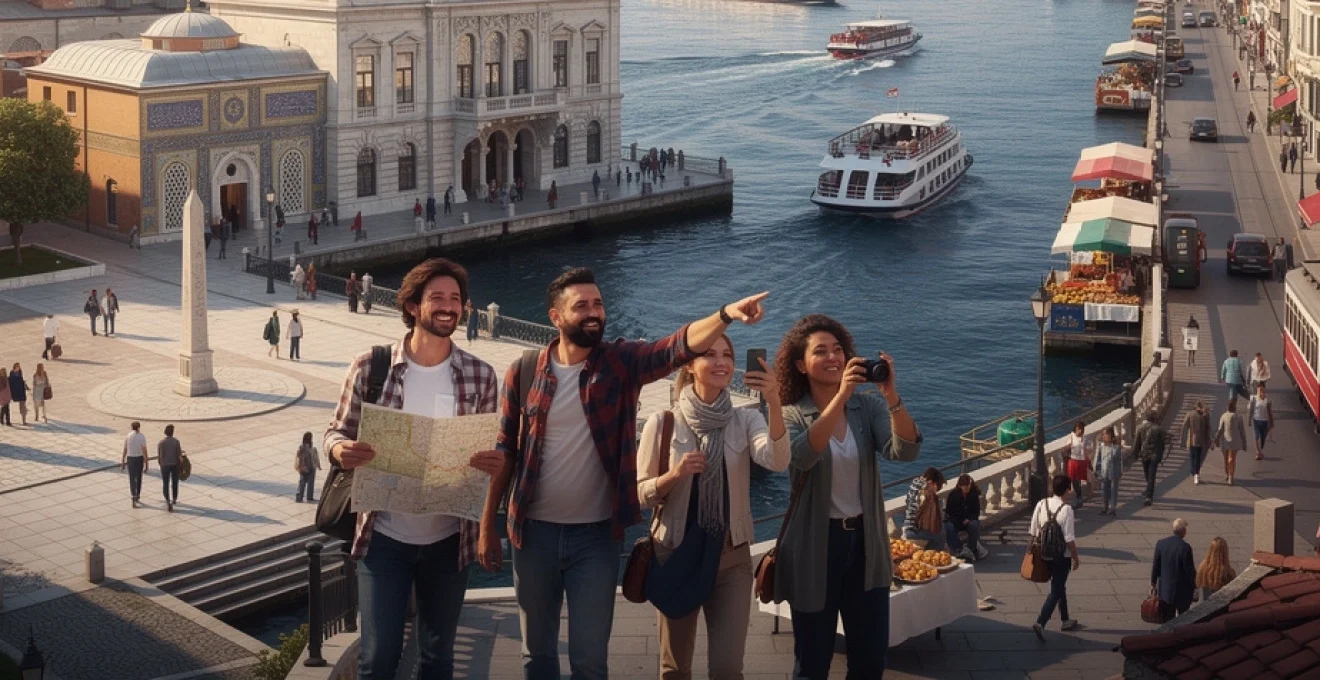
Istanbul stands as one of the world’s most captivating cities, where ancient history collides with contemporary energy across two continents. With architectural marvels spanning Byzantine, Ottoman, and modern periods, this transcontinental metropolis offers travellers an unparalleled cultural experience that demands careful planning to appreciate fully. Whether you’re drawn to towering minarets piercing the skyline, underground cisterns concealing mythical sculptures, or bustling bazaars echoing centuries of commerce, Istanbul rewards those who venture beyond superficial sightseeing. The city’s strategic position straddling Europe and Asia creates a unique atmosphere where Eastern traditions meet Western modernity in countless unexpected ways. From the moment you hear the distant call to prayer echoing across historic neighbourhoods to your first taste of flaky baklava dripping with honey, Istanbul engages all your senses simultaneously, creating memories that linger long after departure.
Day one: sultanahmet district historical peninsula exploration
Your Istanbul journey begins in Sultanahmet, the beating heart of the Old City where empires rose and fell for millennia. This UNESCO World Heritage district concentrates some of humanity’s most significant architectural achievements within comfortable walking distance, making it the ideal starting point for first-time visitors. Begin your morning early—arriving at major attractions before 9:00 AM helps you avoid overwhelming crowds and capture photographs in softer light. The district’s compact layout means you’ll transition seamlessly from Byzantine grandeur to Ottoman magnificence within minutes, experiencing the layered history that makes Istanbul so remarkable.
Hagia sophia grand mosque: byzantine architecture and ottoman heritage
The Hagia Sophia represents architectural ambition at its most audacious—a building that redefined what was structurally possible in the 6th century and continues to inspire awe today. Originally constructed as a Christian basilica under Emperor Justinian I in 537 CE, this masterpiece served as Constantinople’s principal cathedral for nearly a millennium before its conversion to a mosque following the Ottoman conquest in 1453. The massive dome, spanning 31 metres in diameter and soaring 56 metres above the marble floor, seemingly floats overhead thanks to ingenious architectural innovations including forty arched windows that flood the interior with ethereal light. You’ll notice Byzantine mosaics depicting Christian iconography alongside Islamic calligraphy medallions—physical evidence of the building’s dual heritage that few structures worldwide can match.
Since reverting to mosque status in 2020, entry remains free for all visitors, though non-Muslims can only access the upper galleries during designated times outside prayer hours. Plan to spend at least 90 minutes here, allowing time to appreciate intricate details like the Viking runes carved into marble balustrades by Varangian Guard members or the “weeping column” believed to possess healing properties. The interplay between Christian and Islamic artistic elements creates a visual dialogue spanning centuries, offering profound insights into Constantinople’s transformation into Istanbul. Don’t overlook the ablution fountains in the courtyard, which showcase exquisite Ottoman fountain architecture in their own right.
Topkapi palace imperial collections and harem quarters
Topkapi Palace functioned as the administrative and residential headquarters of Ottoman sultans for approximately 400 years, housing up to 4,000 people at its peak. This sprawling complex comprises four main courtyards, each progressively more restricted and intimate, along with numerous buildings containing imperial treasures that boggle the imagination. The Treasury alone houses the Topkapi Dagger with its enormous emeralds, the 86-carat Spoonmaker’s Diamond, and countless other bejewelled objects that demonstrate Ottoman wealth at its zenith. Equally fascinating are the Sacred Relics section containing items attributed to Prophet Muhammad and other Islamic figures, which draws pilgrims alongside history enthusiasts.
The Harem quarters require a separate ticket but absolutely merit the additional cost and time investment. These private residential sections housed the sultan’s family, concubines, and servants within a labyrinthine network of over 300 rooms decorated with stunning İznik tiles and intricate woodwork. Walking through the Harem provides glimpses into the complex hierarchies and daily routines that governed palace life, far removed from sensationalised Western depictions. The Imperial Hall, with its ornate dome and fountain, served as the sultan’s private entertaining space and showcases Ottoman interior design at its most
magnificent, particularly when sunlight filters through stained glass to illuminate the tilework. To make the most of your visit, consider arriving at Topkapi within an hour of opening time and purchasing fast-track tickets online during peak seasons. Allocate at least three hours to explore the courtyards, Treasury, Sacred Relics, and Harem at a comfortable pace—you’ll appreciate the slower rhythm in contrast to the often hectic streets outside the palace walls.
Blue mosque six-minaret marvel and iznik tile craftsmanship
From Topkapi Palace, it is a short walk to the Sultan Ahmed Mosque, more commonly known as the Blue Mosque thanks to the more than 20,000 hand-painted İznik tiles decorating its interior. Commissioned by Sultan Ahmed I and completed in 1616, this mosque famously features six slender minarets, a daring architectural statement at the time that rivalled the Grand Mosque in Mecca. As you step inside, look up to appreciate the cascading domes and semi-domes, designed to draw the eye heavenward while diffusing natural light through over 200 stained-glass windows. The floral and geometric tile motifs, dominated by shades of blue, turquoise, and green, create an almost tapestry-like effect across the walls and arches.
Non-worshippers can enter the Blue Mosque outside of prayer times, and modest dress is required—women should bring a scarf to cover their hair, and both men and women should ensure shoulders and knees are covered. Scarves and wraps are usually available to borrow at the entrance, but having your own speeds up the process and feels more comfortable. Plan to spend 30 to 45 minutes here, including time in the courtyard, which offers one of the most photogenic views of the mosque framed by arcades. If you can, engineer a second visit around sunset; watching the stone facade shift in colour as the sky darkens while the call to prayer echoes across Sultanahmet is one of those quintessential Istanbul experiences you will remember long after your three days in Istanbul are over.
Basilica cistern underground water system and medusa columns
Just a few minutes’ walk from the Blue Mosque lies one of Istanbul’s most atmospheric sites: the Basilica Cistern. Built in the 6th century under Emperor Justinian I, this vast underground reservoir once stored up to 80,000 cubic metres of water for the Great Palace and nearby buildings, channelled via aqueducts from the Belgrade Forest north of the city. As you descend the staircase, your eyes gradually adjust from daylight to the dim, amber-lit darkness, revealing a forest of 336 marble columns rising from shallow water. The quiet drip of moisture, occasional echoing footsteps, and subtle music contribute to an almost otherworldly ambience, making the cistern feel like a subterranean cathedral.
Among the most intriguing features are the two Medusa head bases tucked away in a far corner, repurposed from earlier Roman structures. One is positioned sideways and the other upside down, prompting theories ranging from practical engineering to attempts to neutralise the mythical Gorgon’s gaze. Regardless of the explanation, these sculpted heads add a touch of mystery and myth to the space. Given its popularity, the Basilica Cistern can become crowded, especially midday—aim for early morning or late afternoon to enjoy the walkways with fewer tour groups. If you’re visiting Istanbul on a budget or seeking an alternative, nearby smaller cisterns such as the Cistern of Theodosius occasionally offer lower entry fees and shorter queues while still conveying the genius of Byzantine water management.
Hippodrome of constantinople: egyptian obelisk and serpent column
Before ending your first day in Sultanahmet, take time to wander through Sultanahmet Square, which occupies the footprint of the ancient Hippodrome of Constantinople. Once the city’s primary chariot-racing stadium and public gathering space, the Hippodrome could hold up to 100,000 spectators and served as a political pressure valve where emperors gauged public opinion. Although the grandstands and most structural elements have long since disappeared, several monuments still stand along the central spine, offering tangible links to the city’s Roman and Byzantine past. The most striking is the pink granite Egyptian Obelisk of Theodosius, originally erected at Karnak around 1450 BCE and transported here in the 4th century CE—its base is carved with scenes showing Emperor Theodosius overseeing games in the Hippodrome.
Nearby, the Serpent Column, brought from Delphi, represents another layer of ancient history. Once a triple-coiled bronze pillar supporting a golden cauldron, it commemorated the Greek victory over the Persians at Plataea in 479 BCE. Though the serpent heads have been lost or removed over time, the remaining column still coils upward as a reminder of the city’s connection to earlier classical worlds. As you stroll this open-air museum, imagine the roar of crowds and clash of chariots where today you’ll find strolling families and street vendors. This is also a pleasant area to pause on a bench, enjoy a simit (sesame-crusted bread ring), and reflect on how much history you’ve absorbed in just one day on the historical peninsula.
Day two: bosphorus strait navigation and asian shore discovery
While day one is devoted to the historic core, your second day in Istanbul invites you to experience the city’s maritime soul and its Asian shore. The Bosphorus Strait is far more than a scenic waterway; it is the city’s lifeline, a busy shipping corridor, and a constantly shifting stage where ferries, fishing boats, and tankers cross paths. By combining palaces, neighbourhood exploration, and panoramic viewpoints, you can design a day that showcases both Istanbul’s imperial glamour and its everyday rhythms. Comfortable shoes are essential, as you’ll be blending walking with ferry rides and possibly a short taxi or bus journey up to Çamlıca Hill.
Dolmabahçe palace neo-baroque splendour and crystal staircase
Begin your second morning at Dolmabahçe Palace, easily reached by tram or taxi from Sultanahmet to the Beşiktaş waterfront. Built in the mid-19th century under Sultan Abdülmecid I, Dolmabahçe replaced Topkapi as the primary royal residence and was designed to impress foreign dignitaries with a distinctly European-style grandeur. The architecture blends Baroque, Rococo, and Neoclassical elements with traditional Ottoman features, resulting in an opulent riverside facade that stretches nearly 600 metres along the Bosphorus. Inside, you’ll traverse gilded halls, crystal chandeliers (including one weighing 4.5 tonnes, a gift from Queen Victoria), and reception rooms lined with silk and velvet.
One of the palace’s most famous features is the Crystal Staircase, an elegant double horseshoe staircase framed in Baccarat crystal and brass, which feels almost like something out of a fairy tale. Guided tours, which are mandatory for the main sections, typically take around an hour, and photography is often restricted inside, so be prepared to simply soak up the details with your eyes. The palace grounds also include the Clock Museum and a serene mosque facing the water. Since Dolmabahçe can attract large groups, particularly in summer, booking tickets online when possible and arriving around opening time will help you enjoy the state rooms with fewer crowds. If you’re fascinated by late Ottoman history and the early Republic, note that Mustafa Kemal Atatürk used Dolmabahçe as a presidential residence and passed away here in 1938; his bedroom is preserved as a poignant memorial.
Ortaköy mosque waterfront setting and kumpir street food
From Dolmabahçe, continue north along the waterfront—either on foot (about 25–30 minutes) or via a short bus or taxi ride—to reach Ortaköy, one of Istanbul’s most photogenic neighbourhoods. Here, the Ortaköy Mosque (officially Büyük Mecidiye Mosque) appears to float almost directly on the Bosphorus, framed by the soaring pylons of the July 15 Martyrs Bridge. Its elegant neo-Baroque design, ornate windows, and compact yet graceful dome create an irresistible backdrop for photos, especially at golden hour. Stepping inside reveals a surprisingly intimate prayer hall with pastel-coloured ornamentation and light streaming in from large arched windows overlooking the water.
Ortaköy is equally famous for its street food culture, particularly kumpir—loaded baked potatoes that become full meals when topped with everything from olives and sausage to pickles and corn. Grabbing a kumpir from one of the many stalls, then finding a spot along the promenade to watch ferries glide by, is one of the simplest yet most satisfying culinary experiences you can have in Istanbul. If you have a sweet tooth, follow it up with a waffle piled high with fruit, nuts, and chocolate, another Ortaköy speciality. With its mix of waterfront views, local artisans selling jewellery and handicrafts, and the constant hum of conversation in cafés, Ortaköy offers a more relaxed contrast to the intensity of Sultanahmet—ideal for a midday pause in your three-day Istanbul itinerary.
Bosphorus ferry route: üsküdar to emirgan grove
After lunch, it’s time to fully embrace the Bosphorus. While many visitors book private sightseeing cruises, using public ferries offers a more authentic and budget-friendly way to navigate Istanbul’s waterways. One scenic option is to cross from Beşiktaş or Ortaköy to Üsküdar on the Asian side, then continue north along the Bosphorus by ferry toward neighbourhoods such as Çengelköy and beyond. Üsküdar itself is one of Istanbul’s oldest districts, with a distinctly local feel; its mosques, such as Mihrimah Sultan Mosque, and bustling waterfront square give you a glimpse of daily life away from the main tourist circuit. Grabbing a tea in a traditional çay garden facing the Maiden’s Tower is a small but memorable pleasure.
From Üsküdar, you can either continue exploring the Asian shore or return to the European side and ride a northbound ferry toward Emirgan. This stretch of the Bosphorus reveals yalı (historic wooden mansions), hilltop fortresses, and waterfront palaces that illustrate why Istanbul’s elites have always coveted these shores. If you’re visiting in April, make time to stop at Emirgan Grove (Emirgan Korusu), one of the city’s largest parks and the focal point of Istanbul’s annual Tulip Festival, where millions of tulips transform the hillsides into a patchwork of colour. Even outside spring, Emirgan offers wooded walking paths, cafés, and panoramic views that make it an appealing escape from central Istanbul’s density. Remember that ferry schedules vary by season, so checking timetables in advance can prevent long waits on the pier.
Çamlıca hill panoramic observation deck experience
To end your second day with a literal and figurative overview of the city, head up to Çamlıca Hill on the Asian side. Divided into Büyük (Big) and Küçük (Little) Çamlıca, this elevated parkland offers some of the most expansive views over both the European and Asian shores, the Bosphorus, and the Sea of Marmara. In recent years, the area has gained two major new landmarks: Çamlıca Mosque, the largest mosque in Turkey, and Çamlıca Tower, a futuristic telecommunications and observation tower that has quickly become a favourite vantage point. Reaching Çamlıca typically involves taking a bus or taxi from Üsküdar or Kadıköy; factor in Istanbul traffic when planning your timing, especially around sunset.
At Çamlıca Tower, high-speed lifts whisk you to observation decks and a revolving restaurant where floor-to-ceiling windows provide a 360-degree panorama. Visiting around dusk allows you to watch the city transition from day to night as minarets and bridges light up and ferries trace illuminated paths along the Bosphorus. If the weather is clear, you may be surprised at how far you can see—the city seems to stretch endlessly in every direction, reinforcing just how much lies beyond even a well-planned three-day Istanbul itinerary. Alternatively, if you prefer a quieter, more budget-friendly option, the traditional hilltop tea gardens on Big Çamlıca let you sip tea under pine trees while enjoying nearly as impressive views, proving that sometimes the simplest experiences rival the priciest observation decks.
Day three: beyoğlu cultural quarter and galata tower vicinity
Having explored the historic peninsula and the Bosphorus, your final day focuses on Beyoğlu, Istanbul’s cultural and entertainment hub on the European side. This district, centred around İstiklal Avenue and stretching down toward Karaköy and Galata, reveals a different facet of the city—one shaped by 19th-century European influences, art nouveau architecture, and a contemporary creative scene. Expect a faster tempo here: trams clatter, street musicians perform, and cafés spill onto sidewalks. If you’ve been wondering where Istanbul’s modern energy is most visible, Beyoğlu is where you’ll find it.
İstiklal avenue pedestrian thoroughfare and historic tram route
Start at Taksim Square, a major transport hub and symbolic gathering place, then follow İstiklal Avenue as it gently slopes down toward Galata. This 1.4-kilometre pedestrian street is lined with consulates housed in former embassies, late-Ottoman apartment blocks, cinemas, and international and local brands—a striking contrast to the medieval streets of Sultanahmet. Overhead, you’ll often see the red nostalgic tram rumbling along, offering a slow, scenic ride that feels like stepping into a vintage postcard. Side passages, known as passaj, hide everything from traditional meyhane (taverns) to independent bookshops, making it worth occasionally veering off the main artery.
As you walk, keep an eye out for landmarks such as the historic Çiçek Pasajı (Flower Passage), Galatasaray High School, and churches like St. Antoine of Padua, reminders of the cosmopolitan Levantine communities that once dominated this part of Istanbul. İstiklal is also one of the best places to people-watch—office workers on lunch break, students, tourists, and street performers all share the same space. If the crowds feel overwhelming, duck into a side street café for Turkish coffee or a glass of çay served in the classic tulip-shaped glass. This combination of grand boulevards and intimate side alleys makes İstiklal Avenue a vital part of any three-day Istanbul city break, especially for travellers interested in contemporary culture.
Galata tower medieval genoese architecture and 360-degree vista
Continuing downhill from İstiklal, you eventually spot the conical roof of Galata Tower rising above the rooftops, a landmark that has watched over the Golden Horn since the 14th century. Built by Genoese colonists as part of their fortified settlement opposite Constantinople, the tower has served various roles over the centuries, from lookout post to fire watch station. Today, it functions primarily as an observation deck, offering another unforgettable 360-degree view over Istanbul. Climbing or taking the lift to the top rewards you with sweeping vistas of the historic peninsula, the Bosphorus, and the densely packed neighbourhoods of Beyoğlu and beyond.
To avoid the longest queues, aim to visit Galata Tower early in the morning or later in the evening, especially during high season. Once at the top, the circular balcony can become crowded, so patience is key as you slowly circle for the best photo spots. Many travellers are surprised by just how different the city looks from here compared with Çamlıca Hill; from this vantage point, Istanbul feels more intimate and textured, with domes, chimneys, and rooftop terraces stacked close together. After descending, spend some time wandering the streets around the tower, where independent boutiques, record shops, and cosy cafés occupy historic buildings, creating one of the most atmospheric corners of Beyoğlu.
Karaköy waterfront: contemporary art galleries and third-wave coffee culture
From Galata, stroll downhill toward Karaköy, a neighbourhood once dominated by ports and warehouses that has rapidly transformed into one of Istanbul’s trendiest districts. Along the waterfront, you’ll find a lively mix of ferry terminals, street food stands, and locals fishing from the bridge, while a few blocks inland, renovated industrial buildings now house contemporary art spaces, design boutiques, and some of the city’s best third-wave coffee shops. If you’re interested in Istanbul’s art scene, venues like Istanbul Modern (relocated to a striking new building on the Bosphorus) and smaller galleries in the backstreets showcase both established and emerging Turkish artists.
Karaköy is also an excellent area to take a break and refuel. Whether you prefer meticulously brewed single-origin coffee, a simple Turkish tea, or a leisurely brunch, you’ll find plenty of options catering to different tastes and budgets. The contrast here is striking: historic mosques and hammams stand side by side with minimalist cafés and street art-covered walls, encapsulating the city’s ongoing reinvention. As you sip your drink and watch ferries glide in and out, you may find yourself asking: how does any three-day Istanbul itinerary manage to capture all these layers? While the answer is that it can’t fully, a few hours in Karaköy certainly bring you closer.
Pera museum orientalist paintings and anatolian weights collection
Before your final evening in Istanbul, head back uphill toward Tepebaşı to visit the Pera Museum, a cultural gem often overlooked by rushed itineraries. Housed in a beautifully restored late-19th-century hotel building, the museum is best known for its collection of Orientalist paintings, including Osman Hamdi Bey’s iconic work The Tortoise Trainer, which offers a layered commentary on reform and tradition within the late Ottoman Empire. These paintings, many produced by European artists, reveal how Istanbul and the wider region were imagined and romanticised abroad, providing a useful counterpoint to the city you’ve now experienced firsthand.
Beyond its painting galleries, the Pera Museum hosts fascinating permanent exhibitions on Anatolian weights and measures and Kütahya tiles and ceramics, which together illuminate everyday life and trade across centuries in what is now Turkey. Temporary exhibitions frequently showcase contemporary art and photography, ensuring there’s always something new to discover. Plan for 60 to 90 minutes here, depending on your interest level; it’s an ideal indoor option if you encounter rain or extreme heat during your three days in Istanbul. When you step back out onto the street, you’ll likely find that the museum’s quiet, reflective atmosphere has sharpened your appreciation of the city’s visual and material culture.
Grand bazaar covered market: 4,000 shops labyrinth navigation
No visit to Istanbul feels complete without at least a brief foray into the Grand Bazaar, one of the world’s oldest and largest covered markets. Although you may have already passed through during your time in Sultanahmet, dedicating a focused visit—either early in the morning or late afternoon on your final day—can transform chaos into something more enjoyable. Sprawling over an area of roughly 30,000 square metres and encompassing more than 4,000 shops, the bazaar can indeed feel like a labyrinth. Yet its vaulted lanes are generally organised by trade, with sections specialising in jewellery, carpets, leather goods, textiles, and antiques, making navigation easier once you understand the basic layout.
To avoid feeling overwhelmed, decide in advance what you’re most interested in buying. Are you seeking a hand-knotted rug, copperware for your kitchen, or simply small souvenirs? Having a clear goal lets you ignore much of the sensory overload and focus on a few key streets. Bargaining is expected and can even be enjoyable when approached with a smile and patience; think of it less as confrontation and more as a friendly game. Prices for items like carpets and ceramics can vary widely, so it’s worth browsing a few shops and asking questions before committing. If haggling isn’t your style, consider the nearby Spice Bazaar (Egyptian Bazaar), which offers a more compact experience focused on spices, teas, lokum (Turkish delight), and dried fruits—ideal for edible gifts that will remind you of Istanbul’s flavours once you’re home.
Turkish culinary immersion: meze platters to baklava desserts
Over the course of three days in Istanbul, food will inevitably become one of your primary means of understanding the city. Turkish cuisine here is wonderfully regional and diverse, yet certain staples appear again and again: grilled meats, fresh fish, meze (small plates), fragrant rice dishes, and indulgent sweets. For a classic evening meal, consider visiting a meyhane, the traditional taverns found in areas like Karaköy, Beyoğlu, and Kadıköy. Meals typically begin with a selection of cold and hot meze—think smoked eggplant salad, stuffed vine leaves, spicy tomato ezme, and creamy yoghurt dips—paired with grilled octopus, calamari, or seasonal vegetables. These are often accompanied by rakı, an anise-flavoured spirit diluted with water, which turns milky-white in the glass and is sometimes called “lion’s milk.”
Street food is equally essential to a true Istanbul culinary immersion. Throughout your itinerary, you’ll encounter simit sellers, fish sandwiches along the Galata Bridge, kumpir in Ortaköy, and late-night doner kebabs near Taksim. Don’t overlook humble spots serving mercimek çorbası (lentil soup) or pide (boat-shaped flatbreads topped with meat, cheese, or vegetables), which provide hearty, affordable meals. For dessert, baklava is the undisputed star, especially when enjoyed fresh from renowned patisseries where thin layers of pastry are soaked in syrup and layered with pistachios or walnuts. Pair it with strong Turkish coffee, typically served unfiltered in small cups, and you have a perfect end to a busy day of sightseeing.
Curious about how to go beyond simply eating and truly understand Turkish food culture? Consider joining a guided food walk or cooking class, where you’ll learn the stories behind dishes and gain confidence ordering in local eateries. Even something as simple as paying attention to where locals queue—whether for dürüm wraps in Karaköy or kokoreç (seasoned grilled lamb intestines) near stadiums—can lead you to some of your most memorable meals in Istanbul. In a city where culinary traditions are taken seriously, every snack and sip becomes another lens on daily life.
Istanbul public transport mastery: i̇stanbulkart and metro system
To make the most of three days in Istanbul without exhausting yourself or your budget, mastering the city’s public transport system is essential. The backbone of this system is the İstanbulkart, a rechargeable smart card that works across almost all modes of transport, including trams, metros, buses, funiculars, and most ferries. You can purchase and load an İstanbulkart at kiosks and vending machines around major stations, often paying a small fee for the card itself plus an initial balance. Tapping in is straightforward, and discounted transfer fares apply when switching between modes within a set time window, making multi-leg journeys more affordable than separate tickets.
For most visitors staying in central areas, the T1 tram line (connecting Bağcılar to Kabataş) and the M2 metro line (Yenikapı to Hacıosman) will be the most useful routes. The T1 tram links Sultanahmet with Karaköy and Kabataş, where you can transfer to the F1 funicular up to Taksim Square, while the M2 metro zips under the Golden Horn to Şişhane and Taksim, ideal for reaching Beyoğlu and beyond. Ferries operated by Şehir Hatları and private companies criss-cross the Bosphorus and Golden Horn, and paying with your İstanbulkart is usually cheaper than buying one-off tokens. Not only are ferries one of the most scenic ways to travel between the European and Asian sides, they also tend to be more predictable than taxis in heavy traffic.
Still debating whether to rely on public transport or taxis in Istanbul? While taxis can be convenient, especially late at night or when carrying heavy luggage, traffic congestion and occasional issues with overcharging make them less appealing for routine sightseeing. Using ride-hailing apps such as BiTaksi or Uber (which works with licensed local taxis) helps ensure the meter is used and provides a record of your journey. However, for most daytime travel, a combination of tram, metro, and ferry offers the best balance of speed, cost, and reliability. Think of Istanbul’s transit network as the city’s circulatory system; once you understand its main arteries and how to tap into them with your İstanbulkart, navigating this vast metropolis becomes far less intimidating and far more enjoyable.