# How to Stay Connected Abroad Without Paying Roaming Fees
International roaming charges remain one of the most frustrating aspects of modern travel. A single week abroad can transform an affordable mobile contract into a financial nightmare, with bills reaching hundreds or even thousands of pounds. The telecommunications landscape has evolved dramatically since Brexit, with many UK providers reintroducing European roaming fees that were previously abolished. Meanwhile, travellers venturing beyond Europe face even steeper costs, sometimes paying upwards of £6 per megabyte—an eyewatering £6,000 per gigabyte—when their phone automatically connects to foreign networks.
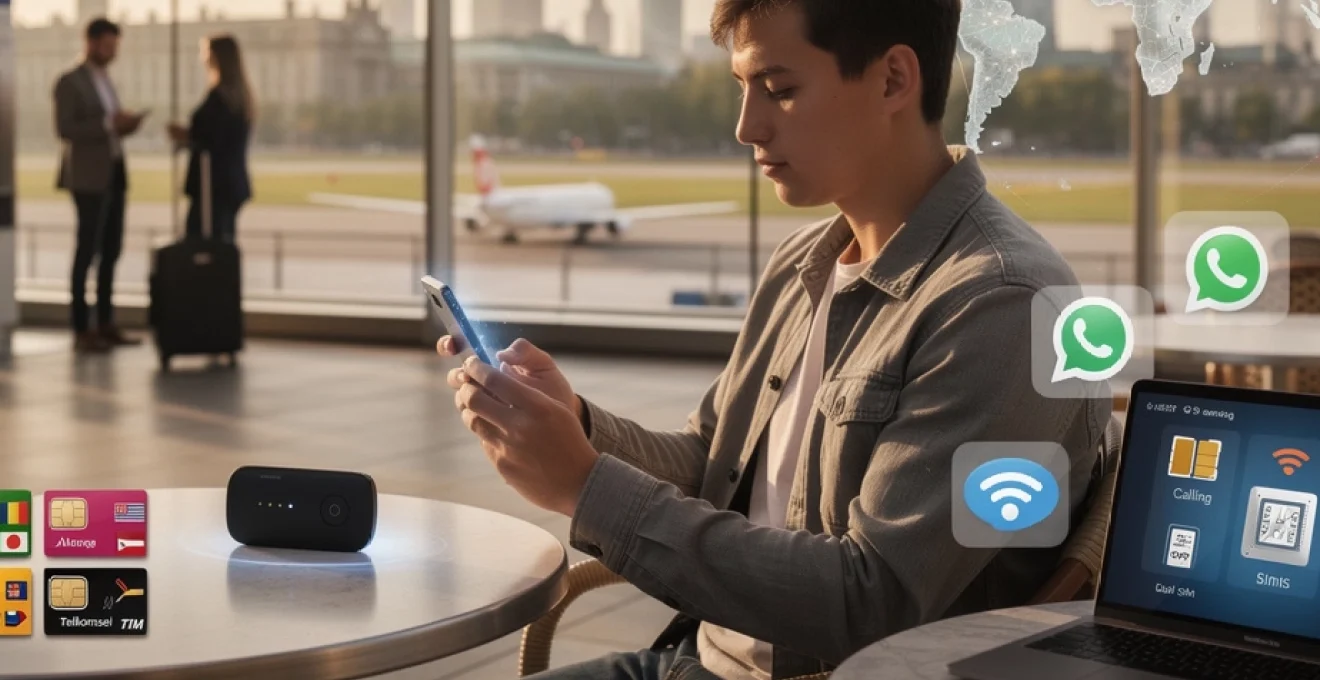
The good news is that staying connected internationally no longer requires accepting these punitive charges. Between technological innovations like eSIM profiles, strategic use of local SIM cards, portable Wi-Fi devices, and proper smartphone configuration, you can maintain full connectivity throughout your travels without the dreaded bill shock upon returning home. Understanding your options and implementing the right strategy before departure ensures you’ll navigate, communicate, and share your experiences seamlessly whilst keeping costs firmly under control.
Understanding international mobile network roaming charges and data tariffs
When you travel outside your home country, your mobile device seeks out compatible networks to maintain connectivity. This process, known as roaming, involves your home provider establishing agreements with foreign carriers to provide service. These inter-carrier arrangements come with substantial costs that providers pass directly to consumers, often with significant markups. The mechanics behind roaming charges explain why they’re so expensive: your data request travels from a foreign tower to that country’s network operator, then back to your home provider for billing, before finally connecting you to the internet—a complex chain that each party charges for.
Current roaming rates vary dramatically depending on your provider and destination. Among the major UK networks, EE charges £2.47 daily for European roaming with a 50GB fair usage limit, whilst Three’s charges range from £2 per day in Europe to £7 daily across 92 countries worldwide. Vodafone implements tiered pricing between £2.42 and £7.39 depending on your package and location. Only O2 maintains free EU roaming, though with a restrictive 25GB fair usage policy. These daily charges might seem modest, but they accumulate rapidly—a fortnight’s holiday quickly adds £35-100 to your mobile costs.
Beyond Europe, roaming becomes exponentially more expensive. Travellers to destinations like the United States, Australia, or Southeast Asian countries often face charges of £5-15 per megabyte when using their standard UK contracts. Background app updates, email synchronisation, and automatic cloud backups can silently drain data whilst you sleep, creating bills that shock even seasoned travellers. A recent study found that 37% of British travellers have experienced bill shock after international trips, with average unexpected charges exceeding £180.
Fair usage policies add another layer of complexity to roaming arrangements. Even providers advertising “free” roaming typically cap data usage abroad—generally between 12GB and 50GB monthly—after which they charge £3-4 per additional gigabyte. These limits might suffice for checking emails and occasional navigation, but fall woefully short for video calls, streaming services, or uploading holiday photos to social media. Understanding these restrictions before departure prevents mid-holiday connectivity crises.
Esim technology: airalo, holafly, and nomad digital SIM solutions
Electronic SIM technology represents perhaps the most significant advancement in travel connectivity over recent years. Unlike traditional physical SIM cards requiring manual insertion and removal, eSIMs exist as embedded chips within modern smartphones that can be programmed remotely. This innovation eliminates the inconvenience of purchasing, swapping, and storing multiple physical SIM cards whilst travelling. More importantly, eSIMs provide access to competitive local data rates without dealing with foreign mobile shops or language barriers.
Several specialist providers have emerged offering international eSIM packages tailored specifically for travellers. Airalo pioneered this market, offering prepaid data plans covering over 190 countries and regions. Their regional packages prove particularly cost-effective for multi-country itineraries—a Europe package covering 39 countries starts at approximately £4.50 for 1GB valid for seven days, whilst their Asia-Pacific coverage spans 17 countries. Holafly differentiates itself by offering
Holafly differentiates itself by offering unlimited data plans in many popular destinations, removing the anxiety of counting gigabytes while you travel. Its Europe packages, for instance, often include unlimited data for 5 to 90 days at a fixed price, which can be ideal if you plan to stream, upload photos, or work remotely without worrying about overage fees. Nomad, another leading digital SIM provider, focuses on flexible data bundles with competitive pricing and strong coverage across Asia-Pacific, the European Economic Area, and North America. Together, these eSIM solutions give you powerful tools to avoid roaming fees while still enjoying reliable high‑speed data almost anywhere you go.
Activating eSIM profiles on iphone and android devices
Activating an eSIM on modern smartphones is typically a straightforward, five‑minute process, but it is worth doing before you leave home to avoid airport stress. On iPhones (XS and newer), you usually receive a QR code or an activation code from Airalo, Holafly, or Nomad after purchase. You open Settings > Mobile Data > Add eSIM, scan the QR code, and follow the on‑screen prompts to label the plan (for example, “Japan data” or “Europe eSIM”). Once installed, you can choose which SIM handles mobile data, calls, and SMS, ensuring your main number remains active for verification texts and important calls.
On Android, the exact steps vary slightly by manufacturer but follow the same logic. Most recent Google Pixel, Samsung Galaxy, and other flagship devices offer an Add eSIM or Download SIM option under Settings > Network & Internet > SIMs. After selecting this, you scan the provider’s QR code or paste the activation code provided in your purchase confirmation email or app. Within minutes, your device connects to a local partner network in your destination country, ready to deliver local‑rate data instead of punitive roaming tariffs. Always test connectivity by disabling Wi‑Fi and opening a browser page to confirm everything works before you board your flight.
Comparing airalo regional packages versus holafly unlimited data plans
When choosing between Airalo and Holafly to avoid international roaming charges, it helps to think about your travel pattern and data usage habits. Airalo’s strength lies in its regional and country‑specific bundles with clear data caps and validity periods. For example, a 5GB, 15‑day Europe eSIM may cost substantially less than daily roaming add‑ons from your UK network, and similar bundles exist for Asia, North America, and the Middle East. These capped plans are excellent for travellers who mainly use messaging, maps, and occasional browsing, and who want precise control over their data budget.
Holafly takes a different approach by prioritising unlimited data plans in many destinations, which can feel more like an “all‑you‑can‑eat” buffet than a measured allowance. For digital nomads, frequent video callers, or anyone who streams music and video on the move, Holafly’s fixed‑price unlimited data can be more cost‑effective and simpler to manage than worrying about each additional gigabyte. The trade‑off is that some unlimited plans may implement fair‑use policies or speed reductions after very high usage, similar to home broadband “soft” caps. Before purchasing, compare the duration, coverage, hotspot/tethering rules, and whether calls or SMS are included (most data eSIMs are data‑only, requiring you to use apps like WhatsApp or Skype for voice).
Nomad eSIM coverage in Asia-Pacific and european economic area
Nomad positions itself as a flexible, traveller‑friendly eSIM provider with strong coverage across the Asia-Pacific region and the European Economic Area. If you’re planning an itinerary that includes countries such as Japan, South Korea, Singapore, Australia, or New Zealand, Nomad’s regional Asia-Pacific plans can be more efficient than buying separate country‑specific bundles from different providers. These packages typically include 5GB, 10GB, or higher data allowances valid for 7–30 days, allowing you to move between countries without manually switching networks or eSIM profiles. For travellers exploring multiple EU and EEA destinations, Nomad offers similar regional plans that function across borders, bypassing the complexity of post‑Brexit roaming rules and fair‑use caps from UK carriers.
One advantage of Nomad is its transparent pricing and frequent promotional discounts accessible through its mobile app. You can often see real‑time details on network partners, expected speeds (4G or 5G where available), and supported hotspot use before you purchase. This degree of clarity helps you avoid surprise restrictions and ensures your “no roaming fees” strategy aligns with your actual connectivity needs. As with other digital SIM solutions, you should verify your phone’s eSIM compatibility and ensure its network bands match your destinations, particularly in Asia-Pacific where frequency bands may differ from those in Europe.
Dual SIM configuration for maintaining home number accessibility
One of the biggest concerns when switching to an eSIM abroad is losing access to your main mobile number for calls, SMS, and two‑factor authentication codes. Fortunately, dual SIM capabilities in modern smartphones allow you to keep your home SIM active for voice and text while routing all data through a cheap local or international eSIM. On iPhone, you can set your home SIM as the default line for calls and messages, while designating the eSIM as your Mobile Data line under Settings > Mobile Data. This means you still receive banking codes and important calls without triggering data roaming fees, because all internet traffic runs over the eSIM.
Android devices offer similar flexibility, typically via Settings > Network & Internet > SIMs, where you select one SIM for data and another for calls and SMS. To avoid accidental roaming charges, you should switch off data usage on your physical home SIM entirely, or disable its roaming in the SIM settings. Think of the home SIM as a “voice‑only” landline that travels with you, while the eSIM acts as your portable broadband subscription. This dual SIM configuration is especially powerful for business travellers who must remain reachable on their usual number but cannot risk unpredictable roaming tariffs.
Local physical SIM card acquisition strategies at destination countries
Despite the rise of eSIM technology, traditional physical SIM cards remain an effective and sometimes cheaper alternative for avoiding roaming fees, particularly in regions where data is inexpensive for local residents. Buying a prepaid SIM in your destination country lets you benefit from the same low tariffs locals enjoy, often including generous or unlimited data plus domestic call allowances. The challenge lies in knowing where to buy, how registration works, and which network offers the best coverage. With a bit of preparation, local SIMs can be a cost‑effective part of your toolkit for staying connected abroad without international roaming charges.
Purchasing prepaid SIM cards at airport kiosks versus city retailers
Most international airports are lined with kiosks selling tourist SIM cards the moment you clear customs, promising “instant connectivity” after a long flight. These airport packages prioritise convenience over price: you pay a premium for the ability to walk out of arrivals fully connected, often with English‑language support and clear instructions. For short trips of a week or less, this surcharge may be worthwhile, as the difference is usually a few pounds compared to roaming fees that can run into the hundreds. Airport tourist SIMs also tend to include generous data and simple activation, making them attractive for less tech‑confident travellers.
However, if you’re travelling on a tighter budget or staying for several weeks, it can be significantly cheaper to buy a standard prepaid SIM from city‑centre mobile stores or official carrier shops. In many European and Asian cities, you will find offers targeted at residents that include larger data allowances and lower per‑gigabyte costs than airport tourist bundles. The trade‑off is that you may need to navigate basic conversations in the local language and possibly show your passport for registration. As a rule of thumb, we recommend comparing airport prices quickly online while waiting for your baggage; if they seem markedly higher, consider using airport Wi‑Fi or an eSIM for the first day, then purchasing a local SIM in town once you have settled in.
Vodafone, orange, and TIM network coverage across europe
When choosing a local SIM in Europe, three major brands frequently appear: Vodafone, Orange, and TIM (Telecom Italia). Vodafone operates in multiple European countries and often provides strong 4G and growing 5G coverage in urban areas, making it a reliable choice for city‑heavy itineraries. Orange, active in France, Spain (via Orange España), and other markets, is known for robust rural coverage and competitive tourist packages that include EU‑wide roaming at domestic rates. TIM, a major Italian operator, offers comprehensive coverage across Italy, including many smaller towns and coastal regions that budget travellers favour.
How do you decide between them to minimise international data costs? Coverage maps available on each provider’s website are a good starting point, especially if you plan to visit remote regions or mountainous areas. Independent reports from network analytics firms, such as OpenSignal or Ookla, regularly rank these operators on speed and reliability; checking recent data can reveal which network currently leads in your destination country. Remember that a cheap plan is only valuable if you can actually get a signal—so for road trips, hiking holidays, or rural stays, prioritise coverage over minor price differences. In practice, most travellers find that any of the big brands in Western Europe offer far better value than continuing to use a UK SIM on standard roaming rates.
AIS thailand and telkomsel indonesia tourist SIM registration requirements
In many countries, buying a local SIM involves more than simply handing over cash; governments require identity verification to combat fraud and enhance security. Thailand and Indonesia are two popular destinations where registration rules affect how you avoid roaming fees. In Thailand, major operators like AIS, TrueMove H, and dtac require you to present your passport when purchasing a SIM. Staff at official shops or authorised retailers will usually scan your passport and register the SIM in your name, a process that takes only a few minutes. Tourist SIMs from AIS typically include generous data bundles, domestic calls, and often some credit for international calls, making them an ideal solution for travellers exploring Bangkok, Chiang Mai, or the islands.
Indonesia follows similar protocols, with leading operator Telkomsel offering tourist‑friendly packages under its “simPATI” and other brands. You must register your SIM using your passport number, and in some cases, local staff will assist with SMS‑based verification or online registration forms. Failure to complete registration can result in your SIM being deactivated after a grace period, leaving you unexpectedly offline. To avoid issues, always buy from official carrier stores or clearly marked authorised outlets—particularly in airports or shopping centres—rather than unverified street vendors. Doing so ensures your SIM is properly registered, your data package is activated correctly, and you can rely on strong nationwide coverage instead of unpredictable roaming connections.
MVNO providers offering cross-border data packages
Beyond the major network operators, mobile virtual network operators (MVNOs) are an underrated option for reducing international roaming charges. MVNOs lease infrastructure from larger carriers but create their own tariffs, often focusing on value‑conscious customers. In Europe, brands such as Lycamobile, giffgaff, and various supermarket‑backed SIMs frequently include EU‑wide roaming or affordable international data add‑ons that work across multiple countries. For long‑term travellers who move regularly between neighbouring countries—say, a rail journey through Germany, Austria, and Italy—these cross‑border packages can simplify connectivity while keeping costs far below standard roaming rates.
However, MVNOs come with some caveats. While they can offer attractive pricing, they may not always receive the same priority on host networks as the main brand’s own customers, which can impact speeds in crowded areas or peak times. Fair‑use policies also tend to be stricter, limiting how long you can stay abroad before roaming allowances are reduced or withdrawn. Before relying on an MVNO as your primary solution to avoid roaming fees, check their terms on international usage, hotspot tethering, and any “permanent roaming” restrictions. Used strategically—perhaps combined with eSIMs or local SIMs in higher‑cost regions—MVNOs can be a powerful component of your overall connectivity plan.
Wi-fi calling and VoIP protocols through WhatsApp and skype
One of the simplest ways to stay connected abroad without roaming fees is to shift as much communication as possible onto Wi‑Fi and internet‑based calling apps. Wi‑Fi calling and Voice over IP (VoIP) services such as WhatsApp, Skype, Google Voice, and Microsoft Teams let you make voice and video calls using data instead of traditional voice minutes. When connected to a secure Wi‑Fi network or a local data plan, these calls can be effectively free or at least dramatically cheaper than traditional roaming calls. This approach turns your smartphone into a small internet terminal: as long as you can reach a stable connection, you can talk, text, and even host meetings from anywhere.
Enabling Wi-Fi calling on EE, three, and O2 UK networks
Wi‑Fi calling is a particularly powerful tool for UK travellers because it allows you to use your usual phone number over any compatible Wi‑Fi network, even with mobile data and roaming turned off. On most modern phones, enabling Wi‑Fi calling is as simple as going into Settings > Phone > Wi‑Fi Calling on iPhone, or Settings > Network & Internet > Wi‑Fi Calling on Android, and toggling the feature on. Major UK networks—EE, Three, and O2 among them—support Wi‑Fi calling on a broad range of handsets, though you may need to enable it in your online account or via the carrier’s app before your first trip.
Once enabled, Wi‑Fi calling can help you avoid roaming fees by routing calls and texts over a local internet connection instead of foreign cellular towers. For example, if you’re staying in a hotel with strong Wi‑Fi, you can put your phone into airplane mode, enable Wi‑Fi, and continue to make and receive calls exactly as you would at home. This is particularly useful for receiving verification codes, returning missed calls, or staying in touch with less tech‑savvy contacts who still rely on standard phone numbers. Do check your provider’s policy, though: some networks may restrict Wi‑Fi calling from abroad or treat certain scenarios differently in their billing systems.
Voip quality optimisation through google voice and microsoft teams
While apps like WhatsApp and Skype are household names, more advanced VoIP services such as Google Voice and Microsoft Teams can be invaluable for remote workers and business travellers trying to keep call quality high on limited bandwidth. These platforms use sophisticated codecs and adaptive bitrate technologies to adjust call quality based on your connection, akin to how streaming services automatically lower video resolution on slower networks. To get the best results, you should prioritise Wi‑Fi or a strong 4G/5G data connection and close other bandwidth‑heavy apps such as streaming or cloud backups during important calls.
Most VoIP apps offer simple settings to improve reliability, such as disabling HD video when your connection is weak, forcing audio‑only calls, or choosing lower‑quality video resolutions. Think of this like choosing a smaller file size so it downloads smoothly over a congested network. For frequent conference calls or online meetings, wearing a wired or high‑quality Bluetooth headset can also reduce echo and background noise, improving the overall experience for everyone on the line. By treating VoIP as a core part of your travel communication strategy—not just an occasional backup—you can drastically reduce traditional roaming minutes and maintain professional‑grade communication from anywhere.
Public Wi-Fi security using NordVPN and ExpressVPN encryption
Public Wi‑Fi networks—airports, cafés, hotels, and co‑working spaces—are invaluable for avoiding roaming charges, but they also introduce security risks. Unencrypted or poorly configured networks can expose your data to eavesdropping, making activities like online banking, email, or work logins vulnerable. This is where a reputable virtual private network (VPN) service, such as NordVPN or ExpressVPN, becomes essential. A VPN encrypts your internet traffic, creating a secure “tunnel” between your device and the VPN server, so anyone attempting to intercept your data sees only scrambled information rather than readable content.
Using a VPN abroad is a bit like putting your data into a locked suitcase before sending it down a public conveyor belt: the belt is still visible to everyone, but the contents remain private. To protect yourself, install your chosen VPN app before you travel, test it at home, and set it to connect automatically when you join unfamiliar networks. While VPNs can slightly reduce your maximum speed, the trade‑off in security is worth it, especially when using open Wi‑Fi to replace expensive roaming data. Combined with basic best practices—avoiding unknown networks, using HTTPS‑secured sites, and logging out of sensitive services after use—a VPN helps ensure that saving money on roaming fees does not come at the cost of your personal or financial security.
Portable Mi-Fi devices and international pocket Wi-Fi rental services
Portable Mi‑Fi devices, also known as pocket Wi‑Fi or mobile hotspots, offer another robust alternative to traditional roaming, particularly for families, groups, or travellers carrying multiple devices. These battery‑powered routers connect to a local mobile network and then broadcast a private Wi‑Fi signal that you can share with smartphones, tablets, and laptops. Instead of each traveller incurring their own roaming charges, everyone connects to the same Mi‑Fi device, spreading the cost of a single data plan. Many international providers now rent or sell pocket Wi‑Fi units preconfigured for specific regions or global coverage, making them an attractive option for multi‑country trips.
Rental services often allow you to book online before departure, then collect the device at the airport, your hotel, or via postal delivery to your home. Pricing is usually based on a daily or weekly flat rate, sometimes with truly unlimited data and sometimes with a fair‑use threshold after which speeds may be reduced. For example, a European pocket Wi‑Fi rental might cost £5–£10 per day for unlimited 4G/5G data, which is easily more economical than paying daily roaming fees for several phones. The convenience of having a single, secure Wi‑Fi network following you from city to city can make international travel feel almost like being at home.
There are, however, a few practical considerations. Mi‑Fi devices require regular charging, with typical battery life ranging from 8 to 15 hours, so you may need to carry a power bank for long sightseeing days. You should also familiarise yourself with any usage limits, roaming zones, and return conditions for rental units to avoid unexpected charges. For some travellers, buying an unlocked Mi‑Fi device and inserting local SIMs at each destination offers the best long‑term value; for others, a short‑term rental with global coverage provides the simplicity they prefer. Either way, portable hotspots are a powerful weapon in your arsenal against unpredictable roaming fees.
Configuring smartphone settings to prevent accidental data roaming charges
Even with the best eSIMs, local SIMs, and Wi‑Fi options, a single misconfigured setting on your smartphone can lead to accidental roaming charges. Your final line of defence is therefore to configure your device so that it cannot silently consume data over your home SIM while abroad. Start by turning off Data Roaming for your primary SIM in the mobile network settings, and, if possible, disable mobile data entirely on that line, using only your eSIM or local SIM for data. Many travellers also enable a spending cap or roaming bar through their carrier’s online account to block chargeable usage beyond a small emergency limit.
Background data and automatic updates are another major culprit for unexpected international charges. Before you leave, set your app store (Google Play or Apple App Store) to update apps only over Wi‑Fi, disable automatic cloud photo backups on mobile data, and restrict background data for heavy apps like social media, cloud storage, and streaming services. Both iOS and Android include “Low Data Mode” or “Data Saver” features that reduce background usage globally, which can be especially helpful if you are working with a small data allowance on an eSIM or local SIM. Think of these modes as putting your phone on a data diet, ensuring that your precious megabytes are reserved for the tasks that matter most while travelling.