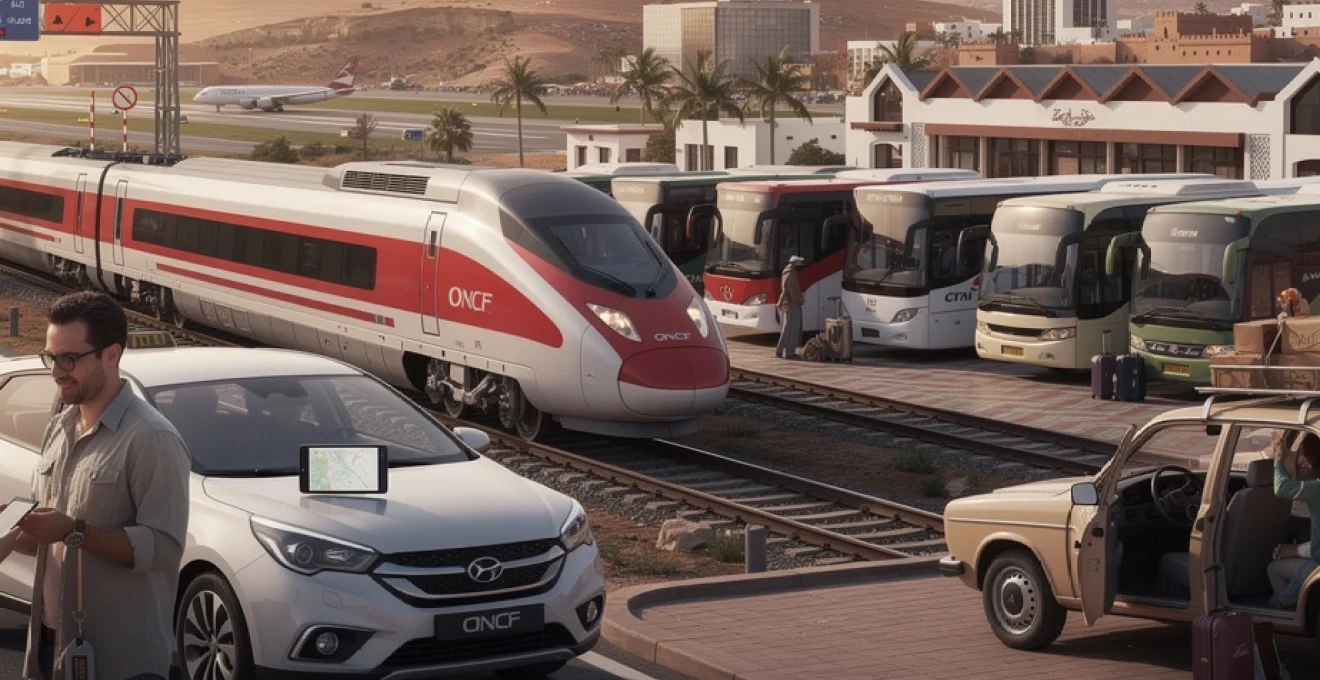
Morocco’s intercity transport infrastructure has undergone remarkable transformation over the past decade, evolving from a primarily road-based system into a sophisticated multimodal network that rivals many European countries. Whether you’re planning a business trip between Casablanca and Tangier or a leisurely journey from Marrakech to the coastal haven of Essaouira, understanding the available transport options can dramatically improve your travel experience. The country’s strategic investment in high-speed rail, modern coach services, and improved road networks means travellers now enjoy unprecedented choice when moving between Morocco’s imperial cities and regional centres.
Navigating Morocco’s transport landscape requires more than simply showing up at a station. Each mode of transport offers distinct advantages, from the comfort and speed of the Al Boraq trains to the flexibility of grand taxis and the comprehensive coverage of bus networks. This guide explores the practical realities of intercity travel across Morocco, examining booking systems, pricing structures, route networks, and the operational nuances that can make the difference between a seamless journey and a frustrating experience.
Intercity rail network: ONCF train routes and booking systems
The Office National des Chemins de Fer (ONCF) operates Morocco’s national railway network, which has become the backbone of intercity passenger transport in the northern and central regions. The rail network extends approximately 2,110 kilometres, connecting major population centres with varying levels of service quality and frequency. Unlike many African rail systems that prioritise freight, Morocco’s network focuses heavily on passenger services, with over 48 million passengers transported annually according to recent ONCF statistics.
The ONCF operates three distinct service categories that cater to different passenger needs and budgets. The flagship Al Boraq high-speed service represents Africa’s fastest train network, capable of reaching speeds up to 320 km/h on dedicated tracks. The Al Atlas branded conventional express services connect cities not served by high-speed infrastructure, offering reserved seating and modern amenities. Finally, the Trains Navettes Rapides (TNR) provide frequent shuttle services between closely positioned cities, particularly on the heavily trafficked Rabat-Casablanca corridor where trains depart every thirty minutes during peak periods.
Rail infrastructure in Morocco follows a distinctive Y-shaped pattern, with the stem running south from Casablanca to Marrakech, and the two arms extending northeast to Oujda via Fès and northwest to Tangier. This configuration means that certain popular tourist routes, particularly those involving southern destinations like Agadir, Essaouira, or Ouarzazate, remain beyond the reach of the rail network. The absence of rail connections to these regions has created opportunities for integrated bus-train services, which we’ll examine in subsequent sections.
Casa-voyageurs to marrakech: High-Speed al boraq service
The extension of Al Boraq services southward from Casablanca to Marrakech represents one of Morocco’s most ambitious infrastructure projects, though as of 2024, this route still operates on conventional tracks rather than dedicated high-speed infrastructure. The 237-kilometre journey typically takes between 2 hours 40 minutes and 3 hours depending on the specific service, with trains departing Casa-Voyageurs station approximately every two hours throughout the day. This frequency increases during peak travel periods, particularly during religious holidays and summer months when both domestic and international tourism peaks.
Passengers boarding at Casa-Voyageurs benefit from a modern station facility that includes waiting lounges, retail outlets, and food service options. The station serves as a major interchange point, with connections available to Al Boraq services heading north towards Rabat and Tangier, as well as conventional services towards eastern destinations. First-class passengers on this route enjoy access to the Al Atlas lounge, featuring complimentary refreshments, charging stations, and quieter waiting areas away from the general concourse.
Pricing on the Casa-Voyageurs to Marrakech route demonstrates Morocco’s variable fare structure, with second-class tickets ranging from 112 to 186 Moroccan dirhams (approximately £9-£15) depending on booking timing and flexibility options. First-class fares typically command a premium of 40-50% over second-class prices, reflecting the additional space, comfort, and reduced passenger density. Advance booking through the ONCF website or mobile application can secure lower
fares, especially on popular weekends and around national holidays. As with other Moroccan intercity trains, all tickets on this corridor include a specific seat reservation, which reduces overcrowding and provides greater predictability compared to many bus or shared taxi options. For travellers planning to connect onward from Marrakech to destinations such as Agadir, Essaouira, or Ouarzazate, the fixed timetable of the Casa–Marrakech trains makes it easier to coordinate with onward bus or tour departures.
Tangier-fès-oujda corridor: conventional rail timetables
While the Al Boraq line currently terminates in Tangier, the eastern arm of Morocco’s rail network towards Fès and Oujda is still operated by conventional Al Atlas services. From Tangier Ville, travellers can either take a direct Al Atlas train to Fès or change at Kenitra from an Al Boraq service, shaving some time off the overall journey. Direct trains between Tangier and Fès typically take around 4 hours 10 minutes, whereas a smart connection via Kenitra can reduce this to approximately 3 hours 25 minutes. Services continue beyond Fès through Taza to Oujda near the Algerian border, with the full Tangier–Oujda journey taking around 10–11 hours.
Frequency on this corridor varies by segment. Between Fès and Oujda there are usually two to three trains per day, reflecting lower demand compared with the busy coastal axis. Between Tangier, Kenitra, Rabat, and Fès, departures are much more frequent, often hourly when combining Al Boraq and Al Atlas services. This flexibility allows you to mix high-speed and conventional trains within a single itinerary, particularly useful if you’re trying to optimise both time and cost when travelling between cities in Morocco.
Timetables on the Tangier–Fès–Oujda corridor are generally reliable, but delays of 10–30 minutes are not uncommon, especially in winter when adverse weather can affect line speeds. For complex itineraries requiring same-day connections to flights or long-distance buses, it’s wise to build in at least one to two hours of buffer time. Remember that late-night services on this corridor can be more lightly loaded but may feel less comfortable for solo travellers, so you may prefer daytime departures if you value a busier, more reassuring environment.
ONCF e-ticketing platforms and supratours integration
ONCF has invested heavily in digital ticketing systems, making it easier than ever to plan and book intercity train travel in Morocco. The primary platform is the official website oncf-voyages.ma, available in French and increasingly stable in English, complemented by an ONCF mobile application for iOS and Android. Booking typically opens three months in advance, and most international payment cards are now accepted, although occasional issues with overseas cards still occur. When that happens, many travellers use third-party agencies or simply purchase tickets at the station upon arrival.
The e-ticketing system supports seat reservations for both Al Boraq and Al Atlas services, allowing you to choose between flexible fares and cheaper, more restrictive advance-purchase options. Tickets are issued in electronic format with a QR code, which you can either print or show on your smartphone; conductors routinely scan these onboard. One important limitation is that sleeper berths and couchettes on the Tangier–Marrakech night train generally cannot be booked directly through the ONCF app and must be arranged via local agencies or at staffed ticket counters, often up to two months in advance.
Integration with Supratours, ONCF’s coach subsidiary, is another key advantage of the Moroccan system when travelling beyond rail-connected cities. Combined rail et route tickets allow you to purchase a single itinerary that covers both train and bus segments, most commonly used for routes such as Marrakech–Agadir or Marrakech–Essaouira. These integrated tickets are easiest to arrange in person at railway stations, though availability via the online platform is improving. For travellers planning complex routes that mix train and Supratours bus legs, it’s wise to confirm connection times in advance, as missed bus links may not always be rebooked without additional cost.
First class vs second class carriages: amenities and pricing
Choosing between first and second class on Moroccan trains is less about basic safety or cleanliness—both are generally acceptable—and more about comfort, crowding, and working space. First-class carriages on Al Boraq and Al Atlas services offer wider seats, more generous legroom, and a lower passenger-to-seat ratio, often with a 2+1 seating configuration instead of 2+2. This can be a significant advantage during busy periods when second class may fill up quickly, especially on routes like Casablanca–Rabat and Casablanca–Marrakech. First-class passengers on Al Boraq services also gain access to dedicated station lounges at major hubs, offering quieter seating and charging points.
Second class remains the preferred option for many travellers because it represents excellent value for money when travelling between cities in Morocco. Carriages are air-conditioned, and seating is reserved on almost all Al Atlas and Al Boraq trains, which reduces the risk of standing-room-only situations seen in some other countries. The main trade-off is crowding: at peak times, luggage racks and overhead space can become congested, and families or groups may find it harder to sit together unless they book well in advance. For shorter hops of one to two hours, most travellers find second class entirely adequate.
In terms of pricing, first-class fares are typically 40–70% higher than second-class tickets, depending on the route and how far in advance you book. ONCF’s dynamic pricing model means that early bookings can yield substantial savings in both classes, while last-minute purchases tend to default to the highest flexible fare tiers. For travellers who need to work on the move, value quieter carriages, or are carrying bulky luggage, the first-class premium is often worthwhile. Conversely, budget-conscious backpackers, students, and larger families may prefer to allocate savings from second-class tickets towards accommodation or guided excursions.
CTM and supratours: premium coach operators for long-distance travel
For destinations beyond the rail network—particularly in southern and coastal regions—long-distance coaches fill the gap and are often the best way to travel between cities in Morocco. Two operators stand out for reliability and comfort: CTM (Compagnie de Transports au Maroc) and Supratours. Both offer air-conditioned coaches, allocated seating on most routes, and scheduled services that connect major hubs with secondary cities and resort towns. Compared with smaller regional bus companies, these premium operators provide better safety standards, more consistent timetables, and clearer online booking options.
CTM’s network is especially extensive, covering routes such as Casablanca–Agadir, Marrakech–Essaouira, Casablanca–Chefchaouen, and long-haul journeys to cities like Laayoune and Dakhla in the far south. Supratours, as a subsidiary of ONCF, focuses more on rail-linked services, operating from dedicated bus terminals adjacent to major railway stations. This makes Supratours an ideal choice when you want a seamless train-to-bus transfer, for example from Marrakech station to destinations along the Atlantic coast. In many cases, the choice between CTM and Supratours comes down to departure times, station locations, and whether you value rail integration over standalone coach options.
CTM station locations in casablanca, rabat, and agadir
CTM operates from dedicated terminals rather than the generic gare routière used by local bus operators, and understanding these locations can save you significant time when planning intercity travel. In Casablanca, the main CTM station is located in the Ouled Ziane area, a substantial bus hub a short taxi ride from Casa-Voyageurs railway station. Traffic congestion around Ouled Ziane can be intense at peak times, so it’s sensible to budget extra time for transfers, especially if you’re connecting from a train or heading to the airport.
In Rabat, CTM services typically operate from a terminal in the city centre or on the main approach roads, depending on the specific route. This central location makes it easy to reach by petit taxi from Rabat Ville or Rabat Agdal railway stations, usually in 10–15 minutes. In Agadir, CTM’s station lies slightly inland from the beachfront hotel zone, often in or near the main urban bus hub. While this may mean an extra taxi ride if you are staying along the seafront, it also allows for more straightforward onward connections to nearby towns and villages using local buses or shared taxis.
Because CTM station names in online booking systems sometimes differ from how locals refer to them, it’s a good idea to cross-check the exact address on a map app before travelling. Asking your hotel or riad staff to write the station name in Arabic can also help when directing taxi drivers, especially in larger cities where multiple bus terminals exist. For long-haul routes, CTM coaches often stop at intermediate CTM offices rather than generic roadside stops, which improves passenger safety and makes luggage handling more organised.
Online reservation systems: CTM mobile app and web portal
CTM has modernised its sales channels with an online booking portal and, increasingly, a mobile application, allowing you to reserve seats in advance for most major routes. The web portal is available in French and sometimes English, though language toggles can be inconsistent. Payments can usually be made with international bank cards, but travellers occasionally report failed transactions, so you may wish to have a backup card ready. Ticket prices online generally match those at physical CTM offices, though small service fees may apply for digital purchases.
When booking via the CTM website or app, you can usually select specific seats, an advantage if you prefer front-row seats for reduced motion sickness or aisle seats for easier movement on long journeys. Tickets are issued as e-vouchers or PDFs, which can be printed or presented on a smartphone; staff at CTM terminals will scan or visually check these before boarding. In some smaller towns, CTM partners with local agencies that also act as ticket offices and parcel depots, so if a route seems sold out online, it can be worth checking availability in person, especially outside peak travel seasons.
One subtle but important feature of the CTM system is its integration of multi-leg journeys under a single booking. For example, if you are travelling from Casablanca to Chefchaouen with a change in Tetouan, CTM may sell this as a single itinerary, ensuring guaranteed connections in most cases. However, unlike rail tickets, bus connections are more vulnerable to delays caused by traffic or weather, so we recommend avoiding tight same-day flight connections after long CTM journeys, particularly on mountainous or coastal routes.
Supratours rail-linked services to essaouira and laayoune
Supratours operates as the road arm of ONCF, specialising in routes that extend rail connectivity to cities without railway lines. A classic example is the popular Marrakech–Essaouira route, where Supratours coaches depart from a terminal directly adjacent to Marrakech railway station. This proximity makes it easy to step off a train from Casablanca or Tangier and board a bus to the coast with minimal hassle. Journey times to Essaouira are typically around 2.5–3 hours, with modern coaches, air conditioning, and reserved seating.
Further south, Supratours plays a crucial role in linking rail-connected Marrakech to major Saharan gateways such as Laayoune. Although the distances involved are considerable—Marrakech to Laayoune by coach can take upwards of 10–12 hours—Supratours’ integration with ONCF ticketing and their use of designated bus terminals enhances both safety and predictability. For many travellers, especially those wary of night-time driving standards among smaller operators, Supratours represents a safer alternative when travelling long distances into the south.
Because Supratours routes are often aligned with train arrival and departure times, schedules can vary slightly when ONCF revises its timetables. It’s advisable to verify current departure times a few days before travel, particularly if you booked tickets well in advance. Combined tickets purchased at railway stations or ONCF offices typically guarantee your seat on both segments, but you should still arrive at the bus terminal 20–30 minutes before departure to check in luggage and confirm boarding gates.
Luggage policies and onboard facilities comparison
Both CTM and Supratours have relatively clear luggage policies, which is a welcome change compared with many informal bus companies. As a rule of thumb, passengers are allowed one large suitcase or backpack to be placed in the hold, along with a small cabin bag for the overhead rack or under-seat storage. For CTM, checked luggage is often tagged and sometimes subject to a small fee—usually the equivalent of a few dirhams—paid at a separate baggage counter. Supratours, particularly on shorter routes, may include basic luggage handling within the ticket price, though charges can apply on long-haul services.
Onboard facilities are broadly similar: air conditioning, reclining seats, and individual reading lights are standard, while onboard toilets may or may not be available depending on the specific coach model. Even when toilets are present, cleanliness and functionality can vary, so many travellers prefer to use rest-stop facilities during scheduled comfort breaks. Neither CTM nor Supratours offers full meal services, but drivers typically stop at roadside cafés or service areas every few hours, allowing passengers to purchase snacks, drinks, or light meals.
In terms of comfort, you can think of CTM and Supratours as the “intercity trains” of Morocco’s road network—more structured and predictable than regional operators, but without the luxury frills of premium private tours. Wi-Fi is occasionally advertised but not consistently reliable, so if you need connectivity, downloading offline entertainment and maps in advance is wise. For fragile or high-value items such as camera equipment, it’s better to keep them in your cabin bag rather than risk damage in the hold, especially on routes with multiple loading and unloading points.
Regional bus companies: navigating local intercity transport networks
Beyond the premium networks of CTM and Supratours, a dense web of regional bus companies connects smaller towns and rural areas, particularly in the Atlas Mountains, Rif region, and remote southern provinces. These operators often depart from the main gare routière on the edge of town rather than dedicated company terminals. Services can be irregular, with departure times that depend more on passenger demand than strict timetables. This system can feel chaotic at first, but it offers valuable flexibility and coverage in areas where trains and premium coaches simply do not go.
When using regional buses to travel between cities in Morocco, it helps to think of them as a hybrid between scheduled transport and informal shared taxis. Tickets are usually purchased at small kiosks or directly from company desks within the station, sometimes moments before departure. Vehicles range from modern coaches to older, less comfortable buses with minimal legroom and no air conditioning. Safety standards can vary, and drivers may push schedules on winding roads, especially in mountainous areas, so it is often worth paying a bit more for a better-known operator when you have a choice.
Because online information about regional bus networks is limited, you will often rely on local knowledge. Asking at your hotel, riad, or hostel is usually the most reliable way to identify current departure times and reputable companies for specific routes. It is also wise to arrive at the bus station at least 30–45 minutes early, particularly in high season, as some routes oversell tickets and operate on a first-come, first-seated basis. For connections involving both regional buses and onward trains or flights, building in generous buffer time is essential due to the unpredictability of departure and arrival times.
Shared grand taxi services: casablanca-rabat and fès-meknès routes
Shared grand taxis form an essential layer of Morocco’s intercity transport ecosystem, especially for medium-distance routes where buses are infrequent or where travellers prioritise speed over comfort. These vehicles are typically large sedans or minivans—historically Mercedes or Peugeot models—configured to carry up to six passengers plus the driver. Grand taxis operate along fixed corridors, departing only when all seats are filled, which can mean a brief wait at busy times or a longer one during off-peak hours. For corridors like Casablanca–Rabat or Fès–Meknès, however, turnover is often rapid and vehicles depart frequently.
The Casablanca–Rabat route is one of the most popular grand taxi corridors, paralleling both the motorway and the busy rail line. Taxis usually depart from specific ranks—often located near main transport hubs or city gates—rather than from ad hoc roadside locations. Fares are fixed per seat and are generally posted or widely known, making it rare for tourists to be significantly overcharged if they confirm the price in advance. Because grand taxis often drive more aggressively than buses or trains, many travellers view them as a trade-off between speed and perceived safety, especially on busy highways.
Between Fès and Meknès, shared grand taxis offer an efficient alternative to regional trains and buses, with journey times of around 45–60 minutes depending on traffic. Taxi ranks in both cities are typically located near major bus or railway stations, which simplifies transfers between modes. For travellers carrying large suitcases, it’s important to note that luggage is often placed in the boot or even strapped to roof racks on longer routes, so you should keep your most valuable items with you inside the vehicle. If you prefer additional comfort or privacy, you can pay for all remaining seats and effectively charter the taxi for a private journey—an option that can be cost-effective for small groups.
While shared grand taxis are an authentic and often efficient way to travel between cities in Morocco, night-time journeys on busy or winding roads are best approached with caution. Fatigue, poor lighting, and variable driving standards can all contribute to elevated risk after dark. Whenever possible, plan your grand taxi journeys during daylight hours and avoid ultra-tight connections with flights or long-distance trains, as departure times remain dependent on how quickly seats fill up rather than on a strict schedule.
Domestic aviation: royal air maroc and air arabia maroc flight corridors
For very long distances—such as from Casablanca to Dakhla—or for travellers on tight schedules, domestic flights can be the most time-efficient way to travel between cities in Morocco. The domestic aviation market is dominated by Royal Air Maroc (RAM), the national flag carrier, with Air Arabia Maroc operating as a key low-cost competitor. Together, they link major urban centres such as Casablanca, Rabat, Marrakech, Agadir, Fès, Tangier, and Oujda with each other and with emerging southern hubs. Flight times between key city pairs rarely exceed 90 minutes, turning what might be an overnight bus ride into a same-morning arrival.
Domestic flights are most competitive on price when booked well in advance or during promotional periods, particularly on routes that also have strong bus or rail alternatives. As with many countries, Morocco’s domestic aviation sector has adopted dynamic pricing models, meaning that fares can rise sharply as departure dates approach. For business travellers or those with fixed itineraries, locking in flights early can free up time for meetings or sightseeing, especially when distances involved make overland travel impractical within a single day.
Casablanca mohammed V to dakhla: route network analysis
The Casablanca Mohammed V (CMN) to Dakhla route exemplifies how domestic aviation can radically reduce travel time in Morocco. Dakhla, located on a narrow peninsula stretching into the Atlantic far in the south, is a burgeoning destination for kitesurfing and eco-tourism but is geographically remote from the country’s main economic centres. Overland travel from Casablanca to Dakhla by bus can take more than 24 hours, often involving multiple stops and overnight segments. By contrast, direct flights on Royal Air Maroc typically cover the distance in around 2.5 hours, occasionally with a technical stop in Laayoune depending on the schedule.
Flight frequency between Casablanca and Dakhla fluctuates seasonally, with additional services often added during peak tourist periods and major events. Because seat capacity is limited and demand from both tourists and local residents can be strong, prices on this corridor tend to be higher than on more competitive domestic routes. For travellers planning surf trips or desert adventures in Dakhla, it is prudent to book flights as soon as accommodation dates are confirmed, as last-minute tickets can be significantly more expensive or even unavailable.
From an operational perspective, the CMN–Dakhla corridor illustrates how domestic aviation fills gaps where rail and coach travel would otherwise dominate. The route integrates with RAM’s wider network, allowing same-day connections from European or North American arrivals into Casablanca. However, given the potential for inbound flight delays, it’s wise to allow several hours’ buffer between an international arrival and a Dakhla-bound domestic connection, or even overnight in Casablanca to reduce stress and avoid misconnection risks.
Marrakech menara and agadir al massira airport connections
Marrakech Menara (RAK) and Agadir Al Massira (AGA) airports serve as key gateways to southern Morocco, each with a growing portfolio of domestic connections. Marrakech, as a major tourist hub, benefits from frequent flights to Casablanca and occasional seasonal services to cities like Tangier and Fès, providing rapid links for travellers who want to combine multiple regions in a short trip. Agadir, known for its beachfront resorts and as a base for exploring coastal surf towns, increasingly features in domestic networks, especially for connections to Casablanca and sometimes Rabat.
In practical terms, flying between cities such as Tangier and Agadir, or Fès and Marrakech, can transform multi-day overland itineraries into short hops of under an hour in the air plus airport transfer time. Airport-city transfers in both Marrakech and Agadir are typically handled by taxis or, in Marrakech’s case, limited bus services; journey times to the city centre usually range from 20 to 40 minutes depending on traffic. Because domestic check-in and security procedures are generally smoother than international ones, arriving 90 minutes before departure is often sufficient, though official guidance may recommend two hours.
When considering whether to fly or take buses or trains between southern cities, think of domestic aviation as a strategic tool rather than a default choice. If you only have a week and want to visit both northern and southern Morocco, a single well-placed domestic flight—such as Marrakech to Tangier—can free up one or two full days otherwise spent on long road or rail journeys. Conversely, if you have ample time and enjoy scenic overland routes, the cost premium of domestic flights may not be justified.
Advance booking strategies and dynamic pricing models
Both Royal Air Maroc and Air Arabia Maroc use dynamic pricing systems similar to those of European and North American airlines. This means that fares are influenced by demand, booking window, day of the week, and even time of day. As a general rule, prices for domestic flights in Morocco are lowest if you book several weeks to a few months in advance, particularly for weekend or holiday travel. Last-minute bookings can be markedly more expensive, especially on monopoly routes where only one carrier operates and load factors are high.
If your travel dates are flexible, using fare calendar tools or experimenting with different departure days can reveal significant savings, sometimes cutting costs by 30–40%. Midweek flights often price lower than Friday or Sunday departures, which see more business and leisure traffic. Another useful strategy is to watch for promotional sales, particularly from low-cost carriers like Air Arabia Maroc, which periodically release discounted seats on selected domestic routes. Subscribing to airline newsletters or fare alerts can help you spot these opportunities before the cheapest fare buckets sell out.
Because domestic flights can be subject to schedule changes, especially in shoulder seasons, it’s wise to monitor your booking in the weeks leading up to departure. Airlines usually notify passengers by email or SMS of any significant time shifts, but checking manually can help you adjust hotel reservations or ground transport if needed. When connecting a domestic flight with an international one, try to book both legs on the same ticket or with generous layovers; while this may cost slightly more upfront, it reduces the financial risk of missed connections due to delays.
Self-drive car hire: navigation challenges on autoroutes and n-roads
Renting a car offers the greatest flexibility for exploring Morocco, especially in regions where public transport is sparse or schedules are inconvenient. Self-drive is particularly attractive if you’re planning to visit multiple small towns, mountain valleys, or desert fringes in a limited timeframe. However, driving standards, road signage, and enforcement practices differ from those in Europe or North America, so it’s important to approach car hire with realistic expectations. Think of it as gaining independence at the cost of added responsibility and concentration, especially on unfamiliar roads.
Morocco’s motorway network—its autoroutes, designated by the prefix A—links major cities like Tangier, Rabat, Casablanca, Marrakech, and Agadir with relatively modern, well-maintained dual carriageways. In contrast, national roads (N routes) and regional roads (R and P routes) can vary widely in quality, from smooth tarmac to narrow, winding lanes with occasional potholes or livestock crossings. For many travellers, a typical itinerary might combine fast motorway segments between cities with slower, more scenic national roads into the Atlas Mountains or along coastal stretches.
While GPS navigation has made routing easier, local driving habits require constant attention. Lane discipline may be lax, indicators underused, and sudden braking or overtaking manoeuvres common. Urban areas add further complexity, with dense traffic, scooters, and occasional informal parking or market encroachment on the roadway. For these reasons, self-drive is best suited to confident drivers who are comfortable adapting to different conditions and who are prepared to take a cautious, defensive driving approach.
Major rental agencies: avis, hertz, and local operators in casablanca
Casablanca, as Morocco’s economic hub and primary international gateway, offers the widest range of car rental options. Global brands such as Avis, Hertz, Europcar, and Budget operate from both Casablanca Mohammed V airport and downtown branches, providing familiar standards of vehicle maintenance, insurance options, and customer service. These international firms typically offer newer fleets, clearer insurance terms, and better support in case of breakdowns or accidents, albeit at slightly higher daily rates than some local competitors.
Local rental agencies can be found throughout Casablanca, often clustered near major hotels or commercial districts. They may offer lower base prices or greater willingness to negotiate, especially for longer rentals, but terms and vehicle conditions can vary considerably. Before committing, it’s important to check reviews, inspect the car thoroughly for existing damage, and ensure that agreed conditions—such as mileage limits, fuel policy, and insurance coverage—are clearly stated in the contract. Taking time-stamped photos or videos of the vehicle at pickup and drop-off can help prevent disputes over minor scratches or dings.
Regardless of provider, most agencies require drivers to be at least 21 years old, with some applying a higher minimum age or young-driver surcharges. An international driving permit is often recommended, especially if your licence is not in French or English. Credit cards are generally required for security deposits, which can be substantial; debit card acceptance is less common. When comparing quotes, look beyond daily rates to consider excess levels (deductibles), coverage for glass and tyres, and any cross-border restrictions if you are contemplating side trips into neighbouring countries via ferry.
Toll booth payment systems on A1 and A7 motorways
The A1 motorway (linking Tangier, Rabat, and Casablanca) and the A7 (connecting Casablanca and Marrakech, and eventually extending towards Agadir) are among Morocco’s most heavily used autoroutes for intercity travel. Both operate on a toll system, with booths located at entry and exit points and sometimes at intermediate plazas. Tolls are payable in cash (Moroccan dirhams) or via electronic tags for locals, though visitors typically rely on cash payments. Having small-denomination notes and coins ready will speed up transactions and reduce the need for change.
Toll rates vary by distance and vehicle category but are affordable by European standards. For example, a private car journey between Casablanca and Marrakech may cost the equivalent of a few euros in tolls, in exchange for a safer, faster route than the parallel national roads. Receipts are usually provided and should be retained until your journey is complete, both for expense tracking and in case of any disputes at exit barriers. Because toll plazas can experience congestion at peak holiday times, especially near Casablanca and Rabat, it’s wise to allow extra time around these choke points.
Navigating toll booths is straightforward: approach the lane marked for cash payments, stop at the barrier, hand over cash to the attendant, and wait for the barrier to lift once the transaction is complete. Some lanes are reserved for electronic tag holders and are clearly marked; as a visitor, you should avoid these to prevent confusion. If you accidentally take a wrong exit or miss a toll plaza, staff at subsequent booths can usually correct the record, though it may require explaining your route in basic French or via a map.
GPS navigation and offline mapping applications for rural routes
Modern navigation tools have made self-drive travel in Morocco significantly easier, but relying solely on a live internet connection can be risky, particularly in rural or mountainous regions where coverage is patchy. Downloading offline maps in advance—via applications such as Google Maps, Maps.me, or other GPS apps—ensures that you retain detailed routing information even when you lose mobile signal. Offline maps also tend to load faster and can reduce mobile data consumption, which is useful if you’re relying on a limited roaming package or local SIM card.
When planning routes that involve smaller R and P roads, it’s wise to cross-check between different mapping platforms and, where possible, local advice. GPS algorithms sometimes favour the shortest route by distance, which can lead you onto narrow, unpaved tracks or remote mountain passes that are unsuitable for standard rental cars. Think of your GPS as a helpful co-pilot rather than an infallible authority: if a suggested turn looks dubious on the ground, it’s often better to stay on the better-maintained road and recalculate.
To further reduce stress, you can pre-mark key waypoints such as fuel stations, viewpoints, and accommodation on your offline map before setting off. This is particularly helpful in areas like the High Atlas or southern deserts, where services can be spaced far apart. Keeping a physical road atlas in the car as a backup provides an extra layer of security in case your phone battery fails or navigation apps crash. By combining digital tools with traditional common sense and local knowledge, you can enjoy the freedom of Morocco’s roads while minimising the risks inherent in self-drive travel.