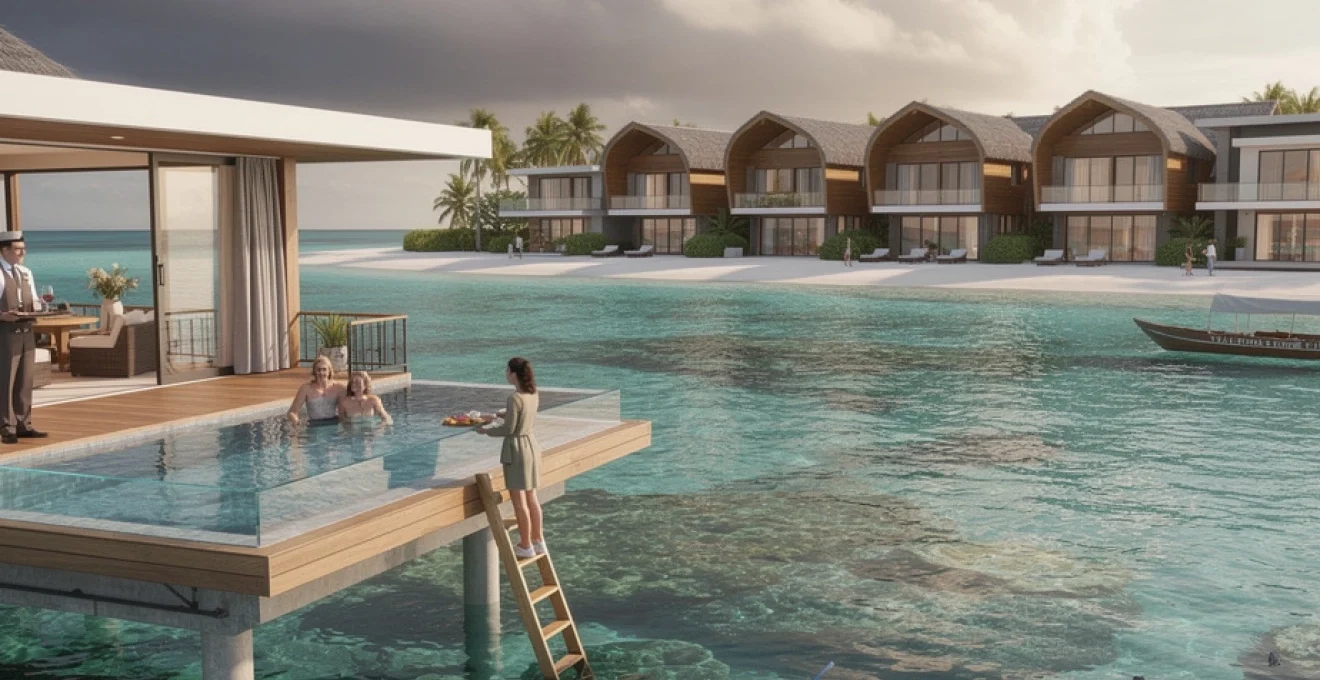
The Maldives has become synonymous with luxury overwater bungalows, those iconic stilted villas that appear to float gracefully above crystal-clear lagoons. These architectural marvels have captured the imagination of travellers worldwide, representing the pinnacle of tropical luxury accommodation. However, with nightly rates often exceeding £1,000 and questions surrounding their environmental impact, many potential visitors wonder whether these floating paradises truly justify their premium price tags.
The allure of waking up to panoramic ocean views, stepping directly from your bedroom into warm turquoise waters, and enjoying unparalleled privacy makes overwater bungalows incredibly appealing. Yet the decision to book one involves careful consideration of construction quality, environmental sustainability, seasonal weather patterns, and the significant financial investment required. Understanding these factors will help you determine whether this once-in-a-lifetime experience aligns with your expectations and values.
Overwater villa construction and engineering standards in the maldives
The construction of overwater bungalows in the Maldives represents a remarkable fusion of engineering innovation and environmental sensitivity. These structures must withstand the unique challenges of marine environments whilst maintaining the luxury standards expected by discerning guests. Understanding the construction methodologies behind these floating villas reveals why they command such premium pricing and helps explain their structural integrity in harsh oceanic conditions.
Lagoon foundation systems and marine environmental impact
The foundation systems employed for overwater bungalows utilise sophisticated pile-driving techniques that minimise disruption to delicate coral ecosystems. Most resorts employ steel or concrete piles driven 8-12 metres into the lagoon floor, creating stable anchoring points that can withstand significant wave action and tidal forces. These foundations are engineered to accommodate natural sand movement and seasonal current changes whilst avoiding damage to existing coral formations.
Environmental impact assessments are now mandatory for all new overwater constructions, with many resorts implementing innovative techniques such as coral transplantation and artificial reef creation around foundation areas. The spacing between piles is carefully calculated to maintain natural water circulation patterns, preventing stagnation that could harm marine life. Advanced construction methods now incorporate biodegradable materials where possible, reducing long-term environmental consequences should structures require future removal.
Traditional maldivian Dhoni-Inspired architecture versus modern stilted designs
Contemporary overwater villa design draws inspiration from traditional Maldivian dhoni boats, incorporating curved rooflines and natural materials that reflect local cultural heritage. However, modern engineering requirements often necessitate departures from purely traditional forms. The curved timber structures characteristic of dhoni construction provide excellent wind resistance but require sophisticated joinery techniques that significantly increase construction costs.
Many luxury resorts now blend traditional aesthetics with contemporary functionality, using locally sourced coconut palm timber for decorative elements whilst relying on engineered hardwoods for structural components. This approach maintains cultural authenticity whilst ensuring compliance with international safety standards. Modern stilted designs often feature larger floor areas and higher ceilings than traditional dhoni-inspired structures, accommodating luxury amenities such as private pools and expansive outdoor decking areas.
Cyclone-resistant building materials and structural integrity requirements
The Maldives’ location within the Indian Ocean cyclone belt necessitates robust construction standards that can withstand winds exceeding 200 kilometres per hour. High-grade marine aluminium framing systems have become increasingly popular due to their corrosion resistance and structural strength. These materials, whilst more expensive than traditional timber, offer superior longevity and require minimal maintenance in saltwater environments.
Structural integrity requirements mandate that overwater bungalows incorporate flexible connection systems that allow limited movement during extreme weather events. Wind load calculations must account for both direct wind pressure and uplift forces that can occur during severe storms. Many newer constructions feature retractable glass walls and reinforced roof systems designed to protect guests whilst maintaining structural integrity during adverse weather conditions.
Glass floor panels and underwater viewing technology integration
The integration of glass floor panels represents one of the most technically challenging aspects of overwater villa construction. These viewing windows require specialised marine-grade tempered glass capable of supporting significant weight loads whilst providing crystal-
clear views of the marine environment below. Engineers must carefully calculate load-bearing capacities, taking into account dynamic forces such as guest movement, furniture placement, and thermal expansion. Multiple laminated layers are typically used, combined with anti-slip surface treatments to ensure safety even when the glass becomes wet.
Beyond simple viewing panels, many high-end Maldivian overwater bungalows now integrate underwater lighting systems and sensor-driven technology that attract and highlight marine life after dark. Smart systems allow guests to control illumination levels and colour temperatures from in-room tablets, creating an immersive aquarium-like experience beneath their feet. Some properties also experiment with augmented reality applications that overlay information about visible fish and coral species, although these remain at the cutting edge of luxury resort technology integration.
Premium resort overwater accommodation analysis: conrad maldives rangali island versus gili lankanfushi
When assessing whether overwater bungalows in the Maldives are worth it, comparing specific flagship properties provides valuable context. Conrad Maldives Rangali Island and Gili Lankanfushi are often cited among the best overwater resorts in the Maldives, yet they deliver luxury in subtly different ways. Understanding how they differ in terms of space, service, facilities, and dining can help you decide which style of overwater experience aligns with your travel preferences and budget.
Suite configuration and square footage comparison across price tiers
Conrad Maldives Rangali Island is known for its extensive range of villa categories, ranging from entry-level water villas of around 74–86 square metres to ultra-luxury options such as the iconic Muraka undersea residence exceeding 600 square metres. These overwater suites typically feature separate living and sleeping areas, large decks, and in many cases, private plunge pools. The resort’s tiered structure allows travellers to experience overwater living at different price points, albeit all firmly in the premium category.
Gili Lankanfushi adopts a different approach, focusing almost exclusively on oversized, rustic-chic overwater villas, with very limited traditional beach inventory. Even the “smallest” Gili villa often surpasses 210 square metres, emphasising vast open-plan spaces, multi-level decks, and expansive bathrooms. At higher price tiers, the Private Reserve—one of the largest overwater residences in the world—stretches to over 1,700 square metres, accessible only by boat. If you prioritise sheer space per pound spent, Gili’s configurations often feel more residential and less hotel-like than those at Conrad.
Private butler service standards and concierge amenity packages
Service levels form a crucial part of the overwater bungalow value equation. At Gili Lankanfushi, every villa is assigned a personal butler known as a Mr. or Ms. Friday, drawing inspiration from the Robinson Crusoe narrative. These butlers handle everything from unpacking luggage to arranging snorkelling trips and private cinema screenings on the beach. The emphasis is on relaxed, barefoot luxury, with staff encouraging a “no news, no shoes” lifestyle while still delivering meticulous attention to detail.
Conrad Maldives Rangali Island also offers butler-style services in its higher villa categories and suites, especially within its top-tier overwater bungalows and the Muraka. Here, private hosts coordinate multi-course in-villa dinners, seaplane transfers, and wellness itineraries across the resort’s dual islands. The overall feel is slightly more resort-like and structured compared to Gili’s intimate, bespoke approach. When deciding if an overwater bungalow is worth the premium, consider how much you value round-the-clock personalised assistance versus more traditional luxury hotel service.
Infinity pool integration and direct lagoon access features
One of the main reasons guests choose overwater bungalows in the Maldives is easy access to warm, shallow lagoons and private pools. Conrad’s water villas often incorporate individual infinity plunge pools that visually merge with the ocean horizon, creating the classic “pool-over-sea” aesthetic. Many units include direct lagoon access via private staircases, with clearly defined swimming zones and nearby house reef snorkelling opportunities. The resort’s dual-island layout means certain villa clusters enjoy calmer waters, while others face open ocean vistas.
Gili Lankanfushi, meanwhile, focuses more on expansive decks and overwater hammocks than on plunge pools in its standard categories, although several higher-tier villas feature impressive private pools. Direct lagoon access is universal, with broad wooden steps descending into typically shallow, sandy-bottomed water ideal for relaxed wading. Some of Gili’s villas are set so far from the main island that they feel almost like private atolls, enhancing seclusion but requiring boat transfers for some facilities. If swimming directly off your deck or lounging in a hammock above turquoise water is your priority, Gili excels, whereas Conrad offers a more pool-centric interpretation of overwater luxury.
Michelin-level dining experiences and in-villa culinary services
Overwater bungalow stays in the Maldives often revolve as much around food as around scenery. Conrad Maldives Rangali Island is particularly renowned for its diverse dining portfolio, including Ithaa, one of the world’s first undersea restaurants, and several concept-driven venues curated by chefs with Michelin-star backgrounds. Guests in premium overwater suites can arrange multi-course tasting menus served in-villa, complete with wine pairings from extensive cellars. For food-focused travellers, these options can transform a stay into a culinary pilgrimage.
Gili Lankanfushi offers a more organic, wellness-oriented dining style, with many ingredients sourced from on-island gardens and nearby suppliers. While you may not find a formal Michelin-star brand on site, the quality of preparation and presentation is often comparable to top European fine-dining establishments. Private sandbank dinners, floating breakfasts delivered by boat, and bespoke in-villa barbecues add romantic, experiential elements that go beyond standard restaurant visits. When weighing whether overwater bungalows in the Maldives are worth it for you, consider whether access to world-class gastronomy and tailored in-villa dining elevates your perception of value.
Cost-benefit analysis: overwater bungalows versus beach villas in north malé atoll
For many travellers, the central question is simple: are overwater bungalows in North Malé Atoll genuinely worth the additional cost compared with beach villas? In this region—home to some of the Maldives’ most accessible resorts due to proximity to Velana International Airport—nightly rates for overwater accommodation can be 30–60% higher than equivalent beach categories. To decide whether to invest in an overwater bungalow, you need to weigh tangible benefits such as privacy and lagoon access against potential trade-offs like longer walks to facilities and reduced beach time.
From a pure financial standpoint, beach villas often deliver better square-metre value and easier access to shaded areas and family-friendly spaces. Overwater units, however, provide direct access to marine life, uninterrupted ocean views, and a sense of seclusion that beach villas—often set closer together along the shoreline—cannot always match. If you are planning a once-in-a-lifetime honeymoon or anniversary, the premium for an overwater bungalow may feel justified. For longer family stays or activity-heavy itineraries where you spend much of the day away from your room, a beach villa may represent a more rational allocation of budget.
A practical compromise many travellers adopt is a split-stay arrangement: several nights in a beach villa followed by a shorter overwater segment. This approach allows you to experience the iconic overwater lifestyle without paying the higher rate for your entire holiday. It also helps you compare both accommodation types directly, which can be invaluable if you plan to return to the Maldives. When booking, ask your resort whether there are low-season promotions or complimentary upgrade campaigns; these can significantly change the cost-benefit calculation in favour of overwater categories.
Marine ecosystem access and snorkelling opportunities from overwater platforms
One of the most compelling advantages of Maldivian overwater bungalows is proximity to vibrant marine ecosystems. Being able to step from your deck directly into a lagoon buzzing with tropical fish feels almost like having a private reef at your doorstep. However, not all overwater villas in the Maldives offer equal snorkelling quality. The distance to the house reef, depth of the lagoon, and strength of currents vary considerably between resorts and even between villa clusters on the same property.
If snorkelling and marine life encounters are a top priority, it is important to research whether the resort’s overwater bungalows sit above coral gardens or predominantly sandy flats. Some North Malé Atoll resorts position their villas in deeper channels closer to reef drop-offs, offering excellent chances to see turtles, reef sharks, and eagle rays right from your ladder. Others favour shallow, calm lagoons that are perfect for casual swimming but less rich in coral diversity. When in doubt, request a villa map and ask specifically about reef access from overwater platforms before confirming your booking.
From a practical standpoint, overwater villas can make it easier to fit multiple short snorkelling sessions into your day. Instead of organising boat trips or walking across the island to a designated entry point, you can slip on your mask and fins and be in the water within minutes. This convenience can be transformative, especially during hot midday hours when you might prefer to alternate between your sun lounger and the lagoon. That said, safety remains crucial: pay attention to current warnings, never snorkel alone in strong winds, and consider a buoyancy aid if you are not a confident swimmer.
Seasonal weather patterns and optimal booking windows for overwater stays
Weather conditions play a major role in determining whether overwater bungalows in the Maldives feel worth their premium price. The archipelago experiences two main monsoon seasons: the drier northeast monsoon typically runs from November to April, while the wetter southwest monsoon prevails from May to October. Peak high season for overwater stays coincides with the driest months of December to March, when skies are clearer, seas calmer, and visibility for snorkelling often excellent. Unsurprisingly, nightly rates during this period can be at their highest.
Should you avoid the wet season entirely if you are investing in an overwater bungalow? Not necessarily. The shoulder months—late April, May, and November—often provide a compelling balance between cost and conditions. You may encounter more passing showers or overcast days compared with peak season, but lagoons can remain pleasantly warm and swimmable. Rates for overwater villas during these times can drop by 20–40% at some luxury resorts, substantially improving the value proposition.
Cyclone risk in the Maldives is comparatively lower than in some other Indian Ocean destinations, but storms and choppy seas do occasionally occur, particularly during the southwest monsoon. Overwater bungalows are engineered for resilience, as discussed earlier, yet high winds and heavy rain can limit deck use and make the sea less inviting. If your vision of overwater living centres on sun-drenched loungers and glass-calm water, aiming for the drier months is sensible. Early booking—often 6–9 months in advance—can secure better rates and more choice of villa orientation, which affects sunrise or sunset views.
Sustainability concerns: coral reef impact and eco-certification standards
As overwater bungalows in the Maldives have grown in popularity, so have concerns about their environmental footprint, particularly on coral reef health. Construction inevitably alters local hydrodynamics and can stress nearby coral systems if not carefully managed. Rising sea temperatures and global bleaching events, such as those recorded in 2016 and 2020, further compound these pressures. As a traveller, you may reasonably ask: does choosing an overwater villa contribute to reef decline, and can you minimise your impact?
Many Maldivian resorts now pursue recognised eco-certifications and sustainability benchmarks to reassure environmentally conscious guests. Standards such as EarthCheck, Green Globe, and LEED assess factors including energy consumption, waste management, water treatment, and biodiversity protection. Some properties go further by employing in-house marine biologists who monitor coral health, run reef restoration projects, and guide educational snorkelling tours. When researching overwater accommodation, look for published sustainability reports or dedicated marine conservation pages on resort websites, as these often signal a genuine commitment rather than simple marketing.
Guests also play a crucial role in safeguarding fragile marine ecosystems during overwater stays. Simple behaviours—avoiding reef-toxic sunscreens containing oxybenzone, never standing on coral, and minimising plastic use—can reduce your individual footprint. Opting for resorts that invest in solar power, desalination efficiency, and greywater recycling helps support more sustainable models of Maldivian tourism. Ultimately, overwater bungalows can be compatible with reef protection if development follows strict environmental guidelines and both operators and guests take responsibility for long-term marine health. By choosing carefully and acting thoughtfully, you can enjoy the magic of an overwater stay while contributing to the preservation of the very lagoons and reefs that make the Maldives so extraordinary.