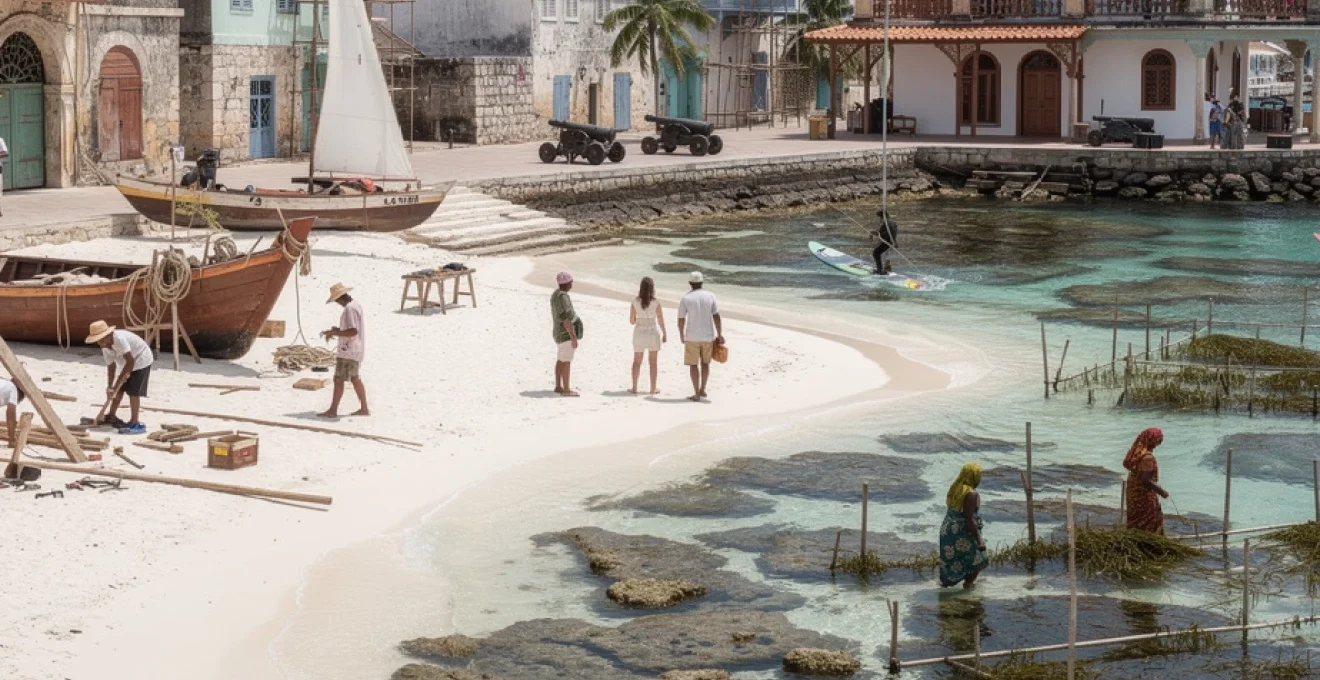
Zanzibar’s magnetic appeal lies in its extraordinary fusion of pristine tropical beaches, centuries-old cultural heritage, and fascinating historical narratives that have shaped the Indian Ocean region for millennia. This Tanzanian archipelago, floating like scattered emeralds in azure waters, represents one of Africa’s most compelling destinations where natural beauty meets profound cultural significance. The islands offer visitors an unparalleled opportunity to experience authentic Swahili culture, explore UNESCO World Heritage sites, and relax on some of the world’s most spectacular coastlines.
What sets Zanzibar apart from other tropical destinations is its remarkable ability to seamlessly blend leisure with learning, adventure with relaxation. The archipelago’s strategic position along ancient trade routes has created a unique cultural mosaic that reflects influences from Africa, Arabia, Persia, and India. Today’s travellers can witness this living heritage whilst enjoying world-class beaches, engaging with vibrant local communities, and participating in conservation efforts that protect both marine ecosystems and cultural traditions.
Pristine coastal geography: zanzibar’s marine ecosystems and beach formations
Zanzibar’s coastal geography represents a masterpiece of natural engineering, where coral reef systems, tidal dynamics, and sedimentary processes have collaborated over thousands of years to create some of the Indian Ocean’s most spectacular shorelines. The archipelago’s beaches are characterised by their powder-fine coral sand, which originates from the breakdown of calcium carbonate structures created by countless generations of marine organisms. This geological foundation supports diverse marine ecosystems whilst providing the pristine white beaches that attract visitors from across the globe.
The archipelago’s position approximately 25-50 kilometres off the Tanzanian coast places it within the East African Coastal Current system, which significantly influences both marine biodiversity and coastal morphology. Warm waters averaging 26-28°C year-round support extensive coral reef networks that function as natural breakwaters, protecting beaches from erosion whilst creating calm lagoons perfect for swimming and snorkelling. These reef systems are home to over 400 species of fish and represent some of the healthiest coral environments in the western Indian Ocean.
Nungwi beach: coral sand composition and tidal dynamics
Nungwi Beach, situated on Unguja’s northern peninsula, showcases the complex interplay between geological processes and marine ecosystems that define Zanzibar’s coastal character. The beach’s distinctive coral sand composition results from the continuous breakdown of nearby reef structures, creating a sediment mix that is 85% calcium carbonate. This high carbonate content gives Nungwi its characteristic brilliant white appearance and explains why the sand remains cool underfoot even during peak afternoon temperatures.
The tidal dynamics at Nungwi are particularly fascinating, with a tidal range typically varying between 2.5 to 4 metres depending on lunar cycles. During spring tides, extensive coral gardens become exposed, creating natural aquariums that visitors can explore on foot. The beach’s orientation and offshore reef configuration create a natural harbour effect, making it an ideal location for traditional dhow operations and modern diving excursions. Water temperatures remain consistently warm throughout the year, ranging from 25°C during the cooler months to 29°C during peak summer periods.
Kendwa beach: geological formation and reef protection systems
Kendwa Beach demonstrates how natural reef protection systems have shaped one of Zanzibar’s most photographed coastlines. The beach sits behind a complex barrier reef system that extends approximately 500 metres offshore, creating multiple channels and lagoons that support diverse marine habitats. This geological formation acts as a natural wave energy dissipation system, ensuring that Kendwa maintains its gentle swimming conditions even during monsoon seasons.
The reef structure at Kendwa consists of three distinct zones: the fore-reef slope, reef crest, and back-reef lagoon. Each zone supports different coral species and fish communities, creating a living laboratory for marine biodiversity. The back-reef lagoon, where most swimming and snorkelling occurs, maintains depths of 1-3 metres and hosts seagrass beds that serve as nursery areas for juvenile fish species. This natural nursery system contributes significantly to the region’s marine productivity and supports local fishing communities.
Unlike many east-coast beaches, Kendwa experiences relatively minimal tidal retreat, meaning you can swim throughout most of the day without having to walk far over exposed seabed. This stability is largely due to the gently shelving continental shelf and the protective barrier of the outer reef, which dissipates wave energy before it reaches the shore. As a result, Kendwa has become one of the best beaches in Zanzibar for year-round swimming, sunset cruises, and beginner-friendly snorkelling. For travellers planning a Zanzibar beach holiday, this combination of calm water and dramatic sunsets makes Kendwa a reliable choice in both the dry and rainy seasons.
Paje beach: kite surfing wind patterns and lagoon morphology
Paje Beach, on Zanzibar’s southeast coast, is internationally recognised for its consistent trade winds and expansive shallow lagoon. The coastal morphology here is shaped by a broad fringing reef lying 500–800 metres offshore, which encloses a wide, flat lagoon with depths generally ranging from 0.5 to 2 metres at low and mid tide. This configuration creates ideal conditions for water sports: the seabed is predominantly sandy, with limited coral outcrops, offering a forgiving surface for kitesurfers and windsurfers learning new skills.
The dominant wind systems at Paje are the kaskazi (northerly winds) from December to March and the kusi (southerly winds) from June to September. During the peak kitesurfing seasons, average wind speeds hover between 15 and 25 knots, providing reliable power for riders of all levels. Because the reef acts as a natural barrier, waves break offshore, leaving the inner lagoon relatively flat—an effect that kitesurfers often compare to having a giant, warm, turquoise training pool. If you are planning a Zanzibar kitesurfing holiday, timing your visit with these seasonal wind patterns will significantly enhance your experience.
Tidal variation plays a crucial role in shaping daily activities in Paje. At very low tide, the water recedes far across the lagoon, revealing seagrass meadows and tidal pools where local women harvest seaweed and children search for small marine creatures. As the tide rises, the lagoon gradually fills, transforming into an expansive aquatic playground for kitesurfing, stand-up paddleboarding, and lagoon snorkelling. Understanding this tidal rhythm—usually with two low and two high tides every 24 hours—helps visitors plan their activities, camera in hand, for both water sports and photogenic low-tide walks.
Jambiani beach: seaweed farming zones and coastal erosion management
Just south of Paje, Jambiani Beach presents a more traditional face of coastal Zanzibar, where tourism coexists with long-established seaweed farming practices. Here, the intertidal zone is structured into neat grids of wooden stakes and ropes used to cultivate Eucheuma and Kappaphycus seaweed, much of which is exported for use in cosmetics and food products. These seaweed farming zones, visible at low tide as geometric patterns in the shallows, provide vital income for local women and contribute to Zanzibar’s position as one of Africa’s leading seaweed producers.
From a coastal management perspective, Jambiani faces increasing challenges from shoreline erosion and sea-level rise. The protective offshore reef still plays a key role in dissipating wave energy, but stronger storm events and changing sea conditions are gradually altering the beach profile. In response, community-driven and NGO-supported initiatives have begun experimenting with nature-based solutions such as mangrove restoration in nearby creeks and the protection of dune vegetation. These green buffers act like living barriers, helping to stabilise sand and reduce the impact of storm surges on homes and guesthouses.
For visitors, walking along Jambiani’s shoreline offers a chance to see how everyday life and environmental adaptation intersect in a coastal village. You might watch women tending seaweed lines at dawn, fishermen preparing ngalawa (outrigger canoes), and children walking to school along sandy paths that inch closer to the sea each year. By choosing lodges that support community coastal projects or by joining guided educational walks about erosion and seaweed farming, you can contribute to a more sustainable form of Zanzibar beach tourism that respects both livelihoods and landscapes.
Stone town waterfront: urban coastal interface and maritime heritage
The Stone Town waterfront is where Zanzibar’s coastal geography meets its urban and maritime history in a vivid, ever-changing tableau. This narrow strip of seafront, framed by historic buildings such as the Old Fort and the House of Wonders, has long served as the archipelago’s primary interface between land and sea. Natural harbour conditions—sheltered waters, relatively deep anchorage close to shore, and protection from prevailing swells—made this an ideal anchorage for wooden dhows and, later, steamships trading along the Swahili coast and across the wider Indian Ocean.
Modern Stone Town retains many elements of this maritime character. Traditional dhows still depart from the harbour, carrying passengers and cargo to neighbouring islands, while smaller boats shuttle visitors to Prison Island and nearby sandbanks. The urban coastline has been progressively hardened with seawalls and quays to protect historic structures from wave action and tidal fluctuations, but this engineering also poses new challenges by altering natural sediment flows. As sea-level rise and coastal flooding increase in frequency worldwide, planners in Zanzibar face the delicate task of safeguarding heritage architecture while maintaining the waterfront’s functional role as a working harbour and public gathering space.
For travellers, the waterfront offers one of the most atmospheric experiences in Stone Town. In the late afternoon, residents gather in Forodhani Gardens to swim, dive from the seawall, and enjoy street food as the sun sets behind anchored dhows. It is here that you can most clearly sense Zanzibar’s identity as both an island community and a historic maritime hub—where every shift of the tide and change of light seems to echo centuries of departures and arrivals along the Indian Ocean trade routes.
Swahili cultural heritage: archaeological foundations and living traditions
Beneath Zanzibar’s beaches and bustling markets lies an archaeological record that documents more than a thousand years of Swahili cultural evolution. Excavations on Unguja and Pemba have revealed remains of early settlements dating from the 8th to 10th centuries CE, where local Bantu-speaking communities began trading with merchants from Arabia, Persia, and the Indian subcontinent. Over time, these contacts fostered the emergence of a distinct Swahili civilisation characterised by stone-built towns, Islamic scholarship, and a mercantile economy linked to wider Indian Ocean trade networks.
What makes Swahili heritage in Zanzibar especially compelling is the way ancient influences continue to shape daily life. Arabic call to prayer mingles with children playing in narrow alleys; Persian-influenced carved doors frame modern cafes; and centuries-old mosques still serve as active places of worship. Rather than existing only in museums, Swahili traditions remain lived and dynamic, from language and architecture to music, cuisine, and social customs. When you stroll through Stone Town or visit rural villages, you are essentially walking through layers of history that remain actively inhabited and constantly reinterpreted.
Shirazi architecture: persian influence in stone town’s built environment
One of the most visible expressions of Zanzibar’s Swahili heritage is the so-called Shirazi architectural tradition, associated with early settlers from the Persian Gulf who intermarried with local populations. While historians debate the precise origins of the Shirazi narrative, its aesthetic legacy is unmistakable in Stone Town’s built environment. Many of the town’s oldest stone houses, constructed from coral rag and lime mortar, feature design elements such as interior courtyards, rooftop terraces, and intricately carved wooden doors that blend Persian, Arab, and local styles.
These buildings often follow a linear plan with rooms arranged around a central corridor or courtyard, designed to maximise ventilation in a hot, humid climate. Thick coral walls act as natural insulators, keeping interiors cool during the day and releasing stored heat at night—a passive cooling system developed long before modern air conditioning. Ornate balconies with turned wooden balustrades overlook the streets, providing shaded outdoor living spaces that also allow residents, especially women, to observe street life while maintaining privacy. In many ways, Shirazi-influenced houses function like living organisms, breathing with the climate and adapting to seasonal changes.
The famous Zanzibari doors, with their brass studs and complex geometric or floral carvings, are another hallmark of this architectural heritage. Originally serving both decorative and symbolic purposes—communicating the owner’s status, profession, or faith—they now stand as icons of Stone Town’s identity. When you admire these doors, you are not only looking at craftsmanship but also at a visual language that encodes stories of trade, migration, and social hierarchy. Conservation projects in Stone Town increasingly focus on restoring these historic facades, recognising that preserving Shirazi architecture is key to maintaining the city’s UNESCO World Heritage status and cultural authenticity.
Taarab music: oud instrumentation and arabic poetic traditions
Taarab music is often described as the soundtrack of Zanzibar, a genre that encapsulates the island’s blend of African, Arab, and Indian influences. Emerging in the late 19th century, taarab drew heavily on Egyptian and Middle Eastern musical styles introduced via records and visiting musicians, which were then adapted to local Swahili poetic forms. The result is a richly orchestrated genre combining instruments such as the oud (a pear-shaped lute), qanun (zither), violin, accordion, and various drums, performed in ensembles that can range from a handful of musicians to full orchestras.
At the heart of taarab lies its lyrical content, which uses elaborate Swahili verse influenced by Arabic poetic traditions. Songs often explore themes of love, longing, social commentary, and spiritual reflection, employing metaphor and wordplay that reward careful listening. In many communities, taarab performances at weddings and celebrations function as both entertainment and subtle social dialogue, where coded lyrics can express feelings or criticisms that might be difficult to voice directly. For visitors, attending a live taarab concert in Stone Town or during the Zanzibar International Film Festival offers a powerful way to connect with local culture beyond the beach.
In recent years, a contemporary wave known as modern taarab has incorporated electronic instruments and pop influences, appealing to younger audiences while sometimes sparking debate about authenticity. Yet this evolution is part of a long Swahili tradition of cultural adaptation—much like the fusion of architectural styles or culinary flavours. If you think of Zanzibar as a crossroads where musical currents from Cairo, Mumbai, and the African mainland meet, taarab is the resonant echo of that confluence, continually renewing itself while remaining rooted in deep poetic and spiritual traditions.
Dhow craftsmanship: traditional shipbuilding techniques and seasonal navigation
Long before commercial airlines and container ships, dhows were the backbone of Zanzibar’s maritime economy, linking the archipelago to ports across the Indian Ocean. These wooden sailing vessels, constructed without formal blueprints, rely on techniques passed down orally from master shipbuilders to apprentices. In coastal villages such as Nungwi and Michamvi, you can still see craftsmen shaping hulls from seasoned hardwoods, using hand tools to fashion planks that fit together like puzzle pieces. Joints are traditionally sealed with a mix of cotton, coconut fibre, and natural resins—an approach refined over centuries of seafaring experience.
Dhow design varies according to function: larger jahazi were historically used for long-distance trade in commodities like cloves, ivory, and textiles, while smaller ngalawa with outriggers serve for inshore fishing and short crossings. Navigation once depended heavily on reading the stars, winds, currents, and cloud formations, as well as on intimate knowledge of coastal landmarks and reefs. Seasonal monsoon winds—the north-easterly kaskazi and the south-easterly kusi—dictated voyage timing, much as airline schedules do today. Merchants would sail with the kaskazi to reach ports like Muscat or Bombay and return months later on the reverse winds.
Although modern engines and GPS have transformed Indian Ocean trade, traditional dhow craftsmanship endures as both a living skill and a symbol of Swahili identity. Sunset dhow cruises offered to visitors are more than scenic outings; they are small-scale re-enactments of a seafaring heritage that connected Zanzibar to distant shores long before mass tourism. By choosing locally owned dhow operators and asking about the boat’s history, you support the continuation of these shipbuilding traditions and help ensure that young Zanzibaris see value in learning ancestral maritime skills.
Spice trade networks: clove cultivation and commercial routes
Zanzibar’s nickname, the “Spice Island,” stems largely from its historic role as a global centre for clove production. Introduced in the early 19th century under Omani rule, clove trees thrived in the islands’ humid, equatorial climate and fertile red soils. At their peak in the late 19th and early 20th centuries, Zanzibar and neighbouring Pemba supplied a significant majority of the world’s cloves, used not only as a culinary spice but also in medicines, perfumes, and clove cigarettes. Plantations—often worked by enslaved or indentured labourers—spread across the interior, reshaping both landscapes and social structures.
The spice trade relied on the same Indian Ocean routes that had long carried textiles, ceramics, and people between East Africa, Arabia, India, and beyond. Cloves harvested and dried in Zanzibar were loaded onto dhows and later steamships bound for markets in the Middle East, Asia, and Europe. These commercial links helped entrench Zanzibar’s position as a cosmopolitan port, where Gujarati traders, Arab merchants, and African coastal communities engaged in complex networks of exchange. Even today, cloves remain one of Tanzania’s important agricultural exports, although global market fluctuations and competition from other producing countries have reduced Zanzibar’s former dominance.
For modern travellers, spice tours offer an accessible window into this history. Guided walks through plantations near Stone Town and in rural villages introduce you to the botanical diversity underlying Zanzibari cuisine: cinnamon, cardamom, nutmeg, vanilla, pepper, and lemongrass, among others. As you crush a clove bud between your fingers and inhale its potent aroma, you are participating in a sensory ritual that once drove international commerce and geopolitical rivalries. Choosing tours that work with smallholder farmers and cooperatives can help ensure that today’s spice tourism contributes to local livelihoods rather than simply romanticising the past.
Stone town unesco world heritage: architectural conservation and urban planning
Stone Town was designated a UNESCO World Heritage Site in 2000, recognised for its outstanding testimony to the fusion of African, Arab, Indian, and European cultures over more than a millennium. This status has helped galvanise efforts to preserve the town’s dense urban fabric of coral stone houses, mosques, churches, and public squares. Yet conservation here is not just about freezing buildings in time; it is about managing a living city where people work, worship, and raise families amid structures dating from the 18th and 19th centuries. How do you protect history without turning it into a museum that excludes everyday life?
Urban planners and conservationists in Stone Town grapple with several intertwined challenges. Many historic buildings suffer from structural decay due to age, salt-laden sea air, and inadequate maintenance. At the same time, population growth and economic pressures create demand for modern infrastructure, including improved sanitation, electricity, and road access. The Stone Town Conservation and Development Authority (STCDA) works with local and international partners to regulate building alterations, encourage appropriate restoration techniques, and provide technical support to property owners. Financial constraints remain a major obstacle, as restoration in coral stone can be labour-intensive and costly.
From a visitor’s perspective, responsible engagement with Stone Town’s heritage means more than simply taking photographs of carved doors and alleyways. Supporting locally run guesthouses housed in restored buildings, hiring certified local guides, and visiting cultural institutions such as the Old Fort, Palace Museum, and Slave Market Memorial all contribute to maintaining the urban fabric. Walking tours that explain how drainage systems, roofscapes, and street layouts evolved over centuries can be surprisingly enlightening, revealing Stone Town as a sophisticated response to climate, trade, and social organisation. In this way, UNESCO recognition serves not only as an honorary title but as a framework for balancing conservation with the realities of contemporary urban life.
Spice island agriculture: botanical diversity and plantation economics
Beyond its historic clove plantations, Zanzibar’s agricultural landscape is characterised by a mosaic of smallholder farms, mixed-crop gardens, and remnant estates. The islands’ equatorial climate—with two rainy seasons, the “long rains” from March to May and the “short rains” around November—supports a remarkable botanical diversity. Farmers cultivate staples such as cassava, rice, and maize alongside cash crops like cloves, black pepper, cardamom, and cinnamon. Fruit trees, including mango, jackfruit, banana, and coconut, are ubiquitous, creating a layered agroforestry system that resembles a semi-wild garden more than a monoculture estate.
Economically, agriculture remains a critical pillar of Zanzibar’s rural livelihoods, even as tourism has grown to dominate foreign exchange earnings. According to recent Tanzanian government data, thousands of smallholder farmers depend on spice sales to supplement household income, often through cooperative marketing arrangements. However, price volatility in global markets and the impacts of climate change—such as irregular rainfall and increased pest pressures—pose significant risks. Diversifying crops and investing in value-added processing (for example, producing essential oils or packaged spice blends) are strategies increasingly promoted by development agencies and local entrepreneurs.
For travellers interested in sustainable tourism in Zanzibar, visiting community-based spice farms and agro-ecology projects can be both educational and impactful. Many tours now highlight not just the sensory appeal of spices but also the realities of plantation economics: land tenure issues, labour conditions, and efforts to transition from chemical inputs to organic methods. Think of these farms as open-air classrooms where you can see how global demand for “exotic” flavours intersects with local struggles for food security and fair income. By purchasing directly from farmers or cooperatives, you help ensure that a greater share of the value from spice tourism remains within rural communities.
Indian ocean trade routes: maritime history and commercial networks
Zanzibar’s history cannot be understood without reference to the wider Indian Ocean world, a maritime realm that has linked East Africa with Arabia, Persia, India, and Southeast Asia for at least two millennia. Long before European colonial powers arrived, seasonal monsoon winds enabled predictable voyages across vast distances, creating what historians often describe as an “aquatic Silk Road.” Zanzibar’s deep, sheltered harbours and strategic position off the East African coast made it an ideal hub in this network, where goods, people, and ideas converged and dispersed.
Commodities flowing through Zanzibar’s ports included ivory, gold, and slaves from the African interior; textiles, beads, and rice from India; dates and horses from Arabia; and ceramics and silk from China by way of intermediary ports. These trade routes were not just about material exchange but also about the circulation of religious beliefs, languages, and technologies. Islam spread along the Swahili coast through merchant communities rather than formal conquest, while architectural styles, musical forms, and culinary techniques all bear the imprint of this cosmopolitan maritime world. In this sense, walking through Stone Town today is like leafing through a living atlas of Indian Ocean history.
Modern shipping lanes and air routes have transformed global logistics, but Zanzibar remains embedded in regional commercial networks. Ferries and cargo vessels connect the islands to Dar es Salaam and other coastal cities, while small-scale fishers and traders continue to ply nearshore waters in traditional craft. For visitors keen to explore this dimension of Zanzibar’s past and present, museums and heritage centres in Stone Town offer exhibits on trade ceramics, navigation tools, and archival documents. Joining a dhow excursion or visiting a working harbour can also provide an intuitive, on-the-water sense of how crucial the sea has always been to the island’s identity and prosperity.
Contemporary tourism infrastructure: sustainable development and cultural preservation
Today, tourism is one of Zanzibar’s most important economic sectors, attracting hundreds of thousands of visitors annually with promises of pristine beaches, rich culture, and accessible history. This influx has driven rapid development of hotels, guesthouses, restaurants, and tour services across Unguja and Pemba. From luxury private islands and boutique beach lodges to family-run inns in Stone Town, the tourism infrastructure is diverse and continually expanding. For travellers, this means a wide range of options when planning a Zanzibar safari-and-beach combination or a dedicated island escape.
However, growth brings complex challenges. Unregulated coastal construction can damage fragile dune systems and seagrass meadows, while increased demand for water and energy strains local resources—especially in smaller villages. Socially, there is a risk that rapid tourism development may erode cultural practices or create inequitable benefit distribution if local communities are marginalised from decision-making and ownership. Recognising these concerns, Zanzibar’s authorities and various NGOs have begun promoting sustainable tourism frameworks that emphasise environmental protection, community participation, and cultural preservation.
For visitors, contributing to sustainable development in Zanzibar often comes down to informed choices. Opting for accommodations with clear environmental policies—such as rainwater harvesting, solar energy, and waste reduction—helps reduce your footprint on delicate island ecosystems. Joining tours that are locally owned and that cap group sizes supports fair employment and more meaningful cultural exchange. Simple practices like dressing modestly in villages and Stone Town, asking permission before taking photographs, and learning a few Swahili phrases foster mutual respect and help ensure that tourism enhances rather than diminishes local dignity.
Encouragingly, many tourism operators in Zanzibar are embracing models that combine conservation with community benefit. Marine protected areas around Mnemba and Chumbe Islands, for example, fund reef conservation and environmental education through carefully managed visitor fees. Cultural initiatives—from traditional music performances to artisan cooperatives restoring historic crafts—use tourism revenue to keep living traditions vibrant. As a traveller, you become part of this evolving story: every choice you make, from the beach you stay on to the coffee you sip in Stone Town, can help sustain the very allure of Zanzibar that drew you to these shores in the first place.