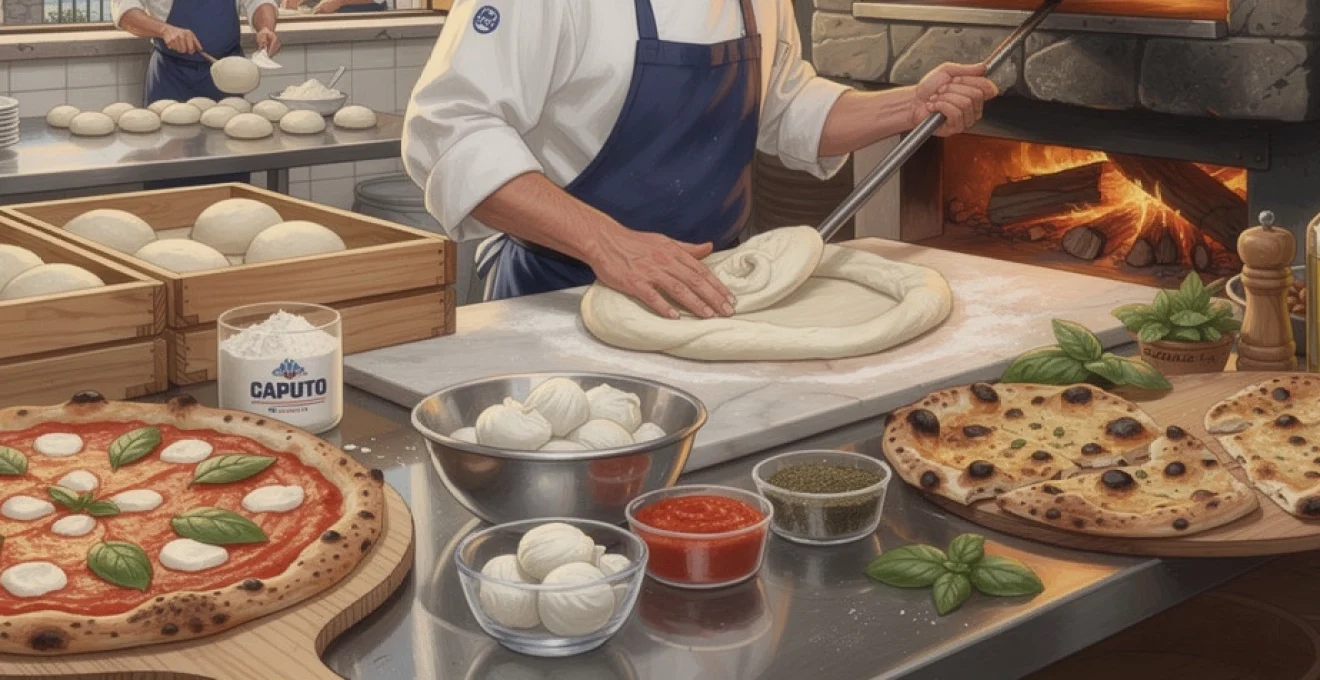
The streets of Naples hold more than centuries of history—they preserve a culinary tradition so profound that the United Nations recognized it as an irreplaceable part of human heritage. When you witness a pizzaiuolo stretching dough with practised hands, tossing it into a wood-fired oven that roars at temperatures exceeding 480°C, and retrieving a perfectly charred masterpiece in barely 90 seconds, you’re observing an art form that has been refined over generations. This isn’t simply about making food; it’s about perpetuating a cultural identity that defines Naples itself. The Neapolitan pizza-making tradition represents a convergence of precise technique, protected ingredients, and passionate dedication that transforms humble components—flour, water, tomatoes, and cheese—into something that transcends mere sustenance.
Historical origins of vera pizza napoletana and AVPN certification standards
Understanding authentic Neapolitan pizza requires examining the organizations and standards that have codified this ancient practice. The evolution from street food to UNESCO-protected heritage reflects decades of dedicated preservation efforts by Neapolitans determined to safeguard their culinary legacy.
The 1984 foundation of associazione verace pizza napoletana
Antonio Pace founded the Associazione Verace Pizza Napoletana (AVPN) in 1984 with a singular mission: to formally define and protect authentic Neapolitan pizza before globalization diluted its identity beyond recognition. Pace, who claims pizza runs through his DNA from generations of pizzaiuoli on both sides of his family, recognized that without standardization, the tradition would fragment and eventually disappear. He assembled seventeen historical pizza-making families in Naples, gathering their collective wisdom to create the first notarized document defining pizza napoletana. This wasn’t an arbitrary set of rules imposed by bureaucrats; it represented an amalgamation of centuries-old family traditions, each contributing their understanding of proper technique and ingredients.
Today, the AVPN headquarters sits atop the Capodimonte neighborhood, overlooking the entire city and the shimmering Gulf of Naples beyond. From this strategic position, the organization has expanded its influence to forty-five countries, certifying nearly eight hundred restaurants worldwide that meet their exacting standards. The ten-page treatise that evolved from that original 1984 document now details every aspect of pizza-making with scientific precision—pH levels, fermentation periods, oven temperatures, and cooking times are all specified with meticulous exactitude. This transformation from oral tradition to documented science has allowed the AVPN to grow the number of qualified pizzaiuoli globally while maintaining quality control.
Traditional pizza napoletana DOC protected designation criteria
The European Union’s Geographical Indications system granted “Pizza Napoletana TSG” (Traditional Specialty Guaranteed) certification, adding another layer of protection to this culinary tradition. This designation ensures that only pizzas meeting specific criteria can legally bear the Neapolitan name within EU jurisdictions. The certification recognizes two varieties: Pizza Margherita and Pizza Marinara. The former features San Marzano tomatoes, fior di latte mozzarella or buffalo mozzarella, extra virgin olive oil, and fresh basil. The latter, predating the Margherita by several decades, contains tomatoes, garlic, oregano, and oil—no cheese whatsoever.
The TSG designation mandates precise measurements that might seem obsessive to casual observers but are essential to maintaining consistency. The finished pizza cannot exceed thirty-five centimeters in diameter. The cornicione—the raised edge crust—must measure between one and two centimeters in height, while the interior base achieves a delicate 0.4 centimeters thickness. These specifications aren’t arbitrary; they reflect the perfect balance between structural integrity and textural contrast that defines Neapolitan pizza. A properly executed vera pizza napoletana exhibits a soft, elastic centre with a pillowy, charred edge that provides both visual appeal and textural complexity.
Ancient pizzerias: da michele, sorbillo, and di matteo
These historic pizzerias are more than popular eateries; they are living museums of Neapolitan pizza culture. Institutions like L’Antica Pizzeria Da Michele, Gino Sorbillo, and Di Matteo embody the continuity of technique and tradition that AVPN seeks to codify. At Da Michele, the menu famously focuses almost exclusively on Margherita and Marinara, underlining the belief that perfection comes from repetition rather than endless variation. Sorbillo, by contrast, represents the new generation of pizzaiuoli who combine deep respect for heritage with a modern sense of hospitality and branding. Di Matteo, located in the heart of the historic centre, is known not only for its classic pies but also for its fried street snacks, reminding us that pizza in Naples has always been intertwined with everyday life and informal dining.
Queue outside any of these pizzerias and you’ll witness how Neapolitan pizza functions as a social ritual. Locals and visitors alike wait together, watching the rapid choreography at the marble counter and the oven’s fiery mouth. Inside, the pizzaiuolo works with astonishing speed, yet every gesture—from stretching the dough to dressing the toppings—follows patterns learned through years of apprenticeship. In this way, Da Michele, Sorbillo, and Di Matteo are not just selling food; they are custodians of the vera pizza napoletana identity, shaping how the world understands “real” Neapolitan pizza.
UNESCO intangible cultural heritage recognition in 2017
On 6 December 2017, UNESCO inscribed the “Art of Neapolitan Pizzaiuolo” on the Representative List of the Intangible Cultural Heritage of Humanity. This recognition did not protect a single recipe or brand, but the living practice itself: the gestures, knowledge, and shared values surrounding Neapolitan pizza-making. The nomination began as a grassroots initiative in 2009, driven by an assembly of pizzaiuoli and supported by the wider Neapolitan community. An online petition later gathered nearly three million signatures worldwide, demonstrating that this tradition resonates far beyond the city’s boundaries.
UNESCO highlighted that the art of the pizzaiuolo is a “social ritual” and an “emotional part of the identity of Neapolitan people.” In Naples, saying “Andiamo a farci una pizza” is another way of saying “let’s go out to eat,” but it also implies participation: you don’t just consume pizza; you share in the atmosphere of the bottega, the pizzeria workshop. For many pizzaiuoli, UNESCO recognition brought a renewed sense of dignity and pride, elevating their craft to the level of other celebrated Italian arts. As Gino Sorbillo famously put it, “La pizza napoletana è uno stato d’animo”—a state of mind and a reflection of the city’s soul.
Authentic neapolitan dough preparation using caputo flour
If the oven is the heart of a Neapolitan pizzeria, the dough is its lifeblood. Authentic Neapolitan dough preparation is deceptively simple—just flour, water, salt, and yeast—yet the technique behind it is anything but basic. Professionals in Naples often rely on Caputo “00” flour, produced locally and formulated specifically for long fermentation and high-heat baking. By carefully managing gluten development, hydration, and fermentation time, pizzaiuoli create a base that is light, digestible, and strong enough to be stretched paper-thin without tearing. When you master the dough, every other element of Neapolitan pizza becomes easier.
Type 00 flour protein content and gluten development techniques
Caputo’s “00” flour is finely milled and typically contains around 11.5–12.5% protein, an ideal range for Neapolitan pizza dough. Too little protein and the dough collapses under its own weight; too much and the crust becomes tough and bread-like instead of soft and elastic. The “00” classification refers to how finely the wheat is ground, resulting in a flour that absorbs water evenly and develops a smooth, extensible gluten network. This is crucial when you’re stretching dough by hand and baking at extreme temperatures.
Gluten development in true Neapolitan pizza is as much about restraint as effort. Instead of aggressive kneading, most pizzaiuoli favour a combination of short mixing and long resting periods, allowing time to do much of the work. Gentle stretch-and-fold techniques are often used to align the gluten strands without overworking the dough, similar to methodically folding a silk scarf rather than twisting a rope. For home bakers attempting authentic Neapolitan pizza, using a high-quality “00” flour and resisting the urge to over-knead are essential steps toward achieving that characteristic softness and chew.
Biga and poolish pre-fermentation methods for enhanced flavour
To deepen flavour and improve digestibility, many expert pizzaiuoli employ pre-ferments such as biga or poolish. A biga is a firm, low-hydration starter, while a poolish is wetter and more fluid; both are made from flour, water, and a small amount of yeast, then left to ferment before being incorporated into the final dough. This slow pre-fermentation encourages the development of organic acids and aromatic compounds, giving the crust a subtle complexity that straight-dough methods can rarely match. Think of it as marinating your dough: time unlocks layers of flavour.
In Naples, some pizzerias still adhere strictly to direct dough methods certified by AVPN, but others experiment with controlled pre-ferments while respecting the broader rules of vera pizza napoletana. For serious enthusiasts, using 20–30% of the total flour in a biga or poolish can transform the final result, delivering more flavour and better oven spring. The key is precision—tracking fermentation times, temperatures, and ratios much like a winemaker monitors their must—because even small changes can significantly affect the dough’s strength and flavour profile.
Hydration ratios and cold fermentation timeline requirements
Authentic Neapolitan dough usually sits in a hydration range of 58–65%, meaning 58–65 grams of water per 100 grams of flour. Within this window, the final texture can vary dramatically: lower hydration yields a slightly denser, easier-to-handle dough, while higher hydration promotes a lighter, more open crumb. In Naples’s humid climate, pizzaiuoli constantly adjust hydration to account for seasonal changes, much like tailoring a recipe to altitude. This ability to “read” the dough is a hallmark of professional skill and one of the reasons Neapolitan pizza can be challenging to replicate at home.
Cold fermentation has become a standard for many modern practitioners seeking enhanced flavour and digestibility. While traditional room-temperature fermentation over 8–12 hours remains common, a 24–48 hour cold ferment at 3–5°C allows enzymes to break down starches and proteins more slowly, resulting in a lighter, more aromatic crust. For those learning the art of making Neapolitan pizza, treating dough like a living organism—monitoring its volume increase rather than just the clock—helps avoid under- or over-proofing. Have you ever noticed how some pizzas leave you feeling heavy while others seem almost weightless? Long, controlled fermentation is often the difference.
Manual staglio dough ball portioning at 250-280 grammes
Once fermentation has progressed to the right point, the bulk dough is divided in a process called staglio, where individual dough balls are portioned and shaped. For a classic Neapolitan pizza between 30 and 35 centimetres in diameter, each dough ball typically weighs between 250 and 280 grams. This weight range ensures the base can be stretched thin while still forming a well-defined cornicione. Too little dough and the rim will be flat; too much and the centre risks becoming soggy under the toppings.
Manual staglio is both technical and tactile. The pizzaiuolo cuts sections from the main dough mass, then tucks and folds the edges underneath to create a tightly skinned sphere. This gentle shaping, done without degassing the interior, traps bubbles that will later expand dramatically in the oven. Watching a master perform staglio is like observing a potter portioning clay—each movement is economical, purposeful, and honed by repetition. For beginners, focusing on consistent dough ball weight and smooth, tensioned surfaces is the first step towards uniform pizzas with predictable baking behaviour.
Wood-fired oven construction and temperature management
The wood-fired oven is the stage on which the art of Neapolitan pizza truly comes to life. Authentic ovens in Naples are typically dome-shaped, hand-built, and capable of sustaining temperatures around 485°C (905°F). At these extremes, a pizza cooks in just 60–90 seconds, developing a charred yet tender crust that is impossible to achieve in standard home ovens. Managing such intense heat requires experience: the pizzaiuolo constantly reads the flames, embers, and stone surface, adjusting wood placement and pizza position in real time. Without this intimate understanding of the oven, even the best dough and toppings cannot reach their full potential.
Traditional dome-shaped oven design using volcanic stone
Classic Neapolitan pizza ovens are constructed from refractory bricks and materials that retain and radiate heat evenly, often incorporating volcanic stone from the Campania region. The low dome shape is not aesthetic decoration; it’s a functional design that optimizes the circulation of hot air and flame. Heat reflects from the curved ceiling, surrounding the pizza and cooking the toppings from above while the stone floor bakes the base from below. This dual-action cooking is what allows the crust to puff dramatically while the centre remains soft and moist.
The oven floor is typically 4–5 centimetres thick, thick enough to store energy but thin enough to respond to temperature changes throughout a service. Builders pay close attention to the height of the dome, the size of the mouth, and the angle of the opening, all of which affect how flames roll across the interior. In Naples, traditional oven construction is itself a specialized trade passed down through generations. When you step into a historic pizzeria, you’re not just seeing a piece of equipment—you’re looking at architecture designed for one purpose: to create perfect Neapolitan pizza.
Oak and beechwood selection for optimal heat distribution
Hardwood selection is another crucial element in maintaining consistent heat. Neapolitan pizzaiuoli traditionally favour well-seasoned oak and beechwood for their high energy output and clean burn. These woods produce long-lasting embers and stable flames, essential for sustaining an even stone temperature during a busy service. Softer woods or resinous varieties, by contrast, can create smoke and soot that negatively affect both the oven interior and the flavour of the pizza.
The fire is usually started several hours before service, gradually bringing the oven up to operating temperature. Once the desired heat is reached, the active fire is moved to one side, and new logs are added in small increments to maintain a steady flame. You can think of this process like fine-tuning an engine: too much wood and the floor may burn the pizza base; too little and the crust won’t rise or char correctly. Skilled pizzaiuoli learn to “listen” to their ovens, reading subtle visual cues in the colour of the dome and the glow of the embers.
Maintaining 485°C cooking temperature for 60-90 second baking
According to AVPN guidelines, the ideal baking temperature for Neapolitan pizza is around 430–485°C (806–905°F), with a cooking time of 60–90 seconds. At this range, the dough undergoes rapid oven spring as moisture in the rim turns to steam, inflating the cornicione into its characteristic airy structure. The sugar residues in the flour and lactose in the cheese caramelize quickly, creating the sought-after “leopard spots” of char without burning the entire crust. Achieving this delicate balance is like walking a tightrope: even a few seconds too long can tip perfect blistering into bitterness.
To maintain consistency, professionals regularly monitor the stone surface temperature using infrared thermometers and adjust their workflow accordingly. Pizzas may be placed closer to or further from the live flame depending on how aggressively the oven is firing at that moment. For home cooks, replicating these conditions is challenging but not impossible—using a pizza steel, maximizing oven temperature, and finishing under a broiler can approximate the intense top and bottom heat, even if the cooking time stretches beyond 90 seconds. Understanding the principles behind temperature management helps you adapt to whatever equipment you have available.
San marzano tomatoes and fior di latte mozzarella selection
The magic of Neapolitan pizza lies in elevating a short list of ingredients rather than overwhelming the dough with excessive toppings. Among those ingredients, San Marzano tomatoes and fior di latte mozzarella hold centre stage. Both are products of the Campania region’s unique terroir, shaped by volcanic soil, coastal breezes, and traditional farming methods. When combined with fresh basil, extra virgin olive oil, and sea salt, they create a flavour profile that is vibrant yet balanced—sweet acidity from the tomatoes, creamy richness from the cheese, and herbal freshness from the basil.
DOP san marzano dell’agro Sarnese-Nocerino tomato specifications
True San Marzano tomatoes used for Neapolitan pizza carry the DOP (Protected Designation of Origin) label “Pomodoro San Marzano dell’Agro Sarnese-Nocerino.” Grown in the volcanic soil around Mount Vesuvius, these plum-shaped tomatoes are prized for their dense flesh, low seed content, and naturally sweet, balanced acidity. DOP regulations govern everything from the specific varieties planted to harvesting methods and canning processes, ensuring that the product maintains consistent quality and typicity. When crushed by hand, San Marzano tomatoes yield a bright, fragrant sauce that needs little more than sea salt to shine.
In Naples, the sauce for authentic Neapolitan pizza is rarely cooked in advance. Instead, raw, crushed tomatoes are spread directly onto the dough before baking, allowing the heat of the oven to gently concentrate their flavour. This approach preserves the tomatoes’ fresh, almost fruity character, which could be lost in prolonged stovetop cooking. For those sourcing ingredients outside Italy, looking for DOP-labelled San Marzano tomatoes is an effective way to approximate the true Neapolitan experience. Have you ever tasted a pizza where the tomato flavour seems flat or metallic? Often, the difference comes down to tomato quality and minimal handling.
Agerola and monti lattari buffalo mozzarella sourcing
When it comes to cheese, Neapolitan pizza traditionally employs either fior di latte (cow’s milk mozzarella) or mozzarella di bufala from Campania. High-quality fior di latte from the Monti Lattari area, particularly around Agerola, is renowned for its delicate flavour and excellent meltability. Buffalo mozzarella, richer and more tangy, often bears the DOP label “Mozzarella di Bufala Campana,” signifying that it comes from water buffalo grazing in specific protected zones. Both cheeses are characterised by high moisture content, which contributes to the creaminess of a proper Margherita.
Pizzaiuoli take great care in handling mozzarella to avoid excessive water pooling on the pizza. The cheese is usually drained and sometimes briefly refrigerated, then cut into strips or small chunks shortly before service. This ensures that it melts evenly without drowning the thin base. In Naples, some pizzerias prefer fior di latte for its gentle profile, while others highlight the more assertive buffalo mozzarella for a luxurious twist. For home pizza-makers, choosing fresh, minimally processed mozzarella and properly draining it before use can dramatically improve texture and flavour.
Fresh basil from vesuvius volcanic soil cultivation
Fresh basil may seem like a small detail, but on Neapolitan pizza it plays a crucial aromatic role. Grown in the mineral-rich soils around Vesuvius, local basil varieties develop intensely perfumed leaves that hold their fragrance even under high heat. In the classic Margherita, whole basil leaves are placed on top of the tomato and cheese, then finished with a drizzle of extra virgin olive oil. As the pizza bakes, the basil releases essential oils that infuse the toppings with a subtly peppery, floral note.
Timing is important: some pizzaiuoli add basil before baking for a mellow, toasted aroma, while others prefer to finish with fresh leaves after the pizza comes out of the oven, ensuring a brighter, greener flavour. Both approaches are considered acceptable within AVPN guidelines, and many pizzerias even combine them. For those learning how to make authentic Neapolitan pizza at home, using fresh, vibrant basil—and not dried substitutes—can be the difference between a pizza that tastes alive and one that feels flat. Just as a final squeeze of lemon can transform a dish, those few basil leaves complete the Margherita’s flavour profile.
Cornicione formation and hand-stretching techniques
The dramatic, airy rim of Neapolitan pizza—the cornicione—is one of its most recognisable features. Creating this structure relies entirely on how the dough is handled; no special moulds or tools are involved. Instead of rolling pins, machines, or docking rollers, the pizzaiuolo uses only their hands to shape each disk, preserving gas bubbles developed during fermentation. This manual stretching is where technique and intuition meet: too much pressure and the dough deflates; too little and the base remains uneven and difficult to bake uniformly.
Palm-pressing method to create airy crust structure
The traditional hand-stretching method begins with a fermented dough ball placed in a light dusting of flour. The pizzaiuolo uses the pads of their fingers and palms to press from the centre outward, gently pushing gas towards the edges. Crucially, they leave a margin around the perimeter untouched, which later becomes the inflated cornicione. This process is similar to coaxing air inside a cushion: you guide the internal pressure where you want volume, rather than forcing it out entirely.
Once the central area is flattened to a few millimetres thick, the dough is lifted and stretched over the backs of the hands or rotated on the counter, using gravity to achieve the final diameter. Experienced pizzaiuoli can perform this in seconds, but the underlying principle is simple: minimal pressure, smooth movements, and constant respect for the trapped gas. For anyone practising at home, focusing on even palm-pressing and preserving a raised rim will do more for your Neapolitan-style pizza than any gadget or shortcut.
Avoiding rolling pins to preserve gas bubble distribution
Why are rolling pins discouraged, even forbidden, in authentic Neapolitan pizza-making? The answer lies in gas distribution. Rolling pins compress the dough uniformly, expelling the carbon dioxide and water vapour that fermentation has created. This might be desirable for certain pastries, but for Neapolitan pizza it destroys the very structure that makes the crust light and airy. When the pizza enters the 485°C oven, those remaining gas pockets are what cause the cornicione to spring dramatically, forming its characteristic honeycomb interior.
Using a rolling pin on a well-fermented Neapolitan dough is like flattening a carefully proofed sourdough loaf moments before baking—it negates hours of patient work. By avoiding mechanical flattening and relying on gentle hand-stretching, the pizzaiuolo ensures that the dough retains a network of micro-bubbles. These expand unevenly in the intense heat, creating the irregular, artisanal appearance that defines vera pizza napoletana. If you’ve ever wondered why some pizzas have a flat, breadstick-like rim, the culprit is often overly aggressive shaping or the use of a rolling pin.
Achieving leopard-spot charring pattern on the rim
The small, irregular dark spots that form on a well-baked Neapolitan crust—known as “leopard spotting”—are more than a visual flourish; they signal correct fermentation, shaping, and baking. These spots appear when the sugars on the surface of the dough caramelise and char in tiny, intense bursts of heat, especially where the rim protrudes closer to the flame. Achieving this pattern requires a combination of proper hydration, a well-preheated oven floor, and strategic positioning of the pizza near the fire. Too low a temperature and the crust will pale; too high or too long and it will burn uniformly rather than forming distinct freckles.
Pizzaiuoli often rotate the pizza slightly during baking to expose different parts of the rim to the hottest area of the oven, encouraging even charring. The goal is a balance between soft, elastic crumb and crisp, charred outer blisters, providing a complex mix of textures in every bite. For home bakers working at lower oven temperatures, achieving true leopard spotting can be challenging, but using a preheated steel or stone and finishing briefly under a broiler can help approximate the effect. Ultimately, the spots are a visual shorthand: a sign that heat, dough, and technique have come together as they should.
Mastering pizza margherita and marinara traditional recipes
Among the many varieties that exist today, Neapolitan tradition recognises two canonical pizzas: Margherita and Marinara. Both are simple on paper, yet each exposes any flaw in dough, ingredients, or technique. Think of them as the scales and arpeggios of the pizza world—master these, and you have the foundation to play any variation. Learning the precise assembly and baking of these two classics is essential for anyone serious about the art of making Neapolitan pizza in Naples or beyond.
Pizza margherita: tomato, fior di latte, and basil assembly protocol
The Margherita begins with a properly stretched disk of dough, about 30–35 centimetres in diameter with a defined, uncompressed edge. A thin layer of crushed San Marzano tomatoes, seasoned only with sea salt, is spooned onto the centre and spread in a circular motion, leaving the cornicione bare. Too much tomato can weigh down the base; too little and the pizza becomes dry. Next comes a scattering of sliced or torn fior di latte or buffalo mozzarella, distributed evenly but sparingly to allow the tomato to show through.
Fresh basil leaves—usually three to five, echoing the Italian flag’s symbolism—are added, followed by a light drizzle of extra virgin olive oil. The pizza is then launched into the 485°C oven, where it bakes for 60–90 seconds. During this time, the cheese melts into soft puddles, the tomato simmers gently, and the basil perfumes the entire surface. When done, the Margherita should display a puffy, leopard-spotted rim, a tender centre, and a harmonious balance of tomato sweetness, dairy richness, and herbal freshness. For many Neapolitans, this is the benchmark by which all pizzerias are judged.
Pizza marinara: garlic, oregano, and extra virgin olive oil application
Older than the Margherita and equally revered, the Marinara showcases the purity of dough and tomato without any cheese. It begins the same way, with a hand-stretched base and a thin layer of seasoned San Marzano tomatoes. Finely sliced garlic is then scattered lightly over the surface—enough to perfume, not overpower. Dried oregano, a quintessential Mediterranean herb, is sprinkled by hand, releasing its aroma as it contacts the moist sauce.
A generous drizzle of extra virgin olive oil completes the topping before the pizza enters the wood-fired oven. Without cheese to buffer the heat, the tomato and garlic roast more directly, creating a deeply savoury, almost maritime character that explains its association with seafarers (“la marinara”). When executed correctly, a Pizza Marinara demonstrates how little is needed to create depth of flavour: high-quality tomatoes, fragrant garlic, good oil, and a perfectly fermented base. For anyone learning Neapolitan pizza, mastering the Marinara is a lesson in restraint and respect for ingredients.
Pala turning technique inside the wood-fired oven
Once a pizza is in the oven, the work of the pizzaiuolo is far from over. Using a long-handled peel known as a pala, they must turn the pizza to ensure even exposure to the intense heat and flames. Typically, the pizza is launched near the boundary between the live fire and the open floor, where the temperature is hottest. After 20–30 seconds, as the rim begins to rise and set, the pizzaiuolo slides a smaller turning peel beneath one edge and rotates the pizza in quick, smooth motions, sometimes lifting it closer to the flame to finish charring the cornicione.
This turning technique is akin to a conductor guiding an orchestra: minor adjustments in position and timing dramatically affect the final result. Too slow to rotate, and one side may burn while the other remains pale; too aggressive, and the toppings may slide or the dough tear. Watching an experienced pizzaiuolo handle the pala is one of the most mesmerising aspects of visiting a traditional Neapolitan pizzeria. For aspiring practitioners, even with a home oven and small peel, adopting the habit of turning the pizza mid-bake will bring you one step closer to the authentic Neapolitan standard.