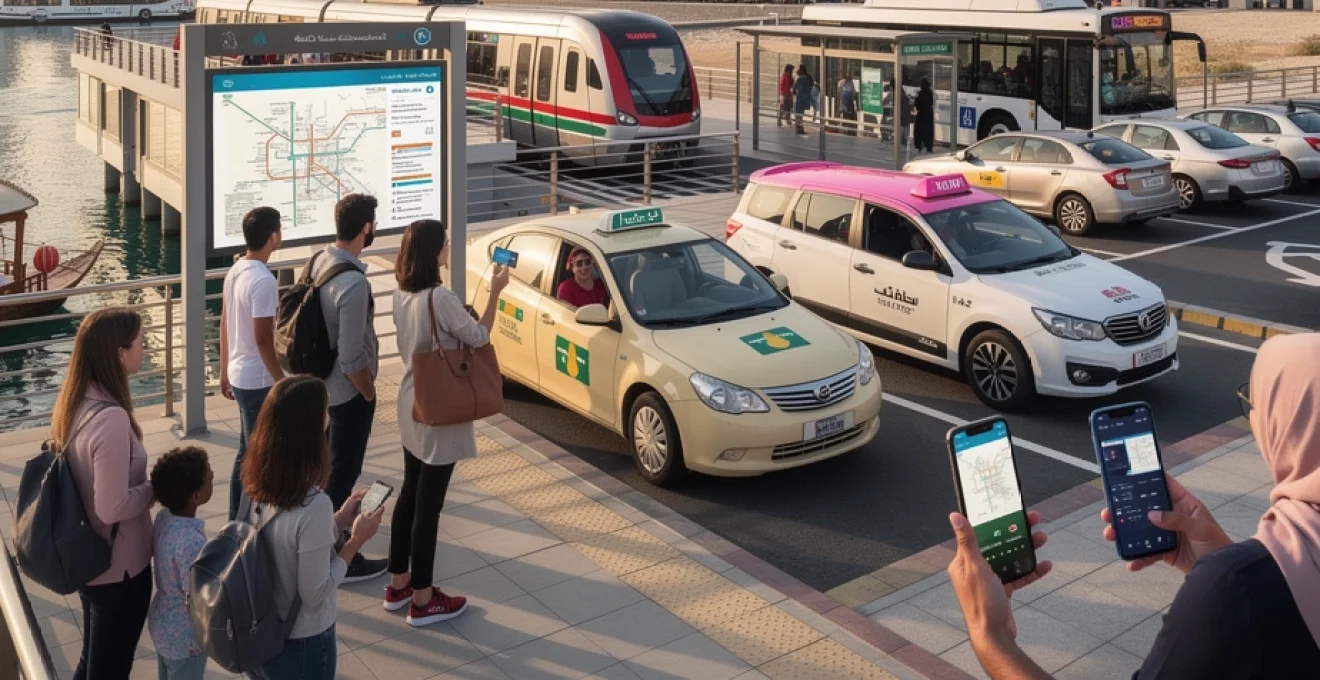
Dubai’s transformation from a desert trading post to a gleaming metropolis has created one of the world’s most sophisticated urban transport networks. The emirate offers visitors an impressive array of transportation options, from cutting-edge driverless metros to traditional wooden abras crossing the historic Dubai Creek. With temperatures soaring above 40°C during summer months and the city sprawling across vast distances, understanding your transport choices becomes essential for maximising your holiday experience whilst managing both comfort and budget.
The city’s infrastructure investments exceeding AED 75 billion over the past decade have resulted in a seamless integration of modern technology with traditional charm. Whether you’re navigating between world-famous attractions like the Burj Khalifa and Dubai Mall, or exploring authentic souks in old Dubai, the transport system accommodates every travel preference and financial consideration. Smart planning and the right transport choices can significantly enhance your Dubai experience whilst keeping costs manageable.
Dubai metro red and green line navigation system for tourists
Dubai’s metro system represents one of the most impressive examples of urban transport innovation globally, serving as the backbone of the city’s public transportation network. This fully automated, driverless system carries over 200 million passengers annually across its two primary lines, offering tourists an efficient, air-conditioned sanctuary from the desert heat. The metro operates with remarkable punctuality, with trains arriving every 3-7 minutes during peak hours and every 7-10 minutes during off-peak periods.
The system’s design prioritises tourist accessibility, with clear multilingual signage and announcements in both English and Arabic. Each station features modern amenities including free Wi-Fi, prayer rooms, and facilities for passengers with special needs. The metro’s integration with other transport modes creates a comprehensive network that connects virtually every major tourist destination in Dubai. Operating hours extend from 5:00 AM to midnight on weekdays, with extended service until 1:00 AM on Fridays and public holidays.
Dubai’s metro system processes over 650,000 passenger journeys daily, making it one of the world’s busiest automated transit systems per capita.
Al ghubaiba to UAE exchange station tourist corridor
The Red Line’s southern terminus at UAE Exchange represents a crucial gateway for tourists exploring Dubai’s diverse districts. This stretch encompasses some of Dubai’s most significant commercial and residential developments, including the bustling Business Bay area and the iconic Downtown Dubai district. The journey from Al Ghubaiba to UAE Exchange takes approximately 45 minutes, offering passengers panoramic views of the city’s architectural evolution.
Along this corridor, tourists can access major shopping destinations, corporate headquarters, and luxury residential complexes. The stations serve as strategic access points to attractions such as the Gold and Diamond Park, various beach clubs, and the expansive Dubai Investment Park. The corridor’s design facilitates easy transfers to other transport modes, with dedicated bus stops and taxi ranks at each station.
Business bay to dubai mall metro link integration
The connection between Business Bay and Dubai Mall stations represents one of the most strategically important segments for tourists, linking the financial district with Dubai’s premier shopping and entertainment destination. This section of the Red Line provides direct access to the Burj Khalifa, Dubai Fountain, and the extensive Dubai Mall complex, which attracts over 100 million visitors annually.
The journey between these stations takes just 8 minutes, making it incredibly convenient for tourists to combine business district exploration with retail therapy and sightseeing. The Dubai Mall station connects directly to the shopping centre via air-conditioned walkways, ensuring comfort regardless of external weather conditions. During peak shopping hours and fountain show times, this section experiences heavy passenger volumes, particularly between 6:00 PM and 10:00 PM.
Nol card procurement and daily pass optimisation
The Nol card system serves as Dubai’s universal transport payment method, accepted across metro, bus, tram, and water transport services. Tourists can choose from several card types, with the Red Ticket being most suitable for short-term visitors. These disposable cards can be loaded with single journeys or day passes, offering flexibility for varying travel patterns.
For extended stays, the Silver Card provides better value with its reusable format and lower per-journey costs.
For many tourists, a practical strategy is to begin with a modest balance on a Red Ticket or Silver Card and then monitor daily spending. If your journeys start approaching the cost of an unlimited day pass, you can adjust by loading daily or weekly products to maximise value. As a rule of thumb, if you plan more than three or four metro or tram rides in a single day, a day pass often works out cheaper than paying for each journey individually.
Emirates NBD and first class cabin upgrade procedures
One of the distinctive features of the Dubai Metro for tourists is the availability of the Gold Class cabin, the metro’s equivalent of first class. This separate cabin offers wider seats, more space, and often a quieter environment, making it appealing after a long day of sightseeing. Gold Class fares are roughly double standard class, but for short segments between key attractions, many visitors find the upgrade worthwhile, especially during peak hours when standard cabins can be crowded.
Tourists with premium banking relationships, including accounts with Emirates NBD and other major UAE banks, sometimes benefit from promotional tie-ups that offer discounted or complimentary Gold Class access. While these offers change frequently, it is worth checking with your bank’s mobile app or customer service before travelling. Even without a promotion, upgrading is straightforward: you simply purchase or top up a Nol Gold Card at any ticket office or vending machine, ensuring you always tap in and out using the same Gold Card to avoid incorrect charging.
The physical process of accessing the first class cabin is intuitive. When you enter the platform, look for signage marked “Gold Class” and position yourself near those doors, as cabin locations vary slightly by station. On board, ticket inspectors periodically check Nol cards, so you should ensure that your card is registered as Gold and has sufficient balance before boarding. If you prefer to experiment, you can maintain both a standard Silver Card and a Gold Card, switching between them depending on whether you want a premium experience or a budget-friendly journey.
Dubai taxi fleet services and ride-hailing applications
While the metro forms the backbone of public transport in Dubai, taxis and ride-hailing services are often the most flexible way to get around Dubai as a tourist, especially when travelling door-to-door or late at night. Dubai’s taxi fleet, operated under the Roads and Transport Authority (RTA), is modern, air-conditioned, and strictly regulated, giving visitors a high level of safety and price transparency. Fares are metered, with starting rates varying slightly depending on time of day and pickup location, particularly at airports.
Ride-hailing applications like Careem and Uber complement the traditional Dubai Taxi Corporation (DTC) fleet, adding layers of convenience such as in-app payments, fare estimates, and vehicle tracking. You can choose between budget-friendly cars, larger vehicles suitable for families, and premium sedans that offer an executive-style experience. For tourists staying at resorts or short-term rentals that are not within walking distance of a metro station, these services become a practical daily tool for reaching attractions spread across the city.
Dubai taxi corporation vs careem vs uber pricing analysis
When considering how to get around Dubai without overspending, understanding the pricing differences between Dubai Taxi Corporation, Careem, and Uber can help you plan your transport budget. Official RTA taxis charge a regulated starting fare (often around AED 5-12 depending on time and location) and a per-kilometre rate, which makes them predictable and generally cheaper for short, point-to-point journeys. Careem and Uber, on the other hand, use dynamic pricing, which can sometimes undercut official taxis in off-peak periods but may become more expensive during major events or rush hour.
Careem has a unique position in Dubai because it integrates directly with the RTA system and can even dispatch official Dubai taxis through the app. This hybrid model allows you to see approximate costs in advance while maintaining the safety of a regulated taxi. Uber focuses more on private vehicles and premium categories, which may appeal if you want a quieter ride or specific car type. As a rough guide, we can say that RTA taxis are typically the most cost-effective for everyday journeys, while ride-hailing apps offer better transparency and convenience, especially when you are unfamiliar with a location or language.
Would you rather pay a bit more for door-to-door comfort or save every dirham for shopping and attractions? A good strategy is to compare estimated fares in the Careem or Uber app before making a decision, especially for longer rides such as Marina to Deira or Palm Jumeirah to Dubai Creek. Remember that all three options are widely available 24/7 in most tourist areas, so you can safely mix and match based on your schedule, budget, and comfort preferences.
Hatta tourism route and long-distance taxi regulations
Many tourists visiting Dubai are tempted by day trips to Hatta, a mountainous enclave known for kayaking, cycling, and heritage villages. Getting to Hatta from central Dubai typically involves a journey of 90 minutes to two hours by car, and taxis can legally serve this long-distance route under specific regulations. If you plan to use a Dubai taxi for a Hatta excursion, you should agree on an approximate fare structure with the driver at the start, as you may be charged for both the outbound and waiting time, similar to booking a private car for the day.
Long-distance taxi trips in the UAE are subject to RTA oversight, but you will find that some drivers prefer intercity or out-of-town journeys and may be willing to wait while you explore. In such cases, it is wise to clarify whether the meter will run continuously, whether there is a fixed hourly waiting charge, and how many hours you intend to stay in Hatta. Alternatively, some tourists opt for organised tours or rental cars for this route, especially if they want the flexibility to stop at viewpoints and dams along the way.
For those considering intercity taxi travel beyond Hatta—such as journeys towards Abu Dhabi or Sharjah—similar principles apply. Taxis can usually cross emirate boundaries, but fare structures may include additional flag-down charges or minimum trip values. When comparing ways to get to Hatta and other outlying attractions, think of official taxis as a reliable, regulated option, much like a metered limousine service, while rental cars offer more autonomy at the cost of taking on driving responsibilities yourself.
Airport taxi queue system at DXB and DWC terminals
On arrival at Dubai International Airport (DXB) or Al Maktoum International Airport (DWC), most tourists first encounter the emirate’s taxi system through the dedicated airport queues. These queues are carefully managed by RTA staff, who direct arriving passengers to the next available vehicle in a well-organised line. Airport taxis operate with a slightly higher starting fare than city pickups to account for the premium service and airport fees, but the meter remains visible throughout the journey for full transparency.
At DXB, each terminal—1, 2, and 3—has its own covered taxi rank just outside the arrivals area. You follow clear signage through customs and baggage claim, then join the queue where marshals help with luggage and answer questions about approximate fares into town. During peak arrival times, such as late-night waves of international flights, queues can appear long, but they tend to move quickly thanks to the large number of taxis on standby. For DWC, the system is smaller in scale but follows the same principles, with an on-site fleet ready to serve both Dubai and neighbouring emirates.
If you prefer to use ride-hailing apps from the airport instead of the traditional taxi queue, dedicated pick-up zones are signposted and designated in the apps themselves. However, in many cases, especially after a long flight or with heavy luggage, the structured taxi queue at DXB or DWC remains the most straightforward way to get from the airport to your hotel. Think of it as an efficient conveyor belt, moving you from plane to hotel lobby with minimal decision-making required.
Ladies taxi service and pink taxi booking protocol
One of the more distinctive elements of getting around Dubai as a tourist is the dedicated Ladies Taxi service, easily recognisable by vehicles with pink roofs. Originally introduced to serve women and children, these taxis are driven by female drivers and are especially popular among solo female travellers or families who prioritise an additional layer of comfort and cultural sensitivity. While the service was initially designed for women only, in practice it caters mainly to women and families travelling together.
You can access Ladies Taxis in several ways. At Dubai International Airport and some major malls, there are dedicated stands or clearly marked areas where pink-roofed taxis wait for passengers. Alternatively, you can request a Ladies Taxi through the RTA call centre or via certain booking features integrated into ride-hailing apps, depending on the latest partnerships. As availability can be lower than standard taxis, it is wise to allow extra time during peak hours if you specifically require this service.
From a protocol standpoint, fares for Ladies Taxis follow the same regulated tariff structure as the broader Dubai Taxi Corporation fleet. Drivers are trained to follow RTA customer service standards, and vehicles are subject to the same safety and maintenance checks. For women visiting Dubai for the first time, choosing a pink taxi can feel like having a trusted local companion on the road—someone who understands both the city’s layout and its cultural nuances, helping you arrive at your destination with added peace of mind.
Dubai bus network and intercity transport connections
Beyond the metro and taxis, Dubai’s bus network offers one of the most cost-effective ways to get around Dubai as a tourist, especially if you are visiting areas not directly served by rail. Managed by the RTA, more than 1,500 modern, air-conditioned buses operate across dozens of routes, linking residential and commercial districts with key tourist hubs. All buses accept the Nol card, so you can transfer seamlessly between metro, tram, and bus without buying separate tickets.
For tourists, the main bus stations to know include Al Ghubaiba, Gold Souq, and Al Sabkha, which act as central hubs for both city and intercity services. From these stations, you can board intercity buses to destinations such as Abu Dhabi, Sharjah, Ajman, and Fujairah, making it possible to explore other emirates without renting a car. Intercity buses generally run at fixed intervals and offer comfortable seats, air-conditioning, and luggage storage, making them a practical alternative to long-distance taxis.
How can you use buses strategically during your stay? A smart approach is to rely on the metro for long north-south journeys and use buses for the “last mile” into neighbourhoods like Jumeirah, Al Barsha, or Dubai Silicon Oasis. The RTA’s official journey planner and apps, along with Google Maps, provide real-time route options and estimated travel times, helping you avoid unnecessary waits in the heat. For budget-conscious travellers, combining metro and bus—powered by a Nol daily cap or pass—can deliver significant savings while still keeping your itinerary flexible.
Water taxi and abra traditional transportation routes
No guide to the best ways to get around Dubai as a tourist would be complete without mentioning the city’s waterways. Long before the advent of skyscrapers, traditional wooden boats, or abras, ferried merchants and residents across Dubai Creek. Today, the RTA has preserved this heritage while modernising services with water taxis, ferries, and air-conditioned abras. These water transport options not only provide practical connections between key districts but also offer some of the most scenic views of old and new Dubai.
Using water transport is often less about speed and more about experience. Think of it as a moving balcony overlooking the city’s evolving skyline, from wind-tower houses in Al Fahidi to glistening towers near Business Bay and the Marina. Fares vary depending on the route and type of vessel, but many rides remain remarkably affordable, making them an attractive complement to metro and bus journeys. If you are crafting a well-rounded Dubai itinerary, weaving in at least one abra ride or ferry trip is highly recommended.
Dubai creek abra stations from deira old souk to bur dubai
The classic abra crossing on Dubai Creek runs between stations such as Deira Old Souk Abra Station and Bur Dubai Abra Station, forming a historic corridor between traditional markets on both banks. For just a few dirhams, you climb aboard a low wooden boat, sit on simple benches, and glide across the water in a journey that takes only 5–10 minutes. Despite its brevity, this crossing is often a highlight for tourists, offering a sensory snapshot of Dubai’s trading past with views of dhows, minarets, and bustling souks.
Services on this corridor run frequently throughout the day, with boats departing every few minutes and no need for advanced booking. You simply pay the fare in cash to the boat operator as you board—one of the few remaining transport experiences in Dubai that does not require a Nol card. If you are visiting the Gold Souk, Spice Souk, or Textile Souk, using the abra is more than just a convenience; it is an atmospheric bridge between Deira and Bur Dubai that enriches your understanding of the city’s roots.
For those who prefer a slightly more modern experience, the RTA also operates air-conditioned abras with Nol card payment options, running on similar routes but with added comfort and sometimes higher fares. Whether you choose the traditional or modern variant, planning your Creek visit around sunset can be particularly rewarding. The shifting light over the water and silhouettes of old buildings create a scene that feels worlds away from the hyper-modern towers just a short distance downstream.
Dubai marina water bus service to JBR beach
On the western side of Dubai, the Marina and Jumeirah Beach Residence (JBR) area offers another opportunity to travel by water. The Dubai Marina water bus operates along the canal-like marina, linking several stations near residential towers, shopping promenades, and JBR Beach. Compared to the Creek abras, the water bus is more modern and enclosed, with air-conditioning and structured seating, making it a comfortable alternative to walking long distances in the heat.
For tourists staying in or visiting the Marina, the water bus can function as both a sightseeing cruise and a practical connector, especially if you want to move between the north and south ends of the district without backtracking on foot. Tickets can often be purchased at kiosks near the boarding points, and in some cases Nol cards are accepted, depending on the specific route in operation at the time of your visit. Riding the water bus gives you a yacht-eye view of the luxurious marina lifestyle, from gleaming towers to moored superyachts, all while slowly approaching the sandy stretch of JBR Beach.
Wondering when is the best time to ride? Late afternoon into early evening works well, allowing you to escape the strongest sun while still enjoying the play of light on the water and buildings. If you are combining a tram or metro trip with a beach day, integrating a short water bus ride can make the journey feel less like commuting and more like a mini-cruise.
Al ghubaiba marine transport station ferry schedule
Al Ghubaiba Marine Transport Station, located near the historic Al Fahidi and Shindagha districts, is a major hub for Dubai’s ferry and water bus network. From here, RTA ferries run along set routes that trace the coastline towards Dubai Marina and, on some services, further along the Dubai Canal. These ferries use larger vessels than abras or water buses and are designed for longer journeys with comfortable seating, onboard facilities, and panoramic windows.
Schedules and routes can vary seasonally, so it is wise to check the latest timetable via the RTA website or mobile app before planning your day. Typically, ferries depart several times daily, with some services tailored to tourists who want to see the skyline from the water, passing landmarks like the Burj Al Arab and the towering skyscrapers of Sheikh Zayed Road. Fares are higher than abra rides but still reasonable when you consider the combination of transport and sightseeing in one experience.
If you think of Dubai’s ferry network as a coastal highway, Al Ghubaiba is one of its main on-ramps. Tourists based in old Dubai can use this station to transition smoothly from heritage districts to contemporary waterfronts, all without stepping into a taxi or metro carriage. Aligning your ferry trip with sunset or early evening adds an extra layer of drama, as the city’s lights flicker on and reflect off the Arabian Gulf.
Private vehicle rental services and driving regulations
For travellers who value maximum independence, renting a private vehicle can be one of the best ways to get around Dubai as a tourist, especially if you plan to explore beyond the city limits. Dubai’s road network is modern and well-maintained, with wide highways connecting key districts and other emirates. Major international rental brands operate at both DXB and DWC, as well as in city locations, providing a broad range of vehicles from compact hatchbacks to SUVs suitable for family trips or desert-adjacent adventures.
However, driving in Dubai comes with responsibilities and regulations that visitors must understand before getting behind the wheel. Speed limits are strictly enforced through cameras, Salik electronic toll gates are widespread on key highways, and parking rules are monitored closely by municipal authorities. If you are accustomed to more relaxed driving environments, Dubai can feel fast-paced—much like moving from a quiet country road to a multi-lane urban motorway—so a cautious, defensive driving style is recommended.
International driving permit requirements for UAE visitors
The first question many visitors ask is whether they need an International Driving Permit (IDP) to drive in Dubai. The answer depends on your nationality and the type of licence you hold. Tourists from certain countries, including many in Europe, North America, and parts of Asia, can rent and drive a car in the UAE using their valid home country licence, provided it is in English or accompanied by an official translation. Visitors from other countries may need an IDP in addition to their national licence.
Car rental companies are well-versed in these regulations and will inform you at the counter if additional documentation is required. To avoid disappointment on arrival, it is wise to check both your rental company’s website and the latest UAE driving requirements from an official government source before your trip. Think of the IDP as a multilingual extension of your home licence—it does not replace your original card but acts as a globally recognised translation that rental agents and authorities can easily interpret.
Regardless of whether an IDP is mandatory for you, your driving licence must be valid for the entire rental period and free from major restrictions. Always carry your passport, visa (or entry stamp), and driving licence when driving, as these may be requested in the event of a traffic stop or incident. Ensuring that all documentation is in order will help you focus on the road and enjoy the freedom that a rental car offers.
Hertz, budget, and thrifty car rental comparison at dubai airports
At Dubai’s airports, major international brands such as Hertz, Budget, and Thrifty operate side by side, giving tourists a wide range of choices in terms of price, vehicle type, and service level. Hertz often positions itself in the mid-to-premium segment, with newer fleets and a strong selection of larger vehicles and SUVs, which can be ideal for families or groups. Budget, as its name suggests, targets cost-conscious travellers looking for compact or economy cars that keep overall trip expenses down.
Thrifty typically offers competitive rates and occasional promotions that are attractive for week-long or extended rentals. When comparing these companies, pay attention not only to the daily rate but also to inclusions such as insurance coverage, mileage limits, and additional driver fees. A quote that appears cheap at first glance may become more expensive once you add mandatory insurance or extra kilometre charges.
So how should you choose among them? If you prioritise a specific car model or a very new vehicle, Hertz may be the best fit. If your main goal is to have an affordable way to move between hotel, malls, and attractions, Budget or Thrifty can deliver strong value. Booking in advance—ideally before you arrive in Dubai—often unlocks lower rates and ensures the car category you want is available at your preferred terminal.
Salik electronic toll system and RTA parking regulations
Dubai uses an electronic toll system known as Salik to manage traffic on key highways, particularly Sheikh Zayed Road and certain crossings over Dubai Creek. Vehicles are fitted with a small Salik tag on the windscreen, and each time you pass through a Salik gate, a fixed toll is deducted from the associated account. For tourists driving rental cars, Salik charges are usually tracked by the rental company and then added to your final bill, often with a small administrative fee per crossing or per day.
Understanding Salik is important for managing your driving budget. If your itinerary keeps you mostly within one district, you may cross few or no toll gates. However, if you frequently drive north–south across the city or between Dubai and neighbouring emirates, these small tolls can add up over a week. Before driving off, ask your rental provider how they calculate Salik charges and whether you can monitor them during your rental period.
Parking in Dubai is regulated by the RTA through a mix of paid street parking zones and multi-storey car parks. Many shopping malls and large attractions offer free or time-limited complimentary parking, but in dense urban areas you will often need to pay by SMS, parking meter, or mobile app. Parking tariffs vary by zone and time of day, with clear signage indicating applicable fees and maximum durations. Failing to pay or overstaying can result in automated fines, so it is wise to treat parking rules with the same seriousness as speed limits.
Dubai police traffic fine payment procedures for tourists
Even the most careful drivers can occasionally make mistakes, and Dubai’s extensive camera network means traffic violations are recorded and processed efficiently. Common offences include speeding, illegal parking, and failing to obey lane markings or traffic lights. For tourists driving rental cars, any fines incurred during the rental period are typically sent directly to the rental company, which then charges the amount to your credit card along with an administrative fee.
If you become aware of a potential violation, you can check outstanding fines via the Dubai Police website or mobile app by entering the vehicle plate number or traffic file details. Some visitors prefer to settle fines themselves before returning the car, as this can sometimes avoid additional service charges from the rental provider. Payment can usually be made online using an international credit or debit card, and receipts are available for your records.
Think of Dubai’s traffic enforcement system as an invisible co-pilot that rewards cautious, rule-abiding drivers and quickly flags risky behaviour. By respecting speed limits, lane discipline, and parking rules, you reduce the chance of unexpected costs and ensure that your driving experience enhances rather than detracts from your overall holiday. With a bit of preparation and awareness, renting a car can be an empowering way to explore both Dubai and the wider UAE on your own schedule.