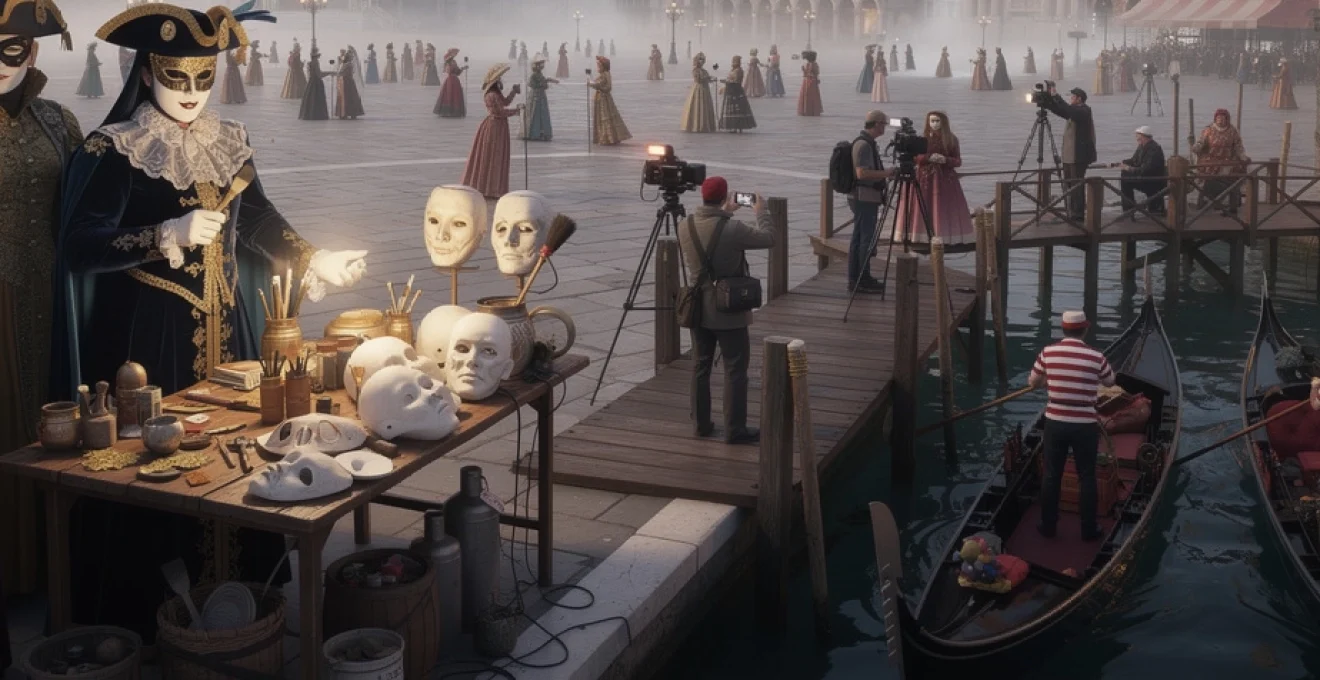
Venice transforms into a mesmerising theatrical stage each February, where centuries-old traditions blend seamlessly with contemporary celebration during the world-renowned Carnival. This extraordinary festival represents far more than elaborate costumes and ornate masks—it embodies the very essence of Venetian cultural identity, offering visitors an unparalleled glimpse into a living historical spectacle. From the intimate workshops of master craftsmen creating exquisite papier-mâché masks to the grandeur of exclusive masked balls held in historic palazzos, Venice Carnival provides an immersive experience that captivates millions of international visitors annually. The festival’s unique atmosphere, enhanced by the city’s distinctive architecture and labyrinthine waterways, creates an otherworldly environment where reality and fantasy converge in the most spectacular fashion.
Historical evolution of venetian carnival traditions from medieval origins to modern revival
The origins of Venice Carnival trace back to 1162, when the Venetian Republic celebrated a military victory over the Patriarch of Aquileia with spontaneous festivities in Saint Mark’s Square. This impromptu celebration evolved into an annual tradition that would eventually become one of Europe’s most prestigious cultural events. By the medieval period, the festival had become officially recognised, with documents from 1296 formally declaring it a public celebration, though evidence suggests pre-Lenten festivities existed as early as 1094.
The 18th century marked the golden age of Venetian Carnival, when the festival reached unprecedented heights of extravagance and international renown. During this period, celebrations could extend for several months, beginning as early as October and continuing through the pre-Lenten period. The carnival attracted European aristocracy, intellectuals, and adventurers, including the famous Giacomo Casanova, who immortalised the festival’s hedonistic atmosphere in his memoirs. The elaborate mask-wearing tradition flourished during this era, serving both practical and social purposes by allowing participants to transcend rigid social hierarchies and engage in otherwise forbidden activities.
The carnival’s decline began with political upheavals in the late 18th century. French occupation in 1797, followed by Austrian rule, imposed strict regulations that effectively banned the festival for its perceived moral excesses. The tradition of mask-wearing was particularly targeted, as authorities viewed anonymity as a threat to social order. For nearly two centuries, Venice Carnival existed only as a shadow of its former glory, occasionally surfacing in private gatherings or limited island celebrations within the lagoon.
The remarkable revival of Venice Carnival in 1979 represents one of the most successful cultural resurrections in modern history. Initiated by local artists, intellectuals, and tourism advocates, the restoration aimed to reconnect Venice with its cultural heritage while stimulating economic activity. The contemporary festival maintains the essential elements of historical carnival whilst adapting to modern sensibilities and international tourism demands. Today’s celebration successfully balances authenticity with accessibility, ensuring the continuation of centuries-old traditions for future generations whilst providing economic benefits to local artisans and businesses.
Carnival calendar and seasonal programming: dates, duration, and annual festivities schedule
Venice Carnival follows the traditional Catholic calendar, taking place during the two weeks preceding Lent, typically spanning from late January through early March. The festival’s timing varies annually based on Easter calculations, creating anticipation amongst seasoned carnival enthusiasts who plan their visits around specific astronomical and liturgical determinations. For 2026, the official carnival period runs from January 31st through February 17th, with peak festivities concentrated during the final ten days when most international visitors arrive.
Pre-carnival events and opening ceremonies at piazza san marco
The carnival season officially commences with pre-festivities beginning around February 7th, featuring preparatory events that build momentum for the main celebration. The opening ceremony traditionally takes place on the first weekend with the spectacular Corteo Acqueo, a water parade featuring decorated boats, gondolas, and period-costumed participants navigating the Grand Canal from Santa Lucia railway station to the Rialto Bridge. This aquatic procession serves as both a tourist attraction and a ceremonial declaration of carnival’s commencement, drawing thousands of spectators along the canal banks.
Piazza San Marco transforms into the festival’s primary stage during opening weekend, hosting the coronation ceremonies and initial costume competitions. The iconic Flight of the Angel
Piazza San Marco transforms into the festival’s primary stage during opening weekend, hosting the coronation ceremonies and initial costume competitions. The iconic Flight of the Angel (Volo dell’Angelo) usually takes place at midday on the first Sunday of the main carnival period: a costumed “angel” descends by cable from the bell tower of San Marco to the centre of the square, symbolically opening the festivities. This breathtaking ritual, inspired by Renaissance acrobatic feats, is accompanied by music, flag-throwers, and an ocean of spectators in masks. If you want a good view, you should arrive at least an hour in advance and be prepared for dense crowds, security checks, and limited mobility around the square. For many visitors, witnessing the Flight of the Angel in person is the moment when the Venice Carnival truly begins.
Weekend programming and peak attendance periods during carnival season
While Venice Carnival technically spans more than two weeks, activity intensifies dramatically on Fridays, Saturdays, and Sundays. Weekends are when most official events, costume parades, and high-profile masked balls take place, and when visitor numbers peak across the historic centre. Piazza San Marco and the surrounding calli become open-air catwalks where costumed participants pose for photos, while secondary squares such as Campo Santo Stefano and Campo San Polo host street performances, food stalls, and live music. If you prefer to experience carnival with slightly fewer crowds, consider visiting during the first week or midweek days, when the atmosphere is still lively but more manageable.
The second weekend of carnival traditionally introduces the Festa delle Marie, a historical re-enactment recalling the rescue of twelve Venetian brides from pirates. Twelve young women, selected in advance, parade through the city in lavish period costume, culminating in a presentation in Piazza San Marco and, on Shrove Tuesday, the crowning of the winning “Maria.” Parallel to these historical processions, themed events, children’s activities, and free concerts unfold across the city. For travellers who want to attend a private masquerade ball or opera performance during Venice Carnival, booking for the final two weekends is essential, as these dates sell out months in advance and define the festival’s social calendar.
Shrove tuesday finale and traditional closing rituals
Shrove Tuesday (Martedì Grasso) marks the climax of Venice Carnival and the symbolic transition from indulgence to the reflective period of Lent. The day’s programme usually includes the final rounds of the official costume contest, with the announcement of the “Best Masked Costume” on a large stage in Piazza San Marco. The winner, often chosen from dozens of elaborately dressed contestants, joins the previous year’s “Angel” and the newly crowned “Maria” in a final public appearance. This closing ceremony combines historical pageantry with a distinctly modern appreciation for costume design and artistic creativity.
As evening falls on Shrove Tuesday, the atmosphere in the city subtly shifts. Many visitors gather along the waterfront of Riva degli Schiavoni or around the Rialto Bridge to enjoy last-minute photographs of masked figures against the lagoon at sunset. Some years, the municipality organises closing concerts or fireworks, though programming varies. At midnight, carnival officially ends, and traditional Catholic custom dictates the beginning of abstinence and simplicity. For you as a visitor, this means that the city quietens almost overnight—an apt reminder that Venice Carnival, like a theatre production, is a temporary but unforgettable performance.
Weather considerations and acqua alta impact on carnival activities
Venice Carnival takes place in late winter, so you should anticipate cold, damp conditions rather than mild spring weather. Average daytime temperatures during February hover between 3°C and 9°C (37°F–48°F), and evening wind chill along the canals can make it feel colder. Light rain and mist are frequent, contributing to the carnival’s mysterious atmosphere but also requiring practical clothing choices such as waterproof boots, layered outfits, gloves, and scarves. If you are planning to wear a detailed historical costume, it is wise to factor in thermal layers and comfortable shoes hidden beneath voluminous skirts or cloaks. After all, you may be standing for long periods while photographers capture shots of your look.
Another important consideration is acqua alta, the seasonal high tide that can periodically flood low-lying areas, especially around Piazza San Marco. While modern tide barriers and improved forecasting have reduced the frequency of disruptive floods, short-lived water levels of 80–110 cm can still occur. In practice, this means that raised wooden walkways may be installed through the square, and certain events might be rescheduled, relocated, or slightly delayed. Checking tide forecasts a few days before your arrival, as well as following the municipality’s official channels or hotel updates, helps you adapt your plans. A pair of lightweight waterproof overshoes can be as essential to your Venice Carnival packing list as your mask.
Traditional venetian mask classifications and artisanal craftsmanship techniques
Masks are the visual signature of the Venice Carnival, and understanding their classifications transforms them from simple souvenirs into cultural artefacts. Historically, masks were not limited to carnival season; Venetians once wore them during much of the year to conduct affairs—romantic, political, or financial—under a veil of anonymity. Over time, certain standardised forms emerged, each associated with a specific social role or theatrical character. When you walk through Venice during carnival, you are effectively stepping into a living gallery of these archetypes, from austere white bauta to enigmatic oval volto and silent, button-held moretta.
Today, master mask-makers (mascherari) continue to work largely by hand, using techniques codified in guild statutes as early as the fifteenth century. Authentic Venetian masks are typically crafted from papier-mâché rather than plastic, then finished with gesso, tempera or acrylic paints, gold leaf, and traditional decorative materials. The result is an object that is both wearable and collectible: light enough to be used for hours during carnival events, yet detailed enough to display at home. By learning to recognise these craftsmanship markers, you can choose pieces that support local artisans and preserve a centuries-old art form.
Bauta, moretta, and volto: classical venetian mask categories
The bauta is perhaps the most iconic Venetian carnival mask. Characterised by its pronounced jaw, protruding nose, and absence of a mouth opening, it was traditionally worn with a black cloak (tabarro) and tri-cornered hat. Its specific shape allowed the wearer to drink and speak without removing the mask, making it ideal for political meetings, gambling, and clandestine encounters. In the eighteenth century, even members of the Venetian Senate wore the bauta during secret councils, turning anonymity into a formal element of governance. When you see a figure in full bauta attire gliding across Piazza San Marco, you are witnessing a direct echo of this political and social history.
The moretta, by contrast, is a smaller, oval mask traditionally worn by women. Originally made of black velvet and held in place not with ribbons but by biting a small button on the inside, the moretta forced its wearer into silence. This combination of visual impact and enforced muteness created an aura of mystery and power, as the masked woman could observe without being obliged to speak. The volto (also known as larva, meaning “ghost”) is the simplest yet arguably most haunting classical Venetian mask: a smooth, full-face white form often paired with a cloak and hat. Because of its blank expression, it acts almost like a canvas, reflecting back the projections of onlookers—it is to carnival what a plain stage is to theatre, ready to host any character you imagine.
Papier-mâché construction methods and traditional materials
Authentic Venetian masks are usually constructed using layered papier-mâché, a method that combines durability with lightness. Artisans begin by applying strips of special paper, often recycled cotton or cellulose-based sheets, onto a mould coated in a separating agent. Each layer is brushed with a gluten-free glue or natural adhesive and left to dry thoroughly before the next is added, a process that can take several days depending on humidity. This multi-layer structure is what prevents genuine masks from cracking easily and allows them to retain their shape year after year. Once removed from the mould, the rough form is trimmed, sanded, and coated with a chalk-based gesso to create a smooth surface for painting.
Decoration is where a mask-maker’s personal style becomes apparent. Traditional techniques include applying gold or silver leaf, hand-painting motifs inspired by Baroque ornamentation, and incorporating elements from commedia dell’arte such as diamonds, musical notes, or theatrical scenes. Some workshops still use tempera paints prepared with egg yolk, while others prefer modern acrylics for flexibility and colour intensity. Additional materials may include lace, feathers, metal filigree, Swarovski crystals, and silk ribbons. Much like a luthier shaping a violin, a skilled mascheraro balances aesthetic complexity with the practical need for comfort and breathability, ensuring that the finished mask can be worn through long nights of dancing during Venice Carnival celebrations.
Contemporary mask atelier locations: ca’ macana and laboratorio artigiano maschere
For visitors who want to go beyond tourist stalls and discover genuine Venetian mask craftsmanship, a visit to a respected atelier is essential. Ca’ Macana, located in the Dorsoduro district near Campo Santa Margherita, is one of the city’s best-known workshops. Its artisans specialise in traditional papier-mâché masks as well as creative reinterpretations, including characters from commedia dell’arte, animals, and oversized fantasy designs. The atelier also offers mask-painting classes outside the busiest carnival days, allowing you to participate in the creative process and bring home a personalised souvenir. During carnival season, Ca’ Macana extends its opening hours, but workshop places are limited and should be booked well in advance.
Another noteworthy studio is Laboratorio Artigiano Maschere, a smaller, often family-run workshop where production remains resolutely artisanal. Here, you can observe stages of the mask-making process, from moulding and drying to hand-finishing and decoration. Many of these ateliers prefer not to allow photography inside, both to protect their designs and to maintain a focused working environment. This is a valuable sign of authenticity: mass-market souvenir shops have no such restrictions. When planning your Venice Carnival itinerary, dedicating an hour or two to exploring these ateliers adds depth to your understanding of the festival, turning the act of purchasing a mask into a meaningful cultural exchange rather than a quick transaction.
Authentic mask authentication and quality assessment criteria
With thousands of masks on sale during Venice Carnival, distinguishing authentic artisanal pieces from mass-produced imports can be challenging. One of the simplest tests is tactile: genuine papier-mâché masks feel light yet solid, with a slightly textured interior and a smooth, carefully finished exterior. Plastic masks, by contrast, are rigid, shiny, and often have rough or unfinished edges around the eyes, nose, and mouth. Look also at the back of the mask; artisanal makers usually paint or seal the interior and attach soft, fabric-covered ribbons rather than simple elastic bands. If you see stickers indicating “Made in China” or similar wording, you can be sure the piece is not a product of Venetian craftsmanship.
Authentic Venice mask workshops typically sign or stamp their creations, sometimes including a certificate of origin or a small card describing the design’s name and historical inspiration. Do not hesitate to ask the seller about the production process—where the mask was made, who painted it, and what materials were used. Genuine artisans will answer confidently and in detail, often pointing out small imperfections as proof of handwork rather than machine manufacturing. While high-quality masks may cost significantly more than street-stall versions, they are durable, more comfortable to wear, and support the continuation of a heritage craft. In the long run, investing in one or two exceptional pieces is far more rewarding than purchasing a suitcase full of disposable souvenirs.
Strategic accommodation booking and venice district selection for carnival visitors
Finding the right place to stay during Venice Carnival can dramatically influence your experience, especially given the city’s complex geography and high seasonal demand. The historic centre is divided into six neighbourhoods (sestieri): San Marco, San Polo, Dorsoduro, Cannaregio, Castello, and Santa Croce. Each offers a different balance of proximity to main events, crowd levels, and budget options. San Marco, for instance, places you at the heart of carnival activity, with Piazza San Marco and the main stage just minutes away. However, this convenience comes with premium pricing, intense noise, and constant foot traffic—ideal if you crave immersion, less so if you value tranquility. Booking here requires planning many months ahead, particularly for stays across the final carnival weekend.
Dorsoduro and San Polo offer an attractive middle ground for Venice Carnival visitors. Dorsoduro, home to the Accademia Bridge and many art galleries, feels slightly more residential while still being within a 15–20-minute walk of Piazza San Marco. San Polo, centred around the Rialto Bridge, connects well to both the Grand Canal and major vaporetto lines, which is useful if you intend to attend evening events across the city. These districts also have a good selection of mid-range boutique hotels and apartments, and they allow easier escape into quieter streets once the nightly festivities end. If you are travelling as a group of friends or a family, renting an apartment in these areas can provide better value, more space, and the option to self-cater between indulgent carnival dinners.
For visitors prioritising budget and local atmosphere, Cannaregio and Castello are excellent choices during Venice Carnival. Cannaregio stretches from the train station towards the northern lagoon and includes many eateries, wine bars, and artisan shops that remain popular with residents. From here, you can walk to Piazza San Marco in around 20–30 minutes or rely on vaporetto lines along the Grand Canal. Castello, especially the eastern part near the Arsenale and Giardini, is even quieter and more residential, yet it often hosts satellite carnival events, parades, and children’s activities. Staying in these districts allows you to experience both sides of carnival: the spectacle in the centre and the everyday rhythm of Venetian life in the outer streets.
Regardless of which district you choose, early booking is crucial. Carnival is one of Venice’s busiest periods, with hotel occupancy frequently surpassing 80–90% across the city and prices rising sharply as dates approach. It is advisable to secure accommodation as soon as official carnival dates are announced, then adjust flight or train bookings accordingly. When comparing options, factor in not only nightly rates but also cancellation policies, breakfast availability (helpful before early-morning photography sessions), and proximity to vaporetto stops. Given occasional acqua alta and crowd congestion, being within a short, direct walk of public transport can save time and stress, especially after late-night masked balls or concerts.
Carnival event categories: masked balls, regatta competitions, and cultural performances
Venice Carnival is not a single event but a constellation of experiences ranging from exclusive masked balls in private palaces to free street performances accessible to every passer-by. Understanding the main event categories helps you design an itinerary that matches your budget, interests, and energy levels. At one end of the spectrum lie high-end gala evenings such as Il Ballo del Doge or the Carnival in Love Grand Ball, where tickets can cost hundreds or even thousands of euros and historical costume is mandatory. At the other end, you will find open-air concerts, comedy sketches, and processions that can be enjoyed simply by showing up at the right square at the right time. Think of the festival as an opera with multiple acts playing out simultaneously across the city—your role is to decide which scenes you want to step into.
In between these extremes are mid-range experiences such as themed dinners in restaurants, small-scale masquerade parties in boutique hotels, and Carnival-themed guided walks. Many visitors choose a hybrid approach: one major ticketed event complemented by several free or low-cost activities. When planning, keep in mind that the densest concentration of Venice Carnival events occurs over the two weekends before Shrove Tuesday. This is also when you will encounter the highest levels of crowding, so leaving some flexibility in your schedule allows you to adapt if a particular square or street becomes too congested for comfort.
Ca’ rezzonico and palazzo pisani moretta exclusive ball events
Among the most sought-after venues for masked balls during Venice Carnival are the city’s grand canal palaces, whose ornate interiors provide a perfect backdrop for historical re-enactments. Ca’ Rezzonico, an eighteenth-century palace now housing the Museum of Eighteenth-Century Venice, occasionally hosts official or private gala evenings in its frescoed halls. Attendees arrive by boat, stepping directly from gondolas or water taxis onto private docks before ascending monumental staircases lit by chandeliers. Even if you do not attend a ball here, visiting Ca’ Rezzonico during the day offers valuable context: you can imagine how the same rooms transform at night under candlelight, live music, and swirling silk skirts.
Palazzo Pisani Moretta, another iconic Grand Canal residence, is well known as a regular host of high-end carnival balls such as the Ball of Dreams or Carnival in Love. These events typically include a welcome cocktail reception, multi-course gala dinner, cabaret and opera performances, and dancing until late. Historical costumes—often rented from specialised ateliers—are obligatory, and dress codes can be precise down to the silhouette and accessories. Tickets must be purchased months in advance and often include optional packages for costume rental and professional photography. For many travellers, attending a ball at Palazzo Pisani Moretta is the ultimate Venice Carnival bucket-list experience, akin to stepping through a portal into the world of Casanova.
Traditional regata storica and gondolier competitions during carnival
Although the famous Regata Storica usually takes place in early September rather than during Venice Carnival, the spirit of rowing and water-based pageantry remains central to the festival. The carnival period often opens with a spectacular water parade along the Grand Canal, in which traditional rowing clubs decorate wooden boats and barges with allegorical themes. Rowers dressed in historical or fantastical costumes glide past crowds lining the fondamenta and bridges, accompanied by music and commentary. For you as a spectator, this event offers a rare chance to see Venice’s historic boats—such as the gondolino and mascareta—in ceremonial use, rather than solely as tourist transport.
On some carnival weekends, local rowing associations and community groups organise informal competitions or demonstrations, especially in the Cannaregio and Castello districts. While these events may not match the scale of the official Regata Storica, they carry significant cultural value and are less crowded than central festivities. If you are keen to witness Venice’s aquatic traditions, consult the official carnival programme or ask your hotel for up-to-date schedules, as times and routes can change annually. Watching rowers cut through the misty lagoon in colourful costumes is an unforgettable complement to the land-based spectacles of masks and music.
Teatro la fenice opera performances and classical concert programming
For culture lovers, Venice Carnival is a perfect moment to combine outdoor festivities with world-class performing arts. Teatro La Fenice, Venice’s historic opera house, typically aligns its season with the carnival period, staging operas, ballets, and classical concerts that evoke the city’s eighteenth-century golden age. Past programmes have included works such as Rigoletto, The Barber of Seville, and La Traviata, often scheduled on carnival weekends to attract both locals and international visitors. Attending a performance here offers a different perspective on the festival: instead of open-air spontaneity, you experience orchestrated drama within one of Europe’s most ornate theatres.
Tickets for La Fenice during Venice Carnival should be secured well in advance, especially for weekend performances. Dress codes are smart—some evenings explicitly encourage formal or even masked attire, although historical costume is not usually required. Beyond La Fenice, smaller churches and concert halls across the city, such as Scuola Grande di San Teodoro or San Vidal, host Vivaldi, Baroque, and chamber-music concerts that complement the carnival atmosphere. If you are planning a full day of activities, consider scheduling concerts for the late evening; they offer a calm, seated counterpoint to hours spent navigating crowds and photographing masks in Piazza San Marco.
Street entertainment districts: campo santa margherita and castello neighbourhood activities
While Piazza San Marco is the headline venue of Venice Carnival, some of the most enjoyable experiences unfold in smaller squares scattered throughout the city. Campo Santa Margherita in Dorsoduro is a lively hub favoured by students and locals year-round, and during carnival it becomes a focal point for street performances, food stands, and informal gatherings. Here you are likely to encounter jugglers, musicians, and families in costume, along with stalls selling frittelle, galani, and hot chocolate. The atmosphere is more relaxed than in San Marco, making it an excellent area for you to take a break, enjoy a spritz, and observe everyday Venetians participating in the festivities.
In the Castello district, particularly near Via Garibaldi and the Arsenale, the municipality often organises neighbourhood-focused events such as children’s workshops, small parades, and open-air theatre. These activities reflect the more community-orientated side of Venice Carnival, far from the luxury balls and international glamour. If you are travelling with children or prefer a less touristy setting, spending an afternoon in Castello can be extremely rewarding. Not only do you avoid the densest crowds, but you also gain insight into how carnival functions as a living tradition for residents rather than just a spectacle for visitors.
Photography guidelines and crowd management strategies for optimal carnival experience
Capturing Venice Carnival through your lens can be one of the most fulfilling aspects of your trip, but it requires some planning to avoid frustration. The combination of narrow streets, large crowds, and highly sought-after subjects means that spontaneous photography can quickly become stressful. To maximise your chances of coming home with images you love, it helps to think like a photojournalist: plan your locations and times, anticipate where the action will occur, and prepare to adapt. Early mornings, especially on weekdays, offer soft light and relatively empty streets, ideal for wide shots of canals, bridges, and occasional solitary costumed figures. Late afternoons and sunsets around Riva degli Schiavoni or the Accademia Bridge provide excellent backdrops for silhouettes and lagoon vistas.
When it comes to photographing masked participants, etiquette is crucial. Although most people wearing elaborate costumes during Venice Carnival expect to be photographed, it is still polite to establish eye contact and, when possible, ask permission with a simple “photo?” and a gesture towards your camera. Many costumed visitors will respond by striking a pose or moving to a more photogenic location, such as near a column or canal railing. To handle the challenging lighting conditions—bright masks against dark cloaks, or strong reflections from water—consider using a lens with a wide aperture (f/1.8–f/2.8) and adjusting exposure compensation to avoid blown highlights. A polarising filter can help reduce glare from the lagoon and wet pavements, especially during midday.
Crowd management is another key element of enjoying Venice Carnival, whether or not you are taking photos. Major bottlenecks occur around the Rialto Bridge, the entrances to Piazza San Marco, and the connecting streets of Mercerie. During peak hours on weekends, these areas can resemble slow-moving rivers of people, making it difficult to stop or change direction. To reduce stress, familiarise yourself with alternative routes on a map: for example, using parallel calli behind the main shopping streets or crossing the Grand Canal via lesser-known traghetto crossings instead of always relying on the Rialto Bridge. Planning breaks in quieter sestieri such as Cannaregio or eastern Castello allows you to recharge before diving back into the densest festivities.
Practical considerations also contribute to a smoother Venice Carnival experience. Wear comfortable, waterproof footwear with good grip—cobblestones can be slippery when wet, and you may spend hours on your feet. Keep valuables secure in a zipped bag or money belt, as dense crowds are attractive environments for pickpockets in any major city. If you intend to stay out late for masked balls or concerts, check vaporetto schedules in advance and identify the nearest night-line stops to your accommodation. Finally, accept that you cannot see everything. Venice Carnival is intentionally overwhelming, more like a kaleidoscope than a checklist; by prioritising a handful of meaningful experiences and leaving room for serendipity, you give yourself the best chance to enjoy this extraordinary festival without feeling exhausted by it.