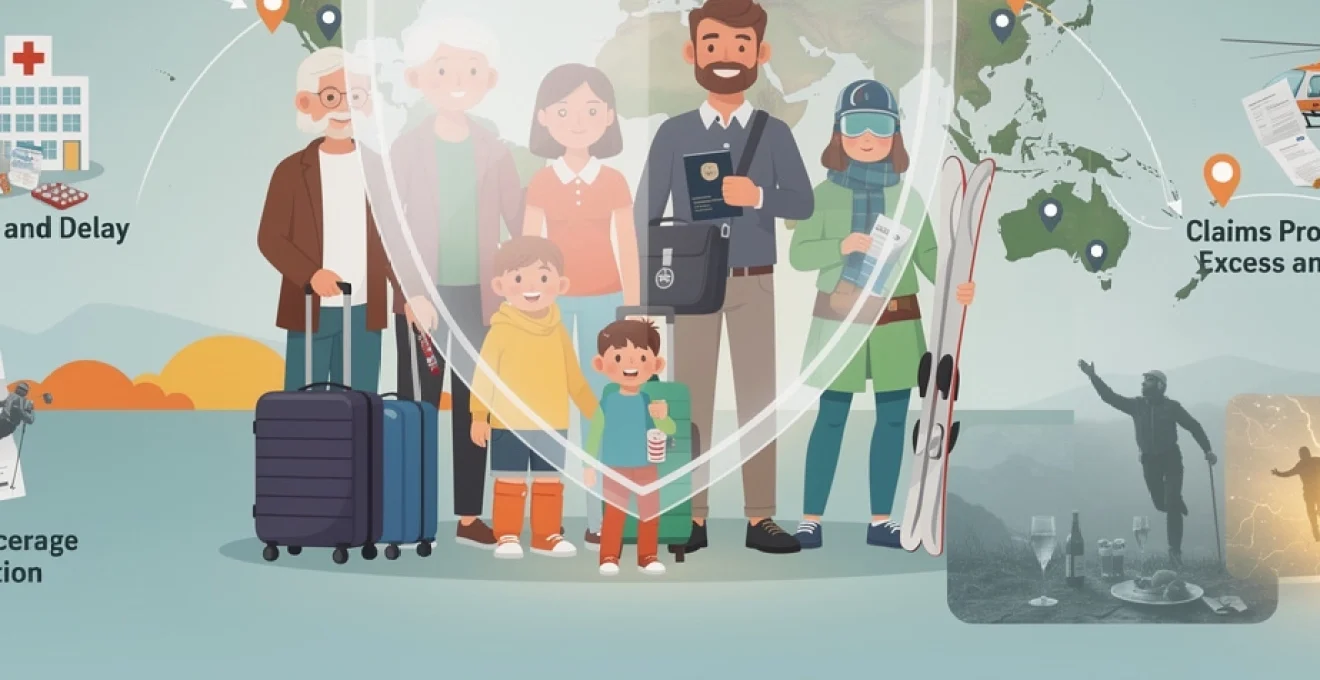
# The Complete Guide to Travel Insurance: What It Covers and Why You Need It
Travel insurance remains one of the most overlooked yet essential components of holiday planning. Each year, millions of travellers venture overseas without adequate protection, only to face catastrophic financial consequences when emergencies strike. Medical evacuations can cost upwards of £100,000, whilst a single hospital stay in the United States might exceed £50,000. Beyond these stark figures lies a more fundamental truth: comprehensive travel insurance provides not merely financial protection, but also access to 24-hour emergency assistance networks that prove invaluable when you’re navigating unfamiliar healthcare systems thousands of miles from home. Whether you’re planning a weekend city break or an extended adventure across multiple continents, understanding the intricacies of travel insurance coverage can mean the difference between a manageable inconvenience and financial devastation.
What travel insurance covers: policy components and coverage scope
Modern travel insurance policies comprise multiple protection layers, each designed to address specific risks associated with international travel. The structure of these policies has evolved considerably over the past decade, with insurers developing increasingly sophisticated coverage frameworks that respond to the diverse needs of contemporary travellers. Understanding the core components of your policy enables you to make informed decisions about the level of protection you require for your specific circumstances.
Medical emergency coverage and evacuation services abroad
Medical expense coverage forms the cornerstone of any comprehensive travel insurance policy, protecting you against potentially ruinous healthcare costs in foreign jurisdictions. Standard policies typically provide coverage ranging from £2 million to £10 million for medical treatment abroad, though the actual amount you’ll need depends heavily on your destination. European trips generally require lower limits due to reciprocal healthcare agreements, whilst journeys to North America or the Middle East demand significantly higher protection levels.
Emergency medical repatriation represents one of the most critical yet frequently misunderstood aspects of medical coverage. This provision covers the costs of transporting you back to the UK when local medical facilities cannot provide adequate treatment for your condition. Air ambulance services alone can exceed £25,000 for a single journey, with specialist medical staff accompanying critically ill patients adding substantial additional expenses. Your policy should also cover accommodation costs for a companion if you’re hospitalised abroad, along with their return travel arrangements.
Most insurers maintain 24-hour emergency assistance helplines staffed by multilingual medical professionals who can coordinate treatment, communicate with local healthcare providers, and arrange payments directly with hospitals. This service proves particularly valuable in countries where medical facilities expect immediate payment before commencing treatment, a common practice throughout much of Asia, Africa, and South America.
Trip cancellation and interruption protection terms
Cancellation coverage protects your financial investment when unforeseen circumstances force you to abandon your travel plans before departure. This component only functions effectively if you purchase your policy immediately after booking your trip, as coverage typically begins from the moment you arrange your insurance rather than from your departure date. Insured events usually include serious illness or injury affecting you or your immediate family members, bereavement, jury service, redundancy, and home emergencies such as flooding or fire damage.
Trip curtailment provisions operate similarly but apply when you must return home early after your journey has commenced. These sections reimburse the unused portion of your holiday costs, plus reasonable additional travel expenses incurred to return home. Many travellers mistakenly assume their package holiday operator will cover these costs, but tour operator liability typically extends only to failures within their direct control, not personal emergencies affecting individual customers.
The financial limits for cancellation claims often mirror the overall policy value, with standard policies covering trips up to £5,000 per person and premium options extending to £10,000 or beyond. You should carefully review these limits against your actual holiday costs, particularly for long-haul destinations, cruise bookings, or luxury accommodations where expenses can escalate rapidly.
Baggage loss, delay, and personal effects indemnification
Personal property coverage within travel insurance policies addresses loss, theft, or damage to your belongings whilst travelling. Standard policies typically provide overall baggage limits between £1,500 and £3,000, with strict single-item limits of £200 to £500 applying to valuable items such as cameras, laptops, jewellery, and mobile
phones. If you routinely travel with high-value gadgets, you may need a separate personal possessions or gadget policy, as standard travel insurance rarely covers the full replacement cost of multiple devices. Insurers will also expect you to take reasonable care of your belongings; leaving a bag unattended in a café or storing jewellery in checked luggage may invalidate a claim. Many policies provide additional cover for baggage delay on the outward journey, reimbursing you for essential items such as toiletries and basic clothing if your suitcase is temporarily misdirected.
When assessing baggage cover limits, compare them carefully with the actual value of what you intend to take with you. Underinsurance remains a common issue, with travellers assuming that the headline baggage figure applies to any single item. In reality, single article limits and valuable item caps can significantly reduce the payout you receive if, for instance, only your laptop is stolen. You should also keep receipts or bank statements for any major purchases, as insurers often require proof of ownership and value when processing claims for lost or damaged property.
Flight delay compensation and missed connection benefits
Flight disruption cover within travel insurance policies is designed to complement, rather than replace, your rights under airline regulations and consumer law. While legislation such as UK261 or EU261 may entitle you to compensation from the airline for long delays or cancellations, travel insurance can step in to cover additional expenses that carriers are not obliged to pay, such as overnight accommodation, meals, and alternative transport arrangements. Policies typically include a travel delay benefit, paying a fixed sum after a specified number of hours’ delay, and a separate section for missed departure or missed connection.
Missed departure cover usually applies when you fail to reach your initial international flight or onward connection due to events outside your control, for example severe public transport disruption, adverse weather, or a motorway accident. In such cases, your insurer may reimburse reasonable extra costs to reach your final destination, including new flights, train tickets, or hotel stays. It is important to retain documentation such as airline confirmation of delay, receipts for any expenditure, and evidence of the underlying cause (for instance, a breakdown report or police incident number). Without this paper trail, insurers may be unable to validate your claim.
Limitations and excesses for travel delay and missed connection benefits can vary widely between policies, so you should examine the small print before assuming you are fully protected. Some policies only pay a modest lump sum regardless of your actual costs, whilst others offer more generous reimbursement subject to prior approval from the assistance provider. You should also note that delays caused by known strikes, pre-announced schedule changes, or failing to allow sufficient time between connections are commonly excluded.
Adventure sports and high-risk activity exclusions
Standard travel insurance is primarily designed for conventional holiday activities, not for high-adrenaline pursuits that materially increase the likelihood of injury. As such, many policies exclude or restrict cover for adventure sports such as off-piste skiing, mountaineering above certain altitudes, scuba diving beyond specified depths, skydiving, and motor sports. If your itinerary includes these kinds of activities, you will often need to purchase an adventure sports add-on or select a specialist insurer whose policy schedule explicitly lists the sports you plan to undertake.
Insurers typically classify activities into risk tiers, with low-risk options such as snorkelling or gentle hiking included as standard, and higher-risk pursuits requiring additional premiums. Some sports may be covered only when undertaken with a licensed operator or qualified guide, and safety equipment such as helmets may be mandatory. For example, a policy might cover on-piste skiing at recognised resorts but exclude any claim arising from skiing in closed areas or under the influence of alcohol. Understanding these nuances is crucial; otherwise, you may assume you are protected only to discover an exclusion after an accident.
Before booking extreme or high-risk activities, it is wise to cross-check your itinerary against the insurer’s activity list and, if necessary, request written confirmation of cover. Think of this as reading the rulebook before playing a complex game: knowing the boundaries in advance helps you avoid unintentional rule breaches. If you participate in professional competitions, record-breaking attempts, or expedition-style trips to remote regions, you will almost certainly require bespoke expedition insurance rather than standard holiday cover.
Pre-existing medical conditions: disclosure requirements and underwriting considerations
Pre-existing medical conditions represent one of the most complex and misunderstood areas of travel insurance underwriting. From the insurer’s perspective, accurately assessing medical risk is essential to pricing policies fairly and ensuring that claims can be paid when they arise. From your perspective, full disclosure protects you from the devastating scenario of having a major claim rejected due to undisclosed medical history. As a general rule, any condition for which you have received treatment, medication, investigations, or specialist advice before purchasing the policy must be declared, regardless of whether you currently feel well.
Insurers normally use a structured medical screening questionnaire to evaluate your health status, asking about diagnoses, surgeries, hospital admissions, and ongoing medications. This process can feel intrusive, but it is analogous to a mechanic checking every key component before clearing a long road trip: the goal is to identify potential risks and ensure the policy is fit for purpose. Failing to mention something material – even unintentionally – may give the insurer grounds to refuse related claims, so it is always better to over-disclose and allow the underwriter to decide what is relevant.
Cardiovascular disease and chronic illness declaration protocols
Cardiovascular conditions such as coronary artery disease, angina, atrial fibrillation, and previous heart attacks are treated as significant risk factors by travel insurers. If you have any form of heart or circulatory disease, you will almost certainly need to complete a detailed medical screening, specifying when the condition was diagnosed, what medication you take, and whether you have experienced recent symptoms or hospital admissions. Similar protocols apply to other chronic illnesses, including diabetes, chronic kidney disease, COPD, and long-term neurological conditions.
Many travellers assume that if their condition is stable and well-managed, they can skip disclosure; this is a dangerous misconception. Even if you have not seen a consultant recently or feel “back to normal”, your history still affects the insurer’s assessment of potential medical costs abroad. Proper disclosure allows the insurer to decide whether to offer cover as standard, apply a premium loading, impose a higher excess, or exclude that condition altogether. Your GP or specialist can often provide a summary letter if you are unsure of specific dates or diagnoses, helping you answer the screening questions accurately.
It is also worth considering how your chronic illness may interact with the stresses of travel – long flights, extreme temperatures, higher altitudes, or unfamiliar food can all act as triggers. Discussing your travel plans with a healthcare professional before you buy insurance can help you understand whether the trip is medically advisable and what additional precautions you might need to take. In turn, you can share this information with the insurer, supporting a more accurate and favourable underwriting outcome.
Look-back period regulations and medical stability clauses
Many travel insurance policies include a look-back period, which is the timeframe during which any new symptoms, diagnoses, or changes to treatment must be disclosed. Common look-back periods range from 60 days to 2 years, although some medical screening questions refer to your entire lifetime history for serious conditions such as cancer or stroke. If, for instance, you were hospitalised for chest pain within the past six months, this would almost certainly fall within the look-back window and need to be declared during screening.
Closely related are medical stability clauses, which define how long a condition must remain unchanged – without new symptoms, hospital admissions, or alterations to medication – before it can be considered stable. Some policies only offer cover for pre-existing conditions that have been stable for a specified period, often 90 or 180 days. If your treatment is still being adjusted or further investigations are pending, the insurer may view your condition as unstable and either decline cover or exclude that particular illness from the policy.
The practical implication for you is straightforward: any change in your health between buying the policy and travelling may need to be reported. If your doctor alters your medication dosage, if new symptoms appear, or if you are placed on a waiting list for surgery, you should contact your insurer as soon as possible. They may need to reassess your risk, adjust your premium, or in rare cases withdraw cover, but disclosing changes proactively is far safer than hoping they will go unnoticed should you later need to claim.
Premium loading and excess application for pre-existing conditions
When an insurer accepts cover for one or more pre-existing medical conditions, they may apply premium loading to reflect the increased likelihood of a claim. This is similar to how car insurers charge more for high-performance vehicles: the underlying risk is simply higher. The additional cost can vary significantly depending on factors such as your age, the seriousness of the condition, recent medical history, and your destination country’s healthcare costs. A stable, well-managed condition might attract only a modest increase, whereas multiple complex conditions could substantially raise the overall premium.
In addition to loading, insurers sometimes impose a higher medical excess for claims related to pre-existing conditions. This means you would pay more out of pocket if you were hospitalised abroad for that specific illness, but the insurer would still cover the majority of the costs beyond the excess. Some travellers choose this structure deliberately as a way to keep premiums more affordable, much like opting for a larger voluntary excess on home insurance to reduce the annual price. It is, however, vital to ensure that any excess remains a sum you could realistically afford in an emergency.
When comparing travel insurance for pre-existing conditions, it can help to think in terms of total potential cost rather than just the upfront premium. A cheaper policy with a very high excess or restrictive condition-specific exclusions may prove more expensive in real terms if you need to claim. Requesting multiple quotes with different excess options and cover levels allows you to find a balance between affordability and meaningful protection.
Specialist travel insurance providers: allclear and insurancewith comparison
For travellers with complex medical histories or multiple pre-existing conditions, mainstream insurers and comparison sites may offer limited options or decline cover altogether. In these circumstances, specialist medical travel insurance providers such as Allclear and Insurancewith can provide a more tailored solution. These companies focus specifically on higher-risk travellers, using more nuanced underwriting models and detailed medical questionnaires to offer cover where standard insurers may not.
Allclear is known for providing policies with no upper age limit and for considering a very wide range of conditions, including serious heart disease and cancer. Their screening process is thorough, but this depth allows them to price risk more precisely and potentially offer cover that would otherwise be unavailable. Insurancewith, by contrast, places particular emphasis on supporting customers with conditions such as cancer, mental health issues, and rare diseases, often incorporating additional support services and charity partnerships into their offerings.
When choosing between specialist providers, you should evaluate not only the premium but also medical cover limits, cancellation protection, and any condition-specific exclusions. It can be helpful to obtain quotes from more than one specialist and to read customer feedback on claims handling, since the true test of any policy lies in how it performs when things go wrong. Ultimately, using a specialist may cost slightly more than a basic comparison-site policy, but the peace of mind of having your medical history properly covered is often invaluable.
Understanding policy exclusions and coverage limitations
Every travel insurance policy contains exclusions and limitations that define the boundaries of what is and is not covered. These clauses are not designed to “catch you out”, but rather to keep premiums affordable by excluding scenarios that are either extremely high-risk or outside the insurer’s control. From a practical standpoint, understanding these exclusions is just as important as knowing what your policy includes. Think of them as the guardrails on a bridge: you rarely notice them when traffic flows smoothly, but they determine how far you can safely go.
Exclusions can apply across the policy as a whole – for example, claims arising from criminal activity – or be specific to particular sections, such as personal possessions or medical expenses. Some limitations are common to almost all policies, while others vary significantly between insurers. Taking time to read the policy wording, especially the general exclusions and “what is not covered” subsections, helps you avoid unpleasant surprises should you need to claim. If anything is unclear, contacting the insurer for clarification before you travel is far easier than disputing an interpretation after an incident.
Alcohol-related incidents and negligent behaviour clauses
One of the most frequently misunderstood areas of travel insurance relates to alcohol consumption and negligent behaviour. Most policies do not require you to abstain from alcohol entirely; enjoying a drink on holiday is expected and, within reason, accepted. However, claims arising directly from excessive alcohol or drug use, or from behaviour that a reasonable person would consider reckless, are commonly excluded. For instance, injuring yourself while heavily intoxicated or climbing from one hotel balcony to another may be treated as gross negligence and therefore not covered.
Insurers will often look at medical records, witness statements, or police reports when assessing whether alcohol played a material role in an incident. Blood alcohol levels, if recorded, can be a key factor, but so can the circumstances surrounding the event. A fall on a wet floor after a single drink is very different from an accident involving dangerous behaviour after many hours of heavy drinking. As a rule of thumb, if your actions while abroad are markedly more reckless than you would consider acceptable at home, your travel insurance may not respond.
This does not mean you must avoid socialising, but it does highlight the value of moderation and common sense. You can think of your policy as a safety net that works best when you are also taking reasonable care of yourself. Maintaining this balance ensures that, should an unfortunate but genuine accident occur, you are well positioned to receive the full benefit of your medical and personal accident cover.
Government travel advisory restrictions and FCDO warnings
Another critical exclusion relates to official government travel advice. In the UK, the Foreign, Commonwealth & Development Office (FCDO) issues guidance on overseas destinations, including warnings against “all travel” or “all but essential travel” to particular regions. Most travel insurance policies provide limited or no cover for trips taken in defiance of these advisories. In practical terms, if you travel to a destination while an FCDO warning against non-essential travel is in place, your policy may not cover medical expenses, repatriation, or cancellation related to events linked to the underlying risk.
The rationale is straightforward: visiting a country during active conflict, severe political unrest, or a major natural disaster substantially increases the likelihood of a claim, to the point where it becomes difficult for standard insurers to price the risk. Some specialist providers offer high-risk or war-zone travel cover, but these are niche products with significantly higher premiums and strict conditions. For most leisure travellers, the safest course is to monitor FCDO advice both at the time of booking and shortly before departure, adjusting plans if the situation deteriorates.
Importantly, many policies do offer some protection if advice changes after you have booked but before you travel. In such cases, cancellation cover may apply, allowing you to recover unrecoverable costs if you decide not to proceed. The key is to act promptly and follow both your insurer’s guidance and official government advice; ignoring clear warnings may not only endanger your safety but also jeopardise your financial protection.
Epidemic and pandemic exclusion provisions post-COVID-19
The COVID-19 pandemic fundamentally reshaped how travel insurers approach epidemic and pandemic risks. Prior to 2020, many policies contained broad exclusions for pandemics, but these were rarely scrutinised by consumers. Today, wordings are more explicit, and coverage for COVID-19-related events varies considerably between providers. Some policies now include specific benefits for Covid medical treatment and quarantine costs, while others exclude pandemics for non-medical sections such as cancellation or travel disruption.
When reviewing travel insurance in the post-COVID era, you should look for clear references to epidemic and pandemic cover, particularly in relation to medical expenses, trip cancellation, and curtailment. Does the policy cover you if you test positive before departure and cannot travel? Are quarantine-related accommodation costs abroad included if you test positive on return? What happens if borders close or flights are cancelled due to a renewed outbreak? These nuances can make the difference between manageable inconvenience and substantial financial loss.
Because pandemic-related restrictions can change rapidly, insurers also pay close attention to government and local authority regulations. Travelling against public health guidance, failing to comply with mandatory testing or quarantine rules, or ignoring entry requirements may invalidate related claims. In uncertain times, staying informed, booking flexible travel arrangements, and selecting a policy with clear, transparent pandemic wording provide the most robust combination of protection.
Geographical exclusions: USA healthcare costs and high-risk territories
Geographical scope is another key limitation in many travel insurance policies. Insurers often divide the world into regions – for example, Europe, Worldwide excluding USA/Canada/Caribbean, and Worldwide including USA/Canada/Caribbean – with premiums reflecting the relative cost of medical treatment in each area. The United States, in particular, is known for extremely high healthcare expenses: routine emergency care can run into tens of thousands of pounds, while complex surgery or intensive care can exceed six figures. As a result, policies including US cover are generally more expensive but also feature higher medical expense limits.
In addition to cost-based regions, insurers may exclude certain high-risk territories altogether, particularly those affected by war, civil unrest, or severe natural disasters. These exclusions are usually listed explicitly in the policy wording and can change over time as global conditions evolve. If you are planning an off-the-beaten-track adventure or visiting multiple countries on a long trip, it is essential to verify that every destination falls within your policy’s geographical area and is not on an exclusion list.
Attempting to save money by purchasing a “Europe only” policy and then adding an unlisted stopover in the USA or a high-risk region is a false economy. In the event of a claim arising in an excluded country, your insurer may legitimately refuse to pay, leaving you fully responsible for any costs. When in doubt, discuss your full itinerary with the insurer before purchasing cover and obtain written confirmation that all planned destinations are included.
Single trip vs annual multi-trip policies: cost-benefit analysis
Choosing between single trip and annual multi-trip travel insurance is largely a question of how often you travel and the type of journeys you take. Single trip policies provide cover for one specific holiday, with fixed start and end dates that match your itinerary. They are often the most cost-effective option if you take only one or two trips a year, particularly if those trips are straightforward and of relatively short duration. You can tailor each policy to the exact destination and length of stay, ensuring you pay only for the cover you actually need.
Annual multi-trip policies, sometimes called annual travel insurance, offer continuous cover for multiple journeys taken within a 12-month period, subject to a maximum trip length per journey (commonly 30, 45, or 60 days). If you travel frequently for work or leisure, the convenience of arranging cover once and forgetting about it can be invaluable. Additionally, for travellers taking three or more international trips per year, annual policies often work out cheaper than buying multiple single trip policies. They also ensure that you remain protected for spontaneous or last-minute breaks, provided each trip falls within the policy’s geographical region and duration limits.
When conducting a cost-benefit analysis, it helps to estimate your likely travel over the coming year: destinations, trip lengths, and any high-risk activities. Consider not only headline premiums but also factors such as excess levels, medical cover limits, and cancellation allowances. For example, an annual policy with a lower cancellation limit per trip might be suitable for frequent short city breaks but inadequate for a single, expensive long-haul holiday. Ultimately, the right choice is the one that offers the most suitable blend of flexibility, price, and protection for your personal travel pattern.
Specialist coverage requirements for different traveller demographics
Not all travellers face the same risks or require identical travel insurance features. Age, family composition, travel purpose, and chosen activities can all influence the type of policy that offers the best value and protection. Recognising these differences allows insurers to design targeted products – from senior traveller insurance to family policies and winter sports add-ons – that more closely align with specific needs. For you as a consumer, understanding which category you fall into helps you narrow down options and avoid paying for unnecessary extras.
In this section, we will explore how travel insurance considerations vary for older travellers, families with children, winter sports enthusiasts, and business travellers. While there is inevitable overlap between these groups, each has distinctive requirements that affect policy wording, benefit levels, and pricing structures. By matching your demographic profile to the appropriate specialist coverage, you can secure more comprehensive and relevant protection without inflating costs.
Over-65 senior traveller policies and age-related premiums
As travellers move into their sixties and beyond, both medical risk and travel patterns often change, prompting insurers to adapt their underwriting approach. Many standard policies impose upper age limits, particularly on annual multi-trip cover, or significantly increase premiums once you cross certain age thresholds such as 65, 70, or 75. This reflects actuarial data showing a higher likelihood of medical claims among older policyholders, especially for conditions like heart disease, stroke, and respiratory problems.
Specialist senior travel insurance policies address these realities by offering cover with higher age caps – sometimes with no upper age limit – and enhanced medical sections designed for later-life health profiles. These products typically include generous medical expense limits and may be more flexible around pre-existing conditions, albeit with detailed medical screening and possible premium loading. Some also incorporate additional benefits, such as cover for mobility aids or extended trip durations for longer winter breaks abroad.
From your perspective as an older traveller, the key is to strike a balance between cost and comprehensive protection. It may be tempting to opt for a cheaper policy that excludes certain pre-existing conditions, but doing so risks facing substantial out-of-pocket costs if you require treatment abroad. Taking the time to obtain quotes from specialist senior providers and carefully comparing what is and is not covered can provide much greater peace of mind for a relatively modest additional outlay.
Family coverage plans and dependent child age limits
Family travel insurance policies are designed to protect two or more related travellers under a single contract, often at a lower overall cost than purchasing individual policies. These plans typically cover one or two adults plus their dependent children, sometimes extending to stepchildren, foster children, or children in full-time education. A major convenience of family cover is administrative simplicity: one policy number, standardised cover levels, and a single renewal date for everyone travelling together.
However, it is important to pay close attention to the definition of “dependent child” in the policy wording. Insurers usually specify both a minimum and maximum age, which can range from under 18 to under 23 or 25 for full-time students. If a child exceeds the age limit or travels independently from the named adults, they may no longer be covered under the family policy and might require separate insurance. Some family policies also include benefits such as waiving the policy excess for children, or offering free cover for younger children when both parents are insured.
When assessing family travel insurance, consider how and when you typically travel together. Do your children often holiday with grandparents or join school trips without you? Are you planning multi-generational vacations where relatives from different households join the same trip? In such scenarios, you may need to combine family policies with individual cover for extended family members to ensure that everyone benefits from appropriate protection.
Winter sports and ski insurance add-on provisions
Winter sports trips introduce unique risks that fall outside the scope of standard travel insurance. Activities such as skiing and snowboarding increase the likelihood of injuries ranging from minor sprains to serious fractures, often in environments where mountain rescue and private clinic costs can be substantial. To address these hazards, many insurers offer dedicated winter sports add-ons or specialist ski policies that extend cover to include on-piste activities and related equipment.
Typical winter sports provisions include cover for ski equipment (both your own and hired), lift pass reimbursement if you are unable to ski due to illness or injury, and compensation for lost ski days when pistes are closed due to lack of snow, excessive snow, or avalanche risk. Crucially, these policies may also include mountain rescue and helicopter evacuation, which can be extremely expensive if not covered. However, there are usually important limitations, such as exclusions for off-piste skiing without a qualified guide, participation in competitive events, or skiing while under the influence of alcohol.
Before hitting the slopes, you should verify not only that winter sports cover is in place, but also that it matches your skill level and planned activities. If you intend to venture off-piste, try heli-skiing, or explore high-altitude glacier routes, a basic winter sports add-on may be insufficient. In that case, a more advanced or specialist ski policy that explicitly lists these activities is advisable, ensuring you are not left exposed in precisely the situations where risks are highest.
Business travel insurance and corporate policy distinctions
Business travellers face a different set of risks and logistical challenges compared with leisure holidaymakers. In addition to standard concerns such as medical emergencies and travel delays, corporate travellers often carry expensive laptops, confidential documents, and equipment, and may work to tight schedules where missed meetings can have significant financial consequences. Business travel insurance policies are tailored to these realities, offering enhanced cover for business equipment, replacement colleagues, and sometimes even emergency document courier services.
Many larger organisations arrange annual corporate travel policies that cover all employees travelling on company business, rather than requiring staff to purchase individual policies for each trip. These corporate policies may also extend limited cover for leisure extensions, such as a weekend break added to the end of a work trip, though conditions vary. Key distinctions often include higher limits for business equipment, broader territorial scope, and specific cover for events such as attendance at conferences, trade fairs, or client meetings.
If you are travelling for work, it is important to clarify whether your employer’s corporate policy covers you fully, partially, or not at all. In some cases, employees may need to arrange their own leisure travel insurance for any non-business days, or to supplement corporate cover with personal protection for pre-existing medical conditions. Clear communication with your HR or risk management department before departure can prevent gaps in cover and ensure that, should anything go wrong, you know which insurer to contact and what support to expect.
Claims process: documentation requirements and excess payment procedures
Even the most comprehensive travel insurance policy is only as effective as your ability to use it when something goes wrong. Understanding the claims process – from initial notification through to settlement – helps you act quickly and appropriately in stressful situations. Most insurers provide 24/7 emergency assistance numbers for urgent medical issues, alongside separate claims departments that handle non-emergency matters such as baggage loss or delayed flights. Knowing which number to call, and what information to provide, can significantly speed up resolution.
Documentation plays a central role in successful claims. Insurers will typically request evidence such as medical reports, police statements, airline delay confirmations, receipts for expenses, and proof of travel bookings. It may feel tedious to collect and retain all this paperwork while on holiday, but you can think of it as building a file that tells the story of what happened. The clearer and more complete that story, the easier it is for the claims handler to validate your loss and authorise payment.
Excess payment procedures vary depending on the type of claim. For medical expenses, the insurer may settle bills directly with hospitals, subtracting the policy excess from any reimbursement owed to you for smaller out-of-pocket costs. For cancellation, baggage, or delay claims, the excess is usually deducted from the final payout: for example, if your approved loss is £600 and your excess is £100, you would receive £500. Some policies apply the excess per person per claim section, while others apply a maximum excess per incident, so it is important to understand how your specific policy works.
To streamline the process, many insurers now offer online claim portals where you can upload documents, track progress, and communicate with claim handlers securely. When you return home, aim to submit your claim as soon as practicable, while events are still fresh in your mind and documents are easy to locate. If at any stage you are unsure about eligibility or required evidence, contacting the insurer for guidance can prevent delays and reduce the risk of misunderstandings. With the right preparation and clear communication, the claims process can function as intended: a practical, reliable safety net that helps you recover from travel setbacks with minimal long-term impact.