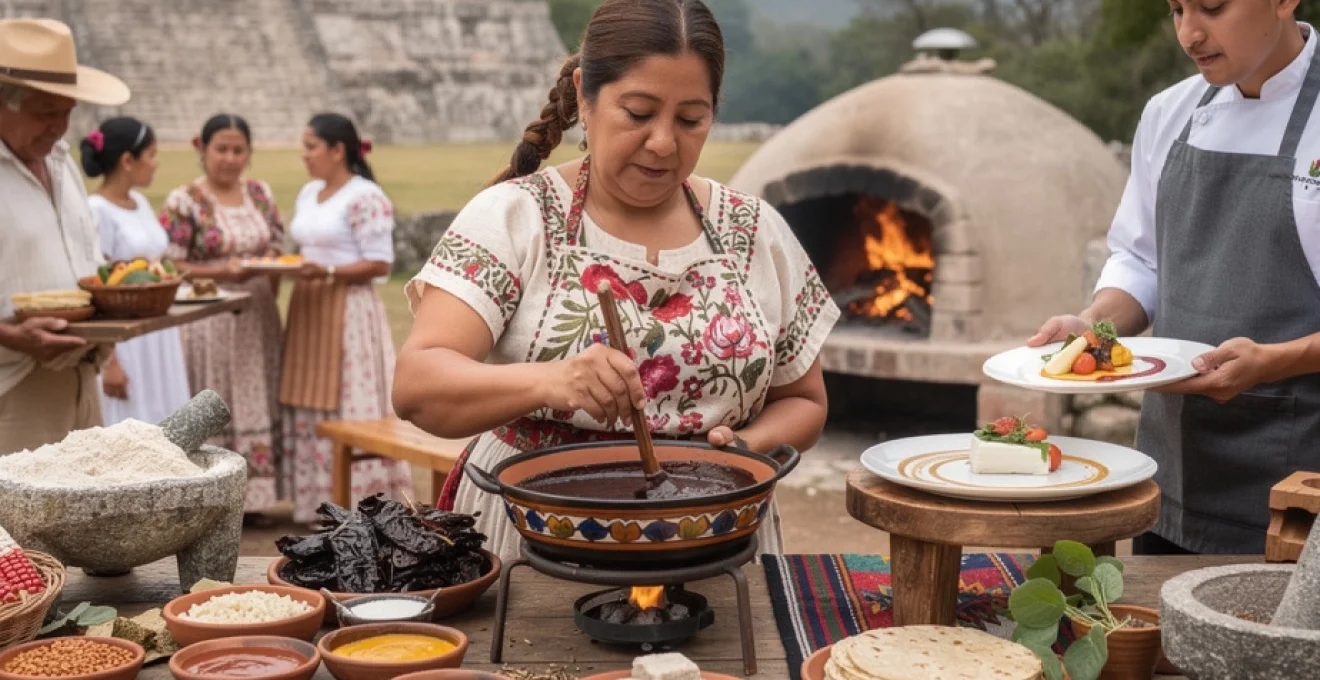
Nestled in the mountainous valleys of southern Mexico, Oaxaca stands as one of the world’s most extraordinary culinary destinations, where ancient indigenous traditions seamlessly blend with contemporary gastronomic innovation. This remarkable region, home to sixteen distinct indigenous groups and over 500,000 native speakers of traditional languages, has preserved culinary techniques and recipes that span millennia. From the smoky complexity of its legendary mole sauces to the artisanal production of mezcal, Oaxaca’s food culture represents far more than mere sustenance—it embodies a living testament to cultural resistance, agricultural biodiversity, and the profound relationship between land and people. The region’s culinary heritage has gained international recognition, with Oaxaca City earning multiple Michelin stars in 2024, yet its true essence remains rooted in the humble kitchens of indigenous communities where corn tortillas are still pressed by hand and mole is ground on volcanic stone metates.
Pre-hispanic culinary foundations and indigenous gastronomy of oaxaca
The culinary landscape of Oaxaca stretches back over 10,000 years, making it one of the earliest centres of agricultural development in Mesoamerica. Archaeological evidence from sites throughout the region reveals that indigenous peoples were cultivating the holy trinity of Mesoamerican agriculture—corn, beans, and squash—as early as 8,000 BCE. These three crops, known collectively as the “Three Sisters,” formed the nutritional and spiritual foundation of pre-Hispanic civilisations and continue to define Oaxacan cuisine today. The sophisticated understanding of companion planting demonstrated by these ancient farmers created sustainable agricultural systems that maximised both yield and soil health, principles that remain relevant to modern sustainable farming practices.
Zapotec agricultural techniques and ancient crop cultivation methods
The Zapotec civilisation, which flourished in the Oaxaca Valley from approximately 500 BCE to 900 CE, developed revolutionary agricultural techniques that transformed the region’s landscape. Their intricate system of terraced fields, irrigation canals, and raised platforms allowed them to cultivate crops in challenging mountainous terrain whilst preventing soil erosion. These ancient farmers possessed an intimate knowledge of microclimates, selecting specific varieties of corn, beans, and squash that thrived in different elevations and soil conditions. The Zapotecs’ milpa farming system—a polyculture approach that intercropped multiple species—created biodiverse agricultural plots that supported dozens of food plants, medicinal herbs, and beneficial insects.
Mixtec ceremonial feast traditions and ritual food preparation
The Mixtec people, renowned for their sophisticated artistic traditions and political structures, developed elaborate ceremonial feasting customs that elevated food preparation to a sacred art form. Ritual meals served during religious ceremonies, seasonal celebrations, and political gatherings featured complex dishes that could take days to prepare. Ceremonial mole preparation often involved entire communities, with families contributing specific ingredients and participating in the grinding, roasting, and mixing processes. These communal cooking events strengthened social bonds whilst preserving culinary knowledge across generations. The Mixtec tradition of offering food to ancestors and deities established spiritual dimensions to cuisine that persist in contemporary Oaxacan food culture.
Teotitlán del valle weaving community traditional cooking practices
The mountain village of Teotitlán del Valle, famous worldwide for its intricate wool tapestries, has maintained some of Mexico’s most authentic pre-Hispanic cooking traditions. Local families continue to prepare traditional dishes using techniques unchanged for centuries, including the use of clay pots fired in underground ovens and the grinding of spices on stone metates. The community’s isolation in the Sierra Norte mountains has protected their culinary practices from external influence, creating a living museum of indigenous gastronomy. Village cooks still harvest wild herbs from the surrounding mountains, collect salt from ancient deposits, and maintain heirloom varieties of corn and beans that have been cultivated in the valley for over 2,000 years.
Monte albán archaeological evidence of Pre-Columbian cuisine
Excavations at Monte Albán, the ancient Zapotec capital and UNESCO World Heritage site, have revealed fascinating insights into pre-Columbian culinary practices.
Food remains, grinding stones, ceramic vessels, and carbonised seeds discovered in domestic and ceremonial contexts indicate that maize-based dishes, bean stews, squash, amaranth, chillies, and cacao were central to daily and ritual life. Residues found inside pottery suggest early forms of nixtamalisation—the alkaline treatment of corn that enhances its nutritional value—were already being practiced more than 2,000 years ago. Archaeobotanical studies have identified dozens of chile varieties and wild greens, showing that pre-Columbian cuisine in Oaxaca was extraordinarily diverse, seasonal, and closely tied to the surrounding ecosystem. Together, these findings confirm that many of the “modern” flavours of Oaxacan cuisine—smoky salsas, maize dough preparations, and herb-laced stews—are direct descendants of ancient recipes once enjoyed on the very terraces of Monte Albán.
Traditional oaxacan cooking techniques and artisanal food production methods
Traditional Oaxacan cooking techniques are as essential to the region’s culinary identity as the ingredients themselves. Rather than relying on modern appliances, many rural households still use tools and methods that would be recognisable to their Zapotec and Mixtec ancestors. Clay comales, volcanic stone metates, wood-fired adobe ovens, and open-hearth kitchens are not nostalgic curiosities; they are precise technologies that shape texture, aroma, and flavour in ways difficult to replicate with gas or electric stoves. Understanding how these artisanal methods work helps explain why Oaxacan cuisine is so distinctive, and why preserving these practices is vital to the region’s cultural and culinary heritage.
Comal clay griddle manufacturing and temperature control mastery
The humble comal—a flat clay or metal griddle—is at the heart of everyday cooking in Oaxaca. In many villages, families still commission comales from specialised potters who use locally sourced clays, shaped by hand and fired in wood kilns. The mineral composition of the clay and the firing temperature determine how evenly the comal distributes heat, how long it retains warmth, and even the subtle toasty flavour it imparts to tortillas and roasted chiles. For cooks who make hundreds of tortillas a day, these differences are as important as a chef’s choice of pan in a professional kitchen.
Mastery of temperature control on the comal is almost an art form. Instead of dials and thermostats, Oaxacan cooks read the colour of the embers, listen to the faint crackle of wood, and watch how quickly a test tortilla blisters to gauge heat. Different zones of the comal are used strategically: the hottest centre for puffing tortillas, the cooler edge for gently warming tlayudas or toasting seeds and spices. When you bite into a perfectly pliable tortilla or a smoky salsa made from charred tomatoes and chiles, you are tasting generations of accumulated knowledge about fire, clay, and timing.
Metate stone grinding technology for masa and spice preparation
The metate, a slightly concave stone slab paired with a cylindrical hand-held stone called the metlapil, is one of the oldest kitchen tools in Oaxaca. Traditionally carved from volcanic rock, its porous surface grips grains and seeds, making it ideal for converting nixtamalised corn into velvety masa. Unlike mechanical grinders that can overheat and tear the corn, the metate crushes and shears the kernels slowly, preserving the dough’s delicate aroma and structure. Many home cooks insist that tortillas made from metate-ground masa have a finer texture and deeper flavour than those made with industrially milled corn flour.
Metates are also used to grind roasted chiles, cacao, nuts, and spices for mole and other complex sauces. The rhythmic, almost meditative motion of grinding allows cooks to control texture with remarkable precision—from a coarse paste for rustic salsas to a silky puree for celebratory moles. In some communities, learning to use the metate is still considered a rite of passage, symbolising a person’s readiness to contribute to the household and to communal feasts. Much like a well-seasoned cast-iron pan, a metate improves over time, gradually absorbing oils and aromas that subtly enrich each new batch of dough or sauce.
Wood-fired adobe oven construction and heat management systems
Wood-fired adobe ovens, known locally as hornos, are another cornerstone of traditional Oaxacan cooking. Built from a mixture of clay, sand, straw, and sometimes manure, these dome-shaped structures function like natural convection ovens. Their thick walls absorb and radiate heat evenly, creating stable temperatures ideal for baking breads, slow-cooking meats, and roasting vegetables. Many hornos are assembled using techniques passed down within families, with small variations in size and shape that reflect local materials and culinary preferences.
Managing heat in an adobe oven requires careful planning and experience. Cooks preheat the horno by burning wood inside until the walls reach the desired temperature, then rake out the embers and load in breads, pan de yema, or marinated meats. Because there is no active flame during baking, the food cooks gently in stored radiant heat, developing a subtle smokiness without charring. Some bakers use a simple “hand test”—measuring how long they can comfortably hold a hand inside the oven—to estimate temperature, a practice akin to gauging grill heat. The result is food with a crust and crumb that are difficult to recreate in modern ovens, contributing to the unique character of Oaxacan baked goods and roasted dishes.
Fermentation processes in tepache and pulque traditional brewing
Fermentation has long played an important role in Oaxacan foodways, particularly in the production of traditional beverages such as tepache and pulque. Tepache is a lightly fermented drink made from pineapple rinds, piloncillo (unrefined cane sugar), and aromatic spices, while pulque is produced from the fermented sap of certain agave species. Both rely on wild yeasts and bacteria present in the environment and on the plants themselves, rather than on cultivated commercial strains. This means each batch expresses its own micro-terroir, reflecting the local climate, flora, and even the wooden barrels or clay jars used for fermentation.
Traditional brewers manage fermentation through experience rather than precise measurements. They adjust sugar levels, container materials, and fermentation times in response to ambient temperature and taste, much like natural-wine producers. Pulque production, in particular, demands patience and care: agaves can take a decade or more to mature before they yield sap, and the liquid must be collected and fermented daily to maintain quality. Although industrial beers and spirits have reduced the everyday presence of tepache and pulque, there is renewed interest among younger Oaxacans and visitors who seek low-intervention, naturally fermented drinks with deep cultural roots. For travellers, sampling these beverages where they are made offers a tangible connection to ancestral brewing knowledge and to the living landscapes that sustain it.
Regional mole varieties and complex sauce preparation techniques
No exploration of Oaxacan cuisine is complete without delving into its moles—the intricate, slow-cooked sauces that have earned the region the nickname “land of seven moles.” These sauces are culinary ecosystems in their own right, often containing more than 30 ingredients and requiring hours or even days to prepare. Each variety reflects a different interplay of chillies, seeds, nuts, herbs, and sometimes chocolate, combined using specific roasting, frying, and grinding techniques. While recipes vary between families and communities, the disciplined methods behind them reveal a shared culinary philosophy: balance, patience, and respect for ingredients.
Mole negro oaxaqueño multi-stage preparation and ingredient sourcing
Mole negro is perhaps the most iconic of all Oaxacan moles, known for its deep ebony colour, silky texture, and layered sweet-smoky heat. Preparing an authentic mole negro is a multi-stage process that can span two or three days, especially for major celebrations such as weddings or patron-saint festivals. Cooks begin by sourcing specific dried chillies—often chilhuacle negro, mulato, and pasilla—that are increasingly rare and expensive due to limited growing regions and climate-related crop pressures. Many families cultivate or contract small-scale farmers to grow these heritage chillies to ensure both quality and availability.
The chillies are painstakingly cleaned, de-seeded, and toasted just until fragrant, a crucial step that can make or break the sauce; over-toasting even a few pieces can introduce bitterness. Seeds, nuts, and spices are separately roasted or fried, while plantains, tomatoes, onions, and garlic are charred to develop caramelised sweetness. Each ingredient is then ground—traditionally on a metate or in a stone mill—before being slowly simmered together with stock and Oaxacan chocolate. The result is a sauce with remarkable complexity, where no single flavour dominates. For home cooks and visitors alike, understanding the labour-intensive nature of mole negro inspires a deeper appreciation when it arrives at the table, often served with turkey, chicken, or tamales.
Mole coloradito chilli selection and roasting methodologies
Mole coloradito, literally “little red mole,” offers a brighter, slightly lighter profile than mole negro, yet it is no less nuanced. Built around a base of red chillies such as guajillo and ancho, coloradito balances sweetness, moderate heat, and gentle acidity. The selection and treatment of chillies are central to its character. Cooks sort through dried pods, discarding any that are brittle, faded, or mould-affected, since these defects can introduce harsh, stale notes. Only pliable, deeply coloured chillies are chosen for soaking and roasting.
Roasting methodologies vary by household, but most involve toasting the chillies quickly on a hot comal or briefly frying them in oil or lard. This step is similar to roasting coffee beans: too short, and the flavour remains flat; too long, and bitterness overshadows the aromatic oils. Tomatoes, sesame seeds, almonds, cloves, cinnamon, and bread or tortillas for thickening are prepared in separate stages, then blended into a smooth sauce. Because coloradito is often served more casually—over chicken, enchiladas, or vegetables—it illustrates how intricate techniques in Oaxacan cooking are applied not only to grand feasts but also to everyday meals.
Mole amarillo hierba santa integration and flavour balancing
Mole amarillo (yellow mole) showcases a different side of Oaxacan gastronomy, one that emphasises freshness and herbal notes over roasted depth. Despite its name, mole amarillo can range from golden to orange, depending on the chiles and thickening agents used. Typically, it features chilhuacle amarillo or other yellow-orange chillies, along with tomatoes, tomatillos, and aromatic herbs. A defining element is hierba santa, a heart-shaped leaf with a distinctive anise-minty aroma that is central to many southern Mexican dishes.
Integrating hierba santa without overpowering the sauce requires careful flavour balancing. Cooks often add the herb toward the end of cooking or incorporate it into the dough used to thicken the mole, allowing its aroma to infuse gently. Too much can dominate the dish; too little, and the characteristic “Oaxacan” profile is lost. Mole amarillo is frequently served with chicken, beef, or seasonal vegetables and masa dumplings called chochoyotes, making it a favourite for family gatherings. For travellers interested in understanding how Oaxacan cooks layer flavours, tasting mole amarillo alongside darker moles provides a vivid demonstration of how herbs, rather than chocolate or heavy roasting, can define a sauce.
Mercado 20 de noviembre mole vendor traditional recipes
To see Oaxacan mole traditions alive in everyday commerce, there is no better place than Oaxaca City’s Mercado 20 de Noviembre. Inside this bustling market, dozens of vendors sell dried mole pastes, freshly ground on-site from family recipes that may date back generations. Each stall offers its own versions of mole negro, coloradito, rojo, verde, and amarillo, often with subtle differences in sweetness, heat, or texture. Shoppers sample small spoonfuls, comparing flavour profiles before choosing the paste that best suits their planned meal or family preferences.
These mole vendors function as both small businesses and informal archives of culinary knowledge. Many still establish direct relationships with chilli farmers in the valleys of Oaxaca, helping to maintain demand for native varieties threatened by cheaper industrial alternatives. Some vendors also adapt to modern needs by offering vacuum-sealed packets for travellers or providing instructions on how to reconstitute the paste with broth at home. For visitors, purchasing mole paste at Mercado 20 de Noviembre is not only a practical way to bring a taste of Oaxaca back to their own kitchens; it is also a way to support the artisans who keep traditional recipes and ingredient-sourcing practices alive in the face of globalised food systems.
Oaxacan cheese-making traditions and dairy processing heritage
Although Oaxaca is most famous for its moles and corn-based dishes, its cheese-making traditions form another key pillar of the region’s culinary heritage. The best-known variety, quesillo (often called Oaxaca cheese abroad), is a semi-soft, stringy cheese made from cow’s milk using a stretched-curd, or pasta filata, technique. In rural dairies, milk from small herds grazing on native grasses is heated and curdled with natural rennet, then allowed to rest until the curd reaches the right elasticity. The curds are cut, kneaded in hot whey or water, and stretched into long ribbons that are wound into the characteristic ball shape you see at markets and roadside stands.
This process, which resembles that used for mozzarella, creates a cheese with a delicate, milky flavour and a wonderfully meltable texture that makes it ideal for tlayudas, quesadillas, and empanadas de quesillo. Beyond quesillo, Oaxaca has a rich variety of regional cheeses, including queso fresco, requesón (a ricotta-like cheese), and aged, crumbly styles used for grating. Many of these are produced in small, family-run dairies that follow seasonal rhythms; production often peaks during the rainy season when pastures are most abundant.
Traditional dairy processing methods emphasise minimal intervention, relying on the natural microbiota of raw or lightly pasteurised milk. This can pose challenges in a regulatory environment that favours standardisation, yet it also contributes to the complex flavours that industrial cheeses often lack. As interest grows in artisanal and regionally distinct cheeses worldwide, Oaxacan producers are beginning to gain more recognition, both within Mexico and internationally. For culinary travellers, visiting a local dairy or cheese market in Oaxaca offers insight into how milk is transformed into one of the region’s most beloved ingredients and how these practices intersect with issues of food safety, sustainability, and rural livelihoods.
Mezcal production terroir and agave species cultivation practices
If mole is the soul of Oaxacan cuisine, mezcal is its spirit—literally and figuratively. Produced primarily in Oaxaca, mezcal is a distilled liquor made from the cooked hearts of agave plants, and its flavour varies dramatically depending on species, soil, altitude, and production techniques. Unlike tequila, which must be made from a single species (Agave tequilana), mezcal can legally be produced from more than 40 agave varieties. In practice, Oaxacan mezcaleros frequently work with species such as Espadín, Tobalá, Madrecuixe, and Tepeztate, each contributing unique aromatic profiles that range from herbal and floral to earthy and smoky.
Terroir in mezcal production is not just a marketing term; it reflects real ecological and agricultural variables. Agaves grown on rocky, high-altitude slopes tend to produce more concentrated sugars and complex flavours, while those cultivated in valleys may yield softer, fruitier spirits. Many small-scale producers still practice rain-fed, low-input agriculture, intercropping agave with corn, beans, and other crops in a system reminiscent of the traditional milpa. However, rising global demand has also led to increased monoculture of fast-growing Espadín in some areas, raising concerns about soil depletion, biodiversity loss, and the sustainability of wild-harvested species.
Once agaves reach maturity—a process that can take anywhere from 6 to over 20 years—their hearts, or piñas, are harvested and slow-roasted in earthen pits lined with hot stones and covered with agave fibres and soil. This underground cooking imparts mezcal’s signature smoky character. The cooked piñas are then crushed, traditionally by a stone wheel (tahona) pulled by a horse or mule, and the resulting mash is fermented in wooden vats or clay pots using ambient yeasts. Distillation typically takes place in copper stills or, in some regions, rustic clay stills that further influence aroma and texture.
Because mezcal production is so labour- and time-intensive, many Oaxacan families treat it as both an economic activity and a cultural inheritance. Knowledge about when to harvest wild agaves, how to recognise healthy fermentation, and how to cut the heads and tails of the distillate is often transmitted orally across generations. For visitors, touring small palenques (mezcal distilleries) around towns like Santiago Matatlán or Santa Catarina Minas can be an eye-opening experience, showing how deeply this spirit is woven into local landscapes and livelihoods. As global interest in craft spirits continues to rise, responsible mezcal tourism and conscientious purchasing—favouring producers who cultivate agaves sustainably and respect traditional methods—play a crucial role in safeguarding this heritage.
Contemporary oaxacan gastronomy and international culinary recognition
In recent years, Oaxaca has emerged as a focal point in global discussions about gastronomy, sustainability, and cultural preservation. The inclusion of Mexican cuisine on UNESCO’s Intangible Cultural Heritage list in 2010 and the awarding of Michelin stars to Oaxacan restaurants in 2024 have brought unprecedented international attention to the region. Yet what makes contemporary Oaxacan gastronomy truly compelling is not only the acclaim of high-end restaurants, but the dynamic dialogue between fine dining, street food, and home cooking. Chefs, traditional cooks, and community organisations are collaborating to celebrate indigenous ingredients, protect seed diversity, and resist homogenising pressures from industrial agriculture and fast-food culture.
Many of Oaxaca City’s most celebrated restaurants build their menus around direct relationships with small-scale farmers and foragers who supply native corn, wild herbs, seasonal mushrooms, and heirloom beans. Tasting menus might feature refined versions of tlayudas, mole-topped dishes in miniature, or desserts infused with mezcal, yet the underlying techniques—nixtamalisation, stone grinding, wood-fire cooking—remain rooted in ancestral practices. At the same time, traditional cooks in villages such as Teotitlán del Valle and communities in the Sierra Norte are opening their homes or small eateries to travellers, offering immersive cooking classes that highlight pre-Hispanic recipes and sustainable agriculture.
This interplay between past and present raises important questions: how can a region welcome culinary tourism and global recognition without diluting the very traditions that make it unique? Some local initiatives address this challenge by promoting fair trade practices, community-run gastronomic tours, and educational programmes that teach younger generations both classical culinary skills and broader environmental awareness. For visitors, choosing experiences that prioritise local ownership, respect seasonality, and highlight underrepresented voices—especially women cooks and indigenous producers—can help ensure that the benefits of Oaxaca’s growing fame are shared more equitably.
Ultimately, the rich culinary heritage of Oaxaca, Mexico, is best understood not as a static collection of recipes, but as a living, evolving system. From ancient terraces at Monte Albán to bustling markets and Michelin-starred kitchens, Oaxacan foodways continue to adapt while holding fast to core values: respect for the land, reverence for biodiversity, and the belief that cooking and eating together are acts of community and resistance. Whether you are savouring a simple memela on a street corner or a meticulously plated mole in a contemporary restaurant, you are participating in a story thousands of years in the making—one that continues to unfold with every meal.