Portugal has emerged as a pioneering force in sustainable tourism, transforming its approach to travel and hospitality through comprehensive environmental initiatives and innovative policy frameworks. With tourism contributing 16.5% to Portugal’s GDP and generating nearly €44 billion in consumption in 2023, the country faces the critical challenge of balancing economic growth with environmental stewardship. The Portuguese government and tourism sector have responded with unprecedented commitment, developing integrated strategies that position the nation as Europe’s leading sustainable tourism destination whilst addressing climate change concerns and overtourism pressures affecting neighbouring countries.
Portugal’s national sustainable tourism strategy 2027: policy framework and implementation
The Portuguese Tourism Strategy 2027 represents a transformative approach to sustainable development, officially approved by the Portuguese Government in 2017 under the guidance of Ana Mendes Godinho, the Secretariat of State for Tourism Portugal. This ambitious initiative emerged from extensive national consultation and establishes Portugal as a thought leader in sustainable tourism policy across Europe and beyond.
The strategy operates across three fundamental sustainability dimensions: economic, social, and environmental. Each dimension features specific targets and monitoring indicators through the Sustainable Tourism Indicators System (SITS), developed in collaboration with international organisations including the UNWTO and Eurostat. The comprehensive framework ensures measurable progress towards sustainability goals whilst maintaining Portugal’s competitive position in the global tourism market.
Turismo de portugal’s carbon neutrality roadmap for hospitality sector
Turismo de Portugal has established an ambitious carbon neutrality roadmap targeting significant emissions reductions across the hospitality sector. The strategy demonstrates remarkable progress, with Portugal’s tourism sector achieving a decoupling of economic growth from greenhouse gas emissions between 2010 and 2019. During this period, whilst the sector’s contribution to the national economy grew by nearly 5% annually, greenhouse gas emissions increased by only 4.1% per year, indicating improved environmental efficiency.
The sector’s emissions intensity has shown consistent improvement, dropping from 0.77 kg of greenhouse gases per €1 generated in 2010 to 0.72 kg per €1 in 2019. By 2021, this figure had decreased further to 0.59 kg per €1, representing a significant environmental achievement. The roadmap includes specific targets for energy efficiency, with goals to increase the number of tourism companies implementing energy efficiency measures by 90% by 2027.
EU green deal compliance: portuguese tourism infrastructure adaptation
Portugal’s tourism infrastructure adaptation aligns closely with EU Green Deal objectives, focusing on renewable energy integration and sustainable transportation networks. The country has increased its share of low-carbon energy in the national energy mix from 6.6% to 7.5% between 2010 and 2021, whilst simultaneously reducing the sector’s reliance on fossil fuels. This transition supports the broader European commitment to climate neutrality by 2050.
The European Commission has recognised Portugal’s efforts through targeted support programmes, including technical assistance for building more sustainable, resilient, and digital tourism ecosystems. These initiatives promote the digital and green transitions whilst strengthening regional cohesion and supporting post-COVID-19 recovery efforts across European tourism destinations.
Regional sustainability certifications: centro de portugal and algarve initiatives
Regional sustainability certifications have become instrumental in Portugal’s decentralised approach to sustainable tourism development. The Centro de Portugal region has implemented comprehensive sustainability frameworks that integrate cultural heritage preservation with environmental protection measures. These initiatives focus on responsible resource management and community engagement, ensuring tourism development benefits local populations whilst maintaining authentic cultural experiences.
The Algarve region has pioneered innovative approaches to coastal sustainability, addressing challenges related to water management, coastal erosion, and seasonal tourism patterns. Regional authorities have developed specific certification programmes for accommodation providers, tour operators, and destination management organisations, creating accountability mechanisms for environmental performance and social responsibility.
Public-private partnership models in sustainable tourism development
Portugal’s success in sustainable tourism relies heavily on innovative public-private partnership models that leverage both governmental policy support and private sector innovation. The “Valorizar” Programme exemplifies this collaborative approach, stimulating balanced tourism demand distribution whilst reducing seasonality and generating employment throughout the country. During its first two years, the programme received 1,719 proposals, approving 641 projects with €91
million in approved incentives, catalysing projects that improve accessibility, enhance heritage sites, and foster integration between residents and visitors.
Beyond “Valorizar”, Portugal has launched innovation-focused partnerships such as the Tourism Innovation Centre, working with global technology leaders to accelerate digital transformation and green innovation in tourism. These public-private collaborations support data-driven destination management, sustainability monitoring, and new business models in areas like eco-tourism and TravelTech. For investors and operators, this ecosystem creates a stable, policy-backed environment for sustainable tourism investment, including funds aligned with residency-by-investment structures that prioritise environmental and social impact as well as financial returns.
Eco-certified accommodation networks: portugal’s sustainable hospitality evolution
As sustainability becomes a defining criterion for travellers, Portugal’s accommodation sector has undergone a significant transformation. Eco-certified hotels, guesthouses, and rural lodgings have multiplied, driven by both government incentives and changing consumer expectations for low-impact stays. The result is an increasingly dense network of sustainable hospitality options, ranging from restored heritage properties to off-grid eco-lodges and agritourism estates that integrate local production and circular economy principles.
Certification schemes such as Green Key, EU Ecolabel, and regional quality labels have become powerful tools for standardising and communicating environmental performance. By adopting clear metrics on energy consumption, water efficiency, waste management, and community engagement, these eco-certified accommodation networks help visitors make informed choices whilst rewarding operators who invest in long-term sustainability. For Portugal, this shift also enhances destination branding, reinforcing its position as a leader in sustainable tourism in Europe.
Pousadas de portugal: heritage properties carbon footprint reduction
Pousadas de Portugal, a collection of historic hotels housed in castles, monasteries, and manor houses, exemplifies how heritage tourism can align with carbon reduction goals. Many of these properties have implemented energy retrofits such as high-efficiency heating and cooling systems, LED lighting, and improved insulation that respect architectural integrity while cutting emissions. Where feasible, solar thermal panels for hot water and photovoltaic systems for electricity complement these measures, reducing reliance on fossil fuels without compromising the guest experience.
The group has also introduced systematic waste reduction and local sourcing policies to minimise the environmental footprint of food and beverage operations. By prioritising regional suppliers and seasonal menus, Pousadas not only reduce transport-related emissions but also support rural economies and traditional producers. For travellers seeking sustainable cultural tourism in Portugal, these properties offer a compelling combination of authenticity, comfort, and measurable climate action.
Quintas do douro: agritourism sustainable practices and wine tourism integration
In the Douro Valley, quintas (wine estates) have become flagship examples of agritourism that integrates sustainable practices throughout the value chain. Many estates now operate under organic or integrated production regimes, reducing pesticide use, enhancing soil health, and preserving biodiversity in vineyard landscapes. Terraced vineyards, already an iconic feature of the Douro, are being managed with renewed attention to erosion control and water retention, helping to adapt to climate change in a region facing hotter, drier summers.
Wine tourism experiences are increasingly designed to highlight these sustainable vineyard practices, whether through guided walks, educational tastings, or hands-on harvest activities. You might visit a quinta where wastewater from the cellar is treated and reused for irrigation, or where cork oaks and native shrubs are restored along slopes as biodiversity corridors. This integration of sustainable agriculture and tourism not only reduces environmental impact but also deepens visitor understanding of the Douro’s UNESCO-listed cultural landscape.
Costa vicentina eco-lodges: low-impact accommodation design standards
Along the wild coastline of the Costa Vicentina, eco-lodges have embraced low-impact design as a core principle of sustainable tourism in Portugal. Many of these properties employ bioclimatic architecture, passive solar design, and natural materials such as local stone, cork, and timber to reduce the need for mechanical heating and cooling. Small building footprints, careful orientation, and landscaping with native plants help preserve the visual and ecological integrity of coastal and rural settings.
Operational practices in Costa Vicentina eco-lodges reinforce this low-impact philosophy: rainwater harvesting, greywater reuse, composting systems, and minimal-light pollution policies are common. Some lodges even run partially off-grid, powered by solar arrays or small-scale wind, demonstrating what near-zero-emission accommodation can look like in practice. For travellers, staying in these eco-lodges offers a tangible way to reduce their holiday footprint while supporting a model of tourism that respects one of Europe’s most unspoilt coastlines.
Green key portugal: certification metrics and performance benchmarking
Green Key Portugal has emerged as one of the most recognised eco-certification programmes for hospitality businesses seeking to demonstrate their commitment to sustainable tourism. The scheme assesses properties on a wide range of metrics, including energy and water efficiency, waste management, staff training, community engagement, and communication of sustainability practices to guests. Establishments must meet baseline criteria and demonstrate continuous improvement, turning certification into an ongoing process rather than a one-off label.
From a policy and market perspective, Green Key serves as an effective benchmarking tool, allowing hotels and resorts to compare their environmental performance with peers. This creates a form of constructive competition that pushes the sector towards higher standards year after year. For you as a guest, the Green Key label provides a quick, reliable signal that an accommodation is actively reducing its environmental impact and aligning with Portugal’s broader sustainable tourism objectives.
Protected area tourism management: balancing conservation with visitor access
Protected areas in Portugal, from rugged national parks to delicate coastal wetlands, are at the heart of the country’s sustainable tourism narrative. Managing these landscapes requires a delicate balance: enabling access and economic benefits for local communities while preventing ecological degradation. To achieve this, authorities have invested in visitor management systems, zoning regulations, and environmental education initiatives that ensure tourism remains compatible with conservation objectives.
In many cases, visitor flows are monitored and regulated through trail networks, designated viewpoints, and capacity limits for sensitive sites. At the same time, local guides, nature-based tour operators, and community associations play a crucial role in shaping responsible tourism behaviour. By linking park entry fees and tourism revenues to habitat restoration, infrastructure maintenance, and community projects, Portugal reinforces the message that well-managed tourism can be a powerful ally for nature conservation.
Peneda-gerês national park: carrying capacity management systems
Peneda-Gerês National Park, Portugal’s only national park on the mainland, has become a testing ground for advanced carrying capacity management in sustainable tourism. The park authorities use a combination of trail zoning, signposted routes, and seasonal restrictions to prevent overcrowding in particularly fragile areas, such as high-altitude lagoons and endemic plant habitats. Digital tools, including mobile apps and geolocated information panels, help visitors choose suitable trails and understand the sensitivity of the environments they are exploring.
To further protect ecosystems, Peneda-Gerês employs monitoring systems that track visitor numbers, trail erosion, and wildlife disturbance, similar to a “health check” for the landscape. These data inform adaptive management decisions, such as temporary closures or the reinforcement of certain paths, ensuring that tourism pressure stays within acceptable limits. For hikers and nature enthusiasts, this means a more structured yet higher-quality experience, with fewer risks of crowding and a greater sense of immersion in the park’s wild scenery.
Ria formosa natural park: wetland conservation and birdwatching tourism
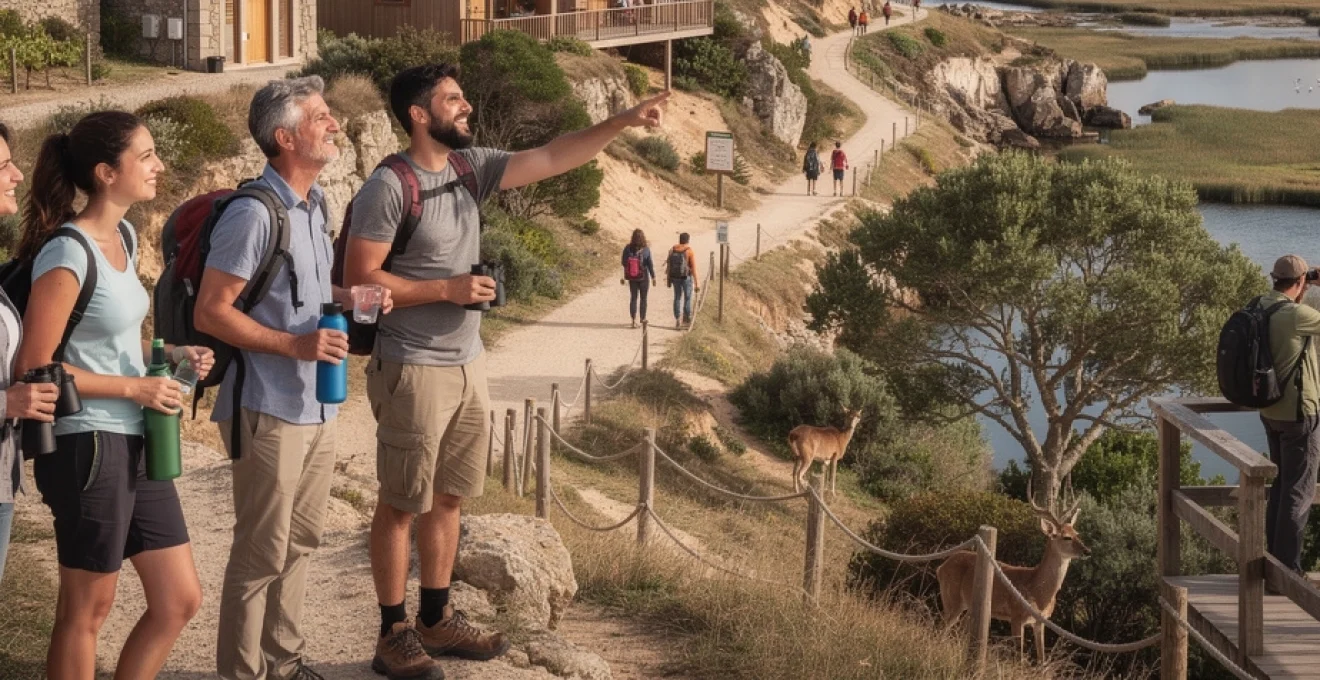
Ria Formosa Natural Park in the Algarve is a critical wetland for migratory birds and a prime example of how nature-based tourism can support conservation. Birdwatching tourism has grown steadily, attracting visitors who value responsible, low-impact experiences and are willing to pay for expert guiding and specialised infrastructure such as hides and observation towers. This niche market generates revenue for local communities while raising awareness about the importance of protecting coastal lagoons, salt marshes, and dune systems.
Park management focuses on controlling access to sensitive breeding and feeding areas, using boardwalks and designated paths to minimise trampling and disturbance. In collaboration with local tour operators, Ria Formosa promotes codes of conduct for birdwatchers, boat tours, and kayakers, ensuring that wildlife always comes first. This careful balance demonstrates that, when managed correctly, wetland tourism can act as a financial and educational lifeline for habitats that are among the most vulnerable to climate change and urban development.
Azores unesco biosphere reserves: geotourism sustainable development models
The Azores archipelago, with several islands recognised as UNESCO Biosphere Reserves and Geoparks, has positioned itself as a global reference point for geotourism and sustainable tourism. Volcanic landscapes, marine ecosystems, and traditional farming practices are interpreted for visitors through well-designed trails, visitor centres, and local guide networks. Rather than mass tourism, the focus is on small-group, high-value experiences that respect the carrying capacity of fragile island environments.
Geotourism initiatives in the Azores integrate conservation funding mechanisms, such as visitor fees for whale watching, cave exploration, and protected area access, which are reinvested in scientific monitoring and habitat restoration. Accommodation and tour operators are encouraged to adopt eco-certification, renewable energy, and waste reduction measures compatible with island constraints. For travellers, this model offers a powerful example of how you can explore spectacular volcanic and marine landscapes while actively contributing to their long-term protection.
Renewable energy integration in portuguese tourism infrastructure
Renewable energy integration has become a cornerstone of sustainable tourism infrastructure in Portugal, reflecting both EU Green Deal priorities and national climate commitments. Hotels, resorts, and rural lodgings increasingly install solar photovoltaic panels, solar thermal systems for hot water, and, in some cases, geothermal heating and cooling solutions. This shift not only reduces greenhouse gas emissions but also improves resilience against volatile energy prices, a major operational concern for energy-intensive tourism businesses.
In coastal and island destinations, small-scale wind turbines and hybrid renewable systems are being deployed to power remote accommodations and tourism facilities that were once dependent on diesel generators. Municipalities such as Lisbon and Porto have also invested in energy-efficient public lighting, electric vehicle infrastructure, and smart building technologies in public tourism facilities, from museums to convention centres. For operators and investors, integrating renewables is no longer just a branding exercise; it is a pragmatic response to regulatory expectations and an opportunity to future-proof assets in a carbon-constrained world.
Community-based tourism initiatives: local economic empowerment strategies
Community-based tourism has gained momentum as Portugal seeks to spread the benefits of tourism beyond traditional hotspots and address overtourism risks. Rural villages in regions such as Alentejo, Centro, and Trás-os-Montes are developing small-scale tourism experiences that highlight local crafts, gastronomy, and cultural traditions. These initiatives often take the form of homestays, cooperative guesthouses, and guided experiences led by residents, ensuring that a high share of visitor spending remains in the community.
Government programmes and NGOs provide training in hospitality, digital marketing, and sustainable business management, helping local entrepreneurs professionalise their offerings without losing authenticity. For you as a visitor, community-based tourism offers the chance to engage directly with residents, learn about traditional farming or artisanal practices, and understand the social dimension of sustainable tourism in Portugal. In many cases, these projects also contribute to rural revitalisation, helping counter depopulation by creating new livelihood opportunities linked to the visitor economy.
Sustainable transportation networks: portugal’s green mobility tourism solutions
Sustainable transportation is a critical pillar of Portugal’s strategy to reduce the carbon footprint of tourism while enhancing accessibility across the country. Investments in rail infrastructure, including high-speed connections between major cities and improved regional services, offer visitors low-carbon alternatives to domestic flights and car hire. Integrated ticketing systems and modernised stations make it easier for travellers to combine train journeys with local buses, trams, and metro networks in urban hubs like Lisbon, Porto, and Faro.
At the local level, many destinations are expanding cycling infrastructure, e-bike rental schemes, and pedestrian-friendly urban design to support car-free exploration. Coastal routes such as the Ecovia do Litoral and inland trails under the “Portuguese Trails” brand are showcased as flagship products for active and sustainable tourism. Electric mobility is also gaining traction, with growing networks of EV charging points and incentives for taxi fleets and car-sharing operators to adopt electric vehicles. By choosing these green mobility options, visitors can significantly reduce their travel-related emissions whilst discovering Portugal at a more relaxed and human pace, turning transportation from a necessary burden into an integral part of the sustainable tourism experience.