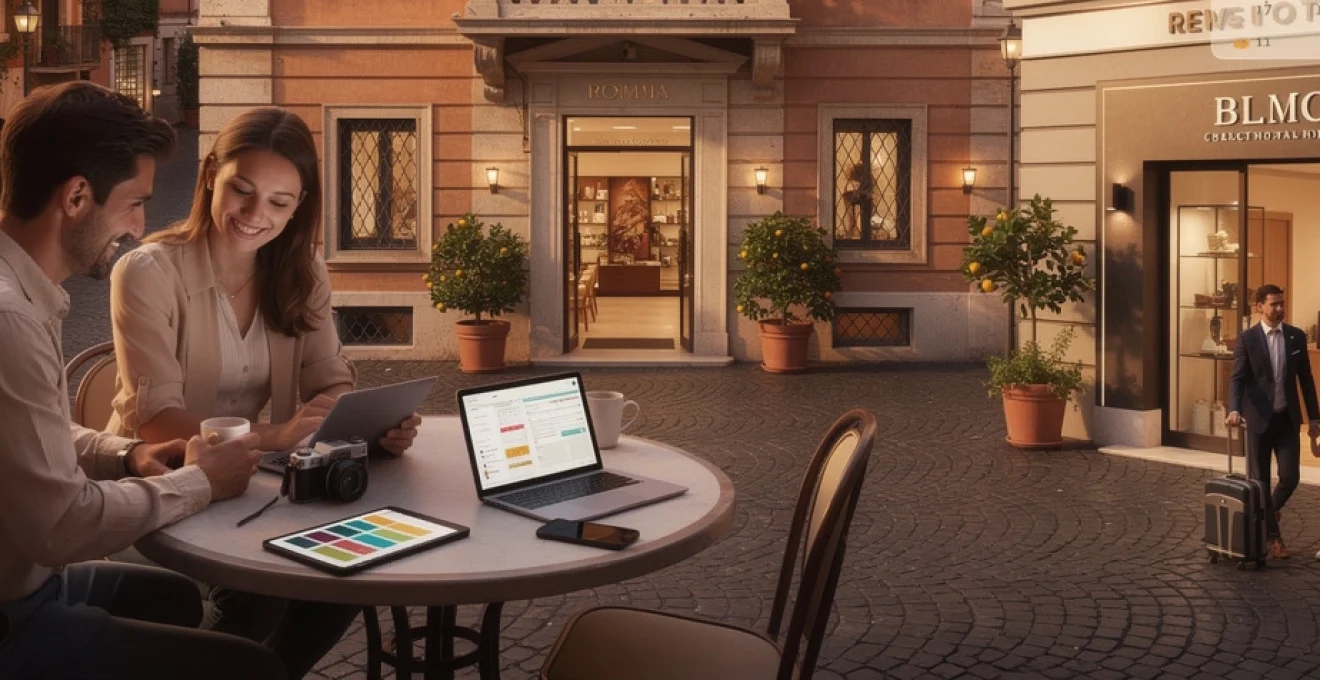
Rome’s accommodation landscape has evolved dramatically over the past decade, with boutique hotels emerging as the preferred choice for discerning travellers seeking authentic experiences in the Eternal City. These intimate properties offer something the larger chains simply cannot replicate: a genuine connection to Rome’s layered history, coupled with contemporary design sensibilities and personalised service that transforms a standard visit into an unforgettable stay. Whether you’re drawn to converted Renaissance palazzos in the Centro Storico or minimalist retreats in the bohemian Monti district, understanding how to navigate Rome’s boutique hotel market will significantly enhance your Italian sojourn. The booking process itself requires strategic thinking—from selecting the right neighbourhood to timing your reservation for optimal rates—and this comprehensive guide will equip you with the insider knowledge needed to secure the perfect Roman bolthole at the best possible price.
Understanding rome’s boutique hotel landscape: trastevere, monti, and historic centre districts
Rome’s boutique hotel scene is inextricably linked to the city’s neighbourhood character, with each district offering distinctly different atmospheres and proximity to major attractions. The Historic Centre, or Centro Storico, remains the most coveted area for first-time visitors, placing you within walking distance of the Pantheon, Piazza Navona, and Trevi Fountain. Properties here typically command premium rates—ranging from €200 to €400 per night—but the convenience of having Rome’s most iconic monuments at your doorstep justifies the investment for many travellers. The architectural fabric of this area means most boutique hotels occupy buildings dating from the 16th to 18th centuries, with original features like frescoed ceilings and marble staircases preserved alongside modern amenities.
Trastevere presents a compelling alternative for those seeking authentic Roman neighbourhood life without sacrificing accessibility to major sights. This former working-class district across the Tiber has transformed into one of Rome’s most atmospheric quarters, where cobbled lanes wind past ivy-covered trattorias and artisan workshops. Boutique hotels here tend to be slightly more affordable, with nightly rates between €120 and €250, and the area’s vibrant nightlife provides entertainment well beyond hotel walls. The neighbourhood’s medieval street plan means properties are often smaller and more intimate, typically offering between 8 and 20 rooms with personalised service that larger establishments cannot match.
Monti has emerged as Rome’s answer to Berlin’s Kreuzberg or London’s Shoreditch—a creative enclave where vintage boutiques, independent galleries, and third-wave coffee shops cluster along narrow streets radiating from Via Urbana. Boutique hotels in Monti attract design-conscious travellers who appreciate contemporary Italian aesthetics and the neighbourhood’s relaxed, residential feel. Despite being just a ten-minute walk from the Colosseum, Monti maintains a distinctly local character, with nightly rates ranging from €150 to €280. The area’s boutique properties tend toward modern design interventions within historic structures, creating striking contrasts between exposed brick walls and minimalist Scandinavian furniture.
Architectural heritage hotels in palazzo buildings vs modern conversion properties
The distinction between heritage palazzo hotels and modern conversions fundamentally shapes your stay experience in Rome. Traditional palazzo properties occupy noble residences constructed between the 15th and 19th centuries, featuring architectural elements like piano nobile reception rooms, internal courtyards, and grand staircases. These buildings were designed to impress, with ceiling heights reaching 5 metres and windows proportioned for pre-electric lighting. Staying in such properties connects you directly to Rome’s aristocratic past, though practical considerations include potentially smaller lifts, irregular room sizes, and occasional challenges with modern plumbing integration. Properties like G-Rough exemplify this category, preserving weathered frescoes and original timber beams while introducing contemporary design elements.
Modern conversion properties take a different approach, typically occupying 20th-century buildings or comprehensively renovated structures where historic fabric has been substantially altered. These hotels prioritise consistency in room sizes, contemporary bathroom fixtures, and reliable infrastructure like air conditioning and soundproofing. The aesthetic leans toward clean lines, neutral colour palettes, and curated art collections rather than historical ornamentation. For travellers prioritising comfort and predictability over atmospheric authenticity, modern conversions often represent the superior choice. The trade-off involves sacrificing
some of the theatrical charm and irregular layouts that make Roman boutique hotels so distinctive. In essence, you are choosing between an immersive “living in a palazzo” experience and a smoother, more standardised stay that emphasises comfort and efficiency over historical character. Many seasoned travellers alternate between the two styles on repeat visits, using palazzo hotels for shorter romantic stays and opting for modern conversions when they need reliable workspace, strong Wi‑Fi, and quiet, well-insulated rooms.
Boutique hotel density analysis: via del corso, via margutta, and campo de’ fiori areas
Not all streets in Rome are equal when it comes to boutique hotel density. Via del Corso, the spine that runs through the Historic Centre, has seen a surge of design-led accommodations in the last ten years, often on upper floors above flagship stores and historic cafés. Here, room counts tend to be higher—between 30 and 70 keys—reflecting the scale of the buildings, and prices are correspondingly elevated, especially within a five-minute walk of the Trevi Fountain or Piazza Venezia. If your priority is step-out-the-door convenience for sightseeing and shopping, this corridor is hard to beat.
By contrast, Via Margutta offers a quieter, more curated boutique hotel environment. Long associated with artists and galleries, this cobbled lane features low-rise palazzos and townhouse-style properties with fewer than 25 rooms. Hotels here lean into an “urban hideaway” positioning, with leafy courtyards, art-filled lounges, and suites that feel more like private apartments than conventional hotel rooms. Average nightly rates sit between €220 and €350, but the sense of discretion and the short stroll to Piazza del Popolo and the Spanish Steps make Via Margutta a prime choice for travellers who value design and calm over being right on a main thoroughfare.
The streets around Campo de’ Fiori, including Via dei Giubbonari and Via dei Baullari, house a dense cluster of small boutique hotels and guesthouses, many converted from merchant houses and small convents. Here, you will find some of the best-value boutique hotels in the Historic Centre, with double rooms frequently available in the €160 to €260 range outside peak weeks. The area’s open-air market, nightlife, and proximity to both Trastevere and Piazza Navona create a lively base, though you should expect more street noise, particularly on weekends. When comparing boutique hotel options across these three micro-areas, think of Via del Corso as “maximum centrality,” Via Margutta as “discreet elegance,” and Campo de’ Fiori as “characterful and social”—each suiting a different style of Rome city break.
Design-led accommodations near villa borghese and pincian hill
The district around Villa Borghese and the Pincian Hill has become a magnet for design-led boutique hotels that prioritise contemporary aesthetics and wellness facilities. Properties in this area often occupy 19th-century buildings that once served as diplomatic residences or private villas bordering the park. Inside, however, you’re more likely to encounter polished concrete floors, sculptural lighting, and bespoke Italian furniture than frescoes or gilded mirrors. For travellers who plan to balance museum visits with morning runs or cycling in the park, staying near Villa Borghese provides the rare combination of green space and quick access to the Spanish Steps and Via Veneto.
Architecturally, these hotels make clever use of vertical space, with rooftop bars and terraces framing skyline views over the Borghese gardens and St. Peter’s dome. Spa facilities and small plunge pools—still relatively rare in central Rome—are more common here than in the denser Centro Storico streets, as building regulations and available footprints are slightly more forgiving. Room rates typically range from €230 in the shoulder seasons to €450+ in peak months, reflecting both the affluent residential character of the neighbourhood and the high design investment. If you appreciate the feel of a design hotel in Milan but still want a clear Roman sense of place, this area offers an ideal compromise.
Family-run vs international boutique chains: the spanish steps quarter case study
The Spanish Steps quarter, including the streets radiating from Piazza di Spagna and Via dei Condotti, provides a clear case study in the contrast between family-run boutiques and international boutique brands. On one side, you have long-established, family-operated hotels and guesthouses with 10 to 25 rooms, often spread across a floor or two of a historic palazzo. These properties excel in personalised service: the owner might greet you by name, recommend a trattoria two streets away, or arrange a last-minute Vatican guide through personal contacts. Rooms can be idiosyncratic in shape, lifts are occasionally petite, and décor may mix antiques with more modest contemporary pieces, but the overall experience feels deeply local.
On the other side, you’ll find high-end boutique chains and luxury design brands with 40 to 100 rooms, polished interiors, and refined ancillary services such as destination restaurants, cocktail bars, and full-service spas. International guests benefit from familiar service standards, multi-language staff, and robust loyalty programmes that can translate into upgrades, late check-outs, or free breakfast. However, nightly rates here can easily exceed €500 in high season, and the guest profile tends to be more global than Roman. Choosing between the two models is a question of priorities: do you prefer a “Roman home” overseen by generations of the same family, or a consistent, highly choreographed luxury experience backed by a global brand?
In practice, you can often spot the difference by examining online reviews. Family-run boutique hotels near the Spanish Steps accumulate recurring mentions of individual staff members and personal touches—“they remembered our coffee order,” “the owner walked us to the taxi”—while chain-affiliated properties receive praise for amenities, breakfast spreads, spa quality, and views. Both can be excellent; for shorter stays focused on shopping and sightseeing, many travellers find that the reliability and facilities of the larger boutique brands justify the premium. For longer visits where you want to settle into the rhythms of the neighbourhood, a family-run property can provide a richer cultural connection.
Strategic booking platforms and direct reservation channels for rome boutique properties
Once you have zeroed in on your preferred neighbourhood and property style, the next step is choosing the right booking channel for your boutique hotel in Rome. While online travel agencies (OTAs) such as Booking.com and Expedia dominate search results, they are only part of the picture. Curated boutique aggregators, brand websites, and direct email enquiries all play a role in finding the best combination of rate, flexibility, and perks. Think of your booking strategy as assembling a toolkit: each platform offers different strengths, and using a mix of them can reveal options you might otherwise miss.
Tablet hotels and mr & mrs smith: curated boutique aggregators
For travellers who value curation as much as convenience, platforms like Tablet Hotels and Mr & Mrs Smith offer a focused way to discover Rome’s best boutique hotels. Unlike broad OTAs that list hundreds of properties with minimal editorial input, these sites maintain selection standards based on design quality, service, and overall experience. If a hotel appears on one of these platforms, it has typically passed a vetting process that goes beyond star ratings and guest reviews. This can be especially useful in Rome, where the term “boutique” is sometimes used loosely to describe any small hotel, regardless of design or service level.
From a pricing perspective, Tablet Hotels and Mr & Mrs Smith usually maintain rate parity with the hotel’s own website but may bundle added-value benefits such as welcome drinks, late check-out, or complimentary breakfast. Their interfaces also allow you to filter for amenities that matter in Rome—air conditioning, elevator access, or 24-hour reception—so you can avoid surprises on arrival. The trade-off is that their inventories skew toward the mid-to-upper end of the market; budget-friendly boutique-style guesthouses are under-represented. As a result, these platforms are best viewed as a shortlist generator: once you have identified properties you like, it’s worth cross-checking rates on other channels.
Direct booking advantages: rate parity and exclusive perks at roman properties
Many independent boutique hotels in Rome now operate with strict rate parity agreements, meaning you will see the same base price across OTAs, meta-search engines, and the hotel’s own website. Where direct booking gains an edge is in the extras. It is common for Roman properties to offer added benefits to guests who book directly—such as a room category upgrade if available, complimentary minibar soft drinks, a welcome prosecco, or more generous cancellation terms. Because OTAs charge commissions often ranging from 15% to 20%, hotels have a strong incentive to shift guests toward direct channels.
To leverage this, use OTAs and aggregators for research and guest reviews, then approach the hotel directly via its website or by email. Many smaller properties respond quickly and are open to matching an OTA rate while sweetening the deal with a perk, especially in shoulder seasons. This is particularly effective if you are booking a longer stay (four nights or more) or multiple rooms for a group. Additionally, direct communication allows you to request specific room types—such as a quiet courtyard-facing room or a terrace suite—with a higher chance of success. In a city where floorplans are often irregular and no two rooms are identical, that personal touch can make a significant difference to your stay.
Design hotels network and small luxury hotels database integration
Two global collections—Design Hotels and Small Luxury Hotels of the World (SLH)—play an outsized role in connecting travellers with high-quality boutique hotels in Rome. Properties within these networks benefit from shared marketing, distribution agreements with major airlines and credit card programmes, and, in some cases, integration into larger loyalty ecosystems such as Marriott Bonvoy for Design Hotels or Hyatt for select SLH properties. For you, this can translate into points earning and redemption opportunities, elite benefits, and more robust customer service channels.
From a qualitative standpoint, inclusion in Design Hotels or SLH is often a reliable indicator of a property’s design credentials and service standards. These collections favour hotels with strong architectural identity, thoughtful interiors, and a clear sense of place—characteristics that align closely with what travellers usually seek from a boutique hotel in Rome. When comparing options, it’s worth checking whether your shortlisted hotel belongs to either network; if it does, you may be able to unlock extra value through status perks, such as guaranteed late check-out, complimentary breakfast, or room upgrades. Just be mindful that the most intimate family-run palazzo hotels sometimes remain proudly independent and may not appear in these databases, even if their quality rivals or exceeds network members.
Google hotel ads vs ota commission structures for independent properties
Behind the scenes, Rome’s boutique hotels balance the visibility offered by OTAs against the cost of commissions, which can significantly erode profit margins. Increasingly, independent properties are turning to Google Hotel Ads as a way to appear prominently in search results while driving more direct bookings. When you search for “boutique hotel in Rome near the Spanish Steps,” the price comparison box that appears often includes both OTA rates and a “hotel website” option fed by Google’s metasearch engine. Hotels can bid on this placement, much like pay-per-click advertising, but they retain more control over the booking journey and data.
For guests, understanding this dynamic can help you decode pricing anomalies. If you notice that the direct rate shown in Google Hotel Ads undercuts the OTA listing by a small margin—say €5 to €15 per night—it may reflect the property’s attempt to nudge you away from commission-heavy channels. Conversely, when OTAs offer heavily discounted “mobile-only” or “Genius” rates, they are often absorbing part of the margin to secure more bookings. As a traveller booking a boutique hotel in Rome, you can think of OTAs as brightly lit shop windows and Google Hotel Ads as a signpost that often leads to better-value direct deals. Using both strategically lets you compare offers in real time before committing.
Temporal pricing dynamics and optimal reservation windows for roman boutique hotels
Timing your reservation can have as much impact on your boutique hotel budget as the choice of neighbourhood. Rome’s visitor patterns follow a recognisable annual rhythm, with predictable demand spikes around religious holidays, major events, and the spring and autumn shoulder seasons. Boutique hotels, with their smaller inventories, are particularly sensitive to these fluctuations; a single group booking or wedding can wipe out availability for key dates. To secure your preferred property at a competitive rate, it helps to understand when demand will be highest and how far ahead locals recommend booking.
High season rate fluctuations: easter week and september fashion week impact
Easter week is arguably the single most volatile period for hotel pricing in Rome, especially for boutique properties within easy reach of the Vatican and the Historic Centre. Pilgrims, cultural travellers, and event attendees converge on the city, pushing occupancy to near 100% in many districts. It is not unusual to see rates increase by 40% to 70% compared with early March or late April, and minimum stay requirements of three nights sometimes apply. If your travel dates are fixed around Easter, aim to book your boutique hotel at least four to six months in advance, particularly for Trastevere, Prati, and Centro Storico locations.
September presents a different but equally impactful demand pattern. Fashion-related events, design fairs, and the return of European travellers after the August break all contribute to a strong late-summer and early-autumn high season. The weather is still warm, the city buzzes with cultural activity, and boutique hotels near the Spanish Steps, Via Condotti, and Monti see occupancy rates soar. During these weeks, prices can rival or exceed those in June, with popular design hotels and palazzo properties selling out 60 to 90 days in advance. If you are flexible, consider arriving in late October instead, when the climate remains pleasant but rates and crowds begin to ease.
Advance purchase rates vs last-minute inventory release patterns
Many boutique hotels in Rome offer advance purchase rates—often labelled “Early Booker” or “Non-refundable”—with discounts of 10% to 25% off the flexible rate if you commit 30 to 60 days ahead. These deals suit travellers with fixed plans and a high confidence that their trip will proceed as scheduled. The trade-off is reduced flexibility: changes and cancellations are usually not allowed, or only with substantial penalties. If you know you will be in Rome over specific dates, locking in an advance purchase rate at a favourite boutique property can protect you from later price increases driven by demand.
Conversely, last-minute deals in Rome’s boutique segment are more limited than in larger chain hotels, simply because inventories are smaller. However, you may see selective discounting 3 to 7 days before arrival when a hotel identifies unsold rooms outside major events. These reductions are often modest—think 10% to 15% rather than dramatic fire sales—but can tip the balance in your favour if you are flexible about exact location and style. A pragmatic strategy is to reserve a cancellable rate at your preferred boutique hotel several months in advance, then monitor prices in the two weeks before arrival. If a better offer appears—either at your chosen property or a comparable alternative—you can adjust accordingly.
Off-peak value periods: january-february and mid-july to august strategies
For travellers prioritising value and quieter streets, Rome’s two main off-peak windows—January to February and mid-July through August—offer compelling opportunities. In winter, cooler temperatures and shorter days deter casual tourists, but the city’s cultural institutions, restaurants, and boutiques remain very much open. Boutique hotels respond with softer pricing; it is common to find quality properties in Monti, Trastevere, and around Campo de’ Fiori discounting standard rates by 25% to 40% compared with May or October. If you are comfortable packing a coat and embracing Rome’s more introspective side, this can be an excellent time to secure a high-end palazzo suite at a mid-range price.
Mid-July to August is more complex. While many Romans leave the city for the coast, international visitors continue to arrive, drawn by school holidays. High temperatures—often exceeding 32°C (90°F)—do exert some downward pressure on prices, particularly for properties without strong air conditioning or outdoor spaces. Boutique hotels with shaded courtyards, rooftop plunge pools, or proximity to Villa Borghese’s greenery tend to hold rates better than those lacking such amenities. If you are visiting in this period, prioritise air conditioning, confirm its hours of operation, and consider booking a boutique hotel slightly away from the busiest tourist arteries to benefit from better rates and a more relaxed atmosphere.
Evaluating authenticity indicators and boutique credentials in rome’s hotel market
With so many properties branding themselves as “boutique,” how can you separate genuinely distinctive hotels from generic rebrands? Start by examining scale: true boutique hotels in Rome typically have between 10 and 50 rooms, allowing for personalised service and individualised room layouts. If a property lists more than 100 rooms yet markets itself as boutique, it is more likely a design-forward chain hotel. Authentic boutiques often highlight the building’s history on their website, referencing former uses as palazzi, convents, or artists’ studios, and showcasing original elements such as coffered ceilings, stone staircases, or restored fresco fragments.
Photography also offers clues. Genuine boutique hotels invest in distinct visual identities, with rooms that vary in layout, colour palette, and artwork. If every room photo looks identical and could belong to any global city, the property may lack the strong sense of place that defines the best boutique hotels in Rome. Guest reviews provide another reliability check: look for mentions of specific staff by name, thoughtful gestures (birthday cakes, personalised itineraries), and neighbourhood recommendations that go beyond the most obvious attractions. These comments suggest a team that knows both the property and its surroundings intimately.
Finally, consider the hotel’s integration with the local community. Does it collaborate with nearby artisans, galleries, or restaurants? Are there references to Roman designers, local ceramics, or contemporary Italian art in the interiors? Boutique hotels that invest in these details tend to deliver a richer travel experience, functioning as cultural interpreters rather than mere places to sleep. In a city as layered as Rome, that difference can be the line between a pleasant stay and a trip that feels genuinely transformative.
Neighbourhood-specific boutique hotel selection: prati, aventine hill, and testaccio analysis
Beyond headline districts like Trastevere and Monti, several less-discussed neighbourhoods offer excellent boutique hotel options with distinct personalities. Prati, the elegant area north of the Vatican, is characterised by wide boulevards, early 20th-century architecture, and a strong local dining scene. Boutique hotels here often occupy former residential blocks and appeal to travellers who want to be close to St. Peter’s Basilica and the Vatican Museums without staying in the densest tourist core. Room rates in Prati generally run 10% to 20% lower than in equivalent properties around the Spanish Steps, making it a smart choice for visitors who value space and quieter evenings.
Aventine Hill presents a very different atmosphere—leafy, residential, and almost village-like despite being within walking distance of the Circus Maximus and the Colosseum. Boutique hotels and refined guesthouses on the Aventine tend to offer gardens, terraces, and views across the city’s domes, catering to travellers seeking a retreat-like environment. Because zoning restricts large-scale developments, most properties remain small, often under 30 rooms, with an emphasis on tranquillity rather than nightlife. If your ideal Roman evening involves a sunset stroll and a glass of wine in a courtyard rather than a crowded bar, Aventine Hill can be an ideal base.
Testaccio, historically a working-class and warehouse district south of the Aventine, has evolved into a foodie hotspot with a strong contemporary art presence. Boutique-style accommodations here are fewer but growing, often in the form of design-led B&Bs and small hotels converted from industrial or commercial buildings. Staying in Testaccio places you close to Rome’s best traditional trattorias, the revamped market hall, and the riverside paths, while still being only a few metro stops from the Historic Centre. Prices are generally more accessible than in Monti or Campo Marzio, making this neighbourhood attractive for travellers who prioritise culinary exploration and nightlife over postcard views.
When comparing these three areas, think of Prati as “elegant and convenient,” Aventine as “serene and scenic,” and Testaccio as “edgy and gastronomic.” Each supports a different style of boutique hotel stay in Rome, and each rewards visitors willing to look just beyond the most obvious districts. Mapping your daily plans—museums, restaurants, walks—against these neighbourhood personalities can help you choose a location that enhances, rather than complicates, your Roman itinerary.
Cancellation policies, deposit requirements, and flexible rate structures at roman boutique properties
The final piece of the booking puzzle involves reading the fine print. Boutique hotels in Rome typically offer a range of rate structures: fully flexible, semi-flexible, and non-refundable. Flexible rates allow cancellation without penalty up to a specified deadline—often 48 to 72 hours before arrival—making them ideal if your travel plans are uncertain. Semi-flexible rates might require cancellation seven days in advance or charge the cost of the first night if you cancel late. Non-refundable rates lock in the lowest price but offer no reimbursement if you change or cancel. As a rule of thumb, the more restrictive the policy, the greater the discount, usually in the 10% to 30% range.
Deposit requirements vary by property and season. Some boutique hotels simply take a credit card as guarantee and charge the full amount at check-in or check-out, while others pre-authorise a portion of the stay or require a one-night deposit at the time of booking—particularly over Easter, Christmas, or during major events. For longer stays or suite reservations, you may encounter stricter terms, such as a 30% advance deposit and a 14-day cancellation window. If you are booking multiple rooms for a group or family, it is worth negotiating directly; hotels sometimes offer more flexible conditions when they know the entire party is under one lead name.
To protect yourself, align your hotel’s cancellation policy with your transportation arrangements and any pre-booked tours. If your flights are on flexible tickets or covered by comprehensive travel insurance, you may feel comfortable opting for a semi-flexible or even non-refundable hotel rate to save money. If your schedule is more volatile, a fully flexible boutique hotel booking in Rome can act as an anchor while other elements fall into place. Always confirm whether quoted deadlines are in local time, and keep a calendar reminder 24 hours before the cut-off to avoid inadvertent charges. With a clear understanding of these policies, you can book the Roman boutique hotel that best matches both your travel style and your risk tolerance.