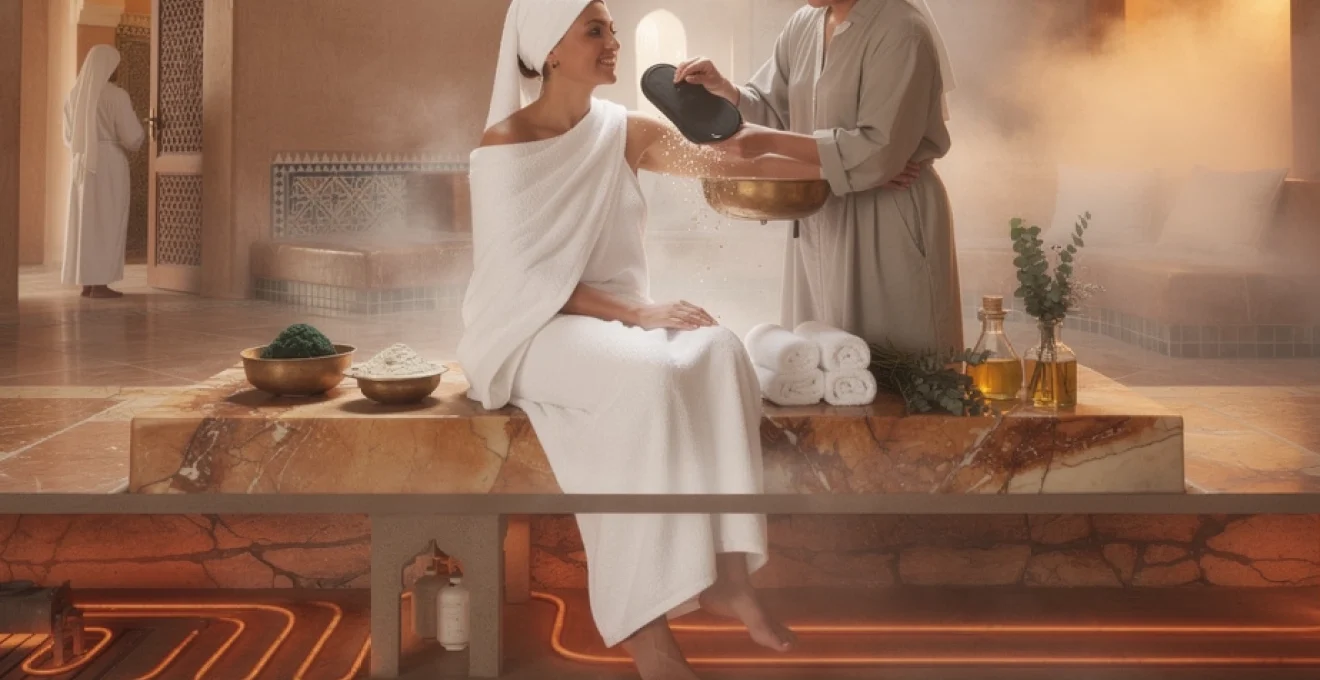
Traditional Moroccan hammams represent one of the world’s most enduring wellness traditions, seamlessly blending ancient Roman bathing practices with Islamic purification rituals. These sacred spaces have served as cornerstones of Moroccan society for over thirteen centuries, evolving from simple public bathhouses into sophisticated wellness sanctuaries that continue to captivate visitors from around the globe. The hammam experience transcends mere cleansing, offering a profound journey through temperature-controlled chambers where steam, traditional soaps, and time-honoured rituals converge to create an unparalleled therapeutic experience. Today’s hammams maintain their authentic character whilst adapting to modern wellness tourism, preserving the architectural marvels and ritualistic protocols that have defined Moroccan bathing culture since the 8th century.
Historical origins and cultural significance of moroccan hammam traditions
The genesis of Moroccan hammam culture traces back to the Roman conquest of North Africa, where public bathing facilities served practical hygiene needs in an era before private water access. However, the Islamic conquest of the 7th century fundamentally transformed these bathing spaces into something far more profound than their Roman predecessors. The integration of Islamic purification principles with existing Roman infrastructure created a unique cultural synthesis that would define Moroccan social life for generations to come.
Archaeological evidence from Volubilis reveals the oldest Islamic hammam ruins in Morocco, dating to the 8th century. These early structures demonstrate how Muslim architects adapted Roman hypocaust systems whilst incorporating distinctly Islamic design elements. The strategic placement of hammams adjacent to mosques reflects the deep spiritual significance of ritual cleansing before prayer, establishing these bathhouses as essential religious infrastructure rather than mere convenience facilities.
The cultural significance of hammams extends well beyond religious observance into the fabric of Moroccan social interaction. Weekly hammam visits serve as cornerstone community events where generations of families gather to share news, celebrate life events, and maintain social bonds. This tradition remains particularly vital for women, who historically found in hammams rare spaces for autonomous social interaction outside domestic constraints.
Ceremonial hammam rituals surrounding weddings exemplify the profound cultural integration of these bathing traditions. Pre-wedding hammam ceremonies involve elaborate purification rituals where brides receive blessings from female relatives whilst undergoing traditional beauty treatments. These occasions transform ordinary bathing spaces into sacred venues for life transition ceremonies, reinforcing the hammam’s role as both physical and spiritual sanctuary.
Architectural design and technical infrastructure of traditional hammams
Traditional Moroccan hammam architecture represents a masterpiece of engineering ingenuity, seamlessly integrating Roman technological innovations with Islamic design principles. The fundamental architectural framework consists of interconnected chambers arranged in a progression from moderate to intense heat, each serving specific therapeutic and ritualistic functions. This sophisticated thermal management system creates optimal conditions for the multi-stage bathing process that defines the authentic hammam experience.
Hypocaust heating systems and underground furnace networks
The hypocaust heating system forms the technological heart of traditional hammam operations, utilising underground furnace networks to distribute radiant heat throughout the bathing chambers. These sophisticated systems feature central furnaces that burn wood or charcoal, generating heated air that circulates through hollow wall cavities and beneath raised floors. The furnace operator, known as the chauffeur, maintains precise temperature control by adjusting fuel input and airflow regulation, ensuring optimal heating conditions across all chambers.
Underground distribution channels, constructed from fired brick and sealed with traditional lime mortar, transport heated air from central furnaces to individual chambers. This network design prevents heat loss whilst allowing precise temperature regulation in each bathing area. The system’s efficiency depends on careful maintenance of air circulation pathways, requiring regular cleaning and repair of underground channels to maintain optimal thermal performance.
Domed ceiling construction and steam circulation mechanics
The distinctive domed ceiling construction serves both aesthetic and functional purposes in traditional hammam design. These curved structures, typically constructed from brick and reinforced with traditional tadelakt plaster, facilitate optimal steam circulation whilst preventing condensation dripping. Small perforations in the dome apex, covered with decorative star-shaped glass panels, regulate humidity levels and provide subtle natural illumination.
Steam circulation mechanics rely on the dome’s curved geometry to create convection currents that distribute moisture evenly throughout
the chamber, while cooler air descends along the walls. This continuous movement helps maintain consistent temperatures and prevents pockets of overly hot or cold air. As steam rises and condenses on the dome, the tadelakt finish encourages droplets to run down the walls rather than fall directly onto bathers, preserving comfort and ensuring a gentle, enveloping mist rather than a harsh downpour.
Ventilation apertures positioned at different heights allow attendants to fine-tune humidity by opening or closing small vents, much like adjusting windows in a greenhouse. In many historic hammams, these openings are fitted with colored glass, casting jewel-like light across the steam and reinforcing the sense of sanctuary. The combined effect of these design choices is a carefully balanced microclimate where heat, humidity, and airflow support the therapeutic progression of the Moroccan hammam ritual.
Marble and tadelakt waterproofing techniques
Effective waterproofing is critical to the longevity of traditional Moroccan hammams, where surfaces are continuously exposed to high humidity and temperature fluctuations. Craftsmen historically relied on two primary materials: polished marble for floors and benches, and tadelakt lime plaster for walls and vaulted ceilings. Marble’s natural density and low porosity make it ideal for high-contact areas, providing both durability and a cool, pleasant surface that contrasts with the ambient heat.
Tadelakt, a hallmark of Moroccan architecture, is a highly specialized lime-based plaster that becomes water-resistant through a meticulous burnishing process. Artisans apply multiple coats of lime plaster, then polish the surface with smooth stones and olive oil soap, compressing the material and closing micro-pores. This technique produces a seamless, slightly reflective finish that sheds water like the surface of a river stone, preventing seepage into the underlying masonry and reducing the risk of mold formation.
The interplay between marble and tadelakt is not purely functional; it also defines the visual identity of traditional hammams. Marble thresholds, basins, and platforms are often contrasted with softly curved tadelakt walls in earthy tones of ochre, cream, or deep red. This material palette enhances the sensory quality of the hammam environment, where the cool touch of stone, the silky smoothness of plaster, and the warmth of steam merge into a coherent therapeutic setting.
Temperature gradient zones: bayt al-maslakh to bayt al-harara
The internal layout of a traditional Moroccan hammam is organized around a deliberate temperature gradient, guiding bathers through a sequence of chambers that gradually increase in heat and humidity. Visitors typically enter through the bayt al-maslakh, or changing and resting area, where the temperature remains close to ambient conditions. This transitional space allows the body to acclimatize slowly, reducing the risk of thermal shock when entering hotter rooms.
From the changing area, bathers progress into the warm room, sometimes called the lukewarm chamber, where mild heat gently opens the pores and relaxes muscles. The journey culminates in the bayt al-harara, the hottest chamber, where intense steam and elevated temperatures drive perspiration, detoxification, and deep muscular relaxation. This zoned design mirrors the logic of modern hydrotherapy circuits, yet it has been refined over centuries in Moroccan hammams to support both religious ablution and extended wellness rituals.
Temperature gradients are not arbitrary; they reflect careful engineering of furnace placement, hypocaust channels, and ventilation openings. The hottest chamber is typically located closest to the furnace and above the densest network of flues, while cooler rooms sit further away along the thermal axis. For modern visitors, understanding this spatial choreography provides insight into how traditional architects created a holistic wellness journey long before contemporary spa design vocabulary emerged.
Ritualistic bathing protocols and therapeutic methodologies
Beyond their remarkable architecture, traditional Moroccan hammams are defined by codified bathing protocols that combine hygiene, spirituality, and therapeutic care. Rather than a simple wash-and-go routine, the Moroccan hammam ritual unfolds through structured stages that target specific physiological and energetic effects. Each product and technique—black soap, steam, exfoliation, clay, and oil—plays a distinct role in this multi-layered wellness tradition.
Modern spa-goers may recognize elements of the hammam ritual in popular exfoliation or body wrap treatments, yet the Moroccan version remains uniquely rooted in local ingredients and Islamic purification concepts. As you move from warming and sweating to deep cleansing and restoration, you participate in a process honed over generations. Understanding these stages not only enhances appreciation for the experience but also helps you adapt the protocol for your own skin type and wellness goals.
Savon beldi application and eucalyptus infusion treatments
The first active step in the traditional hammam sequence is the application of savon beldi, or Moroccan black soap, onto warm, damp skin. This olive-based paste, often enriched with argan oil and aromatic extracts, is massaged over the entire body and left to sit for five to ten minutes. During this time, the combination of heat, humidity, and natural saponins works like a gentle chemical peel, softening the stratum corneum and loosening accumulated impurities without stripping the skin.
In many historic and contemporary hammams, eucalyptus infusion is used alongside savon beldi to intensify the therapeutic effect of the steam. Fresh eucalyptus leaves or essential oil are placed near the furnace or in designated steam inlets, releasing volatile compounds that open the respiratory passages and enhance the sense of mental clarity. You might notice your breathing deepen and your sinuses clear, creating a full-body sensation akin to stepping into a natural eucalyptus grove after rain.
For visitors with sensitive or very dry skin, attendants may adjust the contact time or recommend savon beldi blends with added moisturizing agents like argan or sweet almond oil. This degree of customization reflects an evolving understanding of dermatological needs, demonstrating how traditional hammam practices continue to adapt within modern wellness frameworks. If you are recreating the ritual at home, maintaining adequate bathroom steam and avoiding overly hot water will help you achieve similar softening effects.
Kessa glove exfoliation techniques and dead skin removal
Once the black soap has thoroughly softened the skin, the iconic kessa glove takes center stage. This tightly woven crepe mitt, originally crafted from viscose or plant fibers, is designed to grip the skin’s surface and lift away dead cells in visible rolls. Under the firm, rhythmic strokes of an experienced attendant, years of superficial buildup are shed, often to the surprise of first-time visitors who witness tangible evidence of renewal.
Professional hammam attendants follow specific exfoliation patterns, typically beginning with the limbs and working toward the torso, using long, upward strokes to stimulate circulation and lymphatic flow. Areas with thicker skin—such as elbows, knees, and heels—receive more focused attention, while delicate regions are treated with lighter pressure or skipped entirely. The goal is not to cause pain, but to reach that fine line where vigorous friction yields maximum renewal without damaging the underlying epidermis.
If you are attempting kessa exfoliation yourself, it is crucial to avoid recent sunburns, fresh tattoos, or skin conditions such as eczema or psoriasis flare-ups. Think of the kessa as a precision tool rather than a brute-force scrubber: when used on properly steamed and softened skin, it mimics the effect of a professional microdermabrasion more than a simple loofah. Hydration before and after the session further supports the body’s natural detoxification processes, reducing post-treatment sensitivity.
Ghassoul clay purification and mineral absorption properties
Following exfoliation, many traditional Moroccan hammams incorporate a full-body application of ghassoul (or rhassoul) clay, a magnesium-rich smectite clay mined from the Atlas Mountains. Mixed with warm water, rose water, or herbal infusions, ghassoul forms a silky paste that is smoothed over skin and hair, where it acts like a natural magnet for excess sebum, heavy metals, and environmental pollutants. Unlike some clays that can be overly drying, ghassoul’s unique mineral profile allows it to cleanse while maintaining the skin’s lipid balance.
As the clay begins to dry slightly in the warm, humid air of the hammam, osmotic processes draw impurities out from the pores, while trace elements such as silica, magnesium, calcium, and potassium are gently reintroduced to the skin’s surface. You can think of this stage as a mineral “reset,” similar to immersing yourself in a natural hot spring rich in dissolved earth elements. Hair treated with diluted ghassoul often emerges with increased volume and shine, free from residue commonly left by synthetic shampoos.
Contemporary wellness research has highlighted the growing burden of urban pollution on skin health, making mineral clays like ghassoul increasingly relevant. For those with oily or combination skin, incorporating a ghassoul mask once or twice a week—whether in a Moroccan hammam or at home—can help regulate sebum production and minimize the appearance of enlarged pores. As with all active treatments, patch testing is advisable for highly reactive skin types, and contact time can be adjusted to avoid excessive dryness.
Traditional argan oil post-treatment conditioning
The final phase of the Moroccan hammam ritual is dedicated to nourishment and restoration, traditionally accomplished through generous application of cold-pressed argan oil. Harvested from the endemic argan tree of southwestern Morocco, this golden oil is exceptionally rich in vitamin E, polyphenols, and essential fatty acids. Applied to freshly exfoliated skin, argan oil penetrates more readily, sealing in moisture and reinforcing the skin’s natural barrier function.
Hammam attendants often combine light massage techniques with argan oil application, focusing on tension-prone areas such as shoulders, neck, and lower back. This combination of manual therapy and lipid replenishment deepens relaxation, lowers perceived stress, and promotes a sense of groundedness after the intensely stimulating phases of heat and exfoliation. In many rural communities, similar argan-based massages are also used to relieve muscular fatigue after agricultural labor, underscoring the oil’s broader role in Moroccan daily life.
For modern spa-goers, incorporating argan oil after hammam or sauna sessions provides an effective counterbalance to dehydration and transepidermal water loss. Those with acne-prone skin may favor lighter application on the face, while drier skin types can layer argan oil under a simple moisturizer for enhanced occlusion. Regardless of the specific routine, this concluding step symbolically and physically completes the purification cycle, transforming the hammam from a mere cleansing ritual into a comprehensive skin-conditioning treatment.
Renowned hammam establishments across morocco’s imperial cities
While neighborhood bathhouses remain the backbone of Moroccan hammam culture, several historic and contemporary establishments in the imperial cities have achieved particular renown. These flagship hammams showcase the full spectrum of experiences available, from utilitarian community facilities to opulent palace spas. Exploring these sites allows you to witness how a single tradition can be interpreted through different architectural, social, and economic lenses.
For travelers designing a wellness-focused itinerary, understanding the character of hammams in Marrakech, Fez, Casablanca, and Meknes helps in balancing authenticity with comfort. Some venues emphasize historical continuity and local clientele, while others cater to international visitors seeking curated spa journeys. By sampling both ends of this spectrum, you gain a deeper appreciation for how traditional Moroccan hammams continue to evolve in the 21st century.
Les bains de marrakech and la mamounia palace spa facilities
In Marrakech, perhaps no names are more synonymous with high-end hammam culture than Les Bains de Marrakech and the spa at La Mamounia. Les Bains de Marrakech, located near the city’s ancient ramparts, blends traditional design elements—arched passageways, candlelit corridors, and warm tadelakt walls—with contemporary spa protocols. Here, the classic sequence of black soap application, kessa exfoliation, and ghassoul masking is executed with meticulous precision in private or semi-private cabins, making it particularly accessible for first-time visitors who may feel shy about communal bathing.
La Mamounia, the legendary palace hotel just outside the medina, elevates the Moroccan hammam experience to a level of cinematic luxury. Its spa features expansive marble-clad chambers, intricately carved wooden ceilings, and temperature-controlled pools that complement the traditional steam rooms. Treatments often integrate premium argan oil blends, rose-infused waters, and tailor-made massage sequences, appealing to travelers who want to combine cultural immersion with five-star comfort. Prices at both venues reflect their status, but for many, the combination of impeccable service and architectural drama justifies the investment.
When choosing between these two Marrakech icons, consider your priorities: do you prefer the slightly more intimate, bohemian atmosphere of Les Bains de Marrakech, or the grand hotel setting and extended spa menu of La Mamounia? Either way, booking in advance is highly recommended, particularly during peak travel seasons when wellness tourism in Morocco continues to grow year over year.
Fez medina’s hammam seffarine and bou inania complex
Fez, Morocco’s spiritual and intellectual capital, offers some of the country’s most historically significant hammam structures. Hammam Seffarine, nestled near the brass-workers’ square of Place Seffarine, is one of the oldest functioning bathhouses in the medina. Its relatively modest entrance belies an interior of venerable stone, time-worn basins, and atmospheric steam-filled chambers that have served generations of artisans, students, and families. Visiting Hammam Seffarine provides a rare glimpse into a living medieval infrastructure still operating close to its original purpose.
Nearby, the Bou Inania complex, centered on the famed 14th-century madrasa, includes remains of hammam facilities that illustrate how bathing was integrated into religious and educational life. While the hammam associated with Bou Inania no longer operates in its original form, its architectural traces—water channels, furnace rooms, and tiled ablution areas—help scholars reconstruct the broader social role of baths in Marinid-era Fez. For architecture and history enthusiasts, a guided tour that contextualizes these spaces can transform a simple visit into a deeper exploration of Islamic civic design.
Staying within the Fez medina, you will find a growing number of restored riads offering private hammam suites inspired by these historic precedents. Many combine traditional materials and heating methods with modern plumbing and hygiene standards, making them attractive options if you wish to experience the hammam ritual in a more controlled, personalized environment after sampling the hustle and bustle of public baths.
Casablanca’s hassan II mosque hammam and art deco thermal baths
Casablanca presents a strikingly different face of Moroccan hammam culture, shaped by its 20th-century urbanization and Atlantic location. The hammam facilities associated with the monumental Hassan II Mosque reflect this modern orientation, featuring contemporary engineering, expansive spaces, and strict hygiene protocols. While access policies can vary, the complex demonstrates how large-scale religious architecture in Morocco continues to integrate ablution and hammam functions into its overall design.
Beyond the mosque, Casablanca’s downtown district retains several Art Deco–influenced bathhouses and thermal establishments dating from the French Protectorate era. These venues often feature geometric tilework, streamlined facades, and hybrid design elements that blend Moroccan motifs with European wellness trends of the early 1900s. Stepping into such a hammam can feel like entering a time capsule where colonial-era spa culture intersects with local bathing traditions.
For travelers interested in the evolution of hydrotherapy and urban leisure, Casablanca offers a case study in how Moroccan hammams adapted to changing architectural and social paradigms. Here, you may encounter mixed-use facilities offering not only steam baths and scrubs but also modern saunas, jacuzzis, and fitness amenities—a clear example of how the core ritual is being integrated into broader wellness ecosystems.
Meknes royal hammam traditions and moulay ismail heritage sites
Meknes, often overshadowed by its larger imperial counterparts, possesses a rich legacy of royal hammams tied to the reign of Sultan Moulay Ismail in the 17th and 18th centuries. Within the palace precincts and surrounding kasbahs, archival records and archaeological remains point to extensive bathing facilities designed for the royal household, military elites, and visiting dignitaries. These hammams functioned not only as spaces of purification but also as instruments of statecraft, where negotiations, alliances, and courtly rituals unfolded in discreet, steam-filled settings.
Many of the original royal hammams in Meknes are now closed to the public or reduced to vestiges, yet guided heritage tours can reveal furnace rooms, water storage systems, and tiled ablution areas that hint at their former grandeur. In the surrounding medina, simpler public hammams continue to serve local communities, preserving techniques and social rhythms that likely echo those of earlier centuries. Experiencing one of these neighborhood baths offers a more understated, but equally authentic, encounter with Moroccan hammam traditions.
When you combine visits to Meknes’ mausoleums, granaries, and stables with an exploration of its surviving hammams, a coherent picture emerges of how water management, ritual purification, and political power were interlinked in pre-modern Morocco. For historians and culturally curious travelers alike, Meknes provides essential context for understanding the broader imperial hammam network.
Professional hammam attendant training and service standards
Behind every memorable Moroccan hammam experience stands a skilled hammami or dellak—the professional attendant responsible for guiding you through the ritual. Historically, knowledge was transmitted through informal apprenticeships, with young workers learning furnace management, water handling, and scrubbing techniques by observing senior practitioners. Over time, as wellness tourism expanded and hygiene regulations tightened, more formalized training pathways and service standards began to emerge, particularly in urban centers and spa-oriented hammams.
Today, many high-end establishments in cities like Marrakech, Casablanca, and Agadir require attendants to complete vocational programs in aesthetics, hydrotherapy, or spa management. These curricula cover topics such as skin physiology, infection control, client communication, and ergonomics to prevent repetitive strain injuries from vigorous scrubbing. In some cases, courses are accredited by national tourism or health ministries, aligning the traditional Moroccan hammam ritual with international spa benchmarks while preserving its cultural specificity.
Service standards now typically include structured intake questions about health conditions—such as cardiovascular issues, pregnancy, or dermatological concerns—to adapt treatment intensity and duration. Attendants are trained to monitor signs of overheating, dizziness, or dehydration and to offer breaks or cooler water when necessary. For visitors, this enhanced professionalism translates into a safer, more predictable experience, without sacrificing the invigorating authenticity of the hammam’s core techniques.
Ethical considerations have also gained prominence, particularly regarding privacy, consent, and gender-sensitive service. Many mixed or tourist-oriented facilities offer clear explanations of what each treatment entails, allowing you to opt in or out of specific steps like chest exfoliation or scalp massage. Tipping customs remain an important component of the attendant’s income—typically ranging from 10–20 MAD in local baths to higher amounts in luxury spas—so factoring this into your budget supports the continued transmission of hammam expertise.
Modern adaptations and international spa integration practices
As global interest in holistic wellness has surged, the Moroccan hammam ritual has increasingly crossed borders, finding its way into boutique spas, luxury hotels, and wellness centers from Europe to North America and the Gulf. These international adaptations often preserve the core sequence—steam, black soap, exfoliation, clay, and oil—while modifying environmental conditions and product formulations to suit local regulations and client expectations. In some cases, hammam-inspired treatments are integrated into broader spa circuits that include saunas, ice fountains, and hydrotherapy pools.
One notable trend is the rise of hybrid “Moroccan-Turkish” baths, where elements of both traditions are combined: heated marble slabs and domed ceilings from Ottoman designs, paired with savon beldi and argan oil from Morocco. While purists may argue that such fusions dilute cultural specificity, they also illustrate the adaptability of hammam principles to diverse contexts. For spa operators, offering an authentic Moroccan hammam experience requires investment in proper steam engineering, non-slip surfaces, and staff training in traditional techniques, rather than simply rebranding a generic steam room.
On the product side, demand for ethically sourced savon beldi, ghassoul, and argan oil has fueled growth in cooperative-based production models within Morocco. Women’s cooperatives in particular have become key suppliers to international spa brands, blending ancestral knowledge with fair-trade and organic certification standards. This shift not only supports rural livelihoods but also encourages more transparent supply chains, addressing concerns about overharvesting and quality control.
For individual wellness enthusiasts, the modern adaptation of the hammam extends into the home through complete “hammam kits” and digital guides that explain step-by-step protocols. By recreating even a simplified version of the ritual in your own bathroom—perhaps once a week or once a month—you participate in a living tradition that bridges geography and time. Whether experienced in a centuries-old medina bathhouse or a minimalist urban spa, the essence of the Moroccan hammam remains the same: a carefully orchestrated journey from heat to purification to deep, lasting renewal.