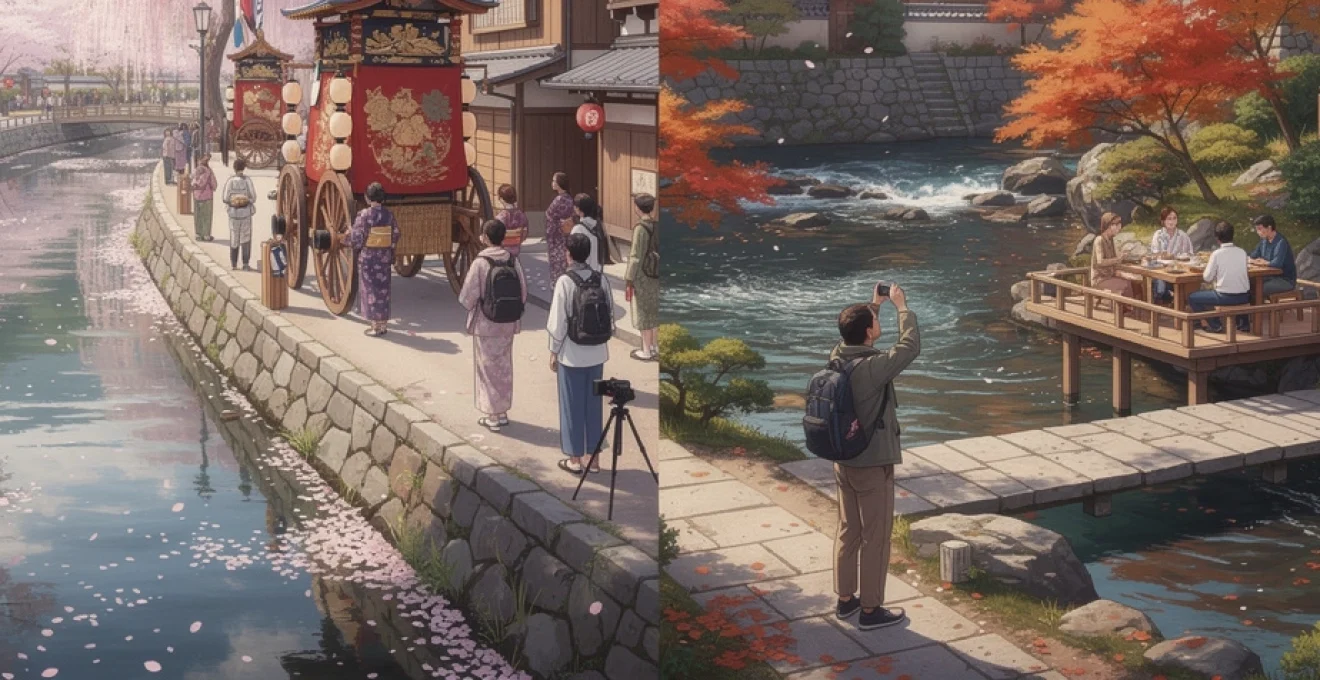
Kyoto stands as Japan’s cultural heart, where ancient traditions blend seamlessly with the rhythm of modern life across four distinct seasons. Each season transforms this former imperial capital into a completely different experience, from the ethereal pink clouds of spring cherry blossoms to the fiery maple leaves of autumn, the vibrant festivals of summer, and the serene snow-covered temples of winter. Understanding the nuanced timing of seasonal changes, crowd patterns, and cultural events becomes essential for maximising your visit to this UNESCO World Heritage city.
The city’s 2,000 temples and shrines, traditional wooden houses, and meticulously maintained gardens create an ever-changing canvas throughout the year. Weather patterns, tourist volumes, and cultural celebrations shift dramatically between seasons, making strategic planning crucial for experiencing Kyoto at its finest. Whether you’re seeking the perfect sakura photograph, hoping to witness the grandeur of Gion Matsuri, or planning to explore temple gardens ablaze with autumn colours, each season demands specific knowledge and preparation.
Spring cherry blossom season: navigating hanami peak times and hidden sakura viewing spots
Spring in Kyoto brings the world-renowned sakura season, typically spanning from late March through early May, with peak blooming occurring in the first two weeks of April. The cherry blossom forecast, or sakura-zensen, becomes a national obsession, with meteorologists tracking bloom progression across Japan’s islands. Kyoto’s diverse microclimates mean different areas peak at slightly different times, extending your viewing opportunities when planned strategically.
Temperature fluctuations during spring range from 10°C to 20°C, requiring layered clothing for comfort throughout the day. Morning visits to popular hanami spots offer the best photography opportunities, with soft golden light filtering through delicate pink petals. However, crowds intensify dramatically during weekends and the peak blooming period, with some locations becoming nearly inaccessible due to visitor volume.
The ephemeral nature of sakura creates a sense of urgency that drives millions of visitors to Kyoto during a remarkably short window, making advance planning and flexible scheduling essential for success.
Philosopher’s path and maruyama park: timing your visit during peak blooming periods
The Philosopher’s Path, stretching 2 kilometres from Ginkaku-ji to Nanzen-ji, becomes a pink tunnel during peak sakura season. Early morning visits before 7 AM provide the most serene experience, with dappled sunlight creating magical photography opportunities. The path’s numerous varieties of cherry trees bloom at slightly different times, extending the viewing season by several days compared to single-variety locations.
Maruyama Park transforms into Kyoto’s largest hanami party destination, with families and friends gathering for elaborate picnics beneath the blossoms. The park’s famous weeping cherry tree, illuminated at night, draws photographers from around the world. Weekday evening visits after 6 PM offer a more manageable crowd experience whilst still capturing the illuminated beauty.
Daigo-ji temple complex: early morning photography strategies for Shimo-Daigo sakura
Daigo-ji Temple complex houses over 800 cherry trees across multiple elevations, creating a layered sakura experience. The Shimo-Daigo area opens at 9 AM, but arriving exactly at opening time positions you ahead of tour groups for pristine photography opportunities. The temple’s pagoda framed by cherry blossoms creates one of Japan’s most iconic spring images.
Professional photographers recommend bringing a polarising filter to enhance the contrast between pink blossoms and blue sky. The temple’s elevated position provides sweeping views across Kyoto, with morning mist often adding ethereal atmosphere to photographs. Weather conditions change rapidly in spring, making flexible planning essential for optimal shooting conditions.
Yoshino-yama hill: alternative viewing locations away from tourist crowds
Yoshino-yama Hill, located in the Higashiyama district, offers spectacular sakura viewing with significantly fewer crowds than mainstream locations. The hill’s 30,000 cherry trees bloom in waves from lower to higher elevations, creating extended viewing opportunities. Local residents often share this hidden gem through word-of-
mouth recommendations rather than mainstream travel guides, so you’re likely to share the trails with locals rather than large tour groups. For the best experience, take an early bus towards Yoshino-yama, then hike gradually upward to follow the “four stages” of blossoms (shimo, naka, kami, and oku zones). This natural progression means that even if central Kyoto has passed peak bloom, you can still find fully blossoming trees at higher elevations.
Because Yoshino-yama sits slightly cooler than central Kyoto, temperatures can be a few degrees lower, and evenings become chilly fast. Pack a light down jacket or windproof layer if you plan to stay for sunset views. The ridge-line paths also offer wide-angle compositions that capture the full scale of the hillside, ideal if you’re looking for sweeping landscape photographs rather than close-up blossom shots.
Temperature fluctuations and rainfall patterns: weather-dependent itinerary adjustments
Spring weather in Kyoto is famously changeable, with sunny 20°C afternoons dropping to single digits after sunset and sudden showers rolling in from the mountains. Building flexibility into your sakura itinerary is crucial: rather than locking in every hour, keep one or two “floating” half-days you can move to match peak bloom or blue-sky conditions. Think of your plan like a sliding puzzle; by shifting one or two pieces, you can dramatically improve your overall cherry blossom experience.
Rainy days need not be wasted in Kyoto. Overcast conditions actually soften contrast and saturation, making close-up blossom photography more flattering. On wet days, prioritise temples with covered corridors and verandas such as Nanzen-ji or Tenryu-ji, where you can stay dry while still enjoying garden views. When strong winds are forecast, visit locations with robust late-blooming varieties first, as fragile petals can fall in a matter of hours once gusts pick up.
To stay ahead of changes, monitor the official Kyoto cherry blossom reports and compare them against your planned route. If Maruyama Park has already moved into the “falling petals” stage but the Philosopher’s Path is still at 70% bloom, swap your days to catch each spot at its best. Carrying a compact umbrella and a packable rain shell lets you react quickly, turning sudden showers into atmospheric photo opportunities instead of trip disruptions.
Summer festival calendar: gion matsuri processions and traditional kyoto celebrations
Summer in Kyoto is defined by festivals, lanterns, and humid evenings where the air itself feels like warm silk. From June through August, the city hosts a dense calendar of events, the most famous being Gion Matsuri, one of Japan’s three great festivals with a history of over 1,000 years. High temperatures often reach 35°C with considerable humidity, so your strategy for summer travel in Kyoto needs to balance cultural immersion with heat management.
Beyond Gion Matsuri, smaller local events such as the Mitarashi Festival at Shimogamo Shrine and riverside kawayuka dining along the Kamo River create a continuous festive atmosphere. Knowing the specific dates and focal points of each celebration allows you to cluster activities and minimise cross-city travel in the heat. As with spring, early mornings and evenings become your most valuable windows for comfortable sightseeing.
Yamaboko junko parade route: strategic positioning for optimal viewing experience
The highlight of Gion Matsuri is the Yamaboko Junko parade, when colossal wooden floats—some weighing over 10 tons—are pulled through central Kyoto. The main processions occur on July 17 and 24, following set routes along Shijo, Kawaramachi, and Oike streets. If you want a clear view without standing in the sun for hours, careful positioning and timing matter more than simply arriving early.
One effective strategy is to head for intersections where floats must turn 90 degrees, such as the junction of Shijo and Kawaramachi. Here, you can watch the dramatic tsuji-mawashi turn, where teams pivot the floats using bamboo slats and sheer manpower. Arriving 60–90 minutes before the procession reaches your chosen corner usually secures a decent spot without an excessively long wait. Bringing a folding fan, sun hat, and plenty of water is essential for safety.
Alternatively, if you prioritise comfort over close-up views, consider booking a café or hotel lounge seat overlooking the route along Oike-dori. Some establishments open reservations specifically for Gion Matsuri viewing, allowing you to enjoy air conditioning and refreshments while still observing the procession. Whichever approach you choose, plan your route home in advance, as trains and buses become extremely crowded immediately after the parade ends.
Kibune and kurama: mountain retreat dining on kawadoko platforms
When summer heat in central Kyoto becomes oppressive, the mountain villages of Kibune and Kurama offer a natural escape. Just 30–40 minutes by train from Demachiyanagi Station, the Kibune valley is famous for its kawadoko—raised dining platforms built directly over the river. Temperatures here can be 5–7°C cooler than downtown Kyoto, and the constant sound of flowing water creates an immediate sense of relief.
Most kawadoko restaurants operate from May to September, serving multi-course kaiseki or seasonal specialties such as river fish and chilled tofu. Reservations are strongly recommended, especially on weekends and in August. To avoid the busiest lunchtime window, aim for an early seating around 11:30 AM or a later afternoon booking, combining your meal with a visit to Kifune Shrine’s picturesque stone steps lined with red lanterns.
For a fuller mountain retreat, consider hiking the trail between Kibune and Kurama, which takes around 2–3 hours at a relaxed pace. The route passes through cedar forests and the atmospheric Kurama-dera Temple complex, offering a welcome contrast to urban Kyoto. Just remember that even in the mountains, humidity remains high; lightweight, quick-drying clothing and proper hydration are as important here as in the city.
Fushimi inari taisha: early morning ascent techniques to avoid heat exhaustion
Fushimi Inari Taisha, with its endless tunnels of vermilion torii gates, is a must-visit in any season, but tackling the full mountain loop in summer requires extra care. Daytime temperatures on the exposed sections of the trail can feel several degrees hotter than in the city centre, and humidity builds quickly under the forest canopy. To enjoy the shrine safely, plan your visit to start between 5:30 and 7:00 AM, when the air is coolest and crowds are still thin.
Think of the ascent as a series of stages rather than a race to the summit. The Yotsutsuji intersection at roughly the halfway point offers panoramic views over Kyoto and makes an excellent turnaround spot if conditions feel too intense to continue. Carry at least one litre of water per person, and consider adding electrolyte tablets to prevent heat cramps, especially if you’re not accustomed to Japan’s summer climate.
If you do decide to complete the full loop, pace yourself by taking short breaks at smaller sub-shrines along the way. Early start times not only reduce heat exposure but also offer unique photographic opportunities, with soft morning light filtering through the torii and pockets of mist lingering in the trees. By the time most visitors arrive mid-morning, you can already be descending, satisfied and safely ahead of the heat.
Arashiyama bamboo grove: humidity management and optimal photography hours
Arashiyama’s bamboo grove is another Kyoto icon that can feel stifling in peak summer, as still air and dense vegetation trap humidity. To keep the experience pleasant, aim to enter the grove just after sunrise, ideally between 6:00 and 7:30 AM. At this hour, temperatures remain relatively low, and slanting light through the bamboo trunks creates the ethereal atmosphere seen in many professional photographs.
Because summer skies in Kyoto often turn hazy by late morning, you’ll get better colour and contrast in your images earlier in the day. A fast lens and slightly higher ISO settings help balance dim light under the canopy without resorting to flash, which disrupts the tranquil mood. Consider walking beyond the main bamboo path towards Okochi Sanso Villa or the less-visited back lanes to escape the densest crowds.
To manage humidity, wear moisture-wicking fabrics and bring a small towel or handkerchief, as locals do, to dab away sweat. Many travellers underestimate how draining a single hour in the grove can feel in August; scheduling a coffee break or river-side rest in central Arashiyama immediately afterwards helps you recover before continuing with temples or the Sagano Scenic Railway.
Autumn kouyou season: momiji viewing techniques and temple garden timing
Autumn in Kyoto rivals, and for some surpasses, spring cherry blossom season in beauty. From late October through late November, the city’s maples (momiji) and gingko trees turn vivid shades of crimson, orange, and gold. Unlike the brief sakura window, kouyou—autumn foliage—unfolds gradually from the northern mountains down into the city, giving you a longer but still finite period to plan an effective Kyoto itinerary.
Peak colour usually arrives in mid to late November, though exact timing varies slightly each year depending on temperature trends. Temple gardens such as Eikando, Tofuku-ji, and Kiyomizu-dera become particularly crowded at this time, especially during weekend night illuminations. To fully appreciate Kyoto’s autumn landscapes, it helps to pair famous spots with lesser-known neighbourhood temples and to vary your visiting times between morning, afternoon, and evening.
One effective approach is to dedicate specific days to different elevation bands. Start with northern areas like Kurama-dera and Kibune when the first colour reports appear, then shift towards central Kyoto temples as the season progresses, finishing in late-peaking locations like Arashiyama and the city’s southern outskirts. This “top-down” strategy mirrors the way colour descends through the region, maximising your chances of seeing multiple areas near their best.
Winter illumination events: kiyomizu-dera light-up schedules and seasonal temple access
Winter in Kyoto is often overlooked, yet it offers some of the most atmospheric experiences of the year. From December through early March, crisp air, occasional snowfalls, and extended night hours create perfect conditions for temple illumination events. Key sites such as Kiyomizu-dera, Kodai-ji, and Shoren-in host seasonal light-ups where gardens, pagodas, and city vistas are bathed in soft, carefully designed lighting.
Kiyomizu-dera’s winter illumination typically coincides with late autumn foliage in early December and again during special New Year or spring periods, though exact dates are announced annually. Evening admission usually begins around 6 PM, with last entry near 8:30 or 9 PM. To avoid the heaviest crowds, arrive 30–45 minutes after opening, when the initial rush has thinned but you still have plenty of time to explore the grounds.
Cold temperatures—often hovering between 0°C and 5°C at night—mean layered clothing, gloves, and a warm hat are non-negotiable. Stone paths and stairs can become slippery when frosty, so footwear with good traction is essential. The payoff is a uniquely serene perspective on Kyoto, where temple roofs gleam under starlight and the city glows softly in the distance like a sea of lanterns.
Outside illumination periods, winter also grants access to temples that feel almost private compared to other seasons. Sites like Ninna-ji, Myoshin-ji, and lesser-known sub-temples often see only a trickle of visitors on cold weekdays, allowing you to sit quietly in tatami rooms and observe dry gardens without interruption. If you’re lucky enough to wake up to fresh snowfall, head immediately for Kinkaku-ji or the Silver Pavilion; these landscapes under a thin white blanket are among Kyoto’s most unforgettable sights.
Seasonal transportation optimization: JR pass routes and keihan line integration strategies
Navigating Kyoto efficiently across four seasons requires more than just a city bus map. Because major seasonal attractions cluster along different axes—the Higashiyama temple belt, the northern mountains, Arashiyama in the west, and Fushimi in the south—understanding how to combine JR lines, private railways, and subways will save you both time and energy. In peak periods like sakura and kouyou, this can mean the difference between spending your day in gardens or queuing at bus stops.
If you hold a nationwide JR Pass, you can leverage JR Sagano Line trains from Kyoto Station to Saga-Arashiyama, cutting transit time to the bamboo grove and Tenryu-ji to under 20 minutes. Similarly, JR Nara Line trains to Inari and Uji are included, making it straightforward to pair Fushimi Inari Taisha with Byodo-in Temple on a single day. Think of JR lines as your high-speed backbone, then layer local options on top for fine-grained access.
The Keihan Line is particularly valuable for connecting central Kyoto with the Higashiyama district and southern Fushimi area. Stations like Gion-Shijo, Sanjo, and Demachiyanagi sit within walking distance of major temples and the Kamogawa riverbank. During festival nights or illumination events, Keihan trains often remain less crowded than city buses, providing a reliable route back to accommodation near Kyoto Station via a quick transfer.
Seasonal crowd surges demand tactical timing. In spring and autumn, avoid starting your day at Kyoto Station bus terminal between 9 and 11 AM, when lines for routes to Kiyomizu-dera and Ginkaku-ji can snake around the concourse. Instead, take the subway to Keage for Nanzen-ji and the Philosopher’s Path, or use Hankyu and Keihan lines to approach Gion from the north. For winter and summer travel, when weather rather than crowds is your main constraint, trains offer sheltered, climate-controlled transit that lets you conserve energy between outdoor sites.
Accommodation booking patterns: ryokan availability during peak seasonal periods
Kyoto’s accommodation market follows a clear seasonal rhythm that mirrors its festival and foliage cycles. Traditional ryokan and machiya townhouses in districts like Gion, Higashiyama, and central Nakagyo book out months in advance for early April and mid-November, when cherry blossoms and autumn leaves reach their peak. If you’re dreaming of tatami rooms, kaiseki dinners, and on-site baths during these windows, advance planning is not optional.
For high-demand weeks, such as peak Gion Matsuri in July or the core sakura period, ryokan owners often open reservations 6–10 months ahead, prioritising repeat guests. Setting calendar reminders and joining mailing lists can give you a critical head start. If your dates are fixed but properties appear full, consider shifting your expectations slightly: staying one subway stop away from Gion or choosing a modern hotel with occasional traditional elements can still deliver a strong Kyoto atmosphere.
Shoulder seasons—May, late September, and early December—offer a sweet spot for many travellers. During these periods, you can often find last-minute vacancies at mid-range ryokan and boutique hotels, sometimes at lower rates than peak months. Weekday stays are generally more flexible than Friday–Sunday nights, so if your itinerary allows, consider structuring your Kyoto visit around midweek nights to expand your options.
Finally, remember that Kyoto’s charm is not limited to its most famous neighbourhoods. Staying near Demachiyanagi, Nijo, or even slightly south of Kyoto Station places you within easy reach of both JR and private lines while immersing you in quieter residential streets. In these areas, family-run inns and smaller guesthouses often maintain availability even when central Gion is fully booked, giving you a more local perspective on Kyoto’s seasonal rhythms.