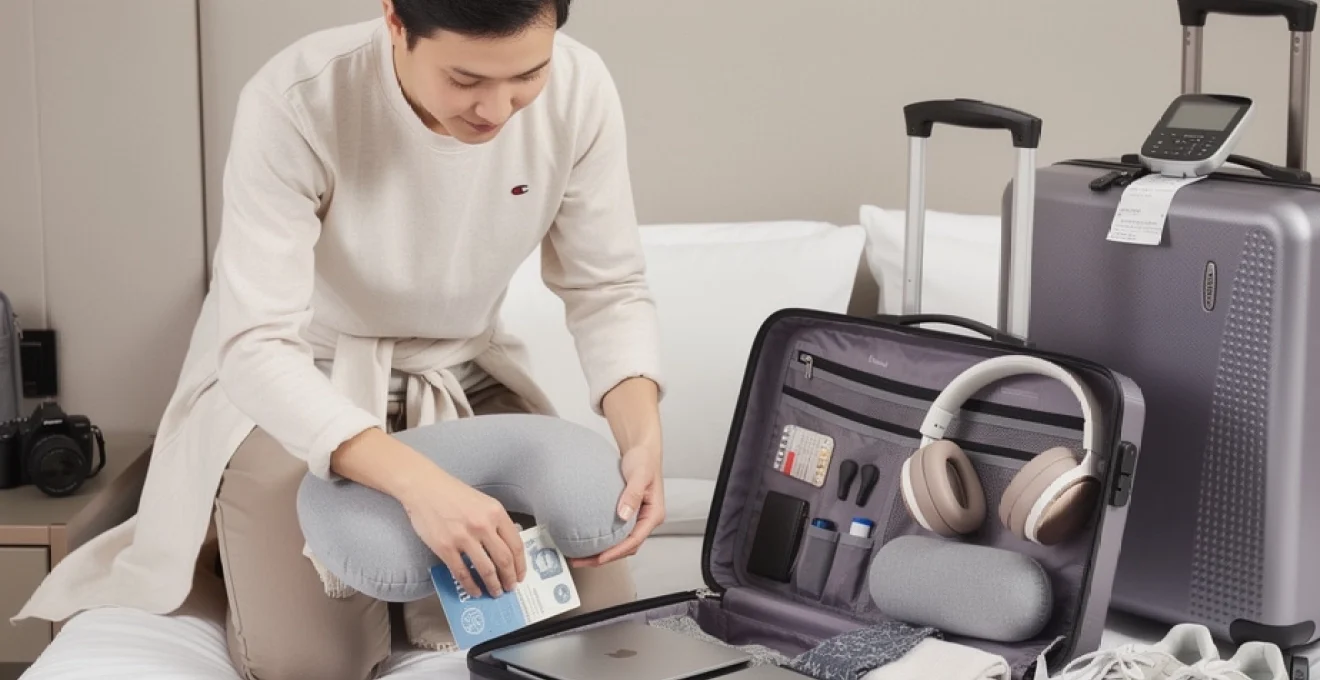
Long-haul flights present unique challenges that extend far beyond simply enduring extended periods in cramped seating. The complexity of international travel demands meticulous preparation, from navigating stringent security protocols to managing personal comfort across multiple time zones. Modern air travel statistics reveal that passengers on flights exceeding eight hours face significantly higher risks of dehydration, jet lag, and deep vein thrombosis, making strategic packing decisions crucial for both safety and comfort.
The average international traveller carries approximately 15-20% more items than necessary, leading to unnecessary baggage fees and physical strain. Professional frequent flyers understand that effective long-haul packing combines essential documentation, health management tools, and comfort systems into a cohesive strategy. This comprehensive approach transforms potentially gruelling journeys into manageable experiences whilst ensuring compliance with increasingly complex international travel requirements.
Essential documentation and security items for international Long-Haul travel
International long-haul travel demands an intricate web of documentation that extends well beyond basic identification requirements. The modern traveller must navigate complex bureaucratic systems whilst maintaining security protocols that vary significantly between departure and destination countries. Proper documentation management serves as the foundation upon which successful international travel experiences are built.
Passport validity requirements and visa documentation protocols
Passport validity requirements represent one of the most frequently overlooked aspects of international travel preparation. The majority of countries require passports to remain valid for at least six months beyond the intended departure date, with some nations demanding up to twelve months of remaining validity. This requirement stems from international agreements designed to prevent travellers from becoming stranded with expired documentation.
Visa documentation protocols vary dramatically across different destination countries, with some requiring advance applications whilst others offer visa-on-arrival services. Electronic visa systems have streamlined many processes, yet travellers must ensure they possess printed confirmations alongside digital copies. The complexity of modern visa requirements means that even experienced travellers should verify current protocols through official embassy sources rather than relying on travel websites or third-party information.
Travel insurance certificates and emergency medical documentation
Comprehensive travel insurance documentation extends beyond basic coverage certificates to include detailed policy schedules and emergency contact information. Medical coverage requirements have become particularly stringent following global health considerations, with many destinations requiring proof of coverage for medical evacuation and repatriation services. These requirements often specify minimum coverage amounts, typically ranging from £50,000 to £1,000,000 depending on the destination.
Emergency medical documentation should encompass prescription medication lists, allergy information, and relevant medical history summaries. Healthcare systems abroad may require detailed medical histories to provide appropriate treatment, particularly for travellers with pre-existing conditions. Digital storage systems provide backup access to critical medical information, yet physical copies remain essential when digital devices fail or become inaccessible.
Digital backup systems for critical travel documents
Modern digital backup systems represent a crucial safeguard against document loss or theft during international travel. Cloud-based storage platforms enable secure access to critical documents from anywhere with internet connectivity, providing invaluable peace of mind for long-haul travellers. Professional travel security experts recommend maintaining multiple digital copies across different platforms to ensure redundancy.
The effectiveness of digital backup systems depends on proper organisation and accessibility protocols. Travellers should create folder structures that mirror their physical document organisation, enabling quick retrieval during stressful situations. Password protection and encryption become essential when storing sensitive information digitally, balancing security with accessibility requirements.
Currency exchange receipts and financial declaration forms
Currency exchange documentation serves multiple purposes beyond simple record-keeping, particularly when travelling to countries with strict foreign currency regulations. Many destinations require declarations for currency amounts exceeding specific thresholds, typically ranging from £5,000 to £10,000 equivalent. Failure to properly declare currency can result in confiscation and significant legal complications.
Financial declaration forms often require detailed information about the source and intended use of carried funds. Travellers carrying substantial amounts should prepare supporting documentation explaining the legitimate business or personal purposes for their currency. Electronic banking documentation and wire transfer receipts provide additional verification for authorities when required.
Airline-specific Carry-On restrictions and weight limitations
Navigating the complex landscape of airline carry-on restrictions requires understanding that regulations vary significantly between carriers,
with limitations covering both the size and weight of cabin baggage. Whilst many airlines reference general IATA guidance, each carrier ultimately sets its own rules, and these can differ even between routes on the same airline. For long-haul flights, understanding these nuances before you pack helps you avoid expensive last‑minute check-in fees and stressful repacking at the boarding gate.
IATA cabin baggage dimensions for major carriers
The International Air Transport Association (IATA) suggests maximum cabin baggage dimensions of approximately 56 x 45 x 25 cm including handles and wheels, but this is advisory rather than mandatory. Major international airlines such as British Airways, Lufthansa and Qatar Airways broadly align with these guidelines, whereas low‑cost carriers and some regional airlines may impose smaller size limits. Long-haul routes generally allow one cabin suitcase plus a personal item, yet the permitted combined weight can vary from 7kg to 18kg.
Before a long-haul flight, travellers should verify both the size and weight allowances directly on the airline’s website for their specific fare class. Premium economy, business and first-class cabins often benefit from more generous cabin baggage policies, but basic economy or “light” fares on full‑service airlines can be as restrictive as budget carriers. Measuring your suitcase and weighing it fully packed at home ensures your long-haul flight packing checklist remains within airline parameters.
Prohibited items list variations across airlines
Whilst aviation security standards are largely harmonised, prohibited item lists still vary subtly between airlines and jurisdictions. Items such as weapons, flammable liquids, and certain tools are universally banned from cabin baggage, but grey areas exist around objects like sporting equipment, self-defence sprays, and sharp grooming tools. For example, some airlines permit small safety razors in hand luggage on long-haul routes, whilst others require all blades to be checked.
Regulations can also differ depending on your departure airport’s national security standards, meaning an item allowed on your outbound long-haul flight may be confiscated on your return. To avoid losing valuable or specialised equipment, cross‑check both your airline’s restricted items list and the security agency guidelines (such as TSA in the United States or the UK’s CAA) a few days before departure. When in doubt, pack questionable items in checked baggage or leave them at home.
Liquid container regulations and TSA 3-1-1 compliance
Liquid restrictions remain one of the most strictly enforced elements of airport security, particularly for international long-haul flights. Most airports follow the TSA‑style “3‑1‑1” rule: liquids, gels and aerosols must be in containers of 100ml (3.4oz) or less, all of which must fit into a single, transparent, resealable plastic bag of around one litre capacity. This includes items often overlooked by travellers such as liquid makeup, contact lens solution, and certain food products like yoghurt or soup.
Strategic packing of liquids can significantly streamline your long-haul airport experience. Decanting toiletries into travel‑sized containers, prioritising solid alternatives (such as bar shampoo and solid perfume), and pre‑packing your liquids bag at home all help you clear security more efficiently. Remember that duty‑free liquids purchased airside must remain in tamper‑evident bags with receipts visible if you are connecting through another airport on a multi‑segment long-haul itinerary.
Electronic device battery capacity restrictions
Lithium batteries, which power most modern electronic devices, are subject to strict regulations because of their fire risk. For long-haul flights, power banks and spare lithium batteries must be carried in cabin baggage only, never in checked luggage. Most airlines cap portable chargers at 100Wh without prior approval, with some allowing up to 160Wh for medical or specialised equipment when pre‑cleared.
To calculate whether your power bank complies, multiply voltage (V) by amp‑hours (Ah) or milliamp‑hours (mAh) and divide by 1,000 to get watt‑hours (Wh). For example, a 20,000mAh, 3.7V power bank equals 74Wh and is usually acceptable on any long-haul flight. Label visibility is crucial, as security staff may confiscate batteries where capacity cannot be verified. Limiting yourself to one or two compliant power banks is usually sufficient to keep your devices powered throughout a long international journey.
Personal comfort systems for extended flight duration
For flights exceeding eight hours, personal comfort moves from a luxury to an essential safety consideration. The confined seating, reduced humidity and ambient noise of a long-haul cabin can exacerbate fatigue, muscle strain and sleep disruption. Building a tailored comfort system—combining ergonomic support, temperature control and sensory management—allows you to arrive significantly more refreshed and better able to adapt to a new time zone.
Ergonomic travel pillows and lumbar support solutions
Traditional U‑shaped neck pillows often provide minimal real support during long-haul flights, allowing the head to fall forward and strain the neck. Modern ergonomic travel pillows incorporate memory foam, adjustable straps and 360‑degree support structures that stabilise the head and cervical spine even when you doze upright. Some designs resemble soft collars or wrap‑around scarves, offering discreet yet highly effective support.
Lumbar support is equally important, particularly in economy cabins where seat cushioning can compress over time. A compact, inflatable lumbar pillow or even a tightly rolled jumper placed in the small of your back can help maintain the spine’s natural curve. Think of your body as a tent: without the correct poles in place, the structure sags and becomes uncomfortable. Investing in proper ergonomic support transforms rigid seat shells into something closer to a makeshift bed.
Compression garments for deep vein thrombosis prevention
Extended immobility on long-haul flights increases the risk of deep vein thrombosis (DVT), particularly for travellers with existing circulatory issues, recent surgery, or certain hereditary conditions. Graduated compression socks or stockings apply gentle pressure that encourages blood flow from the lower legs back towards the heart. Clinical studies suggest that properly fitted compression garments can significantly reduce swelling and lower DVT risk on flights longer than four hours.
When selecting compression garments for a long-haul journey, prioritise medically graded products with clear pressure ratings (usually between 15–30 mmHg). Put them on before you board, as squeezing into them mid‑flight in a cramped seat can be challenging. Of course, compression socks are not a substitute for regular movement—combine them with simple in‑seat exercises and occasional walks down the aisle to maintain optimal circulation.
Noise-cancelling headphone technology and audio equipment
Aircraft cabins generate continuous background noise averaging 75–85 decibels, roughly equivalent to sitting next to a busy road. Over the course of a long-haul flight, this constant drone contributes to fatigue and elevates stress levels. Active noise‑cancelling headphones use microphones and inverted sound waves to counteract much of this ambient noise, creating a quieter personal soundscape even before you play music or podcasts.
When selecting audio equipment for long-haul travel, consider both comfort and battery life. Over‑ear headphones provide superior passive isolation and are often more comfortable for extended use, whereas in‑ear noise‑cancelling earbuds save space and are easier to sleep in. Always pack a wired backup pair in case Bluetooth connectivity fails or the in‑flight entertainment system does not support wireless audio. A simple airline audio adapter can also allow you to use your own headphones with seatback systems, improving both sound quality and comfort.
Sleep aid accessories and circadian rhythm management tools
Achieving meaningful rest on a long-haul flight can dramatically reduce jet lag upon arrival. Accessories such as contoured eye masks, soft earplugs, and lightweight travel blankets help create a micro‑environment conducive to sleep. An eye mask that blocks light completely allows you to simulate nighttime even in a bright cabin, while high‑quality foam or silicone earplugs dampen announcements and ambient chatter.
Beyond physical comfort, managing your circadian rhythm is crucial when crossing multiple time zones. Apps that generate personalised jet lag plans—suggesting when to seek or avoid light, when to nap, and when to consume caffeine—can be surprisingly effective. Think of these tools as navigation systems for your internal clock, guiding you gradually towards your destination time zone. If you use over‑the‑counter sleep aids or melatonin, consult a healthcare professional beforehand and trial them at home to understand their effects before relying on them mid‑flight.
In-flight health and wellness management
Health management during a long-haul flight involves far more than avoiding the in‑flight bread rolls. The combination of low humidity, reduced cabin pressure and prolonged sitting can affect hydration levels, joint health, and even immune function. Proactive wellness strategies help you step off the aircraft feeling functional rather than exhausted, particularly important if you face immediate meetings or onward travel on arrival.
Hydration should be a central pillar of your long-haul flight checklist. Cabin humidity can fall below 20%, drier than most deserts, which accelerates fluid loss through breathing and skin. Aim to drink small amounts of water regularly rather than relying solely on infrequent drinks trolley rounds, and moderate intake of dehydrating beverages such as alcohol and strong coffee. Bringing an empty reusable water bottle to fill after security ensures you always have access to fluids without needing to wait for cabin service.
Movement is equally critical for long-haul wellness. Simple ankle circles, calf raises and seated knee lifts performed every hour help maintain circulation and reduce stiffness. When seatbelt signs are off, brief walks to the galley or aisle stretches can further alleviate muscle tension. Many airlines now include guided in‑seat exercise routines within their entertainment systems, offering structured options if you are unsure where to start. These micro‑movements function like pressing a reset button for your body, breaking up the strain of prolonged sitting.
Nutrition strategies also influence how you feel during and after a long-haul flight. Heavy, salty or high‑sugar meals can leave you bloated and sluggish in the pressurised cabin environment. Opt instead for lighter options with lean protein, complex carbohydrates and fresh fruit where available, and consider packing your own healthy snacks such as nuts, oat bars or cut vegetables. If you follow a specific diet—gluten‑free, vegan, low‑FODMAP—pre‑ordering special meals and carrying backup food ensures you are not left hungry on a 12‑hour sector.
Finally, do not neglect hygiene and respiratory health. Bringing a small kit with hand sanitiser, disinfectant wipes, tissues, and a spare face mask allows you to manage your immediate environment. Wiping down tray tables, armrests and entertainment screens reduces exposure to surface germs, whilst a mask can be reassuring if nearby passengers are coughing. Combined, these simple measures form a practical in‑flight wellness toolkit tailored for long-haul conditions.
Technology and entertainment device preparation
Thoughtful preparation of your technology and entertainment devices can transform a long-haul flight from an endurance test into productive or genuinely enjoyable time. Cabin Wi‑Fi remains inconsistent and expensive on many routes, so offline readiness is key. Treat your personal devices as a portable entertainment system, office and library combined, ensuring everything you need is available without relying on a stable internet connection.
Start with a comprehensive charging strategy. Fully charge all devices—smartphone, tablet, laptop, e‑reader, headphones—the night before departure, and pack a compact multi‑port charger to simplify recharging during layovers. On board, many long-haul aircraft now offer in‑seat power through USB ports or universal sockets; carrying a short USB‑C or Lightning cable in an easily accessible pocket allows you to plug in without unpacking your entire bag. A mid‑capacity, airline‑compliant power bank acts as a safety net if your seat lacks power or the outlet is malfunctioning.
Content preparation is the next step. Download playlists, podcasts, audiobooks, films, and offline maps in advance, prioritising a mix of light entertainment and more focused material depending on how you plan to use your time. An e‑reader loaded with several books weighs less than a single paperback yet provides endless reading options. For those who like to work in transit, ensure key documents are saved offline and that any required software licences do not depend on real‑time internet validation. Think of your device as a suitcase: pre‑loading it with what you genuinely want to consume prevents you from rummaging aimlessly through low‑quality options when boredom hits at 3am.
Organisational tools also play a role in smooth long-haul travel. Cloud‑synced note apps, password managers and secure document storage systems mean you can access booking confirmations, accommodation details and local transport information even if printed copies go astray. Just as you maintain digital backups of passports and visas, consider storing key itineraries and emergency contacts in a password‑protected folder that is accessible offline. This ensures that, even if you land to find roaming unavailable, you are not left guessing your hotel’s address at the taxi rank.
Finally, remember ergonomic considerations when using technology in cramped spaces. Holding a heavy tablet at eye level for hours will quickly strain your neck and shoulders. A lightweight folding stand or case that props your device at a comfortable viewing angle on the tray table can make extended use much more sustainable. Blue‑light‑reduction settings or glasses may also help if you plan to use screens late into the flight but still hope to sleep, supporting better melatonin production and smoother time‑zone adjustment.
Climate-specific clothing strategies for multi-zone travel
One of the more challenging aspects of packing for a long-haul flight is preparing for multiple climate zones in a single journey. You might leave a wintery departure city, transit through a humid hub airport, and land in a tropical destination within 24 hours. Effective climate‑specific clothing strategies allow you to adapt seamlessly without overpacking, keeping your long-haul packing checklist efficient yet versatile.
Layering should be your core principle. Instead of packing single bulky items, opt for several lightweight layers that you can add or remove as temperatures change. A typical long-haul flight outfit might include a breathable base layer, a soft mid‑layer such as a fleece or lightweight jumper, and a compact insulated jacket that packs down when not needed. Aircraft cabins themselves can fluctuate between uncomfortably warm and noticeably chilly, so having options within easy reach—rather than locked in checked baggage—keeps you comfortable throughout the journey.
Fabric choice is also crucial when travelling across different climates. Natural or technical fibres that manage moisture, such as merino wool or modern performance blends, outperform heavy cotton in variable conditions. These materials wick sweat away from the skin in hot, humid environments yet provide insulation when layered in cooler air. Think of them as climate‑adaptive tools: the same merino T‑shirt that keeps you cool during a frantic airport transfer can act as a warm underlayer during an unexpectedly cold layover.
Footwear requires particular attention on long-haul routes that traverse diverse weather patterns. Aim for one main pair of supportive shoes suitable for extensive walking—trainers or lightweight hiking shoes work well—and a secondary pair that addresses either heat (sandals or slides) or formality (simple flats or loafers). Wearing your bulkiest shoes on the plane saves space in your cabin bag, whilst packing compressible alternatives ensures you are not stuck in insulated boots on arrival in a tropical climate. Don’t forget a spare pair of socks in your personal item; changing them mid‑flight can feel surprisingly revitalising.
Finally, plan for your arrival conditions as carefully as you plan for in‑flight comfort. If you are landing into intense heat after leaving a cold climate, ensure you can quickly access weather‑appropriate clothing from your carry‑on—such as a light shirt, shorts or a summer dress—without unpacking your entire bag in the arrivals hall. Conversely, if you are moving from warm to cold, pack a hat, gloves and scarf in an outer pocket so you can layer up before stepping outside. By treating clothing as an adaptable system rather than a static outfit, you will be prepared for every temperature shift that your long-haul itinerary presents.