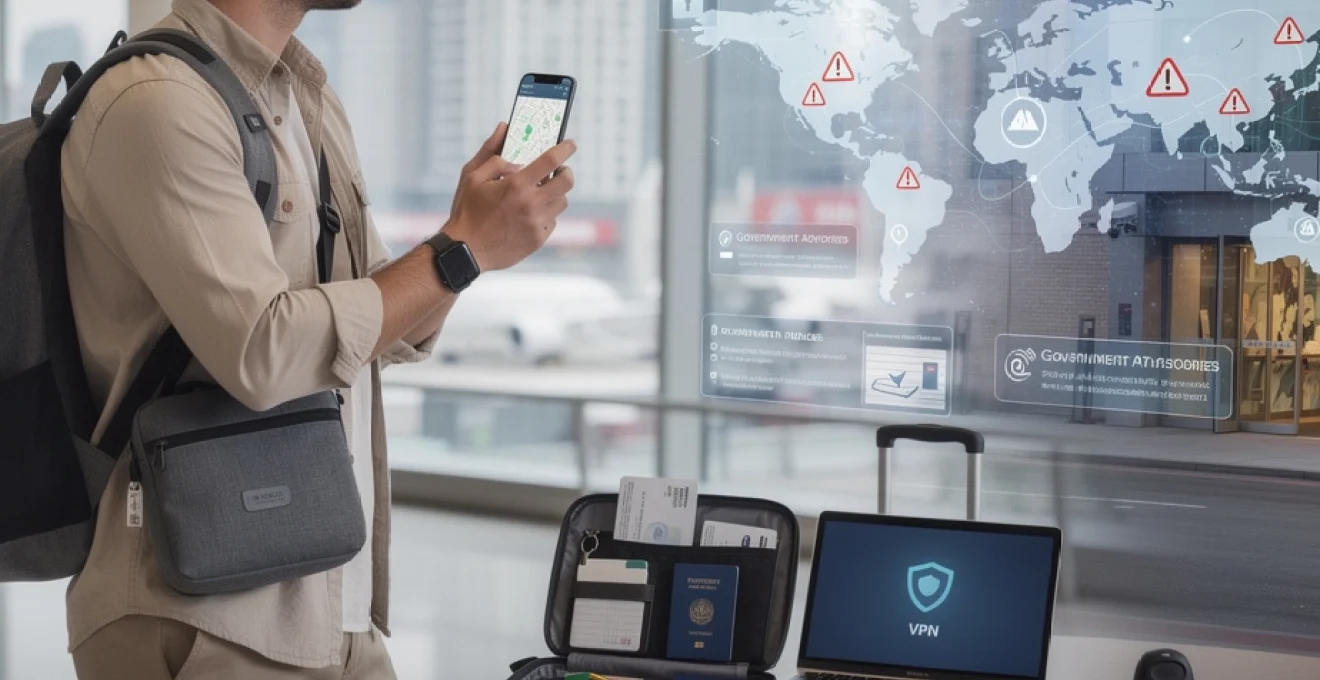
# Top 10 Travel Safety Tips for Solo Travelers
Solo travel represents one of the most liberating and transformative experiences available in modern life. The freedom to chart your own course, immerse yourself in unfamiliar cultures, and discover personal resilience creates memories that endure for decades. Yet this independence comes with inherent responsibilities that cannot be delegated to travel companions or tour operators. Recent statistics from the Adventure Travel Trade Association indicate that solo travel bookings have increased by 42% since 2019, with safety concerns remaining the primary factor preventing would-be travellers from taking that first independent journey. Understanding comprehensive security protocols transforms anxiety into confidence, allowing you to focus on the extraordinary experiences that await rather than fixating on potential risks. The distinction between reckless adventure and calculated exploration lies not in avoiding all risk, but in implementing systematic safeguards that minimize vulnerability whilst maximizing freedom.
Pre-departure risk assessment and travel documentation protocols
The foundation of secure solo travel begins weeks before departure, during the critical planning phase when informed decisions carry the greatest protective value. A thorough pre-departure assessment examines multiple risk dimensions simultaneously, creating layered defences that function independently should one protection measure fail. This approach mirrors professional security methodology used by diplomatic services and corporate travel managers worldwide.
Smart traveller registration services: STEP, FCDO TravelAware, and consular notification systems
Government-operated traveller registration programmes provide emergency communication infrastructure that proves invaluable during crisis situations. The Smart Traveler Enrollment Program (STEP) maintained by the US Department of State, alongside the UK Foreign, Commonwealth & Development Office’s TravelAware service, creates automated notification systems that alert registered travellers to security incidents, natural disasters, civil unrest, and health emergencies affecting their destination. Registration takes approximately five minutes but establishes a direct communication channel with your nearest embassy or consulate.
Beyond emergency notifications, these systems enable consular officials to locate and assist citizens during evacuations, natural disasters, or family emergencies. During the 2023 wildfires in Greece, STEP-registered Americans received real-time evacuation instructions six hours before commercial news outlets reported the incident. The difference between proactive notification and reactive discovery can literally mean the difference between safe evacuation and dangerous entrapment. Registration also facilitates document replacement if your passport is lost or stolen, as consular staff can verify your identity and travel details through the system database.
Comprehensive travel insurance evaluation: medical evacuation and emergency repatriation coverage
Travel insurance represents far more than a checkbox on your pre-departure list—it constitutes your financial safety net when medical emergencies, natural disasters, or security incidents occur thousands of miles from home. The critical distinction separates basic coverage from comprehensive protection lies in emergency medical evacuation and repatriation provisions. A medical emergency requiring air ambulance transport from a remote location can exceed £75,000, a sum that would financially devastate most travellers without adequate insurance coverage.
When evaluating policies, scrutinize coverage limits for emergency medical expenses, ensuring they exceed £250,000 for destinations with expensive healthcare systems like the United States, Japan, or Switzerland. Verify that adventure activities you plan to undertake—whether scuba diving, mountain trekking, or motorcycle riding—fall within your policy coverage rather than listed exclusions. Many standard policies exclude these activities by default, requiring supplementary coverage that costs surprisingly little compared to the protection it provides. Additionally, confirm your policy includes 24-hour emergency assistance hotlines staffed by multilingual operators who can coordinate medical care, arrange evacuation, and communicate with local authorities on your behalf.
Digital document management: encrypted cloud storage and offline backup strategies
Document loss or theft creates cascading complications that can derail your entire journey, particularly when travelling solo without companions who can vouch for your identity or provide financial assistance. Implementing a multi-layered document backup system ensures you can prove your identity, access funds, and continue travelling even if your physical documents disappear. The most effective approach combines encrypted cloud storage with offline backups, creating redundancy that functions regardless of internet connectivity.
Begin by photographing or scanning your passport identification page, visa stamps, travel insurance policy, credit cards (front and back), vaccination records, and accommodation confirmations. Upload these documents to an encrypted cloud storage service like ProtonDrive
Begin by photographing or scanning your passport identification page, visa stamps, travel insurance policy, credit cards (front and back), vaccination records, and accommodation confirmations. Upload these documents to an encrypted cloud storage service like ProtonDrive
or another provider that offers end‑to‑end encryption and zero‑knowledge architecture. Enable two‑factor authentication on this account and use a unique, complex passphrase stored in a reputable password manager. For an additional layer of resilience, save key files as offline PDFs on your phone and laptop, protected by device encryption and a strong lock screen code. This way, even if you lose physical documents and have no internet connection, you still retain verifiable copies that consular officials, banks, or insurers can reference.
Physical backups still play a crucial role in robust document management for solo travellers. Print hard copies of your passport photo page, visa, main insurance summary, and emergency contacts; store one set in your day bag and another in your main luggage, separate from the originals. Some travellers also carry a small encrypted USB drive with the same scans, which can be accessed from a hotel business centre or borrowed device if your own electronics are lost. By combining cloud, device, and physical backups, you create a redundant system where no single point of failure leaves you without proof of identity or coverage.
Destination-specific threat intelligence: FCO warnings, CDC travel notices, and OSAC reports
While headline news tends to sensationalise risk, professional threat intelligence provides nuanced, actionable insights that are far more useful for solo travel safety. Before booking non‑refundable flights or accommodation, review your destination’s advisory page from your government’s foreign office—such as the UK FCDO, US Department of State, or equivalent authority. Pay particular attention to sections on crime, civil unrest, terrorism, natural disasters, and entry/exit requirements, as these can impact where you stay, how you move around, and what insurance coverage you require. Changes in advisory level can also influence your policy’s validity, especially if the destination is classed as “Do Not Travel” or similar.
Health‑related intelligence deserves equal weight in your planning. The Centers for Disease Control and Prevention (CDC) and the World Health Organization (WHO) publish up‑to‑date travel health notices that outline vaccination recommendations, disease outbreaks, and region‑specific health risks such as malaria or dengue fever. For higher‑risk destinations or extended stays, consider consulting OSAC (Overseas Security Advisory Council) reports, which summarise crime trends, infrastructure reliability, and emergency response capacity in major cities. Think of this as performing a “security audit” of your route: by understanding where the genuine risks lie, you can avoid both complacency and unnecessary paranoia.
Accommodation security vetting and safe lodging selection criteria
Your accommodation functions as your base of operations when travelling alone—part sanctuary, part logistics hub. Selecting it purely on price or aesthetic appeal overlooks its critical role in your overall risk profile. A methodical vetting process examines not only guest ratings but also safety‑relevant details such as building security, staff presence, neighbourhood dynamics, and emergency infrastructure. When you treat hotel or hostel selection the way a risk manager would—rather than a casual tourist—you dramatically reduce exposure to theft, harassment, and preventable accidents.
Verified booking platforms: booking.com guest reviews, hostelworld safety scores, and airbnb superhost verification
Major booking platforms now embed safety indicators that are particularly valuable for solo travellers. On Booking.com, filter by properties with consistently high overall scores and pay close attention to reviews specifically mentioning “security,” “safe area,” and “solo travel.” Hostelworld goes a step further with ratings that break down cleanliness, security, and location, allowing you to prioritise hostels with strong locker systems, staffed reception, and clear guest policies. Many solo travellers intentionally sort reviews by “solo traveller” or “female solo traveller” to surface experiences most relevant to their own risk profile.
Short‑term rentals introduce a different risk matrix, making host verification especially important. On Airbnb, Superhost status, high response rates, and a long history of positive reviews provide useful trust signals, but they should not replace your own due diligence. Read reviews for mentions of secure building entry, reliable locks, and host responsiveness during problems. Be wary of listings that have sparse reviews, generic photos reused across multiple properties, or vague location descriptions. When in doubt, message the host directly with specific questions about security measures—legitimate operators will answer clearly and promptly.
Physical security assessment: door locks, window barriers, and room location protocols
Once you have shortlisted properties, assess their physical security features with the same scrutiny you would give to your own home. Ideally, your accommodation entrance should require controlled access—key card, keypad, or staffed front desk—rather than open street‑level doors that anyone can enter. Within the building, rooms on the second to fourth floors typically balance burglary resistance with emergency egress: they are high enough to deter opportunistic break‑ins yet still accessible via fire ladders or, in an extreme emergency, survivable window exits. Ground‑floor rooms with street‑facing windows are best avoided where possible.
Inside the room, perform a quick security audit as soon as you arrive. Test that the main lock, deadbolt, and any chain or swing‑bar mechanisms engage smoothly. Check windows for functioning latches or bars, particularly if they open onto balconies or external corridors that others can access. If anything feels insecure—doors that do not latch, windows that will not close fully—request a room change or speak to management rather than hoping for the best. Remember: you would not ignore a broken lock at home; your temporary room deserves the same standard.
Neighbourhood safety analysis: crime mapping tools and local police station proximity
A beautifully renovated property loses much of its appeal if it sits in a high‑risk area with frequent muggings or poor nighttime lighting. Before finalising a booking, cross‑reference the address on tools such as Google Maps Street View and, where available, city‑level crime mapping services that visualise incident density. This helps you distinguish between lively urban neighbourhoods and genuinely unsafe districts. Asking locals—such as previous guests via reviews or contacts you trust in the region—can also reveal if an area feels secure to walk alone after dark or if taxis are strongly advised instead.
Proximity to essential services forms another under‑appreciated safety criterion for solo travel. Note the distance from your accommodation to the nearest police station, emergency room, and 24‑hour pharmacy; marking these on your offline maps ensures you are not searching in a panic if something goes wrong. Well‑lit streets, visible CCTV, and regular foot traffic all contribute to a safer walking environment, especially when returning in the evening. By evaluating the “ecosystem” around your lodging—not just the building itself—you create a much more resilient safety framework for your stay.
Personal security devices and anti-theft technology for solo journeys
Professional security teams rely on layers of technology to reduce exposure; solo travellers can adopt the same principle on a smaller scale. Carefully chosen devices will not eliminate risk, but they can deter opportunistic crime, accelerate response times, and limit losses if an incident occurs. The key is to select compact, legal‑to‑carry items that integrate seamlessly into your daily habits rather than becoming cumbersome gadgets you leave in your suitcase.
Rfid-blocking wallets and contactless card protection mechanisms
As contactless payments have become ubiquitous, so too has the risk—albeit still relatively low—of RFID skimming, where criminals attempt to read card data using proximity scanners. While many modern cards employ security features that make misuse difficult, an RFID‑blocking wallet or card sleeve adds an inexpensive extra barrier. These products contain metallic fibres that disrupt radio waves, preventing unauthorised reads of your contactless cards and biometric passports. For solo travellers frequently using crowded public transport, markets, or festivals, this passive protection can be reassuring.
However, technology alone is not sufficient; how you carry your payment methods matters equally. Keep one primary card and limited cash in your everyday wallet, and store a backup card separately in your luggage or money belt. This division ensures that even if your main wallet is stolen or misplaced, you retain immediate access to funds. Think of it as financial redundancy: losing one node does not collapse the entire system.
GPS tracking devices: tile mate, apple AirTag, and real-time location sharing applications
Small GPS‑adjacent trackers such as Apple AirTag, Tile Mate, and Samsung SmartTag have become indispensable tools for tech‑savvy travellers. When placed inside checked luggage, camera bags, or daypacks, they allow you to see the last known location of your belongings via your smartphone. During airline disruptions, travellers with trackers often know where their bags are long before airline staff do, dramatically improving recovery odds. For high‑value items like camera gear, placing a tracker in an inside pocket can provide both deterrence and evidence if theft occurs.
Real‑time location sharing via apps adds a further layer of personal safety. Services built into iOS (Find My), Android’s location sharing, or third‑party apps such as Life360 let trusted contacts see your approximate position while you move through unfamiliar cities. Used judiciously, this acts as a remote “buddy system” for solo travel: if you fail to check in or your device remains in an unexpected location for an extended period, friends or family can raise the alarm with local authorities armed with useful information. As always, share your live location only with people you trust implicitly and review your app privacy settings before departure.
Portable door locks, motion sensor alarms, and personal safety devices
For many solo travellers, especially women, peace of mind at night is non‑negotiable. Portable door locks and wedges designed for hotel rooms provide a simple, mechanical way to reinforce existing locks. These devices typically fit into the strike plate of the door or brace against the floor, preventing the door from being opened from the outside even if someone has a key. They are light, inexpensive, and can make a significant psychological difference when staying in unfamiliar surroundings or budget accommodation where you are unsure who else has access.
Compact motion sensor alarms and personal safety devices complement physical barriers by adding an audible deterrent. Door‑mounted alarms that sound if the handle is moved, or small personal alarms activated by pulling a pin, emit a piercing noise designed to startle an aggressor and attract attention. While they are not a substitute for situational awareness or secure locks, they buy you crucial seconds to react and signal for help. Before travelling, test any device at home so you know exactly how to arm, disarm, and deploy it under stress.
Dummy wallets and decoy tactics for high-risk urban environments
In certain cities where street theft and mugging rates are higher, adopting decoy tactics can significantly reduce financial loss in a worst‑case scenario. A dummy wallet—containing a small amount of local currency and expired or fake cards—can be surrendered quickly if you are threatened, while your real valuables remain concealed in a money belt or hidden pocket. This strategy aligns with security professionals’ advice: your priority is to leave the situation safely, not to protect objects. Having something to hand over can defuse tension and shorten the encounter.
Decoy tactics also extend to how you display technology and jewellery in public. Wearing inexpensive accessories and using a basic phone in high‑risk areas, while keeping your primary smartphone secured and out of sight, reduces your perceived value as a target. You are not trying to “outsmart” every criminal; you are simply making yourself a less attractive option than the many other, more visibly lucrative opportunities around you.
Digital security hygiene: VPN usage and data protection whilst travelling
In an era where your phone often holds boarding passes, bank accounts, and personal communications, digital safety is inseparable from physical travel safety. Public Wi‑Fi networks in airports, cafés, and hostels are convenient but inherently untrusted environments; they can be misconfigured, poorly secured, or deliberately spoofed by attackers. A Virtual Private Network (VPN) acts like an encrypted tunnel between your device and the wider internet, preventing others on the same network from intercepting your traffic. For tasks involving financial data, logins, or sensitive communications, activating a reputable VPN is a prudent baseline.
Beyond VPN usage, basic cyber hygiene dramatically reduces your exposure. Keep your devices’ operating systems and apps updated before you travel, disable automatic connection to open Wi‑Fi networks, and avoid logging into critical accounts on shared or public computers. Use strong, unique passwords managed by a password manager, and enable multi‑factor authentication wherever possible so that a stolen password alone does not compromise your accounts. Consider limiting which devices you bring: a “clean” travel laptop or phone containing only essential data presents a far smaller prize to thieves than your primary work machine loaded with confidential information.
Physical protection of your digital assets remains just as important. Never leave devices unattended in public spaces, and be cautious about using public USB charging ports due to the risk—however rare—of so‑called “juice jacking,” where compromised ports install malware. Instead, travel with your own plug‑in charger or a USB data‑blocking adapter. By treating your data the way you treat your passport—valuable, irreplaceable, and worth guarding—you substantially reduce the likelihood that a digital incident will derail your solo travel experience.
Situational awareness techniques and street-smart navigation strategies
Most incidents that affect solo travellers are opportunistic rather than targeted, and situational awareness is your most effective defence against them. At its core, situational awareness means being present: observing who is around you, noticing changes in the environment, and anticipating what might happen next. It is not about constant paranoia; it is about developing the calm, scanning mindset of an experienced driver who checks mirrors and blind spots automatically. The more you practise this mental habit at home, the more natural it will feel on the road.
Practical street‑smart strategies start with how you move through space. Walk with purpose, even when you are uncertain of the route, and avoid stopping in the middle of pavements to consult maps. If you need to re‑orient yourself, step into a shop, hotel lobby, or café where you can check your phone with your back to a wall—reducing both your visibility as a lost tourist and the risk of someone approaching from behind. Keep your bag zipped and positioned in front of your body in crowded areas, and when seated (on a bus, in a restaurant, or at a station), loop a strap around your leg or chair to make grab‑and‑run theft more difficult.
Time of day and alcohol consumption both strongly influence risk levels. Many neighbourhoods that feel vibrant and safe in daylight become more unpredictable after dark; where possible, plan to arrive in new cities during daytime hours and use registered taxis or ride‑share services at night rather than walking alone through unfamiliar streets. Limit your alcohol intake when you do not have trusted companions, and never leave your drink unattended. Ask yourself periodically, “If something went wrong in the next five minutes, how quickly could I move, communicate, or get help?” If the honest answer is “not very,” adjust your behaviour or environment.
Emergency response planning: local authority contacts and evacuation routes
Even the best‑prepared solo travellers can encounter medical issues, natural disasters, or security incidents beyond their control. What separates a frightening but manageable event from a full‑scale crisis is often the presence—or absence—of a clear emergency response plan. Before departure, save local emergency numbers (police, ambulance, fire) into your phone for each country on your itinerary; do not assume that “911” or “112” will work everywhere. Many governments publish these numbers centrally, and dedicated apps like TripWhistle Global SOS collate them for quick reference.
Familiarise yourself with the layout and emergency procedures of each new accommodation as soon as you arrive. Locate fire exits, stairwells, and assembly points, and consider what you would do if you had to evacuate your room at 3 a.m. with minimal notice. Keep a “grab kit” by your bed—passport, one payment card, some cash, phone, and a light jacket—so that you can leave quickly without scrambling in the dark. In regions prone to earthquakes, tsunamis, or severe storms, review local guidance on safe behaviour and evacuation routes; for example, knowing in advance that rapidly retreating coastal water can signal a tsunami may give you the precious seconds needed to move to higher ground.
Finally, integrate your support network into your emergency planning. Share copies of your itinerary and key contact details with a trusted person at home, and agree on check‑in intervals that feel appropriate for the level of risk in your destination. If you intend to undertake higher‑risk activities such as multi‑day hikes, scuba diving, or remote road trips, leave specific route plans and expected return times not only with friends or family but also, where sensible, with accommodation staff or tour operators. When you layer consular registration, local knowledge, and your own preparedness, you create a robust safety net that allows you to travel solo with both confidence and resilience.