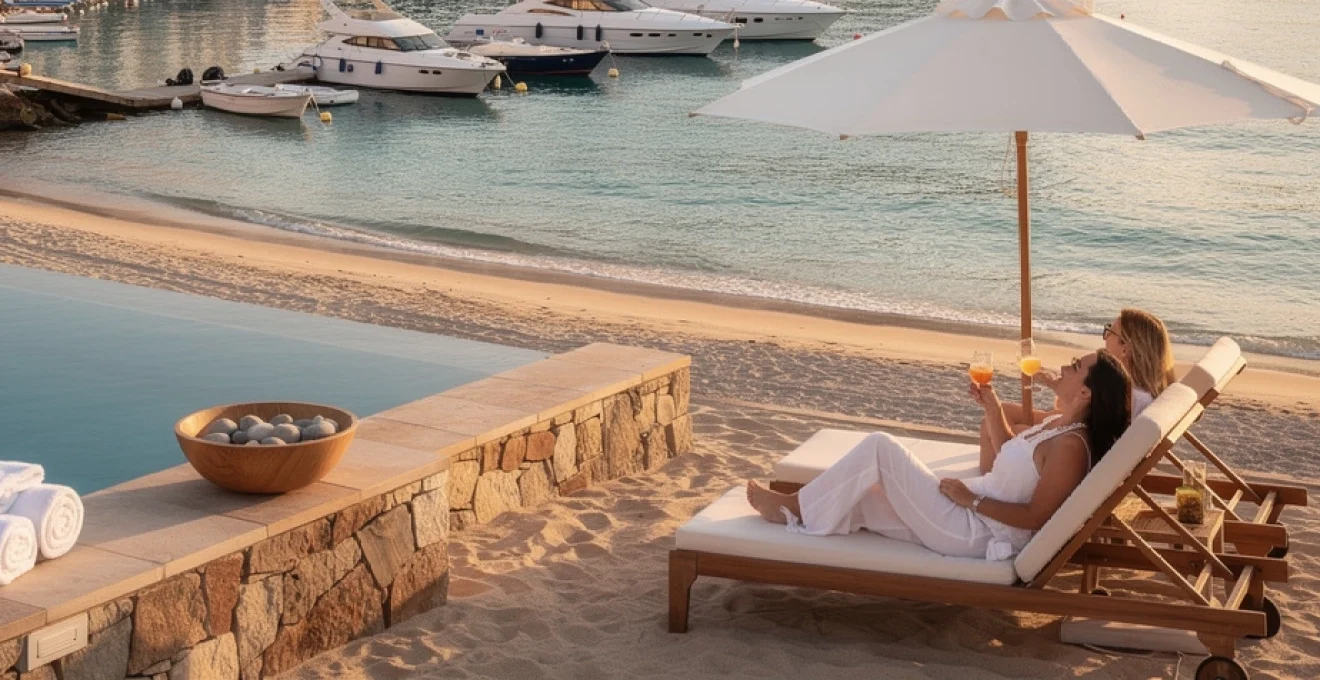
Spain’s coastline stretches over 8,000 kilometres, offering an extraordinary tapestry of golden beaches, rugged cliffs, and crystalline Mediterranean waters that have captivated travellers for generations. From the sun-drenched shores of Andalusia to the dramatic Cantabrian coastline, Spanish seaside resorts combine natural beauty with sophisticated infrastructure, creating destinations that cater to both relaxation seekers and adventure enthusiasts. Whether you’re drawn to the glamorous marina lifestyle of the Costa del Sol or the artistic tranquillity of Catalonia’s hidden coves, Spain’s coastal regions deliver unparalleled diversity in their offerings. Recent statistics indicate that over 83 million international visitors chose Spain in 2023, with approximately 60% specifically selecting coastal destinations for their holidays, demonstrating the enduring appeal of Spanish seaside resorts as premium European getaway locations.
Costa del sol: marbella’s golden mile and puerto banús marina excellence
The Costa del Sol represents the quintessential Spanish coastal experience, where year-round sunshine meets sophisticated resort infrastructure. Marbella stands as the crown jewel of this region, attracting discerning visitors with its unique combination of historic charm and contemporary luxury. The town benefits from an exceptional microclimate that delivers more than 320 days of sunshine annually, with average temperatures ranging from 17°C in winter to 28°C in summer. This remarkable weather consistency has transformed Marbella into one of Europe’s most reliable year-round beach destinations, supporting a thriving tourism economy worth over €1.2 billion annually.
The Golden Mile stretches from Marbella’s old town to Puerto Banús, creating an exclusive corridor lined with luxury villas, five-star hotels, and gourmet restaurants. This prestigious area gained international recognition during the 1960s when European aristocracy and Hollywood celebrities discovered its charms. Today, property values along the Golden Mile average €6,500 per square metre, reflecting the enduring desirability of this coastal strip. The pine-fringed promenade provides direct access to pristine beaches while maintaining proximity to cultural attractions in Marbella’s historic centre, where whitewashed buildings and flower-adorned balconies showcase traditional Andalusian architecture.
Playa de la fontanilla: urban beach infrastructure and accessibility features
Playa de la Fontanilla exemplifies modern beach management, offering 800 metres of golden sand complemented by comprehensive visitor facilities. The beach maintains Blue Flag certification, recognizing its exceptional water quality, safety measures, and environmental management standards. Accessibility features include wheelchair-friendly ramps, adapted changing facilities, and amphibious chairs that enable visitors with reduced mobility to enjoy the Mediterranean waters. During peak season, lifeguard coverage operates continuously from 10:00 to 19:00, with surveillance towers positioned every 200 metres along the shoreline.
The beach’s urban location provides immediate access to restaurants, cafés, and boutiques along the Paseo Marítimo promenade. Recent infrastructure improvements have introduced solar-powered shower facilities, drinking water fountains, and WiFi connectivity across the entire beach area. Beach concession holders offer sunbed and parasol rentals at regulated prices (approximately €15-20 per day for two sunbeds and an umbrella), while water sports operators provide jet-ski rentals, paddleboarding equipment, and parasailing experiences. The municipal tourism office reports that Playa de la Fontanilla receives approximately 1.2 million visitors annually, making it one of the Costa del Sol’s most popular urban beaches.
Marbella club hotel: historic luxury accommodation and wellness facilities
Established in 1954 by Prince Alfonso von Hohenlohe, the Marbella Club Hotel pioneered luxury coastal tourism on the Costa del Sol. The property comprises low-rise Andalusian-style buildings set within 17 acres of subtropical gardens, maintaining an intimate boutique atmosphere despite offering 121 rooms and suites. The hotel’s beachfront location provides direct access to a private sandy beach equipped with Balinese-style beach beds, creating an exclusive coastal sanctuary. Recent renovations have introduced contemporary design elements while preserving the property’s historic character, resulting in a harmonious blend of traditional architecture
and lush landscaping. Wellness facilities include a state-of-the-art Thalasso Spa, which utilizes heated seawater pools, hydrotherapy circuits, and mineral-rich marine treatments to promote circulation and relaxation. Guests can choose from tailored wellness programs that combine nutrition plans, yoga sessions, and personalized fitness coaching, making the Marbella Club an ideal base for a restorative seaside retreat.
Beyond its spa, the hotel offers multiple fine-dining venues, including a beach club that serves Mediterranean cuisine with an emphasis on fresh seafood and locally sourced produce. Families benefit from one of the most highly regarded kids’ clubs in Spain, set in a mini Andalusian village with organic gardens and educational activities. For travellers seeking a balance of heritage, wellness, and access to Marbella’s Golden Mile beaches, the Marbella Club delivers a consistently high standard of service and amenities that justify its premium rates.
Puerto banús yacht harbour: premium dining and designer retail quarter
At the western end of Marbella’s Golden Mile, Puerto Banús functions as the region’s luxury showcase, with a marina capable of berthing superyachts up to 50 metres in length. The harbour area was inaugurated in 1970 and now attracts an estimated 5 million visitors annually, many drawn by its mix of high-end boutiques, vibrant nightlife, and waterfront dining. International designer brands such as Louis Vuitton, Gucci, and Dior line the promenade, turning the marina into an open-air luxury retail corridor.
For those interested in gastronomy, Puerto Banús offers a dense concentration of restaurants ranging from traditional Andalusian seafood taverns to contemporary fusion concepts. Many establishments provide terrace seating overlooking the moored yachts, creating one of the most recognisable dinner settings on the Costa del Sol. While prices can be higher than in central Marbella, the area’s combination of people-watching, marina views, and late-night entertainment makes it a compelling inclusion in any seaside holiday itinerary.
Golf valley in nueva andalucía: championship courses and climate advantages
Just inland from Puerto Banús, the district of Nueva Andalucía is known as “Golf Valley” due to its cluster of championship-standard courses. Facilities such as Real Club de Golf Las Brisas, Aloha Golf Club, and Los Naranjos Golf Club collectively provide more than 54 holes of play within a 5-kilometre radius. These courses were designed by renowned architects including Robert Trent Jones Sr., and feature manicured fairways, lakes, and mature trees framed by mountain and sea views.
The Costa del Sol’s microclimate gives golfers a significant advantage: playable conditions extend across 10 to 11 months of the year, with average rainfall far below the European norm. Many resorts and hotels in Marbella offer dedicated golf packages, including priority tee times, equipment rental, and transfers, simplifying logistics for visiting players. Even if you are not an avid golfer, the landscaped greens and clubhouse restaurants add another layer of leisure infrastructure that enhances the wider resort experience.
Costa brava: cadaqués bay and cap de creus natural park tranquillity
Moving north to Catalonia, the Costa Brava presents a contrasting coastal experience, where jagged cliffs, pine forests, and whitewashed fishing villages replace the urban glamour of the Costa del Sol. Cadaqués, located near the French border, is one of the region’s most emblematic seaside resorts, long favoured by artists and writers for its luminous light and secluded coves. The town’s amphitheatre-like bay opens onto the Mediterranean, while behind it, the Cap de Creus Natural Park forms a rugged backdrop of wind-sculpted rock formations.
Despite its growing popularity, Cadaqués retains a slower pace than many Spanish beach resorts, partly due to its relatively remote location and winding access roads. This isolation has helped preserve both its architectural character and its coastal environment, making it an appealing destination if you are seeking a relaxing beach holiday in Spain with a strong sense of place. Accommodation options range from small family-run hotels to discreet design-led properties, many offering sea views and direct access to the coastal path network.
Platja gran de cadaqués: protected cove swimming conditions
Platja Gran de Cadaqués, the main town beach, curves along the sheltered bay in front of the old centre. Although it is composed of coarse sand and small pebbles rather than fine powder, its calm, clear waters make it ideal for swimming and paddleboarding, particularly for families with children. The bay’s orientation and limited boat traffic contribute to gentle wave conditions, and water quality consistently exceeds EU bathing standards during the summer months.
Urban amenities are close at hand, with cafés, ice-cream parlours, and seafood restaurants lining the waterfront promenade. Beach access points are evenly spaced, and sections of the shoreline are equipped with showers and seasonal lifeguard services. Because the beach sits within a natural cove, wind exposure is lower than on the open coast, which means you can comfortably spend long days by the water even when the Tramuntana winds are blowing more strongly elsewhere along the Costa Brava.
Salvador dalí house-museum in portlligat: cultural heritage tourism integration
A short coastal walk or five-minute drive from Cadaqués brings you to Portlligat, a tiny bay that became world-famous as the home and studio of surrealist artist Salvador Dalí. His former residence has been transformed into the Casa-Museu Salvador Dalí, a site that now welcomes over 150,000 visitors per year. The museum complex preserves the eccentric interiors, ateliers, and gardens exactly as Dalí and his wife Gala arranged them, integrating sculptures, mirrors, and unusual perspectives that echo his paintings.
For travellers interested in combining beach relaxation with cultural tourism in Spain, Portlligat provides a compelling focal point. Due to limited entry slots and the property’s small size, advance online booking is strongly recommended, especially in July and August. Scheduling your visit for early morning or late afternoon allows you to avoid the hottest hours of the day, leaving the central part of the day free for swimming or exploring the coves nearby. In this way, Cadaqués and Portlligat demonstrate how art heritage can be seamlessly woven into a seaside holiday.
Coastal path network: gr-92 hiking routes and mediterranean viewpoints
The area around Cadaqués forms part of the GR-92, a long-distance coastal path that stretches for over 560 kilometres along the Catalan shoreline. Local segments of this trail connect the town with Cap de Creus lighthouse, Cala Jóncols, and numerous smaller coves, offering some of the most spectacular coastal hiking in mainland Spain. Waymarked paths follow former fishermen’s tracks, rising and falling across rocky headlands with constant sea views.
If you enjoy mixing beach time with low-impact outdoor activities, even a short two- or three-hour section of the GR-92 can transform your perception of the Costa Brava. Sturdy footwear and sun protection are essential, as many stretches are exposed and rugged, but the reward is a string of viewpoints where you can pause to watch the waves crashing below. In shoulder seasons such as May–June and September–October, temperatures are ideal for hiking, and you will encounter far fewer crowds than during the peak summer period.
Gastronomic scene: michelin-starred restaurant concentration in roses
Just across the bay from Cadaqués, the town of Roses has become a gastronomic reference point thanks to its high concentration of acclaimed restaurants. While the legendary El Bulli has closed as a restaurant and transformed into a culinary foundation, its influence lives on in a new generation of chefs who experiment with local seafood, olive oils, and produce from the Empordà region. Several establishments in and around Roses hold Michelin stars, making this corner of the Costa Brava one of Spain’s most interesting foodie coastlines.
For visitors staying in Cadaqués, Roses is an easy day trip by road, and combining a morning on its long sandy beach with a leisurely tasting menu lunch is a popular format. Reservations at top-tier restaurants are often required weeks in advance, particularly in summer, so planning ahead is advisable. If you prefer something more casual, numerous beachside chiringuitos and traditional taverns serve grilled sardines, rice dishes, and suquet de peix (Catalan fish stew), offering an accessible way to sample the region’s maritime culinary traditions.
Balearic islands: formentor peninsula and cala mondragó coastal sanctuaries
The Balearic Islands provide yet another dimension to Spanish seaside tourism, with Mallorca in particular offering a mosaic of coastal landscapes from rugged capes to sheltered bays. The Formentor Peninsula in the island’s north and the protected coves of Cala Mondragó in the southeast represent two of Mallorca’s most photogenic seaside sanctuaries. Both areas are characterised by pine-covered headlands, crystalline waters, and a more relaxed atmosphere than the busier resort belts near Palma.
Connectivity to Mallorca is excellent, with frequent flights from major European cities and year-round ferry connections from Barcelona and Valencia. However, once you reach Formentor or Mondragó, you will feel far removed from mass tourism infrastructure. Narrow access roads, parking restrictions, and environmental protections all serve to limit visitor numbers, preserving the sense of tranquillity that makes these enclaves so appealing for a relaxing coastal getaway.
Playa de formentor: pine forest backdrop and cristalline water quality
Playa de Formentor stretches for around one kilometre along a shallow bay, framed by dense pine forests that provide natural shade just a few steps from the waterline. The beach’s fine, pale sand and consistently clear waters have earned it Blue Flag status, and visibility for snorkelling often exceeds 20 metres on calm days. Because the bay is protected by the surrounding peninsula, wave action is usually minimal, creating safe conditions for families and less confident swimmers.
Access to Playa de Formentor is carefully managed during the high season, with traffic restrictions on the main road and a park-and-ride bus service operating from Port de Pollença. Arriving early in the morning not only helps you secure a good spot but also allows you to experience the bay at its quietest, before midday excursion boats arrive. Basic amenities such as sunbed rentals, showers, and a small selection of cafés are available, but the beach still retains a semi-wild character thanks to the absence of large-scale construction along the shoreline.
Hotel formentor: historic grand dame property and spa treatments
Set just back from the beach among mature gardens, the historic Hotel Formentor (now reimagined under a luxury international brand) has been welcoming guests since the 1930s. Over the decades, it has hosted writers, film stars, and statesmen, contributing to its reputation as one of Spain’s classic seaside hotels. Recent refurbishments have updated the rooms and public spaces while preserving signature features such as shaded terraces, colonnades, and panoramic views over the bay.
The property’s wellness offering centres on a compact but well-equipped spa, which incorporates local botanicals and Mediterranean ingredients into its treatment menu. Massages, facials, and hydrotherapy sessions are complemented by yoga classes on the lawn and discreet fitness facilities. Staying at Hotel Formentor gives you immediate, crowd-free access to the beach during early morning and late evening, which can significantly enhance the sense of exclusivity and calm during peak months.
Parc natural de mondragó: protected dune systems and snorkelling zones
On Mallorca’s southeast coast, Parc Natural de Mondragó encompasses a network of coves, dunes, and coastal scrubland that has been protected since 1992. Its two main beaches, Cala Mondragó and S’Amarador, are linked by a short coastal path and are characterised by white sand and exceptionally clear turquoise water. Unlike heavily developed resort areas, buildings are set back from the shoreline, preserving unbroken views of pine forests and rocky headlands.
The park’s shallow bays and rocky outcrops create excellent conditions for snorkelling, with seagrass meadows supporting a variety of fish and marine life. To minimise environmental impact, visitors are encouraged to avoid anchoring boats on posidonia beds and to follow marked trails when exploring the dunes and hinterland. Basic facilities include small snack bars, toilets, and lifeguards during the summer, but the emphasis here is firmly on low-impact nature tourism rather than full-scale resort infrastructure.
Es trenc beach: unspoilt shoreline and salinas salt flat ecosystem
Further southwest, Es Trenc is often cited as Mallorca’s most beautiful natural beach, thanks to its 2-kilometre sweep of almost Caribbean-like white sand and shallow, transparent water. The absence of large hotels along the dune line preserves a wild, open horizon, particularly striking at sunset when the sky reflects off both sea and sand. Despite its popularity with locals and visitors alike, zoning regulations and protected status have prevented the kind of intensive construction seen elsewhere on the island.
Just inland from the beach, traditional salt flats (salinas) form an important part of the local ecosystem and economy, producing high-quality sea salt that is exported worldwide. Guided tours explain how these shallow evaporation ponds support both migratory bird species and artisanal salt harvesting. When planning a visit to Es Trenc, it is wise to arrive early or in late afternoon during July and August, as car parks can reach capacity. Bringing your own shade and provisions will give you greater flexibility, allowing you to fully enjoy one of Spain’s most unspoilt stretches of shoreline.
Andalusian atlantic coast: tarifa’s punta paloma and bolonia archaeological beach
On the Atlantic side of Andalusia, the Costa de la Luz offers a very different seaside experience compared with the sheltered Mediterranean. Here, wide beaches, powerful waves, and constant breezes create ideal conditions for wind sports while also appealing to travellers seeking big-sky landscapes and less developed shorelines. Tarifa, Europe’s southernmost town, has become a global reference point for kitesurfing and windsurfing, yet its surrounding beaches still retain an expansive, almost untouched feel.
Punta Paloma, located a short drive west of Tarifa, is renowned for its towering sand dune that slowly advances inland, partially covering the access road and pine forests. The beach below stretches for kilometres, offering ample space even on busy days. Strong Levante and Poniente winds can make sunbathing more challenging at times, but they also keep temperatures moderated during the hottest months, making this an excellent option for those who find the Mediterranean coast too humid in midsummer.
Further north, Bolonia Beach combines natural beauty with significant archaeological heritage. At one end of the bay lie the well-preserved Roman ruins of Baelo Claudia, including a forum, temples, and a fish-salting factory that once produced garum sauce exported across the empire. The juxtaposition of ancient stone structures with the sound of Atlantic surf creates a uniquely atmospheric setting. After exploring the site and its small museum, you can walk directly onto the adjacent beach, where clear waters and fine sand invite long swims and leisurely walks.
Infrastructure along this Atlantic stretch remains relatively low-key, with a scattering of family-run guesthouses, small boutique hotels, and simple beach restaurants specialising in grilled tuna and other locally caught fish. Because the water here is cooler than in the Mediterranean and currents can be stronger, it is important to respect lifeguard warnings and flag systems. For many visitors, however, this wilder, wind-swept character is precisely what makes the Costa de la Luz one of the best regions in Spain for a relaxing yet invigorating seaside escape.
Cantabrian coastline: san sebastián’s la concha crescent and hondarribia medieval quarter
Turning to northern Spain, the Cantabrian coastline offers a markedly greener and cooler version of the seaside resort, where Atlantic swells meet forested hills and elegant Belle Époque architecture. San Sebastián (Donostia in Basque) is the region’s flagship seaside city, famous for its perfect crescent-shaped La Concha Bay. With soft golden sand, sheltered waters, and a sophisticated urban backdrop, La Concha has frequently been cited among Europe’s most beautiful city beaches.
The promenade that runs along La Concha is ideal for leisurely walks at any time of day, passing ornate balustrades, historic villas, and well-tended gardens. Swimming conditions are typically calm in summer, and the adjacent Ondarreta and Zurriola beaches cater respectively to families and surfers, broadening the city’s coastal appeal. When you add San Sebastián’s extraordinary culinary scene—with more Michelin stars per capita than almost anywhere else in the world—it becomes clear why this city is a top choice for travellers seeking a refined beach holiday in Spain.
Just 20 kilometres to the west, Hondarribia offers a smaller-scale but equally captivating coastal experience. Its medieval upper town is enclosed by remarkably intact walls and features cobbled streets, timbered houses, and a 10th-century castle that now operates as a Parador. Below, the marina and fishing port open onto a sheltered estuary and sandy beach, linked by a pleasant waterfront promenade. The contrast between the fortified old quarter and the relaxed seaside atmosphere creates a layered sense of history that you can explore at an unhurried pace.
Because the Cantabrian coast receives more rainfall than southern Spain, it rewards visitors who are flexible and prepared for changeable conditions. On sunny days, you can swim, sail, or surf; when clouds roll in, there are pintxo bars, museums, and historic sites to discover. This variability is part of the region’s charm, and many repeat visitors argue that the interplay of weather, light, and sea gives places like San Sebastián and Hondarribia a depth and mood that Mediterranean resorts rarely match.
Accommodation selection criteria: thalassotherapy centres and boutique paradores network
With such a wide range of seaside resorts in Spain, how do you choose the right base for a relaxing getaway? One useful approach is to focus on accommodation categories that emphasise wellness, authenticity, and proximity to the sea. Thalassotherapy centres, which harness the therapeutic properties of seawater and marine elements, have seen renewed interest in recent years as travellers prioritise health-oriented trips. Hotels offering full thalasso circuits—typically including heated seawater pools, jets, saunas, and specialised treatments—can be found along both the Mediterranean and Atlantic coasts, particularly in regions such as the Costa del Sol, Galicia, and the Canary Islands.
Staying at a property with on-site thalassotherapy facilities can significantly enhance the restorative impact of your holiday, especially if you combine daily spa sessions with gentle exercise such as beach walks or coastal hiking. When comparing options, look for centres accredited by recognised wellness associations and check whether treatments are tailored to specific needs, such as stress reduction, joint mobility, or respiratory health. Reading recent guest reviews can also provide insight into the quality of staff training and the overall atmosphere, which are just as important as the equipment itself.
Another distinctive accommodation option along Spain’s coastline is the Paradores network, a collection of state-run hotels housed in historic buildings such as castles, monasteries, and manor houses. Many coastal Paradores occupy exceptional seafront locations, offering direct beach access or elevated viewpoints over bays and estuaries. Examples include the Parador de Baiona in Galicia, set within a medieval fortress overlooking the Cíes Islands, and the Parador de Hondarribia mentioned earlier, perched above the estuary at the French border.
Choosing a Parador or other heritage property allows you to anchor your seaside stay in a strong sense of local history and architecture, often accompanied by regional gastronomy in on-site restaurants. While room styles may be more traditional than in cutting-edge design hotels, the trade-off is a richer connection to place and often quieter surroundings than large resort complexes. Ultimately, whether you prioritise spa facilities, cultural immersion, or direct beach access, clarifying your personal criteria before booking will help you find the Spanish seaside resort that best supports the kind of relaxation you are seeking.