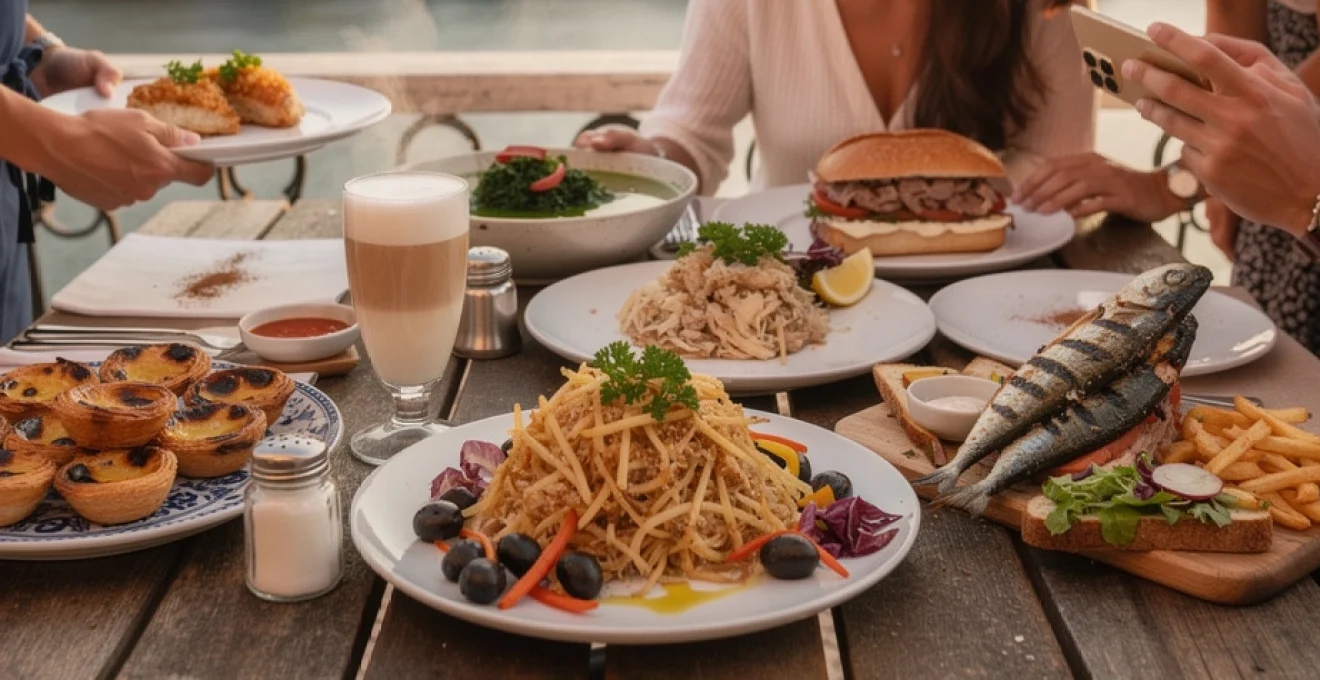
Portugal’s capital city stands as one of Europe’s most celebrated culinary destinations, earning recognition at the 2024 World Culinary Awards as the continent’s premier gastronomic hotspot. This prestigious accolade reflects centuries of maritime trade influence, where African and South Asian flavours merged seamlessly with traditional Iberian cooking techniques. Lisbon’s unique position along the Tagus estuary has blessed the city with abundant fresh seafood, while its historic neighbourhoods like Alfama and Chiado harbour family-run establishments that have perfected recipes passed down through generations.
The city’s culinary landscape offers remarkable diversity at surprisingly accessible prices, making it an ideal destination for both adventurous food enthusiasts and travellers seeking authentic comfort food. From bustling street markets to elegant tascas, Lisbon’s dining scene reflects a culture where meals represent more than sustenance—they embody community, tradition, and the Portuguese philosophy of saudade. Understanding these seven essential dishes provides insight into the soul of Portuguese gastronomy and the cultural heritage that shapes modern Lisbon.
Pastéis de nata: lisbon’s iconic custard tart heritage
The story of Portugal’s most famous culinary export begins in the early 19th century within the walls of the Jerónimos Monastery in Belém. These golden custard tarts emerged from economic necessity when Catholic monks, facing the dissolution of monasteries following the Liberal Revolution of 1820, began selling their secret pastries to generate income. The original recipe, closely guarded and refined over decades, combined techniques learned from French patisserie with locally available ingredients, creating what would become Portugal’s most recognisable dessert.
Pastéis de belém original recipe and monastery origins
The authentic pastéis de nata recipe remains a closely guarded secret, known only to a handful of master pastry chefs at the original bakery. Historical records suggest the monks developed their custard filling using egg yolks left over from wine clarification processes, a common practice in Portuguese monasteries. The distinctive caramelised surface results from baking at extremely high temperatures—often exceeding 400°C—in traditional copper moulds that conduct heat with remarkable efficiency.
Archaeological evidence from the monastery kitchens reveals specialised ovens designed specifically for pastry production, featuring stone chambers that maintained consistent temperatures throughout lengthy baking sessions. These ovens, fired with aromatic woods from Portuguese forests, imparted subtle smoky notes that modern gas ovens cannot replicate. The monks’ innovative approach to egg custard preparation involved whisking techniques that incorporated maximum air while maintaining stability during the intense baking process.
Confeitaria nacional versus casa pastéis de belém authentication
The debate surrounding authentic pastéis de nata centres primarily between two venerable establishments: Casa Pastéis de Belém, which claims direct lineage to the original monastery recipe, and Confeitaria Nacional, established in 1829 as Lisbon’s first commercial bakery. While both institutions produce exceptional custard tarts, discerning palates can detect subtle differences in pastry texture, custard consistency, and caramelisation patterns.
Casa Pastéis de Belém maintains that their tarts represent the true “Pastéis de Belém,” a protected designation that legally distinguishes their product from generic pastéis de nata sold throughout Portugal. Their custard exhibits a distinctly wobbly texture with deeper caramelisation, while their pastry demonstrates exceptional flakiness achieved through traditional lamination techniques. Confeitaria Nacional, conversely, produces tarts with slightly firmer custard and more uniform browning, reflecting adaptations made for commercial production while preserving artisanal quality.
Traditional egg custard preparation techniques and cinnamon integration
Authentic custard preparation requires precise temperature control and timing that separates amateur attempts from professional results. The traditional method involves creating a sugar syrup heated to exactly 106°C before slowly incorporating beaten egg yolks while maintaining constant whisking motion. This technique, known as liaison, prevents the eggs from coagulating while creating the smooth, creamy texture characteristic of superior
custard tarts. Once the custard base reaches the correct viscosity, ground cinnamon and occasionally a strip of lemon peel are infused briefly, then removed to avoid bitterness. The spice should enhance, not dominate, the flavour; think of it as a warm background note rather than the main melody. Many Lisbon pastry chefs still insist on hand-whisking the mixture to control texture, judging readiness not by a timer but by how the custard coats the back of a spoon. For visitors eager to understand Lisbon’s baking traditions, watching this process in an open kitchen can be as fascinating as tasting the final tart itself.
Optimal serving temperature and pairing with galão coffee
For the full pastel de nata experience in Lisbon, temperature matters as much as technique. The ideal tart leaves the oven at around 250–300°C and is served to you once it has cooled just enough for the custard to set but still remain warm and slightly wobbly. At this point, the flaky pastry shatters under gentle pressure, while the centre retains a silky, almost pudding-like consistency. Many locals dust the top with a pinch of cinnamon or icing sugar, customising the sweetness and spice to taste.
In Lisbon’s cafés, you will often see pastéis de nata enjoyed alongside a galão, a tall glass of milky coffee similar to a latte. This pairing balances the tart’s richness with gentle coffee bitterness, making it a perfect mid-morning or afternoon ritual. If you prefer a stronger hit, order a bica (espresso) instead; the concentrated coffee cuts through the custard like a sharp beam of light through stained glass. Whether you sit at the counter of a neighbourhood pastelaria or on a sunny terrace in Chiado, taking a few quiet minutes to savour this combination is one of the simplest, and most authentic, pleasures Lisbon offers.
Bacalhau à brás: portugal’s national codfish preparation method
Among the many ways the Portuguese prepare codfish, Bacalhau à Brás stands out as a definitive comfort dish and a must-try in Lisbon. Originating in the Bairro Alto district and now found on menus across the city, this recipe transforms humble pantry ingredients—salted cod, potatoes and eggs—into something far greater than the sum of its parts. The result is a savoury, creamy tangle of shredded cod and crisp potato matchsticks bound together with softly set scrambled eggs. If you are curious why salted cod holds such a revered place in Portuguese cuisine, tasting this dish will answer that question more clearly than any history book.
Norwegian saltwater cod selection and desalination process
Modern Portuguese kitchens typically source their dried, salted cod from cold North Atlantic waters, particularly off the coast of Norway and Iceland. These regions produce thick, firm fillets that withstand the salting and drying process without losing their flaky texture. When you see stacks of stiff, ivory-coloured fillets in Lisbon’s traditional grocery shops, you are looking at the starting point for Bacalhau à Brás. Choosing high-quality cod is crucial: the best pieces are uniform in thickness, with a clean sea aroma rather than a harsh, overly fishy smell.
Before cooking, the cod must be desalinated—a step that can make or break the final dish. Most Lisbon cooks soak the fillets in cold water for 24 to 48 hours, changing the water several times. This gradual process draws out excess salt while rehydrating the flesh, restoring the cod’s supple texture. In many households, the final rinse is judged by taste rather than a clock, with a small flake sampled to ensure the seasoning is balanced. If you attempt Bacalhau à Brás at home, think of this desalination like tuning a musical instrument: too short and the dish is unbearably salty, too long and you lose the characteristic depth of flavour.
Julienne potato cutting technique and frying standards
The second pillar of an authentic Bacalhau à Brás is the potato, cut into fine julienne strips known locally as batata palha (straw potatoes). In traditional Lisbon kitchens, these matchsticks are sliced by hand for maximum control over thickness, usually around 2–3 mm wide, ensuring they cook evenly and remain crisp. Some modern restaurants use mandolines or pre-cut potatoes, but the most memorable versions still come from places that honour the hand-cut technique. The goal is a delicate crunch that contrasts with the softness of the cod and eggs, similar to the crisp edges on well-roasted potatoes.
Frying standards are strict among seasoned Portuguese cooks. The oil—often refined sunflower or a neutral vegetable oil to avoid overpowering the cod’s flavour—is heated to approximately 170–180°C. Potatoes are fried in small batches to maintain this temperature, preventing them from absorbing excess oil and turning soggy. Once golden and lightly crisp, they are drained thoroughly on paper or a rack. In some tascas, the potatoes are fried to order for each pan of Bacalhau à Brás, ensuring every serving reaches the table with that signature textural contrast.
Scrambled egg integration and parsley garnish protocol
The heart of Bacalhau à Brás lies in how the eggs are handled. Rather than being cooked separately, lightly beaten eggs are poured over the warm cod and potato mixture in the pan, then stirred gently over low heat. The objective is a consistency that sits between a soft scramble and a creamy risotto—moist and cohesive, but never dry or rubbery. Portuguese chefs often describe this stage as “ligar” (to bind), as the eggs are meant to link all components into a harmonious whole.
Timing is critical: remove the pan from the heat while the eggs still appear slightly undercooked, as residual heat continues to set them. A handful of freshly chopped flat-leaf parsley is folded in at the end, adding colour and a bright, herbal note that lifts the dish. In Lisbon’s better restaurants, you will notice that the parsley is added moments before serving rather than cooked into the mixture; this preserves its aroma and prevents it from turning dull and bitter. As with many Portuguese dishes, the garnish is more than decoration—it is part of the carefully balanced flavour profile.
Traditional accompaniments: black olives and pickled vegetables
When Bacalhau à Brás arrives at your table in Lisbon, it is almost always crowned with glossy black olives, typically cured in brine and sometimes marinated with herbs. These olives provide a gentle bitterness and saline burst that punctuates the richness of the eggs and cod. Many locals consider them essential; without the olives, the dish feels incomplete, like a painting missing its frame. Their deep colour also offers visual contrast against the pale gold of the cod and potatoes.
Alongside, you may find simple accompaniments such as a green salad or a small selection of pickled vegetables—carrots, cauliflower and gherkins are common. These pickles act as a refreshing counterpoint, cutting through the dish’s creaminess with acidity and crunch. For an especially traditional Lisbon experience, pair your Bacalhau à Brás with a chilled glass of Vinho Verde or a light Douro white. The wine’s crispness echoes the pickles’ brightness, turning a humble plate of cod into a balanced, memorable meal.
Caldo verde: minho province kale soup authenticity
Caldo Verde, often translated as “green broth,” is one of Portugal’s most beloved soups and a staple on Lisbon menus, despite its origins in the northern Minho province. At first glance, it appears deceptively simple—a bowl of potato-based soup laced with fine ribbons of kale and topped with a slice of cured sausage. Yet, like many traditional Portuguese dishes, its power lies in the balance of texture, seasoning and high-quality ingredients. On cooler evenings in Lisbon, especially outside the summer months, you will see locals order Caldo Verde as both a starter and, in some cases, a light meal in its own right.
Authenticity begins with the choice of greens. In Minho, cooks traditionally use couve galega, a variety of Portuguese kale with long, dark leaves and a robust flavour. The leaves are stacked, rolled into tight cylinders and then sliced into hair-thin strands, a technique that ensures they cook quickly while retaining a slight bite. In Lisbon, some restaurants substitute other leafy greens when necessary, but the most faithful versions still seek out couve galega from regional suppliers. If you are tasting Caldo Verde for the first time, notice how these threads of kale provide both texture and a gentle, earthy bitterness that offsets the soup’s creamy base.
The broth itself starts with onions and garlic sautéed in olive oil, followed by potatoes simmered until soft enough to be puréed. Many chefs blend the base until it is completely smooth, creating a velvety canvas for the kale, while others prefer to leave a bit of rustic texture. A slice or two of chouriço or linguiça—smoked, paprika-seasoned sausages—are then added either during cooking or as a garnish at the end. Their rendered fat and spices infuse the soup with depth and a faint smokiness, much like adding a final brushstroke to a nearly finished painting. Served with a slice of crusty corn bread (broa), Caldo Verde offers a comforting glimpse into Portuguese home cooking.
Bifana: portuguese pork sandwich street food culture
If you want to experience Lisbon’s everyday food culture, few dishes are as revealing as the bifana, a simple yet addictive pork sandwich found in cafés, market stalls and late-night counters across the city. At first, it might look unassuming: thin slices of pork tucked into a small bread roll. But one bite quickly demonstrates why this sandwich holds near-mythic status among locals. The key lies in the marinade, the bread and, often, a liberal splash of spicy sauce that turns a quick snack into a memorable Lisbon street food experience.
Pork cutlet marination in white wine and garlic
The foundation of any excellent bifana is the pork itself, usually taken from the loin or leg for a balance of tenderness and flavour. The meat is sliced very thinly or pounded to achieve a cutlet that cooks in minutes, staying juicy while absorbing the marinade. In most traditional recipes, this marinade is built around dry white wine, crushed garlic and massa de pimentão, a paste made from red bell peppers and salt. Some vendors add bay leaves, paprika or a splash of vinegar to sharpen the seasoning.
In Lisbon’s busiest tascas, pans of marinade bubble gently throughout the day, the pork slices cooking and recooking as orders come in, soaking up flavour like bread in gravy. This process creates meat that is deeply seasoned but still soft enough to tear apart easily with your teeth. When you order a bifana, the vendor will often dunk the bread in the hot cooking juices before assembling the sandwich, ensuring each bite carries the full impact of garlic, wine and spice. For travellers, this is one of the most affordable ways to taste authentic Portuguese street food—simple, quick and packed with personality.
Papo-seco bread roll selection and preparation standards
The bread used for a bifana is just as important as the pork. Traditionally, the sandwich is served on a papo-seco, a small, crusty Portuguese roll with a soft, airy interior and a slightly pointed shape. This style of bread strikes the ideal balance: sturdy enough to hold juicy pork without disintegrating, but light enough not to overshadow the filling. In Lisbon’s old-school cafés, bakers deliver fresh rolls several times a day, and regulars can often tell by taste whether the bread came from their preferred bakery.
Before assembly, some vendors lightly toast or warm the roll, while others simply slice it open and press it against the hot griddle to absorb some of the pan juices. The best papo-seco has a thin, crackling crust that yields easily under your fingers, releasing a faint aroma of yeast and wheat. When combined with the marinated pork, this bread functions a bit like a stage that showcases the star performer: it supports the flavours without stealing the spotlight. If you are ordering a bifana during a busy lunch rush, you may even see trays of rolls stacked behind the counter, a sign that you have chosen a place where turnover is high and the bread is fresh.
Piri-piri sauce application and heat level variations
What transforms a good bifana into a personalised Lisbon street food ritual is the addition of piri-piri sauce. Derived from small African chillies introduced through Portugal’s colonial trade routes, piri-piri is now an essential part of the country’s flavour repertoire. In sandwich shops, it is usually offered in bottled form or in house-made versions that vary from mildly tangy to intensely fiery. You will often see bottles lined up along the counter, inviting you to choose your heat level.
How much piri-piri should you add? That depends on your tolerance and curiosity. Local diners might drizzle the sauce directly onto the pork or mix it with mustard for a more layered flavour, while cautious visitors often start with a few drops on one end of the sandwich and adjust from there. A well-balanced bifana should allow the garlic and wine marinade to remain clearly present, with the piri-piri providing a slow-building heat rather than overwhelming burn. Think of it like adjusting the volume on your favourite song: the goal is to enhance, not distort, the original tune.
Grilled sardines: são joão festival culinary tradition
Few dishes capture the spirit of Lisbon in summer quite like grilled sardines, or sardinhas assadas. Although the São João festival is most famously associated with Porto, Lisbon’s June celebrations of Santo António transform the city into an open-air grill house. Street corners, neighbourhood squares and riverside promenades fill with the smoky aroma of sardines cooking over charcoal. For many residents, the first bite of sardine on bread each June is as much a signal of the season as the warm weather itself.
Traditionally, fresh sardines are simply seasoned with coarse sea salt, sometimes left to rest briefly so the crystals penetrate the flesh. They are then laid whole onto a hot charcoal grill, no marinades or sauces required. The high heat crisps the skin and lightly chars the edges, while the interior remains moist and rich with natural oils. In Lisbon, it is common to serve grilled sardines on a slice of rustic bread, which soaks up the juices and functions almost like an edible plate. You may also find them accompanied by boiled potatoes, grilled peppers and a simple salad of tomato and onion.
Eating grilled sardines is an informal, almost primal experience—bones and all. Many locals pick them up with their hands, peeling back the skin and lifting the fillets from the spine in a few practiced movements. If you are not used to whole fish, it might feel daunting at first, but this is part of Lisbon’s culinary adventure. During festival nights, you can wander through neighbourhoods like Alfama and Mouraria, following the scent of charcoal and sardines until you find a stall with a long line of locals—your best sign that the fish is fresh and the grill master skilled.
Francesinha adaptation: lisbon’s take on porto’s signature sandwich
Although the francesinha originated in Porto, Lisbon has embraced and adapted this indulgent sandwich, adding its own coastal and cosmopolitan twists. At its core, a francesinha is a towering stack of bread, cured meats and steak, smothered in melted cheese and drenched in a hot, beer-based sauce. In Lisbon, you will find versions that honour the northern original as well as creative interpretations that incorporate regional ingredients such as seafood or local sausages. For visitors who associate Portuguese cuisine primarily with fish and light snacks, encountering a Lisbon-style francesinha can be a surprising reminder of the country’s hearty, meat-loving side.
Traditional preparations layer ham, fresh sausage and thin steak between slices of soft white bread, before covering the sandwich in cheese and briefly baking or grilling it to achieve a gooey crust. The defining element, however, is the sauce—a closely guarded recipe in many restaurants, typically built on tomato, beer, stock and a clandestine blend of spices. In Lisbon, some chefs lighten the sauce slightly or add a touch more acidity to suit local tastes, while others double down on richness by serving the sandwich with a fried egg on top and a ring of crispy fries around the plate. It is less a meal and more a culinary event, best approached with an empty stomach and perhaps a friend to share it with.
Lisbon’s adaptations often reflect the city’s maritime character and international influences. You may encounter francesinhas that swap traditional meats for prawns and clams, or versions that use spicy alheira or Iberian porco preto sausages for added depth. Some contemporary bistros even experiment with vegetarian or lighter takes, preserving the layered structure and signature sauce while replacing the meats with grilled vegetables or plant-based alternatives. Whatever style you choose, pairing a francesinha with a cold Portuguese beer or a crisp vinho verde helps cut through the richness. As you savour each decadent bite, you will taste not only Porto’s culinary heritage but also Lisbon’s flair for reinterpretation and innovation.