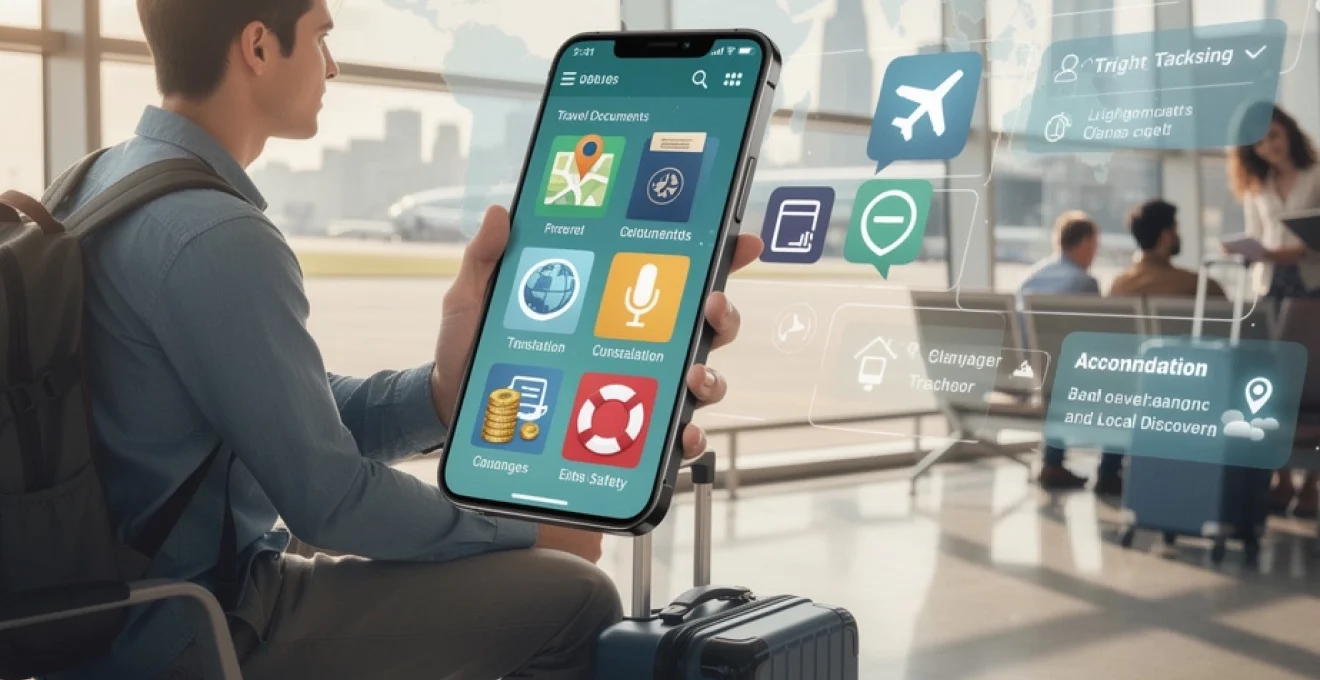
Modern travel has been revolutionised by smartphone technology, transforming how we navigate foreign cities, communicate across language barriers, and manage our journeys. The right collection of mobile applications can mean the difference between a seamless adventure and a stressful ordeal filled with missed connections, communication breakdowns, and navigation disasters. Today’s sophisticated travel apps leverage cutting-edge technologies including artificial intelligence, real-time data synchronisation, and machine learning algorithms to provide unprecedented convenience and security for globetrotters.
The sheer volume of available travel applications can be overwhelming, with over 2.8 million apps currently available on major app stores. However, selecting the right combination of essential tools before departure ensures you’re prepared for virtually any travel scenario. From GPS-enabled navigation systems that function without internet connectivity to advanced translation engines that can interpret complex conversations in real-time, these digital companions have become indispensable for modern travellers seeking both efficiency and peace of mind during their journeys.
Essential navigation applications for seamless route planning
Navigation represents perhaps the most critical aspect of successful travel, particularly when venturing into unfamiliar territories where traditional wayfinding methods prove inadequate. Contemporary navigation applications have evolved far beyond simple point-to-point directions, incorporating sophisticated algorithms that account for real-time traffic conditions, public transport schedules, and even pedestrian-specific routing considerations.
Google maps offline download configuration for remote destinations
Google Maps remains the gold standard for comprehensive navigation solutions, offering extensive offline functionality that proves invaluable in areas with limited connectivity. The offline download feature allows travellers to cache entire city regions, consuming approximately 50-100MB of storage space per major metropolitan area. This functionality becomes particularly crucial when exploring remote destinations where cellular coverage remains sporadic or prohibitively expensive due to international roaming charges.
The application’s offline capabilities extend beyond basic navigation to include detailed business information, user reviews, and operational hours for restaurants and attractions. Recent updates have integrated machine learning algorithms that can predict optimal departure times based on historical traffic patterns, potentially saving travellers significant time during peak congestion periods. The voice-guided navigation system supports over 40 languages, ensuring accessibility across diverse linguistic regions.
Waze Community-Driven traffic optimization features
Waze distinguishes itself through its crowd-sourced approach to traffic management, leveraging data from millions of active users to provide real-time updates on road conditions, accidents, and alternative routing options. The application’s community-driven model creates a dynamic network where users actively contribute information about hazards, police presence, and construction zones, resulting in more accurate and timely navigation guidance than traditional GPS systems.
The platform’s predictive analytics capabilities analyse historical traffic patterns alongside current conditions to suggest optimal departure times for scheduled journeys. This feature proves particularly valuable for travellers managing tight connection schedules or time-sensitive appointments. Waze’s integration with calendar applications enables automatic journey planning, sending notifications when departure times approach based on current traffic conditions.
Maps.me Vector-Based mapping for GPS-Free navigation
Maps.me represents the pinnacle of offline navigation technology, utilising vector-based mapping systems that require no internet connectivity whatsoever. The application downloads entire country datasets, typically ranging from 20MB to 500MB depending on geographical size and detail level, providing comprehensive navigation capabilities even in the most remote locations where cellular towers remain non-existent.
The platform’s vector-based architecture enables smooth zooming and rotation capabilities while maintaining crisp detail at all magnification levels. Unlike raster-based alternatives, Maps.me’s mapping system adapts dynamically to different display sizes and orientations, ensuring optimal visibility across various device configurations. The application includes detailed topographical information, making it particularly valuable for outdoor enthusiasts and adventure travellers exploring mountainous or wilderness regions.
Citymapper Multi-Modal transport integration in urban environments
Citymapper excels in complex urban environments where multiple transportation modalities intersect, providing sophisticated route planning that seamlessly integrates buses, trains, metros, bike-sharing systems, and walking segments into comprehensive journey solutions. The application currently supports over 40 major metropolitan areas worldwide, with each implementation featuring locally customised functionality that accounts for regional transportation peculiarities and cultural preferences
Advanced features such as live disruption alerts, step-free access information, and cost comparisons between different transport combinations empower travellers to make informed decisions in real time. Citymapper also stores recent searches and commonly used routes locally, meaning you can still access previously loaded directions when your mobile data connection becomes unstable. For travellers navigating dense cities like London, New York, or Tokyo for the first time, this multi-modal overview can feel like having a local transit expert in your pocket.
Critical travel document management and security applications
Beyond navigation, safeguarding your travel documents and digital identity is fundamental to a stress-free trip. Losing access to a passport copy, boarding pass, or crucial booking confirmation can quickly derail even the most well-planned itinerary. Document management and security apps combine encryption, cloud synchronization, and intelligent parsing technologies to ensure that your sensitive information remains both accessible and protected wherever you travel.
Tripit pro automated itinerary synchronization from email confirmations
TripIt Pro functions as a central hub for your travel plans, automatically converting scattered booking emails into a structured, timeline-based itinerary. Once you authorise the app to access a designated email address, it scans for reservation details from airlines, hotels, car rentals, and even restaurant bookings, then organises them into a single, easy-to-read interface. This eliminates the common frustration of searching through your inbox at check-in counters or boarding gates.
The Pro version builds on this foundation with real-time flight alerts, alternative flight suggestions during disruptions, and seat-tracking features that notify you when better options become available. For frequent flyers, TripIt Pro can also monitor loyalty points across multiple programmes, consolidating status information in one place. Consider it the digital equivalent of a highly organised travel assistant who never forgets a confirmation number or gate change.
Lastpass encrypted credential storage for travel account security
LastPass addresses one of the most overlooked aspects of travel preparation: secure password management across multiple devices and networks. Instead of reusing weak passwords or writing them down, you store all your credentials in an encrypted vault protected by a single master password and, ideally, multi-factor authentication. This becomes invaluable when you need to log in to airline portals, banking apps, or accommodation platforms from unfamiliar locations.
The application uses zero-knowledge encryption, meaning your passwords are encrypted locally before they ever reach LastPass servers. This architecture ensures that even if remote systems were compromised, your data would remain unreadable. The built-in password generator can help you create strong, unique logins for travel-specific accounts, reducing the risk of credential stuffing attacks when you are most vulnerable—such as on shared Wi‑Fi networks in airports and hotels.
Adobe scan cloud-based document digitization for passport backup
Adobe Scan transforms your smartphone into a portable scanner, using optical character recognition (OCR) to convert physical documents into high-quality, searchable PDFs. Before departure, you can scan your passport, visa pages, travel insurance policy, and driver’s licence, then store them securely in the cloud or within an encrypted folder. Should your original documents be lost or stolen, having clear digital copies significantly streamlines replacement procedures at embassies and consulates.
The app automatically detects document edges, corrects perspective distortions, and enhances clarity, producing results far superior to standard camera snapshots. Integration with Adobe Document Cloud and other storage providers makes it simple to access these files across devices while maintaining organised folders for different trips. Think of it as carrying a compact, digital filing cabinet that weighs nothing but can save days of administrative headaches in an emergency.
App in the air real-time flight status API integration
App in the Air specialises in tracking flight performance and providing highly granular travel updates, integrating data from multiple aviation APIs and airport databases. Once you input your flight details or connect your email, the app monitors gate changes, delays, boarding times, and baggage claim information, pushing alerts even when you are offline via SMS in some configurations. This is particularly useful in large or unfamiliar airports where public announcement systems may be unclear or crowded.
Beyond basic tracking, App in the Air logs your travel history, compiling statistics such as total miles flown, aircraft types, and airports visited. It can also suggest optimal check-in times based on historical congestion data, functioning almost like a personal aviation analyst. For travellers managing tight layovers or complex multi-leg itineraries, this level of insight can make the difference between a missed connection and a smooth transfer.
Comprehensive language translation and communication tools
Effective communication remains one of the most rewarding and challenging aspects of international travel. While learning a new language to fluency may not be realistic before every trip, modern translation apps dramatically reduce friction in everyday interactions. By combining neural machine translation, speech recognition, and augmented reality, these tools help you read menus, negotiate prices, and hold basic conversations—even when you do not share a common language.
Google translate camera-based real-time text recognition technology
Google Translate has become a staple for travellers thanks to its broad language support and versatile translation modes. The standout feature for on-the-go use is the camera-based instant translation, which overlays translated text directly on top of signs, menus, and printed materials in real time. This is achieved through a combination of optical character recognition and neural machine translation models optimised for speed on mobile devices.
Before departure, it is crucial to download offline language packs for your destination so you can translate text even without mobile data. You can also save frequently used phrases in a personal phrasebook, making it easy to access key sentences such as allergy information or address details. While no translation engine is perfect, Google Translate is often accurate enough to avoid misunderstandings in common travel scenarios, functioning like a digital phrasebook that continually improves as its algorithms are refined.
Microsoft translator conversation mode for multi-language group discussions
Microsoft Translator differentiates itself with its powerful conversation mode, designed for real-time, multi-participant dialogue across several languages. Each participant joins a conversation via a QR code or short link, selects their preferred language, and then speaks or types as usual. The app delivers translated text (and often audio) to every participant in their own language, effectively acting as a live interpreter for group settings.
This is especially useful in situations such as guided tours, business meetings, or multi-lingual family gatherings, where several languages are in play simultaneously. Offline capabilities exist for certain language packs, though the best performance still requires a stable internet connection. Think of conversation mode as a shared translation channel, similar to having simultaneous interpreters in a conference but accessible from a single smartphone.
Duolingo gamified language learning modules for pre-travel preparation
While translation apps help in the moment, Duolingo focuses on building foundational language skills before you travel. Its gamified learning modules break vocabulary, grammar, and pronunciation practice into short, manageable sessions, making it easy to integrate into your daily routine in the weeks leading up to a trip. This approach leverages spaced repetition and micro-learning principles to improve retention without overwhelming you.
By completing targeted units on topics such as directions, food, and basic conversation, you gain confidence in handling everyday interactions without relying solely on translation tools. Duolingo’s streaks, levels, and achievement badges provide a sense of progress that can be surprisingly motivating, turning pre-travel preparation into a habit rather than a chore. Even learning just 100–200 essential words can transform your experience from transactional to genuinely engaging with local culture.
Sayhi voice-to-voice translation engine capabilities
SayHi focuses on streamlined, voice-to-voice translation that prioritises natural conversation flow. You speak into your device, the app transcribes and translates your words, then plays the translation aloud in your chosen target language. The other person can then respond in their language, and the app performs the same process in reverse, effectively mediating the dialogue.
The interface is deliberately minimal, with large buttons and clear language selection options, making it especially suitable for quick use in taxis, shops, or emergency situations. SayHi supports dialect options for certain languages and offers adjustable speech speed, which can help when communicating with individuals who are hard of hearing or not accustomed to technology. While it may not replace learning the language, it functions as a pragmatic bridge when you need to communicate accurately and respectfully in real-world contexts.
Advanced currency conversion and financial management systems
Managing money abroad involves more than simply checking exchange rates; you also need to track spending, split costs, and minimise banking fees. Advanced travel finance apps combine live currency feeds, offline storage of rates, and intelligent budgeting tools to keep your finances transparent and under control. In an era when card payments and digital wallets are increasingly dominant, preparing a robust financial toolkit before departure is as important as booking your flight.
Dedicated currency conversion apps such as XE Currency allow you to monitor multiple currencies simultaneously and store the latest rates for offline use, which is particularly useful when you are negotiating prices in markets or comparing ATM withdrawals. Many travellers pair these converters with multi-currency banking apps or prepaid travel cards that apply real interbank exchange rates, helping to avoid the hidden margins often embedded in traditional bank transactions. By setting daily or trip-wide budgets in your home currency, you can quickly see how accommodation, food, and activities are impacting your overall spend.
For group travel, cost-splitting tools like Splitwise have become almost indispensable. Instead of tracking every shared taxi or restaurant bill manually, you log expenses as you go, assign them to specific group members, and let the app calculate who owes whom at the end of the trip. This not only reduces mathematical errors but also removes the social friction of chasing repayments, since the app can send polite reminders automatically. Have you ever finished a holiday and struggled to remember who paid for what on day three? Proper use of these financial management systems ensures that kind of confusion becomes a thing of the past.
Emergency preparedness and safety communication platforms
While few of us like to dwell on worst-case scenarios, being prepared for emergencies is a key component of responsible travel. Safety-focused apps consolidate local emergency numbers, embassy details, and real-time alerts into a format you can access quickly under stress. Much like packing a first-aid kit you hope never to use, setting up these digital tools before departure offers peace of mind without adding weight to your luggage.
Government-backed applications, such as the US State Department’s Smart Traveler app or similar services from other countries, provide up-to-date travel advisories, security alerts, and contact information for nearby consulates. Many allow you to register your trip, enabling authorities to contact you more easily during large-scale incidents or natural disasters. In addition, some apps specialise in location sharing with trusted contacts, allowing friends or family to follow your route in real time and receive automated alerts if you fail to check in as planned.
Another category of safety tools focuses on medical support and local health infrastructure. Certain apps maintain directories of nearby hospitals, pharmacies, and English-speaking doctors, alongside basic first-aid guidance and medication name equivalences. When combined with offline mapping, this effectively acts as a digital emergency handbook tailored to your location. Just as navigation apps prevent you from getting geographically lost, these platforms help ensure you are not figuratively lost when rapid decision-making is required in unfamiliar systems.
Accommodation and local discovery applications with geolocation services
Finding the right place to stay and uncovering worthwhile experiences on the ground are central to any successful trip. Accommodation and discovery apps powered by geolocation services use your current position, historical preferences, and crowd-sourced reviews to surface tailored recommendations in real time. Rather than relying solely on printed guidebooks or generic top-10 lists, you gain access to dynamic, data-driven suggestions that reflect both current conditions and your personal travel style.
Major booking platforms integrate interactive maps that display hotels, hostels, and short-term rentals in relation to key landmarks, public transport hubs, and neighbourhood amenities. This spatial view helps you assess not just price and rating but also how convenient a property will be for your planned activities. Have you ever booked a “central” hotel only to discover it adds 40 minutes to every journey? Using map-based filters and distance calculations greatly reduces that risk by making location a quantifiable factor from the outset.
On arrival, local discovery apps highlight nearby points of interest, from highly rated street-food vendors to lesser-known viewpoints and walking trails. Many now incorporate context-aware recommendations, adjusting suggestions based on time of day, weather, and seasonal events—much like a local friend would. You can save favourite spots, create custom lists, and share them with travel companions, turning your smartphone into a collaborative field guide. In combination with the navigation, security, and translation tools outlined above, these geolocation-driven platforms complete a robust digital ecosystem that supports every stage of your journey, from initial planning to those spontaneous detours that often become your most memorable travel stories.