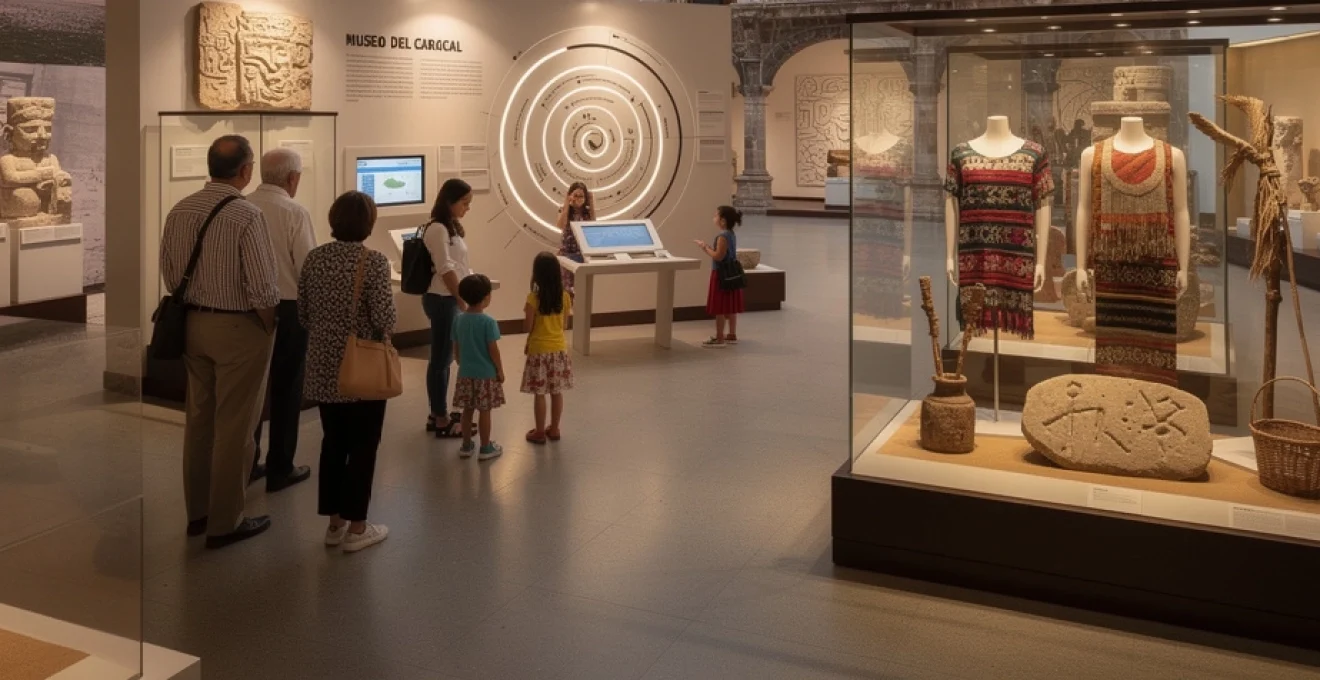
Mexico stands as one of the world’s most culturally rich nations, housing over 1,600 museums across its 32 states—making it the Latin American country with the highest museum density per capita. These cultural institutions serve as living repositories of civilisations that span millennia, from ancient Mesoamerican empires to contemporary artistic movements. Each museum tells a unique story of Mexico’s complex cultural tapestry, where indigenous traditions, colonial influences, and modern innovations converge to create a distinctive national identity.
The significance of Mexico’s museum network extends beyond mere preservation; these institutions function as essential educational resources that illuminate the country’s transformation through various historical epochs. From the sophisticated astronomical calculations of the Maya to the revolutionary murals of the 20th century, Mexican museums offer visitors an immersive journey through time. Understanding Mexico’s cultural heritage requires more than superficial observation—it demands engagement with the artefacts, artworks, and archaeological evidence that reveal the depth of human achievement across different civilisations.
Mexico city’s archaeological and anthropological museums: Pre-Columbian civilisation documentation
The capital city serves as Mexico’s primary cultural nucleus, containing some of the world’s most significant anthropological collections. These institutions house millions of artefacts that document the sophisticated societies that flourished in Mesoamerica long before European contact. The concentration of archaeological material in Mexico City reflects centuries of systematic collection and scholarly research, creating repositories that rival any global collection in their scope and significance.
Museo nacional de antropología’s mesoamerican artefact collections
The National Museum of Anthropology represents Mexico’s crown jewel among cultural institutions, containing the world’s most comprehensive collection of pre-Columbian artefacts. Its halls showcase the artistic and technological achievements of civilisations including the Olmec, Maya, Aztec, and numerous smaller cultures that contributed to Mexico’s rich heritage. The museum’s architecture itself reflects Mexican identity, with its distinctive umbrella-shaped structure and central courtyard that creates a contemplative space for visitors.
The museum’s collection strategy focuses on presenting complete cultural contexts rather than isolated objects, allowing visitors to understand how ancient societies organised their daily lives, religious practices, and political structures. Interactive displays demonstrate everything from obsidian blade manufacturing techniques to the complex calendar systems that governed agricultural cycles. The institution regularly updates its exhibitions with new archaeological discoveries, ensuring that visitors encounter the latest research findings about Mexico’s ancient civilisations.
Templo mayor museum’s aztec tenochtitlan archaeological evidence
Located at the heart of Mexico City’s historic centre, the Templo Mayor Museum sits directly atop the ruins of the Aztec empire’s most sacred site. Archaeological excavations have revealed the extraordinary sophistication of Tenochtitlan, the Aztec capital that once housed over 200,000 inhabitants. The museum’s unique position allows visitors to observe active archaeological work while exploring galleries that contextualise the discoveries.
The museum’s collection includes some of the most significant Aztec artefacts ever discovered, including elaborate offerings buried within the temple’s foundations. These ceremonial deposits contain materials from across the Aztec empire and beyond, demonstrating the extensive trade networks that connected Mesoamerican societies. Recent discoveries have revealed previously unknown aspects of Aztec religious practices, challenging earlier assumptions about their spiritual beliefs and ceremonial customs.
Museo del caracol’s interactive mexican history timeline exhibits
The Galería de Historia (commonly known as Museo del Caracol) takes an innovative approach to presenting Mexican history through immersive, chronological exhibitions. Its spiral architecture guides visitors through a carefully constructed historical narrative that begins with pre-Columbian civilisations and continues through Mexico’s independence movements. The museum’s design philosophy emphasises experiential learning, using dioramas, sound effects, and interactive elements to create memorable educational experiences.
This institution excels at presenting complex historical processes in accessible formats, making it particularly valuable for understanding how different cultural traditions merged and evolved over time. The museum’s treatment of the colonial period demonstrates how indigenous knowledge systems adapted to and influenced European practices, creating distinctly Mexican cultural expressions. Educational programmes target diverse audiences, from school groups to international researchers studying Mexican cultural development.
Casa de los azulejos colonial architecture preservation techniques</h3
This landmark building in the historic centre of Mexico City exemplifies how colonial architecture can be preserved while remaining fully integrated into contemporary urban life. The Casa de los Azulejos, with its iconic blue-and-white Talavera tile façade, demonstrates conservation techniques that balance aesthetic restoration with structural reinforcement. Conservation specialists have carefully documented original tile patterns, mortar compositions, and construction methods to guide each restoration campaign, ensuring that replacements visually and materially match 18th-century techniques.
Preservation efforts also highlight how colonial-era buildings encapsulate layers of Mexican identity. Inside, visitors can observe original stone staircases, carved wooden ceilings, and mural work by artists such as José Clemente Orozco, all maintained through ongoing preventive conservation. The building’s adaptation as a commercial and cultural space shows how heritage architecture can remain economically viable without sacrificing historical authenticity. For anyone interested in understanding how Mexico safeguards its built heritage, Casa de los Azulejos serves as a practical case study in colonial architecture preservation.
Regional museums preserving indigenous cultural traditions and ethnographic heritage
While Mexico City’s museums provide a panoramic view of national history, regional museums offer more intimate insights into local traditions and indigenous cultural heritage. These institutions document how communities across Oaxaca, Chiapas, the Yucatán Peninsula, and northern deserts preserve languages, rituals, and craftsmanship that pre-date the Spanish conquest by centuries. By visiting them, you gain access not only to artefacts but to living cultural practices that continue to evolve.
Regional museums often collaborate directly with indigenous communities, ensuring that objects are interpreted through local perspectives rather than external narratives. This approach transforms museum collections into shared cultural projects rather than distant displays. For travellers seeking to understand Mexico beyond its major cities, these museums function as gateways into regional identities, environmental adaptation strategies, and ceremonial worldviews that remain central to everyday life.
Museo regional de oaxaca’s zapotec and mixtec ceremonial artefacts
Housed in the former Convent of Santo Domingo, the Museo Regional de Oaxaca contains one of the most important collections of Zapotec and Mixtec ceremonial artefacts in Mexico. Its galleries display offerings from the Tomb 7 excavation at Monte Albán, including gold pectorals, turquoise mosaics, and intricately carved bone objects that illustrate high levels of artistic and technical sophistication. These objects were not mere decorations; they served as powerful ritual items connecting rulers with deities and ancestors.
The museum’s interpretive displays help visitors understand how Zapotec and Mixtec elites used material culture to reinforce political authority and cosmological beliefs. Contextual panels explain burial practices, calendar systems, and the symbolic meanings of animals and geometric motifs in pre-Columbian religion. By exploring these collections, you gain a clearer sense of how indigenous concepts of time, power, and the sacred still resonate in contemporary Oaxacan festivals, textiles, and community organisation.
Museo maya de cancún’s post-classic period archaeological findings
Located in one of Mexico’s most visited tourist regions, the Museo Maya de Cancún offers essential context for understanding the archaeological sites scattered across the Yucatán Peninsula. Its collections focus particularly on the Post-Classic period, when Maya city-states such as Tulum and Mayapán developed extensive trade networks and complex political structures. Artefacts on display include carved stelae, incense burners, shell jewellery, and architectural elements that reveal how Maya communities adapted to coastal environments.
The museum’s design integrates indoor galleries with an on-site archaeological zone, allowing you to move from vitrines to original structures within minutes. Detailed explanations of hieroglyphic texts, trade goods, and ritual paraphernalia help demystify the late Maya world, which is often overshadowed by the earlier Classic period. For travellers who may only know Cancún as a beach destination, this institution offers a powerful reminder that they are standing atop the remains of a sophisticated civilisation with its own astronomical, agricultural, and philosophical systems.
Museo de las culturas del norte’s desert nomadic tribes documentation
Situated near the archaeological site of Paquimé in Chihuahua, the Museo de las Culturas del Norte documents the lives of semi-nomadic and sedentary groups that inhabited Mexico’s northern deserts. Its exhibits challenge the stereotype that desert societies were culturally “simple” by showcasing elaborate pottery, shell ornaments traded from distant coasts, and architectural innovations such as multi-storey adobe complexes. These materials demonstrate how communities adapted to harsh environments through irrigation systems, seasonal mobility, and long-distance exchange networks.
The museum places special emphasis on the cultural continuity between ancient desert tribes and contemporary indigenous groups, such as the Rarámuri (Tarahumara). Ethnographic sections explore traditional running practices, weaving techniques, and spiritual beliefs tied to the mountainous and desert landscapes. By comparing archaeological evidence with modern practices, you can trace how strategies for survival, symbolism, and community organisation have evolved over centuries while retaining core elements of identity.
Museo regional de chiapas’s highland maya textile preservation methods
The Museo Regional de Chiapas, located in Tuxtla Gutiérrez, provides a comprehensive overview of the state’s cultural and natural history, with a particularly strong focus on Highland Maya communities. One of its most notable contributions to understanding Mexican cultural heritage lies in its textile collections and preservation methodologies. Traditional garments from Zinacantán, San Juan Chamula, and other communities are displayed alongside detailed explanations of weaving techniques, dye sources, and symbolic motifs.
Conservation teams at the museum employ specialised methods to protect fragile organic fibres from humidity, light, and insect damage. Controlled climate storage, minimal handling protocols, and digital documentation ensure that both physical textiles and their patterns are preserved for future generations. For visitors, these collections serve as a vivid reminder that cloth can function like a historical archive: each huipil encodes information about social status, marital identity, and cosmological beliefs, much like a written document would in other cultures.
Colonial period museums: spanish viceroyalty cultural synthesis
The colonial period in Mexico, spanning roughly from the early 16th to the early 19th century, produced a complex fusion of European, indigenous, and African cultural elements. Museums dedicated to this era illustrate how Spanish institutions such as the Church and the viceroyal administration interacted with pre-existing Mesoamerican social structures. Through these collections, you can observe how power, belief, and everyday life were renegotiated under colonial rule.
Institutions like the Museo Nacional del Virreinato in Tepotzotlán and numerous diocesan museums across the country preserve baroque altarpieces, silverwork, religious paintings, and liturgical garments that embody this cultural synthesis. Many objects reveal subtle forms of resistance and adaptation: indigenous artisans incorporated local flora, fauna, and symbolic motifs into ostensibly European religious imagery. Visiting these museums is akin to reading a dialogue between cultures, where negotiation and transformation are visible in every carved column and gilded frame.
Revolutionary period documentation centres: 20th century political transformation
The Mexican Revolution (1910–1920) reshaped the country’s political, social, and cultural landscape, and its legacy is preserved in specialised documentation centres and museums. Institutions such as the Museo Nacional de la Revolución in Mexico City, the Regional Museum of the Mexican Revolution in Puebla (Casa de los Hermanos Serdán), and state archives in Chihuahua and Morelos collectively narrate the conflict from multiple perspectives. They house personal letters, weapons, photographs, propaganda posters, and oral histories that trace Mexico’s transition from dictatorship to a new constitutional order.
These museums demonstrate that understanding Mexico’s modern identity requires more than learning the names of revolutionary leaders like Madero, Zapata, and Villa. Exhibits explore the experiences of peasants, women, and indigenous communities who participated in or were affected by the upheaval. Interactive maps, timeline displays, and multimedia installations show how land reform, labour rights, and educational policies emerged from revolutionary demands. When you walk through these documentation centres, you essentially move through the blueprint of contemporary Mexican political life.
Contemporary art museums: modern mexican cultural expression and identity formation
Contemporary art museums across Mexico provide a window into how artists interpret and critique the country’s past while imagining new futures. Institutions such as the Museo de Arte Moderno and Museo Tamayo in Mexico City, the Museo de Arte Contemporáneo de Monterrey (MARCO), and smaller independent spaces throughout the country exhibit works that engage with themes like migration, environmental change, gender, and urbanisation. These venues highlight that Mexican cultural heritage is not static; it is continually being redefined in conversation with global artistic currents.
By visiting contemporary art museums, you encounter visual narratives that challenge simplified images of Mexico as a land of only pyramids and colonial churches. Installations may repurpose traditional materials, such as amate paper or weaving techniques, in avant-garde formats, drawing direct lines between ancestral practices and present-day concerns. Curatorial programmes often include artist talks, film screenings, and community workshops, inviting you to participate in ongoing debates about identity, memory, and social justice. In this sense, contemporary museums function not only as exhibition spaces but as forums where Mexico’s cultural future is actively negotiated.