# Top Reasons to Travel by Ferry in Greece
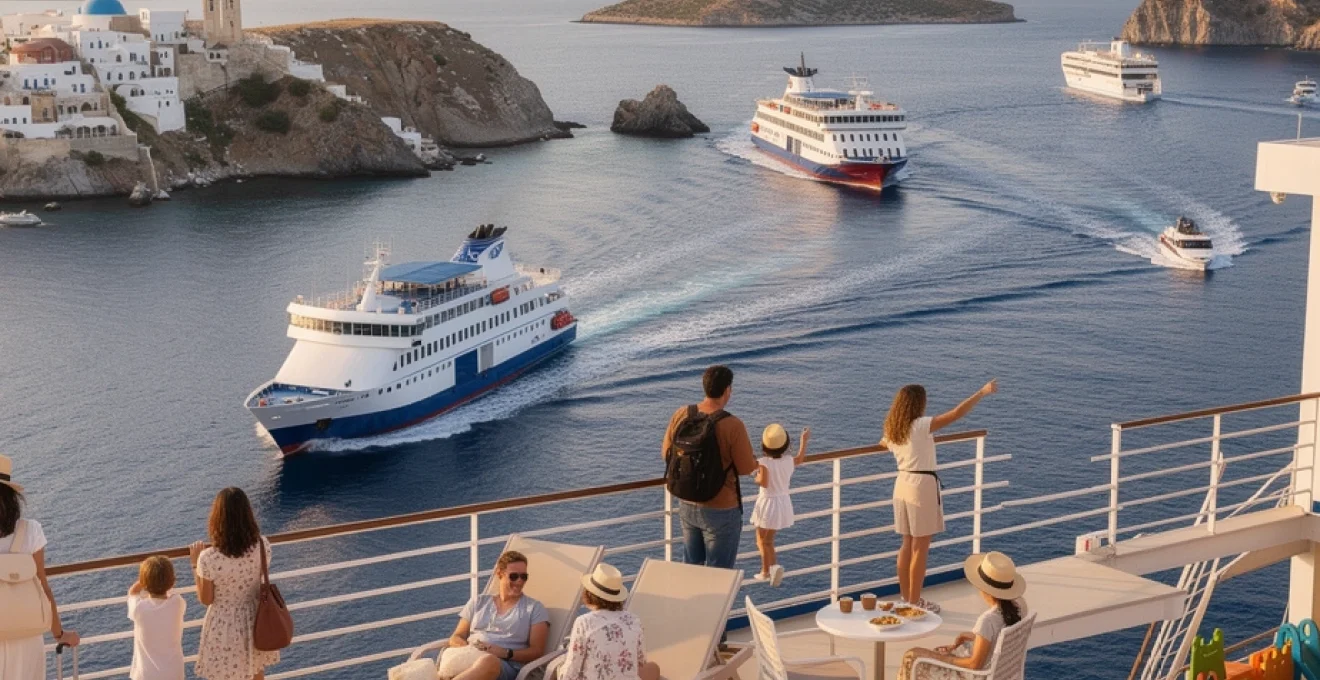
Greece’s maritime heritage stretches back millennia, and today’s modern ferry network continues that ancient tradition of seafaring exploration. With over 200 inhabited islands scattered across the Aegean and Ionian Seas, ferry travel remains the authentic, practical and enriching way to experience the Greek archipelago. Whether you’re planning a romantic getaway to Santorini, an adventure through the Dodecanese, or a cultural immersion in the Saronic Gulf, travelling by ferry offers advantages that extend far beyond simple transportation. From panoramic sea views and genuine island-hopping freedom to cost-effective pricing and environmental sustainability, the Greek ferry system provides an experience that domestic flights simply cannot match. The gentle rhythm of the waves, the salt-kissed Mediterranean breeze, and the anticipation of watching your destination emerge on the horizon transform each journey into an integral part of your Greek holiday rather than merely a means to an end.
Inter-island connectivity across the aegean and ionian archipelagos
The Greek ferry network represents one of Europe’s most comprehensive maritime transport systems, connecting mainland ports with dozens of island destinations throughout the year. This extensive connectivity makes ferry travel not just convenient but often the only practical option for reaching many of Greece’s most captivating islands. Unlike air travel, which serves only the largest islands with airports, ferries provide access to remote gems where authentic Greek culture thrives away from mass tourism. The intricate web of ferry routes allows you to craft bespoke island-hopping itineraries that would be impossible using other transport modes.
Ferry operators have refined their schedules over decades to accommodate both local residents and international visitors. During peak summer months, the frequency of sailings increases dramatically, with some popular routes offering multiple daily departures. This flexibility means you’re not constrained by limited flight schedules or forced to spend more days than desired on any particular island. The convenience extends to last-minute travel decisions too—whilst booking in advance secures better prices, you can often purchase tickets on the day of departure for many routes, providing spontaneity that enriches your Greek adventure.
Ferry routes linking the cyclades: santorini, mykonos, naxos and paros
The Cyclades archipelago boasts the most extensive inter-island ferry connections in Greece, creating an island-hopper’s paradise. Santorini, with its volcanic caldera and sunset-drenched villages, connects directly to neighbouring islands like Naxos, Paros, Mykonos, and Ios through both conventional and high-speed ferries. These routes operate with remarkable frequency during the April-October season, with journey times ranging from 40 minutes on fast catamarans to three hours on traditional vessels. The strategic positioning of central hubs like Naxos and Paros facilitates seamless multi-island exploration, allowing you to experience the dramatic cliffs of Santorini, the cosmopolitan energy of Mykonos, and the authentic village life of smaller islands in a single holiday.
Blue Star Ferries and Hellenic Seaways dominate these Cycladic routes, offering reliable daily services that form the backbone of the region’s tourism infrastructure. The beauty of this network lies in its versatility—you might start your journey in Athens’ Piraeus port, spend three nights admiring Santorini’s iconic blue-domed churches, ferry across to Naxos for its remarkable beaches and Venetian kastro, then conclude in Mykonos for world-class dining and nightlife. Each crossing offers its own scenic rewards, from watching the sun glint off whitewashed villages perched on cliffsides to spotting dolphins playing in the ferry’s wake.
Dodecanese island hopping: rhodes, kos and patmos maritime networks
The Dodecanese islands, stretching along Turkey’s Aegean coast, present a distinctly different character from the Cyclades, with ferry routes reflecting their more dispersed geography. Rhodes serves as the archipelago’s transportation hub, its medieval Old Town and modern marina welcoming ferries from Athens, Crete, and neighbouring Dodecanese islands. Regular connections link Rhodes to Kos, famous for its ancient Asklepion healing sanctuary and vibrant beach resort areas, whilst smaller vessels serve the spiritual haven of Patmos,
where whitewashed houses tumble down towards tranquil bays. Larger conventional ferries and smaller local boats weave these islands together, enabling flexible itineraries that range from spiritual retreats to beach-focused escapes. Because some of the smaller Dodecanese islands have no airports or only limited seasonal flights, the ferry network is not just convenient here – it is essential for both residents and visitors.
For travellers, this means you can design a route that might begin with the historical grandeur of Rhodes, continue to the laid-back shores of Kos, then detour to lesser-known islands like Symi or Leros before reaching Patmos. High-speed catamarans cut travel times significantly in summer, while year-round conventional ferries ensure that even off-season trips are possible with some planning. If you crave a sense of discovery beyond the most famous Greek islands, the Dodecanese ferry lines open the door to a more off-the-beaten-path island hopping in Greece.
Saronic gulf connections: hydra, spetses and aegina accessibility
The Saronic Gulf islands are the easiest to reach from Athens, making them ideal for short breaks or spontaneous getaways. Frequent ferries and hydrofoils depart from Piraeus to Aegina, Hydra, Poros and Spetses, with crossing times often under 90 minutes. For many visitors, these quick routes offer the perfect introduction to ferry travel in Greece, combining ease of access with charming island atmospheres and calm, sheltered waters.
Hydra and Spetses stand out for being (largely) car-free, which transforms your arrival by ferry into a step back in time. As you disembark, you are greeted not by traffic but by stone mansions, horse-drawn carriages and pedestrian promenades hugging the harbour. Aegina, on the other hand, is popular with Athenians for weekend escapes, renowned for its pistachio groves and the impressive Temple of Aphaia. Because departures are so frequent, you can easily plan a day trip, an overnight stay or even a mini “Saronic island hopping” itinerary without complicated logistics.
If you are travelling with children or seniors, the Saronic Gulf connections offer a gentler alternative to longer Aegean crossings. Sea conditions here are typically milder, ferry ports are compact and manageable, and boarding procedures are straightforward compared with larger island hubs. For those wondering whether to rent a car or rely on ferries near Athens, these short routes prove that you can leave the vehicle behind and still explore multiple destinations with minimal stress.
Ionian sea routes: corfu, kefalonia and zakynthos ferry schedules
On Greece’s western flank, the Ionian Sea offers a different island-hopping experience, framed by lush green landscapes and turquoise waters. Ferries here primarily connect the mainland ports of Igoumenitsa, Patras and Killini with major islands such as Corfu, Kefalonia and Zakynthos. Unlike the interlinked Cyclades, the Ionian network is more linear, but it still provides ample opportunities to combine several islands in one itinerary, especially in summer when schedules are more frequent.
Corfu serves as a major gateway, with year-round connections from Igoumenitsa and seasonal international routes from Italy. Kefalonia and Zakynthos are usually reached from Killini or Patras, with conventional ferries capable of carrying vehicles, campervans and plenty of luggage. For travellers researching how to get to the Greek islands without flying, these Ionian ferries are particularly attractive, as they connect with overland routes from Central Europe via the Adriatic. Think of them as moving bridges that link road trips and island escapes into one seamless journey.
Timetables in the Ionian can vary more between winter and summer than in the central Aegean, so checking schedules well in advance is crucial if you plan to travel outside peak season. Still, for those seeking quieter beaches, verdant mountain villages and dramatic coastal scenery, the Ionian ferry routes deliver a rewarding alternative to the better-known Cycladic circuits. You can sail from mainland Greece to Zakynthos’ famous Shipwreck Beach, then onward to Kefalonia’s Myrtos Bay, enjoying each crossing as a scenic interlude rather than a chore.
Cost-effectiveness of greek ferry travel compared to domestic aviation
Beyond connectivity, one of the top reasons to travel by ferry in Greece is cost-effectiveness. Domestic flights between Athens and the islands can be convenient, but airfares fluctuate significantly, especially in high season. Ferries, by contrast, usually offer a broader range of price points, from economical deck tickets to premium cabins, often undercutting equivalent flight prices on popular routes. When you factor in baggage allowances, the ability to bring a vehicle and the savings from avoiding airport transfers, ferry travel in Greece frequently delivers better overall value.
Ferry prices do vary depending on distance, type of vessel and travel class, but even longer overnight crossings to islands like Crete or Rhodes can be surprisingly affordable when compared to peak-season flights. For travellers planning extended island hopping, choosing ferries over planes can feel like opting for a slow, scenic rail trip instead of a short-haul flight: you may spend a bit more time in transit, but the experience itself becomes part of the holiday, and your budget stretches further across multiple destinations.
Blue star ferries economy class pricing structure and fare categories
Blue Star Ferries, one of the largest operators in Greece, offers a clear and flexible pricing structure that helps travellers optimise their budgets. On most routes, you can choose between several fare categories: simple deck tickets, air-type economy seats, numbered seats, and a variety of cabin classes. Deck tickets are typically the most economical option, giving you access to indoor lounges and outdoor spaces, while air-type seats provide reserved seating similar to an airplane but with far more legroom and freedom to move around.
For many popular routes, such as Athens to Naxos or Mykonos, economy fares often start around €30–€50 one way, depending on season and vessel type. Compared with domestic flights, which can easily exceed €100 per leg during peak months, this represents a substantial saving, especially for families or groups. Blue Star also offers discounted ferry tickets in Greece for specific categories such as students, large families and residents of remote islands, making ferry travel an even more attractive option for those eligible.
Cabins and higher-class seating naturally come at a premium, but even these upgrades can be cost-effective on longer overnight routes. Instead of paying for a separate hotel night plus a flight, you effectively combine transport and accommodation into a single expense. When you consider that a four-berth inside cabin shared among friends or family often costs less per person than a mid-range hotel room, the value proposition of travelling by ferry in Greece becomes clear.
Seasonal tariff variations: high season vs off-peak ferry ticket costs
Just like hotels and flights, ferry prices in Greece are influenced by seasonality. High season, generally from late June to early September, sees increased demand and, in some cases, higher base fares or fewer discount promotions. However, even during these peak months, ferries usually remain more affordable and flexible than domestic flights, especially if you book early and avoid the very busiest days around major holidays.
Outside the high season – in April, May, late September and October – travellers can often benefit from significantly lower ticket prices. Operators may introduce early-booking offers or special promotions that make island hopping on a budget particularly appealing. For instance, the cost difference between an April sailing to Santorini and an August departure on the same route can be considerable, yet the onboard experience is almost identical, and crowds are smaller in shoulder months.
If you are planning a multi-island itinerary and wondering when is the best time to visit Greece by ferry, considering off-peak travel can make a real difference to your overall budget. Think of tariffs as tides that rise and fall with demand: by adjusting your travel dates even slightly, you may unlock substantial savings on both ferry tickets and accommodation, without sacrificing the quality of your island experience.
Multi-island pass options: island hopping tickets and combined route savings
For travellers intent on exploring several islands in one trip, combining routes strategically can yield notable savings. While Greece does not yet have a universal “all-islands” ferry pass, many booking platforms and agencies allow you to bundle multiple legs into a single reservation. This makes it easier to compare prices, align timetables and choose the most economical sequence of crossings, especially in networks like the Cyclades where routes are dense and varied.
Some operators and tour companies also offer curated island-hopping packages, where ferry tickets, transfers and accommodation are pre-arranged at a preferential rate. These packages can be particularly useful if you are new to ferry travel in Greece and want reassurance that connections will run smoothly. It is a bit like buying a rail pass rather than separate train tickets: you might not save on every single segment, but the overall cost and convenience balance in your favour.
Even if you choose to book your Greek island ferry tickets independently, planning your route with a map and schedule in hand can help you avoid unnecessary backtracking or expensive high-speed segments. For example, linking Athens–Paros–Naxos–Santorini in a logical line often costs less than jumping back and forth between distant islands. By treating your itinerary as a chain, not a series of random dots, you turn your ferry journeys into both a budget-friendly and time-efficient way to see more of Greece in one holiday.
Onboard amenities and passenger facilities on modern greek ferries
Modern Greek ferries are far more than simple means of transport; they are floating mini-resorts designed to make your journey comfortable and enjoyable. On longer routes, especially overnight crossings to Crete or the Dodecanese, you will find a surprising range of facilities that rival those of mid-range hotels and airports. From comfortable cabins and lounges to restaurants, cafés and even children’s play areas, the onboard experience is a major reason many travellers prefer ferries to domestic flights in Greece.
Depending on the operator and vessel type, amenities can include sun decks, Wi-Fi access, charging points, luggage rooms, and dedicated pet areas. Larger conventional ferries operated by companies such as Minoan Lines, Anek-Superfast, Blue Star and Hellenic Seaways usually offer the widest selection of services. This means that instead of enduring a cramped, rushed journey with strict baggage rules, you can stroll on deck, enjoy a meal, work on your laptop or simply watch the coastline glide by at a relaxed pace.
Cabin accommodation options: air-type, lux and standard berth configurations
When booking a ferry in Greece, you will often be presented with several accommodation choices, especially on longer routes. At the most basic level are air-type seats, which resemble airplane seats but are arranged in spacious lounges rather than narrow cabins. These are ideal if you want a reserved place to sit without investing in a private cabin, and they’re particularly popular on daytime crossings between Athens and the Cyclades or Dodecanese.
For overnight journeys, cabins are a game-changer. Standard inside and outside (sea-view) cabins typically come in two- or four-berth configurations, with comfortable beds, private bathrooms and storage space for luggage. Families, couples or groups of friends can reserve entire cabins, turning the ferry into a moving hotel room where you can sleep, shower and arrive at your destination refreshed. Many ferries also offer “Lux” cabins with enhanced décor, more space and sometimes extra amenities, appealing to travellers seeking a more premium experience without the price tag of a luxury resort.
Some vessels even feature pet-friendly cabins and accessible cabins designed for passengers with reduced mobility, complete with wider doors and adapted bathrooms. When planning your Greek island itinerary, it can be helpful to think of these accommodation options as part of your overall lodging strategy: by choosing one or two overnight crossings with cabins, you effectively gain extra days on the islands without sacrificing rest or comfort.
Vehicle transportation capacity: car decks, motorcycles and campervan facilities
One major advantage of travelling by ferry in Greece is the ability to bring your own vehicle. Most conventional ferries have spacious car decks capable of accommodating cars, motorcycles, campervans and even small trucks. If you are planning a road trip that spans both mainland and islands, this transforms ferries into essential links that keep your journey continuous and flexible. Instead of returning a rental car on the mainland and hiring a new one on each island, you drive aboard, park and disembark ready to explore as soon as the ramp drops.
For families, groups or anyone carrying sports equipment like bicycles, kayaks or diving gear, this vehicle capacity can be both practical and cost-effective. While there is an additional fee for transporting a car or campervan, it is often balanced by the convenience of having your own transport on each island, especially where public buses are infrequent. Some Greek islands, like Hydra, restrict private cars altogether, but in such cases you simply leave your vehicle at the departure port and enjoy car-free exploration upon arrival.
If you intend to travel with a vehicle during the busy summer months, booking well in advance is essential, as car deck spaces are more limited than passenger seats. Think of vehicle reservations as cargo slots on a container ship: once they are full, they are full. By securing your space early, you avoid last-minute stress and ensure that your island-hopping road trip across Greece runs smoothly from port to port.
Gastronomic services: a la carte restaurants and self-service cafeterias
Food is an integral part of the ferry experience in Greece, reflecting the country’s rich culinary culture. On larger vessels, you will often find both self-service cafeterias and à la carte restaurants, offering everything from quick snacks and salads to full meals. This variety allows you to tailor your onboard dining to your schedule and budget: you might grab a coffee and spanakopita for a short morning crossing, then sit down later for a leisurely lunch as the islands slide past your window.
Self-service cafeterias typically serve hot dishes, sandwiches, pastries and desserts at reasonable prices, making them ideal for families or travellers who prefer casual dining. À la carte restaurants, where available, provide a more refined experience with waiter service and a wider selection of Greek and international dishes. In many cases, ingredients such as olive oil, cheese and wine are sourced from local regions, turning your meal into a small gastronomic journey across Greece.
For travellers with dietary requirements, it is wise to bring a few snacks just in case options are limited on shorter or smaller-ship routes. However, on most mainline ferries, you can expect decent coffee, fresh juices and a selection of light meals throughout the voyage. Compared to the limited and often expensive choices at airports or onboard planes, the gastronomic services on Greek ferries feel both more relaxed and more authentically local.
Entertainment infrastructure: sun decks, children’s play areas and shopping arcades
One of the pleasures of travelling by ferry in Greece is the opportunity to enjoy the journey itself. Sun decks, often equipped with chairs and tables, invite you to bask in the Mediterranean light, read a book or simply gaze at the changing seascape. For many travellers, these open-air spaces are the highlight of the crossing, offering a sense of freedom that enclosed aircraft cabins can never match. Watching islands appear on the horizon is like turning the pages of a living atlas.
Families will appreciate that many modern ferries feature children’s play areas, giving younger travellers a safe space to burn off energy. Rather than asking kids to remain seated for the entire trip, you can accompany them to dedicated zones with toys or soft play equipment, making the time at sea feel like an adventure rather than an obligation. Some larger ships also include small shopping arcades where you can browse souvenirs, books, cosmetics or local products, ideal if you need a last-minute gift or travel item.
Wi-Fi is increasingly available on board, though speeds can vary depending on route and network coverage. This makes it possible to catch up on work, stream light content or plan your next island activities while you sail. In many ways, the entertainment infrastructure on Greek ferries turns them into hybrid spaces: part lounge, part café, part observation deck. Instead of counting the minutes until you land, you may find yourself wishing the crossing would last a little longer.
Scenic maritime routes through the greek seascape
Another compelling reason to choose ferry travel in Greece is the sheer beauty of the maritime routes themselves. Sailing through the Aegean or Ionian Seas offers a front-row seat to one of Europe’s most spectacular seascapes: cobalt waters, rugged coastlines, whitewashed villages and distant mountain ranges, all shifting with the light as the day progresses. Where a domestic flight gives you a brief aerial glimpse, a ferry crossing allows you to immerse yourself in the scenery for hours, at a human scale.
Certain routes are particularly renowned for their views. The passage from Santorini towards Naxos and Paros, for example, skirts dramatic caldera cliffs before opening onto expansive blue horizons dotted with smaller Cycladic islets. Approaching Naxos, the massive marble gate of the Portara comes into view, like a stone frame welcoming you to the island. Similarly, ferries entering the harbours of Symi, Hydra or Corfu Town glide past colourful neoclassical facades and fortifications, offering picture-perfect perspectives that you simply cannot get by arriving at an inland airport.
Even shorter crossings in the Saronic Gulf or around the Peloponnese can be surprisingly scenic, especially at sunrise or sunset when the sea and sky merge into pastel hues. If you enjoy photography, sketching or simply daydreaming while watching the world go by, the deck of a Greek ferry is an unbeatable vantage point. Think of it as a moving balcony on the Mediterranean, one where every turn of the hull reveals a new composition of light, water and land.
Ferry operator reliability: hellenic seaways, minoan lines and anek-superfast performance
When planning a trip, reliability is as important as cost and comfort. Fortunately, the major Greek ferry operators have long experience managing complex route networks and large passenger volumes. Companies such as Hellenic Seaways, Minoan Lines and Anek-Superfast operate under strict EU maritime safety standards, conducting regular inspections and maintenance on their fleets. While occasional delays can occur due to weather or port congestion, statistics from recent years show that the vast majority of scheduled sailings depart and arrive broadly on time.
Hellenic Seaways focuses heavily on the Aegean, serving key Cycladic and Saronic routes with a combination of conventional and high-speed vessels. Minoan Lines and Anek-Superfast are best known for their routes connecting mainland Greece with Crete and Italy, often operating large, cruise-style ferries with extensive onboard facilities. For many travellers choosing between airlines and ferries in Greece, these operators provide a reassuring blend of modern ships, clear booking systems and customer support in multiple languages.
To maximise reliability in your own itinerary, it is wise to build in a buffer of a few hours – or even an overnight stay – before any onward international flights. This is especially true in late summer, when strong Meltemi winds in the Aegean can occasionally disrupt schedules. However, such disruptions are the exception rather than the rule, and ports and operators are generally well practiced in managing them. By checking live updates from your operator or using ferry-tracking apps on the day of travel, you can stay informed and adjust plans if needed, just as you would with any other form of transport.
Environmental sustainability of sea travel in the mediterranean basin
In an era of increasing environmental awareness, many travellers are asking how to reduce the carbon footprint of their holidays. While all forms of transport have an impact, ferry travel in Greece can be a more sustainable option than multiple short domestic flights, particularly when ships are operating at high occupancy. Studies on transport emissions in Europe consistently show that, per passenger-kilometre, large ferries can compare favourably with aviation, especially when they also carry freight that would otherwise require separate logistics.
Greek ferry operators have begun investing in greener technologies and practices to further reduce their environmental impact. This includes upgrading engines for improved fuel efficiency, adopting low-sulphur fuels in line with international regulations, and exploring hybrid or alternative propulsion systems for future vessels. On board, many ships have introduced waste separation, reduced single-use plastics and improved wastewater treatment, small but meaningful steps towards more eco-friendly ferry travel in the Mediterranean.
For environmentally conscious travellers, choosing ferries over planes for island hopping is akin to choosing a train instead of a domestic flight in mainland Europe. You may spend a little longer in transit, but you gain a richer, more grounded experience while supporting a mode of transport that is gradually becoming cleaner. Simple choices – such as travelling with a reusable water bottle, minimising waste on board and favouring modern, efficient vessels – can further reduce your impact.
Ultimately, Greece’s ferries are not just connectors between islands; they are part of a broader maritime ecosystem that has sustained communities for centuries. By opting for ferry travel, you support coastal economies, help maintain year-round connectivity for island residents and encourage continued investment in greener maritime technologies. In this sense, every time you step onto a Greek ferry, you are participating in a living tradition that aims to balance the joy of exploration with respect for the sea that makes it possible.