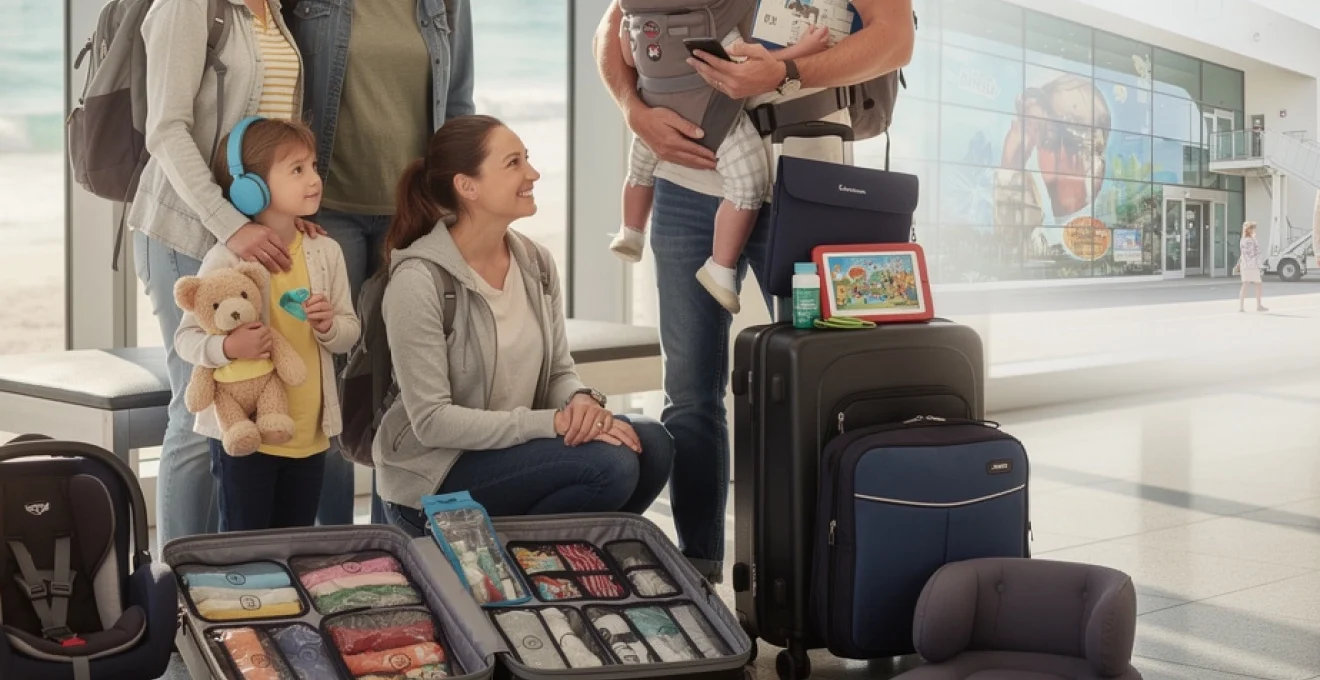
Family travel represents one of the most enriching investments parents can make in their children’s development, yet it consistently ranks among the most anxiety-inducing experiences for modern families. The prospect of navigating airports with toddlers, managing meltdowns in unfamiliar environments, or coordinating nap schedules across time zones can transform what should be an exciting adventure into a logistical nightmare. However, with strategic planning and evidence-based approaches, family holidays can become opportunities for genuine connection rather than exercises in crisis management. The distinction between chaotic family trips and memorable adventures often comes down to preparation, realistic expectations, and a willingness to adapt established routines to new environments.
Pre-trip planning strategies for family travel success
The foundation of any successful family holiday begins weeks before departure. Research consistently demonstrates that families who invest time in comprehensive pre-trip planning report significantly lower stress levels and higher satisfaction rates throughout their journeys. This preparatory phase extends far beyond simply booking flights and accommodation—it encompasses understanding your children’s developmental needs, anticipating potential challenges, and creating flexible frameworks that allow for spontaneity within structure.
Booking Child-Friendly accommodations with kitchen facilities and laundry services
Accommodation selection represents perhaps the most critical decision in family travel planning. Properties offering kitchen facilities provide invaluable flexibility for families managing picky eaters, dietary restrictions, or budget constraints. The ability to prepare familiar breakfast foods or reheat leftovers can eliminate numerous potential flashpoints throughout your holiday. Similarly, in-room laundry facilities or accessible launderette services dramatically reduce the volume of clothing you’ll need to pack, particularly for trips exceeding five days. When evaluating properties, prioritise those advertising family rooms with separate sleeping areas for children—this configuration allows parents to enjoy evening downtime after children’s bedtime without retreating to darkness themselves.
Beyond basic amenities, consider proximity to essential services. Pharmacies, supermarkets, and medical facilities located within walking distance provide peace of mind, particularly when travelling with infants or toddlers whose needs can change rapidly. Reviews from other families often reveal practical details that official property descriptions omit—whether the pool area becomes overwhelmingly noisy during peak hours, if the kitchen equipment includes child-safe items like plastic dishes, or whether the property maintains appropriate water temperature for bathing young children.
Creating Age-Appropriate itineraries using google maps timeline features
Modern mapping technology has revolutionised itinerary planning for families. Google Maps Timeline features allow you to visualise daily distances, identify rest stops, and estimate realistic travel times based on actual traffic patterns rather than theoretical calculations. When planning with children, the general principle suggests limiting travel time to approximately one hour for every year of your youngest child’s age as a maximum daily threshold. A three-year-old, therefore, might reasonably manage three hours of cumulative travel time throughout a day, provided this includes regular breaks for physical activity and snacking.
Age-appropriate itineraries also acknowledge that young children process experiences differently than adults. Rather than attempting to visit five museums across three days, consider dedicating entire mornings to single locations, allowing children to explore at their natural pace. Quality consistently trumps quantity in family travel—one thoroughly enjoyed experience creates more lasting memories than a rushed sequence of checkbox visits. Build itineraries around children’s energy patterns, scheduling cognitively demanding activities during their natural alert periods and reserving afternoons for less structured exploration or downtime.
Coordinating nap schedules with flight departure times and time zone adjustments
Sleep management represents one of the most underestimated aspects of successful family travel. When booking flights, strategic timing can transform the journey from ordeal to opportunity. For families with young children who still nap regularly, afternoon departures that coincide with natural sleep windows often prove optimal for shorter flights. Long-haul international travel presents different considerations—overnight flights aligned with children’s bedtime routines can result in sleeping passengers for substantial portions of the journey, though this approach requires careful preparation including replicating bedtime routines as closely as cabin conditions permit.
Time zone adjustments require graduated approaches for children under five. Begin shifting bedtimes by 15-minute increments three to four days before departure when crossing multiple time zones. Upon arrival, immediate exposure to natural daylight helps reset circadian rhythms more effectively
and should be combined with consistent meal times and familiar evening routines where possible. For particularly sensitive sleepers, maintaining core sleep cues—such as the same bedtime story, sleep sack, or white noise app—helps signal to their body that it is time to rest, even in a different time zone. Remember that full adjustment can take several days; keeping the first 24–48 hours relatively low key and avoiding tightly packed schedules gives everyone the space to adapt. Ultimately, viewing jet lag not as a problem to be fixed overnight but as a gradual transition will reduce frustration for both you and your children.
Securing travel insurance with paediatric emergency coverage
Comprehensive travel insurance becomes non-negotiable when you are travelling with children, yet not all policies are created equal. Look specifically for coverage that includes paediatric emergency care, access to English-speaking medical professionals, and 24/7 telemedicine support where available. Policies that reimburse for emergency dental treatment, replacement of essential medical equipment (such as inhalers or epinephrine auto-injectors), and hospital stays in private paediatric wards can significantly reduce both financial and emotional strain during a crisis. When comparing options, pay attention to per-person medical limits rather than total family limits to ensure adequate coverage for every child.
It is also wise to confirm that your chosen travel insurance covers pre-existing conditions, including asthma, allergies, or neurodevelopmental diagnoses such as autism or ADHD. Many insurers require these to be declared in advance, and failure to do so may invalidate claims. Keep digital and printed copies of your policy, emergency helpline numbers, and any medical consent forms for travelling without one parent. You might never need to use them, but knowing robust paediatric coverage is in place allows you to relax and focus on the positive aspects of family travel.
Essential packing techniques for multi-generational travel
When grandparents, parents, and children travel together, packing becomes a more complex exercise in logistics. Multi-generational trips often involve varied activity levels, different mobility requirements, and diverse preferences around comfort items. Rather than viewing this as a complication, think of your shared suitcase space as a small ecosystem where each item should earn its place. Strategic packing techniques reduce clutter, streamline airport navigation, and make it easier for everyone—especially tired parents—to locate what they need quickly in transit or at your destination.
Compression packing cubes and capsule wardrobe systems for children’s clothing
Compression packing cubes can be transformative for family travel, particularly when you are sharing luggage across generations. Assign each child a different colour cube so that outfits remain clearly separated, reducing morning chaos and arguments over missing shorts or favourite pyjamas. Within each cube, a capsule wardrobe system—built around 2–3 base colours and interchangeable layers—allows you to create multiple outfits from a limited number of pieces. For example, six to eight mix-and-match items can comfortably cover a week for a toddler when combined with access to laundry facilities.
To keep children’s clothing functional and space efficient, prioritise quick-drying fabrics, neutral bottoms that pair with several tops, and items that layer easily for fluctuating temperatures. Rolling outfits together (top, bottom, underwear, socks) and storing them in labelled zip bags within each cube can dramatically speed up morning routines. For multi-generational travel, consider one shared “family cube” containing communal items such as spare hats, swimwear, and lightweight rain jackets—this creates a go-to grab bag for spontaneous outings, minimising the risk of leaving essentials behind.
Tsa-compliant medication organisation for infants and toddlers
Managing medication for young children adds another layer of complexity, especially when crossing borders or passing through security screening. Most aviation authorities, including the TSA and UK equivalents, permit reasonable quantities of liquid medication, formula, and breast milk above the usual 100 ml limits when needed for infants and toddlers. To streamline the process, store all medicines in a single transparent pouch, along with printed prescriptions and a brief note from your paediatrician for controlled or temperature-sensitive medications. Having everything organised in one place reduces stress at checkpoints and demonstrates to security officers that you are prepared.
Pill organisers with clearly labelled compartments for morning, midday, and evening doses can be helpful for older children, but for infants and toddlers, pre-measured syringes (with secure caps) are often more practical. Keep a basic paediatric first-aid kit in your carry-on with fever reducers, antihistamines, oral rehydration salts, and any routine medications your child takes. Think of this kit as your in-flight “safety net”: if a minor illness arises mid-journey, you will already have age-appropriate treatments to hand rather than scrambling to locate a pharmacy on arrival.
Portable entertainment solutions: kindle kids edition and offline netflix downloads
Thoughtful entertainment planning can transform long stretches of transit into surprisingly peaceful interludes. Devices like the Kindle Kids Edition offer a distraction-free reading environment without the constant temptation of games or social media, making them ideal for school-age children. Many families find success in pre-loading a curated library of age-appropriate books and audiobooks, treating the device as a miniature travel library. For younger children or those who prefer visual media, offline Netflix downloads and similar services provide reliable access to favourite shows without relying on patchy airport or in-flight Wi-Fi.
To maintain balance and avoid digital overload, aim for a mix of screen-based and non-screen activities. Simple options such as reusable sticker books, magnetic puzzles, or compact sketch pads can be just as engaging when introduced at the right moment. Consider preparing a “surprise bag” with a few new or rarely seen items, to be revealed gradually throughout the journey when attention begins to wane. Like changing gears on a bicycle, rotating between different types of entertainment helps keep children regulated and prevents the boredom that often triggers challenging behaviour.
Compact safety equipment: car seat travel bags and inflatable booster seats
Safety considerations extend far beyond the aeroplane cabin, especially if your itinerary includes taxis, rental cars, or ride-shares. Car seat travel bags not only protect your child’s seat from damage in the hold but also make it easier to manoeuvre through the airport by adding backpack straps or wheels. Labelling the bag clearly with your name, contact details, and destination hotel can prevent stressful delays at baggage claim. For older children who meet the minimum size requirements, inflatable booster seats offer a practical compromise between safety and portability, easily fitting into a backpack or carry-on when deflated.
Before departure, double-check local regulations regarding child restraint systems in your destination country, as enforcement and standards can vary. If you plan to rely on ride-shares or taxis, research whether these services allow you to install your own car seats and how long this typically takes—practising installation at home can shave precious minutes off your transfer times. Thinking of portable safety equipment as non-negotiable, similar to passports or travel documents, ensures that it is prioritised in your packing rather than treated as an optional extra.
Airport navigation and in-flight comfort management
Airports can either be exciting gateways to adventure or overwhelming sensory environments for children, depending largely on how prepared you are. Clear roles for each adult in a multi-generational group—who manages boarding passes, who watches the pushchair, who stays with the older child—prevent last-minute confusion. Similarly, breaking the journey into predictable stages (check-in, security, snack, boarding) and narrating these to your children helps them feel more secure. Once on board, small adjustments to your in-flight routine can dramatically improve everyone’s comfort and reduce the likelihood of mid-air meltdowns.
Priority boarding protocols for families at major carriers
Many major airlines offer some form of priority or pre-boarding for families travelling with young children, typically under the age of two or sometimes up to five. Taking advantage of this option allows you extra time to stow carry-on luggage, install car seats where permitted, and settle children without the pressure of a full boarding queue behind you. If the airline does not automatically announce family boarding, do not hesitate to approach the gate agent and ask—policies occasionally vary by route, but staff will usually try to accommodate reasonable requests.
However, there are situations where you may choose to board later, particularly if you are managing energetic toddlers who find it difficult to sit still. In such cases, one adult can pre-board with the bags to organise the seating area, while another remains in the terminal with the child until closer to departure. This staggered approach can reduce the total time children spend confined to their seats, which is especially valuable on medium-haul flights where patience can wear thin. Consider your child’s temperament and energy levels, and select the boarding strategy that best supports their regulation.
Security checkpoint strategies for pushchairs and baby formula
Security checkpoints are often the most stressful points in a journey with children, but they do not have to be chaotic. Before reaching the queue, remove snacks, electronics, and liquids (including baby formula, breast milk, and purees) into a single, easily accessible bag. Most airports will allow larger quantities of baby food and milk through security, but expect them to be separately screened, which can add a few minutes. Having everything ready in one place speeds up the process and reduces the number of times you need to open your main baggage.
Pushchairs and travel strollers typically need to be collapsed and placed through the X-ray machine, or inspected manually if they do not fit. Practise folding and unfolding your buggy one-handed at home; being able to do this quickly while holding a baby or toddler is invaluable. If travelling with another adult, designate one person to lead the way through the scanner and gather bags, while the other focuses solely on childcare. Viewing the security process as a well-rehearsed drill rather than an unknown obstacle can help you remain calm, which in turn reassures your children.
Managing cabin pressure discomfort during ascent and descent
Changes in cabin pressure during take-off and landing are a common source of distress for babies and young children, who may not yet know how to equalise their ears. Offering a bottle, breast, dummy, or sippy cup during ascent and descent encourages swallowing, which helps relieve pressure. For older children, sugar-free chewing gum, chewy snacks, or even exaggerated yawning “games” can be surprisingly effective. Starting these strategies just before the plane begins to climb or descend, rather than waiting until discomfort begins, is usually more successful.
If your child is prone to ear infections or has recently had a cold, consider consulting your GP or paediatrician before flying. They may recommend specific decongestants or nasal sprays appropriate for your child’s age. Packing a small comfort kit with favourite soft toys, a lightweight blanket, and noise-reducing headphones can provide additional reassurance during noisy or bumpy sections of the flight. Think of this kit as a “sensory shield” that helps your child feel protected in what is, after all, a very unfamiliar environment.
Bassinet seat reservations on long-haul international routes
For infants under a certain weight and length (which varies by airline), bassinet seats on long-haul flights can be a genuine game-changer. These attach to the bulkhead wall in front of specific rows and allow babies to sleep flat or semi-reclined, freeing parents’ arms and laps for much-needed rest. Because bassinet positions are limited, it is essential to request them at the time of booking and reconfirm several days before departure. Some carriers prioritise younger infants or those with medical needs, so flexibility and early planning improve your chances of securing one.
Be aware that bassinet rows often come with trade-offs: armrests may be fixed, personal screens may be stored in the arm, and you might be seated close to galley or lavatory areas with more foot traffic. Nonetheless, many families find these minor inconveniences worthwhile for the ability to lay their baby down safely. Pack a fitted muslin or small sheet to line the bassinet for added comfort and familiarity, and dress your baby in layers so you can adapt easily to the cabin temperature. As with any aspect of family travel, going in with realistic expectations—hoping for some sleep rather than a full night’s rest—helps you feel satisfied with whatever rest you are able to achieve.
Destination-specific activities for various age groups
Once you arrive, choosing the right activities for your children’s developmental stage can make the difference between frazzled outings and genuinely joyful days. Rather than attempting to please everyone at once, consider alternating “child-led” and “adult-led” experiences, or selecting attractions that offer layered engagement for different ages. Many destinations now invest heavily in family tourism infrastructure, providing interactive exhibits, accessible pathways, and quiet zones designed with young visitors in mind. By planning destination-specific activities in advance, you can avoid decision fatigue on the day and focus on enjoying time together.
Toddler-friendly beaches: clearwater beach florida and costa teguise lanzarote
Toddlers experience beaches with all their senses, which is why calm waters, gentle slopes, and ample shade are crucial for family-friendly seaside days. Clearwater Beach in Florida is frequently cited as one of the best beaches for young children, thanks to its soft white sand, shallow entry points, and well-maintained facilities. Nearby playgrounds, lifeguard stations, and family restrooms make it easier to manage everything from nappy changes to snack breaks without trekking long distances. The promenade offers pram-friendly paths, allowing grandparents or non-swimmers to enjoy the scenery without venturing onto the sand.
On the other side of the Atlantic, Costa Teguise in Lanzarote offers a similarly toddler-friendly environment, with sheltered coves and predictable weather for much of the year. Many of the local resorts cater specifically to families, providing kids’ pools, shaded areas, and easy access to the beach. If your toddler is still adjusting to the idea of sand and waves, bringing familiar items such as a small spade, bucket, or even a favourite bath toy can help bridge the gap. Think of these beaches as outdoor classrooms: opportunities for sensory exploration, early science conversations about shells and tides, and gentle practice with water confidence.
Interactive museums: natural history museum london and cité des sciences paris
Interactive museums can be ideal for curious children, especially when the weather is less cooperative. The Natural History Museum in London combines awe-inspiring architecture with hands-on exhibits, from the dramatic dinosaur displays to the earthquake simulator. Arriving early or booking timed-entry tickets, where available, can help you avoid the busiest crowds—an important consideration for children who are sensitive to noise or overwhelmed by large groups. The museum also offers family trails and backpacks with activity prompts, turning what might otherwise be a passive visit into an active treasure hunt.
In Paris, the Cité des Sciences et de l’Industrie takes interactivity to another level, with dedicated spaces like the Cité des Enfants designed specifically for different age bands. Timed sessions encourage focused exploration without overstimulation, and exhibits are purposely built to be touched, manipulated, and experimented with. When you view these museums not as places where children must be quiet, but as environments that invite them to ask questions and test ideas, the experience becomes far more relaxed for everyone. Planning shorter, focused visits followed by outdoor play in nearby parks keeps energy balanced and prevents cultural fatigue.
Theme park rider switch programs at disneyland paris and alton towers
Theme parks present unique logistical challenges for families with children of varying ages and heights. Rider switch programmes—offered at destinations like Disneyland Paris and Alton Towers—are designed to ensure that adults and older children can enjoy more intense attractions without leaving younger siblings unattended. The basic principle is simple: one adult rides while the other waits with the non-riding child, then they swap without queuing twice. This system can save significant time, reduce frustration, and make the experience feel more equitable for everyone.
To use rider switch effectively, familiarise yourself with each park’s specific procedures before your visit, as you may need to obtain a special pass or speak to staff at the ride entrance. Combine this with realistic expectations about how many attractions you will manage in a day; moving at a slightly slower pace but maintaining a positive mood is usually preferable to racing between rides. Remember that for many younger children, parades, character meetings, and themed playgrounds hold just as much magic as headline roller coasters. By planning your day around a mix of high-energy thrills and gentler experiences, you support regulation and keep family harmony intact.
Managing routine disruptions and behavioural challenges
Even the most meticulously planned family trip will disrupt normal routines to some extent. Bedtimes shift, meal times slide, and sensory input increases dramatically. For many children—especially toddlers and those with additional needs—these changes can manifest as heightened emotions, clinginess, or behavioural challenges. Rather than interpreting these responses as misbehaviour, it is helpful to view them through the lens of regulation: your child’s nervous system is working hard to make sense of novel environments. Your role is less about enforcing strict rules and more about providing a stable emotional anchor.
Maintaining a few “non-negotiable” anchors from your home routine can provide powerful reassurance. This might mean keeping the same bedtime song, reading a familiar story every night, or using a visual schedule to outline the day’s plan. When tantrums or meltdowns do occur—as they inevitably will at some point—prioritise safety and connection over discipline. A calm, predictable response (“You’re upset because you’re tired and hungry; we’re going to find a quiet spot and have a snack”) teaches children that big feelings are manageable, even in unfamiliar settings.
It can also be helpful to build in regular regulation breaks throughout the day, just as you would schedule rest stops on a long drive. These might be short visits to a playground, ten minutes of quiet reading in a café, or simple movement games in your hotel room. Think of your child’s emotional capacity like a battery: every new experience uses energy, and strategic pauses allow it to recharge before it reaches empty. As parents and carers, extending the same compassion to yourself—acknowledging your own fatigue and need for downtime—models healthy coping strategies your children can emulate.
Post-travel recovery and memory documentation techniques
The journey does not end when you walk back through your front door. Post-travel recovery is a critical, often overlooked phase that can shape how your children remember the entire experience. Allowing for a buffer day at home before returning to work or school helps everyone recalibrate their sleep schedules, digestion, and social energy. Keep meals simple and familiar, reduce demands where possible, and reintroduce regular routines gradually rather than expecting an immediate return to “normal.” For younger children, talking through what happened on the trip can help integrate the experience and ease any lingering anxieties.
Documenting your family holiday is more than a sentimental exercise; it also supports children’s cognitive and emotional development. Creating a simple travel journal—with drawings, ticket stubs, printed photos, and a few sentences about favourite moments—encourages reflection and language skills. Older children might enjoy putting together a short slideshow or digital scrapbook, selecting images and adding captions themselves. These tangible records act like mental anchors, helping children revisit positive memories long after you have unpacked the suitcases.
Finally, taking time as adults to review what worked well—and what you might do differently next time—turns each trip into valuable data for future planning. Perhaps you discovered that your child copes better with morning flights, or that two major activities per day is your family’s absolute maximum. Treat these insights as part of an evolving “family travel manual” unique to your household. Over time, you will develop a toolkit of strategies tailored precisely to your children’s needs, making each subsequent journey smoother, more enjoyable, and genuinely stress-free in the ways that matter most.