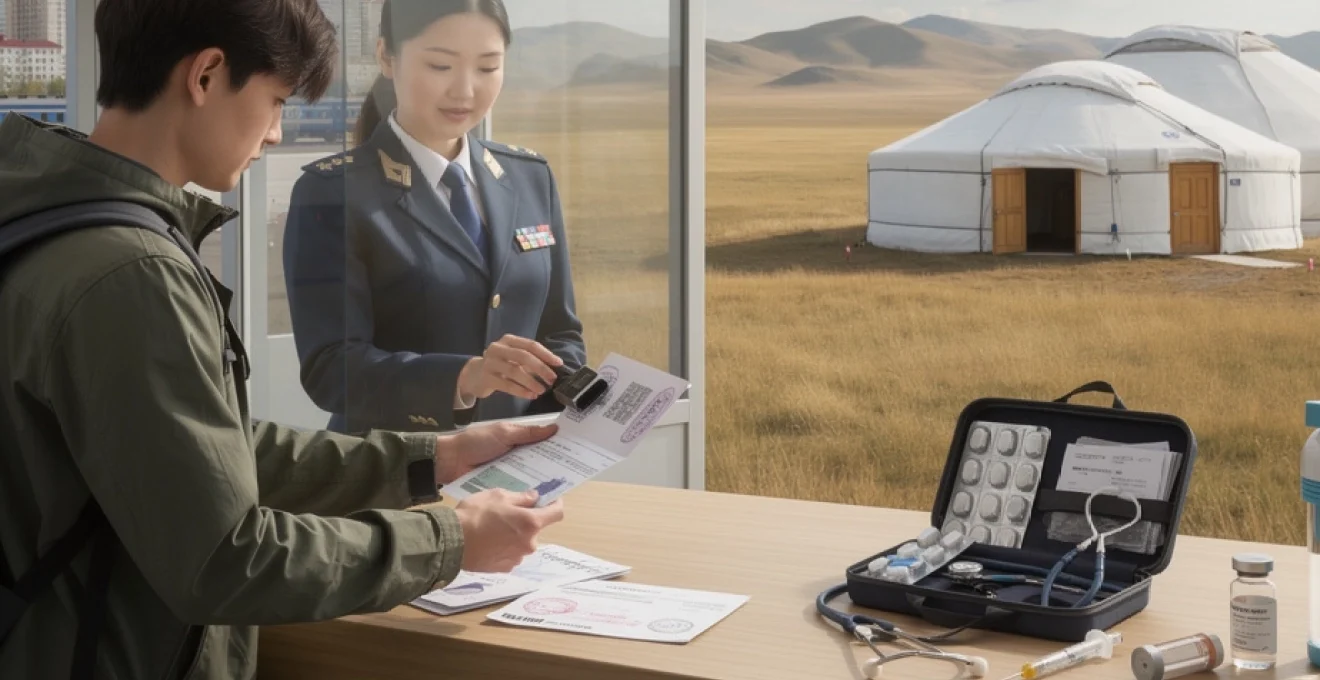
Mongolia stands as one of the world’s last great frontiers, offering travellers an extraordinary opportunity to experience authentic nomadic culture whilst exploring vast steppes, towering mountains, and dramatic desert landscapes. This landlocked nation between China and Russia presents unique challenges and rewards that require careful preparation and cultural understanding. From navigating visa requirements to understanding local customs in traditional ger settlements, successful travel to Mongolia demands thorough planning and respect for local traditions.
The country’s extreme climate variations, limited infrastructure outside major cities, and distinctive cultural practices create both adventure and complexity for visitors. Whether you’re planning to witness the spectacular Naadam festival, explore the Gobi Desert’s ancient formations, or experience life with nomadic herding families, understanding Mongolia’s practical requirements and cultural nuances proves essential for a meaningful journey.
Mongolia visa requirements and entry documentation for UK citizens
British citizens enjoy significant advantages when travelling to Mongolia, as they can enter the country without a visa for tourism purposes. This visa-free arrangement allows stays of up to 30 days, making Mongolia accessible for most holiday durations. However, travellers must ensure their passport remains valid for at least six months beyond their intended departure date, as Mongolian immigration authorities strictly enforce this requirement.
Tourist visa application process through mongolian embassy london
For extended stays exceeding 30 days, British travellers must apply for an appropriate visa through the Mongolian Embassy in London. The tourist visa application process requires several documents including a completed application form, passport photographs, proof of accommodation bookings, and evidence of sufficient financial means. Processing typically takes five working days, though expedited services are available for urgent travel requirements.
The embassy strongly recommends applying at least two weeks before your intended departure date, particularly during peak summer travel seasons when application volumes increase significantly. Visa fees vary depending on the duration and type of visa requested, with tourist visas generally costing between £40-£80 for UK citizens.
Passport validity requirements and border entry stamps
Mongolia’s border control procedures require meticulous attention to documentation details. Your passport must contain at least one completely blank page for entry and exit stamps, as Mongolian officials use full-page stamps rather than smaller endorsements. Immigration officers also expect to see clear evidence of your intended departure, typically in the form of return flight bookings or onward travel arrangements.
Border crossings can experience significant delays during peak travel periods, particularly at the main Zamyn-Üüd crossing with China and the Sükhbaatar crossing with Russia. Patience proves essential as processing times vary considerably depending on seasonal traffic and staffing levels at remote border posts.
Visa-free transit regulations via beijing capital international airport
Many travellers reach Mongolia via connections through Beijing, where specific transit regulations apply for UK citizens. China offers 24-hour and 72-hour visa-free transit periods for passengers with confirmed onward bookings, provided they remain within designated airport areas. These arrangements facilitate convenient connections to Ulaanbaatar without requiring Chinese visa applications.
However, travellers planning to explore Beijing during layovers must secure appropriate Chinese visas in advance, as visa-on-arrival facilities are not available for UK passport holders. The complexity of these arrangements makes direct flights to Mongolia increasingly attractive despite higher costs.
Registration requirements with mongolian immigration police
All foreign visitors to Mongolia must complete registration with local immigration authorities within seven days of arrival, regardless of their accommodation type. This mandatory procedure applies equally to hotel guests, ger camp visitors, and those staying in private residences. Most reputable hotels and tourist camps handle registration automatically, but independent travellers must complete this process personally.
Registration can now be completed online through the Immigration Agency’s digital platform, significantly simplifying what was previously a time-consuming bureaucratic process. Failure to register results in substantial fines upon departure, potentially reaching several hundred pounds depending on the duration of non-compliance.
Essential vaccinations and health precautions for mongolian steppe travel
Mongolia’s diverse ecosystems and climate extremes create specific health challenges that require careful preparation and appropriate vaccinations. The country’s healthcare infrastructure varies dramatically between urban centres and remote regions, making prevention far more practical
Mongolia’s healthcare infrastructure varies dramatically between urban centres and remote regions, making prevention far more practical than treatment once you are already on the steppe. Before travelling, UK visitors should book an appointment with a travel clinic or GP at least six to eight weeks in advance to discuss recommended vaccines and region-specific health risks. Standard UK immunisations such as tetanus, diphtheria, polio and measles should be fully up to date, as medical care in the countryside is basic and sometimes hours or even days away. You should also consider your planned activities carefully – extended horse treks, homestays with nomadic families, and camping in forested or marshy areas all come with additional health considerations.
Japanese encephalitis and tick-borne encephalitis vaccination protocols
Two of the most important disease risks for rural Mongolia are Japanese encephalitis (JE) and tick-borne encephalitis (TBE). Both are viral infections that affect the brain and can cause long-term neurological problems or, in rare cases, death. The likelihood of exposure depends heavily on where and when you travel. If your Mongolia itinerary focuses largely on Ulaanbaatar and short, organised excursions, your risk is relatively low; if you plan to spend weeks camping in forested areas, hiking in the north, or staying near rice paddies and wetlands in neighbouring regions, vaccination becomes far more advisable.
The Japanese encephalitis vaccine is generally recommended for travellers spending a month or more in rural or semi-rural areas, especially during the warmer months from May to October when mosquito activity is highest. The standard schedule involves two doses given 28 days apart, although accelerated regimens may be available for late planners. Tick-borne encephalitis, by contrast, is spread by the bite of infected ticks in forested and grassy areas, particularly in northern Mongolia near the Russian border. The TBE vaccine normally requires a three-dose course over several months, so early planning is essential if you want full, long-lasting protection.
Even if you are fully vaccinated, you should still adopt rigorous bite-prevention measures while travelling in Mongolia. This includes using high-concentration DEET or picaridin insect repellent, wearing long sleeves and trousers tucked into socks in tick-prone areas, and performing regular tick checks after hikes or time spent in long grass. Think of vaccination as a strong safety net, not an invitation to ignore basic precautions. Combining both approaches gives you the best possible protection when exploring Mongolia’s wild landscapes.
Altitude sickness prevention in altai tavan bogd national park
The remote Altai Tavan Bogd National Park in western Mongolia offers some of the country’s most dramatic scenery, but its high altitudes can pose serious challenges for unprepared visitors. Many trekking routes and base camps here sit between 2,500 and 3,500 metres, while popular climbing objectives reach over 4,000 metres. At these elevations, the reduced oxygen levels increase the risk of acute mountain sickness (AMS), particularly if you ascend too quickly from lower altitudes such as Ulaanbaatar or Ölgii.
To reduce the risk of altitude sickness, you should plan your Altai itinerary to allow for gradual acclimatisation wherever possible. Ideally, spend at least one or two nights at an intermediate altitude before tackling higher passes or peaks, and follow the classic advice of “climb high, sleep low” when day-hiking from a central camp. Listen to your body carefully: headaches, nausea, unusual fatigue and disturbed sleep can all be early warning signs of AMS. If symptoms worsen with further ascent, the only effective treatment is to descend to a lower altitude and rest until you feel better.
Some travellers choose to carry acetazolamide (Diamox) after discussing it with their GP or travel doctor, as this medication can help speed acclimatisation when used correctly. However, it should never be seen as a substitute for sensible ascent rates and good judgement. You will also acclimatise more easily if you stay well hydrated, avoid alcohol in the first days at higher elevation, and pace yourself rather than treating mountain trekking like a race. Think of travelling in the Altai as a marathon rather than a sprint: slow, steady progress almost always leads to a safer and more enjoyable experience.
Medical kit essentials for remote gobi desert expeditions
The Gobi Desert’s huge distances, sparse population and limited medical facilities make a well-prepared personal medical kit absolutely essential. Unlike many destinations where a pharmacy is never far away, large areas of the Gobi have no reliable access to medication beyond basic village shops. If you are travelling as part of an organised tour, your operator should carry a group first-aid kit; however, you should still bring your own tailored supplies for personal use and emergencies.
At a minimum, your Mongolia medical kit for the Gobi should include broad-spectrum painkillers, anti-diarrhoeal medication, oral rehydration salts and a basic course of antibiotics prescribed by your doctor for severe traveller’s diarrhoea or respiratory infections. Add adhesive plasters, sterile dressings, blister pads, antiseptic wipes and an elastic bandage for sprains – useful after long days in the saddle or climbing dunes. A digital thermometer, tweezers and small scissors can prove invaluable for managing minor injuries without delay.
Because the Gobi’s climate is extremely dry and sun exposure intense, high-factor sunscreen, SPF lip balm, sunglasses with full UV protection and a wide-brimmed hat are non-negotiable. Many travellers also benefit from motion sickness tablets, as long journeys over rough tracks in 4×4 vehicles can be surprisingly hard on the stomach. Finally, if you rely on prescription medicines, always bring more than you think you need, carried in original packaging along with a copy of the prescription. In remote Mongolia, running out of a vital medication is far more than a minor inconvenience.
Water purification systems for khövsgöl lake region
Khövsgöl Lake is one of Mongolia’s most celebrated natural attractions, often described as the “younger sister” of Lake Baikal. Its clear, blue waters appear pristine, and many local people still drink directly from the lake. However, as a visitor you should treat all water sources – including the lake and surrounding streams – as potentially contaminated and rely on your own water purification system. Even low levels of bacteria or parasites can quickly disrupt your trip, especially when you are far from modern medical care.
The most practical approach for Mongolia travel is to combine mechanical filtration with chemical or UV treatment. Lightweight pump or squeeze filters remove most sediment and many pathogens, while chlorine dioxide tablets or UV purification pens add a second level of protection against viruses and smaller organisms. This two-step approach might feel excessive at first, but it greatly reduces your risk of gastrointestinal illness during longer treks along Khövsgöl’s shores or horseback journeys into the surrounding taiga.
When planning how much purified water you’ll need each day, remember to factor in the dehydrating effects of cold, dry air and physical exertion. Even in cool temperatures, you should aim for at least two to three litres of safe drinking water daily, more if you are hiking or riding for several hours. Collapsible water bottles and insulated flasks work particularly well for steppe travel, as they can be packed away when empty and protect treated water from freezing in colder months. By thinking of water purification as part of your daily routine – rather like brushing your teeth – you quickly build habits that keep you healthy throughout your time in Mongolia.
Climate patterns and seasonal weather considerations across mongolia’s regions
Mongolia’s climate is famously extreme, with temperature swings that can feel almost unreal if you are used to the milder conditions of the UK. The country experiences a classic continental climate: long, bitterly cold winters, short but intense summers, and relatively low annual rainfall. However, conditions vary significantly between regions such as Ulaanbaatar, the Gobi Desert, the Khangai Mountains and the northern lake districts. Understanding these regional climate patterns is crucial when choosing the best time to travel to Mongolia and deciding what clothing to pack.
Because weather can change rapidly, particularly on the open steppe, you should always prepare for a wider range of conditions than you might expect from the forecast alone. A day that begins warm and sunny in Ulaanbaatar can end with icy winds or sudden storms in the surrounding hills. Layered clothing, windproof outerwear and sturdy footwear are essential for almost any season. By aligning your Mongolia itinerary with typical climate patterns – for example, visiting the Gobi in spring or autumn rather than mid-summer – you can maximise comfort while still experiencing the landscapes at their most impressive.
Ulaanbaatar temperature extremes and urban weather patterns
Ulaanbaatar is often described as the world’s coldest capital city, and for good reason. Winter temperatures frequently fall below -30°C, with January and February being the harshest months. Even during periods of bright sunshine, wind chill can make the air feel dramatically colder, particularly in exposed areas and along the Tuul River. Snow can persist on the ground for months, and ice on pavements can make simple walks surprisingly hazardous if you are not paying attention.
Summers in Ulaanbaatar, by contrast, can be unexpectedly warm, with daytime highs in July and August commonly reaching 25–30°C. However, nights often cool down rapidly, so you will still need a fleece or light jacket after dark. The city experiences most of its annual rainfall between June and August, usually as short but heavy showers or thunderstorms. Because drainage infrastructure can struggle with sudden downpours, localised flooding and muddy streets are not unusual. Packing a compact waterproof jacket and quick-drying footwear will help you stay comfortable when urban weather turns unpredictable.
Another important factor for visitors is Ulaanbaatar’s winter air pollution, largely caused by coal burning for heating. Between November and March, air quality can deteriorate significantly, especially on still, cold nights when smog accumulates in the city’s bowl-shaped valley. If you have asthma or other respiratory conditions, you may wish to avoid winter travel to the capital or bring high-quality particulate masks (such as FFP2 or N95) for outdoor use. Checking daily air quality indices online before venturing out can help you adjust your activities accordingly.
Gobi desert microclimate variations and sandstorm frequency
The Gobi Desert covers a vast area of southern Mongolia and northern China, and its climate is more varied than many visitors expect. While summer daytime temperatures can easily exceed 35–40°C in exposed areas, nights can still be surprisingly cool, sometimes dropping below 10°C. Spring and autumn are often regarded as the most comfortable seasons for Gobi travel, offering warm days, cold but manageable nights, and generally clear skies. Winter brings its own stark beauty, with occasional snow on the dunes, but conditions are harsh and many ger camps close for the season.
One of the defining features of the Gobi’s microclimate is its strong, often sudden winds. These can arise seemingly out of nowhere, transforming a calm afternoon into a sand-laden gale in minutes. Sandstorms are most frequent in late spring, particularly in April and May, when dry soils and seasonal winds combine. During these events, visibility can be severely reduced and fine dust infiltrates vehicles, tents and clothing. While tour operators are used to handling such conditions, you should still bring sunglasses that seal well, a buff or scarf to cover your mouth and nose, and protective covers for camera equipment and electronics.
Because humidity is extremely low year-round, dehydration is a constant risk in the Gobi, even outside the hottest months. You may not feel yourself sweating, but you will be losing moisture rapidly through breathing and physical exertion. As a rule of thumb, you should drink more water than you think you need and supplement it with electrolytes on longer hikes or camel treks. Treat the Gobi like a giant outdoor sauna: if you wait until you feel thirsty, you are already behind on hydration.
Khangai mountains precipitation levels and snow coverage duration
The Khangai Mountains in central Mongolia offer a very different climate profile, characterised by cooler temperatures, higher rainfall and longer periods of snow cover. This region, which includes popular destinations such as Orkhon Valley and Tsetserleg, experiences most of its precipitation between June and September. Summer showers tend to be short but sometimes heavy, feeding rivers and creating lush grazing pastures for nomadic herders. As a result, trails can become muddy and river crossings may be more challenging after prolonged rain.
Snow typically begins to settle in the Khangai region from late October or early November, with higher passes remaining snow-covered until April or even May. Winter temperatures are severe, though generally a little milder than in Ulaanbaatar or the far north. If you are planning horse trekking or hiking here in shoulder seasons, it is wise to assume you may encounter snowfields, icy tracks or frozen river crossings, particularly at elevations above 2,000 metres. Sturdy, waterproof boots with good grip and warm socks are essential, even if your trip officially takes place in “autumn”.
Because of the Khangai’s changeable conditions, layering becomes especially important. A typical day might begin frost-covered, turn warm and sunny by midday, and end with a rain shower or cold wind sweeping down from the peaks. Rather than packing a single heavy coat, bring a combination of base layers, insulating mid-layers and a waterproof shell that you can adjust as conditions evolve. Think of your clothing system as a toolkit: the more flexible the tools, the better you can respond to Mongolia’s rapidly shifting mountain weather.
Optimal weather windows for trans-mongolian railway journey
Many visitors combine travel to Mongolia with a journey on the iconic Trans-Mongolian Railway, connecting Moscow, Ulaanbaatar and Beijing. While the train operates year-round, certain months offer particularly favourable conditions for enjoying the landscapes rolling past your window. Late May to early October is generally considered the best window, with June and September often striking the ideal balance between comfortable temperatures, long daylight hours and reduced tourist crowds.
Travelling in high summer (July and August) brings lush green steppe views and the chance to align your trip with Mongolia’s Naadam festival, but it also coincides with peak demand for tickets and accommodation. Carriages on some stretches can become uncomfortably warm in hot spells, particularly if air-conditioning is limited or intermittent. Spring and autumn, by contrast, offer cooler but still pleasant conditions, with the added bonus of golden larch forests and snow-capped peaks in northern sections of the route.
Winter journeys on the Trans-Mongolian can be magical for those who enjoy stark, snow-covered landscapes and are prepared for the cold. However, you will need proper winter clothing for brief station stops in Siberia and Mongolia, and potential delays are more common due to weather-related issues. Whichever season you choose, it is wise to build a little flexibility into your itinerary in case of timetable changes, and to pack a small “comfort kit” with warm layers, snacks and entertainment for longer stretches between major stops.
Transportation infrastructure and overland route planning
Mongolia’s vast size and sparse population mean that transportation infrastructure is far less developed than in most European countries. Outside of Ulaanbaatar and a few regional centres, you will encounter limited paved roads, minimal public transport and large distances between fuel stations or repair facilities. This can be daunting at first glance, but with realistic expectations and careful planning, overland travel in Mongolia becomes one of the most rewarding aspects of your trip. The key is to think in terms of days and regions rather than precise timetables and fixed daily mileage.
The main north–south and east–west routes linking Ulaanbaatar with provincial capitals are generally paved, though surfaces can be rough and repairs frequent. Once you leave these corridors for more remote valleys, monasteries or national parks, tracks often become unsealed, unmarked and sometimes disappear altogether into the steppe. For this reason, most visitors opt for organised tours with local drivers or hire a 4×4 and driver rather than attempting self-drive. A professional driver not only navigates challenging terrain but also understands local etiquette when crossing private pastureland or entering herders’ areas.
Public transport options within Mongolia consist mainly of long-distance buses and shared minibuses connecting Ulaanbaatar to provincial towns. These services are inexpensive but can be crowded, slow and subject to last-minute schedule changes. If you are on a tighter budget and comfortable with some uncertainty, buses offer a fascinating glimpse into everyday Mongolian life. However, you should not rely on them for reaching remote attractions such as the Flaming Cliffs, Orkhon waterfall or Altai Tavan Bogd; for these destinations, private transport remains essential.
When planning overland routes, it is wise to build generous buffers between connections, especially if your onward travel involves international flights or the Trans-Mongolian Railway. Distances that appear modest on a map can take far longer than expected due to rough tracks, livestock on the road, river crossings and unexpected vehicle repairs. As a rule, assume average speeds of 40–60 km/h on paved routes and significantly less on dirt tracks. By embracing a slower, more flexible rhythm of travel, you will find that delays become opportunities to appreciate the landscape rather than sources of stress.
Cultural etiquette protocols in traditional ger settlements
Staying in a traditional ger (yurt) settlement or with a nomadic family remains one of the most memorable experiences of travelling to Mongolia. However, these visits also come with specific cultural etiquette that differs markedly from Western norms. Mongolian hospitality is famously generous, but it is built on mutual respect and an understanding of unspoken rules passed down through generations. As a guest, you are not expected to be perfect; you are, however, expected to make a genuine effort to follow local customs.
When approaching a ger, you should walk confidently but respectfully, avoiding loud noise or running. It is customary to call out a greeting such as “Nokhoi khor!” (literally “hold the dog”) as you approach, giving the family time to welcome you and secure any animals. Enter with your right foot first and avoid stepping on the threshold – this low wooden or metal bar is considered spiritually significant, and standing on it is thought to bring bad luck. Once inside, move clockwise and sit where your host indicates, usually on the left side for male guests and right side for female guests, unless told otherwise.
Food and drink play a central role in Mongolian hospitality, and you will almost certainly be offered milk tea, dairy products or snacks shortly after arriving. It is polite to accept at least a small amount, even if you are not particularly hungry or accustomed to fermented mare’s milk or strong local cheeses. Always take items with your right hand or with both hands together, sometimes with your left hand lightly touching your right wrist or elbow as an extra sign of respect. If you genuinely cannot consume something, it is better to explain gently via your guide rather than simply refusing without comment.
Inside the ger, certain areas and objects are considered especially significant. The back of the ger, opposite the door, is the place of honour and may house a small Buddhist altar or family photographs. You should not sit with your back to this area, nor should you lean on or place objects on the central support pillars. Pointing your feet towards the household shrine, stove or older family members is also considered disrespectful. Think of the ger as a living, sacred space rather than just a tent: by moving mindfully and observing how your hosts behave, you will quickly pick up subtle but important cues.
Currency exchange mechanisms and payment systems in rural mongolia
Mongolia remains a predominantly cash-based society, particularly outside Ulaanbaatar and a handful of larger towns. The national currency is the Mongolian tögrög (MNT), and you will need a steady supply of local banknotes for almost all day-to-day transactions in rural areas. While major hotels, some restaurants and supermarkets in the capital accept international debit and credit cards, card payments become increasingly rare as you move into the countryside. Foreign cards, especially Mastercard and American Express, can also be temperamental even when terminals are available.
The most convenient way for UK travellers to obtain tögrög is to withdraw cash from ATMs in Ulaanbaatar using a Visa debit or credit card, which tend to be more widely accepted than other networks. ATMs are common in central districts and usually offer withdrawal limits in the range of 400,000–800,000 MNT per transaction. Currency exchange offices in the city also convert pounds or euros into tögrög at competitive rates, though US dollars remain the most widely recognised foreign currency. You should avoid exchanging money at border posts or unofficial vendors, where rates are poorer and scams more likely.
Once you leave the capital, ATMs become sporadic and may be out of service for extended periods due to technical issues or lack of cash. For this reason, it is wise to calculate your likely daily spending in rural Mongolia – including meals, snacks, small souvenirs, optional activities and tips – and withdraw enough money to cover your entire time outside Ulaanbaatar, plus a safety margin. Keep banknotes organised in different envelopes or pouches, separating larger denominations (such as 20,000 and 50,000 MNT notes) from smaller ones used for taxis, market purchases and minor expenses.
In traditional ger camps and with nomadic families, payment customs can differ from what you might expect. Organised tours usually include accommodation and meals in their package price, so you will not pay your hosts directly, though a small cash tip is always appreciated if offered discreetly through your guide. In local shops and markets, prices are generally fixed and bargaining is limited, unlike in some other Asian countries. Having exact or near-exact change makes transactions smoother, especially in very small settlements where vendors may struggle to break large notes. By planning your currency needs carefully and respecting Mongolia’s cash-first culture, you will find everyday interactions much easier – and far less stressful – throughout your journey.