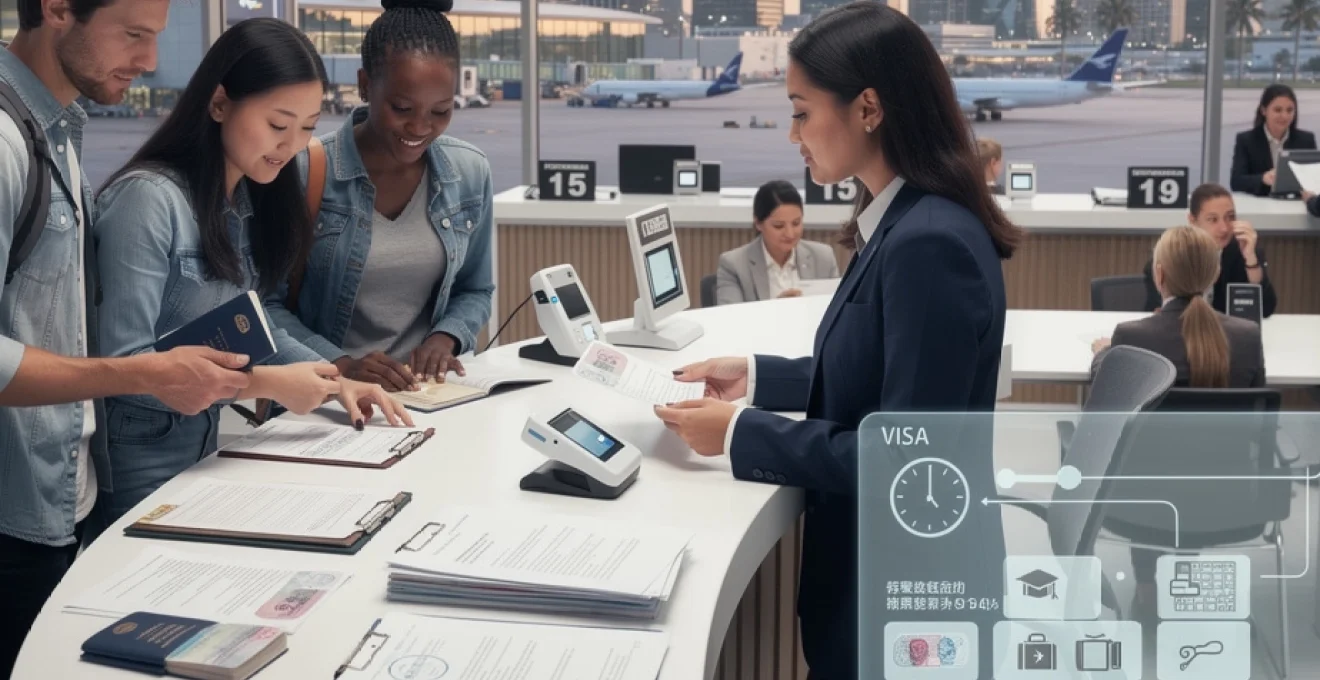
International travel has become increasingly complex in the digital age, with evolving visa requirements, electronic authorisations, and biometric verification systems transforming how borders are managed globally. Whether you’re planning a short holiday, pursuing educational opportunities abroad, or embarking on a business venture in another country, understanding the visa landscape before you depart is essential to avoid costly delays, refusals, or even deportation upon arrival. The consequences of misunderstanding entry requirements can extend beyond immediate inconvenience—overstays, incorrect visa categories, and documentation errors can result in multi-year entry bans that significantly impact your future travel plans. With approximately 1.4 billion international arrivals recorded globally in recent years, immigration authorities have implemented sophisticated systems to manage this unprecedented movement whilst maintaining border security. This comprehensive guide navigates the intricate world of visa formalities, providing you with the detailed knowledge needed to ensure your international journey begins smoothly and remains compliant throughout your stay.
Visa categories and classification systems across international jurisdictions
Understanding the fundamental differences between visa types represents your first critical step in preparing for international travel. Each country operates its own classification system, though many share common principles based on the purpose and duration of your intended stay. Immigration authorities worldwide distinguish primarily between short-stay visitor visas for tourism and business, long-stay visas for education or employment, and residence permits that grant extended rights within a host country. The distinction matters enormously—applying for the wrong category can result in automatic refusal, wasted application fees, and potential complications for future applications. Recent statistics indicate that approximately 15-20% of visa refusals stem from applicants selecting inappropriate visa categories for their intended activities, highlighting how crucial proper classification becomes in your application strategy.
Schengen area uniform visa requirements and type C Short-Stay regulations
The Schengen visa system represents one of the world’s most significant visa harmonisation frameworks, covering 27 European countries that have abolished internal border controls. When you apply for a Schengen Type C short-stay visa, you’re requesting permission to travel throughout this entire zone for tourism, business, or family visits lasting up to 90 days within any 180-day period. This calculation method—known as the “90/180 rule”—proves more complex than it initially appears, as you must count backwards from each day of your intended stay to ensure you haven’t exceeded the 90-day threshold. Immigration officers at Schengen borders now use sophisticated digital systems that automatically calculate your previous stays, making miscalculations immediately apparent. The Schengen Visa Code mandates that you apply at the consulate of your main destination—the country where you’ll spend the longest portion of your trip—or if durations are equal, the country of first entry. Type C visas typically offer single, double, or multiple-entry options, with multiple-entry visas increasingly becoming standard for applicants with established travel histories.
United states Non-Immigrant visa classifications: B-1/B-2, F-1, and H-1B distinctions
The United States operates one of the world’s most complex visa classification systems, with dozens of non-immigrant categories serving specific purposes. The B-1/B-2 tourist and business visitor visa remains the most common, permitting stays typically up to six months for tourism, medical treatment, or business activities such as attending conferences and negotiating contracts. However, you cannot work or study on a B-1/B-2 visa—these activities require an F-1 student visa or H-1B specialty occupation work visa respectively. The F-1 visa allows international students to study at accredited institutions whilst also permitting limited on-campus employment and Optional Practical Training after graduation. Meanwhile, the H-1B visa serves professionals in specialty occupations requiring theoretical or technical expertise, though the annual cap of 85,000 visas (including 20,000 for advanced degree holders) creates intense competition. Recent data shows approval rates for B-1/B-2 visas hovering around 75-80% globally, though this varies dramatically by nationality and individual circumstances. Understanding these distinctions prevents the common mistake of attempting activities unauthorised by your visa category—a violation that can trigger immediate deportation and lengthy re-entry bans.
Electronic travel authorisations: ESTA, eTA canada, and
ETA Australia frameworks
Electronic Travel Authorisations sit somewhere between a visa and a simple passport check: they are not full visas, but they are binding digital permissions to travel that are pre‑screened against security and immigration databases. The United States ESTA, Canada’s eTA, and Australia’s ETA all follow a similar logic—visa‑exempt nationals must complete a short online form, pay a modest fee, and receive electronic clearance before boarding a flight. These systems dramatically reduce queues at consulates, but they also mean that airlines will deny boarding if your authorisation is missing, expired, or linked to an old passport. In practice, you should treat an ESTA or comparable authorisation with the same seriousness as a physical visa, checking validity dates and passport numbers well before you travel.
Despite their apparent simplicity, electronic travel authorisations still involve risk‑based decision making by immigration authorities, and applications are not guaranteed to be approved. For instance, ESTA approvals are usually granted within minutes, but the US Department of Homeland Security advises applying at least 72 hours before departure in case further checks are required. Canada and Australia follow similar timelines, and all three schemes can refuse an application outright if you disclose certain criminal convictions, past immigration violations, or security red flags. In that scenario, you would usually need to apply for a full visitor visa instead, facing stricter scrutiny and longer processing times. Because your ETA, eTA, or ESTA is digitally linked to the passport you used when applying, even something as simple as renewing your passport without updating your travel authorisation can result in being turned away at check‑in.
Long-stay national visas and residence permit pathways in EU member states
Alongside the common Schengen short‑stay regime, each EU and Schengen state maintains its own system of long‑stay national visas (often called D visas) and residence permits. These authorise stays longer than 90 days for purposes such as degree‑level study, employment, family reunification, or long‑term research projects. While a Schengen Type C visa mainly concerns where and how long you can visit, a national D visa focuses on where you will reside, incorporating conditions on work rights, study, and access to public services. In many countries, the D visa is simply an entry visa valid for a few months, which you then convert into a residence permit at the local immigration office after arrival.
Because rules differ widely between member states, two students with identical profiles might face very different procedural steps and evidentiary standards depending on whether they choose, say, Germany, Spain, or the Netherlands. Some jurisdictions issue residence permits that automatically allow travel throughout Schengen for up to 90 days in any 180‑day period, blurring the line between national and Schengen rights for the holder. Others grant only limited mobility, particularly in the first year of residence. If you are planning a long‑term move, it is essential to research not just “how do I get the visa?” but also “what are my rights once I hold the residence permit?”—including whether you can change employer, bring dependants, or transition to permanent residence after several years.
Documentary requirements and evidentiary standards for visa applications
Once you have identified the correct visa type, the next barrier is evidentiary: proving to immigration authorities that you meet all requirements. Consulates and visa application centres increasingly rely on standardised document checklists, but they retain broad discretion to request additional evidence. As a rule of thumb, you must be able to demonstrate who you are (identity), why you are travelling (purpose), how you will support yourself (finances), and that you will respect immigration rules (intentions to leave, or to comply with conditions if you are a migrant). Think of your application as building a clear narrative, backed by reliable documents, that answers those four questions without leaving gaps.
Biometric data collection protocols and visa application centre procedures
In most jurisdictions, modern visa applications include compulsory biometric collection—typically fingerprints and a digital photograph—at an approved visa application centre (VAC). Systems such as the Schengen Visa Information System (VIS), the UK’s biometric enrolment, and US consular biometrics all serve the same goals: confirming your identity, preventing impostors from using stolen passports, and enabling future checks against immigration and law‑enforcement databases. You will usually book an appointment online, bring your completed application form and supporting documents, and submit your biometrics on the same day. These data are then stored for several years and reused for subsequent applications, sometimes reducing the need for repeat appointments.
Procedurally, VACs like VFS Global or TLScontact act as intermediaries: they collect documents and biometrics but do not decide your case. Staff may conduct a basic completeness check, yet the final decision always rests with the embassy or consulate. Because VAC appointments can fill up quickly in peak seasons, you should secure a slot as soon as you know your travel dates, rather than waiting for flight confirmation. You must also follow local security protocols—many centres prohibit bags, electronic devices, or companions without appointments, which can surprise first‑time applicants. Treat the biometrics appointment much like a formal interview: arrive early, dress neatly, and bring printed copies of all required forms, even if you have uploaded them online.
Financial sufficiency proof: bank statements, sponsorship letters, and income verification
Almost every visa regime requires proof that you can support yourself without working illegally or relying on public funds. For short‑stay visitor visas, this usually means providing recent bank statements—often for the last three to six months—showing regular income, savings, and the ability to pay for flights, accommodation, and daily expenses. Some countries publish indicative minimum amounts per day (for example, certain Schengen states expect between €45 and €120 per day, depending on accommodation), while others assess your finances in the round. Sudden large deposits just before applying can trigger suspicion unless you can document their legitimate source, so it is wise to plan several months ahead and maintain a stable financial profile.
If a third party will cover your costs, such as a family sponsor or host institution, their support must be clearly evidenced. Sponsorship letters should specify the relationship, the extent and duration of support, and be accompanied by the sponsor’s own bank statements, employment contracts, or tax returns. For work and study visas, authorities may also consider employment contracts, scholarship awards, or official funding letters as part of financial sufficiency. Ask yourself: if an officer looked only at your bank statements and supporting documents, would it be obvious that you can afford your trip without working illegally? If the answer is anything less than a confident “yes”, your file probably needs strengthening.
Travel insurance mandates and minimum coverage thresholds by destination
Travel medical insurance, once an afterthought, is now a formal requirement for many visa categories. Schengen uniform visas, for example, require insurance with a minimum coverage of €30,000 for emergency medical expenses and repatriation, valid across the entire Schengen area for the full duration of your stay. Some national long‑stay visas go further, insisting on comprehensive health insurance comparable to local residents’ coverage, particularly for students and retirees. Gulf states, parts of Latin America, and an increasing number of Asian destinations have introduced similar mandates, often checking insurance policies at the visa stage and sometimes again at the border.
When choosing a policy, you must look beyond headline marketing and confirm that the wording meets consular requirements: does it explicitly cover emergency medical treatment, hospitalisation, and repatriation? Are pre‑existing conditions included or excluded? Is there a high deductible that could leave you exposed? Cheaper policies may technically meet minimum thresholds but prove difficult to use in practice, especially if they require payment upfront and reimbursement later. In essence, insurance is your safety net when things go wrong abroad—treat it as an integral part of your visa strategy, not a box‑ticking exercise.
Invitation letters, hotel confirmations, and itinerary documentation standards
To establish the purpose and structure of your trip, most visitor visa applications require proof of accommodation and travel plans. This can take the form of hotel bookings, rental agreements, or an invitation letter from a private host or organisation. Immigration authorities are wary of “dummy bookings” that are cancelled immediately after visa issuance, so they may cross‑check dates and require non‑refundable reservations only in limited circumstances. A pragmatic approach is to choose bookings with flexible cancellation terms and ensure that your itinerary, flight dates, and accommodation all align logically in your application.
Invitation letters—whether from family, friends, or business partners—should be detailed and precise. They typically state who is inviting you, their legal status in the destination country, where you will stay, how long your visit will last, and whether they will contribute financially. Supporting evidence, such as a copy of the host’s ID or residence permit and proof of address, strengthens credibility. Consular officers look for consistency: if your form says you are visiting for a two‑week conference, but your flights and hotel bookings span three months, your intentions will naturally be questioned. Think of your itinerary documents as a map that allows an officer to follow your journey step by step without encountering contradictions.
Visa processing timelines and application submission strategies
Even the most perfectly documented application can fail to deliver if you misjudge processing times. Consulates operate within official “service standards” but are also affected by staffing levels, local demand, and security considerations. The rise of digital systems has shortened decision times in many categories, yet complex cases or security checks can still push decisions well beyond expected windows. Effective travel planning therefore means working backwards from your intended departure date, building in buffers for potential delays, appointment scarcity, and document collection.
Standard processing windows versus expedited service options at consular posts
Most consular posts publish indicative processing times: for example, Schengen visitor visas are generally processed within 15 calendar days, UK visit visas often within three weeks, and many US non‑immigrant visas within a similar timeframe once the interview is complete. However, these are guidelines rather than guarantees, and they typically exclude the time needed to secure an appointment or correct incomplete submissions. High‑risk profiles, security hits, or extensive background checks can lead to “administrative processing” that lasts weeks or even months. For travellers with fixed commitments—such as starting a university course or attending a critical business event—such delays can be devastating.
Some jurisdictions offer premium or expedited services for an additional fee, promising faster decisions or priority appointments. For instance, certain visa centres provide “priority” and “super priority” processing for UK applications, while a few Schengen states operate limited express channels in specific countries. Yet these services accelerate only the decision‑making stage; they cannot override missing documents, security concerns, or strict legal requirements. Before paying for an expedited option, ask yourself whether your file is genuinely ready and robust. Paying more for speed cannot turn an otherwise weak application into an approval, and refusal rates for rushed, incomplete files remain high.
Peak season application bottlenecks and strategic submission timing
Visa demand is highly seasonal, spiking around summer holidays, major festivals, and academic intake periods (typically August–October and January). During these peaks, appointment slots at VACs and consulates can be fully booked weeks in advance, leading to a domino effect where travellers miss flights, forfeit deposits, or have to reschedule key events. Airlines and tour operators seldom refund losses caused by visa delays, as responsibility for checking timelines usually rests with the traveller. In some countries, even seemingly “low‑risk” nationals may face long waits simply because of volume.
Strategic timing can mitigate these risks. As a general rule, you should apply as early as the rules allow: Schengen visitor visas up to six months before travel, some long‑stay visas three to six months in advance, and study or work visas as soon as you receive your admission or job offer letters. Consider avoiding peak appointment days if your schedule is flexible, and monitor consular announcements for any sudden changes to processing rules or capacity. By treating your visa application as the first, non‑negotiable step of your travel planning—rather than an afterthought—you greatly increase the chances of boarding your flight as scheduled.
VFS global, TLScontact, and third-party visa service provider networks
Outsourcing has transformed how visa applications are submitted, with companies like VFS Global, TLScontact, BLS, and others running hundreds of centres worldwide on behalf of governments. These providers handle logistics: appointment bookings, fee collection, document intake, biometrics, and optional extras such as document scanning or courier returns. They do not decide applications, yet many applicants understandably confuse VAC staff with consular officers. Understanding this distinction is crucial, especially if you receive informal comments about your chances—only the embassy or consulate can issue a refusal or request further evidence.
Third‑party providers also offer additional paid services that may or may not be necessary for your situation, such as premium lounges, photocopying, or form‑filling assistance. While some options genuinely improve convenience, others simply monetise tasks you could perform yourself with careful preparation. Always consult the official government visa pages first to confirm fees, mandatory steps, and free support options, and be cautious about unofficial agents promising guaranteed approvals. No private company can influence the outcome of a properly lodged application, and consular authorities regularly warn against scams that exploit anxious travellers.
Visa-free travel agreements and reciprocal entry arrangements
Against this backdrop of formal visa procedures, many travellers benefit from visa‑free regimes based on bilateral or multilateral agreements. These arrangements allow short‑term visits without prior consular applications, often relying instead on electronic travel authorisations or simple passport checks at the border. However, “visa‑free” does not mean “rule‑free”: visitors remain subject to strict conditions on length of stay, permitted activities, and eligibility, and overstepping those boundaries can still lead to removal or long‑term bans. Appreciating the legal framework behind visa‑exempt travel helps you avoid assuming that past practice—such as a friendly wave through passport control—equates to unconditional permission.
Commonwealth nations and historical colonial preferential access frameworks
Historically, Commonwealth membership and colonial ties shaped preferential mobility patterns, with many citizens enjoying easier access to former imperial centres. While those broad privileges have narrowed significantly since the late twentieth century, echoes remain in specific visa exemptions, working holiday schemes, and resident routes. For instance, some Caribbean and Pacific states have favourable arrangements with the United Kingdom or other Commonwealth partners, while citizens of countries such as Australia, New Zealand, and Canada often find tailored youth mobility or seasonal work programmes. These frameworks reflect political and historical relationships as much as pure migration policy.
Nevertheless, you should avoid assuming that Commonwealth citizenship alone guarantees visa‑free travel to another member state. Each country sets its own rules, often differentiating sharply between short tourist visits, long‑term work, and settlement. Where preferential schemes exist, they commonly have strict age limits, quotas, or occupation requirements. As with other forms of visa‑free travel, border officers retain discretion to refuse entry if they doubt your intentions, financial means, or compliance history. A shared Commonwealth heritage may open certain doors, but it does not remove the need to understand and respect local immigration law.
ASEAN visa exemption schemes and southeast asian mobility corridors
In Southeast Asia, regional integration through the Association of Southeast Asian Nations (ASEAN) has fostered a patchwork of visa‑exemption agreements among member states. Many ASEAN nationals can travel visa‑free to neighbouring countries for short stays, often between 14 and 30 days, facilitating tourism, family visits, and cross‑border trade. This has created vibrant “mobility corridors”, where residents of cities like Singapore, Kuala Lumpur, Bangkok, and Jakarta routinely move across borders for weekend trips or short‑term business. Over time, these flows have shaped regional economies, from low‑cost airlines to border markets and cross‑border education.
Yet ASEAN exemptions are not uniform, and rules have tightened or loosened at various points due to security, public health, or political concerns. Lengths of stay, extension possibilities, and eligibility criteria still vary by nationality pair, and many arrangements exclude work or long‑term study. For non‑ASEAN citizens, visa‑free access to parts of the region may exist but on entirely different terms, often reflecting broader geopolitical or economic partnerships. If you plan to combine multiple Southeast Asian countries in a single itinerary, it is wise to map out your allowed stay in each jurisdiction, ensuring that your movements remain compliant with every country’s individual rules.
Gulf cooperation council states and on-arrival visa facilities
The Gulf Cooperation Council (GCC) states—Bahrain, Kuwait, Oman, Qatar, Saudi Arabia, and the United Arab Emirates—have historically offered a mix of visa‑on‑arrival, eVisa, and sponsor‑based entry systems. For many Western and Asian nationals, short tourist or business visits are now possible via streamlined online portals or electronic approvals obtained just before departure. Dubai’s growth as a global hub, for instance, owes much to the ease with which eligible travellers can obtain short‑stay permission, sometimes literally within minutes. At the same time, long‑term work and residence in the Gulf almost always require employer sponsorship and more intrusive vetting.
On‑arrival facilities may appear effortless, but they still involve legal formalities: you must meet criteria on passport validity, return tickets, accommodation, and in some cases proof of funds or health insurance. Eligibility lists can change with little notice, especially in response to diplomatic shifts or security events, so travellers relying on visa‑on‑arrival should always verify requirements shortly before departure. Because penalties for immigration violations in the Gulf can be severe—including detention, fines, and deportation—it is particularly important not to overstay or work without appropriate sponsorship, even if entry itself initially felt informal.
Common visa refusal grounds and administrative review mechanisms
Despite your best efforts, visa refusals remain a reality of modern travel, with global refusal rates for some visitor categories hovering between 15% and 30% depending on nationality and destination. Understanding why applications are refused—and what remedies exist—can turn a setback into a learning opportunity rather than a permanent barrier. Most decisions hinge on credibility: do officers believe that you will comply with the conditions of your visa, that your documents are genuine, and that your stated purpose is accurate? When their answer is “no”, they will usually reference specific legal provisions setting out refusal grounds.
Article 32 schengen visa code rejection reasons and appeal procedures
Within the Schengen framework, refusals of uniform short‑stay visas are governed by Article 32 of the Schengen Visa Code. Common reasons include doubts about the authenticity of documents, insufficient proof of funds, an unclear travel purpose, failure to demonstrate an intention to leave before visa expiry, or alerts in the Schengen Information System (SIS) indicating previous overstays or security concerns. The refusal notice must use a standard form, ticking relevant boxes and sometimes providing brief additional comments. Although these explanations can feel formulaic, they offer crucial clues as to how you can improve a future application.
Importantly, Article 32 also guarantees the right to appeal, but procedures are defined by the law of the member state that took the decision. Appeal deadlines are often short—sometimes as little as 15 or 30 days—and may require submissions in the local language or through a lawyer. In practice, many applicants instead choose to reapply with a stronger dossier, especially when the refusal stemmed from simple documentary gaps rather than complex legal issues. Whether you appeal or reapply, focus on directly addressing each refusal ground: if funds were deemed insufficient, provide clearer financial records; if the itinerary looked implausible, refine your plans and ensure all documents are consistent.
Section 214(b) US immigration and nationality act denials for immigrant intent
For US non‑immigrant visas, the most frequently cited refusal ground is Section 214(b) of the Immigration and Nationality Act. This provision presumes that every applicant intends to immigrate permanently unless they can convince a consular officer otherwise. Put simply, if the officer doubts that you will return home after your visit—or views your ties to your home country as weak—you may be refused, even if your documents are technically in order. Typical indicators include limited employment history, no substantial assets, inconsistent travel plans, or previous long stays in the US or other countries.
One challenging feature of 214(b) refusals is that they do not carry a formal right of appeal; instead, applicants may reapply, ideally after their circumstances have changed or they can present a more convincing narrative. Because US consular interviews are brief, often lasting only a few minutes, your ability to communicate clearly and consistently matters as much as your paperwork. Officers are assessing your overall profile, not just a checklist of documents, so strengthening your ties at home—stable employment, ongoing studies, family responsibilities—can be as important as refining your travel plans. Think of the interview as a chance to tell a coherent, credible story about why you are visiting and why you will return.
Biometric matching failures and identity verification discrepancies
Another, less discussed reason for visa refusals or delays involves biometric and identity mismatches. As more countries link visa systems to fingerprint and facial recognition databases, discrepancies between your documents and stored biometric records can trigger alarms. These may arise from something as benign as a name change, multiple passports, or minor data entry errors, but they can also signal attempted identity fraud or the use of forged documents. When systems flag an issue, applications may be routed into enhanced security checks, significantly extending processing times and sometimes resulting in refusal.
To minimise such risks, it is essential to maintain consistency across all identity documents and application forms—spelling of names, dates of birth, passport numbers, and previous travel histories should match as closely as possible. If legitimate changes have occurred, such as marriage‑related name changes or nationality switches, you should clearly document and explain them. In some cases, you may need to submit additional proof of identity or attend further interviews. While you cannot control how databases interpret your biometrics, you can control the clarity and honesty of the information you provide, which goes a long way towards resolving doubts.
Compliance obligations and overstay consequences under immigration law
Securing a visa is only the beginning of your legal obligations; staying compliant throughout your journey is equally critical. Immigration authorities track entries, exits, and sometimes internal movements through increasingly sophisticated systems, meaning that overstays or unauthorised work rarely go unnoticed in the long term. The consequences of even a short overstay can be far‑reaching, affecting future visa applications not only in the country concerned but also in other jurisdictions that share data. Understanding how validity periods, entry stamps, and digital records interact helps you avoid unintentional breaches.
Visa validity periods versus permitted duration of stay distinctions
One of the most common sources of confusion is the difference between a visa’s validity period and the allowed duration of each stay. A multi‑entry visa might be valid for several years, yet each individual visit could be capped at 30, 60, or 90 days, as specified either on the visa sticker or in the approval notice. Similarly, a US B‑1/B‑2 visa may be valid for up to 10 years, but the Customs and Border Protection officer at the port of entry determines how long you can remain during that particular trip, typically up to six months, recorded on your admission stamp or electronic I‑94 record. Treating visa validity as a green light to remain for its entire span is a fast route to inadvertent overstays.
To stay compliant, you must carefully track both sets of dates: when your visa itself expires and when your authorised stay ends. In many systems, the latter is what matters most for overstay calculations, not the printed visa expiry. Long‑term migrants on residence permits face similar issues if they misinterpret renewal deadlines or miss mandatory registration steps. When in doubt, consult official guidance or seek clarification from immigration authorities before your authorised period runs out; in some cases, extensions or changes of status are possible if initiated in time, but options shrink rapidly once you fall into overstay.
Entry and exit stamp verification through border management systems
Historically, paper stamps in passports were the primary evidence of your movements, but modern border management increasingly relies on integrated electronic records. Many countries now register entries and exits automatically when your passport is scanned, linking them to your visa or immigration status. In the Schengen area, for instance, officers already use systems that calculate time spent in the zone, and a new Entry/Exit System (EES) will further automate this process. Similar digital tools operate in North America, parts of Asia, and the Gulf, allowing authorities to detect patterns of frequent short stays that cumulatively approach or exceed permitted limits.
Nevertheless, physical stamps still matter, both as a backup and as evidence for future applications. Officers assessing a new visa request often flip through your passport to reconstruct your travel history, looking for unexplained gaps, missing exit stamps, or apparent overstays. If you notice that a stamp is missing or incorrect, you should try to resolve it immediately with border staff, as correcting errors later can be difficult. Keeping your own log of entry and exit dates—especially when combining multiple countries under complex rules like the Schengen 90/180 calculation—provides an extra safeguard against miscalculations, both for you and for the authorities.
Overstay penalties: financial sanctions, entry bans, and deportation protocols
Overstaying a visa, even by a few days, can trigger a range of sanctions that escalate with the length and seriousness of the breach. At the lower end, some countries impose administrative fines or require you to apply for an exit permit, which may delay your departure and generate a negative note on your record. Longer or repeated overstays can lead to formal deportation orders, detention pending removal, and multi‑year re‑entry bans. In the Schengen zone, significant overstays often result in alerts entered into the Schengen Information System, effectively barring you from all participating states, not just the one where the overstay occurred.
Beyond legal penalties, overstays undermine your credibility in the eyes of future immigration officers, making it harder to obtain visas even in unrelated regions. Many application forms now ask explicitly about previous overstays, deportations, or bans, and failing to disclose them honestly can lead to permanent inadmissibility for misrepresentation. If you realise that you are at risk of overstay—because of illness, cancelled flights, or other emergencies—it is far better to contact local immigration authorities, your consulate, or a qualified legal adviser before your authorised stay ends. Proactive, transparent engagement may not erase the problem, but it often leads to more lenient outcomes than waiting until enforcement catches up with you.