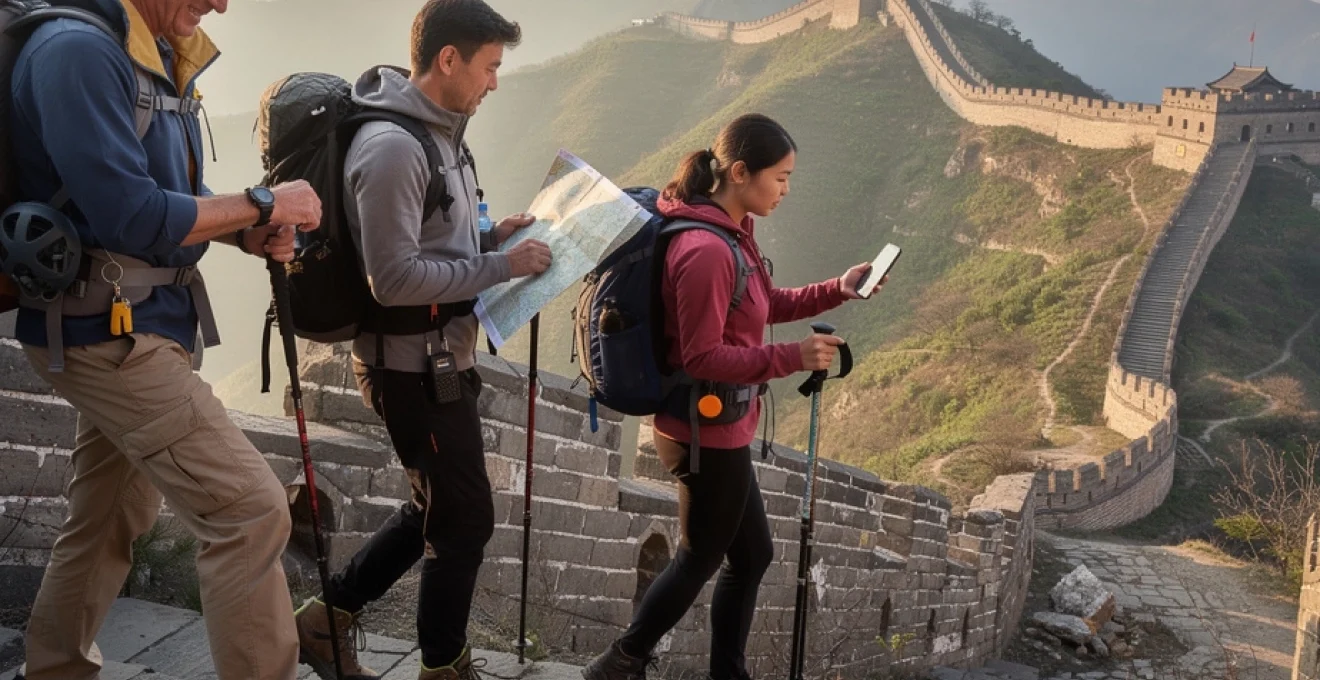
The Great Wall of China stands as one of humanity’s most remarkable architectural achievements, stretching over 13,000 miles across China’s diverse terrain. For adventure seekers and history enthusiasts alike, walking sections of this ancient fortification offers an unparalleled experience that combines physical challenge with cultural immersion. The Wall’s construction spanned over 2,000 years, with sections dating from the Spring and Autumn period through the Ming dynasty, creating a complex network of battlements, watchtowers, and defensive structures that vary dramatically in condition and accessibility.
Modern hikers face unique opportunities to explore both restored tourist-friendly sections and wild, unrestored segments that demand technical climbing skills and extensive preparation. The diversity of available routes means that proper planning becomes crucial for safety and enjoyment. From the crowded pathways of Badaling to the challenging terrain of Jiankou, each section presents distinct physical demands, weather considerations, and logistical requirements that must be carefully evaluated before embarking on this extraordinary journey.
Essential preparation and physical conditioning for great wall hiking
Undertaking a Great Wall hiking expedition demands comprehensive physical preparation that extends far beyond casual weekend walking. The Wall’s challenging terrain, featuring steep gradients, uneven stone surfaces, and significant elevation changes, requires a systematic conditioning programme tailored to the specific demands of high-altitude trekking across ancient battlements.
Cardiovascular training protocols for High-Altitude terrain navigation
Effective cardiovascular conditioning forms the foundation of successful Great Wall hiking preparation. The Wall’s elevation ranges from sea level at Shanhaiguan to over 1,700 metres at Jiayuguan, with many popular sections situated between 500-1,000 metres above sea level. This altitude variation, combined with Beijing’s air quality challenges, necessitates robust aerobic fitness development.
Training should commence at least 8-12 weeks before your expedition, beginning with moderate-intensity activities such as brisk walking, cycling, or swimming for 30-45 minutes, three to four times weekly. Gradually progress to higher-intensity interval training, incorporating hill walking or stair climbing to simulate the Wall’s demanding ascents. Interval training sessions should include 2-3 minute high-intensity periods followed by equal recovery periods, repeated 6-8 times per session.
Advanced preparation involves weighted pack training, carrying 15-20% of your body weight during training hikes to simulate the gear load you’ll carry on the Wall. This conditioning approach strengthens the cardiovascular system whilst simultaneously adapting the musculoskeletal system to the specific demands of loaded hiking across uneven terrain.
Muscular endurance development for steep gradient ascents
The Great Wall’s architectural design prioritises defence over accessibility, resulting in extremely steep sections with steps that can reach knee-high proportions. These challenging gradients demand exceptional muscular endurance, particularly in the quadriceps, glutes, and calf muscles, whilst also requiring significant core stability for balance on uneven surfaces.
Strength training programmes should focus on functional movements that replicate Wall climbing demands. Step-ups using platforms of varying heights develop the specific muscle recruitment patterns required for navigating the Wall’s irregular stone steps. Perform 3 sets of 12-15 repetitions per leg, gradually increasing platform height and adding weighted packs as fitness improves.
Eccentric training proves particularly valuable for preparing muscles to control descent on steep sections. Negative step-ups, where you slowly lower yourself from an elevated platform, develop the muscle control necessary to navigate downward sections safely. Single-leg squats and lateral lunges address the multi-directional stability requirements encountered when traversing crumbling or uneven wall sections.
Acclimatisation strategies for beijing’s variable climate conditions
Beijing’s continental climate presents significant seasonal variations that directly impact hiking conditions and preparation requirements. Summer temperatures regularly exceed 35°C with high humidity levels, whilst winter conditions can drop below -15°C with strong winds across exposed wall sections. Spring and autumn offer the most favourable hiking conditions but still require careful preparation for rapid weather changes.
Heat acclimatisation becomes crucial for summer expeditions, requiring 10-14 days of gradual exposure to elevated temperatures and humidity. Training in heated environments or during
the hottest part of the day helps your body adapt gradually without excessive strain. Aim for 60-90 minutes of low to moderate intensity exercise in warm conditions every other day, ensuring you hydrate before, during, and after each session. For winter and shoulder-season hikes, focus on wind exposure training by spending time outdoors in cooler, breezy conditions while practising your layered clothing system so you can remove or add layers efficiently on the Wall.
Regardless of season, plan to arrive in Beijing at least two days before tackling more demanding sections like Jinshanling, Gubeikou, or Jiankou–Mutianyu routes. Use this time for light walking in the city and short hill or stair sessions rather than full training days. This approach allows your body to adapt to local air quality, time zone changes, and subtle altitude differences while reducing the risk of overtraining before your Great Wall hiking itinerary even begins.
Medical clearance requirements and altitude sickness prevention
Given the steep gradients, long stair climbs, and remote locations of some Great Wall sections, obtaining medical clearance is strongly recommended if you have any pre-existing cardiovascular, respiratory, joint, or metabolic conditions. Schedule a consultation with your healthcare provider 6-8 weeks before departure, bringing a description of your planned routes, typical daily elevation gain, and expected hiking durations. This enables your doctor to assess your suitability for high-intensity hiking and adjust medications if necessary.
While most Great Wall sections sit at moderate elevations (typically under 1,200 metres), some travellers may still experience mild symptoms similar to altitude discomfort, especially when combined with heat, pollution, and fatigue. To minimise issues, increase your daily water intake to at least 2-3 litres, avoid heavy alcohol consumption the day before hiking, and consider using electrolyte tablets during long days on the Wall. If you feel persistent headache, dizziness, or extreme fatigue, descend to lower, less exposed areas, rest in the shade, and reassess your condition; pushing on can quickly turn a minor problem into an evacuation scenario.
Hikers with asthma, COPD, or cardiac history should carry a written medical summary and essential medications in easily accessible pockets rather than in the bottom of a backpack. In addition, ensure that your travel insurance explicitly covers high-intensity hiking activities, including evacuation from rural areas. For extended treks connecting multiple sections, it can be prudent to identify the nearest county hospitals along your route in advance and note their Chinese names and addresses in both pinyin and characters for faster communication with local drivers.
Technical gear selection and equipment configuration
Thoughtful gear selection is critical for safe and enjoyable walking on the Great Wall of China, where conditions range from polished, tourist-friendly stonework to crumbling, overgrown battlements. Unlike standard city sightseeing, Wall hiking requires a configuration more akin to light alpine trekking: secure footwear, adaptable clothing layers, reliable navigation tools, and a compact but complete safety kit. Choosing equipment with the Wall’s unique demands in mind will dramatically reduce your risk of slips, exposure, and navigation errors.
Footwear specifications for uneven stone surface traction
Your footwear is arguably the single most important equipment decision for Great Wall hiking. Restored sections such as Mutianyu, Jinshanling, and Badaling feature smooth flagstones and steep staircases that can become extremely slippery when wet or dusty. Unrestored areas like Gubeikou and Jiankou add loose rubble, broken steps, and soil-covered surfaces to the mix. For this reason, running shoes designed for flat pavements are rarely sufficient.
Prioritise lightweight hiking boots or trail shoes with aggressive lug patterns and sticky rubber compounds. A firm heel cup and torsionally stiff midsole help stabilise your foot when descending narrow, uneven stairs or traversing angled stonework. While full mountaineering boots are unnecessary and often too heavy, low-cut casual trainers without ankle support increase your risk of inversion sprains on the Great Wall’s irregular steps. Break in any new footwear at least two to three weeks before flying to China, including several long walks of 10-15 km to identify potential hotspots and adjust sock choices.
For most hikers, a combination of moisture-wicking liner socks and mid-weight merino or synthetic hiking socks balances breathability and blister prevention. In hotter months, consider shoes with good ventilation and quick-drying materials; in shoulder seasons or winter, waterproof membranes may be beneficial, particularly on sections where morning dew or light snow accumulate on the stone. Whatever your setup, always pack at least one spare pair of socks in your daypack to change into if your feet become excessively sweaty or wet during the day.
Layered clothing systems for temperature regulation
Walking the Great Wall of China exposes you to wind, sun, and rapid temperature swings, especially on ridgeline sections such as Jinshanling–Simatai or Gubeikou. A layered clothing system allows you to fine-tune comfort without carrying excess weight. Think of your outfit as three coordinated components: base layer for moisture management, mid-layer for insulation, and outer layer for wind and light rain protection.
For most seasons, a lightweight, synthetic or merino base layer top is sufficient to wick sweat away from the skin during intense stair climbs. Add a thin fleece or light insulated jacket for cool mornings and breaks on exposed towers, where wind chill can be significant even in spring and autumn. A windproof, water-resistant shell (rather than a heavy, fully waterproof jacket) usually offers the best compromise for Great Wall hiking, as sustained downpours are less common than short showers and gusty conditions on the battlements.
Lower body clothing should prioritise mobility and quick drying. Softshell or trekking trousers with some stretch are ideal, and zip-off legs can be helpful during shoulder-season hikes where mornings are cold and afternoons warm. In high summer, breathable long sleeves and full-length trousers remain advisable despite the heat; they provide valuable protection against intense UV exposure, insects, and the occasional scratchy vegetation on unrestored sections. A wide-brimmed hat or cap, UV-rated sunglasses, and high-SPF sunscreen are non-negotiable for long days under an unshaded sky.
Navigation technology and offline mapping solutions
On fully developed sections such as Badaling or central Mutianyu, navigation is straightforward: clear signage, defined paths, and regular facilities reduce the risk of becoming lost. However, once you move into more remote or partially restored areas—Gubeikou, Huangyaguan, or the traverses around Jinshanling and Simatai—navigation becomes more complex. Paths may fork, unofficial trails cut across farmland, and signage is often limited or only in Chinese.
To maintain situational awareness, download detailed offline maps before leaving your hotel using apps such as Maps.me, Gaia GPS, or similar services that function well in China. Pre-mark key points like trailheads, village bus stops, guesthouses, and bailout routes where you can safely exit to roads. Treat your phone as your primary navigation tool but not your only one; rural power cuts and unexpected battery drain are common enough that over-reliance on electronics is risky.
Carrying a printed map of the specific Great Wall section you plan to hike, annotated with your intended route and elevation profile, provides a useful backup and an at-a-glance overview of the terrain. Think of your navigation system like a layered clothing system: multiple overlapping tools that can compensate if one fails. A compact power bank with at least 10,000 mAh capacity ensures your phone and GPS remain operational through a full day on the Wall, particularly if you are also using your device for photography.
Emergency communication devices and safety equipment
Although major Great Wall sections are relatively close to Beijing, the terrain can feel surprisingly remote once you move beyond the main access points. Mobile coverage is patchy in some valleys and on wilder routes, and rescue response can be slow. You do not need a full expedition kit, but you do need a deliberate safety configuration. Think in terms of two priorities: communication and immediate first response.
When possible, purchase a local SIM card upon arrival in China to ensure reliable connectivity on domestic networks; this significantly improves your chances of placing calls in rural areas. For multi-day or off-the-beaten-path itineraries, consider carrying a satellite messenger or SOS-enabled GPS device that can send your location in emergencies. At minimum, always inform your accommodation or a trusted contact of your intended route and expected return time, and carry the phone numbers of your hotel, local taxi services, and emergency services stored in your contacts and written on paper.
Your personal safety kit should fit in a small pouch and remain in your daypack at all times. Include blister plasters, adhesive bandages, a small elastic bandage, disinfectant wipes, pain relief tablets, any personal medications, and a compact emergency blanket for unexpected delays or weather changes. A lightweight headlamp is essential if you plan sunrise or sunset hikes on sections like Jinshanling or Simatai, where returning in partial darkness without hands-free lighting can be hazardous. Finally, a simple whistle attached to your shoulder strap offers a low-tech but effective way to signal for help if you suffer a fall in a less-trafficked tower or descent.
Comprehensive route analysis: mutianyu to jinshanling sections
The most popular Great Wall of China routes near Beijing form a loose arc from the heavily restored, accessible sections at Badaling and Mutianyu to the more remote, semi-wild stretches at Jinshanling, Simatai, Gubeikou, and Huangyaguan. Understanding the technical profile, infrastructure, and crowd dynamics of each segment allows you to design an itinerary that matches your fitness, risk tolerance, and appetite for adventure. Instead of asking “Which section is best?”, it’s more useful to ask “Which section is best for me given my time, experience, and goals?”
Below, we examine the principal Great Wall hiking routes in this corridor from a practical perspective: surface conditions, gradient, exposure, access logistics, and typical visitor volumes. This comprehensive analysis equips you to combine multiple sections into day hikes or short expeditions, such as linking Gubeikou to Jinshanling or exploring Mutianyu after a challenging Jiankou approach. By comparing restored and unrestored segments side by side, you can balance photographic opportunities, safety margins, and the level of solitude you are seeking.
Mutianyu section: restored battlements and tourist infrastructure
Mutianyu is widely regarded as the optimal compromise between accessibility, scenery, and crowd levels for first-time visitors walking the Great Wall of China. Entirely restored and well-maintained, this section offers paved walkways, solid stone steps, and sturdy guardrails along much of its 2.5–3 km length. The gradients are still demanding—particularly between watchtowers 19 and 20—but the risk of tripping on rubble or crumbling masonry is significantly lower than on wild sections.
From a logistics perspective, Mutianyu is straightforward. Regular buses, organised tours, and private transfers connect Beijing to the base village in roughly 60–90 minutes under normal traffic conditions. Once on-site, you have multiple ascent options: cable car, chairlift, or staircases from various trailheads. This infrastructure makes Mutianyu ideal for mixed-ability groups or families, where some members may prefer to minimise climbing while others test themselves on steeper stretches of the Wall. Facilities—restaurants, restrooms, souvenir shops—are concentrated at the base and near the main access towers.
Despite its popularity, Mutianyu rarely feels as congested as Badaling. If you begin your hike near opening time or later in the afternoon, you can often enjoy relatively quiet stretches between towers, especially in the central and eastern sectors. The restored battlements, framed by forested hills, create excellent vantage points for photography without requiring technical skills. For many travellers, walking Mutianyu provides the classic “Great Wall of China” experience: iconic views, a tangible sense of history, and enough physical challenge to feel accomplished by the end of the day.
Jinshanling to simatai: advanced hiking terrain assessment
The Jinshanling–Simatai corridor showcases the Great Wall at its most dramatic: ridgelines studded with watchtowers, partially restored ramparts, and far-reaching views with relatively few visitors. Historically, hikers could traverse directly between Jinshanling and Simatai on the wall-top route, but as of recent years, sections near Simatai have been intermittently closed for renovation and safety concerns. Always verify current access rules locally; in many cases, you can still experience both areas in a single day by combining shuttle transfers with out-and-back hikes on each section.
Technically, Jinshanling is more demanding than Mutianyu but less hazardous than completely wild routes like Jiankou. Expect longer, steeper staircases, more frequent elevation changes, and stretches where the stonework transitions from fully restored to semi-ruined. This variability requires stronger leg endurance and better balance, especially in wet or foggy conditions. Simatai, by contrast, retains more of its original character, with narrower walkways and a more rugged feel even where restoration has been completed; it is best suited to confident hikers comfortable with significant exposure.
Advanced route planning here involves more than just distance. Because some towers and ridges are closed or partially degraded, you may need to incorporate detours on hillside footpaths or use cable cars to bypass steepest sections safely, particularly if hiking with less-experienced companions. When executed well, however, a day split between Jinshanling and Simatai offers an exceptional overview of the Wall’s strategic design, from heavily fortified gate complexes to lonely, wind-battered sentry posts. For strong hikers, sunrise at Jinshanling followed by a late-afternoon or evening visit to illuminated Simatai battlements can be one of the most rewarding Great Wall itineraries available near Beijing.
Badaling section: crowd management and peak season navigation
Badaling remains the most visited Great Wall section, drawing millions of domestic and international tourists each year. Its popularity stems from straightforward access via train or bus, extensive safety features, and the symbolic status of a site frequently used for state visits and official ceremonies. However, this convenience comes at a price: during national holidays and weekends, the wall-top path can resemble a city street at rush hour, making purposeful hiking challenging.
If Badaling is your only feasible choice—for example, due to strict time constraints or mobility considerations—you can still optimise your experience with careful planning. Aim to arrive on the first trains or buses from Beijing, which typically reach the site around opening time. Heading immediately to the less frequented southern sector often yields slightly lower crowd densities than the classic northern viewpoint, where most tour groups converge. Moving steadily and taking shorter photo stops near popular towers help you avoid being boxed in by large, slow-moving groups.
From a technical standpoint, Badaling’s surfaces and gradients are similar to Mutianyu’s most moderate sections: well-built stairs, handrails, and frequent rest points. For visitors with limited fitness or those using aids such as walking poles or wheelchairs, Badaling offers the broadest range of partial-access options. That said, if your primary goal is extended hiking rather than simply “seeing the Wall,” you may find that the density of people, combined with the theme-park atmosphere at the base area, limits the sense of immersion. In such cases, reallocating your time to Mutianyu or Jinshanling will generally result in a more satisfying Great Wall hiking experience.
Gubeikou unrestored segments: technical climbing challenges
Gubeikou marks the transition from restored showcase to wild frontier for many Great Wall of China hikers. Here, long sections of the ramparts remain largely untouched since the Ming dynasty, with missing parapets, fractured steps, and towers reduced to romantic but unstable ruins. Unlike Badaling or Mutianyu, where your main challenge is endurance, Gubeikou demands a more technical approach: route-finding, careful foot placement, and the ability to judge when to bypass a dangerous segment.
On the Wohushan and Panlongshan ridges, you will frequently encounter sloping stone slabs covered with dust or vegetation, where a slip could result in an uncontrolled slide. Some stretches of the original wall are so eroded that local authorities or landowners have established parallel dirt trails slightly below the crest, forcing hikers to transition between wall-top and hillside paths. In addition, sections near military zones are strictly off-limits, requiring detours through forested valleys before regaining the Wall further along the ridge.
For these reasons, Gubeikou is best attempted by experienced hikers comfortable with uneven, exposed terrain and self-reliant navigation. Trekking poles can greatly enhance stability on loose descents, and high-traction footwear is essential. While guided day hikes are available, many independent travellers still choose to walk Gubeikou–Jinshanling as a one- or two-day mini-expedition, overnighting in nearby villages. Approached with respect and proper preparation, this route offers one of the most authentic impressions of the Great Wall as a working frontier system rather than a polished monument.
Huangyaguan section: historical significance and trail conditions
Huangyaguan, located further east in the mountains of Tianjin municipality, combines challenging terrain with deep historical resonance. Originally constructed during the Northern Qi dynasty and later reinforced under the Ming, this segment guarded a vital pass and today hosts the annual Great Wall Marathon, known for its punishing stair climbs. For hikers, that race profile is a useful indicator of what to expect: steep, sustained ascents and descents that test leg endurance even over relatively short distances.
The trail surface here is a hybrid of restored stone and older masonry, with some watchtowers fully rehabilitated and others left in partial ruin. The “Sky Ladder” section, a famous flight of near-vertical steps, demands deliberate pacing and frequent rests for anyone not already acclimatised to intense stair work. On hot days, the combination of exertion and limited shade can quickly lead to overheating if you have not hydrated adequately beforehand. Fortunately, the presence of a small fortress town and visitor facilities at the base means you are rarely far from shelter or water once you descend.
Historically minded travellers will appreciate Huangyaguan’s interpretive signage and preserved fortifications, which provide clearer context on garrison life than many other sections. The maze-like Bagua (Eight Trigrams) courtyard, for instance, illustrates the fusion of military engineering and philosophical symbolism that characterises much of China’s defensive architecture. Because visitor numbers are significantly lower than at Badaling or Mutianyu, you can often explore these features without crowds, making Huangyaguan a worthwhile choice for those willing to invest extra travel time from Beijing in exchange for quieter, more contemplative walking.
Logistics coordination and permit requirements
Successful Great Wall hiking hinges as much on logistics as on fitness. Public transport timetables, ticketing rules, and occasional access restrictions can change with little warning, particularly in the wake of major holidays or infrastructure upgrades. Before finalising your route plan, check the latest information on operating hours, shuttle services, and any temporary closures through your accommodation, reputable tour operators, or official tourism websites. Building a small buffer of time into your schedule—especially for sections more than two hours from Beijing—helps absorb minor disruptions without derailing your entire itinerary.
For the majority of popular sections around Beijing—Badaling, Mutianyu, Jinshanling, Simatai, Huanghuacheng, Gubeikou, and Huangyaguan—no special trekking permits are required beyond purchasing standard entry tickets. However, longer, through-hikes may brush against military zones or conservation areas where access is restricted. In such cases, local guides and guesthouse owners are invaluable sources of up-to-date route advice; if they tell you a section is closed, take that warning seriously. For foreign visitors, ensure your Chinese visa duration comfortably covers your planned stay and that your passport, entry stamp, and accommodation registrations are in order, as random checks occasionally occur at transport hubs.
Transportation planning should include both outbound and return legs. Know the time of the last bus or train back to Beijing, or pre-arrange a private transfer if you anticipate finishing after dark. Carry enough cash in yuan to cover entrance fees, shuttles, snacks, and an emergency taxi ride; while mobile payments are ubiquitous in China, foreign cards and apps are not always accepted, especially in rural kiosks. If you intend to combine multiple sections over several days, consider basing yourself in a nearby town or village rather than commuting from Beijing each day; this strategy reduces travel fatigue and increases your effective time on the Wall.
Safety protocols and emergency response procedures
Even on well-maintained sections, the Great Wall of China remains a high-consequence environment: steep drops, exposed stairs, and rapidly changing weather all increase the stakes of minor missteps. Establishing clear personal safety protocols before you set foot on the battlements is therefore essential. Treat your hike less like a casual city stroll and more like a mountain outing: conservative decision-making, constant assessment of footing, and respect for your own limits will prevent the vast majority of incidents.
Begin each day with a brief mental checklist: weather forecast, water supply, energy snacks, charged phone and power bank, first-aid kit, and route overview. Set simple turnaround rules—such as “we must start descending by 3 p.m.” or “if thunder is audible, we leave the Wall immediately”—and stick to them even if the view from the next tower looks tempting. When descending very steep staircases, keep at least one hand free for railings or wall edges and avoid overtaking others on narrow steps; crowd-induced jostling is a frequent contributor to slip-and-fall accidents on busy sections.
If an incident does occur, your response should prioritise stabilising the situation and summoning help efficiently. For minor injuries (blisters, small cuts, mild strains), move to a flat, less-exposed area such as inside a tower, administer basic first aid from your kit, and reassess whether continuing is sensible. For more serious events—suspected fractures, loss of consciousness, chest pain, or heatstroke—do not attempt to self-evacuate over long distances. Instead, use your phone or satellite device to call emergency services and your accommodation, providing as precise a location as possible (section name, closest tower number, visible landmarks).
On well-trafficked sections, staff, vendors, or fellow hikers can often assist in relaying information and coordinating with local authorities. On wilder routes, however, response times may be extended, so your initial actions matter greatly. Keeping the injured person warm (or shaded in hot conditions), calm, and hydrated until help arrives can be decisive. This is also where hiking with at least one companion becomes more than a comfort—it becomes a core safety protocol. Solo hikers should be especially conservative in their route choices, avoiding the most isolated and technically demanding stretches unless accompanied by a professional guide.
Cultural heritage preservation guidelines and visitor responsibilities
Walking the Great Wall of China is not only a physical journey but also an encounter with a fragile cultural treasure that has endured for centuries. Every loose brick, worn step, and weathered inscription tells part of a story that long predates modern tourism. As visitors, we share responsibility for ensuring that this heritage remains intact for future generations of hikers and historians. The choices you make—where you step, what you touch, and what you leave behind—have real, cumulative impacts on a structure already under constant pressure from natural erosion.
The core principles are simple but powerful: leave no trace, take only photographs, and treat every part of the Wall as irreplaceable. Avoid climbing on parapets, sitting on unstable edges, or prying loose stones, even if they appear to be “just rubble.” In unrestored sections like Gubeikou or Huangyaguan, staying on established paths rather than shortcutting over fragile masonry reduces further degradation of already vulnerable areas. Graffiti, carving names into bricks, or leaving padlocks may seem harmless in the moment, but multiplied by thousands of visitors, these actions cause substantial, often irreversible damage.
Respect for local communities is another key dimension of responsible Great Wall hiking. Many access routes cross farmland, village paths, or private courtyards; seek permission where appropriate, follow posted signs, and avoid trampling crops or blocking narrow lanes with parked vehicles. Purchasing snacks, water, or simple meals from small local vendors directly supports those who live in the Wall’s shadow and often act as informal guardians of nearby segments. Finally, be mindful when flying drones or conducting commercial photography: some areas prohibit unmanned aircraft or require special permits, both for safety and to preserve the tranquillity of the setting for other visitors.
In embracing these guidelines, you become more than a tourist ticking off one of the “new seven wonders of the world.” You become a temporary steward of a shared human legacy, contributing—in small but meaningful ways—to the ongoing survival of one of history’s greatest engineering achievements.