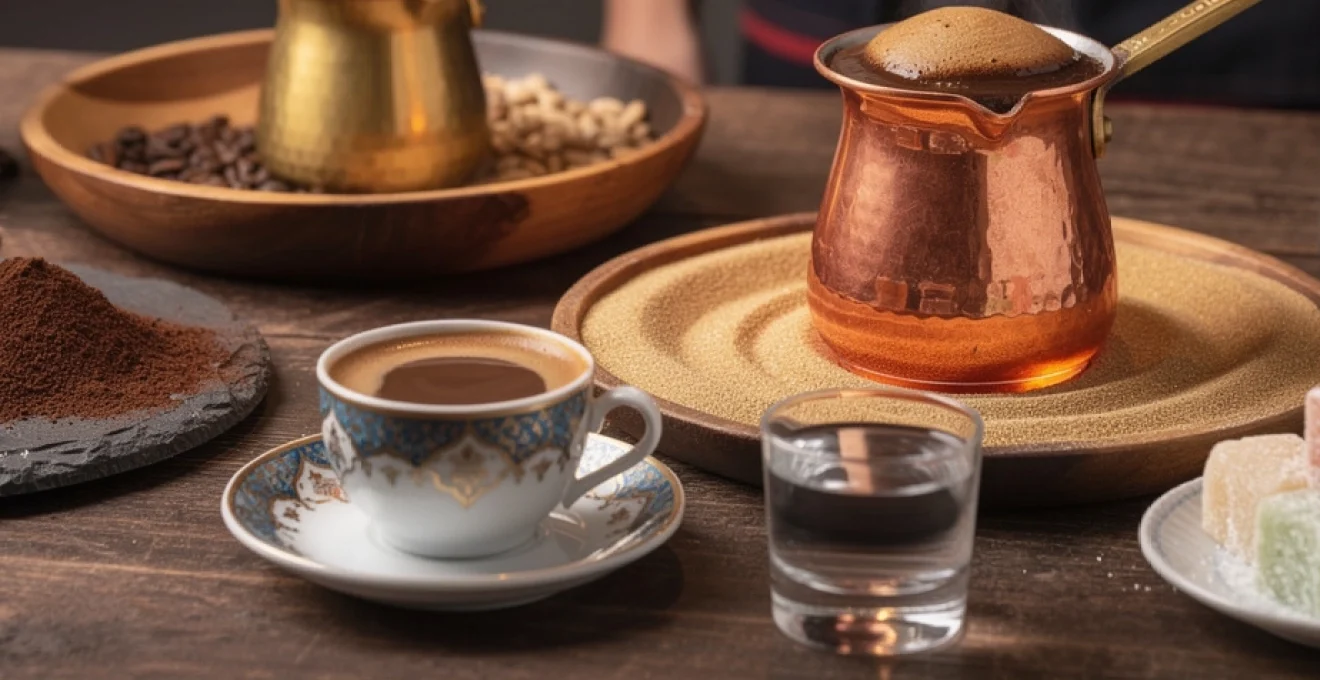
Turkish coffee stands as one of the world’s most distinctive brewing methods, representing centuries of cultural heritage wrapped in an intensely aromatic cup. Unlike conventional coffee preparation techniques that rely on filtration or pressure extraction, this ancient method creates a beverage where the grounds remain suspended throughout the drinking experience. The result is a thick, rich coffee with an almost syrupy consistency that delivers profound flavours in remarkably small servings. This unique preparation method has earned Turkish coffee recognition as a UNESCO Intangible Cultural Heritage, cementing its status as more than just a beverage but rather a cultural phenomenon that continues to captivate coffee enthusiasts worldwide.
The traditional ibrik brewing method and cezve construction materials
The foundation of Turkish coffee’s uniqueness lies in its specialised brewing vessel, known as a cezve or ibrik. This small, narrow-necked pot features a wide bottom that tapers to a narrow spout, creating optimal conditions for the slow, controlled heating process essential to proper Turkish coffee preparation. Traditional cezves are crafted from copper, brass, or silver, with each material imparting subtle characteristics to the final brew.
The brewing process begins with cold, filtered water measured precisely according to the number of servings required. Finely ground coffee is added directly to the water in a ratio of approximately one heaped teaspoon per demitasse cup, along with sugar if desired. The mixture is then stirred thoroughly to ensure complete integration before heating begins.
Copper versus brass cezve performance characteristics
Copper cezves represent the gold standard for Turkish coffee preparation due to copper’s exceptional thermal conductivity properties. This metal distributes heat evenly across the vessel’s surface, preventing hot spots that could scorch the delicate coffee grounds. The uniform heat distribution allows for the gradual temperature increase necessary to develop the characteristic foam that crowns authentic Turkish coffee.
Brass cezves offer similar thermal properties but with slightly different heat retention characteristics. While copper responds quickly to temperature changes, brass maintains heat more steadily once warmed. This consistency can benefit novice brewers who might struggle with the precise temperature control required for optimal foam formation. Professional baristas often prefer brass for its durability and resistance to tarnishing.
Sand cooking technique and temperature control precision
Traditional Turkish coffee preparation employs heated sand as the cooking medium, a technique that provides unparalleled temperature control precision. The cezve is nestled into fine sand heated to approximately 200°C, allowing the coffee to warm gradually and evenly. This method prevents the violent boiling that would destroy the delicate foam structure essential to authentic Turkish coffee.
The sand cooking technique enables brewers to adjust temperature by moving the cezve to different areas of the sand bed. Hotter zones near the heat source accelerate the warming process, while cooler perimeter areas allow for gentle temperature maintenance. This precise control ensures the coffee never reaches a full boil, instead achieving the perfect simmering point that encourages foam development without bitter compound extraction.
Foam formation science and crema stability factors
The signature foam that tops Turkish coffee results from a complex interaction between carbon dioxide release, surface tension, and protein structures within the coffee grounds. As the coffee warms slowly, dissolved gases begin to escape, creating microscopic bubbles that aggregate into the characteristic foam layer. The ultra-fine grind size maximises surface area, promoting rapid gas release and foam formation.
Stability of this foam depends on several critical factors, including water mineral content, coffee freshness, and grinding consistency. Hard water with higher mineral content creates more stable foam due to increased surface tension. Fresh coffee contributes essential oils that act as natural emulsifiers, helping maintain foam structure throughout the brewing and serving process.
Single-serving preparation protocol and timing specifications
Authentic Turkish coffee preparation follows a precise single-serving protocol that cannot be scaled up without compromising quality. Each cezve typically accommodates one to four servings maximum, with individual preparation ensuring optimal extraction for each cup. The brewing process requires approximately 3-4 minutes of gentle heating, during which the brewer must monitor foam development carefully.
The critical moment occurs when foam begins to rise towards the cezve’s rim. The vessel
The critical moment occurs when foam begins to rise towards the cezve’s rim. The vessel must be removed from the heat just before the liquid reaches a full boil, preserving the delicate crema rather than allowing it to collapse. Many experienced brewers will briefly remove the cezve, let the foam subside slightly, and then return it to the heat once or twice more to build a thicker, more stable layer. Timing here is measured in seconds rather than minutes; even a brief delay can lead to over-extraction and bitterness. For consistent results at home, you can think of the process like tempering chocolate: slow, attentive heating with frequent visual checks produces the most refined flavour and texture.
Distinctive arabica bean selection and ultra-fine grinding specifications
While the brewing ritual often takes centre stage, the uniqueness of Turkish coffee begins much earlier, with purposeful bean selection and a powder-fine grind. Traditionally, Turkish coffee relies on high-quality Arabica beans known for their nuanced acidity, floral aromatics, and natural sweetness. The goal is not merely caffeine strength but a layered flavour profile that can still shine through such an intense extraction method. Because the grounds are never filtered out, both the origin and the grind of the beans directly shape the body, aroma, and aftertaste you experience in the cup.
Modern roasters who specialise in Turkish coffee often choose specific origins that stand up well to the ultra-fine grind and extended contact time with hot water. Beans with clean profiles and low defect rates are preferred, since any flaw will be magnified by the unfiltered brewing method. For home enthusiasts wondering how to make Turkish coffee properly, starting with fresh, single-origin Arabica beans is one of the most impactful upgrades you can make.
Yemeni mocha and ethiopian heirloom varietal preferences
Historically, some of the most prized beans for Turkish coffee have come from Yemen and Ethiopia, regions considered the cradle of coffee cultivation. Yemeni Mocha beans tend to offer complex notes of cocoa, dried fruit, and gentle spice, which harmonise beautifully with traditional additions like cardamom. Ethiopian heirloom varietals, especially those from regions such as Yirgacheffe and Sidamo, contribute bright acidity, floral aromas, and hints of stone fruit that remain perceptible even through the dense texture of Turkish coffee.
These origins are favoured because their flavour clarity cuts through the thickness of the brew, much like a high-quality olive oil still stands out in a rich stew. Many specialty roasteries now craft Turkish coffee blends that combine Yemeni and Ethiopian components to balance sweetness, acidity, and body. When you choose beans with such heritage, you are not only enhancing taste but also connecting with centuries-old trade routes and traditions that shaped coffee culture across the Ottoman Empire and beyond.
Powder-grade particle size distribution requirements
The grind used for Turkish coffee is the finest in the coffee world, often described as powder-grade or flour-like. Typical Turkish coffee particle size averages around 100 microns or less, significantly finer than espresso, which usually sits closer to 250–300 microns. This extreme fineness increases surface area dramatically, enabling rapid extraction of soluble compounds during the relatively short, low-temperature brew.
However, it is not just about grinding as fine as possible; achieving a narrow particle size distribution is essential for consistency. Excessive amounts of ultra-fine dust can create a muddy, overly bitter cup, while larger particles will under-extract and feel gritty on the palate. Professional Turkish grinders, often using steel burrs engineered specifically for this method, are designed to minimise these inconsistencies. If you are using a home grinder, opting for a high-quality burr model capable of micro-adjustments is crucial for crafting authentic Turkish coffee at home.
Roasting profiles for turkish coffee bean preparation
Traditional Turkish coffee roasting tends to favour a medium to medium-dark profile, aiming for a balance between origin character and roasty depth. Too light a roast can taste sharp or grassy when ground so finely, while very dark roasts risk overwhelming the cup with bitterness and smoke. A carefully controlled roast, usually ending shortly after the first crack or just into the second crack, accentuates caramelisation, chocolate notes, and a rounded mouthfeel.
Roasters also consider development time after first crack, adjusting the curve so that acidity is softened without losing vibrancy. Because Turkish coffee is brewed at lower temperatures than espresso and for slightly longer contact times, a roast that might seem modestly developed for filter coffee often performs perfectly here. Many speciality roasters publish their roast level and intended brewing method, so looking for beans labelled specifically for Turkish or ibrik preparation can help you achieve that classic, balanced intensity.
Storage methods for preserving ground coffee volatiles
Once ground to a powder-like consistency, coffee loses its aromatic compounds much faster than coarser grinds, making storage a critical factor in preserving Turkish coffee’s unique character. Ideally, beans should be ground immediately before brewing, but when this is not possible, storing the grounds in an airtight, opaque container away from heat, moisture, and light becomes essential. Oxygen exposure rapidly degrades volatile aromatics that contribute to the beverage’s floral and spicy notes.
Some traditional households still purchase pre-ground Turkish coffee from trusted roasters and consume it within a week or two, relying on frequent turnover to maintain freshness. If you buy larger quantities, dividing the coffee into smaller containers and opening only one at a time can significantly extend shelf life. Think of it like preserving fine spices: the more carefully you protect your Turkish coffee grounds, the more vivid and expressive your cup will be.
UNESCO cultural heritage status and regional preparation variations
In 2013, UNESCO added Turkish coffee culture and tradition to its list of Intangible Cultural Heritage of Humanity, recognising that this drink represents a living social practice rather than just a culinary technique. This status highlights the role of Turkish coffee in hospitality, storytelling, courtship, and everyday social life across Turkey and many neighbouring regions. Interestingly, even though brewing principles remain similar, each culture that adopted Turkish coffee has developed its own distinctive variations and rituals.
From the coffee houses of Ottoman Istanbul to modern cafés in Athens, Beirut, or Yerevan, the way Turkish coffee is served and consumed tells you a great deal about local values and history. Some communities emphasise elaborate presentation with ornate cups and trays, while others focus on the act of sharing, pairing the coffee with sweets or dried fruits. Exploring these differences can feel like tracing branches of a family tree, where each region preserves the same roots yet expresses them in its own language.
Ottoman empire coffee house culture and social rituals
Turkish coffee’s rise to global prominence began in the 16th century, when it was introduced to Istanbul and quickly integrated into the life of the Ottoman court and city. Coffee houses, known as kahvehane, soon became central hubs for conversation, poetry, political debate, and the exchange of news. These spaces were sometimes called “schools of the wise,” reflecting how intellectual and social life intertwined over small cups of thick, aromatic coffee.
Within the palace, coffee ceremonies were highly formalised, with dedicated coffee makers serving sultans and dignitaries in carefully choreographed rituals. Over time, similar customs filtered into everyday homes, where offering coffee became a primary gesture of respect and welcome. Even today, in many Turkish and Middle Eastern households, refusing a cup of coffee can be interpreted as declining social connection, underscoring how deeply this beverage is woven into ideas of hospitality and friendship.
Greek frappe influence and balkan regional adaptations
Across the Aegean and into the Balkans, Turkish-style coffee evolved alongside new coffee trends, most famously the Greek frappe. While frappe itself is an iced, instant coffee drink quite different from Turkish coffee, it reflects the same cultural impulse: to linger over coffee while socialising, often for hours. In many Greek cafés, you will still find traditional “Greek coffee” brewed in a briki, virtually identical to Turkish coffee but adapted to local tastes and naming conventions.
In countries such as Bosnia and Herzegovina, Serbia, and North Macedonia, similar unfiltered coffee is known as bosanska kafa or simply “domestic coffee.” The preparation may involve slightly different cup shapes, serving trays, or accompaniments like sugar cubes and lokum, yet the technique—slow brewing in a small pot with ultra-fine grounds—remains recognisably Turkish. These regional adaptations demonstrate how a single brewing method can diversify, much like a shared melody that each culture improvises in its own style.
Armenian and levantine preparation method distinctions
In Armenia, Turkish-style coffee is often referred to as Soorj and is brewed in a long-handled pot similar to the cezve, sometimes with subtle changes in grind coarseness or sugar levels. It is typically served strong and unsweetened, allowing the natural characteristics of the beans to dominate. Coffee in Armenian households frequently accompanies pastries or dried fruits, reinforcing its role as a centrepiece of hospitality and celebration.
Across the Levant—in Lebanon, Syria, Jordan, and Palestine—coffee known as qahwa or qahwa arabiya may be prepared plain or infused with cardamom, mastic, or other aromatics. In some traditions, sugar is added at the beginning and adjusted to specific sweetness levels such as sade (no sugar), orta (medium), or şekerli (sweet). The brewing vessel can vary in shape and material, but the core principle of unfiltered, foam-topped coffee remains constant. These regional distinctions show how Turkish coffee functions as a shared language with many dialects—each familiar yet subtly different.
Fortune telling traditions and tasseography interpretation methods
One of the most intriguing cultural practices associated with Turkish coffee is tasseography, the art of reading fortunes in coffee grounds. After finishing your cup—leaving a small amount of liquid and the slurry of grounds—you place a saucer on top, make a wish, and flip the cup upside down. Once the cup cools and the grounds have settled into patterns on the interior walls and saucer, a reader interprets the shapes as symbols related to your future.
Common interpretations include animals, objects, and letters; for example, a bird might symbolise incoming news, while a road could indicate travel or a long-term change. Unlike rigid fortune-telling systems, Turkish coffee readings are often playful, blending intuition, storytelling, and cultural symbolism. In many families, the “coffee fortune” is less about predicting fate and more about opening a conversation—providing a light-hearted way to discuss hopes, worries, and possibilities. In this sense, the ritual acts like a mirror: the shapes in the cup invite you to reflect on what you already feel beneath the surface.
Modern turkish coffee equipment innovations and commercial applications
As interest in authentic brewing methods has grown within the global specialty coffee scene, Turkish coffee has inspired a wave of modern equipment innovations. Electric Turkish coffee makers with built-in heating profiles now allow cafés and home users to reproduce traditional results with greater consistency and less guesswork. Some machines simulate the gradual temperature curve of sand brewing, automatically stopping just before boiling to preserve the foam and prevent over-extraction.
In professional settings, baristas are beginning to treat Turkish coffee with the same precision once reserved only for espresso—measuring dose, water volume, and brew time with scales and timers. High-end cafés may even offer single-origin Turkish coffee flights, highlighting how different beans respond to the ibrik method. For commercial roasteries, pre-packaged Turkish coffee blends, often flavoured with cardamom or mastic, have become a popular product line for export, enabling more people to experience this traditional brew without specialised knowledge.
Health properties and caffeine content analysis compared to espresso
Given its intense flavour and thick texture, many people assume Turkish coffee contains far more caffeine than other brewing methods. In reality, a standard 60–70 ml serving of Turkish coffee typically delivers around 60–80 mg of caffeine, comparable to or slightly lower than a single espresso shot, which averages 63–90 mg depending on dose and extraction. The perception of extra strength often comes from the concentrated taste and the practice of sipping slowly, which can make the energising effect feel more gradual and sustained.
From a health perspective, Turkish coffee retains a higher amount of natural oils and fine particles because it is unfiltered, meaning it contains compounds such as cafestol and kahweol. Some studies suggest these may modestly raise LDL cholesterol when consumed in large quantities, so moderation is advisable for people with specific cardiovascular concerns. On the positive side, Turkish coffee is rich in antioxidants and polyphenols that may support cognitive function, protect cells from oxidative stress, and improve mood and alertness. Enjoyed in reasonable amounts and without excessive sugar, it can be part of a balanced, health-conscious lifestyle.