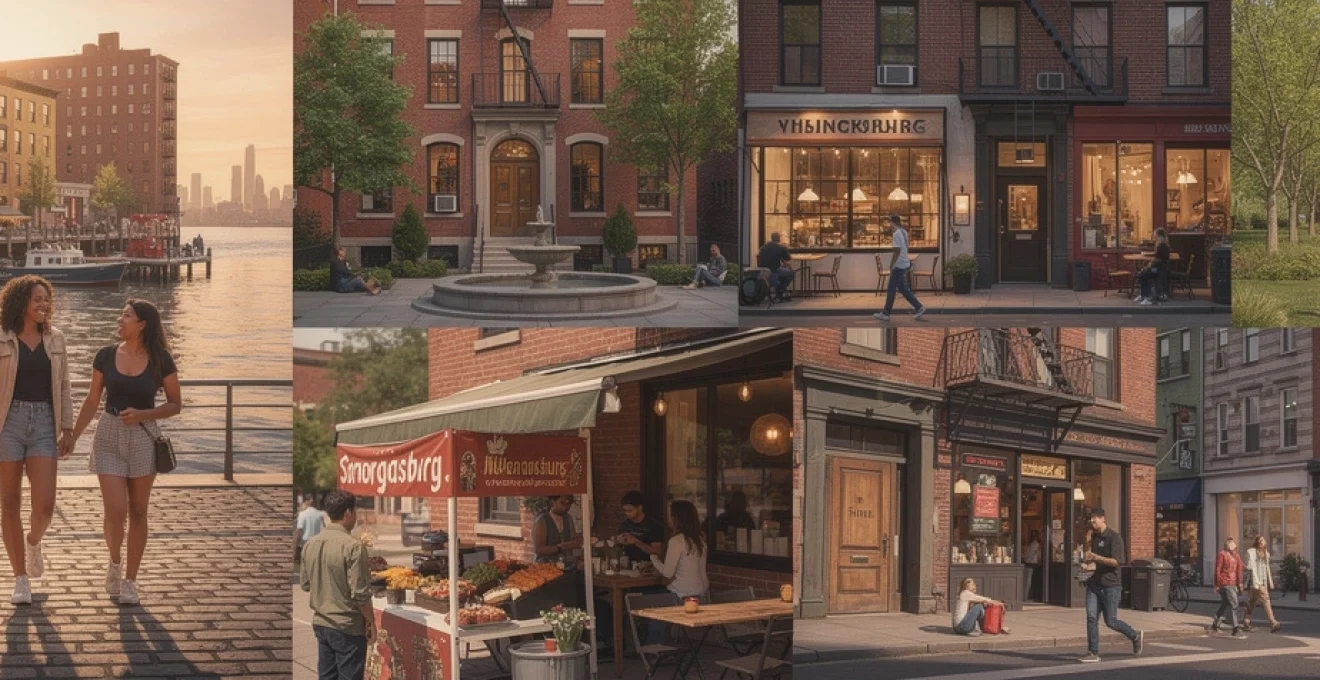
New York City’s magnetic allure extends far beyond the neon-lit spectacle of Times Square and the tourist-packed corridors of Midtown Manhattan. While these iconic destinations certainly deserve their place in travel itineraries, the city’s authentic character emerges in its diverse neighbourhoods, each offering distinct cultural experiences, culinary adventures, and hidden gems that locals treasure. From Brooklyn’s artisanal food markets to Queens’ authentic ethnic enclaves, Manhattan’s historic districts to the Bronx’s cultural institutions, the five boroughs present an intricate tapestry of experiences that reveal the true essence of America’s most dynamic metropolis.
The city’s neighbourhood diversity creates opportunities for visitors to experience genuine New York living, whether that means sampling hand-pulled noodles in Flushing’s Chinatown, exploring world-class contemporary art in Long Island City, or discovering centuries-old architecture in Greenwich Village. Each district maintains its own rhythm, local businesses, and community identity, offering travellers the chance to move beyond surface-level tourism and engage with the city’s multifaceted personality.
Brooklyn’s cultural districts and artisanal food scene
Brooklyn has transformed from Manhattan’s quieter sibling into a cultural powerhouse that attracts visitors seeking authentic New York experiences. The borough’s renaissance encompasses everything from waterfront parks and craft breweries to world-class museums and innovative dining establishments, creating a destination that rivals Manhattan for cultural significance and local character.
Dumbo’s waterfront promenade and brooklyn bridge park
Down Under the Manhattan Bridge Overpass, commonly known as DUMBO, represents one of New York’s most successful urban revitalisation projects. This former industrial district now houses galleries, restaurants, and the expansive Brooklyn Bridge Park, which stretches along 85 acres of waterfront property. The park features multiple piers offering different recreational activities, from kayaking and fishing to carousel rides and outdoor cinema screenings during summer months.
Time Out Market occupies a prime position within this district, bringing together some of Brooklyn’s most celebrated food vendors under one roof. The market showcases everything from artisanal pizza by Juliana’s to innovative cookie dough creations, providing visitors with a concentrated taste of Brooklyn’s culinary innovation. The rooftop terrace offers spectacular views of both the Manhattan and Brooklyn Bridges, creating an ideal setting for afternoon dining or evening drinks.
Williamsburg’s craft brewery trail and smorgasburg market
Williamsburg has established itself as Brooklyn’s epicentre for craft brewing and weekend food markets. The neighbourhood hosts numerous breweries within walking distance of each other, including Brooklyn Brewery, which offers tours and tastings that highlight the borough’s brewing heritage. The industrial architecture of converted warehouses provides atmospheric settings for these establishments, many featuring outdoor beer gardens and rooftop spaces.
Smorgasburg, operating seasonally in East River State Park, brings together over 100 local food vendors every weekend. This market has become a launching pad for many of New York’s most successful food entrepreneurs, offering everything from Korean-Mexican fusion tacos to artisanal ice cream sandwiches. The market’s location provides stunning Manhattan skyline views while visitors sample diverse culinary offerings that represent the city’s melting pot of cultures and cuisines.
Park slope’s prospect park and brooklyn museum complex
Park Slope combines residential charm with significant cultural institutions, anchored by the 585-acre Prospect Park designed by Frederick Law Olmsted and Calvert Vaux. The park features the LeFrak Center for ice skating and roller skating, the Prospect Park Zoo, and the Brooklyn Botanic Garden, which becomes particularly spectacular during cherry blossom season in late April and early May.
The Brooklyn Museum, located adjacent to the park, houses over 1.5 million works spanning 5,000 years of art history. The museum’s Egyptian collection ranks among the world’s finest, while its contemporary galleries showcase emerging artists and established masters. The museum’s first Saturday programme offers free evening admission with live music, art-making activities, and special exhibitions, creating a community atmosphere that distinguishes it from Manhattan’s larger institutions.
Red hook’s maritime heritage and local distillery scene
Red Hook maintains its maritime character while evolving into a destination for craft spirits and local dining.
Warehouses and cobblestone streets nod to the area’s working waterfront past, while new creative spaces, small galleries, and independent shops draw visitors who want to see what New York City looks like beyond the high-rises. Locally made spirits are a particular highlight: distilleries such as Widow Jane and Van Brunt Stillhouse offer tours and tastings that explain how New York grains are transformed into award-winning bourbon, whiskey, and rum. After sampling a flight, you can stroll along the waterfront for panoramic views of the Statue of Liberty and Lower Manhattan, or settle into one of Red Hook’s seafood shacks for lobster rolls and freshly shucked oysters.
Reaching Red Hook requires a little more planning than visiting neighbourhoods connected by multiple subway lines, but that remoteness is part of its appeal. Many visitors opt for the NYC Ferry, which provides a scenic approach across New York Harbor, or the local bus routes that connect to nearby subway stations in Carroll Gardens and Cobble Hill. Once there, you’ll find that the slower pace, converted warehouses, and small-scale producers create an atmosphere that feels more like a coastal village than a borough of New York City. For travellers looking for non-touristy things to do in New York City, Red Hook delivers an experience that feels genuinely local.
Manhattan’s hidden neighbourhoods and local experiences
Step away from Midtown’s skyscrapers and you’ll find that Manhattan is a patchwork of compact, walkable neighbourhoods, each with its own architectural style, culinary scene, and community traditions. Exploring these districts on foot is one of the best ways to experience New York City beyond Times Square, as you can move from tree-lined residential streets to bustling café corners in the space of a few blocks. Historic preservation has kept much of the 19th-century streetscape intact, allowing you to walk through neighbourhoods that look strikingly similar to how they appeared a century ago.
Many first-time visitors miss out on these areas because they focus their time on the city’s most famous attractions. Yet neighbourhoods like Greenwich Village, SoHo, the Lower East Side, and the East Village offer a richer understanding of how New Yorkers actually live, work, and socialise. Whether you’re sipping espresso in a century-old café or browsing independent bookshops, these local experiences create the kind of memories that stay with you long after the bright lights of Broadway have faded.
Greenwich village’s historic brownstone architecture and washington square park
Greenwich Village, often simply called “the Village,” has long served as New York’s centre of bohemian culture, LGBTQ+ history, and artistic experimentation. Its defining feature is its irregular street grid, a remnant from before Manhattan adopted its rigid north–south avenues and east–west streets. As you wander along leafy blocks like West 10th Street or Perry Street, you’ll pass rows of 19th-century brownstones and townhouses, many meticulously restored, that give the neighbourhood an almost European feel.
Washington Square Park forms the Village’s social heart, framed by the iconic marble arch and constant street life. On any given afternoon, you might encounter jazz musicians, competitive chess players, student protests, and families enjoying the playgrounds and lawns. The park is also an excellent starting point for exploring nearby cultural landmarks, including historic jazz clubs, Off-Broadway theatres, and literary cafés that once hosted figures such as Jack Kerouac and James Baldwin. If you’re looking for free things to do in New York City beyond Times Square, spending an hour people-watching on a bench here is hard to beat.
Soho’s cast-iron district and independent boutique shopping
SoHo (South of Houston Street) is best known today for its luxury boutiques and flagship stores, but its real distinction lies in its architecture. The neighbourhood contains the world’s largest collection of cast-iron buildings, many dating from the mid-19th century, when manufacturers used prefabricated iron façades to quickly create ornate, fire-resistant structures. Today, these buildings house lofts, galleries, and shops, with classic features like Corinthian columns, large arched windows, and elegant fire escapes.
Beyond the global brands on Broadway, SoHo rewards those who venture down quieter side streets such as Crosby, Greene, and Wooster. Here, independent boutiques, design studios, and small galleries showcase everything from emerging fashion labels to contemporary photography and sculpture. Because many spaces are in former industrial lofts, they often host rotating exhibitions and installations. If you’re interested in unique shopping in New York City, SoHo’s side streets offer the chance to discover pieces you won’t find in a typical mall.
Lower east side’s tenement museum and authentic delicatessen culture
The Lower East Side has served as a gateway for immigrants for more than a century, and its streets still reflect layers of Jewish, Italian, Chinese, Puerto Rican, and more recent arrivals’ cultures. The Tenement Museum, housed in meticulously restored 19th-century tenement buildings, provides one of the most vivid introductions to this history. Guided tours take you through recreated apartments and shopfronts, telling the stories of real families who lived and worked there, and illustrating how New York’s identity was shaped by waves of immigration.
Food remains a central part of the Lower East Side experience. Classic delicatessens such as Katz’s serve towering pastrami sandwiches and matzo ball soup, offering a taste of old New York that many visitors never experience if they stay confined to Midtown. Nearby bakeries sell knishes, bialys, and rugelach alongside newer cafés showcasing contemporary takes on traditional recipes. If you’re seeking authentic New York deli culture rather than tourist-focused eateries, an afternoon wandering the Lower East Side is an excellent place to start.
East village’s st. marks place and underground music venues
The East Village has long been associated with countercultural movements, from punk rock and experimental theatre to avant-garde poetry and underground film. St. Marks Place, a short but influential stretch of East 8th Street, epitomises this history with its eclectic mix of vintage shops, record stores, tattoo parlours, and casual eateries. Though the area has gentrified in recent decades, it still retains enough grit and individuality to feel distinct from more polished parts of Manhattan.
Music lovers will find that the East Village and its neighbouring blocks in the Bowery remain fertile ground for live performances in intimate venues. Clubs and bars host everything from jazz and indie rock to experimental electronic sets, often with modest cover charges and lineups that feature emerging local bands. For visitors looking for alternative nightlife in New York City beyond Times Square’s mega-venues, an evening of venue-hopping in the East Village offers a far more personal, and often more memorable, experience.
Queens’ multicultural enclaves and authentic cuisine
Queens is widely recognised as one of the most ethnically diverse urban areas on the planet, with residents speaking more than 150 languages and representing communities from almost every continent. This diversity is most visible in its food, where a short subway ride can transport you from South Asian street snacks to Colombian bakeries or Korean barbecue. For travellers who see dining as a core part of discovering a destination, Queens offers some of the best authentic cuisine in New York City at price points that are often far lower than in Manhattan.
Because many of Queens’ neighbourhoods are primarily residential rather than tourist-focused, visiting them gives you insight into how everyday New Yorkers live. You’ll share sidewalks and subway platforms with families, shop workers, and students instead of tour groups. If you’re willing to navigate a slightly more complex transit map and walk a few extra blocks, the reward is a set of culinary and cultural experiences that feel genuinely global yet deeply local.
Flushing’s chinatown and koreatown dining experiences
Flushing, in northern Queens, rivals and in some ways surpasses Manhattan’s Chinatown in terms of scale and authenticity. The main commercial corridors around Main Street and Roosevelt Avenue are lined with Chinese supermarkets, bakeries, and noodle shops, many featuring menus written primarily in Mandarin or Cantonese. Here you can sample regional specialties such as hand-pulled Lanzhou noodles, Sichuan hot pot, or dim sum served from steaming carts in bustling dining rooms.
In addition to its Chinese community, Flushing hosts a significant Korean population, with clusters of Korean barbecue restaurants, cafés, and dessert shops that create a distinct Koreatown feel along nearby streets. Many of these venues stay open late into the night, making Flushing a popular destination for group dinners that stretch over several hours of grilling, sharing, and conversation. If you’re interested in exploring New York food destinations beyond Times Square, planning an evening in Flushing allows you to eat like a local while experiencing one of the city’s most vibrant street scenes.
Astoria’s greek heritage and bohemian beer garden
Astoria has long been associated with Greek immigration, and while the neighbourhood has diversified over time, its Hellenic roots remain easy to spot. Traditional bakeries sell honey-soaked baklava and koulouri bread rings, while family-run tavernas serve grilled octopus, moussaka, and fresh seafood accompanied by carafes of house wine. Wandering down streets like Ditmars Boulevard, you’ll encounter a mix of old-school cafés where older residents sip strong coffee and more contemporary restaurants catering to younger crowds.
One of Astoria’s most beloved institutions is the Bohemian Hall and Beer Garden, one of the oldest beer gardens in New York City. Founded by Czech and Slovak immigrants over a century ago, it features long communal tables, a spacious outdoor courtyard, and a menu of Central European dishes alongside an extensive beer list. On warm evenings, the garden fills with a cross-section of Astorians and visitors, creating a convivial atmosphere that feels worlds away from Midtown’s rooftop lounges. If you’re looking for relaxed nightlife in New York City beyond Times Square, an evening at this beer garden is a strong contender.
Jackson heights’ little india and colombian restaurant scene
Jackson Heights is one of Queens’ most striking examples of multicultural coexistence, with South Asian, Latin American, East Asian, and LGBTQ+ communities all sharing the same compact grid of streets. The area around 74th Street and Roosevelt Avenue is often referred to as “Little India,” thanks to its concentration of Indian, Pakistani, Bangladeshi, and Nepali businesses. Here, you can browse sari shops, gold jewellery stores, and spice markets before settling into a restaurant for dishes such as dosa, biryani, or momo dumplings.
Just a few blocks away, you’ll find a strong Colombian and broader Latin American presence, reflected in bakeries offering arepas, pandebono cheese bread, and fragrant coffees. Casual restaurants and food trucks serve specialties like bandeja paisa, empanadas, and fresh juices made from tropical fruits rarely seen in mainstream supermarkets. This close proximity of cultures makes Jackson Heights an ideal destination for a self-guided food crawl, allowing you to sample different cuisines within a single afternoon or evening.
Long island city’s MoMA PS1 contemporary art centre
Long Island City, located just one subway stop from Midtown Manhattan, has rapidly evolved into one of New York’s most important contemporary art hubs. At the centre of this transformation is MoMA PS1, an affiliate of the Museum of Modern Art dedicated to experimental and cutting-edge work. Housed in a former public school building, the institution uses its classrooms and courtyards for large-scale installations, multimedia exhibitions, and performance art that often push the boundaries of traditional museum experiences.
Visiting MoMA PS1 offers a very different feel from the more formal galleries of Midtown. You can wander through cavernous rooms filled with sound art, video projections, or site-specific sculptures, often encountering works by artists who are just beginning to gain international recognition. In warmer months, the museum’s courtyard hosts events and, in some years, architectural pavilions created as part of design competitions. Coupled with the rapidly growing skyline, waterfront parks, and increasing number of cafés and breweries, Long Island City is a compelling stop for travellers interested in modern art and urban change.
Central park’s lesser-known attractions and seasonal activities
Central Park is one of New York City’s most famous landmarks, but many visitors only see a fraction of its 843 acres, focusing on the areas closest to Midtown. By venturing deeper into the park, you can discover quieter landscapes, historic structures, and neighbourhood-specific attractions that showcase how locals use this green space throughout the year. Think of the park as a series of interconnected “rooms,” each with its own character, rather than a single undifferentiated lawn.
In the northern section, the North Woods offers some of the most tranquil walking trails in Manhattan, complete with streams, rustic bridges, and dense tree cover that can make you feel far removed from the surrounding city. Nearby, the Harlem Meer provides a scenic pond framed by lawns and a visitors’ centre that hosts educational programmes and seasonal events. During winter, the park’s two ice rinks—Wollman Rink in the south and the more intimate Lasker Rink (currently under redevelopment as part of a new facility)—become popular destinations for skating with skyline views.
Spring and autumn bring their own distinct attractions, from cherry blossoms near the Reservoir and Conservatory Garden to spectacular foliage around the Ramble and the Mall. Summer ushers in open-air performances such as Shakespeare in the Park at the Delacorte Theater and concerts on the Great Lawn, many of which are free but require advance planning or lottery tickets. If you’re visiting New York for the second or third time, building a few hours of Central Park exploration into your itinerary—beyond the usual photo stops—can offer a refreshing perspective on the city’s changing seasons.
Upper manhattan’s historical sites and natural escapes
Upper Manhattan, stretching roughly from the Upper West and Upper East Sides through Harlem, Washington Heights, and Inwood, is rich in both history and green space. Many visitors never make it this far north, yet the area contains Revolutionary War sites, early American mansions, and parks that preserve the island’s original topography. Exploring these neighbourhoods allows you to see how New York City developed beyond its colonial core at the southern tip of Manhattan.
In Harlem, landmarks such as the Apollo Theater recall the neighbourhood’s central role in African American music, from jazz and soul to hip-hop. Nearby, brownstone-lined side streets and historic churches provide context for the Harlem Renaissance and the civil rights movement. Further north, Hamilton Grange National Memorial preserves the relocated home of Alexander Hamilton, while Fort Tryon Park offers dramatic cliffs, Hudson River views, and the Met Cloisters, a branch of the Metropolitan Museum of Art dedicated to medieval European art and architecture.
At Manhattan’s northern tip, Inwood Hill Park protects the last natural forest and salt marsh on the island, with hiking trails that follow glacial ridges and rocky outcrops. From certain viewpoints, you can look out over the Harlem River and the Bronx, gaining a sense of the region’s geography that’s impossible to grasp from street level in Midtown. For travellers seeking nature in New York City without leaving the borough of Manhattan, these northern parks provide an ideal escape from urban density.
Alternative entertainment venues and rooftop experiences
New York City’s entertainment landscape extends far beyond Broadway theatres and blockbuster concert arenas. In recent years, smaller performance spaces, independent cinemas, and hybrid cultural venues have flourished in neighbourhoods across the five boroughs. These places often blend film, music, comedy, and visual art in creative ways, giving you the chance to experience local talent in intimate settings. If you’re asking yourself what to do in New York City at night beyond Times Square, these alternative venues offer a wealth of options.
Rooftop experiences have also become a defining feature of modern New York nightlife, capitalising on the city’s ever-changing skyline. From hotel terraces in Midtown to converted industrial rooftops in Brooklyn and Queens, these spaces host everything from DJ sets and film screenings to yoga classes and outdoor art installations. Some rooftops are known for high-energy parties, while others focus on relaxed seating, craft cocktails, and sunset views. Checking schedules in advance is essential, as many venues adjust their programming seasonally and require reservations during peak times.
For travellers who want to combine culture with city views, rooftop cinemas and seasonal pop-up theatres provide a particularly memorable evening. Imagine watching a classic New York film with the actual skyline as your backdrop, or listening to a live jazz trio while lights flicker on across the river—experiences like these are what make exploring beyond Times Square so rewarding. By seeking out these smaller, often locally run venues, you not only diversify your itinerary but also support the creative communities that keep New York City’s cultural scene vibrant and continually evolving.