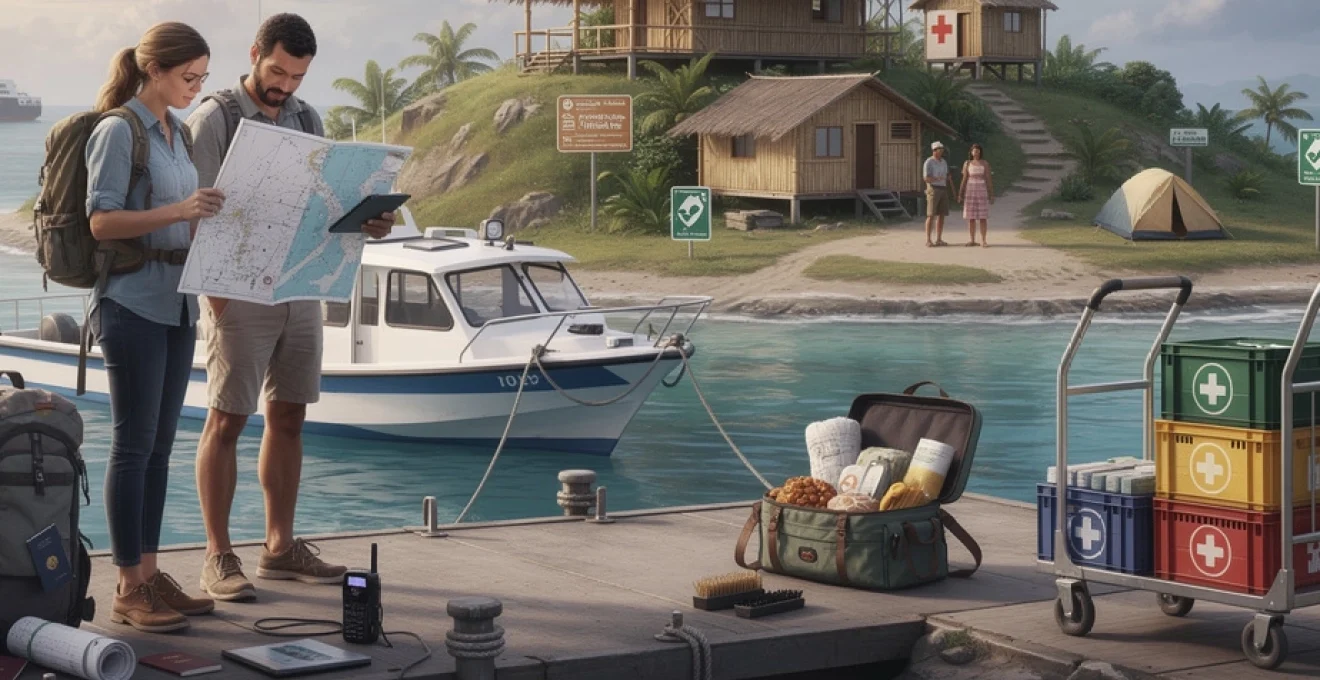
Remote island travel represents one of the last frontiers of authentic adventure tourism. Far from the predictable rhythms of conventional destinations, these isolated territories offer experiences that challenge modern assumptions about connectivity, convenience, and accessibility. Whether you’re drawn to the volcanic peaks of Tristan da Cunha, the coral atolls of French Polynesia, or the windswept shores of the Faroe Islands, understanding what awaits you is essential for transforming ambition into reality. The romantic notion of escaping to a desert island quickly encounters practical realities: infrequent transport schedules, limited medical facilities, and infrastructure that operates on fundamentally different principles than mainland locations. Yet for those willing to embrace these constraints, remote islands deliver rewards that transcend conventional tourism—profound solitude, pristine ecosystems, and cultural encounters unmarred by mass visitation. This comprehensive guide examines the logistical, practical, and experiential dimensions of remote island travel, equipping you with the knowledge necessary to navigate these extraordinary destinations successfully.
Pre-departure logistics: visa requirements and maritime transport arrangements
Before setting foot on any remote island, you’ll navigate a complex web of entry requirements that vary dramatically by territory. Unlike mainstream destinations with streamlined visa processes, many isolated islands operate under unique administrative frameworks that reflect their political status—whether as British Overseas Territories, French departments, or autonomous regions within larger nations. Researching these requirements months in advance isn’t merely advisable; it’s absolutely essential for avoiding costly disruptions to your travel plans.
Securing entry permits for pacific and indian ocean territories
Pacific and Indian Ocean islands present particularly intricate entry protocols. French Polynesia, for instance, requires specific documentation for stays exceeding ninety days, while Pitcairn Island—despite its British affiliation—implements its own immigration procedures due to its extreme isolation. You’ll often need to demonstrate proof of onward travel, comprehensive travel insurance, and sufficient financial resources to support yourself throughout your stay. Some territories, including certain Cook Islands and Vanuatu locations, require advance notification of arrival dates due to limited accommodation capacity and the need to arrange transport from primary landing points. Processing times for these permits can extend from several weeks to three months, particularly for islands that receive few annual visitors and lack dedicated immigration infrastructure.
Charter vessel booking versus scheduled ferry services
Maritime transport to remote islands divides into two distinct categories, each with significant implications for your budget and flexibility. Scheduled ferry services, where they exist, operate on timetables that range from weekly to quarterly, with departures subject to weather cancellations that can extend delays by days or weeks. The RMS St Helena, which served the South Atlantic islands for decades, exemplified this approach—offering reliable but inflexible passage tied to specific sailing schedules. Charter vessels provide greater autonomy but demand substantially higher financial investment, often requiring you to join expedition groups or organize sufficient passengers to justify the captain’s time and fuel costs. For islands like Tristan da Cunha, where scheduled vessels depart Cape Town only five to eight times annually, timing your journey around these sailings becomes the cornerstone of your entire travel plan. Research vessel schedules at least six months before your intended departure, and maintain flexibility in your dates—weather patterns and mechanical issues frequently alter departure windows.
Freight forwarding systems for essential supplies and equipment
The absence of comprehensive retail infrastructure on most remote islands necessitates strategic planning regarding equipment and supplies. Many travelers underestimate the complexity of transporting specialized items—diving equipment, photography gear, medical supplies, or dietary essentials—to locations where replacement or purchase proves impossible. Freight forwarding services exist for some territories, allowing you to ship items ahead of your arrival, but these systems operate with timeframes measured in months rather than weeks. Weight restrictions on small aircraft and cargo space limitations on vessels mean that every kilogram matters, both financially and practically. Some islands impose strict biosecurity protocols that prohibit certain foods, plant materials, or even soil residues on hiking boots, requiring thorough cleaning and declaration procedures. Understanding these constraints shapes your packing strategy fundamentally—prioritizing compact, durable, multi-purpose items over convenience or luxury goods that add weight without proportional value.
Travel insurance coverage for medical evacuation from islands like tristan da cunha
Standard travel insurance policies often exclude or severely limit coverage for remote island destinations, particularly regarding medical evacuation
from ultra-remote locations. When you’re planning travel to a remote island like Tristan da Cunha, Pitcairn, or outer Micronesian atolls, you must verify that your policy explicitly includes medical evacuation from isolated areas and covers transport by helicopter, fixed-wing aircraft, or diversion of commercial vessels. Evacuation from such islands can cost tens of thousands of dollars, and in some cases you may first be transported to an intermediate location before reaching a facility with full surgical capacity. Look for policies that cover “search and rescue,” “emergency medical evacuation,” and “repatriation of remains,” and confirm that there are no exclusions for travel beyond a certain distance from major hospitals. When in doubt, contact the insurer in writing, describe your exact destination and planned activities (diving, trekking, sailing), and request confirmation that you are covered under those conditions.
Accommodation infrastructure on isolated archipelagos
Once you’ve solved the question of how to reach a remote island, the next critical consideration is where you will sleep. Accommodation options on isolated archipelagos range from sophisticated eco-resorts to family homestays and basic camping on designated sites, but what unites them is scarcity. Unlike mainland destinations where you can often book a room the night before arrival, remote island travel usually demands that you secure lodging weeks or months in advance, especially during short high seasons when transport and beds are both constrained. Understanding the type of infrastructure available will help you calibrate expectations, budget appropriately, and pack the right equipment.
Off-grid eco-lodges and solar-powered guesthouses
Many of the most compelling remote islands have embraced off-grid accommodation models that reduce dependence on imported fuel and fragile utility networks. In places like the outer Seychelles, certain Fijian islands, or small atolls in the Maldives, eco-lodges rely on solar panels, rainwater catchment, and composting systems rather than conventional grids. That has practical implications for you as a guest: electricity may be available only during certain hours, high-draw devices like hairdryers are often prohibited, and air conditioning may be replaced by ceiling fans and natural ventilation. You can expect a level of comfort, but it will usually be aligned with low-impact living rather than urban luxury.
From a planning perspective, you should ask detailed questions before booking: Is power available 24/7 or on a schedule? Are there charging points in individual rooms or only in common areas? Is hot water solar-heated and therefore dependent on weather conditions? The answers will influence what you pack—for example, a small power bank, headlamp, and quick-dry clothing often prove more useful than a suitcase full of electronics. You can think of these eco-lodges as hybrid spaces: more comfortable than expedition camping, but still requiring the mindset of a traveler who understands that every watt and every liter of fresh water counts.
Homestay protocols with indigenous communities in vanuatu and solomon islands
On many remote islands, especially in Melanesia, community-based homestays are the primary way visitors can experience local life and directly support indigenous communities. In Vanuatu and the Solomon Islands, village bungalows or family guest rooms are often built using local materials and sit within active subsistence communities, where fishing, gardening, and customary practices shape the daily rhythm. As a guest, you are not simply renting a room; you are entering a social system governed by kastom (customary law) and local hierarchies. Respecting these frameworks is essential for a positive experience for both you and your hosts.
Homestay protocols typically include modest dress in villages (even if the beach norm is more relaxed), seeking permission before wandering through gardens or sacred sites, and observing quiet hours after evening meals. Gifts—such as school supplies, seeds, or small solar lights—are often welcome, but cash payments and pricing should be clarified upfront, ideally arranged through a local tourism office or trusted intermediary. Shared meals are common, and you should be prepared to eat what is available, which may be simple but fresh: taro, fish, island greens, breadfruit, and seasonal fruit. Asking permission before taking photographs, especially of ceremonies or children, demonstrates cultural sensitivity and helps avoid misunderstandings in communities that may receive very few outsiders each year.
Camping regulations on protected atolls and conservation zones
For travelers seeking the most immersive remote island experience, camping on uninhabited beaches or protected atolls can be incredibly rewarding—but it is also heavily regulated. Many of the planet’s most pristine coral systems and seabird nesting colonies lie within national parks or marine protected areas in places like Kiribati, the Chagos Archipelago, and remote parts of French Polynesia. These zones often prohibit unsupervised camping or limit it to specific sites, both to protect fragile ecosystems and to ensure visitor safety in environments with no immediate emergency services. Assuming that you can simply pitch a tent anywhere is one of the most common misconceptions about desert island travel.
Before planning a camping-based trip, you should verify whether a permit is required, whether you must be accompanied by a licensed guide, and what equipment you are allowed to bring. Many conservation authorities impose strict “pack in, pack out” rules, including human waste management, and ban open fires to prevent invasive species and habitat damage. In some atolls, you may be asked to disinfect tents, boots, and even camera tripods to avoid introducing seeds or pathogens, a process that can be as detailed as trekking in Antarctica. If you are accustomed to backcountry camping in national parks with clear trail systems and ranger stations, think of remote atoll camping as one level further removed: you are responsible not only for your own survival but also for ensuring that your presence leaves an almost invisible trace.
Telecommunications and connectivity limitations
One of the defining characteristics of remote island travel is a radical shift in connectivity. While tourism marketing sometimes promises “Wi-Fi in paradise,” the reality on many outer islands is intermittent bandwidth, high latency, and frequent outages driven by weather, power constraints, or limited backhaul capacity. For some travelers, this digital disconnection is precisely the appeal; for others—especially remote workers or those with family obligations—it can be a serious operational challenge. Understanding the telecommunications landscape before you depart allows you to set realistic expectations, notify clients or loved ones, and bring appropriate backup solutions.
Satellite internet systems: starlink and VSAT availability
Historically, remote islands depended on geostationary satellite connections (VSAT) with high latency and limited throughput, shared across entire resorts or villages. That meant slow email, unreliable video calls, and bandwidth rationing that prioritized essential services over streaming or large file transfers. In recent years, low Earth orbit constellations such as Starlink have begun to change that picture on some islands, offering significantly faster speeds and lower latency. However, deployment remains uneven: a handful of Pacific islands and Arctic communities have adopted Starlink, while many others still rely on legacy systems or undersea cables that may not reach outer atolls.
As a traveler, you should not assume that Starlink will be available simply because it exists in your home country. Check directly with your accommodation or local operators: do they use VSAT, fiber, or newer satellite systems? Is access free, metered, or restricted to certain hours? In particularly isolated destinations, bringing your own portable satellite terminal may be possible but expensive, and you must verify that local regulations permit its use. For most visitors, planning as if you will have “email-only” connectivity—slow, scheduled, and sometimes absent—is the safest baseline when traveling to a remote island.
Mobile network coverage gaps in micronesian and caribbean remote islands
Mobile coverage on remote islands is typically concentrated around main settlements, ports, and administrative centers, leaving large swaths of coastline, interior terrain, and smaller islets entirely without signal. In Micronesia, for example, you may have basic 3G in the capital area but nothing on outlying atolls a short boat ride away. In the Caribbean, even within nations with robust tourism sectors, smaller islands or national park zones can be effectively offline once you leave the main village or resort. Coverage maps published by telecom operators often prove optimistic, assuming unobstructed line-of-sight that does not account for volcanic ridges or dense vegetation.
If your itinerary includes island hopping or extended stays on less-developed islets, consider your mobile phone an occasional tool rather than a reliable lifeline. You might be able to send messages while in port in the morning and then be fully disconnected until you return at night. For navigation, offline maps downloaded in advance, along with printed backups for key routes, are essential. You can think of connectivity as tidal: present in brief, predictable windows, and completely absent for long stretches, especially when you’re engaged in activities like sailing, trekking, or diving away from the main communications hub.
Emergency communication devices: iridium satellite phones and EPIRB beacons
Given these connectivity gaps, robust emergency communication planning becomes a non-negotiable component of remote island travel, particularly for independent sailors, kayakers, or trekkers. Satellite phones operating on global constellations such as Iridium or Inmarsat provide voice and text coverage far beyond terrestrial networks, allowing you to contact rescue coordination centers, local authorities, or family members even when you are days from the nearest cell tower. For many itineraries—crossing between islands by small vessel, exploring uninhabited atolls, or participating in survival-style experiences—operators will either provide such devices or require you to carry them as a safety condition.
In addition to satellite phones, devices like EPIRBs (Emergency Position-Indicating Radio Beacons) and PLBs (Personal Locator Beacons) play a critical role. When activated, they transmit your location via satellite to international rescue systems, triggering a search and rescue response coordinated by maritime authorities. While you may never need to touch them, they function as a last line of defense in environments where a twisted ankle, capsized kayak, or unexpected storm can rapidly escalate into a life-threatening situation. Before departing, learn how to arm, test, and deploy any beacon you carry, and ensure that registration details and emergency contacts are up to date.
Data roaming costs and local SIM card procurement challenges
Even when mobile coverage exists, using it economically can be difficult. Data roaming charges on remote islands are often significantly higher than on the mainland, especially in territories served by small independent carriers outside major international agreements. A brief session of map loading or photo sharing can translate into substantial fees if you leave your phone on default roaming settings. For this reason, many seasoned island travelers disable roaming entirely and rely on Wi-Fi hotspots or locally purchased SIM cards whenever possible. Yet acquiring a local SIM can itself be challenging: shops may observe limited opening hours, require passport photocopies, or simply run out of stock on smaller islands.
To manage costs and reduce frustration, you should research in advance whether eSIM options exist for your destination, whether the local operator offers tourist packages, and where physical SIMs can be purchased (airport, main town, or only in the capital on another island). Consider downloading all critical apps, documents, and entertainment before departure, and pre-saving offline language tools and translation files. From a budgeting standpoint, treating mobile data as a scarce, high-value resource rather than an unlimited utility will help you avoid surprise charges and encourage more intentional use of your time online.
Healthcare access and medical preparedness protocols
Healthcare on remote islands ranges from basic clinics staffed by nurses or general practitioners to fully equipped hospitals in regional hubs such as Tahiti, Honolulu, or Réunion. However, on truly isolated islands—the kind served by monthly supply ships or weekly flights—facilities may be limited to primary care, stabilization, and telemedicine links with mainland specialists. Complex trauma, cardiac events, and advanced surgical needs almost always require evacuation to a larger center, which can take hours or even days depending on weather and transport availability. This reality makes your own medical preparedness a central pillar of safe remote island travel.
Before departure, a comprehensive medical consultation is strongly recommended, particularly if you have chronic conditions such as diabetes, cardiovascular disease, or asthma. Discuss your exact destination, anticipated activities, and the nearest higher-level medical facility; your clinician can help you assess whether the risk profile is acceptable and what contingency medications or documentation you should carry. Vaccination requirements will depend on the region—Pacific and Indian Ocean islands may require or recommend vaccines for hepatitis A and B, typhoid, tetanus, and in some cases diseases like Japanese encephalitis or rabies if you’re engaging in extensive outdoor activities. Proof of yellow fever vaccination may be required if you’re transiting via endemic countries, even if the island itself is low risk.
Your personal medical kit should be more robust than for a typical city break. In addition to basic first-aid items (bandages, antiseptic, blister care, pain relief), consider including a course of broad-spectrum antibiotics prescribed by your doctor, oral rehydration salts, anti-diarrheal medication, altitude or seasickness tablets where relevant, and any personal prescriptions in quantities exceeding your planned stay by at least one week. On islands with sharp coral, volcanic rock, or mangrove habitats, foot protection and thorough wound cleaning are critical to prevent infections that local clinics may have limited capacity to manage. If you wear contact lenses, bring sufficient solution and a backup pair of glasses; high UV exposure and wind can make extended lens use uncomfortable.
Finally, familiarize yourself with local emergency procedures: What is the number for ambulance or coast guard services? Is there a resident doctor, or are practitioners visiting on rotation? Does your accommodation maintain an emergency plan and first-aid equipment, including oxygen for dive incidents? Asking these questions on arrival does more than protect you personally; it signals to local providers and hosts that you take island safety seriously, which can improve coordination if an incident occurs. In remote environments, prevention and preparation are often the difference between a manageable problem and a full-scale evacuation.
Provisioning strategies for limited commercial infrastructure
When you travel to a remote island, traditional assumptions about shopping and dining options must be recalibrated. Many of these destinations have few or no restaurants, intermittent market supplies, and single small shops that close early or operate on irregular schedules linked to supply ships. Shipments of fresh produce and dairy may arrive only weekly or monthly, and weather delays can leave shelves sparse for days. For visitors used to 24-hour supermarkets and extensive restaurant choices, this reality can be disorienting—unless you plan for it thoughtfully.
Effective provisioning starts before you leave the mainland. If your accommodation includes a kitchen or you’re joining a charter that expects self-catering, work with your host or operator to understand exactly what is available locally and what you should bring. Non-perishable staples—rice, pasta, lentils, nuts, dehydrated meals, and high-calorie snacks—pack well and bridge gaps when fresh food is scarce. For those with dietary restrictions (gluten-free, vegan, severe allergies), bringing specialized products is often essential, as remote island shops may stock only a narrow range of imported goods with limited labeling. Think of your food plan as a layered system: core staples you control, supplemented by whatever seasonal fish, fruit, or root vegetables the island can provide.
Water deserves particular attention. Some islands rely exclusively on rainwater tanks or desalination units, and while tap water may be safe for locals, your stomach may not adapt quickly. In such cases, portable filtration systems or UV sterilizers provide added security and reduce reliance on single-use plastic bottles, which are a major environmental burden in small communities. If you plan extended hikes or boat trips away from settlements, carry more water than you think you need; resupply points are rare and springs may be seasonal or non-existent. Remember that in humid tropical climates, daily fluid requirements can easily exceed three liters per person, especially when you factor in sun exposure and salt spray.
Cash management is another often-overlooked provisioning issue. Many remote islands operate largely on cash-based economies, and ATMs may not exist or may run out of funds between supply visits. Before boarding your final flight or ferry, withdraw sufficient local currency in a mainland hub, taking into account accommodation balances, meals, boat hires, tips, and small purchases for handicrafts or community contributions. While carrying more cash than usual can feel uncomfortable, it is often the only way to transact once you arrive. Treat your budget, like your pantry, as something that must be self-sufficient for the duration of your stay.
Environmental adaptation: climate patterns and biosecurity compliance
Remote islands are deeply shaped by their climate and ecological vulnerability. Trade winds, ocean currents, and cyclone belts dictate not only when you can travel but also what kind of experience you will have once you land. Dry seasons may bring clear skies and calm seas ideal for diving or sailing, while wet seasons transform trails into mud, restrict inter-island transport, and swell mosquito populations. In high-latitude islands like Svalbard or the Faroe Islands, storm systems, sea ice, and limited daylight introduce a different set of constraints, making shoulder seasons both rewarding and demanding. Aligning your travel dates with favorable climate windows is one of the most powerful ways to reduce risk and increase enjoyment.
Beyond comfort, climate has safety implications. On low-lying coral atolls, king tides and storm surges can temporarily flood roads and airstrips, isolating communities until conditions improve. Cyclone and hurricane seasons—typically November to April in the South Pacific and June to November in the North Atlantic—do not make travel impossible, but they require heightened flexibility, robust travel insurance, and a clear understanding of local shelter protocols. You should monitor regional meteorological services rather than relying solely on generic apps, and be psychologically prepared for last-minute itinerary changes or extended stays if evacuation routes close. In remote island travel, the weather is not just background scenery; it is an active participant in your journey.
Equally important is adhering to strict biosecurity measures designed to protect fragile island ecosystems from invasive species and diseases. Because many remote islands evolved in isolation, their flora and fauna are highly susceptible to disruption by seemingly harmless introductions: seeds stuck in shoe treads, insects in luggage, or food waste that attracts non-native predators. Quarantine regulations may require you to declare outdoor gear, clean hiking boots with disinfectant, avoid bringing fresh fruit or animal products, and submit bags to inspection on arrival. In some cases, you’ll be asked to use specific cleaning stations before boarding inter-island boats or entering sensitive conservation zones.
Complying with these protocols is not simply a legal requirement; it is an ethical obligation to the communities and environments that host you. Think of biosecurity as a form of respect, akin to observing cultural norms or paying fair prices. A single invasive plant or fungus, accidentally introduced by an unclean tent or untreated wooden souvenir, can cost local authorities years of effort and substantial funds to control. By taking the time to thoroughly wash and dry your equipment, avoid prohibited items, and follow local guidance, you help ensure that the remote island you experience today remains just as wild and distinctive for future travelers—and for the people who call it home.