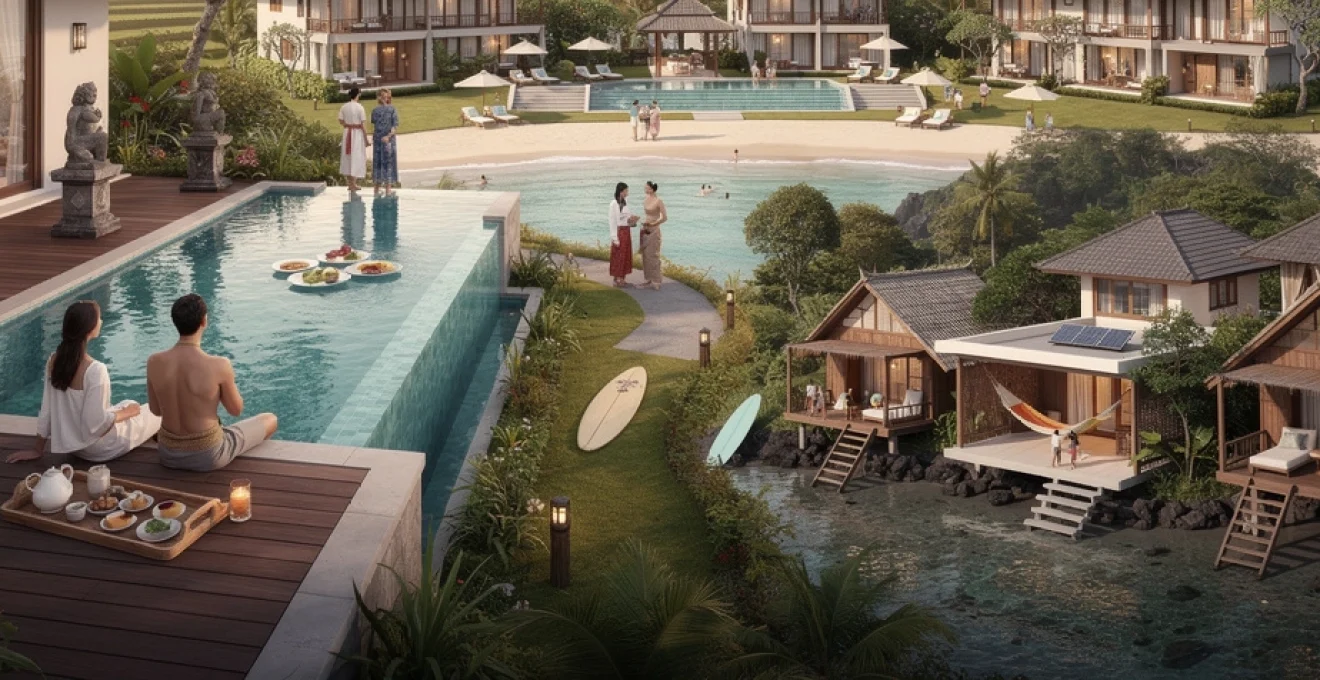
Bali’s accommodation landscape presents travellers with an extraordinary array of choices, from opulent clifftop villas overlooking dramatic coastlines to intimate traditional bungalows nestled within rice paddies. The Island of the Gods has evolved beyond its backpacker roots to become a sophisticated destination catering to luxury seekers, wellness enthusiasts, and adventure travellers alike. With over 4.2 million international visitors annually, Bali’s hospitality sector has responded by developing distinctive accommodation categories that reflect both modern luxury standards and authentic Balinese heritage.
The decision between villa, resort, or bungalow accommodation fundamentally shapes your entire Bali experience. Each option offers unique advantages in terms of privacy, service levels, cultural immersion, and value proposition. Understanding these distinctions becomes crucial when planning your ideal Indonesian getaway, particularly as peak season rates can vary dramatically between property types and locations.
Luxury villa accommodations: private pool estates and beachfront properties
Bali’s villa rental market has reached unprecedented sophistication, with properties now featuring hotel-grade amenities alongside residential privacy. The island boasts over 15,000 registered villa properties, ranging from modest three-bedroom compounds to sprawling estates accommodating up to 24 guests. These private sanctuaries typically include dedicated staff, private swimming pools, fully equipped kitchens, and personalised concierge services that rival five-star hotels.
The villa experience centres around complete autonomy and customisation. Guests enjoy the freedom to set their own schedules, arrange private dining experiences, and host gatherings without the restrictions common in resort environments. Many luxury villas employ dedicated villa managers who coordinate everything from airport transfers to private chef services, creating a seamless blend of independence and support.
Seminyak villa complexes: oberoi district and petitenget beach access
Seminyak’s villa scene epitomises Bali’s evolution into a luxury destination, with the prestigious Oberoi district housing some of the island’s most exclusive properties. These villas typically feature contemporary Balinese architecture, infinity pools, and direct beach access to Petitenget’s golden sands. The area’s villa rentals command premium rates of $750-2,500 per night during peak season, reflecting their proximity to world-class dining and nightlife venues.
The district’s appeal lies in its seamless integration of luxury accommodation with Seminyak’s vibrant social scene. Villa guests can easily access renowned beach clubs like Potato Head and Ku De Ta, while enjoying the privacy of gated compounds just moments from the action. Many properties offer traditional Javanese Joglo pavilions as focal points, creating striking contrasts between ancient architectural elements and modern amenities.
Ubud jungle villas: rice terrace views and traditional joglo architecture
Ubud’s villa market emphasises spiritual wellness and natural integration, with properties designed to harmonise with the surrounding jungle landscape. These elevated retreats typically feature open-air living spaces, traditional alang-alang thatched roofing, and panoramic views across UNESCO World Heritage rice terraces. The region’s villa rentals range from intimate honeymoon hideaways to expansive family compounds with multiple pavilions.
Authentic Joglo architecture defines Ubud’s most coveted villas, utilising centuries-old construction techniques that create naturally ventilated spaces without air conditioning. These traditional structures, originally designed as Javanese royal residences, feature soaring timber frameworks and intricate woodcarvings that celebrate Indonesian craftsmanship. Modern amenities are seamlessly integrated without compromising architectural integrity.
Canggu Cliff-Top villas: echo beach proximity and surfbreak accessibility
Canggu’s villa development focuses on surf culture and laid-back luxury, with clifftop properties offering front-row seats to world-class breaks like Echo Beach and Batu Bolong. The area attracts younger demographics seeking Instagram-worthy backdrops alongside serious wave-riding opportunities. Villa rentals here typically include surf guide services, board storage facilities, and easy access to the vibrant café and co-working scene.
For groups, Canggu villas can be more cost-effective than booking multiple resort rooms, especially when you factor in shared amenities like private pools, in-villa chefs, and on-site staff. However, you should consider the trade-off between seclusion and convenience, as many cliff-top villas require scooter hire or private drivers to reach shops, restaurants, and co-working hubs. If your Bali itinerary revolves around surf sessions, café hopping, and sunset beach walks, these villas offer a compelling blend of lifestyle and comfort.
Jimbaran bay villa rentals: seafood market access and airport convenience
Jimbaran Bay has emerged as a strategic villa destination for travellers seeking both tranquillity and practicality. Located just 15–20 minutes from Ngurah Rai International Airport, the area is ideal for shorter stays or for those who dislike lengthy transfers after long-haul flights. Villa rentals here range from compact two-bedroom pool villas tucked into hillside gardens to expansive multi-villa estates that can host weddings and corporate retreats.
What truly differentiates Jimbaran is its coastal dining culture. The famous Jimbaran seafood market and beachfront grill restaurants allow villa guests to source fresh fish and have it prepared either on the beach or by a private chef back at their property. This proximity to local food culture creates an immersive experience that many resort environments cannot match, particularly if you enjoy shopping in traditional markets and experimenting with Indonesian flavours at home.
Families often prefer Jimbaran villas because of the bay’s calm waters and relatively uncrowded beaches, especially compared to Kuta or Seminyak. You can spend the morning swimming with younger children, return to your villa for a leisurely lunch and nap, then head back out for sunset without long commutes. When evaluating where to stay in Bali with kids, Jimbaran’s balance of quiet, safety, and easy airport access makes it a strong contender.
Villa booking platforms: airbnb luxe vs onefinestay premium selection
As Bali’s villa inventory has expanded, so too have the platforms that curate and distribute these properties. Airbnb Luxe and onefinestay represent the upper tier of villa booking services, both promising hotel-level standards in privately owned homes. Airbnb Luxe focuses on verified quality and dedicated trip designers, while onefinestay emphasises consistent service protocols, professional housekeeping, and local concierges across its portfolio.
When choosing between these platforms, consider how much support you want before and during your stay. Airbnb Luxe often appeals to independent travellers who still appreciate some planning assistance, whereas onefinestay feels closer to a boutique hotel experience, with more standardised services and clear operating procedures across properties. Both typically feature villas with private pools, daily housekeeping, and optional chef or butler services, which can be crucial if you are organising a multi-generational family trip or a retreat.
It is also worth comparing platform fees and cancellation policies, as these can significantly affect total cost for longer stays. In some cases, once you discover a specific property through a third-party platform, you may find better rates or added-value inclusions by contacting the villa’s management company directly. However, you should weigh any savings against the loss of platform protections and flexible rebooking options, especially if you are travelling during peak season or with a large group.
Resort categories: all-inclusive properties vs boutique hotel experiences
Beyond private villas, Bali’s resort sector has diversified into distinct categories that cater to different travel styles and budget levels. All-inclusive properties appeal to travellers who prefer cost certainty and convenience, while boutique hotels attract those seeking bespoke design, cultural immersion, and curated experiences. Understanding the differences between these resort types can help you decide where to stay in Bali if you value structured packages versus spontaneous exploration.
All-inclusive resorts typically bundle accommodation, meals, beverages, and selected activities into a single nightly rate. This model is particularly attractive for families or couples who want to avoid constant budgeting and bill-signing throughout their holiday. Boutique hotels, by contrast, often operate on a bed-and-breakfast or half-board basis, prioritising personalised service, unique architecture, and intimate atmospheres over sheer volume of inclusions.
Nusa dua integrated resorts: mulia resort and st. regis strand beach
Nusa Dua represents Bali’s most polished integrated resort enclave, characterised by manicured gardens, gated security, and wide, swimmable beaches. Flagship properties like Mulia Resort and The St. Regis Bali Resort anchor this area, offering expansive facilities that include multiple pools, fine-dining restaurants, kids’ clubs, and direct access to Strand Beach. For travellers comparing Bali villas vs resorts, Nusa Dua’s integrated complexes provide a compelling all-in-one alternative.
Many Nusa Dua resorts offer all-inclusive or semi-inclusive plans, particularly at the luxury level. Packages may encompass buffet and à la carte meals across several restaurants, free-flow non-alcoholic drinks, and selected alcoholic beverages within specified hours. Some properties, inspired by concepts like “Luxury Bali All Inclusive” packages, go further by adding airport transfers, 24-hour butler service, and curated signature activities such as cooking classes or cultural performances.
However, integrated resorts can feel somewhat insulated from everyday Balinese life. While this seclusion is ideal for honeymooners and families seeking safety and predictability, it means you may need private transport to access local warungs, markets, or temples. If you choose Nusa Dua as your base, you might schedule dedicated “exploration days” with a driver-guide to balance resort comfort with cultural discovery.
Sanur heritage hotels: tandjung sari resort and puri santrian legacy
Sanur offers a markedly different resort experience, shaped by its history as one of Bali’s earliest tourist hubs. Heritage properties like Tandjung Sari and Puri Santrian preserve mid-20th-century charm, with low-rise bungalows, mature tropical gardens, and an emphasis on Balinese art and architecture. These hotels appeal to travellers who value nostalgia and authenticity over ultra-modern design.
Unlike many all-inclusive resorts, Sanur’s heritage hotels usually operate on a more flexible basis, allowing guests to dine in-house or explore the beachfront promenade’s numerous cafés and warungs. This arrangement is ideal if you enjoy leisurely strolls and varied dining rather than being tied to a single property’s meal plan. Sanur’s calm lagoon and paved beachfront path also make it exceptionally walkable and bike-friendly, particularly for older travellers or families with small children.
Room rates in Sanur often undercut those in Seminyak or Nusa Dua for comparable quality, especially in shoulder seasons. If you are considering where to stay in Bali for a longer visit—say two to three weeks—Sanur’s combination of heritage ambiance, moderate pricing, and good infrastructure (including easy access to fast boats to Nusa Lembongan and the Gilis) can make it a practical and charming base.
Ubud wellness resorts: como shambhala estate and four seasons sayan
Ubud has cemented its reputation as Bali’s wellness capital, and its resorts reflect this holistic focus. Flagship properties like COMO Shambhala Estate and Four Seasons Resort Bali at Sayan integrate spa therapies, yoga, meditation, and nutrition programs into their core offerings. Instead of a traditional all-inclusive model based solely on food and beverages, these resorts often provide wellness-inclusive packages that combine accommodation with daily classes, consultations, and spa treatments.
Choosing an Ubud wellness resort is somewhat like enrolling in a short-term retreat: your daily schedule can include guided rice field walks, sound healing, breathwork sessions, and personalised spa rituals. This structure suits travellers who want to reset lifestyle habits or recover from burnout, but it may feel overly programmed if you prefer unstructured exploration. It is important to read sample itineraries and inclusion lists carefully, as package value depends heavily on how many activities and treatments you intend to use.
These properties typically command some of Bali’s highest nightly rates, yet the per-day cost can be competitive when you factor in the price of separate spa visits, yoga classes, and healthy meals elsewhere. If you are deciding where to stay in Bali for a wellness-focused holiday, think of these resorts less as simple accommodation and more as integrated health investments, similar to booking a curated fitness or detox retreat.
Uluwatu clifftop resorts: bulgari resort and alila villas accessibility
Uluwatu’s clifftop resorts deliver some of the most dramatic vistas in Bali, perched high above the Indian Ocean with private beach access via elevators or steep staircases. Luxury brands like Bulgari Resort Bali and Alila Villas Uluwatu exemplify this category with ultra-contemporary architecture, expansive villa-style suites, and high staff-to-guest ratios. These properties are favoured by honeymooners, design aficionados, and travellers for whom the view is a central part of the experience.
While some Uluwatu resorts offer partial all-inclusive options—such as daily breakfast, afternoon tea, and cocktail hours—they more commonly operate on an à la carte basis with high-end dining concepts. You might enjoy degustation menus, wine-pairing dinners, and chef’s table experiences without committing to a full package. This flexibility allows you to dine off-property at famous beach clubs or local warungs, although you will need to budget for transfers due to the area’s spread-out geography.
The main trade-off in Uluwatu is accessibility versus setting. Clifftop locations mean frequent use of buggies, elevators, and stairs, which can be challenging for travellers with mobility issues. When deciding where to stay in Bali for easy movement, you may prefer flatter areas like Sanur or Nusa Dua. However, if your priority is cinematic sunsets, privacy, and world-class architecture, Uluwatu’s resorts are difficult to beat.
Private bungalow selection: traditional joglo vs modern minimalist design
For many travellers, Bali’s romantic image is closely tied to standalone bungalows set amid rice fields, beaches, or gardens. These units, often more affordable than full villas yet more characterful than standard hotel rooms, bridge the gap between rustic charm and comfort. When comparing traditional Joglo bungalows with modern minimalist designs, you are essentially choosing between heritage ambiance and contemporary convenience.
Traditional Joglo bungalows draw on Javanese and Balinese architecture, using teak wood, carved doors, and high-pitched roofs that encourage natural airflow. By contrast, modern minimalist units emphasise clean lines, polished concrete, and large glass panels that frame the surrounding landscape. Both styles can be incredibly atmospheric, but they offer different experiences in terms of noise insulation, temperature control, and integration with nature—key considerations when deciding where to stay in Bali for more than a few nights.
Amed beachfront bungalows: diving centre proximity and sunrise mount agung views
Amed, on Bali’s northeast coast, has grown from a sleepy fishing strip into a renowned dive and snorkel hub. Beachfront bungalows here place you steps from the water, with many properties partnering directly with PADI dive centres or offering in-house equipment rental. If your ideal Bali stay revolves around underwater exploration of coral gardens and shipwrecks like the USAT Liberty in nearby Tulamben, Amed’s bungalow scene delivers excellent location value.
Sunrise in Amed is particularly striking, with Mount Agung often silhouetted against the early light. Many traditional bungalows are oriented to maximise these views, featuring verandas with hammocks or daybeds where you can watch fishing boats return with their morning catch. Accommodation is generally more modest than in south Bali, but you will find both simple bamboo huts and more polished, air-conditioned structures depending on your budget.
Because Amed is several hours’ drive from the airport, it suits travellers with flexible itineraries who prioritise diving or off-the-beaten-path experiences over nightlife and shopping. When balancing where to stay in Bali between popular south-coast areas and quieter regions, you might allocate three or four nights to Amed as a dedicated dive or snorkel segment within a longer trip.
Gili air eco-bungalows: solar power systems and coral restoration projects
Although technically part of Lombok rather than Bali, the Gili Islands—especially Gili Air—are closely integrated into many Bali travel plans due to convenient fast-boat connections. Gili Air’s eco-bungalows appeal to travellers drawn to sustainability and low-impact stays. Many properties rely on solar power for electricity, use saltwater or filtered systems for pools, and engage in coral restoration or beach-cleaning initiatives with local NGOs.
Staying in an eco-bungalow on Gili Air is somewhat like opting for a hybrid between camping and boutique accommodation. You may have open-air bathrooms, composting systems, and limited air conditioning in exchange for reduced environmental footprint and a stronger sense of place. Properties often provide bicycles instead of motorised transport—reinforcing the island’s car-free, scooter-free ethos—and encourage guests to join reef-safe snorkelling tours.
If sustainability is a major criterion in your decision on where to stay in Bali and its surrounding islands, you should review each property’s environmental policies carefully. Look for transparent information about energy sources, waste management, and community engagement rather than vague “eco” branding. The trade-off for lower carbon impact can be occasional inconveniences, such as brief power cuts or reduced water pressure, so set your expectations accordingly.
Munduk mountain retreats: coffee plantation tours and sekumpul waterfall access
Munduk, in north-central Bali, offers a cool, misty counterpoint to the island’s coastal heat. Private bungalows and small retreats here often sit on ridgelines overlooking valleys, clove plantations, and terraced hillsides. For travellers wondering where to stay in Bali to escape humidity and crowds, Munduk’s mountain climate and slower pace can be a welcome relief.
Many properties integrate agricultural experiences into their offerings, including guided coffee plantation tours, spice garden walks, and farm-to-table dining. You might wake to the sound of roosters, sip locally roasted coffee on your balcony, then set out for day hikes to waterfalls like Sekumpul, Banyumala, or Munduk itself. Accommodation ranges from basic wooden huts with shared facilities to higher-end bungalows featuring fireplaces, heated blankets, and floor-to-ceiling windows.
Transport infrastructure in this region is improving but still limited compared to the south, so you will likely rely on private drivers for transfers and day trips. For this reason, Munduk works best as a two- or three-night segment within a broader Bali itinerary rather than your sole base. The reward is a deeper connection to Bali’s highland landscapes and agricultural heritage, far removed from the island’s party zones.
Lovina dolphin watching bungalows: traditional fishing village immersion
Lovina, on Bali’s north coast, is best known for its early morning dolphin tours and black-sand beaches. Bungalows in this area are typically set within garden compounds that open directly onto the sea or sit just across the coastal road. If you are curious about slower-paced coastal life and want to experience a traditional fishing village environment, Lovina offers a gentler alternative to the more commercialised south.
Many bungalow operators collaborate directly with local boatmen, allowing guests to arrange sunrise dolphin trips, snorkelling, or simple coastal cruises from their doorstep. While sightings are not guaranteed, the experience of being on the water at first light, with the mountains behind you and the open ocean ahead, can be a highlight of a north Bali stay. Accommodation tends to be mid-range, with fan or air-conditioned rooms, modest pools, and simple restaurants serving Indonesian and continental dishes.
Lovina’s relative isolation means fewer nightlife options and longer transfer times—approximately three hours from the airport, depending on traffic and route. However, this same distance keeps crowds low and prices moderate, making it an appealing choice if you are stretching your budget across a multi-week itinerary. When considering where to stay in Bali for authentic village interaction, dolphin watching, and hot springs or temple excursions, Lovina deserves a place on your shortlist.
Regional accommodation analysis: micro-climate considerations and transport infrastructure
Bali’s compact size can be deceptive: micro-climates and transport infrastructure differences substantially affect the comfort and convenience of your stay. Coastal areas like Seminyak, Canggu, and Nusa Dua tend to be hotter and more humid, with relatively consistent temperatures year-round. By contrast, upland regions such as Ubud and Munduk are several degrees cooler, especially at night, and receive more rainfall—factors that can influence your choice of villa, resort, or bungalow design.
For example, an open-air Joglo bungalow with minimal insulation works beautifully in breezy coastal zones but may feel chilly or damp in highland areas during the wet season. Similarly, properties down narrow village lanes or along steep cliffs might require scooters or four-wheel-drive vehicles, which can be a challenge for first-time visitors. When you evaluate where to stay in Bali, it is wise to map not only attractions but also road access, typical traffic patterns, and your own comfort with different forms of transport.
Travel times on the island often exceed what distance alone would suggest. A 30-kilometre journey can easily take 90 minutes due to narrow roads, ceremonies, or construction. If your accommodation is in a remote villa or mountain bungalow, consider whether it offers shuttle services or works with reliable local drivers. Strategically, many travellers split their stay between two or three regions—such as a week in the south and a few days in Ubud or the north—to minimise repeated long transfers while still sampling Bali’s diversity.
Budget allocation strategies: peak season pricing vs shoulder season value
Accommodation often accounts for 40–60% of a Bali travel budget, especially for visitors opting for private villas or luxury resorts. Prices fluctuate significantly between low, shoulder, and peak seasons, with year-end holidays, July–August, and major regional events driving the highest rates. During these times, popular villas and resorts can book out months in advance, and nightly prices in prime areas may double compared to off-peak periods.
If you are flexible on travel dates, shoulder seasons—typically April–June and September–early November—often deliver the best balance of price, weather, and availability. You might secure a premium villa in Canggu or Seminyak at rates comparable to a mid-range hotel during peak season, or upgrade from a standard bungalow to a boutique resort in Ubud without dramatically increasing your overall budget. This is one of the most effective strategies when deciding where to stay in Bali without overspending.
Another tactic is to mix accommodation types across your itinerary. For instance, you could allocate a larger portion of your budget to three or four nights in a high-end Uluwatu resort or Nusa Dua all-inclusive, then balance costs with a week in more modest bungalows in Amed or Lovina. Think of your total spend like a sliding scale: by consciously pairing splurge nights with value stays, you preserve memorable highlights without sacrificing length of stay or key experiences like diving, spa treatments, or cultural tours.
Booking platform comparison: direct property reservations vs third-party aggregators
Once you have narrowed down where to stay in Bali—whether a clifftop villa, beach resort, or jungle bungalow—the next decision is how to book. Direct reservations through a property’s own website often come with added-value inclusions such as complimentary airport transfers, spa credits, or flexible check-in and check-out options. Many all-inclusive resorts, for instance, reserve their most generous packages or “unlimited privilege” deals for guests who book directly, sometimes including transfers, daily laundry, or dedicated butler services.
Third-party aggregators and online travel agencies (OTAs) like Booking.com, Agoda, and major villa platforms excel in comparison shopping and user reviews. They allow you to filter by amenities, location, and price, and often feature free cancellation or pay-on-arrival options that are useful in uncertain times. However, these platforms may charge higher commissions to properties, which can indirectly affect your room rate or reduce the likelihood of complimentary upgrades.
A balanced approach is to use aggregators for research—reading recent guest feedback, comparing images, and checking baseline rates—then cross-reference with the property’s official site. If the direct rate is similar but includes breakfast, transport, or activity credits, the total value may surpass that of a slightly lower OTA price. Conversely, if an aggregator offers significant discounts or loyalty rewards that matter to you, booking through that channel can be sensible. Just ensure you understand cancellation policies, payment terms, and any differences in inclusions before confirming your reservation.