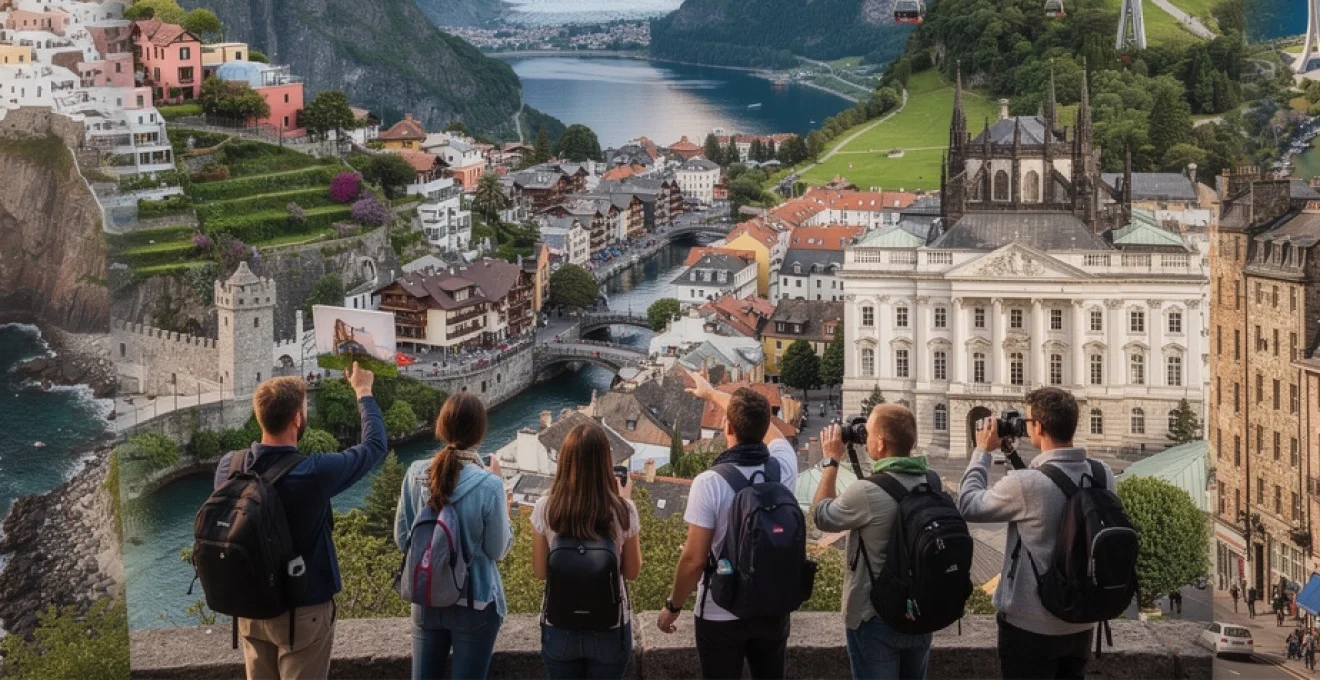
Europe’s diverse tapestry of landscapes, cultures, and histories presents travellers with an almost overwhelming array of choices. From sun-drenched Mediterranean coastlines to dramatic Alpine peaks, from medieval city centres to pristine Nordic fjords, the continent offers experiences that cater to every type of explorer. Understanding which destinations align with your interests—whether you’re drawn to architectural marvels, natural wonders, or culinary adventures—can transform a good holiday into an unforgettable journey. The key lies in recognising that Europe’s most rewarding destinations often combine multiple elements: breathtaking scenery, rich cultural heritage, and distinctive local character that sets them apart from generic tourist traps.
The challenge isn’t finding places to visit in Europe—it’s selecting those that will deliver the most meaningful experiences for the time and resources you invest. With over 44 countries and countless regions each offering unique attractions, strategic planning becomes essential. Whether you’re considering a fortnight-long grand tour or a focused exploration of a single region, understanding what makes certain destinations truly exceptional will help you craft an itinerary that exceeds expectations.
Mediterranean coastal gems: santorini, amalfi coast, and costa brava
The Mediterranean coastline represents some of Europe’s most visually stunning and culturally rich territory. These sun-blessed shores have attracted visitors for millennia, from ancient Greek philosophers to Renaissance artists, and today’s travellers continue to be drawn by the same combination of natural beauty, historical depth, and sensory pleasures. The three regions highlighted here exemplify different facets of Mediterranean charm, each offering distinctive architecture, culinary traditions, and coastal landscapes that have captivated generations of visitors.
What distinguishes these Mediterranean destinations from countless other coastal areas is their ability to blend dramatic natural settings with centuries of human habitation that has enhanced rather than diminished their beauty. The interplay between sea, sky, and stone creates visual compositions that seem almost impossibly perfect, whilst the mild climate and emphasis on outdoor living foster a pace of life that allows you to fully absorb your surroundings.
Santorini’s caldera views and oia sunset vantage points
Santorini’s fame rests primarily on its extraordinary volcanic caldera—the flooded crater of an ancient eruption that occurred around 1600 BCE. The crescent-shaped island’s western edge rises dramatically from the sea, with whitewashed buildings clinging to cliffs that drop 300 metres to the water below. This geological drama, combined with the distinctive Cycladic architecture of domed churches and cave houses carved into the volcanic rock, creates one of Europe’s most photographed landscapes. The village of Oia, perched on the island’s northern tip, has become synonymous with spectacular sunsets, though the crowds gathering each evening can detract from the experience.
Beyond the obvious visual appeal, Santorini offers archaeological treasures including the Bronze Age settlement of Akrotiri, remarkably preserved beneath volcanic ash. The island’s volcanic soil produces distinctive wines, particularly the crisp Assyrtiko variety, and several wineries offer tastings with caldera views. However, mass tourism has significantly impacted the island’s character, with cruise ship arrivals creating bottlenecks in Fira and accommodation prices reaching stratospheric levels during peak season. Visiting during shoulder months (April-May or September-October) provides a more authentic experience whilst still delivering excellent weather.
Amalfi coast’s positano cliffside architecture and ravello gardens
The Amalfi Coast’s 50 kilometres of coastline represent one of Italy’s most celebrated landscapes, where the Lattari Mountains plunge dramatically into the Tyrrhenian Sea. Positano’s vertical village, with its pastel-coloured houses stacked impossibly on near-vertical cliffs, creates an architectural spectacle that seems to defy gravity. The town’s labyrinthine stairways and narrow lanes reward exploration, though the steep terrain demands reasonable fitness. The beach, whilst picturesque, consists of coarse pebbles and can become uncomfortably crowded during summer months.
Ravello, perched 365 metres above sea level, offers a more serene alternative to the coastal bustle. The town’s spectacular gardens at Villa Cimbrone and Villa Rufolo provide some of
its most celebrated vantage points, combining manicured terraces, Moorish-inspired cloisters, and sweeping views across the coastline. Classical music festivals in summer add a further layer of romance to the setting. For travellers comparing European coastal destinations, it is worth noting that the Amalfi Coast’s beauty comes with logistical challenges: narrow, winding roads prone to traffic jams, scarce parking, and premium pricing for even mid-range accommodation. Planning ahead—especially by booking local buses, boats, or private transfers—makes a significant difference to how much you actually enjoy the region rather than merely endure the crowds.
Costa brava’s tossa de mar medieval walls and cadaqués art scene
Spain’s Costa Brava offers a markedly different Mediterranean experience, with a rugged coastline punctuated by pine-fringed coves, golden beaches, and historic fishing villages. Tossa de Mar stands out for its remarkably preserved medieval old town, Vila Vella, where fortified stone walls and watchtowers rise directly above the sea. Walking the ramparts at sunset, you gain panoramic views of the bay whilst passing narrow lanes lined with stone houses and small galleries. Unlike some overbuilt Spanish resorts, Tossa’s scale remains human, and its mix of beach life and historic fabric makes it appealing for families and independent travellers alike.
Further north, Cadaqués has long attracted artists and writers drawn to its luminous light and whitewashed waterfront. Salvador Dalí spent much of his life in nearby Portlligat, and his eccentric former residence is now one of the region’s most intriguing visitor attractions (advance reservations are essential due to strict capacity limits). The town itself maintains an understated bohemian character, with small studios, contemporary art spaces, and simple seafood restaurants clustered around the harbour. For travellers seeking popular destinations in Europe that still feel authentic, the Costa Brava often proves a more relaxed alternative to heavily commercialised Mediterranean strips.
Mediterranean climate patterns and optimal visiting windows
The Mediterranean climate is widely perceived as reliably sunny, but seasonal nuances can significantly shape your experience. Summers (late June to August) bring high temperatures, strong sun, and peak visitor numbers to Santorini, the Amalfi Coast, and the Costa Brava. In Santorini, daytime highs routinely surpass 30°C, and the island’s dark volcanic rock amplifies the heat. On the Amalfi Coast, humidity and limited shade during midday can make extensive sightseeing uncomfortable, whilst road congestion peaks. The Costa Brava, although slightly less intense, still sees crowded beaches and higher accommodation rates.
For most travellers, the shoulder seasons—April to early June and September to mid-October—offer the best balance between pleasant weather and manageable crowds. Sea temperatures are typically warm enough for swimming from late May through October on all three coasts, with the Mediterranean retaining heat well into autumn. Winter brings a different rhythm: many businesses on Santorini and along the Amalfi Coast close from November to March, whereas the Costa Brava, being closer to larger urban centres like Girona and Barcelona, remains somewhat more active. When you are prioritising which popular destinations in Europe should be on your list, aligning your travel dates with these climate patterns will often matter as much as the destination itself.
Ferry routes and inter-island connectivity in the cyclades
For travellers considering Santorini as part of a broader Greek island itinerary, understanding ferry connectivity across the Cyclades is crucial. Santorini functions as a key hub, with frequent high-speed and conventional ferries linking it to Mykonos, Naxos, Paros, Ios, and Crete in peak season. High-speed catamarans can complete routes like Santorini–Mykonos in under three hours, but they are more sensitive to windy conditions—a common occurrence in the Aegean, especially during the meltemi winds of July and August. Conventional ferries are slower yet usually more stable, with larger decks and better outdoor space for enjoying the seascapes.
Timetables can vary significantly between seasons, with multiple daily departures in summer dwindling to just a few weekly connections in winter. Booking advance tickets is advisable for popular summer routes and weekend sailings, particularly if you’re travelling with a vehicle. However, leaving some flexibility in your schedule helps you adapt to weather-related disruptions, which are not uncommon. If your goal is to weave several Greek islands into a single holiday, think of Santorini less as a standalone “iconic stop” and more as a strategic node that allows you to combine marquee sights with quieter islands where you can escape the crowds.
Alpine mountain retreats: chamonix-mont-blanc, zermatt, and innsbruck
Whilst the Mediterranean promises sun and sea, Europe’s Alpine regions offer an entirely different kind of allure: dramatic peaks, glaciers, alpine meadows, and villages that have adapted to high-altitude life over centuries. Chamonix-Mont-Blanc in France, Zermatt in Switzerland, and Innsbruck in Austria represent three of the most popular mountain bases in Europe, each with its own character. Collectively, they demonstrate why the Alps rank among the best European destinations for outdoor enthusiasts, whether you’re interested in light hikes, technical mountaineering, or simply soaking up the scenery from a café terrace.
What makes these Alpine retreats particularly compelling is the integration of high-quality infrastructure—cable cars, cog railways, well-marked trails—with landscapes that still feel genuinely wild. In recent years, climate change has accelerated glacial retreat and increased rockfall hazards, reshaping some classic routes and outlooks. As a result, travelling here with up-to-date information and a realistic assessment of your abilities is more important than ever. The good news is that all three destinations cater to a broad spectrum of visitors, from casual sightseers to experienced alpinists.
Chamonix’s aiguille du midi cable car and mer de glace glacier access
Chamonix’s reputation as the “capital of alpinism” rests largely on its proximity to Mont Blanc and the surrounding high-mountain terrain. The Aiguille du Midi cable car, one of the most impressive in Europe, transports you from the valley floor (1,035 metres) to 3,842 metres in under 20 minutes. At the top, observation terraces deliver sweeping views of the Mont Blanc massif, the Vallée Blanche, and peaks extending into Italy and Switzerland. For many visitors, simply stepping out into this thin, crisp air and taking in the panorama is a highlight of their entire European trip.
Access to the Mer de Glace, once one of the largest glaciers in the Alps, historically involved a cog railway to Montenvers and a short descent to the ice. Due to rapid glacial retreat—estimated at more than 700 metres since the 1990s—today’s route includes a lengthy stairway and a stark visual lesson in climate change. Interpretive panels mark former glacier levels, making it clear how dramatically the landscape has shifted within a single lifetime. If you’re deciding which popular destinations in Europe to prioritise for educational as well as scenic value, Chamonix offers a powerful combination of both.
Zermatt’s matterhorn glacier paradise and car-free village infrastructure
Zermatt, nestled at 1,600 metres in the Swiss canton of Valais, positions itself almost entirely around one mountain: the Matterhorn. Its instantly recognisable profile dominates the skyline and provides the backdrop for countless photos from ski pistes and hiking trails. The Matterhorn Glacier Paradise cable car system, reaching an altitude of 3,883 metres, gives access to one of Europe’s highest viewing platforms. From here you can see 38 peaks over 4,000 metres and numerous glaciers, along with a small ice palace carved into the glacier itself. Year-round skiing is technically possible, though conditions and offerings vary with changing snow patterns.
One of Zermatt’s most distinctive features is its car-free village centre. Private vehicles are prohibited, with visitors arriving by train to the main station and continuing by small electric taxis, hotel shuttles, or on foot. This policy creates a quieter, cleaner environment and encourages people to move at a human pace, whether they’re browsing shops or heading to trailheads. It also reflects a broader trend in European mountain destinations toward more sustainable tourism models. However, this quality comes at a price: Zermatt is one of the more expensive Alpine bases, so budgeting carefully for accommodation and mountain transport is essential.
Innsbruck’s nordkette cable railway and bergisel ski jump architecture
Innsbruck, capital of Austria’s Tyrol region, distinguishes itself by combining an urban cultural scene with immediate access to serious mountain terrain. The Nordkette cable railway, designed in part by star architect Zaha Hadid, links the city centre with high-altitude viewpoints in under 30 minutes. Starting from the Congress station, you ride a funicular and then gondolas to reach Seegrube and Hafelekar, where you can either strike out on hikes or simply contemplate the Inn Valley from panoramic terraces. This vertical commute encapsulates why Innsbruck is often cited as one of the best cities in Europe for people who want city life and mountains in the same day.
Also designed by Zaha Hadid, the Bergisel Ski Jump is both a functioning sports facility and an architectural landmark. Even if you’re not visiting during a competition, taking the lift to the viewing deck provides an unusual perspective over the city and surrounding peaks. Combined with Innsbruck’s historic Altstadt—featuring the famous Golden Roof and baroque townhouses—the city forms a bridge between imperial history and contemporary Alpine culture. Visitors who might find high-mountain resorts like Zermatt or Chamonix too single-focus often appreciate Innsbruck’s broader mix of museums, cafés, and everyday Austrian life.
Via ferrata routes and technical climbing circuits across the alps
For those seeking more active engagement with Alpine landscapes than simple viewpoints allow, via ferrata (literally “iron paths”) provide a structured introduction to vertical terrain. These protected climbing routes use fixed cables, ladders, and metal rungs to enable progress along rock faces that would otherwise require advanced climbing skills. Italy’s Dolomites are particularly famous for historic via ferrata dating back to World War I, but similar routes exist near Chamonix, Zermatt, and Innsbruck. They are graded by difficulty, with easier options suitable for fit beginners under professional guidance.
However, the apparent security of a steel cable can be misleading. Proper equipment—helmet, harness, and certified via ferrata lanyard—is non-negotiable, and weather conditions can change rapidly. In recent years, Alpine rescue services have reported an increase in incidents involving under-prepared visitors attempting technical routes they discovered on social media. If you’re considering adding a via ferrata to your European itinerary, honestly assess your comfort with exposure and hire a local guide for your first outing. Think of it as the difference between strolling along a lakeshore and venturing onto a narrow cliff path: both are “walks,” but the required mindset and preparation differ dramatically.
Historic capital cities: prague’s charles bridge, vienna’s ringstrasse, and edinburgh’s royal mile
Beyond coastlines and mountains, many of Europe’s most compelling destinations are its historic capitals, where layers of architecture and urban planning reveal centuries of political and cultural evolution. Prague, Vienna, and Edinburgh each present distinct narratives, from medieval kingdoms and imperial courts to enlightenment thought and literary traditions. If you are trying to decide which cities in Europe to prioritise for a first or second trip, these three offer a rich concentration of sights without feeling as overwhelming as megacities like London or Paris.
What connects them is not uniformity but rather a shared commitment to preserving their historic cores whilst adapting to modern needs. Careful conservation policies, extensive pedestrian zones, and robust public transport make it relatively easy for visitors to access major sights on foot or via tram, bus, and metro. At the same time, overtourism has become a real concern, particularly in Prague’s Old Town and Edinburgh during festival season, prompting authorities to introduce measures that disperse visitors and protect residents’ quality of life.
Prague castle complex and lesser town baroque architecture
Prague Castle is officially listed by Guinness World Records as the largest ancient castle complex in the world, encompassing palaces, churches, gardens, and defensive works spread across roughly 70,000 square metres. Dominating the skyline above the Vltava River, it has served as the seat of Czech kings, Holy Roman emperors, and modern presidents. Within its walls, St. Vitus Cathedral showcases a mix of Gothic and later styles, whilst the Old Royal Palace and Golden Lane offer glimpses into different eras of courtly and everyday life. The complex is less a single “castle” than a small fortified town, and allocating at least half a day to explore is advisable.
Descending from the castle into Malá Strana (Lesser Town), you enter a district characterised by baroque churches, aristocratic palaces, and quiet backstreets. Unlike the more commercialised Old Town Square, this area retains a slightly more residential feel, especially once you step away from the main route to Charles Bridge. The bridge itself, lined with baroque statues and crowded with street performers, photographers, and souvenir stands, remains iconic but can feel saturated during peak hours. For a more atmospheric experience, consider an early-morning or late-evening visit, when the Vltava shimmers and the city’s spires emerge in softer light.
Vienna’s schönbrunn palace and hofburg imperial apartments
Vienna’s identity as the former capital of the Habsburg Empire is clearest in its palatial architecture. Schönbrunn Palace, once the imperial summer residence, rivals Versailles in scale and ornamentation, with over 1,400 rooms (a fraction of which are open to the public) and extensive formal gardens. Audio-guided tours lead you through state rooms where decisions affecting much of Europe were once made, whilst the gardens offer structured parterres, wooded paths, and hilltop viewpoints crowned by the Gloriette. The on-site zoo, founded in 1752, is the oldest continuously operating zoo in the world, making the palace complex a full-day destination for many visitors.
In the city centre, the Hofburg Palace complex houses the Imperial Apartments, the Sisi Museum, and the Spanish Riding School, among other institutions. Walking through these spaces, you gain insight into both the public pomp and private routines of the imperial family. Combined with the Ringstrasse—a grand boulevard encircling the historic core and lined with monumental buildings like the State Opera and Parliament—Vienna offers a masterclass in 19th-century urban design. Compared with some other European capitals, it feels particularly clean, orderly, and well-organised, qualities that many travellers appreciate after more chaotic cities.
Edinburgh’s old town closes and new town georgian planning
Edinburgh’s appeal lies in the stark contrast between its medieval Old Town and the planned Georgian New Town, both of which together form a UNESCO-listed urban landscape. The Royal Mile, stretching from Edinburgh Castle to the Palace of Holyroodhouse, runs along a volcanic ridge and is flanked by narrow closes—steep, confined alleys leading down toward the Grassmarket and Cowgate. Exploring these passages reveals hidden courtyards, historic tenements, and small museums that illustrate how densely populated and stratified the Old Town once was.
North of Princes Street, the New Town presents a completely different urban logic: wide streets, formal squares, and elegant neoclassical terraces designed in the late 18th and early 19th centuries. This contrast between organic medieval growth and Enlightenment-era rational planning is one reason Edinburgh is often described as “a city of two halves.” Visitors who come primarily for the Edinburgh Festival in August sometimes overlook this spatial narrative, yet it is central to understanding why the city feels both dramatically picturesque and intellectually rigorous.
UNESCO world heritage site designations and conservation protocols
All three cities—Prague, Vienna, and Edinburgh—include areas inscribed on the UNESCO World Heritage List, reflecting their “outstanding universal value” to humanity. These designations are not merely honorary; they come with obligations for monitoring, conservation, and sustainable management. For instance, Prague has faced scrutiny over high-rise developments that might compromise key sightlines, while Edinburgh has had to balance modern infrastructure projects, such as tram extensions and new hotel developments, with preservation of its historic skyline. Vienna’s historic centre was briefly placed on the “World Heritage in Danger” list due to concerns over large-scale development near the Ringstrasse.
For travellers, UNESCO status can serve as a useful shorthand when prioritising which popular destinations in Europe to visit, but it should not be the only criterion. Some relatively unknown towns and cultural landscapes also carry the designation, whilst certain vibrant, contemporary neighbourhoods may fall outside protected zones yet be essential to understanding a city’s present-day life. What UNESCO designations do underscore, however, is the importance of travelling responsibly: respecting local guidelines, supporting heritage-friendly businesses, and recognising that the very qualities that draw millions of visitors each year require active protection.
Northern european fjord landscapes: norway’s geirangerfjord and lofoten archipelago
If you’re drawn to stark, dramatic landscapes shaped by ice and ocean, Norway’s fjords are hard to ignore when deciding which European destinations should be on your list. Geirangerfjord, a UNESCO-listed branch of the larger Storfjord system, is often cited as one of the most beautiful fjords in the world. Sheer cliffs rise over 1,000 metres from deep, dark waters, punctuated by cascading waterfalls such as the Seven Sisters and the Suitor. Small farms cling improbably to ledges high above the water, testifying to centuries of human adaptation to this challenging terrain.
Further north, the Lofoten Archipelago offers a different yet equally compelling seascape. Jagged peaks spring almost directly from the ocean, surrounding sheltered bays dotted with rorbuer (traditional fishermen’s cabins) now converted into atmospheric accommodation. Fishing villages like Reine, Henningsvær, and Nusfjord provide access to hiking trails, kayaking routes, and winter activities such as aurora hunting. Because the Gulf Stream moderates the climate, Lofoten’s ports remain ice-free year-round, even though they lie above the Arctic Circle—a geographical paradox that many visitors find fascinating.
Logistically, both Geirangerfjord and Lofoten require more effort to reach than major European cities, often involving a combination of flights, ferries, and scenic drives. However, Norway’s investment in infrastructure—tunnels, bridges, and well-maintained roads—makes independent travel feasible for those comfortable with mountain driving and variable weather. If you are used to Mediterranean predictability, think of Norway as the opposite: forecasts change quickly, and rain, wind, and sudden clearings all form part of the experience. Pack accordingly, build buffer time into your schedule, and you’ll be rewarded with some of the continent’s most unforgettable vistas.
Iberian peninsula cultural corridors: barcelona’s gaudí trail and lisbon’s alfama district
The Iberian Peninsula offers a rich interplay of Roman, Islamic, and Christian influences, layered with modern creativity and maritime history. Barcelona and Lisbon, two of its most charismatic coastal capitals, illustrate this blend particularly well. Barcelona’s Gaudí trail and Lisbon’s Alfama district each provide structured ways to explore not just iconic buildings and viewpoints but also deeper cultural currents that shape local life. For travellers weighing where to spend limited time in Spain and Portugal, these corridors can serve as strong anchor points around which to design a broader itinerary.
In Barcelona, the work of architect Antoni Gaudí dominates many visitors’ agendas. The Sagrada Família, still under construction more than 140 years after its inception, attracts millions annually and rewards those who book timed-entry tickets well in advance. Park Güell, originally conceived as a residential garden city, offers mosaic-covered terraces and playful architectural details overlooking the city and sea. Casa Batlló and Casa Milà (La Pedrera), located along the Passeig de Gràcia, showcase Gaudí’s organic forms and innovative use of materials. Following this Gaudí trail gives you a concentrated insight into Catalan Modernisme and its role in forging a distinct regional identity.
Lisbon’s Alfama district, by contrast, embodies a more ancient, organic urbanism. Spared the worst of the 1755 earthquake that reshaped much of the city, Alfama retains a maze of narrow lanes, stairways, and intimate squares cascading down toward the Tagus River. Tram 28, one of the city’s vintage yellow trams, rattles through its streets, but exploring on foot allows you to appreciate tiled facades, small tascas (taverns), and improvised viewpoints known as miradouros. In the evenings, the district’s fado houses fill with melancholic music that many consider the sonic expression of Portuguese saudade—a concept of longing and bittersweet nostalgia.
Both cities are grappling with the pressures of mass tourism and rising housing costs, issues that can directly affect visitors. In Barcelona, regulations on short-term rentals and cruise ship arrivals aim to reduce strain on central neighbourhoods, while Lisbon has begun to re-examine incentives that favoured tourism-oriented development over local needs. As a visitor, you can contribute positively by choosing locally owned accommodation, dining in neighbourhood restaurants beyond the most famous streets, and respecting residents’ space—particularly in densely populated historic quarters where balconies and windows open directly onto narrow lanes.
Baltic sea heritage sites: tallinn’s medieval old town and stockholm’s gamla stan quarter
Finally, for travellers seeking European destinations that combine maritime history with compact, walkable historic centres, the Baltic Sea region offers strong contenders. Tallinn, capital of Estonia, boasts one of the best-preserved medieval old towns in Europe, its skyline punctuated by church spires and defensive towers. Cobblestone streets wind between merchant houses, guild halls, and sections of city wall that still encircle the core. Upper Town (Toompea) provides viewpoints over the red-tiled roofs of Lower Town and the harbour beyond, illustrating the city’s longstanding role as a trading hub in the Hanseatic League.
Stockholm’s Gamla Stan, situated on a small island at the heart of the Swedish capital, presents a slightly later but equally atmospheric urban fabric. Narrow streets like Mårten Trotzigs gränd (the city’s narrowest alley) open suddenly into squares such as Stortorget, framed by colourful merchant houses. The Royal Palace, one of Europe’s largest, anchors the quarter, while the nearby Riddarholmen island offers views of the City Hall and modern skyline. Despite heavy tourist traffic in summer, Gamla Stan still shelters residential buildings, small artisan shops, and historic churches, maintaining a balance between heritage showcase and lived-in neighbourhood.
Both Tallinn and Stockholm are popular stops on Baltic cruise itineraries, which can lead to midday surges in visitor numbers. If you’re staying overnight, consider exploring early in the morning or later in the evening, when day-trippers have departed and the streets regain a more local rhythm. In Tallinn, venturing beyond the walls into districts like Kalamaja and Telliskivi reveals a vibrant creative scene housed in former industrial spaces. In Stockholm, walking or taking a short ferry to Södermalm introduces you to a different facet of the city, with viewpoints, cafés, and boutiques catering more to residents than tour groups.
Including one or both of these Baltic capitals in your European plans offers a useful counterpoint to the continent’s better-known destinations. They demonstrate how smaller cities can deliver high levels of cultural interest, architectural charm, and quality of life without the overwhelming scale of some western European metropolises. As with all the places discussed—from Santorini to Geirangerfjord—the key is to match what these destinations genuinely offer with what you personally value in travel, so that your own list of popular destinations in Europe feels curated rather than simply copied from social media.